





@PatriciaGant
Volgen
Dane, We all should help one another.
Human beings are like that.
We should live by each other’s happiness - not by each other’s misery.
We don’t want to hate and despise one another, share the Joint.
And mother earth is rich and can provide for everyone.
We can Grow enough Happiness, In this paradise, there is room for everyone.
We only exist to bring joy into the world and The way of life can be free and beautiful,
but we have lost the way.
Grow High and Give the world A smile.
At the end we own nothing more then all our memories, lets make them amazing for everyone,
nothing to lose only everything to win.
for those who come after, right.
A last kiss goodby, a second one, softer and long as a sign, that you are woth it.
That Everyone worth, who loved and given.
Enought Hippie Talk, now have a nice day and an even better grow, thx for watching by.
((From Seed 🌱
((From Clone 🌿
week report:
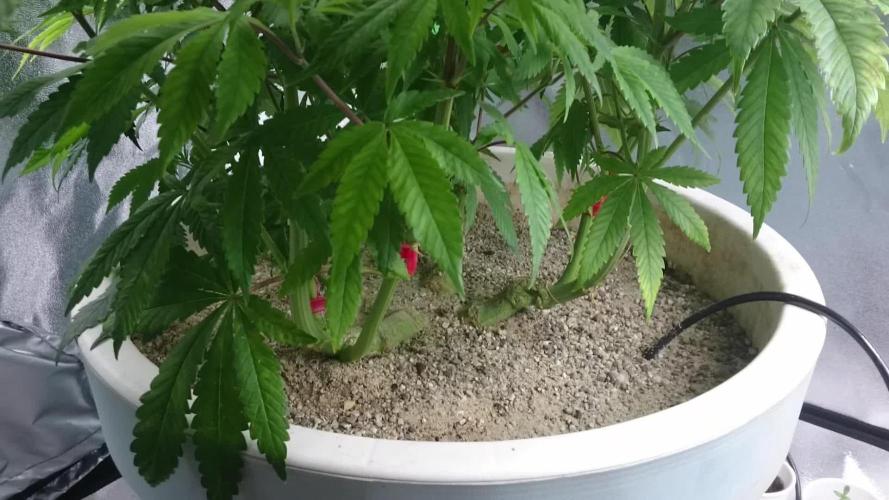
shhhit those fking flys sand should be washed and not mineral heavy SHOULD well i let airpump in mabe it helpd sand could strangle off air suply we see
well well sadly she is dying




@RageTdavis
Volgen
Im going into pre-flower phase as of 9-8-26 week 4 into the pre formation of the buds at the brink of pre terps 😋 😋 😋 smell not there is sense a hint of wood chocolate 😄 at times just me or the buds itself


@Ogchemst
Volgen
Day 1 of flo, description in OG Kush Diary, I'm really curious about this bush. I think I will taste great from what people told me it'd been really good for making some wax also, I like how I managed that canacopy I know I can do better but it's my first time trying this actually... I'm kinda beating myself up because I wanted a bit longer branching but next time I think I will try doing this with all 4 of my plants just because I like how it looks
Day 3: sorry to see that beautiful bushy structure having to come off, I enjoyed looking at it but time to give those bigger buds some space and give the plant some energy to the top so I'm removing all unnecessary small little branching to increase the airflow etc.. I enjoy working on my plants.
Day 4: flo so I managed to get rid of most of the bush and alot more of the plant has opened up, I removed mostly smaller branches and let the bigger ones stay just to see how I can further improve this In future and what to look for.
I could watch all the videos I want but without a 1st hand experience it's always just a theory , there's always room for improvement every grow in my opinion.
8 Feburary Update: I flushed all 3 with some water and fed 10ml of each a and b + additives they responded very well soon on day 7 I'm planning to start giving them more bloom nutrients after flushing the medium just a little once more so I can really push it and make sure my ppm is high enough without too much salt buildup, for that I will be using cal mag water followed up by final dose of grow a + B with some big bud I'm trying to avoid that saltbuildup at all costs here as this is my first grow in 7 Years here in Germany 🇩🇪😁, btw the water quality here is so much better than in Ireland...
I gotta be careful with pests alot living on the bottom floor, thing is a nightmare...



@DogDoctorOfficial
Volgen
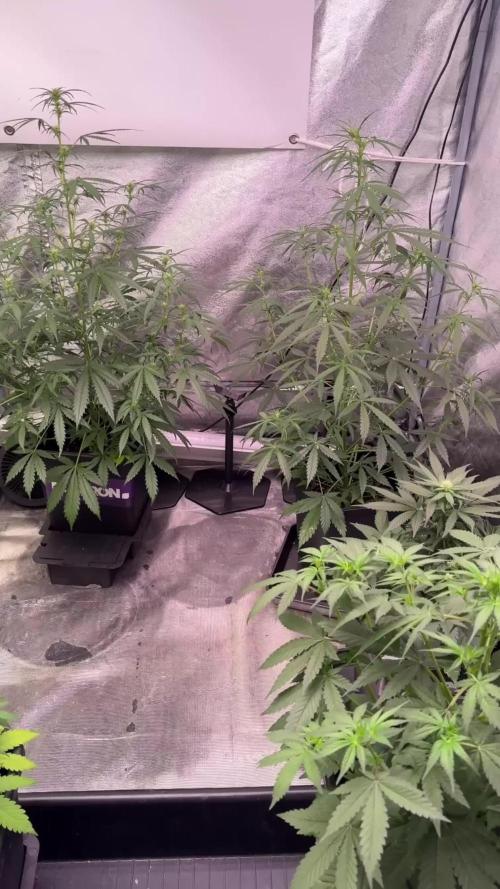
💜 Week 5 – Purple CousKush Auto (Pheno B)
Same Genetics, A Different Story
One of the greatest reminders that nature always has the final word is watching multiple phenotypes grow side by side.
This Purple CousKush has shared every step of the journey with her sister. The same germination conditions. The same Plagron feeding schedule. The same Future of Grow lighting. The same Mammoth tent. The same 12/12 flowering schedule from seed.
Yet she has decided to tell an entirely different story.
While some plants rush into flower and others focus on stretch, this beautiful lady has invested her energy into building a compact, incredibly healthy structure before fully committing herself to bloom.
She’s taking her time.
And I’m perfectly happy to let her.
⸻
🌱 Plant Development
At 66 cm tall, this phenotype has developed into a wonderfully balanced and compact plant with exceptional vigour.
The first thing that catches my attention every time I walk into the tent is just how lush she looks. Her foliage is thick, rich green and incredibly healthy, giving her a full appearance despite her more restrained vertical growth.
Flowering is now clearly underway. Fresh pistils are appearing at every growing tip and along the internodes, confirming that she’s fully transitioning into bloom. She simply isn’t in any hurry, and that’s perfectly fine.
The spacing between nodes remains excellent, allowing light to penetrate deep into the canopy while creating dozens of promising future flowering sites.
She’s building the foundations first.
The flowers will follow.
⸻
🌿 Environment & Growing Conditions
Like the rest of the Project Blue Tent, environmental conditions remained very stable throughout the week.
* 12/12 lighting schedule from seed
* Future of Grow Black Series LED providing approximately 850 PPFD
* Mammoth Pro grow tent
* Day temperatures around 31°C
* Relative humidity averaging 72%
* CO₂ levels around 639 ppm
Despite the warmer summer temperatures, this phenotype has remained calm and vigorous throughout the week. Leaf posture has been excellent, colour remains beautifully uniform, and the plant continues to show absolutely no signs of stress.
Healthy roots create healthy plants, and this girl certainly looks like she’s enjoying life.
⸻
💧 Feeding Program
This Purple CousKush continues to be hand-watered rather than connected to the AutoPot system.
Growing in a 15 L Plagron Lightmix container, she received approximately 1 litre of nutrient solution per watering.
This week’s feeding consisted of:
• Terra Grow – 1.8 ml/L
• Terra Bloom – 1.9 ml/L
• Pure Zym – 1 ml/L
• Power Roots – 1 ml/L
• Sugar Royal – 1 ml/L
• Power Buds – 1 ml/L
The feeding schedule continues to match her needs perfectly. The deep green foliage, steady growth and healthy new shoots all suggest she’s receiving exactly what she requires while gradually shifting her focus from vegetative growth into flowering.
Sometimes consistency really is the best strategy.
⸻
🌸 Phenotype Notes
Comparing this plant with her sister perfectly illustrates why I enjoy documenting individual phenotypes instead of treating every plant as if they were identical.
They come from the same seed pack.
They’ve received the same care.
They’ve experienced the same environment.
Yet they’re expressing themselves in wonderfully different ways.
This phenotype is slightly slower entering flower, but she compensates with an incredibly sturdy frame, beautiful branching and dense, vibrant foliage that gives her a very robust appearance.
She’s not behind.
She’s simply following her own genetic rhythm.
That’s one of the reasons I love growing from seed—every plant has its own personality waiting to be discovered.
⸻
🔍 Looking Ahead
Over the next week I expect flowering to become much more obvious as the pistils continue multiplying across every branch and the first real bud sites begin to establish themselves.
With her compact structure, balanced branching and excellent health, I’m excited to see how she fills out during the coming weeks.
Sometimes the slower starters end up becoming the biggest surprises at harvest.
We’ll simply keep providing a stable environment, consistent nutrition and plenty of patience while she writes the next chapter herself.
⸻
💭 Final Thoughts
Every phenotype teaches something different.
This Purple CousKush reminds me that speed has never been the goal. Health, balance and consistency will always matter far more than racing toward the finish line.
Watching her develop has been incredibly enjoyable because she’s never tried to imitate the other plants in the room. She’s simply growing exactly the way her genetics tell her to.
As growers, sometimes our best decision is simply to observe, trust the process and resist the temptation to interfere.
Nature has been doing this for millions of years.
She knows what she’s doing.
⸻
🙏 Thank You
A huge thank you to everyone following this journey and sharing it with me week after week. Your support, encouragement, advice and conversations are a huge part of what makes GrowDiaries such an incredible community.
A very special thank you to the amazing companies helping bring this project to life:
💜 Zamnesia for the fantastic genetics.
💜 Plagron for the trusted nutrition.
💜 Future of Grow for the incredible Black Series lighting.
💜 TrolMaster for helping keep every environmental parameter under control.
And finally, thank you to every member of the GrowDiaries family. Whether you’re here to learn, share your own experience or simply enjoy watching these plants develop, I truly appreciate every visit, every comment and every conversation.
Until next week…
Growers Love and happy growing, everyone! 🌱💚


@OnlyTomatoes
Volgen
[ Information ]
For all information on this grow, including strain and room details, please see the first week of veg.
[ Updates ]
Day 10 - Watered today, 1.2ec feeding of mainly organics (Fulvic/Humic, Kelp, Molasses, Big Bloom) with runoff. 6.8ph. Group one is stretching much harder due to plant density, I will be adding a net soon.
Day 13 - Watered today with the nutrients listed for this week. 2.2ec at 6.5ph. 80gals total. Added a small dose of Open Sesame for the first time today as bud sites are starting to form on all plants. Added a net to Group 1 yesterday, I will add the nets for Group 2 in a couple days. Group 1 plants are 38-40 inches, group 2 plants are 32-34 inches. I may adjust net height, this isn't normally how I run a cycle; I'm trying a few different things side-by-side. The "one plant per square foot of canopy" group has consistently shown that even with a short veg period there is far too many wasted growth nodes on the sides of the canopy. The plants around the edge tend to branch out instead of up, as they're naturally trying to find sunlight. My last attempt at using these side branches with heavy topping of the middle nodes resulted in a higher yield, as expected as the light footprint was 5x5 instead of 4x4, which defeats the purpose of "one plant per square foot of canopy" anyways. A better test would have been to stunt the growth of all middle nodes enough to weave the side branches into the main canopy, though this seems to be a waste of time without much gain. I'm much happier with Group 2 which has 1 plant per 2 square feet of canopy space. While it also has side branching, the difference in height at the canopy level of the sides and middles are not nearly as different as Group 1, which means a more even light distribution without the need of a net. As overgrown as the room is getting, they still have 7-8 days before they're defoliated a final time.


@TheHighentist
Volgen
WEEK 6 and i am as impatient as i could be.
This week should be the moment of truth, when it comes to thickness of the buds!
👽👉14/11 Waterday*
I upped the BioBloom and TopMax for PK and less BioGrow for nitrogen.
They are FROSTY as ever! Very satisfied
BioHeaven 4
BioGrow 2
BioBloom 4
TopMax 4
Rootjuice 1
👽👉 15/11
One of the ladies is very hungry and showing signs of needing PK
👽👉 16/11
Atm because the outside climate has a big influence on my indoor climate, lower temperatures at night have been occuring.
Battling the temps by having dehumidifier running with heat
👽👉 17/11 Waterday*
They got same feed as last time, but giving a bit more volume now
👽👉 18/11 Christmas coming early, frosty times
👽👉 19/11 I had some buds that got too heavy and fell over, Fixed with some natural thread to hold them up
👽👉 20/11 Close to getting another SCROG to hold them up, but i think its time for harvest soon


@Growthetics
Volgen
Sorry for the late post had a very busy period. The buds are great, good feedback from patients.
First time I've been able to taste a fully organic bud and I can say I won't be going back!



@TrickzGrowz
Volgen
Servus Moin!
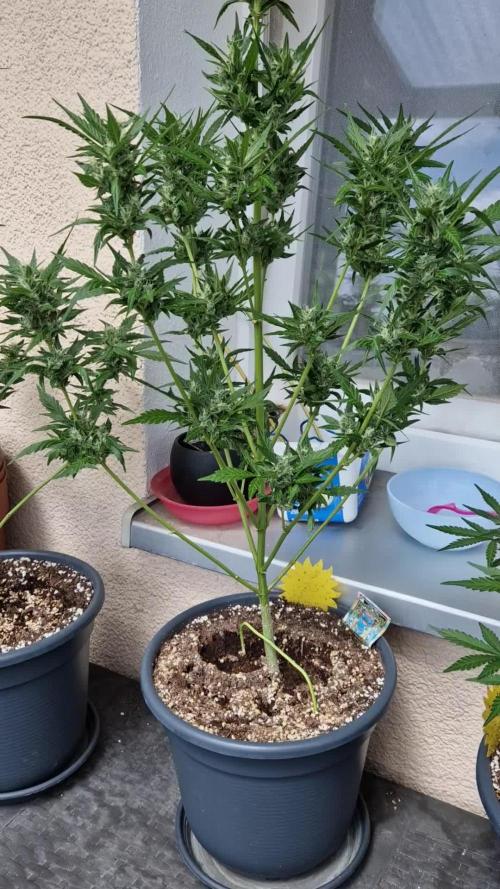
Bei der Pineapple Slush XL sieht man langsam Steigerung in der Blütendichte. Weiter wie gehabt.


@Kevjunior20
Volgen
All the girls have popped out of the soil & are doing amazing except of my free (northern lights) but other than that I’m ready to see what comes of this grow! Stay tuned & show your support no NEGATIVE COMMENTS💙🙏🏾


@NANTANLUPAN
Volgen
It is finishing its fifth week of flowering, every time I am convinced of its quality genetics👽, it is a very healthy variety🙏 it copes well with stress and bad weather⚡☁️☀️, it has a sweet orange smell🍊it is very sticky🍯, I hope it will show its colorful genetics 💜







@CarpediemOK
Volgen
She doesn't still recovering... but doesn't look that bad, ph is around 5, and decided to stop feeding with nutrition for a few days, any tip will be appreciated


@CannaIGrow
Volgen
Topped this girl this week, she’s growing pretty good. Very nice looking plant to my eye.


@GoldenWeedGrower
Volgen
Legend
Timestamp: 📅
EC - pH: ⚗️
Temp - Hum: 🌡️
Water: 🌊
Food: 🍗
pH Correction: 💧
Actions: 💼
Thoughts: 🧠
Events: 🚀
Media: 🎬
D: DAY, G: GERMINATION, V: VEGETATIVE, B: BLOOMING, R: RIPENING, D: DRYING, C: CURING
________________________________
📅 D105/R01 - 28/02/24
⚗️ EC: 0.9 pH: 5.2
🌡️ T: 21-25 °C H: 50-65 %
🌊
🍗
💧
💼
🧠 Ripening starts
🚀
🎬 Added timelapse and screenshots and monthly rate of T-H and VPD 📈📈📈 from TrolMaster App
Translate
________________________________
📅 D106/R02 - 29/02/24
⚗️ EC: 1.2 pH: 6.7
🌡️ T:21-24 °C H: 50-65 %
🌊
🍗
💧 Added pH+
💼
🧠 If someone who followed the diary from the beginning is asking himself what about mother plant "Mamma Aglio", here I posted some picture of her which demonstrate the difference between a bad and a good grow
🚀
🎬 Added pics of Nicole and pics of "Mamma Aglio" to show the difference between a bad and a good grow with sounds and TrolMaster logo. Added usual timelapse and screenshots.
________________________________
📅 D107/R03 - 01/03/24
⚗️ EC: 0.8 pH: 6.4
🌡️ T: 20-24 °C H: 45-65 %
🌊 2L
🍗
💧
💼
🧠
🚀
🎬 Added Timelapse and screenshots. 4 pics added
________________________________
📅 D108/R04 - 02/03/24
⚗️ EC: 0.8 pH: 6.7
🌡️ T: 20-25 °C H: 45-70 %
🌊 1L
🍗
💧
💼
🧠
🚀
🎬 Added Timelapse
________________________________
📅 D109/R05 - 03/03/24
⚗️ EC: 0.8 pH: 6.7
🌡️ T: 21-25 °C H: 45-65%
🌊 RES Changed 💦💦💦
🍗
💧
💼
🧠 I'm starting the flush, as trichomes look milky and quite ready. In this last week the ripening will be complete and th girl would be ready for harvesting.
🚀 Flush started
🎬Added 8 pics of trichomes, Timelapse and sceenshots. Two pics and two videos of my "garden's pre-harvest magic" 😋😋😋
________________________________
📅 D110/R06 - 04/03/24
⚗️ EC: 0.2 pH: 7.5
🌡️ T: 19-25 °C H: 55-65%
🌊
🍗 Flawless finish
💧
💼
🧠 1 day with pure water and now I added Flawless finish
🚀 Flushing
🎬Added Timelapse and sceenshots
________________________________
📅 D111/R07 - 05/03/24
⚗️ EC: 0.2 pH: 7.5
🌡️ T: 20-25 °C H: 55-65%
🌊
🍗
💧
💼
🧠
🚀 Flushing
🎬Added 8 pics. Added timelapse and screenshots. I also prepared a timelapse of the entire week with some music 🎵🎵🎵 and weekly rate of T-H and VPD 📈📈📈




@Ultraviolet
Volgen
What's in the soil? What's not in the soil would be an easier question to answer. 16-18 DLI @ the minute. +++ as she grows.
Probably not recommended, but to get to where it needs to be, I need to start now.
Vegetative @1400ppm 0.8–1.2 kPa 80–86°F (26.7–30°C) 65–75%, LST Day 10, Fim'd Day 11
CEC (Cation Exchange Capacity):
This is a measure of a soil's ability to hold and exchange positively charged nutrients, like calcium, magnesium, and potassium. Soils with high CEC (more clay and organic matter) have more negative charges that attract and hold these essential nutrients, preventing them from leaching away.
Biochar is highly efficient at increasing cation exchange capacity (CEC) compared to many other amendments. Biochar's high CEC potential stems from its negatively charged functional groups, and studies show it can increase CEC by over 90%. Amendments like compost also increase CEC but are often more prone to rapid biodegradation, which can make biochar's effect more long-lasting. biochar acts as a long-lasting Cation Exchange Capacity (CEC) enhancer because its porous, carbon-rich structure provides sites for nutrients to bind to, effectively improving nutrient retention in soil without relying on the short-term benefits of fresh organic matter like compost or manure. Biochar's stability means these benefits last much longer than those from traditional organic amendments, making it a sustainable way to improve soil fertility, water retention, and structure over time. Needs to be charged first, similar to Coco, or it will immobilize cations, but at a much higher ratio.
a high cation exchange capacity (CEC) results in a high buffer protection, meaning the soil can better resist changes in pH and nutrient availability. This is because a high CEC soil has more negatively charged sites to hold onto essential positively charged nutrients, like calcium and magnesium, and to buffer against acid ions, such as hydrogen.
EC (Electrical Conductivity):
This measures the amount of soluble salts in the soil. High EC levels indicate a high concentration of dissolved salts and can be a sign of potential salinity issues that can harm plants.
The stored cations associated with a medium's cation exchange capacity (CEC) do not directly contribute to a real-time electrical conductivity (EC) reading. A real-time EC measurement reflects only the concentration of free, dissolved salt ions in the water solution within the medium.
98% of a plants nutrients comes directly from the water solution.
2% come directly from soil particles.
CEC is a mediums storage capacity for cations. These stored cations do not contribute to a mediums EC directly.
Electrical Conductivity (EC) does not measure salt ions adsorbed (stored) onto a Cation Exchange Capacity (CEC) site, as EC measures the conductivity of ions in solution within a soil or water sample, not those held on soil particles.
A medium releases stored cations to water by ion exchange, where a new, more desirable ion from the water solution temporarily displaces the stored cation from the medium's surface, a process also seen in plants absorbing nutrients via mass flow. For example, in water softeners, sodium ions are released from resin beads to bond with the medium's surface, displacing calcium and magnesium ions which then enter the water. This same principle applies when plants take up nutrients from the soil solution: the cations are released from the soil particles into the water in response to a concentration equilibrium, and then moved to the root surface via mass flow.
An example of ion exchange within the context of Cation Exchange Capacity (CEC) is a soil particle with a negative charge attracting and holding positively charged nutrient ions, like potassium (K+) or calcium (Ca2+), and then exchanging them for other positive ions present in the soil solution. For instance, a negatively charged clay particle in soil can hold a K+ ion and later release it to a plant's roots when a different cation, such as calcium (Ca2+), is abundant and replaces the potassium. This process of holding and swapping positively charged ions is fundamental to soil fertility, as it provides plants with essential nutrients.
Negative charges on soil particles: Soil particles, particularly clay and organic matter, have negatively charged surfaces due to their chemical structure.
Attraction of cations: These negative charges attract and hold positively charged ions, or cations, such as:
Potassium (K+)
Calcium (Ca2+)
Magnesium (Mg2+)
Sodium (Na+)
Ammonium (NH4+)
Plant roots excrete hydrogen ions (H+) through the action of proton pumps embedded in the root cell membranes, which use ATP (energy) to actively transport H+ ions from inside the root cell into the surrounding soil. This process lowers the pH of the soil, which helps to make certain mineral nutrients, such as iron, more available for uptake by the plant.
Mechanism of H+ Excretion
Proton Pumps: Root cells contain specialized proteins called proton pumps (H+-ATPases) in their cell membranes.
Active Transport: These proton pumps use energy from ATP to actively move H+ ions from the cytoplasm of the root cell into the soil, against their concentration gradient.
Role in pH Regulation: This active excretion of H+ is a major way plants regulate their internal cytoplasmic pH.
Nutrient Availability: The resulting decrease in soil pH makes certain essential mineral nutrients, like iron, more soluble and available for the root cells to absorb.
Ion Exchange: The H+ ions also displace positively charged mineral cations from the soil particles, making them available for uptake.
Iron Uptake: In response to iron deficiency stress, plants enhance H+ excretion and reductant release to lower the pH and convert Fe3+ to the more available form Fe2+. The altered pH can influence the activity and composition of beneficial microbes in the soil. The H+ gradient created by the proton pumps can also be used for other vital cell functions, such as ATP synthesis and the transport of other solutes. The hydrogen ions (H+) excreted during photosynthesis come from the splitting of water molecules. This splitting, called photolysis, occurs in Photosystem II to replace the electrons used in the light-dependent reactions. The released hydrogen ions are then pumped into the thylakoid lumen, creating a proton gradient that drives ATP synthesis.
Plants release hydrogen ions (H+) from their roots into the soil, a process that occurs in conjunction with nutrient uptake and photosynthesis. These H+ ions compete with mineral cations for the negatively charged sites on soil particles, a phenomenon known as cation exchange. By displacing beneficial mineral cations, the excreted H+ ions make these nutrients available for the plant to absorb, which can also lower the soil pH and indirectly affect its Cation Exchange Capacity (CEC) by altering the pool of exchangeable cations in the soil solution.
Plants use proton (H+) exudation, driven by the H+-ATPase enzyme, to release H+ ions into the soil, creating a more acidic rhizosphere, which enhances nutrient availability and influences nutrient cycling processes. This acidification mobilizes insoluble nutrients like iron (Fe) by breaking them down, while also facilitating the activity of beneficial microbes involved in the nutrient cycle. Therefore, H+ exudation is a critical plant strategy for nutrient acquisition and management, allowing plants to improve their access to essential elements from the soil.
A lack of water splitting during photosynthesis can affect iron uptake because the resulting energy imbalance disrupts the plant's ability to produce ATP and NADPH, which are crucial for overall photosynthetic energy conversion and can trigger a deficiency in iron homeostasis pathways. While photosynthesis uses hydrogen ions produced from water splitting for the Calvin cycle, not to create a hydrogen gas deficiency, the overall process is sensitive to nutrient availability, and iron is essential for chloroplast function.
In photosynthesis, water is split to provide electrons to replace those lost in Photosystem II, which is triggered by light absorption. These electrons then travel along a transport chain to generate ATP (energy currency) and NADPH (reducing power). Carbon Fixation: The generated ATP and NADPH are then used to convert carbon dioxide into carbohydrates in the Calvin cycle. Impaired water splitting (via water in or out) breaks the chain reaction of photosynthesis. This leads to an imbalance in ATP and NADPH levels, which disrupts the Calvin cycle and overall energy production in the plant. Plants require a sufficient supply of essential mineral elements like iron for photosynthesis. Iron is vital for chlorophyll formation and plays a crucial role in electron transport within the chloroplasts. The complex relationship between nutrient status and photosynthesis is evident when iron deficiency can be reverted by depleting other micronutrients like manganese. This highlights how nutrient homeostasis influences photosynthetic function. A lack of adequate energy and reducing power from photosynthesis, which is directly linked to water splitting, can trigger complex adaptive responses in the plant's iron uptake and distribution systems.
Plants possess receptors called transceptors that can directly detect specific nutrient concentrations in the soil or within the plant's tissues. These receptors trigger signaling pathways, sometimes involving calcium influx or changes in protein complex activity, that then influence nutrient uptake by the roots. Plants use this information to make long-term adjustments, such as Increasing root biomass to explore more soil for nutrients. Modifying metabolic pathways to make better use of available resources. Adjusting the rate of nutrient transport into the roots. That's why I keep a high EC. Abundance resonates Abundance.


@eldruida_lamota
Volgen
Do sweet dos será la variedad más tardía de todo pero no por ello va a ser lo peor.
Al contrario esta variedad tan reconocida de sweet seeds es una bomba y que si se tiene paciencia suficiente se logran flores muy ricas tanto en sabor como en potencia.
.
La humedad esta al 45% la temperatura está entre 21/25 grados , y como siempre el ph , ya que es de lo más importante,está en 5,8/6,0.
.
AgroBeta:
Ya tenemos el lavado de raíces realizado, y hemos retirado los nutrientes para aplicar un estrés hídrico.
.
Hasta aquí todo familia 🕸️ , un saludo y buenos humos fumetillas💨💨💨.




@Draco1243
Volgen
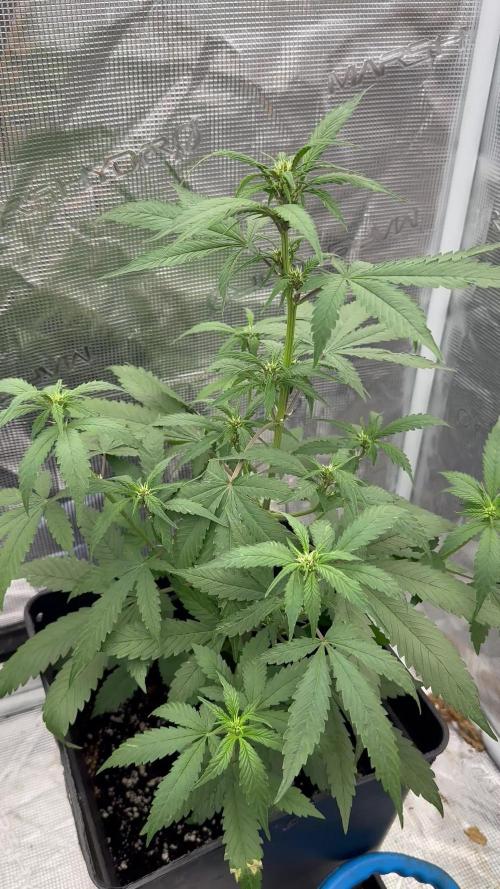
My favorite was the bussdown. She was east to grow smells great. Great yeild gets u straight stoned. Resist to alot , they didn't have any issues well a few others did.


@FelixTerpz
Volgen
Flowering started on day 28. I applied a topdressing once with Green House Feeding BioBloom at 1.5 grams per liter Soil. I’ll repeat that in the third week to reach the full dose of 3 grams per liter.
I also discovered some thrips, so I reacted immediately by using small nematode sachetsboth on the plant and in the watering solution.


@TherealNICOGREEN
Volgen
Det går fint det kommer nok lige lidt an på hvordan man ser på det;) jeg prøver dobbelt topping og pt går det virkelig godt og jeg kan også se på bladenes stilke de er helt RØD/LILLA 👌💚😘🤗🙏🏼💚glæder mig til at se 👀 hvordan den kommer til at se ud u fuld blomst og med buds
