


Likes
Comments
Share

@BlackForestGrower
Follow
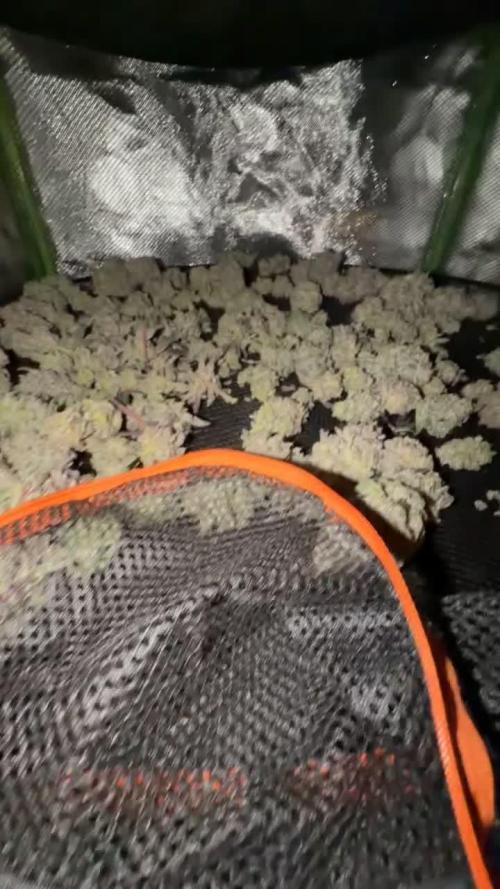
It was a great last run.
It’s been a beautiful time.
My time here done now.
BlackForestGrower out. 🌲✌️

Likes
39
Share


@J_diaz420
Follow
Todo marcha bien!!
Creo que lo fundamental en esta semana es arta humedad y riego foliar por encima, pero en las raíces tratar de no llenar de agua ya que a esta temprana edad la plántula no tiene tanta raíces formadas, lo que provoca que se estanquen, quedando enanas y mostrando carencias por no poder beber.
Trataré de seguir como voy, saludos 🍀

Likes
2
Share


@babylamchi
Follow
Week . 27/11 - 05/12
- finally I managed to lower the humidity. Its stable at 40-45% RH rite now.
- still need a little bit of defoliation

Likes
20
Share


@Bakeryguy420
Follow
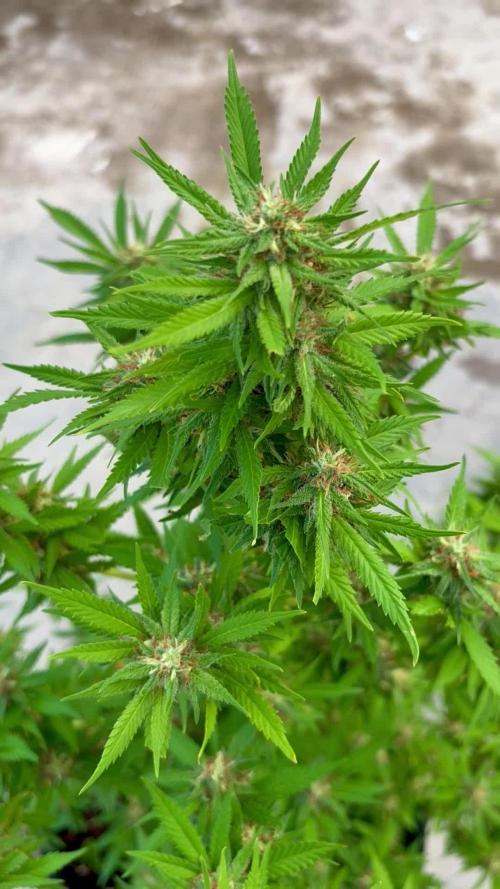
Cruising through the week. Stopped stretching around 4 ft 1 inch. From measuring from top of soil to the top. Such a beautiful plant. Dark purple on all the leaves. Bud sites are really starting to come in now. Going be a nice yield. So happy to have gotten the purple pheno. Beyond thrilled.
Currently she getting fed every 2 days about about a gal of water each time. I 4 grams of mega crop
2 gram of sweet candy
1 gram bud explosion
Ppms at runoff using my Tds meter is 2250. I usually keep this high during early and mid flowering then towards then boost it up until I notice some burning then cut back with water.
No issues at the moment everything seems to be growing fairly smoothly :). Another 4 weeks should be close to harvest ^_^



Likes
4
Share

@LittleBigTrees
Follow
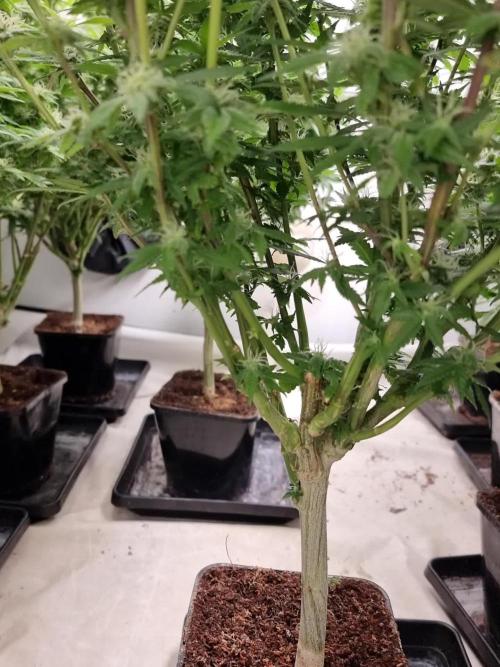
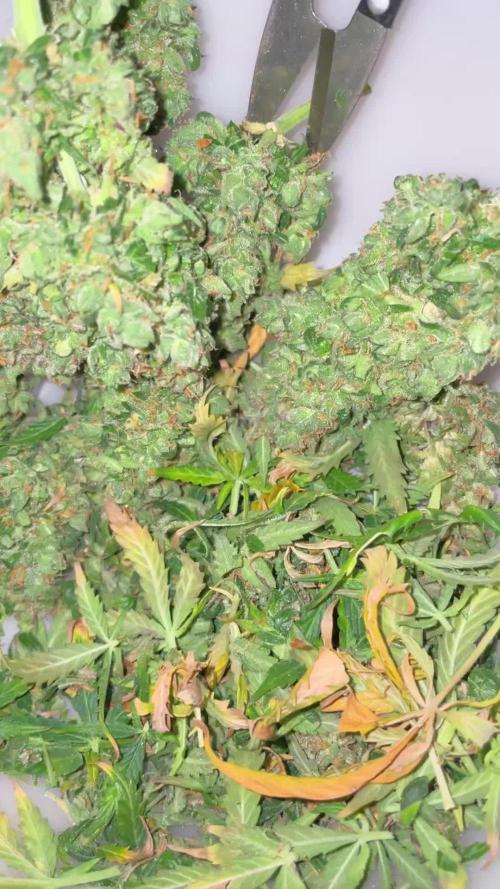
Feeding full strength apart from after dry periods.
After dry periods i feed at 33% but still maintain 20% run off.
I'm pulling fan leaves as they grow.



Likes
1
Share


Likes
8
Share


@CanarianGrow92
Follow
Week 2 and nice and green, we just gave some more organic nutrients like palm tree ash and some guanokalong powder, for the moment its seems to be all good, in 2 weeks I'll be adding some sugars and some more PK

Likes
47
Share


@Ultraviolet
Follow
What's in the soil? What's not in the soil would be an easier question to answer. 16-18 DLI @ the minute. +++ as she grows.
Probably not recommended, but to get to where it needs to be, I need to start now.
Vegetative @1400ppm 0.8–1.2 kPa 80–86°F (26.7–30°C) 65–75%, LST Day 10, Fim'd Day 11
CEC (Cation Exchange Capacity):
This is a measure of a soil's ability to hold and exchange positively charged nutrients, like calcium, magnesium, and potassium. Soils with high CEC (more clay and organic matter) have more negative charges that attract and hold these essential nutrients, preventing them from leaching away.
Biochar is highly efficient at increasing cation exchange capacity (CEC) compared to many other amendments. Biochar's high CEC potential stems from its negatively charged functional groups, and studies show it can increase CEC by over 90%. Amendments like compost also increase CEC but are often more prone to rapid biodegradation, which can make biochar's effect more long-lasting. biochar acts as a long-lasting Cation Exchange Capacity (CEC) enhancer because its porous, carbon-rich structure provides sites for nutrients to bind to, effectively improving nutrient retention in soil without relying on the short-term benefits of fresh organic matter like compost or manure. Biochar's stability means these benefits last much longer than those from traditional organic amendments, making it a sustainable way to improve soil fertility, water retention, and structure over time. Needs to be charged first, similar to Coco, or it will immobilize cations, but at a much higher ratio.
a high cation exchange capacity (CEC) results in a high buffer protection, meaning the soil can better resist changes in pH and nutrient availability. This is because a high CEC soil has more negatively charged sites to hold onto essential positively charged nutrients, like calcium and magnesium, and to buffer against acid ions, such as hydrogen.
EC (Electrical Conductivity):
This measures the amount of soluble salts in the soil. High EC levels indicate a high concentration of dissolved salts and can be a sign of potential salinity issues that can harm plants.
The stored cations associated with a medium's cation exchange capacity (CEC) do not directly contribute to a real-time electrical conductivity (EC) reading. A real-time EC measurement reflects only the concentration of free, dissolved salt ions in the water solution within the medium.
98% of a plants nutrients comes directly from the water solution.
2% come directly from soil particles.
CEC is a mediums storage capacity for cations. These stored cations do not contribute to a mediums EC directly.
Electrical Conductivity (EC) does not measure salt ions adsorbed (stored) onto a Cation Exchange Capacity (CEC) site, as EC measures the conductivity of ions in solution within a soil or water sample, not those held on soil particles.
A medium releases stored cations to water by ion exchange, where a new, more desirable ion from the water solution temporarily displaces the stored cation from the medium's surface, a process also seen in plants absorbing nutrients via mass flow. For example, in water softeners, sodium ions are released from resin beads to bond with the medium's surface, displacing calcium and magnesium ions which then enter the water. This same principle applies when plants take up nutrients from the soil solution: the cations are released from the soil particles into the water in response to a concentration equilibrium, and then moved to the root surface via mass flow.
An example of ion exchange within the context of Cation Exchange Capacity (CEC) is a soil particle with a negative charge attracting and holding positively charged nutrient ions, like potassium (K+) or calcium (Ca2+), and then exchanging them for other positive ions present in the soil solution. For instance, a negatively charged clay particle in soil can hold a K+ ion and later release it to a plant's roots when a different cation, such as calcium (Ca2+), is abundant and replaces the potassium. This process of holding and swapping positively charged ions is fundamental to soil fertility, as it provides plants with essential nutrients.
Negative charges on soil particles: Soil particles, particularly clay and organic matter, have negatively charged surfaces due to their chemical structure.
Attraction of cations: These negative charges attract and hold positively charged ions, or cations, such as:
Potassium (K+)
Calcium (Ca2+)
Magnesium (Mg2+)
Sodium (Na+)
Ammonium (NH4+)
Plant roots excrete hydrogen ions (H+) through the action of proton pumps embedded in the root cell membranes, which use ATP (energy) to actively transport H+ ions from inside the root cell into the surrounding soil. This process lowers the pH of the soil, which helps to make certain mineral nutrients, such as iron, more available for uptake by the plant.
Mechanism of H+ Excretion
Proton Pumps: Root cells contain specialized proteins called proton pumps (H+-ATPases) in their cell membranes.
Active Transport: These proton pumps use energy from ATP to actively move H+ ions from the cytoplasm of the root cell into the soil, against their concentration gradient.
Role in pH Regulation: This active excretion of H+ is a major way plants regulate their internal cytoplasmic pH.
Nutrient Availability: The resulting decrease in soil pH makes certain essential mineral nutrients, like iron, more soluble and available for the root cells to absorb.
Ion Exchange: The H+ ions also displace positively charged mineral cations from the soil particles, making them available for uptake.
Iron Uptake: In response to iron deficiency stress, plants enhance H+ excretion and reductant release to lower the pH and convert Fe3+ to the more available form Fe2+. The altered pH can influence the activity and composition of beneficial microbes in the soil. The H+ gradient created by the proton pumps can also be used for other vital cell functions, such as ATP synthesis and the transport of other solutes. The hydrogen ions (H+) excreted during photosynthesis come from the splitting of water molecules. This splitting, called photolysis, occurs in Photosystem II to replace the electrons used in the light-dependent reactions. The released hydrogen ions are then pumped into the thylakoid lumen, creating a proton gradient that drives ATP synthesis.
Plants release hydrogen ions (H+) from their roots into the soil, a process that occurs in conjunction with nutrient uptake and photosynthesis. These H+ ions compete with mineral cations for the negatively charged sites on soil particles, a phenomenon known as cation exchange. By displacing beneficial mineral cations, the excreted H+ ions make these nutrients available for the plant to absorb, which can also lower the soil pH and indirectly affect its Cation Exchange Capacity (CEC) by altering the pool of exchangeable cations in the soil solution.
Plants use proton (H+) exudation, driven by the H+-ATPase enzyme, to release H+ ions into the soil, creating a more acidic rhizosphere, which enhances nutrient availability and influences nutrient cycling processes. This acidification mobilizes insoluble nutrients like iron (Fe) by breaking them down, while also facilitating the activity of beneficial microbes involved in the nutrient cycle. Therefore, H+ exudation is a critical plant strategy for nutrient acquisition and management, allowing plants to improve their access to essential elements from the soil.
A lack of water splitting during photosynthesis can affect iron uptake because the resulting energy imbalance disrupts the plant's ability to produce ATP and NADPH, which are crucial for overall photosynthetic energy conversion and can trigger a deficiency in iron homeostasis pathways. While photosynthesis uses hydrogen ions produced from water splitting for the Calvin cycle, not to create a hydrogen gas deficiency, the overall process is sensitive to nutrient availability, and iron is essential for chloroplast function.
In photosynthesis, water is split to provide electrons to replace those lost in Photosystem II, which is triggered by light absorption. These electrons then travel along a transport chain to generate ATP (energy currency) and NADPH (reducing power). Carbon Fixation: The generated ATP and NADPH are then used to convert carbon dioxide into carbohydrates in the Calvin cycle. Impaired water splitting (via water in or out) breaks the chain reaction of photosynthesis. This leads to an imbalance in ATP and NADPH levels, which disrupts the Calvin cycle and overall energy production in the plant. Plants require a sufficient supply of essential mineral elements like iron for photosynthesis. Iron is vital for chlorophyll formation and plays a crucial role in electron transport within the chloroplasts. The complex relationship between nutrient status and photosynthesis is evident when iron deficiency can be reverted by depleting other micronutrients like manganese. This highlights how nutrient homeostasis influences photosynthetic function. A lack of adequate energy and reducing power from photosynthesis, which is directly linked to water splitting, can trigger complex adaptive responses in the plant's iron uptake and distribution systems.
Plants possess receptors called transceptors that can directly detect specific nutrient concentrations in the soil or within the plant's tissues. These receptors trigger signaling pathways, sometimes involving calcium influx or changes in protein complex activity, that then influence nutrient uptake by the roots. Plants use this information to make long-term adjustments, such as Increasing root biomass to explore more soil for nutrients. Modifying metabolic pathways to make better use of available resources. Adjusting the rate of nutrient transport into the roots. That's why I keep a high EC. Abundance resonates Abundance.
Likes
Comments
Share

@Growfather1
Follow
Hello everyone!
Everything is looking great as we officially enter week two of the Amnesia Grow Diary, Part One.
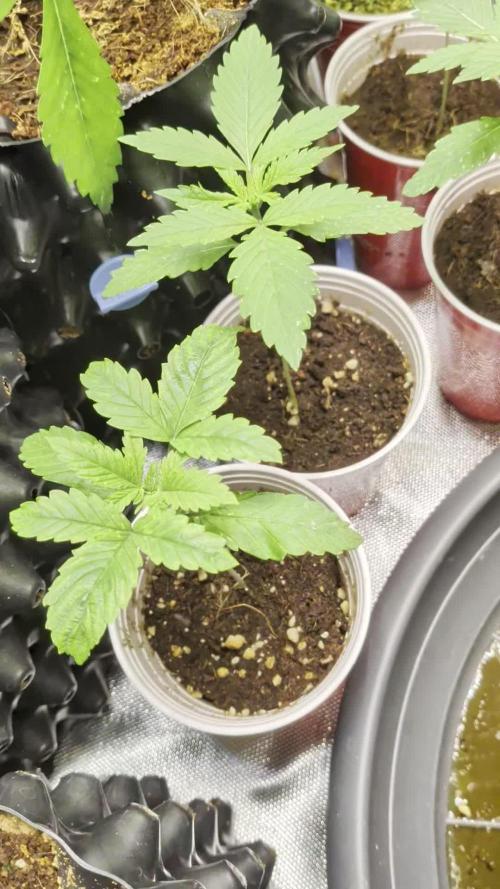
The young seedlings are currently sitting pretty directly under the LED light rather than being shaded under the canopy of a flowering plant.
They are absolutely soaking up the rays and enjoying their dedicated light.
They are still hanging out in their solo cups for now, but a transplant is definitely on the horizon.
I plan to move them into their permanent homes in about 10 days from now.
Everything is looking perfectly okay in the grow room.
The environment is dialled in nicely right now:
• Humidity: Holding steady at 65%
• Temperatures: Ranging comfortably between 21°C and 26°C
To keep everything protected, I will be giving them a preventative treatment with neem oil over the weekend.
Honestly, they look so comfortable in those solo cups right now, I think they’re convinced they’re at a college frat party. Let's hope they don't get too attached to the plastic lifestyle before moving day!
Let’s see how they look next week.
Thank you for stopping by and have a nice day!
Best regards,
Growfather


Likes
2
Share

@hassehujasse
Follow
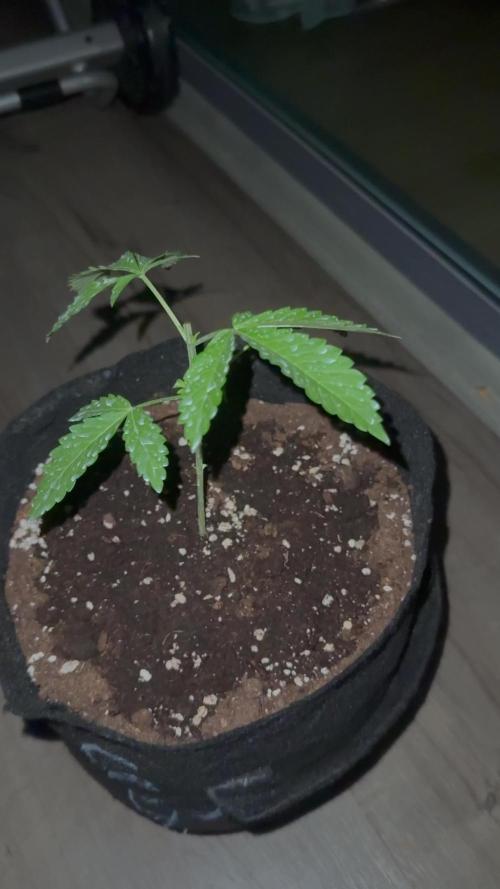
Does she looks topped at midday?Growing outdoor- does it looks like indoor for most?
Third week began with feeding with cal mag and lets see how tall she goes
Likes
28
Share


@Luv2Grow
Follow
Day 71 - Starting week 11 and she’s coming down the end. She’s mostly milky and can’t really see but a couple clear trichs in there, plus a few amber. I’m just waiting now for her to get about 25% amber then I’ll chop. Should be ready for some water in another day or so and read somewhere to give her iced water so gonna try that and see what it does. Loving all the orange and yellow colors that are coming out in her and such a sweet strong smell.
Day 72 - She’s was dried out so gave her 2 gallons of water with 5ML of MagiCal and 80ML of Sugardaddy from Technaflora to try and finish her up. She’s probably got about 10ish days left, all milky trichs now and can see she’s starting to amber up a bit more. This could possibly be her last watering but may give her one more drink before chopping.
Day 73 - No updates really, just waiting for her to dry up and get the chop. Still watching the trichs and all milky with a few amber still.
Day 75 - Still just waiting for her to amber up before chopping and hopefully she’ll get a bit fatter before hand. She’s already rock hard and smells amazingly sweet, should end up being a good smoke in the end.
Day 76 - She’s getting a little more amber in here so this is going to be her final week. I’ll give her one more drink of plain water tomorrow and let her dry out till chop day.
Day 77 - Ending week 11 and gave her her last drink of water tonight. She’s gonna a ton more amber trichs so will be chopping her some point this weekend, possibly Sunday. She’s showing some amazing colors and smell as well!

Likes
6
Share


@eldruida_lamota
Follow
Que pasa familia, vamos con la primera semana de vida de estas Papaya Sherbet feminizadas de fastbuds.
Vamos al lío , las 3 semillas que germinaron con éxito se colocaron en macetas de 0.6 litros y asomaron 3 , 100% ratio germinado.
El ph se controla en 6.2 , la temperatura la tenemos entre 20/22 grados y la humedad ronda el 50%.
El ciclo de crecimiento puse 18h de luz, el foco está al 75% de potencia.
Hasta aquí todo, Buenos humos 💨💨💨



Processing
Likes
4
Share


@el_cultivito
Follow
Fendi 2 has a mutated fan leaf that kinda looks like a lobster claw.
Some older leaves that started yellowing at the tips last week (I think it was a nutrient burn from transplanting from rockwool cube into soil), have gotten more brown and curled upwards.
Processing
Likes
18
Share


@Blueboy2019
Follow
5th April
1st day off week 5 flower
The girls are swelling up there already a nice size and they still got 4 weeks left... Loved this grow from day 1
My royal gorilla and blue gelato 41 have just smashed it there massive.. Blue gelato 41 might be done earlier but she's still got loss off white hairs so I know she's still got a bit off growing to do 🇬🇧grower blueboy
6th April my girls not long woke up just pulled few yellow feafs of her.. Only 1 feels a little lite so gonna leave them another day and feed all the girls together... 1 out of 2 blue gelato 41 looks like she wants to push ahead off all the rest but I'm just gonna wait and see because she still has loads off white hairs... When I harvest theses girls ill be doing it one at a time very detailed harvest so keep an eye out guys
7th April I've uploaded a video of my girls day 3 in week 5 off flower what you guys think...

Likes
39
Share


@Randyb4
Follow
Day 127 53 Days of flower, First day of Week 18
Day 128 54 Days of flower
Plants look good, they still have some white hairs though.
Day 129 55 Days of flower
Trimmed 1 bud from Plant B but it doesn't seem dry enough yet. Plants A and C look like they keep popping new hairs.
Day 130 56 Days of flower
Chopped Plants A and C and started hang drying them, they look great in my opinion.
Day 131 7 Days of drying for B and D
So the buds seemed dry and the stems snap so I jarred and trimmed. Looks like 3.5 ounces or or so but I didn't Weigh

