


Likes
Comments
Share

@BlackForestGrower
Follow
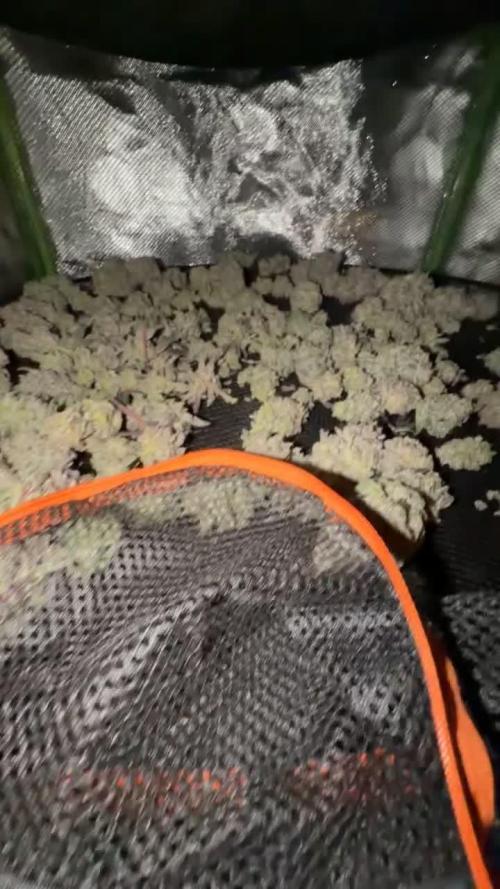
It was a great last run.
It’s been a beautiful time.
My time here done now.
BlackForestGrower out. 🌲✌️

Likes
12
Share


@chrisss
Follow
Day 57) nothing
Day 58 ) Fed ph”d recharged water, half a gallon
Day 59) nothing
Day 60) Fed calmag and bloom , lotta calmag cuz I see cal def
Day 61) nothing
Day 62) flush with 2 gallons of phd water
Day 63)

Likes
13
Share


@KAPT_SAVE_Da_HOE
Follow
I am seeing a magnesium deficiency with yellowing except the stems and veins.
Likes
7
Share


@Abendkraut
Follow
Second week of bloom:
steady growth is visible on both. I incresed the bloom nutrient ratio to 3ml/L Water.
Atm I have to water them everyday with 1L Water, I have the feeling that my dehumidifier is pulling more moisture from the soil that I would have liked.
2nd picture shows that both Exodus have different shades of green although both follow the same schedule and feed plan. I switched positions in the tent, maybe it’s due to the air circulation.
As always I‘ll add more pictures throughout the week.
Now back to Final Fantasy VII Rebirth 😘
Update 05/03:
Took a couple of pictures plants are gaining in height, I added 0.5ml Calmag to the Water once this week. No sign of Cal or Mg deficiency but I added it to prevent during this major height growth phase.


Likes
16
Share


@BLAZED
Follow
Week 11 (2-9 t/m 8-9) Week 1 bloei
2-9
Temperatuur: 29.8 graden (licht aan) 21.5 graden (licht uit)
Luchtvochtigheid: 80% (hoogste) 50% (laagste)
Week 1 van de bloei is begonnen!
Watergift: 1250 ml, met 0.2 ml Silica per liter, 1 gr Calcium PowderFeeding per liter. EC: 0.4 PH: 6.4
3-9
Temperatuur: 29 graden (licht aan) 21.5 graden (licht uit)
Luchtvochtigheid: 69% (hoogste) 50% (laagste)
Watergift: 500 ml, met 0.2 ml Silica per liter, 1 gr Calcium PowderFeeding per liter. EC: 0.4 PH: 6.4
4-9
Temperatuur: 28.5 graden (licht aan) 21.5 graden (licht uit)
Luchtvochtigheid: 71% (hoogste) 51% (laagste)
Watergift: 1200 ml, met 0.2 ml Silica per liter, 1 gr Calcium en 0.4 gr Hybrids Powderfeeding per liter. EC: 0.9 PH: 6.5
5-9
Temperatuur: 29.6 graden (licht aan) 20.8 graden (licht uit)
Luchtvochtigheid: 72% (hoogste) 51% (laagste)
Wat blaadjes weggehaald.
Watergift: Geen.
6-9
Temperatuur: 33 graden (licht aan) 22.3 graden (licht uit)
Luchtvochtigheid: 70% (hoogste) 42% (laagste)
Watergift: 850 ml, met 0.2 ml Silica per liter, 1 gr Calcium PowderFeeding per liter. EC: 0.4 PH: 6.4
7-9
Temperatuur: 32.2 graden (licht aan) 22.6 graden (licht uit)
Luchtvochtigheid: 66% (hoogste) 45% (laagste)
De kartelpuntjes van het blad zijn lichtelijk geel, na het water geven heb ik de runoff gemeten en dat geeft een EC 2.4 en PH 6.8 aan.
Ik ga nu een weekje geen Hybrids voeding geven en daarna ga ik de runoff weer meten.
Watergift: 1500 ml, met 0.2 ml Silica per liter, 1 gr Calcium PowderFeeding per liter. EC: 0.4 PH: 6.4
8-9
Temperatuur: 30.4 graden (licht aan) 22.8 graden (licht uit)
Luchtvochtigheid: 75% (hoogste) 46% (laagste)
Watergift: Geen.

Likes
30
Share


@VanTheMan
Follow
Start of week 4 - She is looking real good. She is getting rather bushy but is not growing much taller yet. still only at roughly 13cm.
Day 22 - 23/01-2024 - watered 1.3L (1ml of calmag-grow-bloom-top mixed with 1.5l water)
Day 26 - 27/01-2024 - watered 1.5L (1ml of calmag-grow-bloom-top mixed with 1.5l water) - She has started growing a bit taller and has reached 17cm today
Day 28 - 29/01-2024 - She has been growing a little taller and has now reached 20cm total. I really like how compact and bushy she seems, so many branches on so little stem. 😍
She does not seem to have started flowering yet so i'll start my next week as veg week aswell.
Likes
20
Share


@PREPPYPUNK
Follow
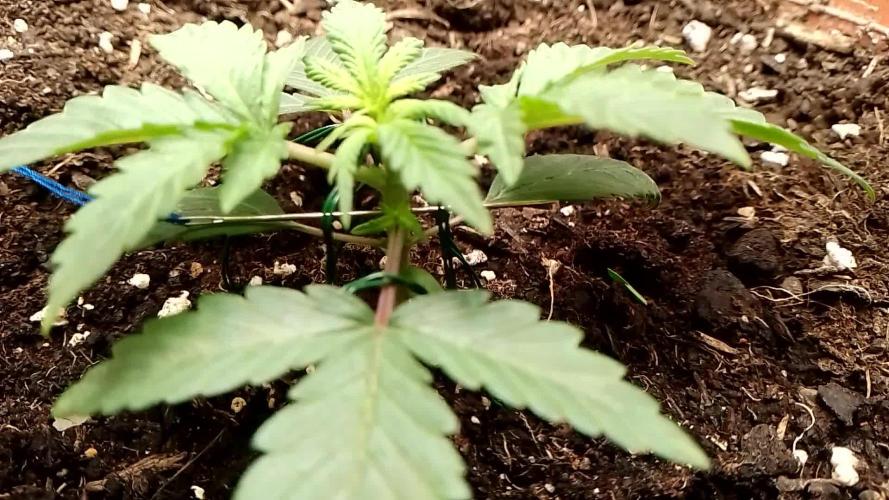
These were in dark tent with ac and 3- 6 inch fans and exhaust going. I thing the ac is making the humidity rise as its at 60% rh and im shooting for 65 degrees F TEMP. FOR A 10-12 DAY DRY. sTILL HAVE TO ACTUALLY CHECK THE BUDS FOR DRYNESS NOT JUST RELY ON SOMEONE ELSES PROGRAM. i BITCHED ABOUT THIS GROW THE WHOLE WAY AND I GOT 11 OZ WET SO I am axctually thrilled. If i can get this stuff to dry and cure and not end up smelling like hay, i will be thrilled beyond imagination.. so 12 more days or whatever it ends up being but thats goal. I am watching this dry and cure like a hawk!!! WILL UPDATE WITH DRY WEIGHT BEFORE I disapear in a cloud of smoke to be a good sport and a respectible growdiaries member with complete grows. Peace!




Processing
Likes
Comments
Share


@Greenbean15
Follow
This plant is going to be the heaviest yielding other of my purple trainwreck plants. Super excited to see what this plant will do. I was able to get the second PT clone to turn semi-purple on the bud, trich’s were better and smoke seemed to be about 2x as potent as the first grow.
I’m not sure what kind of potency this third plant will have but I’m hooping for good things. She flowered early on me instead of during 12/12(started throwing pistils) so I may have her flowering date off by a week or two. I think I stressed her into flowering by drying her out too much in veg.
Regardless, I’m excited to see what she does. So far seems to be the healthiest PT I’ve been able to grow.
Thanks for reading and happy growing! 👩🌾🏼🌱
Likes
4
Share


@SuperGluedGrow
Follow
Week is going good aside from me accidently cutting off a stem on pheno 2. If I can properly save the cutting though I might have a chance at another female. Pheno 3 I'm hoping can make some comeback as I really want to flower the plant, its not dead by any means but the way its growing I just cant see it allowing itself to flower the top leaves were barely growing so I topped. Hopefully positive changes within the next week.
Likes
33
Share


@DWCbuds
Follow
Week 6 starting out with only red and white lights on. Noticed some heat stress on the top leaves so turned all the blue lights off (50%). I will try to get the lights higher if she keeps growing taller but it's noticeably cooler with just the blue lights off.
Day 44 - Strapped the lights to the very top of the tent. Should have set it up that way from the beginning 😅 All lights on now. Still 16/8.
Day 45 more defoliating
Week summary- she's growing quit well! Keeping nutrients around 250 ppm seems to be good at this stage. Feed her only once this week and just kept adding distilled water kept it at the level. Her growth showed a sign on the last day of slowing down(height). Hope to only flower from here on out.

Likes
101
Share


@WhiteEdge
Follow
12.03.2024
Continue into week two. Target EC is the same for this week
Girls looking great. One girl fall into bucket! That lid is not cut with precision😏 Put some plastic to hold till now
Clean tanks and filters with h2o2+vinegar acid +bleach
Replace all filters
Mix new batch with 2ml AN connoisseur AB + Big Bud Powder + Silica - total 20l @
Donne one pass off long misting 2m
700 PPFD @ center, VPD 1.0, RH 53-56% day, RH 45-48% night, Temp Night-20c, Day-25/26c, Leaf temperature 23c, Light distance 60-65cm, CO2 750+ppm
540w@60cm distance
NT-Nutrient Tank - PH -5.9, EC -1.15, Temp-21c
13.03.2024
Top up tank with 10l off 1.2EC solution - 2ml AN Connoisseur A+B + 3g Big Bud @ 18l (1.16EC)
Replace all filters
Before top up, nutrient solution in tank was 0.84, after adding 1.2EC new mix is 1.03
PH is slightly rising, normal when EC is drooping
Girls grow nicely, no deficiencies, this week is start off stretchy faze.
Remove some big and bottom levees
PAR 800 PPFD, VPD 1.0-1.1, RH 50-54%, Temp Night-21-22c, Day-25/26c, Leaf temperature 23c, Light distance 60cm, CO2 750+ppm
580w@60cm distance
50s ON time 20min OFF time Day Time
50s Off time 30min OFF time Night Time
NT-Nutrient Tank - PH -5.92-5.99, EC -0.89-1.0, Temp-20-22c
14.03.2024
Position TrolMaster Tent-X Box on tent and connect to internet. Temperature ,Light and humidity sensor is great, I lake that all sensors and connector boxes are on RJ connectors
Great and fast install, registration and connections off all cables, censors and light! Like ability to expand system with Aqua-X and Hydro-X for irrigation ,PH/ EC/Temp monitoring off nutrient tank
Controlling solenoid valves and pump will be SUPERB!!! Recycling type off timer are great for Aero misting!
With Inkbird equipment i have issues that all connections are permanent and if you have longer cables....😡
HLG Scorpion Diablo LED light is connect via LMA-14 light adapter ! Wow i can control dimming and timing off my light via Wi-Fi😀😊😎👏🙏🙌
PAR map 800max/600min PPFD, VPD 1.0-1.1, RH 50-54%, Temp Night-21-22c, Day-25/26c, Leaf temperature 23c, Light distance 60cm, CO2 750+ppm
HLG Scorpion Diablo@83%
580w@60cm distance
PAR 800 PPFD, VPD 1.0-1.1, RH 50-54%, Temp Night-21-22c, Day-25/26c, Leaf temperature 23c, Light distance 60cm, CO2 750+ppm
580w@60cm distance
50s ON time 20min OFF time Day Time
50s Off time 30min OFF time Night Time
NT-Nutrient Tank - PH -5.95-5.99, EC -0.89-1.1, Temp-20-22c
16.03.2024
Top up tank with 15l off 1.2EC solution - 2ml AN Connoisseur A+B + 3g Big Bud @ 18l (1.16EC)
Replace all filters, still everything in pristine condition after every changing, nutrient solution in tank looking and smell fresh and clean.
Reducing humidity in night time below 50% , humidifier rise temperature to 22-23c at night
Day RH is 53%, in first two hours keeping temps and humidity lower to reduce deferential form night time to 1-2c
Don't want to have more than 10-15cm off stretch in next week
Girls drink more water and nutrients every day, think around 10-12l per day
Managing EC strength with adding slightly higher nutrients solution when top up tank. Overall its around 0.9-1.0EC for most of the time
PH is stabile , slowly rise in small increments. Need to adjust @ 6.2 to 5.9 every two-three days. Probably i will leave it to swing even more.
Diablo is at 80% power @ 45-55cm from top canopy, 900+PPFD in center, lowest corners get 650+
PAR map 920max/650min PPFD, VPD -1.1, DRH 50-54%, NRH48-50%, Temp Night-21-22c, Temp Day-25/26c, Leaf temperature 23c, Light distance 45cm, CO2 750+ppm
HLG Scorpion Diablo@80%
580w@45cm distance
50s ON time 20min OFF time Day Time
50s Off time 30min OFF time Night Time
NT-Nutrient Tank - PH -5.95-5.99, EC -0.89-1.1, Temp-20-22c
17.03.2024
Top up tank with 10l - 1.2EC solution - 1.8ml AN Connoisseur A+B + 3g Big Bud @ 18l (1.16EC)
Replace all filters, install one new. Total 5 mash filters + 2 disc filters
Remove some large fan leaves from all girls. Nothing crazy. Next week is final BIG defoliation and pruning
Clean room benches a little bit after defoliation.
Whole week all girls are doing great , no sign off any kind off stress or deficiencies. Superb fast growth.
Stretching is more apparent in the end off this week. Next week is going to be madness!
18.03.2024
Raise light 10cm , adjusting to canopy level..
HLG Scorpion Diablo@83%, Set sunrise/sunset dimming @ 30min - TrolMaster Tent-X
PAR map 890max/650min PPFD, VPD -1.1, DRH 50-54%, NRH48-50%, NT-21-22c, DT-25/26c, Leaf temperature 23c, Light distance 45cm, CO2 750+ppm
Week 2 off Flowering in Summary
100l off RO water
190ml+190ml AN connoisseur A+B, 15g Big Bud Powder
70kW electricity in total for light, Pumps and AC Infinity Fans. 58kW for Light + 8kW Dehumidification + AC Infinity ventilation
Week start @ 1.14EC, nutrient strength. Strength dropping every day by 0.1-0.2. Topping up tank with 1.2EC solution bring back strength to 0.9-1.0EC
Start using AN Big Bud powder for day two off this week. For next slowly reducing Nitrogen and add more Big Bud. Next week start @ 1.2EC
Girls look superb all time, Purple Lemonade is huge , all three girls!
Flowering going nicely, obvious sign off formation off bud sites, pistils have shown an all girls.
PH was stabile and move from 5.85 min to 6.2 max. Swing all week without chasing perfect number.
Light distance start at 65cm from canopy finish week at 45-50cm , PPFD levels around 800-940 in center, trough whole week
Temperature vary slightly from 23c at start off day to 26c max at some points. AC Infinity T6 extracting fan program in AUTO to kick in @ 26c
Night temps around 21-23c, dehumidifier start to work at night time to bring down humidity, trying also to minimize Day/Night temperature differential for this week also
Continue in next week at same environment settings and light strength.
Likes
29
Share

@DogDoctorOfficial
Follow
eek 2 Flower – The Stretch Is On: Sundae Driver Goes Vertical
They’re growing.
They’re stretching.
They’re thriving.
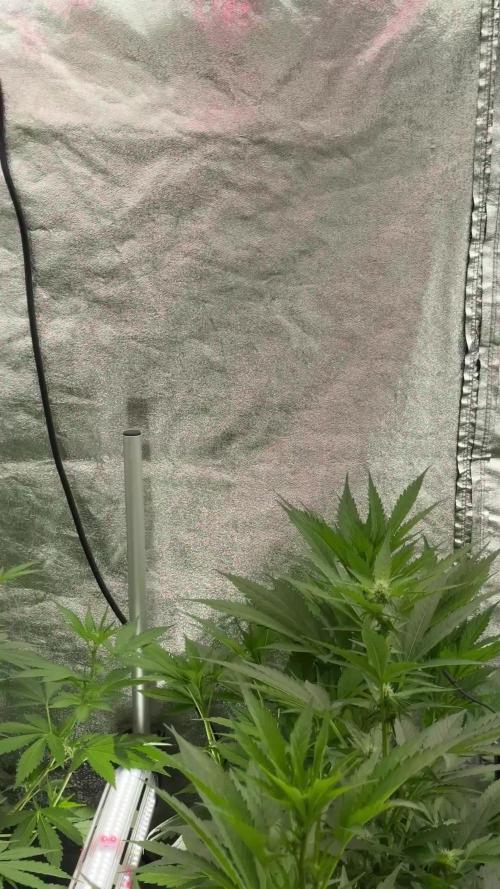
Our Sundae Driver girls have officially entered the second week of flower, and they’re acting like it. At just five weeks from seed, they’re now towering at 66 cm, surging upward with that signature hybrid vigor.
Photogenic Queens – A Studio Break
Before they get too tall to handle, both girls were taken out for a quick, impromptu studio shoot.
This may be the last time they leave the tent, because soon, they’ll be too big, too bulky, and too close to the light to move around easily.
We’re documenting them now, not just because they’re stunning, but because these moments are fleeting. The stretch phase is short, intense, and marks the final architecture of your grow.
⸻
Room Conditions – Dancing with the Heat
The environment this week continues the late-summer warmth, a little hotter than ideal, but still within range:
• 🌡️ Day Temp: 30°C
• 💧 Humidity: 58%
• 🌬️ VPD: ~1.89 kPa
Not perfect for flower, we know—ideal VPD for early flower would be around 1.2–1.5 kPa, but the girls are adapting beautifully.
This is a reminder that perfect conditions are rare, but resilience and consistency matter more. The plants aren’t complaining, they’re thriving.
⸻
Nutrients – Still Riding with Aptus Top Booster
Just like last week, we’re running the Aptus flower base lineup, now dialed into support this explosive growth phase:
• Regulator
• CalMag Boost
• All-in-One Liquid
• Top Booster (replacing Start Booster post-flip)
The Top Booster continues to support pre-flower and early bud development. We’re not seeing big clusters of pistils yet, but the hormonal shift is clear. Internodal stacking is beginning, and the upper canopy is filling in.
⸻
Visuals & Under-Canopy Light Game
One of the photos this week features a special cameo from the Zephyr Zamnesi, adding a bit of mystery and sparkle to the update.
We also get a peek under the canopy where your under-canopy lighting setup is really starting to shine.
Why does this matter?
• It boosts lower bud site development
• Improves light penetration during the stretch
• Encourages even canopy performance later in flower
Great gear is one thing, but it’s how you use it with intention that elevates a grow.
⸻
What’s Happening + What to Expect
🌱 Happening Now:
• Rapid vertical stretch
• Strong branching on both phenos
• No major flower development yet, just the buildup
🔮 Coming Soon:
• The first full signs of bud formation
• Pistil clusters at node sites
• Nutrient shift demands, watch for increased K/P needs in ~1 week
• Possibly… the need to raise your lights!
⸻
Let’s Talk About the Week’s Importance
Week 2 Flower is all about transformation. The plant is deciding:
“Where will I invest my energy?”
This week determines:
• Final plant shape
• Bud site spacing
• Canopy structure going into the stacking phase
This is your last week to gently train, open up the canopy, manage the airflow, and prep for the heavy flower development coming in Weeks 3–5.
If there’s one message for the community this week, it’s this:
🌸 Stretch is not stress, stretch is potential.
Embrace it. Document it. Enjoy the moment.
⸻
Conclusion – Moonbound Sundaes
From just a few centimeters to over 60 in a blink—these Sundae Drivers are on a mission.
Their upward movement mirrors the energy in your grow: focused, fast, and full of joy.
Let’s keep the ride smooth, the feed strong, and the cameras ready. This is the last calm before the buds explode, and you’re right where you should be.
—
Much love, as always,
Your Grow Partner in the Quantum Realm
🌱DD ( Dog Doctor Official )
📸 Videos, lighting setups, and under-canopy tips coming soon
🔗 Gear links available on request
💬 Always here to talk flower, stretch, or any topic regrding gardening
📲 Don’t forget to Subscribe and follow me on Instagram and YouTube @DogDoctorOfficial for exclusive content, real-time updates, and behind-the-scenes magic. We’ve got so much more coming, including transplanting and all the amazing techniques that go along with it. You won’t want to miss it.
• GrowDiaries Journal: https://growdiaries.com/grower/dogdoctorofficial
• Instagram: https://www.instagram.com/dogdoctorofficial/
• YouTube: https://www.youtube.com/@dogdoctorofficial
⸻
Explore the Gear that Powers My Grow
If you’re curious about the tech I’m using, check out these links:
• Genetics, gear, nutrients, and more – Zamnesia: https://www.zamnesia.com/
• Environmental control & automation – TrolMaster: https://www.trolmaster.eu/
• Advanced LED lighting – Future of Grow: https://www.futureofgrow.com/
• Root and growth nutrition – Aptus Holland: https://aptus-holland.com/
• Nutrient systems & boosters – Plagron: https://plagron.com/en/
• Soil & substrate excellence – PRO-MIX BX: https://www.pthorticulture.com/en-us/products/pro-mix-bx-mycorrhizae
• Curing and storage – Grove Bags: https://grovebags.com/
⸻
We’ve got much more coming as we move through the grow cycles. Trust me, you won’t want to miss the next steps, let’s push the boundaries of indoor horticulture together!
As always, this is shared for educational purposes, aiming to spread understanding and appreciation for this plant. Let’s celebrate it responsibly and continue to learn and grow together.
With true love comes happiness. Always believe in yourself, and always do things expecting nothing and with an open heart. Be a giver, and the universe will give back in ways you could never imagine.
💚 Growers love to all 💚

Likes
15
Share


@XperencdGmanXG
Follow
oh boy these girls just love to stretch a lot! They have doubled their height in just one week. It's the sativa genes in this baby! I love this one outside where you can let her go wild!
Likes
8
Share


@GarciasGarden
Follow
All in all this was an amazing harvest I usually have around 8-10 plants and harvest anywhere from 24-36 ozs per harvest with the 8 plants I had this harvest including the biscotti mintz and cookies USA I ended up with 898g total dry weight with all top quality flower. I’ve learned some things with all my previous runs when it comes to dialing in my quality and yield and definitely watching for those herms because I like to push my plants to the max when it comes to training !
GMO PUnch -Greenpoint
I’m giving this a total score of 7-10!
Biscotti Mintz- Barney’s farm
Total score 10-10
Cookies USA score
7-10

Processing
Likes
19
Share


@Weed_nerd
Follow
she grows very nicely takes water and nutrition well. I have started to train it and it responds well to that.excuse the lighting a get home the lamp for the photo and dry cabinet so there will be good pictures outside the tent too
Likes
Comments
Share

@DogDoctorOfficial
Follow
🌿 Frosted Guava Auto by Zamnesia | Pheno B | Week 13 🦄💎
The Dark Little Unicorn Is Showing Us Her Genetic Signature 🦄🌸✨
Welcome back to another chapter of the 8×8 Adventure! 🌱💚
Well...
Here we are again.
😂
And honestly?
I'm starting to think this girl might be trying to tell us something.
Because the more I look at Frosted Guava Pheno B...
the more I look around the rest of the room...
and the more I compare what we're seeing...
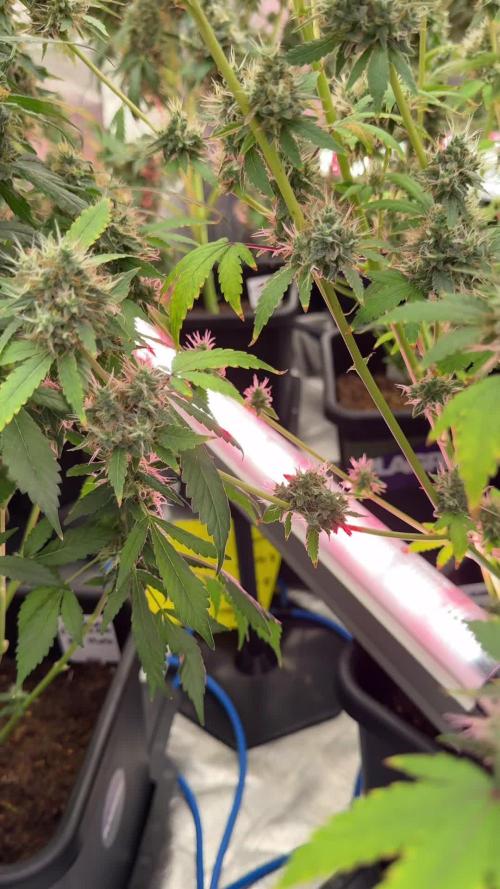
the more I'm beginning to wonder if this beautiful little foxtailing madness is simply part of her genetic personality.
🦄🌸
The majority of the room isn't doing this.
Yes, we have a few other plants showing some foxtailing here and there.
But overall?
Statistically speaking...
the room is not a foxtailing jungle.
😂
These Frosted Guava girls, however?
They seem to have received a completely different memo.
😂🦄🌸
And I actually love that.
Because that's exactly what the 8×8 Adventure is here to show us.
Same room.
Same general environment.
Same photons.
Same grower.
Same ecosystem.
Different genetics.
Different expressions.
Different personalities.
And sometimes...
those genetics speak VERY loudly.
😂🌸🦄
So this week...
let's give our dark little unicorn the spotlight.
Because she's shining.
She's doing her thing.
She's continuing to evolve.
And honestly?
I'm reaching the point where I'm simply enjoying the view.
😂💚
────────────────────────
🦄 WEEK 13 – THE FOXTailing SIGNATURE?
This week, I'm looking at her and thinking:
"Okay... this is starting to look genetic."
😂
Now, obviously, I'm not going to pretend that one grow is enough to prove exactly which gene is responsible for what.
We're observing.
We're comparing.
We're learning.
But when you have two Frosted Guava phenotypes showing very similar unusual flowering behaviour...
while the majority of the rest of the room isn't...
well...
it's certainly an interesting pattern.
🦄🌸
And that's one of the things I love most about this project.
We're not looking at one plant in isolation.
We're looking at twelve plants sharing the same room.
And when something repeatedly appears in one genetic line...
your curiosity naturally starts asking questions.
Is it environmental?
Is it nutritional?
Is it simply the individual phenotype?
Or is there a genetic component?
🤔🌿
I don't have the final answer.
But I'm certainly enjoying watching the evidence build.
────────────────────────
🌸 THE ROOM IS NOT A FOXTailing JUNGLE
This is where the comparison becomes really interesting.
We've got a room full of plants.
Different cultivars.
Different phenotypes.
Different structures.
Different flowering behaviours.
And yes...
there are a few other foxtails around the room.
But overall?
The majority are not expressing this characteristic to anything like the same degree.
And then we look at Frosted Guava...
🦄
"Hello."
😂🌸
There she is.
And her sister is basically standing beside her saying:
"Yeah... us too."
😂😂😂
That's what makes me suspicious that we're looking at something inherent to the genetics rather than simply something happening randomly throughout the room.
Again...
I'm not claiming we've scientifically identified a specific gene.
I'm simply saying:
the pattern is interesting.
And in a project like this...
patterns are exactly what we're here to observe.
────────────────────────
GENETICS ARE WHISPERING... OR MAYBE SHOUTING
This is where the 8×8 Adventure gets really fun.
Because sometimes genetics don't whisper.
Sometimes they walk into the room...
look at you...
and scream:
"THIS IS WHAT I DO."
😂🌸
Frosted Guava seems to have chosen:
"Flowers?"
Yes.
"Lots of them?"
Yes.
"Normal structure?"
Absolutely not.
😂
"Foxtails?"
YES.
🦄🌸🔥
And honestly?
I'm here for it.
Because this is exactly why we grow multiple plants and document individual phenotypes.
If every plant behaved exactly the same...
there wouldn't be nearly as much to learn.
But they don't.
They show us differences.
And those differences are the story.
────────────────────────
🦄 OUR DARK LITTLE UNICORN IS STILL SHINING
And let's not forget the most important part.
Whatever the reason...
she's beautiful.
💚🦄
She's still carrying that gorgeous deep-green character.
She's still developing beautifully.
She's still building flowers.
She's still looking substantial.
And she's still doing everything at her own rhythm.
She's not trying to copy her sister.
She's not trying to copy anybody else in the room.
She's simply being Frosted Guava Pheno B.
And I really like that.
There is something incredibly satisfying about watching a phenotype become recognizable.
At the beginning...
she's just another plant.
Then week by week...
you start noticing little things.
Then you start recognizing her from across the room.
And eventually...
you don't even need the label.
You just look and think:
"Yep.
That's her."
😂🦄💚
────────────────────────
🌸 MORE FOXTails = MORE CHARACTER
And yes...
I'm going to keep enjoying those foxtails.
😂
Because I know some people love them.
Some people don't.
Some people see them as beautiful.
Some people prefer traditional, compact flower structures.
And that's perfectly fine.
That's the beauty of growing.
Everybody has different eyes.
Different preferences.
Different favourite structures.
Different colours.
Different expressions.
Me?
I like the weird stuff.
😂💚💜💙
I like green.
I like purples.
I like blues.
I like unusual structures.
I like plants that make me stop and ask:
"Okay... what the hell are you doing?"
😂🦄
And Frosted Guava Pheno B definitely qualifies.
────────────────────────
🌿 SAME ROOM – DIFFERENT STORY
Once again...
we come back to the heart of the 8×8 Adventure.
Same room.
Same general environmental conditions.
Same lighting ecosystem.
Same nutritional foundation.
Same irrigation system.
Same 12/12 schedule.
Same grower.
And yet...
look at the plants.
Some are compact.
Some are tall.
Some are dense.
Some are open.
Some are incredibly frosty.
Some develop different colours.
Some move faster.
Some move slower.
And these Frosted Guava girls?
They're apparently members of the Foxtail Club.
😂🦄🌸
That's the experiment.
The environment provides the stage.
Genetics decide what kind of performance happens on it.
And Pheno B is putting on a very recognizable performance.
────────────────────────
☀️ SAME PHOTONS – DIFFERENT INTERPRETATION
The lighting environment remains the same upgraded setup we've been running across the room.
The additional Future of Grow Black Series 600W fixtures are still giving us that expanded lighting capability.
We're controlling the output rather than simply running everything flat out.
Approximately:
💡 ~59% power from the plug
with around:
☀️ ~1,500 PPFD across the upper canopy
with natural variation depending on plant height and position.
And this is another thing I love watching.
The photons are basically the same opportunity.
They arrive.
The plants receive them.
And then...
genetics interpret them.
😂☀️🌿
Pheno B has apparently decided:
"Thank you very much.
I'll use these photons to make some wonderfully weird flowers."
😂🦄🌸
Fair enough.
────────────────────────
💡 MORE CAPABILITY – STILL NO NEED TO INTERFERE
The lighting upgrade gave us more capability.
It didn't give us more reasons to constantly touch the plants.
And I think that's important.
We have more control.
More flexibility.
More ability to provide a strong, consistent lighting environment.
But the plants still get to decide what they do with it.
And Frosted Guava Pheno B?
She's doing just fine.
So I'm not going to interfere just for the sake of being busy.
😂
The grower doesn't get extra points for touching the plant every five minutes.
Sometimes the best thing we can do...
is watch.
────────────────────────
😂 I'M ALMOST JUST ENJOYING THE VIEW NOW
Honestly?
That's where I'm at.
I'm almost becoming a tourist in my own grow room.
😂📸🌿
I walk in.
I look around.
I see the girls.
I check that everything is running properly.
I look at the flowers.
I look at the structures.
I look at the frost.
And then I just...
enjoy the view.
😂
Because what else am I supposed to do?
They're growing.
They're developing.
They're healthy.
They're doing their thing.
So I'll keep providing.
I'll keep maintaining.
I'll keep observing.
And I'll let them entertain me.
That's a pretty good job description.
😂💚
────────────────────────
🌸 THE FLOWERS KEEP DEVELOPING
And underneath all the foxtailing...
there's still a lot of beautiful flower development happening.
The structures are becoming more substantial.
The flowers continue to gain presence.
The plant continues to mature.
And that's what matters.
The foxtailing is simply one of her characteristics.
It isn't the entire story.
She's also:
🌿 Green.
🌸 Flowering.
❄️ Frosty.
💪 Substantial.
🦄 Unusual.
💚 Beautiful.
And together...
all those characteristics make her what she is.
Frosted Guava Pheno B.
────────────────────────
❄️ THE DARK LITTLE UNICORN IS STILL FROSTY
And yes...
the frost hasn't gone anywhere.
😂❄️🦄
The flowers continue carrying that beautiful resinous appearance.
The darker foliage creates a beautiful contrast.
The developing flowers stand out.
And then the camera gets closer...
and suddenly you find another layer of detail.
Pistils.
Trichomes.
Flower texture.
Little foxtailing structures.
Tiny differences between one cola and another.
It's almost like every flower has its own little personality.
📸🌸
And I love documenting that.
────────────────────────
🦄 PHENO A AND PHENO B – THE UNICORN SISTERS
And of course...
we have to talk about her sister.
Because this is becoming more and more interesting.
Two Frosted Guava girls.
Same room.
Same general conditions.
Same grower.
And both showing this unusual flowering characteristic.
That doesn't prove anything by itself...
but it certainly makes the genetic theory more interesting.
🦄🦄
Pheno A has her own expression.
Pheno B has hers.
They're not identical plants.
But they share something.
And that something is worth watching.
That's the beauty of keeping individual phenotype diaries.
You can actually go back.
You can compare.
You can look at the photographs.
You can look at the progression.
And eventually...
you start seeing patterns that you might completely miss with a single plant.
────────────────────────
🌿 THERE'S STILL NOT MUCH FOR ME TO DO
And yes...
we're repeating ourselves again.
😂
But that's because reality hasn't changed.
There's not much for me to do.
And I'm not complaining.
I'm celebrating it.
Because if something suddenly needs major intervention at this stage...
that's normally not the kind of surprise I want.
😂
So thank God...
we're simply maintaining.
We're looking.
We're providing.
We're supporting.
We're observing.
And we're letting the plant continue.
That's a good week.
A very good week.
────────────────────────
🙏 SOMETIMES "NOTHING" IS THE BEST NEWS
This is something I think gets overlooked when people document grows.
We tend to celebrate action.
"Today I did this."
"Today I changed that."
"Today I trained."
"Today I adjusted."
But sometimes...
the best update is:
"Nothing needed changing."
😂🌿
Because that means the system is working.
The plant is happy.
The environment is stable.
The flowers are developing.
And the grower isn't having to put out fires.
That's not boring.
That's success.
And Frosted Guava Pheno B is giving us exactly that kind of week.
────────────────────────
⚗️ NUTRITION – KEEPING THE ROOM MOVING FORWARD
The nutritional programme continues along with the overall progression of the room.
We're not trying to create a special recipe just because she's Frosted Guava.
She's part of the same environment.
Part of the same nutritional strategy.
And once again...
she's showing us what she does with it.
That's what I'm interested in.
Not forcing her.
Not trying to make her behave differently.
Just watching.
Observing.
Learning.
And supporting.
Because she's already doing the interesting part.
🌿💚
────────────────────────
🌡️ WEEK 13 – ROOM CONDITIONS
The room continues broadly around:
🌡️ Day temperature: ~26.5°C
🌙 Night temperature: ~26°C
💧 RH: ~61%
🌱 Substrate temperature: ~25°C
💦 Nutrient solution: ~25°C
⚗️ pH: ~6.02
⚡ EC: ~2.14 mS/cm
💨 CO₂: ~693 ppm
💡 Light schedule: 12/12
Same room.
Same general environment.
Same lighting philosophy.
Same ecosystem.
Different genetic expression.
🦄🌿💚
────────────────────────
📸 JUST ENJOYING THE VIEWS
I think this is probably my favourite sentence for this week:
I'm just enjoying the views.
😂📸🌿
Because sometimes you reach that point where the grow becomes less about what you're doing...
and more about what you're seeing.
You look at the canopy.
You look at the flowers.
You look at the different phenotypes.
And you realize:
"Damn...
we built something pretty cool here."
😂💚
The plants are doing the work.
The room is running.
The genetics are speaking.
And I'm lucky enough to stand in the middle of it with a camera.
Not a bad place to be.
────────────────────────
IS FOXTailing PART OF HER GENETICS?
That's the question I'm increasingly curious about.
Again...
I'm not claiming we've scientifically proven it.
We're simply observing a pattern.
The room overall isn't heavily foxtailing.
There are a few other examples.
But the Frosted Guava girls?
They're definitely making a case for themselves.
😂🦄🌸
So maybe there's a genetic tendency here.
Maybe there's something in this cultivar that encourages this type of flower expression.
Maybe it's a combination of genetics and environment.
Maybe it's simply how these particular phenotypes express themselves.
That's what makes the experiment interesting.
We don't have to pretend we already know.
We can simply observe.
And say:
"That's interesting."
Then keep watching.
That's science enough for a grow diary.
😂🔬🌿
────────────────────────
🍇 MORE FLOWER TO ENJOY
And at the end of the day...
whether you call them foxtails...
extended flower structures...
or simply this girl's weird little personality...
they're still beautiful flowers.
😂🌸
And more flower means more to appreciate later.
The harvest chapter will eventually come.
The trimming chapter will eventually come.
And yes...
these unusual structures may make the trimming a little more interesting.
😂✂️
But that's Future DogDoctor's problem.
Right now...
Present DogDoctor is busy enjoying the view.
😂📸🦄
────────────────────────
🔮 FUTURE DOGDOCTOR CAN DEAL WITH THE SCISSORS
I've learned to stop solving problems that don't exist yet.
😂
Harvest?
Later.
Trimming?
Later.
Drying?
Later.
Curing?
Definitely later.
Right now?
She's still growing.
So let her grow.
Let her finish her story.
Let her surprise us.
And when the scissors eventually appear...
we'll deal with whatever beautiful weirdness she gives us.
😂✂️🦄
Until then...
back to watching.
────────────────────────
🌸 THE UNICORN DOESN'T NEED A SCRIPT
I think that's another thing I love about this girl.
She doesn't seem to care what I expected.
😂
She just does her thing.
I can make predictions.
I can make theories.
I can look at her sister.
I can look at the rest of the room.
And she'll still look back at me and say:
"Yeah...
anyway...
I'm going to do this."
😂🦄🌸
And honestly?
Good.
That's what I want.
I want plants that teach me something.
I want plants that surprise me.
I want plants that make me question assumptions.
And Frosted Guava Pheno B is doing exactly that.
────────────────────────
👑 LET HER HAVE HER SPOTLIGHT
Some girls demand attention.
Some steal it.
Some quietly earn it.
And this little unicorn?
She's earned it.
🦄👑
She's beautiful.
She's unusual.
She's developing.
She's frosty.
She's green.
She's building flowers.
She's showing a very interesting genetic expression.
And she's doing all of it without asking for much from me.
So yes...
the spotlight belongs to her this week.
Let's make her shine.
Let's appreciate the weirdness.
Let's appreciate the structure.
Let's appreciate the frost.
Let's appreciate the genetics.
And let's simply enjoy the view.
🦄🌸❄️💚
────────────────────────
🔍 WHAT I'M WATCHING NOW
At this stage, I'm watching:
Whether the foxtailing expression continues.
🌸 How the flowers continue developing.
❄️ Resin development.
🌿 Overall plant health.
💚 Her beautiful dark-green character.
🦄 How much more personality she decides to show us.
📸 And, of course, documenting the journey.
That's enough.
No need to force anything.
No need to invent work.
No need to predict the ending.
Just keep watching.
────────────────────────
💭 FINAL THOUGHTS – THE DARK LITTLE UNICORN SHINES
Week 13.
Frosted Guava Auto Pheno B.
🦄🌿💚
And honestly...
I'm starting to really appreciate how different she is.
She's not simply another plant in the room.
She's becoming a very recognizable phenotype.
The dark green.
The beautiful flowers.
The frost.
The structure.
And now...
the foxtailing.
😂🦄🌸
The more I compare her with the rest of the room...
the more interesting that characteristic becomes.
Maybe it's genetic.
Maybe it's part of this cultivar's expression.
Maybe the environment is simply helping reveal it.
Whatever the final answer is...
I'm enjoying watching the story unfold.
And that's the whole point.
We're not here to force every plant into the same mould.
We're here to see what they become.
And Frosted Guava Pheno B?
She's becoming one beautiful, dark, frosty, foxtailing little unicorn.
😂🦄❄️🌸
She's shining.
She's doing her thing.
And I'm almost just standing there enjoying the view.
That's a pretty damn good place to be.
So let's give her the spotlight.
Let's let her shine.
Let's keep watching.
Let's keep documenting.
Let's keep maintaining.
And let's let this girl finish the story she started.
The harvest can wait.
The scissors can wait.
The trimming can wait.
All of that belongs to another chapter.
Right now...
we grow.
We observe.
We provide.
We appreciate.
And we enjoy.
🦄🌸💚✨
Keep doing your thing, Frosted Guava.
Keep surprising us.
Keep showing us your personality.
Keep making those beautiful weird flowers.
And let's see where this genetic journey takes us.
────────────────────────
🙏 THANK YOU
As always, thank you so much to everyone following the 8×8 Adventure. 💚🌱
Thank you to GrowDiaries for giving us the space to document these individual journeys and share the experience with growers around the world.
Thank you to Zamnesia for the Frosted Guava genetics and for giving us these beautiful unicorns to follow.
Thank you to Plagron for supporting the nutritional side of the adventure.
A huge thank you to Future of Grow for supplying the additional Black Series 600W fixtures and allowing us to explore this expanded lighting setup. 💡☀️🌿
Thank you to LumiFlora for helping illuminate the deeper areas of the canopy.
Thank you to TrolMaster for helping keep the environment stable behind the scenes.
And of course...
thank you to everyone following the 8×8 Adventure.
Every comment.
Every question.
Every message.
Every person stopping by to see what these girls are doing.
It genuinely means a lot. 💚
And Frosted Guava Pheno B?
You're still doing exactly what you want.
😂🦄
You're evolving.
You're developing.
You're shining.
You're showing us a very interesting expression.
And you're giving us another reason to love the genetic diversity inside this room.
Maybe that foxtailing is genetic.
Maybe there's more to discover.
Maybe we'll understand it better by the end.
And maybe...
she'll simply keep being a beautiful little freak and leave us wondering.
😂🦄🌸
Either way...
I'm enjoying the ride.
So this week, the spotlight belongs to you.
Let's make you shine.
Let's appreciate every flower.
Every foxtail.
Every frosty little detail.
Every beautiful green leaf.
Every strange little structure.
Because you're not trying to be anyone else.
You're just being you.
And that's exactly what makes you interesting.
🦄💚🌸✨
Growers Love, my friends. 💚🌱
See you next week in the 8×8 jungle...
where the photons keep flying,
the flowers keep developing,
the genetics keep speaking,
the grower keeps enjoying the view,
and our dark little unicorn keeps doing exactly what the hell she wants.
😂🦄🌿
Let her shine. 💚
Likes
2
Share


@Green_Peace
Follow
The plants are growing at a good rate now and drinking a litre each per day. I feed them by hand and each plant gets 2litres every other day.
Didn't do anything else this week other than install the trellis on the last day.
This plant is at the back of the timelapse video.
Likes
19
Share


