


Likes
Comments
Share

@MistaOC
Follow
06.03. F46
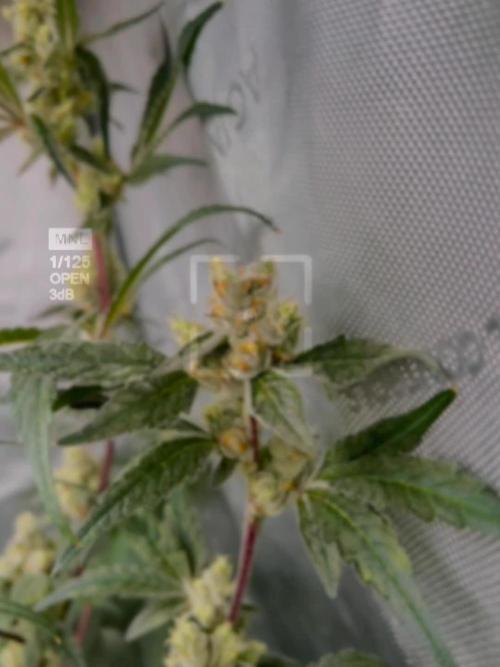
Day 46 of flower and everything is moving forward exactly as planned.
The powdery mildew situation is significantly more under control compared to previous grows. It hasn’t disappeared completely, but the difference is huge. At this stage of flowering it’s absolutely manageable and no longer something that worries me. Humidity is staying consistently between 47–53%, which helps keep the situation stable.
Aside from that, the plants are simply impressive. The buds continue to develop beautifully and the overall health of the canopy remains excellent. It’s one of those moments where you just stand in front of the tent and admire what’s growing in there.
More and more it becomes clear that this genetic line is something special. Every day the plants show more character and quality.
This run continues to be an absolute pleasure to watch. 🌿🔥.

Likes
1
Share

@Mrdub
Follow
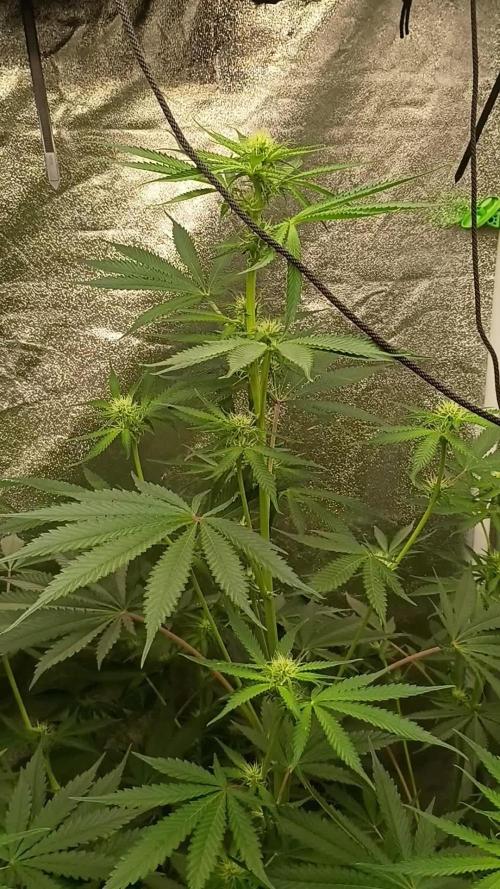
Holy shit this girl is tall AF but I'm pretty sure it's the strive nutes I been using I think to much nitrogen has made this girl very stemmy not a lot of but bud sights but the ones she has are pretty fat this girl might out grow the tent lol she has a little smell but not much yet and growing like a weed lmao she has gorgeous stretch of 24 x 32


Likes
9
Share


@Krissci
Follow
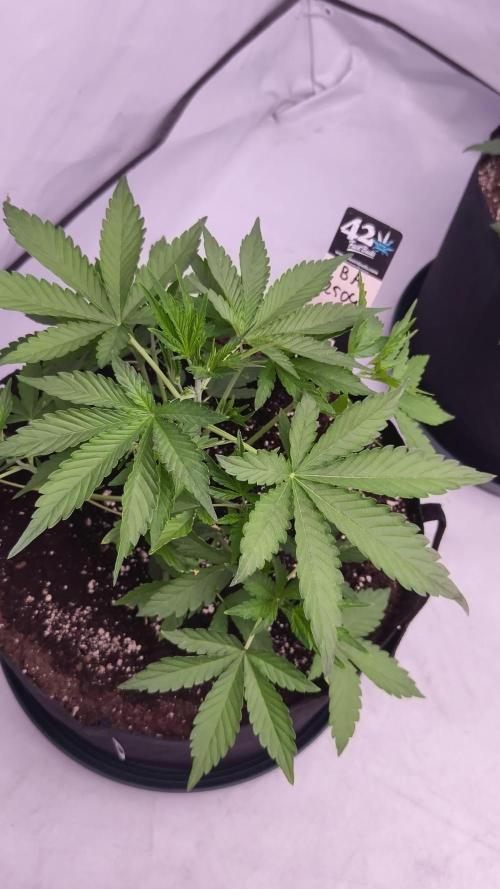
Day 7.....loads of head developed
Very slow flowering growth but should produce alot of bud
Mostly bending fan leaves for light exposure to bud sites

Likes
89
Share


@Njanne
Follow
The nights are cold now, and the days are not warming up the way they used to... I think we are ready to harvest. Ripening is slowing down. I'll give her a day or two more and then I'll do the chop! Stay tuned for the harvest reports.
Likes
12
Share


@cookingwithninja
Follow
day 14 added 1/2tbsp magnesium sulfate in 5gal water along with regular flower water amendments. 1gal of water per day average, bridal and thunder can take more water. Ph 6.8 today
day 15 I will defoliate in a few days :) day 15 video, you see some stem action
day 16 video
day 17 I added (4x20w daisy-chained)80w of poop purple ancient leds Keep adding soluble PK, organic booster etc. I see the stacks relax on defoliation for a few days, maybe tomorrow morning (skip day21) I feel like I will be able to chop week 6-7 as my last grow, push hard fast-continue everything is great, soon bridal and thunder will require 1gal water per day. I would like to see even more mass. I'm extremely happy, starting to see frost
day18. BIG UPDATE many short vids of final defoliation(ahead of "day 21"). Wild amendments appeared! Any recommendations for a lawnmower? Bridalparty stretched over an inch overnight, led touch diode burn on 1 spot. Raised lights slightly, Added new amendments into water. Bridal wants to drink more than 1gal per day, So I will be using almost 5gal-ish water per day not denying the plant needs-watering. I am very happy! defoliation took about 4h today.

Likes
41
Share


@Cannaguy
Follow
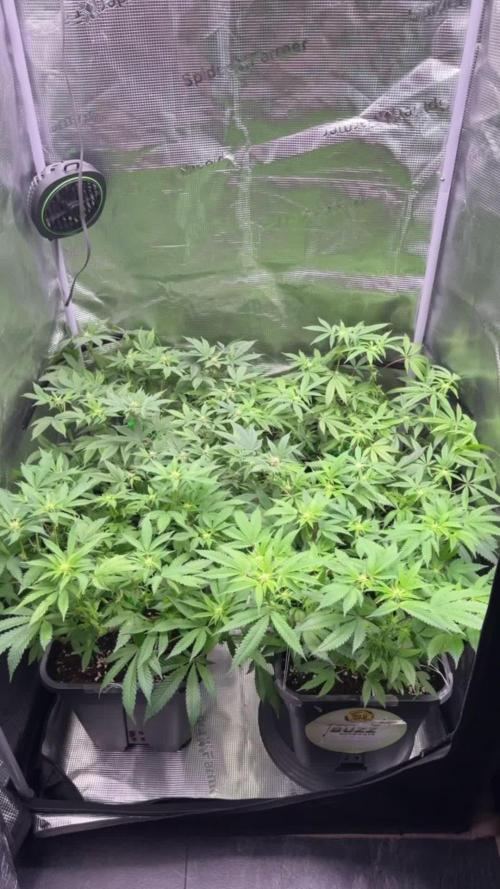
Some of the leaves have been starting to yellow indicating that the plants are now needing a little more feed and are getting towards the end of their life cycle! The smell of the gelato x gmo is overwhelming when I first approach the plants, and the blueberry x mother of Berry is a more subtle sweet/fruity smell.



Likes
1
Share

@FourTwenty_Plants
Follow
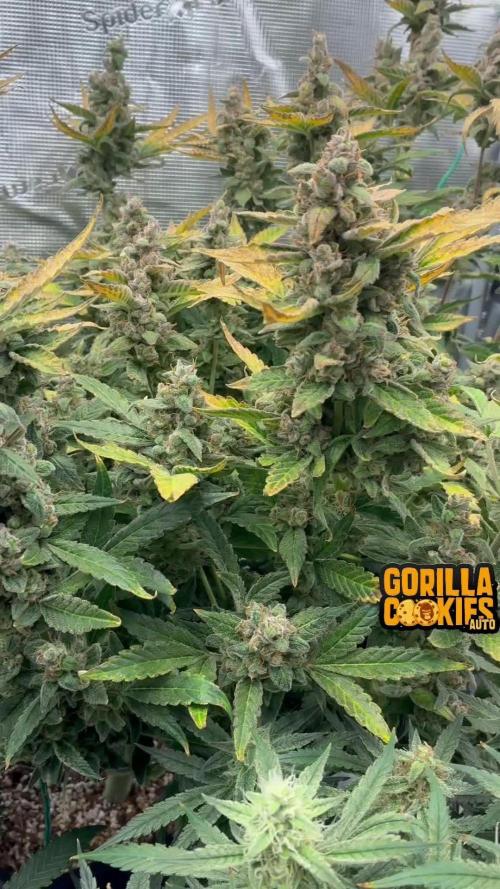
So last overdrive tank before I start giving her clear water with Flawless finish.

Likes
4
Share

@Samsationalseeds
Follow
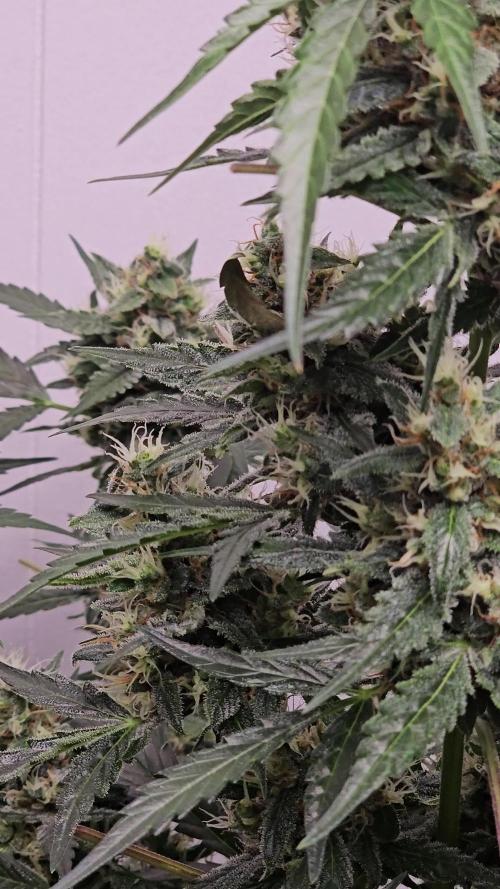
First one of the 3 adopted by dad later look like its getting to harvest.
I am so pleased with my autos. I know that there are f one so that means that there are finicky and need to be grown by skilled people.But I feel like there's a high ceiling for my bred strains!
Likes
12
Share


@BusyBeeFarmer
Follow
🌿 Dosidos Week 7 Update 🌿
📉 Slow Growth & Temperature Insights
This week, growth has been a bit slower than expected. I recently got a temperature monitoring system, and it confirmed my suspicion: between 2-3 AM, temperatures drop too low. ❄️ The plant only shows mild stress, but it’s something to keep an eye on.
🌡️ Climate Adjustments
To improve conditions, I’ve moved the plant into the flowering room 🌸, turned on an extra light, reduced fresh air intake, and halved the exhaust airflow. So far, my new monitor shows a VPD of 1.6, which sounds ideal! Let’s see how the night goes! 🌙✨

Likes
25
Share


@BigDaddyK
Follow
Starting to flower 🌹
Friday video fir you
Added another vid
Sunday added full power Fir 10 hrs
Likes
3
Share


@Grammo216
Follow
Late update, ran into some issues with the roots but the end product is still decent. Will make some tweaks next time, the problem was my transplant. I didn’t put the plants down deep enough and the soil was compacted to add. Plants start tipping over and nearly derooted when buds got heavier. Also was using too much nutes, will be switching to coco. Don’t think I used too much, soil just retained a lot of the nutes and water. Hoping coco will solve that issue for me.


Likes
3
Share


@Kern420
Follow
Die Woche über haben sich die Blüten weiter entwickelt. Die Trichome wurden mehr und man fängt an erste Terpene zu riechen.
Wir haben Donnerstag (BT 2) stark entlaubt und schauen jetzt wie die Pflanzen wachsen.
Z-Up haben wir ziemlich extrem entlaubt. Mal schauen wie sie reagiert.
Likes
8
Share


@eldruida_lamota
Follow
Que pasa familia, vamos con la septima semana de floración de estas Zkittelz de Seeds Mafia.
La humedad está entorno al 50%, y la temperatura la tengo entre los 22/24 grados.
Controlamos en ph en cada riego a 6.2.
Y el agua que utilizo de riego suele estar estancada entre 24 / 36 horas, hasta aquí todo bien, tienen un buen color, ya van progresando y floreciendo a buen ritmo, las flores se están poniendo repletas de tricomas, vemos cómo avanzan estas semanas y como avanza el progreso de las flores.
Mars hydro:
Code discount: EL420
https://www.mars-hydro.com/
Agrobeta:
https://www.agrobeta.com/agrobetatiendaonline/36-abonos-canamo
Hasta aquí todo, Buenos humos 💨💨💨

Processing
Likes
26
Share


@GrowGuy97
Follow
All of the ladies are now starting to flower except the NHL I think it’s a little behind but all in all they are growing great!
Day 31 - Everything seems to be going great, fed the ladies yesterday havnt had any more issues yet (Thankfully) thanks for following & happy growing friends✌️🏼🌱
Day 33- A few of the ladies have some dead leaves not sure if it’s normal or if something is wrong.. they all seem pretty healthy other wise!


Likes
27
Share


@Stealthman
Follow
playing around with the on/off cycle timing to find the optimum settings
Likes
52
Share


@SlowpokeFuegobud
Follow
🍮 🤤 ❤️ 🍮 🤤 ❤️ 🍮 🤤 ❤️ 🍮 🤤 ❤️ 🍮 🤤 ❤️
DAY 64
Watered with nutes again haha 💧 0.5ml/L Grow + 3ml/L Bloom
DAY 67
Watered with nutes 💧 0.5ml/L Grow + 3ml/L Bloom
DAY 69
Watered with BioEnhancer 🐡 :doctorfish: 0,5g/L
🌱 🙏 Grower love!!!
_________________________________________________________________________
https://hypnoseeds.com/product/cream-brulee-auto/
Cream Brulee Auto
Description
We love our Cream Brulee and wanted to create an even more special variety so everyone could harvest it faster. Introducing Cream Brulee Auto! After a meticulous process of crossing our exemplary variety with our autoflowering genetics of the highest quality; it is ready to shine and captivate all grow spaces. Equally to lovely feminized Indica-leaning sister, Cream Brulee Auto will take over your heart. You’ll want to keep it in constant rotation. In just about 8 weeks it goes from being a seed to a bountiful harvest of sweet and creamy cannabis from the irresistible dessert we know and love.
Appearance and Grow Tips
While Cream Brulee Auto has the same quality and potency as its feminized cannabis predecessor, what stands out is its speed to finish and enormous dense colas. These magical cannabis seeds take around 8 weeks from seed to harvest and can produce up to 500 grams (per plant) of pure happiness. Indica lovers won’t be able to look away, their growth speed will put anyone in a trance!
Make sure to provide this variety with at least 18 hours of light throughout the entire grow and decent pot size, around 3 gallons minimum, so it can grow to its full potential. Due to its ultra-fast autoflowering genetics, we recommend planting the previously germinated seed directly into the final pot to avoid stressing or damaging the roots. LST is always a good idea to increase performance and control any height problems you want to avoid.
Administer nutrients at 1⁄4 of the recommended dose and then gradually increased as the plant grows and reacts. With optimal conditions and treatment, this strain will bless you with beautiful buds of up to 19% THC.
Flavor and aroma
Thanks to its special lineage, Cream Brulee Auto is absolutely packed with the same delicious flavors and aromas. Its autoflowering magic makes it even easier and quicker to grab your delicious dessert cannabis buds. Notes of cream, caramel, together with vanilla, buttered nuts, and coffee will leave stunned even the most experimental cannabis connoisseur.
Effects
After the first delicious puff, you will be in a dream state, deeply relaxed and pleasantly euphoric. Its calming effect makes it better to consume it at night to help you sleep. Similarly, during the day if you are looking for a half-conscious state Cream Brulee Auto will keep you upbeat and happy.
😍
________________________________________________________________________________
SETUP:
° Mars Hydro TS1000 Version 2022
https://www.mars-hydro.com/all-products/ts-1000-led-grow-light
Thanks @coco!! ❤️
° Zelsius 60x60 cm (2x2ft)
° 2x 5W Fans
° PrimaKlima EC 125 400/240cm³/h exhaust fan & Carbon Active Granulate 240cm³/h
° Biobizz Grow + Bloom
° tap water EC 0,26uS upgraded to EC 0,5 with PlantMagic MagneCal - pH 8, nutrient solution downgraded to pH 6,5 with Advanced Hydroponics Minus Bloom
° BioEnhancer every 2 weeks instead of feeding
° from week 4 in the same container Aptus Enzym+ once a week
° Organic tomato soil + perlite
🍮

Likes
42
Share


@MadeInGermany
Follow
Unfortunately, I had to find out that my account is used for fake pages in social media.
I am only active here on growdiaries.
I am not on facebook instagram twitter etc All accounts except this one are fake.
Flowering day 20
since time change
to 12/12.
Hi everyone 😃.
The lady continues to develop very nicely :-).
The buds get thicker and look tastier 😅.
This week it was poured 2 times with 1.2 l each time.
The tent was cleaned and everything checked for functionality.
Have fun and stay healthy 🙏🏻
You can buy This Strain at :
www.Zamnesia.com
☝️🏼☝️🏼☝️🏼☝️🏼☝️🏼☝️🏼
Strain
Gelato clone from mother (Zamnesia )
☝️
Genetics: Wedding Cake x Gelato x Gelato 33
Vega lamp:
2 x Todogrow Led
Quantum Board 100 W
💡
Bloom Lamp :
2 x Todogrow Led
Cxb 3590 COB 3500 K 205W
💡💡☝️🏼
Soil :
Canna Coco Professional +
☝️🏼
Fertilizer:
Green House Powder Feeding
☝️🏼🌱
Water:
Osmosis water mixed with normal water (24 hours stale that the chlorine evaporates) to 0.2 EC. Add Cal / Mag to 0.4 Ec Ph with Organic Ph - to 5.5 - 5.8 .
