Likes
Comments
Share
03/05 start of new week but they are getting chopped in 2 days. No water nothing just letting em ride
Likes
2
Share
Organic living soil mixed by myself while mixing the local organic matter : ) For example: Earthworm casting / Bat guano / Seaweed power extract / perlite / peat / coco / soil / fungi needed And water when dry.
Likes
2
Share
All plants look happy, healthy and green. Added some cheap Wilkos Organic Plant Feed because why the hell not? Next 2 weeks will increase PK for peak flower. This plant is on the left of the timelapses.
Likes
3
Share
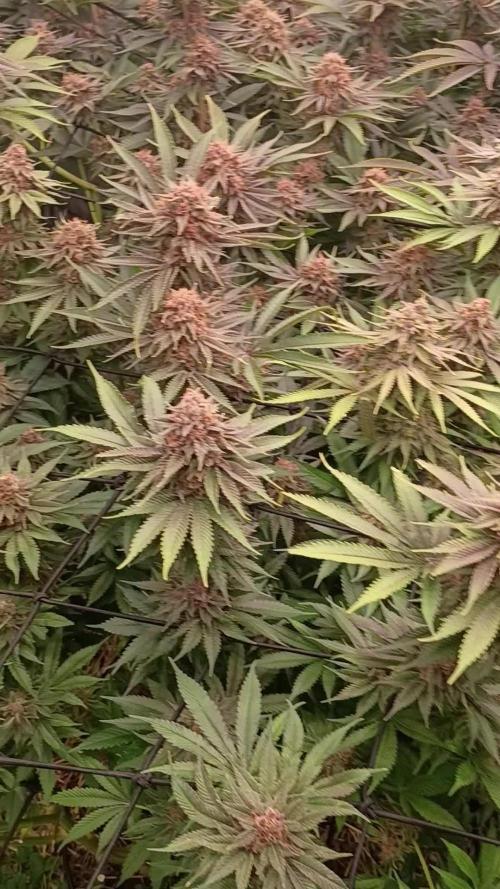
Had rain For 2 days high humidity buds also added another wave of pistills on 1 cheese strain
Processing
Likes
3
Share
End of week 6, pistils started to form so I decided to switch to a 12/12 light cycle and move them in the tent. Defoliated both, and did LST on one and super crop the other.
Likes
14
Share
@Radagast_
Follow
07.07. Day 36# Day flowering 19# As for the autos, i'm changing the title to "dwarf" lol I was not at all satisfied with the vegetation, even less so with the stretching... as far as that is concerned the stretching is not much different from last week, they are only 5 cm bigger,streching is over,they also branched badly, although they were under heat stress almost the whole week, but let's move on. Yesterday was the end of their fifth week.
Likes
12
Share
@Crimm
Follow
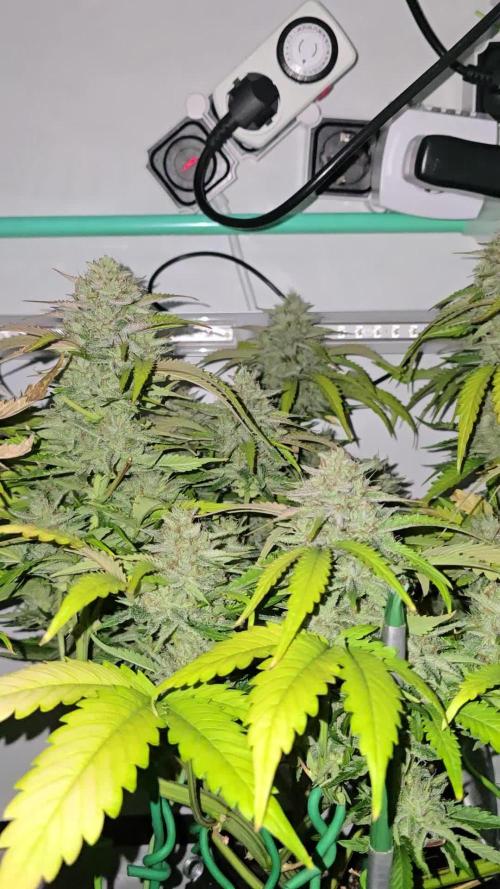
Today is the last day before chop day. I didn't end up doing any flushing as I couldn't find much evidence that it makes any real difference. Starting to get some fade/LED bleaching here and there. Really excited to see how much bud is hanging out under all those fan leaves. The one plant that got an accidental topping is still behind the others in getting ripe but not so much that I am wanting to keep it growing. Seeing just a few amber trichomes here and there and I am not a fan of couch-lock so now is perfect time to harvest. I will end up hanging the whole plant to dry. Thanks everyone who gave me help and tips for my first grow! I will likely post the dry weight and harvest pictures in a few weeks once they are dry. Maybe add a few pictures of rosin I plan on making. Happy Jul!
Likes
2
Share
@igrowcan
Follow
[Week 8 - Flowering Stage] The plant is in full bloom, with buds growing larger and more potent within the minigrow box. We ensure optimal lighting levels to support flowering.
Likes
45
Share
My homework. Rubisco regeneration is intrinsically linked to nitrogen supply because Rubisco is a major sink for nitrogen in plants, typically accounting for 15% to over 25% of total leaf nitrogen. The regeneration phase itself consumes nitrogen through the synthesis of the Rubisco enzyme and associated proteins (like Rubisco activase), and overall nitrogen status heavily influences the efficiency of RuBP regeneration.Structural Component: Nitrogen is an essential building block for all proteins, and the sheer abundance of the Rubisco protein makes it the single largest storage of nitrogen in the leaf. Synthesis and Activity: Adequate nitrogen supply is crucial for the synthesis and maintenance of sufficient Rubisco enzyme and Rubisco activase (Rca), the regulatory protein responsible for maintaining Rubisco's active state. Nitrogen deficiency leads to a decrease in the content and activity of both Rubisco and Rca, which in turn limits the maximum carboxylation rate, Vmax, and the rate of RuBP regeneration Jmax, thus reducing overall photosynthetic capacity. Nitrogen Storage and Remobilization: Rubisco can act as a temporary nitrogen storage protein, which is degraded to remobilize nitrogen to other growing parts of the plant, especially under conditions of nitrogen deficiency or senescence. Nitrogen Use Efficiency (NUE): The allocation of nitrogen to Rubisco is a key determinant of a plant's photosynthetic nitrogen use efficiency (PNUE). In high-nitrogen conditions, plants may accumulate a surplus of Rubisco, which may not be fully activated, leading to a lower PNUE. Optimizing the amount and activity of Rubisco relative to nitrogen availability is a target for improving crop NUE. Photorespiration and Nitrogen Metabolism: Nitrogen metabolism is also linked to the photorespiration pathway (which competes with carboxylation at the Rubisco active site), particularly in the reassimilation of ammonia released during the process. To increase RuBisCO regeneration, which refers to the process of forming the CO2 acceptor molecule Ribulose-1,5-bisphosphate (RuBP) during photosynthesis, the primary methods involve optimizing the levels and activity of Rubisco activase (Rca) and enhancing the performance of other Calvin-Benson-Bassham (CBB) cycle enzymes. Biochemical and Environmental Approaches: Optimize Rubisco Activase (Rca) activity: Rca is a crucial chaperone protein that removes inhibitory sugar phosphates, such as CA1P (2-carboxy-D-arabinitol 1-phosphate), from the Rubisco active site, thus maintaining its catalytic competence. •Ensure optimal light conditions: Rca is light-activated via the chloroplast's redox status. Adequate light intensity ensures Rca can effectively maintain Rubisco in its active, carbamylated state. •Maintain optimal temperature: Rca is highly temperature-sensitive and can become unstable at moderately high temperatures (e.g., above 35°C/95F° in many C3 plants), which decreases its ability to activate Rubisco. Maintaining temperatures within the optimal range for a specific plant species is important. •Optimize Mg2+ concentration: Mg2+ is a key cofactor for both Rubisco carbamylation and Rca activity. In the light, Mg2+ concentration in the chloroplast stroma increases, promoting activation. •Manage ATP/ADP ratio: Rca activity depends on ATP hydrolysis and is inhibited by ADP. Conditions that maintain a high ATP/ADP ratio in the chloroplast stroma favor Rca activity. Enhance Calvin-Benson-Bassham (CBB) cycle enzyme activity: The overall rate of RuBP regeneration can be limited by other enzymes in the cycle. •Increase SBPase activity: Sedoheptulose-1,7-bisphosphatase (SBPase) is a key regulatory enzyme in the regeneration pathway, and increasing its activity can enhance RuBP regeneration and overall photosynthesis. •Optimize other enzymes: Overexpression of other CBB cycle enzymes such as fructose-1,6-bisphosphate aldolase (FBA) and triose phosphate isomerase (TPI) can also help to balance the metabolic flux and improve RuBP regeneration capacity. Magnesium ions, Mg2+, are specifically required for Rubisco activation because the cation plays a critical structural and chemical role in forming the active site: A specific lysine residue in the active site must be carbamylated by a CO2 molecule to activate the enzyme. The resulting negatively charged carbamyl group then facilitates the binding of the positively charged Mg2+ion. While other divalent metal ions like Mn2+ can bind to Rubisco, they alter the enzyme's substrate specificity and lead to dramatically lower activity or a higher rate of the non-productive oxygenation reaction compared to Mg2+, making them biologically unfavorable in the context of efficient carbon fixation. The concentration of Mg2+ in the chloroplast stroma naturally increases in the light due to ion potential balancing during ATP synthesis, providing a physiological mechanism to ensure the enzyme is activated when photosynthesis is possible. At the center of the porphyrin ring, nestled within its nitrogen atoms, is a Magnesium ion (Mg2+). This magnesium ion is crucial for the function of chlorophyll, and without it, the pigment cannot effectively capture and transfer light energy. Mg acts as a cofactor: Mg2+ binds to Rubisco after an activator CO2 molecule, forming a catalytically competent complex (Enzyme-CO2-Mg2+). High light + CO2) increases demand: Under high light (60 DLI is a very high intensity, potentially saturating) and high CO2, the plant's capacity for photosynthesis is high, and thus the demand for activated Rubisco and the necessary Mg2+ cofactor increases. Mg deficiency becomes limiting: If Mg2+ is deficient under these conditions, the higher levels of Rubisco and Rubisco activase produced cannot be fully activated, leading to lower photosynthetic rates and potential photo-oxidative damage. Optimal range: Studies show that adequate Mg2+ application can enhance Rubisco activation and stabilize net photosynthetic rates under stress conditions, but the required concentration is specific to the experimental setup. Monitoring is key: The most effective approach in a controlled environment is to monitor the plant's physiological responses e.g., leaf Mg2+ concentration, photosynthetic rate, Rubisco activation state, and adjust the nutrient solution/fertilizer to maintain adequate levels, rather than supplementing a fixed "extra" amount. In practice, this means ensuring that Mg2+ is not a limiting factor in the plant's standard nutrient solution when pushing the limits with high light and CO2. Applying Mg2+ through foliar spray is beneficial to Rubisco regeneration, particularly in alleviating the negative effects of magnesium (Mg) deficiency and high-temperature stress (HTS). While Mg can be leached from soil, within the plant it is considered a mobile nutrient, particularly in the phloem. Foliar-applied Mg is quickly absorbed by the leaves and can be translocate to other plant parts, including new growth and sink organs. Foliar application of: NATURES VERY OWN MgSO4 @ 15.0g L-1 in a spray bottle. Foliar sprays are often recommended as a rapid rescue measure for existing deficiencies or as a supplement during critical growth stages, when demand for Mg is high. Application in the early morning or late evening can improve absorption and prevent leaf burn. The starting point [of creativity] is curiosity: pondering why the default exists in the first place. We’re driven to question defaults when we experience vuja de, the opposite of déjà vu. Déjà vu occurs when we encounter something new, but it feels as if we’ve seen it before. Vuja de is the reverse—we face something familiar, but we see it with a fresh perspective that enables us to gain new insights into old problems.
Likes
7
Share
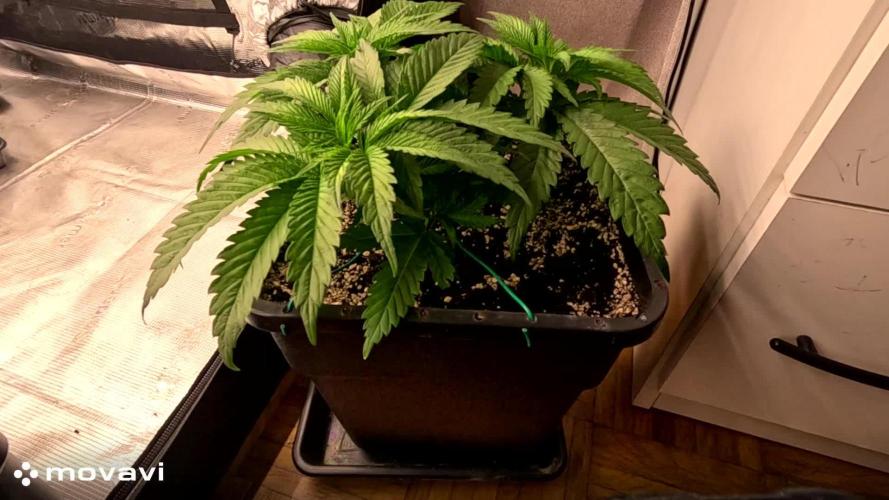
I turned on the second light and added the scrog net this week to begin doing LST. Pinched all the new tops that were starting to come up so I get more of those precious main colas. She's loving the extra 150w of light, growth has really started to explode. Now I'm working on evening out the canopy height so that everything is even when I flip to flower. The fun has begun.
Likes
1
Share
Buenas a tod@s... Bueno cuarta y trágica semana( para mí) por dos bajas que tuve en el indoor, que fueron las dos plantas hermafroditas, se vio a tiempo el problema y se tomó se quitaron las variedades que fue la psicodelicia y una variedad de estás tres q tenía... Estás dos de momento van bien, en cuanto vea algo q no me cuadre, o me quite la tranquilidad solución rápida, TODOS LOS DIAS se revisan las plantas a ver q tal van evolucionando posteriormente a el problema ocurrido... De momentos estás dos van creciendo muy bien, fuertes y espero no tenés más disgustos de este tipo, todo pasa x algo... A seguir trabajando duro como siempre.. 💪🏻💪🏻💪🏻⚡⚡⚡⚡😎⚕️ 🇦🇷🤝🏻🇪🇦
Likes
8
Share
@Dendegrow
Follow
👹 MonsterMarker – Week 7 | Flowering Start 🌸 This one is a real beast! 🚀 The roots are the most explosive of all my plants – absolutely insane growth underground 🌱. On top, she’s very stocky and strong, which makes me think there’s a lot of Indica genetics in her 🍃💪. The smell is already super nice – deep, rich, and very promising 🌿💨. She feels like she’s building the foundation for some serious flowers. Can’t wait to see how this monster evolves – follow along, it’s going to be fun 👹🔥. --- 👹 MonsterMarker – Woche 7 | Blütebeginn 🌸 Das hier ist echt ein Biest! 🚀 Die Wurzeln sind von allen Pflanzen am krassesten gewachsen – richtig verrücktes Wachstum unter der Erde 🌱. Oben ist sie dagegen sehr stämmig und kompakt, was stark nach einem hohen Indica-Anteil aussieht 🍃💪. Der Geruch ist schon jetzt richtig gut – tief, reichhaltig und sehr vielversprechend 🌿💨. Man merkt, dass sie gerade die Basis für dicke Blüten aufbaut. Bin gespannt, wie sich dieses Monster entwickelt – bleibt dran, das wird spannend 👹🔥.
Likes
23
Share
Buenas a todos compañeros cultivetas! Seguimos trabajando las Critical Purple de GeaSeeds y decir que llevan un ritmo brutal ! Aquí en la tercera semana de la etapa de flora... las he guiando un poquito con la malla y la verdad pinta fantastico. Soportan el peso de la rama muy bien. Seguimos abonando con línea orgánica grotek y bueno los resultados pintan bien En cuanto a la iluminación.. estamos con un Lec 315W solux selecta a pena potencia de w jejeje. He instalado unas trampas para insectos por si algún polizonte le da por aparecer. De momento todo limpio Destacar que las temperaturas vuelven a bajar.. han rondado entre 17 y 19°C en apagado y unos 22°C en encendido. Hemos conseguido vencer las temperaturas del exterior , aún así les falta un pelin de calor Jajaja HE COLGADO UN VIDEO DONDE APARECEN RECIEN ENCECIDO EL ARMARIO Y BUENO AHI SE VE QUE LA TEMPERATURA ES BASTANTE BAJA. Aún así la raíz se mantiene calentita y la canopia no peligra. la humedad relativa en torno al 65% osea que genial. En breves volvemos con más contenido. Un saludo a todos compañeros
Likes
6
Share
Week 4 – Vegetative Stage – Mango Kush (Zamnesia Seeds) Grower: Dog Doctor Strain: Mango Kush Breeder: Zamnesia Seeds Tent: 8x8 Shared Environment Environment Control: • TrolMaster Ecosystem (Model One LED by ThinkGrow) • Future Of Grow Ecosystem (Black Series 600W) Watering: Hand-fed Nutrient Line: Aptus Holland (unchanged recipe) ⸻ 🌱 Two Paths, One Queen’s Blood This week marks a defining moment in the journey of our two Mango Kush phenotypes—Pheno #1 and Pheno #2—both sharing the same genetics, but taking very different roads toward flower. ⸻ 👑 Mango Kush #1 – The Trailblazer She’s taken the lead and she knows it. Currently at her 8th or 9th node, she’s branching out beautifully, vigor, symmetry, structure. This girl is showing early signs of dominance, with a wide frame and a hunger for light. Her architecture screams “future canopy queen.” 📸 We took her to the photo studio again this week and wow. She’s a natural in front of the lens. Her structure is clean, confident, and glowing under the full-spectrum light. ⸻ 🌱 Mango Kush #2 – The Rising Sister Much younger, but full of potential. Currently pushing her 4th pair of leaves, this one was a late germination and is only about 2.5 weeks old since she popped above soil. Despite her smaller size, there’s something familiar about her. Her leaf shape and structure closely mimic Mango #1 during her early days, tight internodes, round fans, calm posture. Genetics run strong here. We’re keeping her in veg for as long as possible, but next week we’re flipping everything to flower, which means she’ll start blooming early. It’s not ideal, but it’s necessary, as the older girls (Mango #1, the Lava Cake and the rest of the sisters) are growing fast and space must be balanced. ⸻ 💧 Nutrients – No Change, Still Precision We’re keeping the Aptus Holland formula exactly as it is for this week. The girls are loving it, and there’s no sign of deficiency or excess. Here’s what they’re still getting in each liter: • Regulator – 0.15 ml: Structure, resilience, and stress defense • CalMag Boost – 0.25 ml: Building the skeleton • 💧 All-In-One Liquid – 1 ml: A steady and complete base • 🌱 Start Booster – 0.25 ml: For root expansion and early shoot development This balanced, light recipe keeps things clean and focused, supporting both the rapid growth of Mango #1 and the early development of Mango #2. ⸻ 🌡️ Lights, Climate, & Ecosystem Balance Both Mango Kush plants are thriving under dual full-spectrum LEDs: • TrolMaster ecosystem running the ThinkGrow Model One LED • Future of Grow ecosystem running the Black Series 600W Each system is tuned to maintain optimal light intensity for its space and phase. Climate conditions are steady thanks to active airflow, dual controllers, and filtered intake/exhaust setups. 💨 Carbon filters from TrolMaster and Spider Farmer keep the air clean and pure, even though we haven’t reached flower yet, clean air is good air, and early filtering helps prevent environmental noise and pathogens. ⸻ 🔮 What to Expect… and What Not To What to expect: • Mango #1 will likely dominate flower structure, showing her potential early • Mango #2 may surprise us with a compact, denser canopy due to earlier light flip • Structural differences will emerge—same genetics, but different timelines = different expressions • Visual comparisons will help us understand Mango Kush’s phenotypic range What not to expect: • Uniform results—they’re the same strain, but on very different developmental clocks • Aggressive training—due to the timeline, we’re letting them grow mostly unmanipulated ⸻ 📣 Final Words – Community & Curiosity We thank you all for reading, growing, and following this journey with us. ✨ Every grow is a conversation between light, root, leaf, and time. And we’re sharing it all. ⸻ With light, love, and the rhythm of two sisters in sync but not the same, Dog Doctor 📲 Don’t forget to Subscribe and follow me on Instagram and YouTube @DogDoctorOfficial for exclusive content, real-time updates, and behind-the-scenes magic. We’ve got so much more coming, including transplanting and all the amazing techniques that go along with it. You won’t want to miss it. • GrowDiaries Journal: https://growdiaries.com/grower/dogdoctorofficial • Instagram: https://www.instagram.com/dogdoctorofficial/ • YouTube: https://www.youtube.com/@dogdoctorofficial There’s a new series blooming—and it’s more than just plants. It’s about process, patience, and paying attention. ⸻ Explore the Gear that Powers My Grow If you’re curious about the tech I’m using, check out these links: • Genetics, gear, nutrients, and more – Zamnesia: https://www.zamnesia.com/ • Environmental control & automation – TrolMaster: https://www.trolmaster.eu/ • Advanced LED lighting – Future of Grow: https://www.futureofgrow.com/ • Root and growth nutrition – Aptus Holland: https://aptus-holland.com/ • Nutrient systems & boosters – Plagron: https://plagron.com/en/ • Soil & substrate excellence – PRO-MIX BX: https://www.pthorticulture.com/en-us/products/pro-mix-bx-mycorrhizae • Curing and storage – Grove Bags: https://grovebags.com/ ⸻ We’ve got much more coming as we move through the grow cycles. Trust me, you won’t want to miss the next steps, let’s push the boundaries of indoor horticulture together! As always, this is shared for educational purposes, aiming to spread understanding and appreciation for this plant. Let’s celebrate it responsibly and continue to learn and grow together. With true love comes happiness. Always believe in yourself, and always do things expecting nothing and with an open heart. Be a giver, and the universe will give back in ways you could never imagine. 💚 Growers love to all 💚
Likes
20
Share
Friends, as some of you may not know, “2nd time around Candy Auto” is named 2nd time because my puppies ate the first plant. I am so glad I grew another @Divine Seed Candy Auto because she is getting fat and smelling up my backyard. According to @DivineSeed Candy Auto my plant should have thick side buds as well AND it does. I tried to capture a few side pictures of my buds so you could see them. I am quite impressed with this plant. I am in the 5th week of flowering, which equates to 35 days. According to @DivineSeeds, Auto Candy needs 60 days minimum of flower time. As usual, I clipped off a bud so I could get some close up pics of her. I smelled the bud and just like @Divine Seeds boasts, it has a flowery/sweet smell. Miss Candy Auto is truly a beautiful scent. In addition, she is extremely sticky to the touch. Take a look at the close up pictures I took with my Max-see magnifier!! It is just about time to start flushing her. Stay tuned to next week to see how 2nd Time Around Candy Auto is doing! As always, Be Happy!! Comments and Likes are appreciated!! Susquihanna
Likes
Comments
Share
@mihixd
Follow
D74 10L with nutes D76 10L no nutes, flush begins pic 3 and 4 still could use a bit of growth so gonna check on those in a ween, if trichomes on those ones are cloudy ill chop
Likes
2
Share
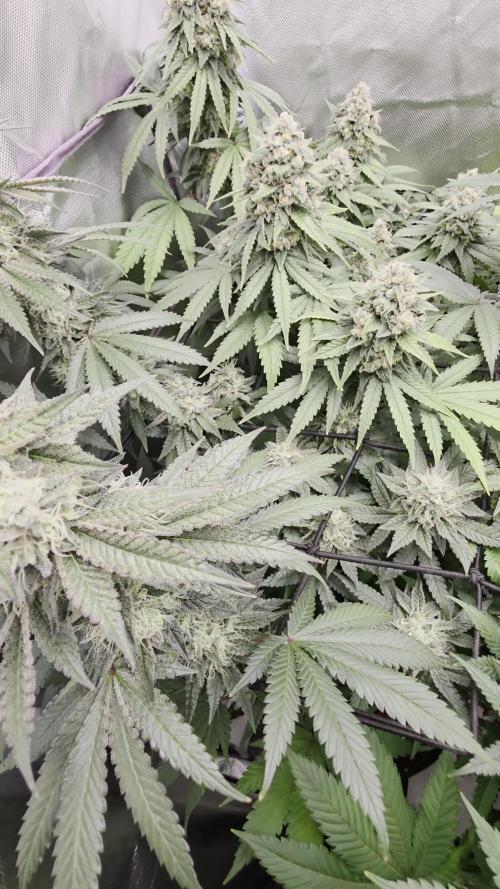
We’re deep into Week 8, and Blue Banana Cream is stacking up beautifully. Trichomes are looking frosty, covering the buds in a thick, sticky layer—definitely a strain that’s going to shine post-cure. The aroma has intensified compared to earlier weeks, now pushing out a stronger creamy, fruity scent with a slight gas undertone. Every time I open the tent, it hits harder. The buds are swelling up nicely, transitioning from airy to more mid-compact density. Pistils are still mostly white, meaning it’s got a bit more time before it fully ripens. One thing I’ve noticed—the branches are starting to lean from the weight, so some light support might be needed to prevent them from bending too much in the final stretch. I’m keeping temps at 18-20°C and humidity around 55-60% to ensure a proper finish. With harvest around the corner, it’s just about watching those trichomes shift from clear to cloudy/amber and letting this one reach its peak.
Likes
56
Share
@MrGrow
Follow
11.10.2022 130 giorni dalla germinazione al raccolto 70 giorni fioritura in totale Pianta molto bella, sexy, 2 semi su 2 germinati con successo. di due piante, ho avuto 2 fenotipi leggermente diversi, entrambe le piante mostrano una struttura ibrida tendenzialmente sativa, con rami lunghi e boccioli densi e duri, ricoperti da tricomi. Ho laciato le piante crescere con un Lst applicato un po in ritardo, ma entrambe le piante hanno reagito benissimo e formato delle belle chiome a cespuglio. Profumo tendente al dolce, note di lavanda ed erbe aromatiche, una delle 2 in fase avanzata di fioritura profumava di ananas maturo, semplicemente uno spettacolo! La resa sembra buona, le cime sono di ottima qualita, aggiornerò con peso tra poche settimane!