Check the winners The Grow Awards 2026 🏆
Likes
Comments
Share
@valiotoro
Follow
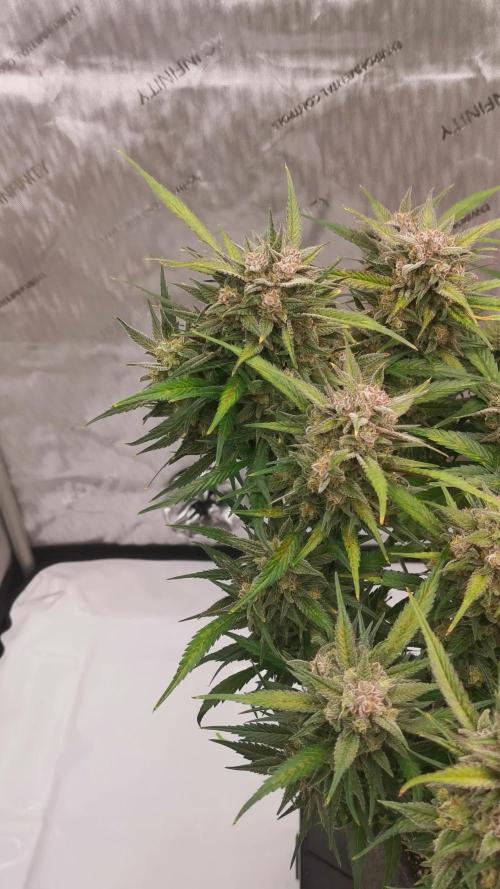
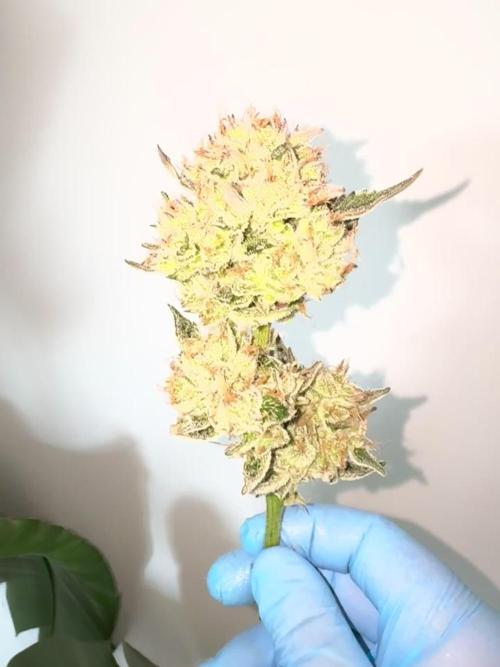
The buds have a beautiful structure and are covered in resin.🔥
Likes
2
Share
Dump de lo que fue esta semana. Seguimos ajustando con lst la estructura que quiero y empezamos a la transición a flora. Esta semana será la última de vegetativo donde trataremos de sacar clones (esquejes) de ambas. Ya que he estado mirando videos y tomando información de cómo hacerlo, creo tener una idea de cómo hacerlo sin fallas en el intento. La próxima semana nos veremos realizando estos esquejes y veremos el avance de esta última semana. Recuerden que todo lo estoy haciendo de forma empírica y sin conocimiento previo. Todo ha sido con apoyo a videos de otros growers e información de distintas páginas. Gracias por estar aquí y compartir conmigo esta primera experiencia!
Likes
45
Share
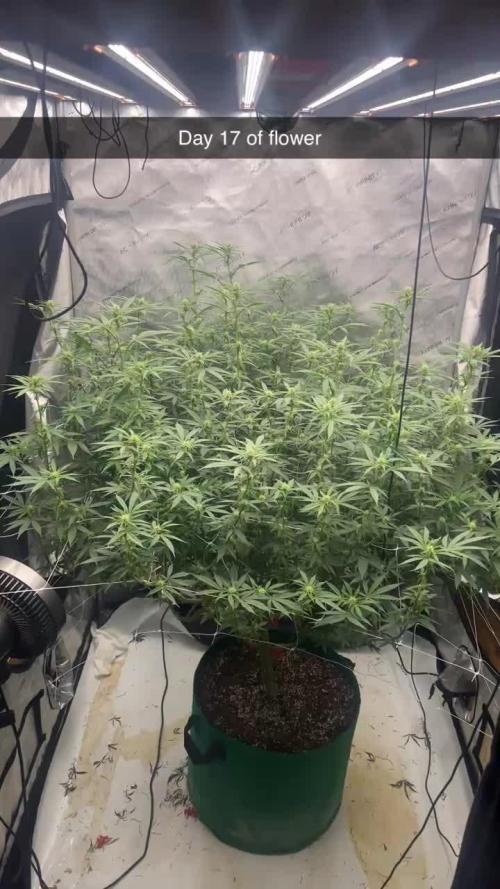
2nd net is up. Early bud formations are promising. holding up to the extremes pretty well, some leaves taking minor damage, but overall, she is holding up, gave her 1 night at 50F see how she would react, stressful. Not advised as it messes with her metabolism, but I want to see if it triggers any anthocyanin response. Love to see her purp up but no signs yet. Homework. If Rubisco activity is impaired and it cannot properly function or regenerate its substrate, the plant's leaves are likely to turn a pale green or lime green, a condition known as chlorosis. Essentially, Rubisco activity is highly regulated and susceptible to various environmental and metabolic factors that can cause it to become inhibited, leading to an apparent failure in RuBP regeneration due to a lack of consumption. Rubisco regeneration is intrinsically linked to nitrogen supply because Rubisco is a major sink for nitrogen in plants, typically accounting for 15% to over 25% of total leaf nitrogen. The regeneration phase itself consumes nitrogen through the synthesis of the Rubisco enzyme and associated proteins (like Rubisco activase), and overall nitrogen status heavily influences the efficiency of RuBP regeneration. RuBisCO is a very large enzyme that constitutes a significant proportion (up to 50%) of leaf soluble protein and requires large investments in nitrogen. Insufficient nitrogen supply limits the plant's ability to produce adequate amounts of RuBisCO, thereby limiting the overall capacity for photosynthesis and carbon fixation. Maintaining the optimal, slightly alkaline pH is crucial for the proper function and regeneration of Rubisco. Deviations in either direction (too high or too low) disrupt the enzyme's structure, activation state, and interaction with its substrates, leading to decreased activity and impaired RuBP regeneration. (LIME GREEN CHLOROSIS) Structural Component: Nitrogen is an essential building block for all proteins, and the sheer abundance of the Rubisco protein makes it the single largest storage of nitrogen in the leaf. Synthesis and Activity: Adequate nitrogen supply is crucial for the synthesis and maintenance of sufficient Rubisco enzyme and Rubisco activase (Rca), the regulatory protein responsible for maintaining Rubisco's active state. Nitrogen deficiency leads to a decrease in the content and activity of both Rubisco and Rca, which in turn limits the maximum carboxylation rate, Vmax, and the rate of RuBP regeneration Jmax, thus reducing overall photosynthetic capacity. Nitrogen Storage and Remobilization: Rubisco can act as a temporary nitrogen storage protein, which is degraded to remobilize nitrogen to other growing parts of the plant, especially under conditions of nitrogen deficiency or senescence. Nitrogen Use Efficiency (NUE): The allocation of nitrogen to Rubisco is a key determinant of a plant's photosynthetic nitrogen use efficiency (PNUE). In high-nitrogen conditions, plants may accumulate a surplus of Rubisco, which may not be fully activated, leading to a lower PNUE. Optimizing the amount and activity of Rubisco relative to nitrogen availability is a target for improving crop NUE. Photorespiration and Nitrogen Metabolism: Nitrogen metabolism is also linked to the photorespiration pathway (which competes with carboxylation at the Rubisco active site), particularly in the reassimilation of ammonia released during the process. To increase RuBisCO regeneration, which refers to the process of forming the CO2 acceptor molecule Ribulose-1,5-bisphosphate (RuBP) during photosynthesis, the primary methods involve optimizing the levels and activity of Rubisco activase (Rca) and enhancing the performance of other Calvin-Benson-Bassham (CBB) cycle enzymes. Biochemical and Environmental Approaches: Optimize Rubisco Activase (Rca) activity: Rca is a crucial chaperone protein that removes inhibitory sugar phosphates, such as CA1P (2-carboxy-D-arabinitol 1-phosphate), from the Rubisco active site, thus maintaining its catalytic competence. •Ensure optimal light conditions: Rca is light-activated via the chloroplast's redox status. Adequate light intensity ensures Rca can effectively maintain Rubisco in its active, carbamylated state. •Maintain optimal temperature: Rca is highly temperature-sensitive and can become unstable at moderately high temperatures (e.g., above 35°C/95F° in many C3 plants), which decreases its ability to activate Rubisco. Maintaining temperatures within the optimal range for a specific plant species is important. •Optimize Mg2+ concentration: Mg2+ is a key cofactor for both Rubisco carbamylation and Rca activity. In the light, Mg2+ concentration in the chloroplast stroma increases, promoting activation. •Manage ATP/ADP ratio: Rca activity depends on ATP hydrolysis and is inhibited by ADP. Conditions that maintain a high ATP/ADP ratio in the chloroplast stroma favor Rca activity. Enhance Calvin-Benson-Bassham (CBB) cycle enzyme activity: The overall rate of RuBP regeneration can be limited by other enzymes in the cycle. •Increase SBPase activity: Sedoheptulose-1,7-bisphosphatase (SBPase) is a key regulatory enzyme in the regeneration pathway, and increasing its activity can enhance RuBP regeneration and overall photosynthesis. •Optimize other enzymes: Overexpression of other CBB cycle enzymes such as fructose-1,6-bisphosphate aldolase (FBA) and triose phosphate isomerase (TPI) can also help to balance the metabolic flux and improve RuBP regeneration capacity. Magnesium ions, Mg2+, are specifically required for Rubisco activation because the cation plays a critical structural and chemical role in forming the active site: A specific lysine residue in the active site must be carbamylated by a CO2 molecule to activate the enzyme. The resulting negatively charged carbamyl group then facilitates the binding of the positively charged Mg2+ion. While other divalent metal ions like Mn2+ can bind to Rubisco, they alter the enzyme's substrate specificity and lead to dramatically lower activity or a higher rate of the non-productive oxygenation reaction compared to Mg2+, making them biologically unfavorable in the context of efficient carbon fixation. The concentration of Mg2+ in the chloroplast stroma naturally increases in the light due to ion potential balancing during ATP synthesis, providing a physiological mechanism to ensure the enzyme is activated when photosynthesis is possible. At the center of the porphyrin ring, nestled within its nitrogen atoms, is a Magnesium ion (Mg2+). This magnesium ion is crucial for the function of chlorophyll, and without it, the pigment cannot effectively capture and transfer light energy. Mg acts as a cofactor: Mg2+ binds to Rubisco after an activator CO2 molecule, forming a catalytically competent complex (Enzyme-CO2-Mg2+). High light + CO2) increases demand: Under high light (60 DLI is a very high intensity, potentially saturating) and high CO2, the plant's capacity for photosynthesis is high, and thus the demand for activated Rubisco and the necessary Mg2+ cofactor increases. Mg deficiency becomes limiting: If Mg2+ is deficient under these conditions, the higher levels of Rubisco and Rubisco activase produced cannot be fully activated, leading to lower photosynthetic rates and potential photo-oxidative damage. Optimal range: Studies show that adequate Mg2+ application can enhance Rubisco activation and stabilize net photosynthetic rates under stress conditions, but the required concentration is specific to the experimental setup. Monitoring is key: The most effective approach in a controlled environment is to monitor the plant's physiological responses e.g., leaf Mg2+ concentration, photosynthetic rate, Rubisco activation state, and adjust the nutrient solution/fertilizer to maintain adequate levels, rather than supplementing a fixed "extra" amount. In practice, this means ensuring that Mg2+ is not a limiting factor in the plant's standard nutrient solution when pushing the limits with high light and CO2. Applying Mg2+ through foliar spray is beneficial to Rubisco regeneration, particularly in alleviating the negative effects of magnesium (Mg) deficiency and high-temperature stress (HTS). While Mg can be leached from soil, within the plant it is considered a mobile nutrient, particularly in the phloem. Foliar-applied Mg is quickly absorbed by the leaves and can be translocate to other plant parts, including new growth and sink organs. Foliar application of: NATURES VERY OWN MgSO4 @ 15.0g L-1 in a spray bottle. Foliar sprays are often recommended as a rapid rescue measure for existing deficiencies or as a supplement during critical growth stages, when demand for Mg is high. Application in the early morning or late evening can improve absorption and prevent leaf burn. The starting point [of creativity] is curiosity: pondering why the default exists in the first place. We’re driven to question defaults when we experience vuja de, the opposite of déjà vu. Déjà vu occurs when we encounter something new, but it feels as if we’ve seen it before. Vuja de is the reverse—we face something familiar, but we see it with a fresh perspective that enables us to gain new insights into old problems. Come walk in the enchanted forest.
Likes
Comments
Share
Gonna go watch alien vs predator and smoke this cross of ripleys og x hubbabubbasmelloscope
Likes
31
Share
@Growi
Follow
Tag 100 . Aufgrund gewisser Umstände nur bedingt zur Dokumentation gekommen , Die kommenden zwei wochen werde ich genaustens ein Auge darauf werfen wann die Ladys Perfekt ernte Reif sind , Die Linke , welche zwischendurch deutlich mängel bzw. ärger machte hat sich im nachhinein super gemacht würde mich behaupten , ich schätze dadurch hat sie auf irgendwie noch dieses Saftige Grün im Vergleich zu den Anderen beiden . Wann genau ich den Flush starte und dünger absetzen werde weiß ich noch nicht ganz , vlt noch eine woche wie bisher und dann Flush.. Lets Go Week 15 😤🙌
Likes
9
Share
Salut a tous, nous sommes à la 7ème semaine de floraison tout ce passe bien les tête on pris en densité c'est une semaine fraîche la température de la tente a diminuer mais sans incidents toujours dans la plage optimale. Je pense que 2 a 3 semaine suffiront pour que les bourgeons soit mûre pour pouvoir récolter cettte dame. J'ai commencé le flush de advanced nutrients en fin de semaine est l'odeur es agréablement bon a sentir elle à envahit toute l'appartement. Va bientôt faire le concours du mois sponsorisés par Ganja farmer seed. J'ai jeté un œil au trichomes celle-ci sont encore prématuré.
Likes
5
Share
@123Grow
Follow
Filling out the trellis net. Looks like another 2-3 weeks until I flip the ladies. Using SST’s, LABS and natural inputs for this grow. I have made some mistakes in the past using Organics, but have figured out HOW to use them for an entire grow. The vegetative state, I have never had a problem with. The transition into the first 3 weeks is when I have had the most issues. After a little research and testing, I finally have a basic blue print of how to feed plants in flower for 10-12 weeks now or shorter. Mark Bowell from Perfect Gardens on YouTube and Mr Canucks Grow from Canada are my largest information inputs. Final Thank you to Mr McGooz for keeping me in the know. 10-11: yes, some of the stalks are turning purple. This is not due to phosphorus, magnesium, or any deficiency. It is due to the light being too intense for the plants. I am at the max distance and running the light at 30% ( it’s a 600 watt 🤣🤣). Soooo yeah, that purple is going to stay for a bit. Purple with other leaf discoloration or senescence IS a problem, purple stems with NO leaf issues isn’t serious issue. Cant it be fixed? We are going to find out….Photosynthesis Plus will be on hand in the next 5-6 days. This permits the plant to USE more of the photons ( yes, I have carbon in my media). This should minimize the purple and allow me to UP THE WATTS 🗣️🗣️ 10-14: spoke to my “guide” and we made the decision to go ahead and flower these ladies. We saw how much stretch there is to be had and realized we are currently filling the trellis by 75%. We are estimating the entire 4x4 area to be completely filled. I defoliated and pruned the smaller sites off the lower areas of the plant. Not quite lollipopping, just selectivity choosing sites to keep and bones that will get in the way. For transition I am using a ratio of 1:1:1 on NPK’s to ease the flip. The ppm’s will be between 750-800. Once we reach early flower, we switch the NPK’s to 1:3:2 ( flower girl by Dr Earth OR Fish bone meal and langbenite). I switch each feeding between the two for 5-6 weeks. At week 7 we switch to 0:3:3 ( seabird guano and Langbeinite) at 500 ppm’s. Week 8 the same feed. Week 9 kelpseaweed/water Only ( these are 10 week cultivars). Thank you for taking the time to read. 10-16 😍😍😍 Plants are starting to show deficiencies!!! Yes, normally one freaks out 😂😂😂 The slight deficiency is a sign that I can go ahead and start: The Flowering Cycle. When using Organics, you have to use your eyes because nothing is specific. Meaning: you have to see when the amendments are running out to A: Top Dress B. Make compost teas. We are going the compost tea route for flower. I made a video showing exactly what I use. The ratio is 5-5-5 ( yes earlier we were going to use 2-2-2, but we found out there is no calcium or magnesium in the all purpose mix by Dr Earth…another reason to learn to read your plants).
Likes
64
Share
Super easy growing, almost no maintenance, she just needs love and attention, and she will shine for you
Likes
21
Share
Привет друзья. Моей растихе сегодня 34 дня. Начал применять LST технику на 19 дне и продалжаю применять её через день, а 18 августа добавил ДЕФОЛИЗАЦИЮ С 20.08 ДЕФОЛИЗАЦИЮ делаю каждые 3,4 дня С 20.08 применяю технику LST каждые 3,4 дня На сегодняшний день влажность 63% Растение растёт хорошо. генетика радует. Всем мира и добра! #Smail_Seeds
Likes
12
Share
@Andres
Follow
She is in her last stage to be cut. I want them to be 80% ambar. so I'll let her bounce all the salts by washing her roots. It has 97 days outdoor.
Likes
14
Share
@GodG420
Follow
Very stable medium-sized strain. This plant has never been trimmed and didn't make lots of leaves, it has developed big dense buds with fast grow process!
Likes
12
Share
🗓️ WEEK 2 / DAYS 8-14 (flo) 💧 To tackle this week, I've increased the EC to 1.8, PH is nicely oscillating between 5.9 and 6.1. Her thirst is definitely increasing, as she's now drinking about 2.5 LT/day. 🌱 As early as day 10 of flowering she was already clearly showing preflowers – much earlier than any other photoperiod strains I've grown before, I'm really impressed! The plant seems to have undergone a complete metamorphosis and has become absolutely beautiful; you can really see it in the video I took on day 14 flo. Around mid-week, I did another round of defoliation – nothing too extreme, but it was necessary to improve air circulation and expose more of those preflower sites to the light. In terms of stretching, she shot up from 29 cm to 42 cm this week!
Likes
10
Share
In they’re final homes, 4 days without the makeshift incubators. Looking good
Likes
151
Share
@BioBuds
Follow
Wow, isn't this 1 dollar seed performing :P The force is strong in this one. If I had to complain, the buds have a lot of leaves, but hey, were not... What a joy to grow this strain, she is easy to grow and creates big buds, I hope she tastes like a Kush and we will be happy campers with this one. The lights were a bit too close to her, she really didn't enjoy that light and heat, so we raised them, and after that growth went exponential in the buds again. And this for two or three more weeks, depending on the trichomes which I like for a large part amber so add another week for this. I'm guessing 1st week of January that she can be harvested, we shall see! Don't forget to check out the Christmas deals at www.mars-hydro.com, if you are still in doubt, see in the lights page of the SP-3000, what the score is of this light and the results people have with it. Thank you for visiting my journal again! Hug Bud
Likes
23
Share
@Puraweeda
Follow
Uniquement de l'eau à l'arrosage. Je réduis progressivement le temps de lumière. Puissance de la lampe 60% à cause de la chaleur.
Likes
47
Share
@S2340420
Follow
Hit a dry spell this week leaves weree white droopy just gave them some water n theve perked back up might need to add a bit of time on at the end time will tel