


Likes
Comments
Share


Likes
9
Share


@Northerngarden85
Follow
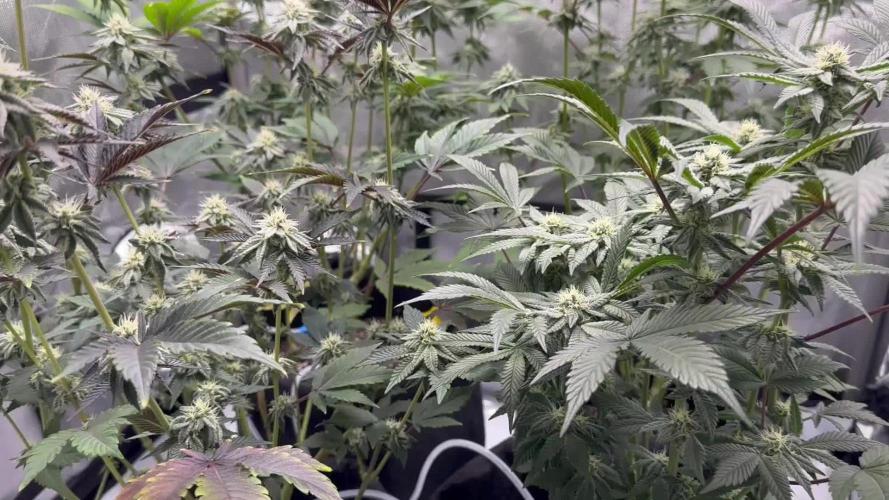
Looking nice now taking a bit for feed now
The smell is definitely getting stronger now really looking forward the see these baby's in final stage also big shout out the @barnysfarm my seed have arrived today ready for launch. And new diaries tk come piece out growmies update few pictures when lights are off 🍋🍋


Likes
35
Share


@SmokingTiki
Follow
- I didn't weight wet buds.
- The trichomes photos have been taken just before the harvest on buds all over the plants.
- The hash balls were : a little less than 1cm diameter for the Mandarin Punch#1 and around 3mm diameter for the Mandarin Punch#2
- Drying was made at 20°C and around 50% of humidity.
- Humidity in jar around 50% on the first day, temperature around 20°C.
MANDARIN PUNCH #1
Veg time : 44 days.
Flowering time : 70 days.
Total time from seed to harvest : 114 days.
Height : 142cm
Pot size : 26l
Harvest : 61g
MANDARIN PUNCH #2
Veg time : 45 days.
Flowering time : 67 days.
Total time from seed to harvest : 112 days.
Height : 123cm
Pot size : 10l
Harvest : 41g


Likes
Comments
Share
@gz420G
Follow
Blütewoche 7
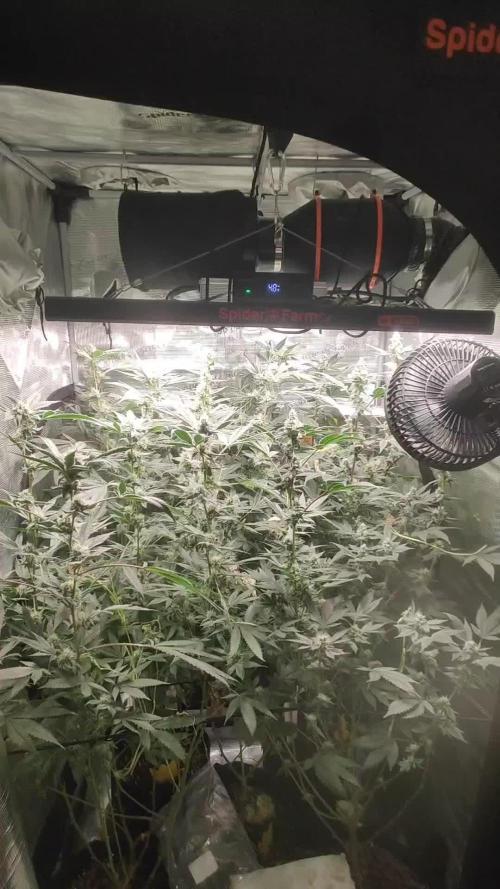
Der Grow geht langsam in die Zielgerade. Die Capjunky zeigt sich aktuell von ihrer schönsten Seite – mit ihren dicht harzbedeckten Blättern sehen die beiden Pflanzen wunderschön aus und übertreffen die Orange Bud und die Tangerine Dream in Bezug auf Blütenstruktur und Geruch deutlich.
Ab sofort erhalten die Pflanzen nur noch pH-reguliertes Wasser.
Ausserdem kämpfe ich leider noch immer mit den Temperaturen (Schnitt 26,5 °C, Spitzen bis 28,5 °C), was für die 7. Blütewoche eigentlich zu warm ist. Ich beobachte die Blüten täglich und habe mir einen zweiten Ventilator ins Zelt gestellt um das um das Risiko für Schimmel zu minimieren.

Likes
5
Share


@HapticNation
Follow
lots of cloudiness and a hint of amber starting to show in the trics, overall banging growth on the blue dreams. I mislabeled one (the purple AF one) so thats unknown strain. lol I won't have someone help germinate next time. lol other than that. looks like a great run. ill be doing multiverse beans run next. going to make a seed to harvest video for the Haptic Nation Growmies YouTube channel too.
Likes
60
Share


@BudBoutique
Follow
Welcome to Bud Boutique Grow Diary - really appreciate all your love and support :)
Dont forget to check out my other current grows!
🗓️ This Week:
- Day 9 transplanted 2/2 with mycorrhizal Powder from Great White Shark into a 0.3 liter pots)
- all still inside AC Infinity Germination Kit
- keep up high humidity with about 80% and open the little air vents of the humidity dome to start with a minimum of air circulation
Thank you for still staying with me 💚
___________________________________________
--- 🌱 Strain (Sponsor) 🌱 ---
🏷️ Cookie Haze by Kannabia Seed Company
https://www.kannabia.com/en/feminized-cannabis-seeds/cookies-haze
--- 🥗 Nutrients and Feeding (Sponsor) 🥗 ---
* 🍸 XPERT NUTRIENTS: Master Grow A+B, Master Root, Enzymes
* 📅💪 baseline + additives: 2ml/l
https://xpertnutrients.com/
---💡 Lighting ---
💡AC INFINITY - Germination Kit
https://acinfinity.com/grow-accessories/propagation/humidity-domes/humidity-dome-germination-kit-with-seedling-mat-and-led-grow-light-bars-5x8-cell-tray/#product-warranty
--- 🏭 Grow Setup ---
* 🏠🌿 Indoor: Homebox 120x120x200cm (4x4)
* 📐🌀 PrimaKlima exhausting Fan 1180m3/h (running on 60-80%) & Can Light Filter 800m3/h & 1x Fanbox 1x Dyson fan for Air circulation
https://primaklima.com/de/shop/ventilatoren-de/ec-ventilatoren/pk160ec-tc/
https://canfilters.com/products/filters/
All Likes and comments are highly appreciated!!!
don't forget to check out my Instagram: budboutiquee
- Bud Boutique


Likes
2
Share

@Hylex
Follow
Habe die samen alle keimen lassen bis 1cm wurzel vorhanden war und dann eingetopft die zillions kam erst am 8.09 in die keimung


Processing
Likes
6
Share


@Moss420
Follow
Added the first screen into the tent. Decided to kick Big Mumma out because she just wasn't growing any taller and the other plants were really over growing her.
For the new setup I used kitty litter trays and mesh to sit the plants on - each plant gets its own tray so I can track runoff EC individually and I cut little flaps in the mesh so I can wet vac the runoff. With this setup I shouldn't need to move the plants out of the tent until harvest.
For the scrog I just tied some builders rope around the poles of the tent and tied the trellis netting off with training wire. I've been manipulating the growth just to try and fill out the whole screen, I also gave them a good haircut because I plan on flipping them soon, don't want them to outgrow the tent.

Likes
2
Share


@Dixxie
Follow
“Ah, look at this photo of my baby in full bloom! It looks more radiant than me on a Monday morning before my coffee. Seems like it’s been feasting on sunshine and love. I’m tempted to put up a little sign that says ‘Do not disturb, growing’ to ward off curious glances. Who would’ve thought I’d become such a passionate plant caretaker? My friends think I’ve become a gardening expert, but I haven’t told them yet it’s just because I’m tending to my little cannabis plants! #HappyPlant #ClumsyCultivator”

Likes
9
Share


@TickleToast
Follow
Amber is coming in nicely, top to bottom - starting 1 week flush!
~As one only can in *Hydroponics (& coco). It's not "bro science" it's biology 101. It does not boost thc, it does nothing to terpene production. Simply put - we are ensuring/pushing a fall fade, that in soil you may or may not get naturally as nutrients are always present, (I'm not seeing growers emulate late fall weather outside of ice bathes-about all there is for soil). Color change! With that you geeeeeet *the breakdown of chlorophyll, and a better taste as a result.
Lots of purple popped up this week,
two gals with foxtailing (one mother / one clone - but no herms thankfully - all nat-ur-al)
First thought it would just be the mother / being too close to LEDs, but her clone did the same thing at 10''
Very excited for this harvest!
~~~~~~~~~~
Granddaddy Purple (Feminized Photoperiod)
(Sponsored By)
~Zamnesia~
https://www.zamnesia.com/us/11056-zamnesia-seeds-granddaddy-purple.html
Hybrid: Grandaddy Purple x Purple Kush (Purple Urkel x Big Bud*)
30% Sativa / 70% Indica
Flowering Time: 63-70 Days
22% THC
CBD 1%
~~~~~~~~~~
Zamnesia was kind enough to give us a discount code with this grow ~ go get you 20% off at checkout!!!
20% Off Code: ZAMMIGROW2024
https://www.zamnesia.com/us/
~~~
In-depth information regarding my day-to-day / common practice may be found on the front page of my profile (in the comments).
~~~
Breeders - my services are available!
I'm always keeping an eye out for great genetics to test and showcase.
Shoot me a message! :)
~~~
https://bit.ly/3MplXqf
^^^GrowAce Affiliate Link^^^
Use this if you want to show some support!
(Just follow that link and the cookie stored in your browser is good for 30 days!)
~~~
Questions & Feedback are welcomed, feel free to message me!
Thanks for stopping by growmies! 🤙🤙🤙🙏🙏🙏

Likes
4
Share

@pHilosophy420
Follow
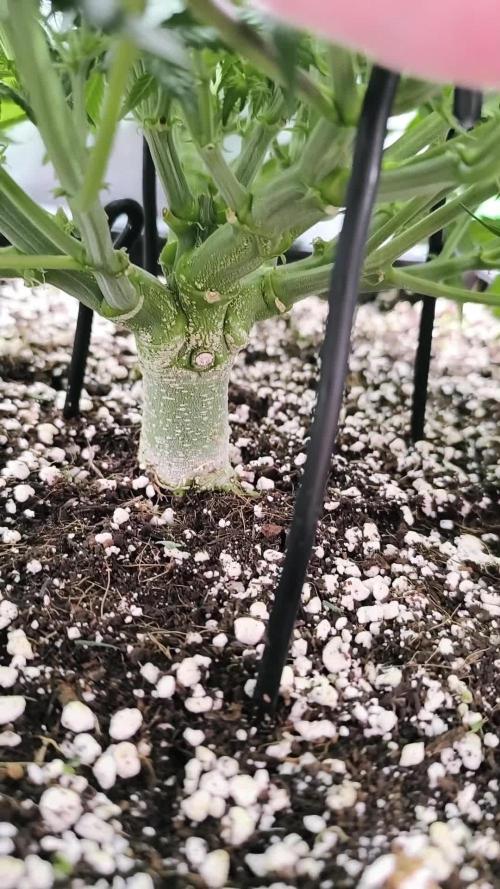
Day 49 - Lamp dostanę 45cm at 75% power.
She is very wide (50cm) and short bushy plant covered with buds like blueberry's. The buds are getting from very nicely 👌
Likes
Comments
Share


@Marihuanacali89
Follow
Bueno familia aquí tenemos el experimento en proceso ... Con muchas ganas de que salga bien y que cuando retire los cubos se vea claramente la calavera ..así que sigamos con la niña #maracuyá de @cremonawers_seed
Processing
Likes
5
Share


@GaiaGreenGiant
Follow
Day 42 - Another week gone by! No issues. Just water when dry. Gaia Green is proving itself to be a valuable addition. Makes growing so much easier. Speaking of easy, this strain takes well to any training induced on it but for this girl, I might just let her go naturally. We’ll see.

Likes
16
Share


@Naujas
Follow
107 days!! Here is another great experience :) The girl has matured, 330 grams of wet, full of sticky, resinous shiny, pleasantly smelling flowers :) I think it will be about 90 dry :) although the girl is definitely not the biggest, but she looks great, the smell is also amazing :) I also got some sugar leaves from which I will make bubble hash, For me personally it is really beautiful and good growth, which I think will definitely be confirmed by the dried and cured flowers :) there will be a smoke review, as well as the total dry weight. good luck to everyone :).

Likes
21
Share

@DogDoctorOfficial
Follow
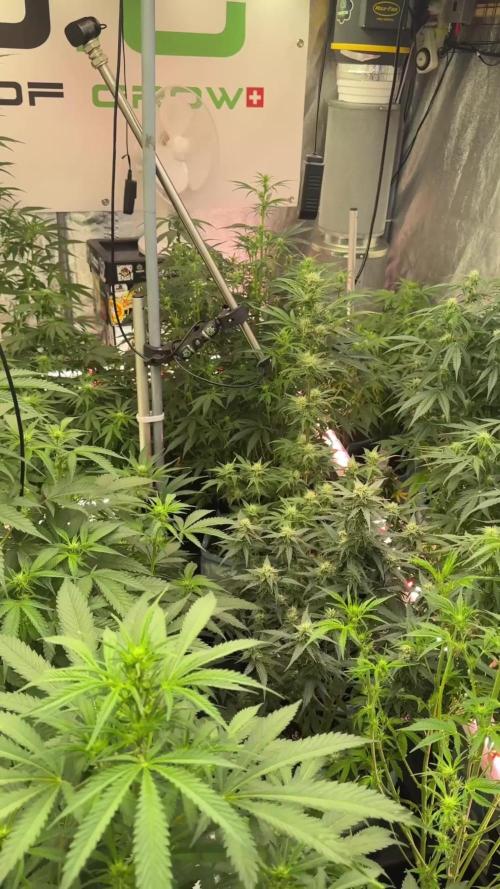
🌌 Cosmic Noodles
Week 8 From Seed
(Week 4 Flower — 12/12 From Seed)
⸻
How Did We Get Here?
These girls have been on 12/12 from seed.
No veg phase.
No long structural preparation.
No topping cycles.
No extended shaping.
They expressed themselves naturally — and we simply guided them.
We are calling this Week 4 Flower based on visible floral development, even though biologically it’s Week 8 from seed.
Two phenotypes.
Two structural expressions.
Two approaches.
And this week… two very different stories.
⸻
👑 Plant #1 — “The Big Walla” (No Test)
She is exactly what a healthy plant should look like under pressure:
• Deep, lush green
• Aggressive bud stacking
• Strong apical dominance but with lateral competition
• Defoliation response? Like nothing happened.
• In and out of the studio — no stress expression
• Structural integrity intact
She had light low-stress training, nothing extreme. Just guidance.
You can see in the time-lapse frames how robust she is.
She’s not surviving the environment.
She’s thriving in it.
This is our control plant.
⸻
Plant #2 — The Overwatering Test (Autoflower)
Now the real talk.
This plant was intentionally overwatered.
She was left sitting in runoff water for approximately 36 hours.
Immediate reaction.
Within that window:
• Drooping leaves
• Loss of turgor pressure
• Slowed metabolism
• Oxygen deprivation at root zone
• Visual stress expression
This is what root hypoxia looks like.
After 36 hours, we elevated her and drained everything.
Now we’re seeing:
• Necrotic leaf tissue
• Some dead lower leaves
• But… white pistils still pushing
• Bud development continuing
She’s stressed.
But she’s not done.
⸻
🌱 Why Overwatering Is Worse Than Underwatering
Underwatering:
• Roots search for moisture
• Oxygen availability increases
• Root mass expands
• Enzymes help break down dead root matter
• Temporary droop, usually reversible
Overwatering:
• Roots suffocate
• Anaerobic conditions form
• Microbial imbalance can develop
• Nutrient uptake becomes impaired
• Tissue death can occur
Water fills pore spaces in soil.
No air = no oxygen = no respiration.
Roots breathe.
When they can’t — the whole plant pays for it.
And with an autoflower, recovery window is shorter.
A photoperiod could be vegged longer to recover.
An auto?
Clock is ticking.
⸻
Environment — Playing on the Edge (But Controlled)
Current room conditions:
• Canopy Temp: ~28°C
• RH: ~70%
• CO₂: 1000+ ppm
• PPFD: 800 → 1300 µmol/m²/s
On paper, 28°C + 70% RH sounds high.
But here’s the key:
Massive Airflow
We have:
• Strong horizontal airflow
• Vertical movement
• Air exchange
• Under-canopy circulation
Airflow changes everything.
⸻
🍃 Leaf VPD vs Room VPD
Room VPD at 28°C / 70% RH is moderate-high humidity.
But leaf temperature under strong light + airflow is often slightly higher than ambient.
This increases transpiration.
Add 1000+ ppm CO₂:
• Stomata don’t need to open as wide
• Photosynthesis rate increases
• Plants tolerate higher humidity
• Metabolic rate remains high
This is why they’re thriving.
We are pushing high PPFD — up to 1300 µmol in larger tops — but only where plant size can handle it.
Smaller plants receive ~800 µmol.
Light intensity is scaled to structure.
⸻
💡 Lighting Strategy
We are running:
• Top lighting
• Under-canopy lighting
• End-of-day red (15 minutes)
Let’s break this down.
⸻
🔦 Under-Canopy Lighting — Why?
Purpose:
• Illuminate lower bud sites
• Reduce larf
• Stimulate lower photosynthesis
• Improve uniformity
• Reduce shading stress
We are not trying to replace top light.
We are supplementing energy where dense canopy blocks photons.
It also improves airflow around lower sites because buds stay active and not shaded/degrading.
⸻
🔴 End-of-Day Red (15 Minutes After Lights Off)
We run 15 minutes of red spectrum at lights-off.
Why?
Phytochrome manipulation.
Plants have two main light-sensitive phytochrome states:
• Pr (red-absorbing)
• Pfr (far-red absorbing)
Red light converts phytochrome into its active Pfr state.
When lights go off, Pfr slowly converts back to Pr in darkness.
By giving a short red pulse:
• We influence phytochrome equilibrium
• Potentially enhance flowering signaling
• Encourage elongation control
• Improve transition consistency
It does not extend photoperiod.
It manipulates light signaling.
We are experimenting — not claiming magic.
But we document everything.
⸻
🌱 EC & Feeding
Soil EC: 0.9
Feed EC: 2.4
This tells us:
They are eating aggressively.
If runoff EC stays stable and doesn’t climb, we maintain feed strength.
High metabolic demand requires high input.
But we monitor carefully.
If soil EC begins rising?
We adjust immediately.
⸻
Structural Differences
Plant #1:
• Slight LST
• Strong lateral competition
• Dense but controlled canopy
Plant #2:
• Some training
• More natural expression
• Slightly smoother, smaller phenotype
Even genetics within the same strain express differently.
And that’s the beauty of 12/12 from seed.
You see who they truly are.
⸻
🔮 What This Week Represents
This week is about:
• Stress response
• Root health
• Environmental boundaries
• Recovery observation
• Real learning
Not hype.
Not perfection.
Reality.
⸻
📅 What to Expect Next Week
For the Big Walla:
• Continued stacking
• Increased resin production
• Structural thickening
• Possibly slight nutrient demand increase
For the Overwatered One:
• Either:
• Gradual recovery with reduced leaf mass
• Or stalled development if root damage was severe
We do not expect explosive rebound.
We expect stabilization first.
⸻
❤️ Gratitude
To:
• The OGs who’ve been here since day one
• The new followers discovering the journey
• The skeptics who keep us sharp
• The haters who fuel consistency
• Sponsors supporting experimentation
• GrowDiaries platform
• Discord family
• Instagram community
This is not a solo grow.
This is shared documentation.
⸻
🌌 Final Thought
Nothing in nature is perfect.
And that’s exactly why this works.
This week proves it.
One queen thriving.
One queen struggling.
Both teaching.
Cosmic Noodles — Week 8.
Let’s recover one.
Let’s push the other.
Let’s document everything.
For the Big Walla:📡 DELETED @ 1K Please stay tuned.we never quit https://www.youtube.com/@DOGDOGTHEDOCTOR NEW
🙏 Thank you for your patience and continued support.
FOR DISCOUNT CODES AND MORE JUST FOLLOW THE LINK https://website.beacons.ai/dogdoctorofficial
📲 Don’t forget to Subscribe and follow me on Instagram and YouTube @DogDoctorOfficial for exclusive content, real-time updates, and behind-the-scenes magic. We’ve got so much more coming, including transplanting and all the amazing techniques that go along with it. You won’t want to miss it.
GrowDiaries Journal: https://growdiaries.com/grower/dogdoctorofficial
Instagram: https://www.instagram.com/dogdoctorofficial/
YouTube: https://www.youtube.com/@dogdoctorofficial Deleted by Youtube
Vimeo : https://vimeo.com/dogdoctorofficial Under construction stay tuned ⸻
Explore the Gear that Powers My Grow
If you’re curious about the tech I’m using, check out these links:
🔆 Lighting & Environmental Control
• Future of Grow — Advanced LED lighting technology
https://www.futureofgrow.com/
DISCOUNT CODE: DOG20
• Lumiflora — Under-canopy LED lighting
https://lumiflorade.com/
• TrollMaster — Environmental controllers and automation gear (past collaboration)
⸻
Genetics
• Zamnesia Seeds — Genetics used in this project
https://www.zamnesia.com/
⸻
🌱 Soil, Substrates, Boosters & Root Support
• Plagron — Substrates, bio mixes, and supportive products
https://plagron.com/en/
⸻
🎒 Storage, Curing & Preservation
• Grove Bags — Curing and storage solutions
https://grovebags.com/
⸻
📸 Photography Equipment & Tools
(Not sponsors, but part of my creative toolkit)
• Sony A6700
• Sony full-frame macro lens + few more
• Stacking photography workflow - learning
• iPhone (for behind-the-scenes shots)
We’ve got much more coming as we move through the grow cycles. Trust me, you won’t want to miss the next steps, let’s push the boundaries of indoor horticulture together!
As always, this is shared for educational purposes, aiming to spread understanding and appreciation for this plant. Let’s celebrate it responsibly and continue to learn and grow together.
With true love comes happiness. Always believe in yourself, and always do things expecting nothing and with an open heart. Be a giver, and the universe will give back in ways you could never imagine.
💚 Growers love to all 💚
📸 P.S. – The Eye Behind the Lens
All photos in this diary (for now — except for the ones showing the camera, which I took with an iPhone) are taken with a Sony A6700 paired with a Sony full-frame macro lens and a few more.
Photography is part of the story — it’s how we share the fine textures, the glow, and the quiet details that words can’t always capture.
I’ve also started experimenting with photo stacking — a technique where multiple images, each taken at a slightly different focus point, are layered together to create one perfectly sharp image from front to back.
It’s not digital enhancement or AI; it’s pure photography — a way to reveal the plant’s beauty in microscopic depth, from trichome to petal.
You’ll even see a few shots of "ghost me" capturing the shots — camera, lens, setup — because every grow deserves not just to be cultivated, but documented like art.
FOR DISCOUNT CODES AND MORE JUST FOLLOW THE LINK https://website.beacons.ai/dogdoctorofficial
NEW DISCORD - Official Server Invite Link : https://discord.gg/ksjAkA5T74
Likes
1
Share


@DrGreenbutterThumb
Follow
Pretty heavy yield for only 2 plants they smell and look astounding.
Harvested in 2 parts. To allow the lower buds to densen and mature.
Likes
14
Share


@Hempy_The_Kid
Follow
05/18/22 changed nutrient water PH 6.20 TDS 870 now on bloom nutrients. Will give foliar feeding tonight at lights out.
05/19/22 PH 6.13 TDS 890 gave LST to even canopy and get some airflow.
05/20/22 PH 6.19 TDS 878
05/21/22 PH 5.95 TDS 906
05/22/22 PH 6.15 TDS 750
05/23/22 PH 5.95 TDS 780
05/24/22 PH 5.90 TDS 850

Likes
6
Share


@Kendoda
Follow
I’m flipping 12/12 this evening.
I had a little tip burn on a couple of leaves of the Fullgas. These were in the central area of the light so I just eased off a little on the light intensity and haven’t noticed any issue since. It’s also a little dark atm so will hold off adding the bio grow until next week.
Update **
Ive upped the light power by 10% again and watered in 4ml of Alg a mic in 2L of water.
