


Likes
Comments
Share


@TeamQuality420
Follow
So for this week the training comes into play . So 1 ogkz was topped, 1 ogkz was broken , * note on the brake it was the best brake I have done , not because I am getting better at it mostly because the outer skin of the plant with the OG kz was much thicker and stronger than I'm used to so it broke quite easily. My guess is the correlation with the autoflower plays a big part in that. And 1 ogkz I just left it be .
Green crack
1 kept as a mother
2 were broke
2 topped

Likes
3
Share


@CannaGods
Follow
The plan is coming along nicely and it is flowering, there is a slight smell but it is not too strong. Last week I had switched the nutrients to 1-2-3 ratio.. I do not do any weaning there is no need.
I allow the plant to use up the majority of the nutrients and then readjusted it for flower, there is no reason to waste any water unless there is root problems or root debris.. you can solve this by getting a two-dollar fishnet from your local pet store.
I did notice that from boosting the nutrients to a high level that the strain has met its limits at 700 PPM the tips started to curl, I corrected this a day later by removing 4 gallons of solution, and re-diluting the correct amount. Please keep in mind that there have been zero fluctuations in pH during this whole grow the plant's routing system has reached homeostasis. The chemicals that I am using have adjusted the H2O to a perfect 5.8 to 5.9 pH. I am still spraying the plants with diluted Epson salts for magnesium. As well as adding it to the root system. I do not check EC unless I see severe problems in leaves.

Likes
28
Share


@PrairieFrostGrow
Follow
*
************** Week 7 - May 23 to 29, 2020 - Days 43 to 49 from germination ****************
*
This week she started to take more shape and came out of her ball form and standing up now. Side branches are still growing strong and reaching for the top of the canopy. Increased light intensity also as she is getting bigger and bushy with leaves now. She has increased her feed amounts this week and eating more now. She is happiest when her pot is dry and her leaves are up and praying.
Heavy leaf strip and removed some lower nodes mid week. Letting her focus on growing the top nodes by removing lower points. Opened up the middle nice now and she is looking like a cannabis plant😀 Keep an eye on nitrogen though as she is green. She was getting choked out on the lower growth so removing some and letting the light in, the rest of the of sites should help her fatten up.
Little more detail.......
May 23/20, Day 43
- 3L feed - VeloKelp & Rezin & L.Wt & Sensyzime @ 1.5ml = 150ppm and 6.1pH
- she is setting her buds but her leaves still look dark.
- keeping ppm lower at 150.
- main top reaching up more today.
- Flower light switch turned on and raised the lights to increase intensity now.
May 24/20 - Day 44
- Dry out day
- Only two girls in the tent today so she should react well.
- (GSC plants not flipping and moved to veg tent so made room in flower tent.)
May 25/20 - Day 45
- fed twice today
- 7:30am feed: 2L Sensyzime, Piranha, Rhino Skin, Rezin @ 1.5ml/L = 335ppm and 5.9 pH.
- 8:30pm feed: Vitathrive & Velokelp @ 1.5ml/L = 350ppm and 5.8pH
- heavy leaf strip today.
May 26/20 - Day 46
- dry out day.
- keep an eye on the girl because the last time the girl dried out she reacted well
- noticed the inner growth is slightly brown around the edges. Buds/pistols are not very tall. Light should help with this.
- still only two girls in the tent.
May 27/20 - Day 47
- 3L feed: Mass&Terp @ 3ml/L, Rezin&LWt&Vita @ 1.5ml/L, CalMag&Rhino&Piran&D.F. @ 1ml/L = 1250ppm & 6.0pH
- added more water to reduce ppm to 1080.........1250 a little high right now.
- she was ready to be fed.....eating a little more now.
- Her hairs are getting longer and reaching out more now......light helps😀
May 28/20 - Day 48
- 2L feed: Mass @ 4ml/L, Vita & Sensyzime @ 2ml/L, Dual Fuel @ 1.5ml/L = 1350ppm
- little high so added water reduce ppm 1100
- She is taller and today and really looking nice.
- She definitely likes it when her pot dries out.
May 29/20 - Day 49
- dry out day
- letting her be....she is happy😀
That wraps up another week. It has been great because she is really taking shape now and looking like the little girl I had in my mind👌
Likes
19
Share


@adam_pawloski87
Follow
Let’s Go Day day 61 from seed !!! This week went real well! As you can see all these girls are starting to stack very well! Everything is pretty much the same, we have switched to fully bloom an these ladies are just Looking super healthy , we are getting a nice smell of grapes on these Ogreberrys ! Bruce Banner is packing crystals like a Mofo too an super stanky , all very happy about this run ! Still got a nice few more weeks of bloom to go let’s watch em stack ! Lets grow lil ladies let’s grow !! Hope you all enjoy an have an amazing productive day ! Peace love an positive vibes to all you Growmies out there Cheers 😶🌫️💨💨💨💨💨🤙🏻 If there’s any questions please just ask I’ll be glad to help !!


Likes
8
Share


@romeoromeo
Follow
Growing strong and big 💪🏼🌱
Day 15, gave her tap water with bio bizz fertilisers, in the evening did some LST.
Day 16, continuing with the LST, growing strong and healthy 💚
Day 17, gave her only water, 0,5 ml, she is getting bigger 🤭😊

Likes
20
Share
@Tower84
Follow
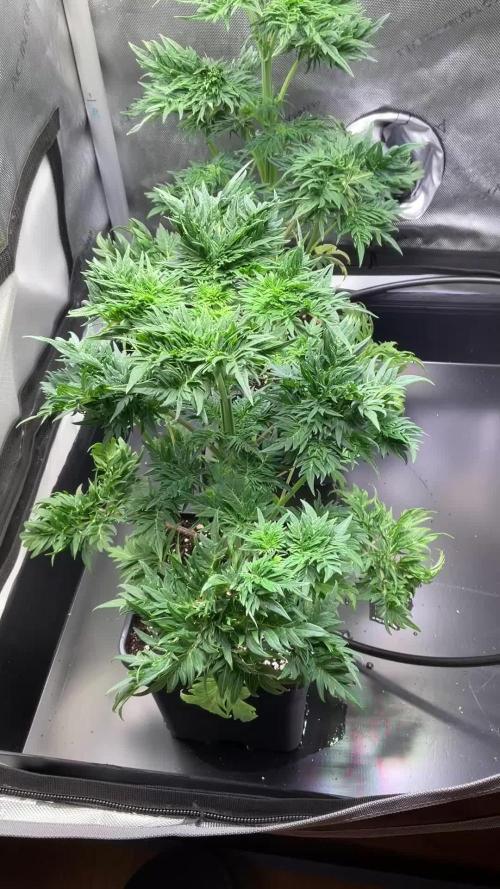
🇩🇪 Woche 5 – Mentha de Croco (Terpyz) 🌱🔥
Die beiden Mentha de Croco entwickeln sich in Woche 5 weiterhin richtig stark 💪🌿
Schön buschiger Wuchs, kompakte Struktur und ein insgesamt sehr vitaler Eindruck. Die Blätter sind sattgrün und dicht – keinerlei Anzeichen von Mängeln oder Stress 👌✨
Aktuell läuft noch der „Hybrid-Modus“: tagsüber draußen Sonne tanken ☀️ und abends wieder zurück ins Zelt 🌙
Das klappt bisher super und die Pflanzen profitieren sichtbar von dem natürlichen Licht und der frischen Luft.
Langsam wird es aber eng im Topf ? – die Wurzeln wollen mehr Platz! In etwa zwei Wochen geht’s endlich in die 30L Töpfe nach draußen, wo sie ihr volles Potenzial entfalten können 🚀🌱
Fazit: Top Zustand, kräftiges Wachstum und bereit für den nächsten großen Schritt 🔥🌳
---
🇬🇧 Week 5 – Mentha de Croco (Terpyz) 🌱🔥
The two Mentha de Croco plants are still going strong in week 5 💪🌿
Nice bushy growth, compact structure, and overall very vigorous. Leaves are deep green and dense – no signs of deficiencies or stress 👌✨
Currently running a “hybrid mode”: outside during the day for sunlight ☀️ and back inside at night 🌙
This routine works great so far, and the plants clearly benefit from natural light and fresh air.
However, the pots are starting to feel small ? – roots are ready for more space! In about two weeks, they’ll move into 30L outdoor pots and really take off 🚀🌱
Conclusion: Excellent condition, strong growth, and ready for the next big step 🔥

Likes
19
Share


@Jaxx_Teller
Follow
Very easy to grow and a decent yield for autos. Potency and flavour are there and they're very pretty buds 😍😍

Likes
26
Share


@Magic_frequency
Follow
Well i will just be hoping that these girls will be quality with the audio frequency. I know from the first place that my lamp to light distance when veg state it was too high i noticed it after 6 weeks. And forgot again cause im stupid and flipped it on 7th week. 😪 mistakes mistakes. Mdfckr me😩😩😩 wish they are 1 hit kill 😂
Likes
18
Share


@MisterAeroponics
Follow
Ran into sulfur and phosphorus deficiency week 7. Added the small scoop beastie blooms and like an 1/8 tsp of silver bullet sulfur terp enhancer. Still running about 9ml per gallon at 5.8 possible hydrogen.. AC motor went out on one of the ac’s, will have it fixed by Wednesday been cooler temps and storms lately so been okay.

Likes
80
Share


@Mrs_Larimar
Follow
I had alot of Fun with this Grow, and a lot of Growers, had a Story about the Strawaberry Cough. Thank you all for sharing that with me!!! I learned alot about the heritage of this Strain and its appearing in Movies and Music. Mr. Kushman itself had a great Story about Strawberry Cough, and how he got them as a Present
But back to the Grow
fast Germinating, Germiating Rate 100 Percent, fast grower, and then the Journey began......
One Pheno turned out with Cottoncandylike Buds , The other Pheno with Fistsized Dense Buds
Booth showed a wonderful Scent, and they were a Pleasure to look
One Plant is still growing
Thank you @Miister_lee , for the opportunity to grow them
And LEGALIZE WORLDWIDE


Likes
5
Share

@CalGonJim
Follow
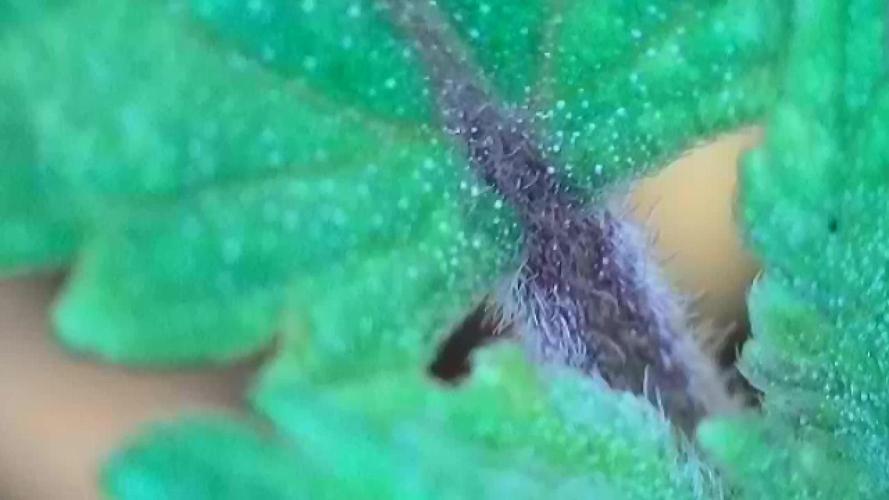
9/15 12AM MONDAY!!! THEY ARE ALL DOING GREAT!!! VERY HEAVY AMINOS YESTERDAY, NO DAMAGE.
9/15 11:24PM. In plant cells, glutathione S-transferases (GSTs) act as transporters, facilitating the movement of anthocyanins from the endoplasmic reticulum (ER) to the vacuole for storage, though their exact mechanism is still being studied. The synthesis of glutathione (GSH) itself occurs in the cytosol of mammalian cells through two ATP-requiring enzymatic steps, while anthocyanins are synthesized via a separate phenylpropanoid pathway
9/15 11:42PM glutathione metabolism glutathione S-transferases plantsThinkingKicking off 5 searchesLooking at 71 sitesPutting it all together In plants, glutathione S-transferases (GSTs) are a diverse family of enzymes integral to glutathione (GSH) metabolism, primarily functioning in detoxification and stress response. The core of this process involves GSTs catalyzing the conjugation of the tripeptide GSH with various toxic compounds, or xenobiotics, making them less harmful and easier to sequester or transport. Glutathione (GSH) metabolism in plants GSH metabolism is a tightly regulated process that maintains cellular redox balance and protects against stress. Biosynthesis: GSH is synthesized in two adenosine triphosphate (ATP)-dependent steps:(gamma )-Glutamylcysteine synthetase (GSH1) joins L-glutamate and L-cysteine to form (gamma )-glutamylcysteine. In Arabidopsis, this enzyme is located exclusively in the chloroplasts.Glutathione synthetase (GSH2) adds glycine to (gamma )-glutamylcysteine to produce GSH. This enzyme is found in both the cytosol and the chloroplasts.Oxidation and reduction: GSH exists in two forms: a reduced monomer (GSH) and an oxidized disulfide dimer (GSSG).Oxidation: In the process of scavenging reactive oxygen species (ROS), GSH is oxidized to GSSG.Reduction: Glutathione reductase (GR) uses NADPH to reduce GSSG back into active GSH, which is essential for maintaining a high GSH-to-GSSG ratio inside the cell.Degradation: Glutathione can be degraded in the cytosol, apoplast, and vacuoles by (gamma )-glutamyltransferases (GGTs) and other peptidases, allowing for recycling of its amino acid components.Transport and compartmentalization: While synthesis occurs in the chloroplasts and cytosol, transporters move GSH and its conjugates throughout the cell, including to the mitochondria, peroxisomes, and vacuoles. Functions of glutathione S-transferases (GSTs) GSTs are a large, ancient gene family with diverse roles that extend beyond detoxification. The primary functions involving GSH are: Detoxification of xenobiotics and heavy metals: GSTs catalyze the conjugation of the thiol group of GSH to a wide range of electrophilic and hydrophobic substrates, including herbicides, pesticides, and heavy metals. The resulting GSH-conjugates are then recognized by ATP-binding cassette (ABC) transporters and sequestered in the vacuole, reducing their cellular toxicity.Protection from oxidative stress: Stress conditions like drought, salinity, and high light increase levels of ROS, which cause lipid peroxidation. 🚨Some GST isoforms have glutathione peroxidase (GPOX) activity, using GSH to reduce toxic lipid hydroperoxides to less damaging alcohols, thereby protecting cell membranes.Defense against pathogens: During pathogen attacks, GST activity increases to detoxify microbial toxins and secondary defense-related compounds. This helps to bolster the plant's resistance response.Metabolism of endogenous compounds: GSTs play roles beyond immediate stress response by participating in the normal metabolic processes of plants. Examples include:Hormone transport: Some GSTs act as binding proteins (ligandins) that transport plant hormones like auxins within the cell.Metabolite transport: Specific GSTs facilitate the transport of important compounds like flavonoids and anthocyanin pigments into the vacuole.Tyrosine degradation: The zeta GST class (GSTZ) catalyzes a critical step in the breakdown of the amino acid tyrosine.Redox signaling: By influencing the GSH/GSSG ratio and interacting with plant hormones, GSTs can regulate cellular signaling pathways that control growth and stress response. 🚨GSTs and plant stress response The expression of many GST genes is highly inducible by various environmental and endogenous cues, making them key players in a plant's ability to adapt to adverse conditions. Abiotic stress: Drought, salinity, heavy metals, and extreme temperatures all trigger increased GST expression, which helps plants manage resulting oxidative damage. Overexpression of specific GST genes has been shown to enhance stress tolerance in transgenic plants.Herbicide resistance: The ability of crops and weeds to detoxify herbicides through GST-catalyzed conjugation is a well-studied example of GSTs in stress adaptation. Herbicide safeners, chemical agents that protect crops from herbicide injury, work by boosting the activity of these GST enzymes.Developmental processes: Studies have linked the expression of certain GST genes to specific stages of plant development, such as fruit ripening, root and stem development, and flower formation. ""
9/16 12:32am
AI Overview
In plants, phenylalanine is the precursor for anthocyanin synthesis, a process that involves a multistep pathway in which glutathione (GSH) plays a critical role in the transport of the final pigment to the cell vacuole.
Phenylalanine initiates anthocyanin synthesis
The biosynthesis of anthocyanins begins with the amino acid phenylalanine, which is produced via the shikimate pathway. The conversion process, known as the phenylpropanoid pathway, involves a series of enzymatic reactions:
1. Phenylalanine ammonia-lyase (PAL): This enzyme catalyzes the first committed step of the pathway, converting L-phenylalanine into trans-cinnamic acid.
2. Downstream enzymatic reactions: A series of additional enzymes, such as chalcone synthase and chalcone isomerase, convert the intermediate compounds into unstable anthocyanidins.
3. Glycosylation: Glycosyltransferase enzymes stabilize the anthocyanidins by adding sugar molecules, creating the final, stable anthocyanin pigments.
4.
Glutathione is crucial for anthocyanin transport
After synthesis, glutathione is essential for transporting anthocyanins for storage.
* Glutathione S-transferases (GSTs): These enzymes bind to the newly formed anthocyanins in the cytoplasm. This binding is a key step that facilitates the transport of the anthocyanin-GST complex across the tonoplast (the vacuolar membrane) and into the vacuole.
* Vacuolar storage: Once inside the vacuole, the anthocyanins accumulate and provide color to plant parts, such as flowers, fruits, and leaves.
* Catalytic role: Recent research has also found that certain GSTs have a catalytic role in anthocyanin synthesis. They can catalyze a dehydration step to form specific anthocyanidins, significantly boosting production in engineered systems.
*
The process in summary
The synthesis and accumulation of anthocyanins involve a coordinated process of multiple steps:
1. Production from phenylalanine: The amino acid phenylalanine enters the phenylpropanoid pathway, where enzymes convert it into the basic flavonoid structures.
2. Formation of anthocyanidins: Further enzymatic modifications produce the colored but unstable anthocyanidins.
3. Stabilization and transport with glutathione: These anthocyanidins are stabilized by glycosylation and then bound by GSTs (which use glutathione). This binding enables their transport into the vacuole for storage and visible pigmentation.
9/15 12:46AM https://pmc.ncbi.nlm.nih.gov/articles/PMC7238016/
9/16 1:30AM BKO is looking great!!!
Conclusion
The “butter frosting” resin on Cookie Apple F1, healthy yellow-green fusiform, and Blueberry KO’s pigmented cotyledons show your anthocyanin-glutathione-phenylalanine strategy is working—phenylalanine drives synthesis, glutathione ensures transport. Tweak amino acids to 100–150 mg/L to reduce tip burn.
9/16 3:34am
9/16 4:31AM Anthocyanin glutathione synthesis phenylalanine proline tmg powder relating current project:
* Phenylalanine is a precursor: Phenylalanine is an amino acid and the starting point for the phenylpropanoid pathway in plants.
* Anthocyanin synthesis: This pathway creates various secondary metabolites, including the flavonoid pigments known as anthocyanins, which give plants their red, purple, and blue colors.
* Pathway activation: Multiple enzymes, such as phenylalanine ammonia-lyase (PAL), catalyze the conversion of phenylalanine into the building blocks for anthocyanin.
*
Anthocyanin and glutathione synthesis
* Glutathione S-transferase (GST): This enzyme is crucial for synthesizing anthocyanins in plants. It transports anthocyanins into the cell's vacuole for storage.
* Glutathione (GSH) production: Anthocyanins can promote glutathione synthesis in certain cells. For instance, the anthocyanin cyanidin-3-O-β-glucoside (C3G) has been shown to increase the expression of glutamate-cysteine ligase (Gclc), a key enzyme in GSH synthesis.
* Antioxidant effect: By upregulating GSH production, anthocyanins contribute to the antioxidant defense system, protecting cells from oxidative stress.
*
Proline and glutathione synthesis
* Shared precursor: In some organisms, the synthesis pathways for proline and glutathione share a precursor molecule called γ-glutamyl phosphate.
* Alternative pathway: Research on bacteria and yeast has revealed an alternative, trace pathway where γ-glutamyl phosphate from the proline synthesis pathway can be diverted to produce the glutathione precursor γ-glutamylcysteine.
* Oxidative stress response: Studies in mouse oocytes show that supplementing with proline upregulates genes related to glutathione synthesis (Gclc and Gclm), increases glutathione levels, and reduces oxidative stress.
*
TMG powder, methylation, and homocysteine
* Methyl donor: Trimethylglycine (TMG), or betaine, is a potent methyl donor, meaning it provides methyl groups needed for various biochemical processes in the body, including the methylation cycle.
* Homocysteine regulation: One of TMG's primary functions is to convert the amino acid homocysteine into methionine. This helps regulate homocysteine levels, which is important for cardiovascular health.
* TMG and proline interaction: In plants and some organisms, TMG and proline act as compatible solutes or osmoprotectants, helping cells stabilize against osmotic stress like drought or salinity. However, in human biology, TMG mainly functions through methylation, while proline is involved in different metabolic and antioxidant roles.
*
How they all relate
The listed components are connected through several overlapping metabolic and regulatory pathways:
* Anthocyanin synthesis starts with phenylalanine.
* Anthocyanins can promote glutathione synthesis via upregulation of key enzymes like Gclc.
* Glutathione synthesis can be influenced by the proline synthesis pathway, as they share an intermediate in some contexts.
* TMG powder supports the methylation cycle, which helps regulate homocysteine levels. While TMG and proline serve similar protective roles in some organisms, their primary human metabolic functions differ, with TMG focusing on methylation and proline having distinct roles in antioxidant response and metabolism
9/17 217am Die Hard Christmas Grow
9/18, 11:34 AM. I ordered some square saucers that were cartoonishly too small but they fit inside the AC infinity germination kit and they fit with the Bud Cups perfectly really nice so it’s not a total loss.
9/18 11:45AM mix. Foliar Spray, the rest of the mix ec 0.46
Mixed up Aminos first and separate and use 16 oz for foliar spray. Then mixed up:
Root: 1 mL/L Connoisseur A & B GROW,
.2 mL/L CaliMagic,
.2 mL/L Purpinator.
Setria Glutathione: 150 mg/L(Brand: Emerald 250mg capsule.)
TMG: 150 mg/L = (Brand Nutricost)
Phenylalanine: 150 mg/L (Brand Nutricost)
Proline: 150 mg/L (Brand Nutricost).
9/18 228PM AI Overview
Glutathione influences plant colors by regulating the accumulation of pigmented compounds, primarily anthocyanins. The tripeptide accomplishes this through its role in transporting pigments within plant cells and in protecting against environmental stresses like UV radiation that can cause oxidative damage.
Transporting pigments into plant cell vacuoles
Glutathione works with a class of enzymes called Glutathione S-transferases (GSTs) to transport pigments like anthocyanins into the vacuole for storage.
Anthocyanin transport: In plants with pigmented tissues, such as purple grapes or red flowers, glutathione-conjugated pigments are transported by GSTs across the tonoplast membrane into the vacuole. This process is crucial for the stable accumulation of pigments.
Genetic manipulation: Research shows that manipulating specific GST genes can alter a plant's pigmentation. For instance, silencing a particular GST gene in purple grape hyacinths caused their petal color to shift to a lighter shade of purple. Similarly, defective GST genes in carnations resulted in pale-colored flowers.
Protecting against UV light and stress
Glutathione helps regulate plant pigmentation in response to environmental factors, especially UV-B radiation.
Activating flavonoid production: When plants are exposed to UV light, a surge in glutathione triggers the expression of genes involved in producing flavonoids. Flavonoids, including anthocyanins, can act as protective sunscreens for the plant, and their increased synthesis and accumulation can alter visible coloration.
Balancing oxidative stress: Intense UV-B radiation increases reactive oxygen species (ROS) in plants, which can cause oxidative damage. Glutathione is a master antioxidant that helps detoxify these ROS, preventing cellular damage that can affect a plant's pigment-producing mechanisms.
Indirectly influencing plant colors
By regulating cellular redox status and interacting with other molecules, glutathione also affects pigment expression in more indirect ways.
The xanthophyll cycle: As part of a plant's antioxidant system, glutathione helps maintain the reduced state of other protective antioxidants like tocopherol and zeaxanthin. Zeaxanthin is a carotenoid pigment involved in the xanthophyll cycle, which helps dissipate excess light energy.
Redox signaling: The balance between reduced glutathione (GSH) and oxidized glutathione (GSSG) is a key cellular signal for stress response. A shift in this ratio during environmental stress can influence the production of secondary metabolites like pigments, allowing the plant to adapt. "
9/19 1:41AM AI Overview
The key difference is that anthocyanins are the sugar-containing form (glycosides) of pigments, while anthocyanidins are the sugar-free form (aglycones). Anthocyanidins are the foundational molecules, and when a sugar molecule attaches to them, they become anthocyanins, which are more stable and water-soluble, making them the forms found naturally in plants, such as berries and purple vegetables.
Anthocyanidin (Aglycone)
Structure: The basic, sugar-free molecule of the anthocyanin structure.
Location: Not found freely in nature but is the core component that is then glycosylated.
Properties: Color changes with pH, being visible in acidic conditions but colorless in basic conditions.
Examples: Cyanidin, delphinidin, pelargonidin, peonidin, petunidin, and malvidin.
Anthocyanin (Glycoside)
Structure: Consists of an anthocyanidin linked to one or more sugar molecules.
Location: Found in the vacuoles of plant cells.
Properties: Water-soluble and are the pigments responsible for the red, purple, and blue colors in plants.
Function: The sugar attached provides stability, allowing for accumulation in plants and providing antioxidant properties.
Examples: Cyanidin-3-glucoside and other derivatives like acylated anthocyanins. "
9/19 2:43AM I also saw a good mans immediate accent into Heaven, that perspective matters too. no less angry about it though.
9/19 10AM Heavy Amino spray 250mg each in 1L of Setria Glutathione and Phenylalanine
9/19 10:10PM The sons and daughters of americas real terror organization carried out the last horror show, and the one before that and before that. It's not a foreign country, it's always the anti white anti human black sheets and badges that did this.
9/19 10:43PM AI Overview
Phenylalanine and glutathione contribute to plant colors through different biochemical pathways
. Phenylalanine is a precursor for the pigments themselves, primarily anthocyanins, while glutathione is involved in the transport and stabilization of these pigments within the plant cell.
Phenylalanine: The pigment precursor
The source of aromatic compounds: Phenylalanine is an aromatic amino acid and the starting compound for the phenylpropanoid pathway in plants. This pathway produces a vast number of secondary metabolites, including anthocyanins, which give many plants their red, purple, and blue colors.
Color enhancement: Research has shown that increasing the amount of available phenylalanine can lead to more intense red coloration in some fruits, such as mangoes and apples.
Pathway stimulation: Phenylalanine ammonia-lyase (PAL) is a key enzyme in this pathway that converts phenylalanine into precursors for anthocyanin biosynthesis. An increase in phenylalanine levels stimulates this entire process.
Glutathione: The pigment transporter
Anthocyanin transport: After anthocyanin pigments are synthesized in the cell's cytoplasm, they must be transported into the central vacuole for storage. Glutathione S-transferases (GSTs) are a family of enzymes that facilitate this process.
Color intensity: A functional GST is essential for proper anthocyanin accumulation. Mutations in GST genes can result in a significant decrease in color intensity, as seen in the pale or white flowers of certain gentian mutants.
Mechanism of action: The GST binds to the anthocyanin pigment and moves it from the cytoplasm into the vacuole. If the GST is defective, the pigment cannot be transported correctly, leading to a loss of coloration.
Summary of interactions
The roles of phenylalanine and glutathione are distinct but cooperative in producing plant colors:
Phenylalanine provides the essential building blocks for creating the colored compounds (anthocyanins).
Glutathione, with the help of GSTs, ensures these colored compounds are correctly moved to their storage location (the vacuole).
This cooperative system explains why mutations or deficiencies in either process can lead to reduced or altered coloration in plants."
9/19 10:51PM AI Overview.
Trimethylglycine (TMG) supports the production of glutathione, a vital antioxidant
. However, there is no evidence to suggest a direct relationship between these supplements, the amino acid phenylalanine, and the colors of plants. The concepts are linked indirectly via complex biological processes.
Trimethylglycine (TMG) and glutathione
TMG and glutathione are connected through the body's methylation cycle.
TMG as a methyl donor: TMG plays a critical role in the methylation process by donating a methyl group, which helps convert the harmful amino acid homocysteine back into methionine.
Support for glutathione production: This methylation cycle, which is supported by TMG, is essential for producing glutathione. Glutathione is a powerful antioxidant that protects against cellular damage and is crucial for detoxification.
Supplementation considerations: TMG supplements are sometimes taken alongside other supplements to support health, though consultation with a healthcare provider is recommended.
Phenylalanine and the methylation cycle
Phenylalanine is an essential amino acid, but its role is distinct from the TMG-glutathione process.
Essential nutrient: Phenylalanine is a key nutrient for cellular metabolism.
Potential interactions: A separate medical study on experimental hyperphenylalaninemia (abnormally high phenylalanine levels) in chicks observed a decrease in other amino acids in the brain, including those involved in the glutathione pathway. This demonstrates how excessive levels of one amino acid can potentially influence others, though this does not represent a typical interaction.
Plant colors
The connection between the supplements and plant colors is purely conceptual, as the colors are determined by completely different biological processes.
Anthocyanins: The colors of many plants, including red, purple, and blue flowers, come from pigments called anthocyanins.
Glutathione in plants: While plants contain glutathione as an antioxidant to combat stress, it influences color by regulating the transport and accumulation of anthocyanin pigments, not by being a pigment itself.
TMG and phenylalanine in plants: Plants contain TMG, which functions as an osmoprotectant (protecting against osmotic stress). They also contain phenylalanine, but these substances do not directly determine the plant's visible color."
9/19 11:21PM. !!!!!! this was pointless and im dumber for having read it. !!! Light intensity and spectrum affect metabolism of glutathione and amino acids at transcriptional level: https://pmc.ncbi.nlm.nih.gov/articles/PMC6938384/
9/20 11:08 AM the seedlings and the four autos are doing just great. The amino spray with phenylene and glutathione really had nice effects no burning nice solid growth even seedlings from basil lavender various lettuce all are perfect.🚨🚨🚨👍👍👍👍👍
9/21 2AM I AM BECOME ANTHOCYANID!!! ITS WORKING AND ON A SEEDLING I SEE THE GELATO COLLORS IN BLUEBERRY KO AND THE LEAF SHAPE OF BUBBLES BLUEBERRY,!!!


Likes
43
Share


@DrDuhboto
Follow
The plants are all really taking off nice bud growth and very healthy looking canopy.
Plants are going through water every 3 days on the dot now.
I have noticed that one plants buds are showing some purple hues but the others remain colorless so far.
The Smell is really nice already. Very fruity it reminds me of fruit loops.
My light is on full blast and the plants are praying nicely.
There have been no signs of stress from the flip.
I will likely defoliate a bit at the end of the week to make sure everything can get as much light as possible.
Likes
4
Share

@Chubbs
Follow
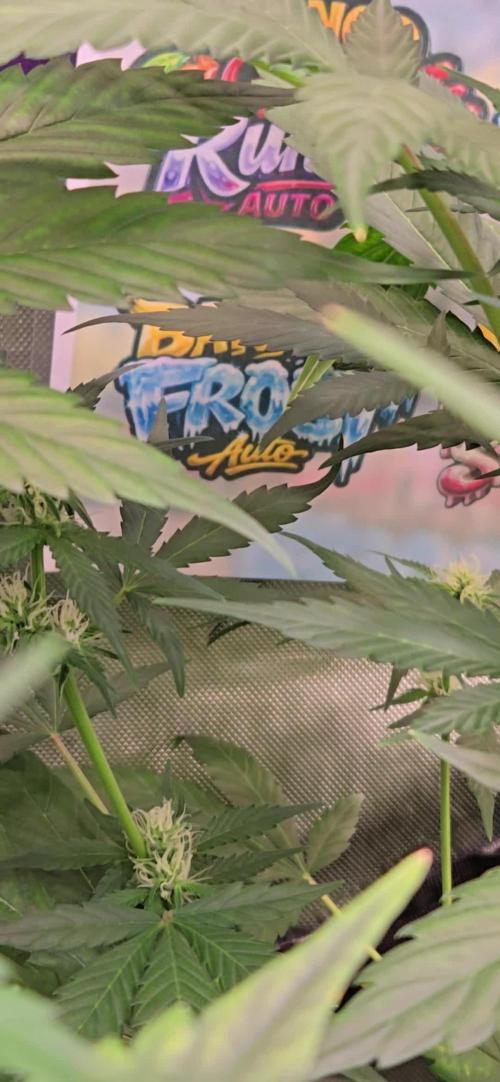
What up Fam, I apologize for the late update. Been away for 2 weeks from the ladies and my son who was watching them did amazing, as I came back to an absolute forest. The plants almost tipped in size which is crazy the growth they had while I was gone. I started adding bloom nutes and did a defoliation and lollipop this week. I'd normally start my training around week 3 but over all they're happy and healthy as can be. Let's Go Happy Growing.
Likes
4
Share


@alexb420
Follow
buds starting to get shape and trichs coming in nice. the blueberry muffin has such a unique berry pastry smell. no dank weed smell at all. the khalifa mintz x (bcc x jealousy) is still pretty gassy, with stronger fruit profiles on both strains now that the buds are starting to get fuller. update in a bother 2-3 weeks lol.

Likes
44
Share


@Cogollo_eu
Follow
**Encontrarás la traducción a español al final de la descripción**
From/Desde: 22/03/19 || To/Hasta: 28/03/19
From day/Desde día: 29 || To day/Hasta día: 35
You can find the Money Maker Diary here:
** Podéis encontrar el diario de las Money Maker aquí:**
https://growdiaries.com/diaries/25667-gorillamakingmoney-gorilla-vs-money-m
-----IMAGES & VIDEOS-----
Video 1:
Exactly the same video as 2 but accelerated +400% to fix it to 1 minute for instagram.
Video 2:
7 days (29~35) TimeLapse, 1 image each 60 secs @ 30 fps
Video 9:
An overview video not as awesome as it's music 😂💪
Video 10:
Myself working on the babies, lowering tops, topping & training.
Video 12:
Full working on the secondary Gorilla, twisting some branches, topping & training.
-----WEEK SUMMARY-----
Well, now i'm getting a bit scared as i adventured myself into Photoperiod, high training, full topping... in indoors at once. I feel that plants are going good, but i really don't know what am i doing, and if i'm doing well. Also i don't know how much time should i give them of vegetation stage, because i don't want to eternalize myself with this tent, so i'm planning to leave this upcoming 6th week and maybe the 7th of vegetation, but no more. Anyway they look pretty atm 😻. In video 10 the main-linning Gorilla suffered an accident as i grabbed the main left branch from a weak point and it has broken (sec 39 aprox.) so it has one less node than the right branch.
-----WATERING CALENDAR-----
24/03/19 - 1.000 ml with all week nutrients @ 0.9 E.C. PH5.8
*****ESPAÑOL*****
-----IMÁGENES & VÍDEOS-----
Vídeo 1:
TimeLapse, exactamente el mismo vídeo que el 2 pero acelerado a un poco más del 300% para ajustarlo a 1 minuto para Instagram.
Vídeo 2:
7 días (29~35) TimeLapse, 1 imagen cada 60 segundos @ 30 fps.
Vídeo 9:
Un vídeo general no tan increíble como la música de fondo 😂💪.
Video 10:
Trabajando en las pequeñas, rebajando las alturas, haciendo topping y entrenando.
Video 12:
Trabajando a pleno en la segunda Gorilla, girando algunas ramas, haciendo toppings y entrenándola.
-----SUMARIO SEMANAL-----
Bueno, ahora estoy empezando a estar asustado. Me he aventurado a probar con fotodependientes, entrenamiento fuerte y super topping, todo a la vez. Siento que las plantas van bien, pero realmente no se lo que estoy haciendo ni si lo estoy haciendo bien. También tengo dudas sobre cuanto tiempo más dejarlas en estado vegetativo ya que no me quiero eternizar con este armario, por lo que estoy planeando dejar esta sexta semana de crecimiento y quizás una séptima, pero no más. Aun así y con todo, las nenas se ven preciosas 😻. En el vídeo 10 sufro un accidente en la Gorila con main-linning ya que amarré el final del tallo principal izquierdo por un punto débil y este se partió (sec 39 aprox.), por lo que tiene un piso de topping de más en comparación con tallo derecho.
-----CALENDARIO DE RIEGO-----
24/03/19 - 1.000 ml con todos los nutrientes semanales @ 0.9 E.C. PH5.8

Likes
185
Share
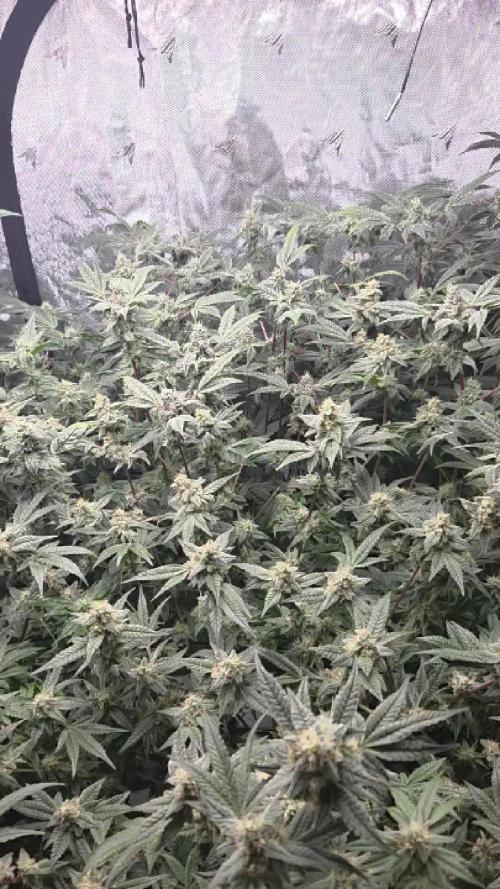

@LGreen
Follow
Einen schönen Sonntag mal wieder & frohes Neues 😊
🌿 Wochenupdate
Es läuft alles in allem weiterhin stabil =)
Ich tracke und erhalte nach wie vor die Nährstofflösung.
Mir ist lediglich ein kleiner Interpretationsfehler unterlaufen…
Notorious hat erste Anzeichen von Salzstress durch einen konstant zu hohen EC gezeigt.
Kein starkes Schadbild und ziemlich sicher nichts, was den Run oder ihre Entwicklung gefährden würde zum Glück =D
Trotzdem hat es mich zu dem Zeitpunkt ehrlich gesagt ziemlich abgefuckt 😅
Ich hätte hier deutlich intensiver hinschauen sollen.
Da sie von ihrer Blattstruktur her generell eher hart bzw. rau ist, ist mir der Fehler erst relativ spät aufgefallen, jetzt zeigt sie bereits leichte lokale Verbrennungen.
Sonst sind keine klassischen Mängelbilder vorhanden, keine Root-Probleme und keine pH-Ausreißer.
Die anderen Ladies performen im selben Reservoir völlig unauffällig 😊
Ich gehe davon aus, hier einen EC-empfindlichen Phäno erwischt zu haben.
Natürlich habe ich mich direkt nach dem ausgiebigen Ärgern daran gemacht, die Nährstofflösung etwas zu entspannen =D..
Ich bin jetzt runter auf 1.800 EC und beobachte zunächst ein paar Zyklen des Uptake-Patterns.
Danach entscheide ich, wie es weitergeht 😊
🌸 Pflanzenstatus & Training
Blueberry Cupcake Frostet fleißig weiter ❄️
Ich finde, sie sieht einfach traumhaft aus 😄
Ihr Geruch hat sich nochmal deutlich intensiviert und geht jetzt klar in Richtung beerig, der Joghurt Teil ist verschwunden =D
Bin wirklich gespannt, was da noch kommt und wie sie sich weiterentwickelt 🔥
Purpz ist Aktuell für mich ganz klar der Eyecatcher im Zelt =)
Top Frost, sehr schöne homogene Sites und ich meine bereits leichte Anthocyan-Einlagerungen erkennen zu können 😍
Der Geruch geht inzwischen eher in Richtung Diesel, mit einem leicht fruchtigen Abgang 🍋
Schwer zu greifen, aber extrem spannend 😄
Notorious THC Entwickelt sich ebenfalls gut 😊
Abgesehen von den lokalen Burns macht sie insgesamt einen guten Eindruck.
Der kushige, eher dumpfe Geruch hat sich manifestiert, allerdings muss man bei ihr schon etwas näher rangehen =)
Vom Frost zieht sie gut nach ❄️
Vom Aufbau her habe ich generell den Eindruck, dass sie etwas später dran ist.
Dafür sehe ich aber klar das Potenzial auf richtig schöne Buds, die Ansätze sehen sehr vielversprechend aus =D
Guzzlerz Hat auch echt gut aufgeholt, bin ehrlich gesagt überrascht 😄
Optisch immer noch etwas zart, das hat sie noch nicht ganz abgelegt,
aber von der Entwicklung her würde ich sagen mittlerweile auf Augenhöhe mit NTHC 👍
Bei ihr meine ich einen leichten bläulichen Schimmer in der jungen Blüte erkennen zu können, für mich bleibt es auch hier absolut spannend =D
Geruchs review gibt's hier beim nächsten update.
⚙️ System
Top-Ups erhalten weiterhin die Lösung 🔧😊
VPD: 1,35 kPa
CO₂: 700–800 ppm im Durchschnitt
EC: 1.800–1.850 µS/cm
PPFD: 1.000
Vielen Dank fürs Lesen und Mitfiebern 😊
Ich wünsche euch allen eine schöne Woche 🌱
Likes
4
Share


@SoulGrownBotanicals
Follow
This was an awesome strain to grow. She was fairly quick , and solid. Stinky for a long time. I've only chopped the main cola so far. The side buds are similar in size to the main just a tad smaller. I can't wait to grow this strain again.
Likes
4
Share


@GeminiCQC
Follow
I'm expecting at least another week on the hubba bubba as it's getting nice and thick, and I haven't noticed any new pistols form in a few days. The ABxRKO is still trucking, and it makes me excited for the next drop that tree1four did. It smells heavy on the burger side, but not super meaty. It has a slightly sweet gassy meaty smell to it.
