


Likes
Comments
Share

@Bauer420
Follow
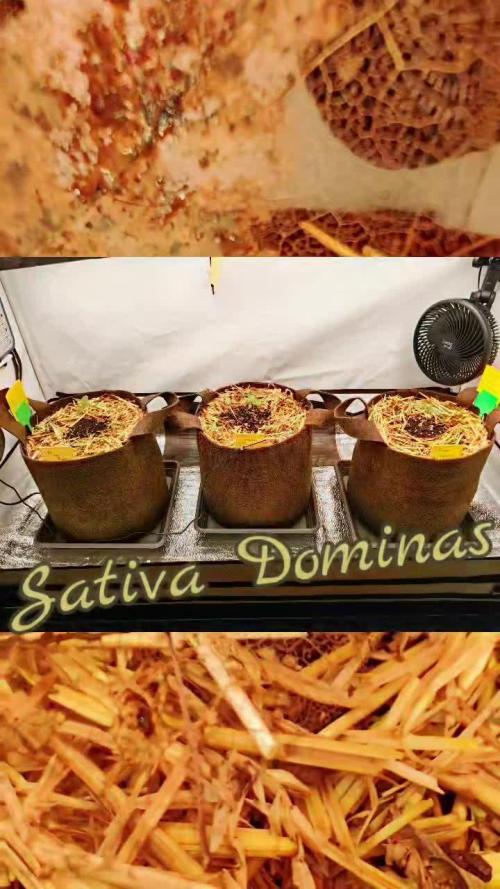
Woche 2 / Tag 9
Die Sativa Diven zeigen Zähne
(und nasse Füße)
Hallo zusammen 👋
Meine zwei kleinen Diven stehen jetzt seit 9 Tagen unter der Crescience Fluxshield 450C (sweet spot bisher 210ppfd– läuft super smooth bisher).
•The Real Amnesia (Growers Choice die echte holländische Clone-Lineage
•Mimosa Gusher (Growers Choice 50/50 Hybrid, aber mit dem citrus mint Gusher-Vibe)
Leider hab ich’s mit dem Gießen mal wieder etwas zu gut gemeint.😅 Was auch der fehlenden zeit geschuldet war, sonst gibts längere anlaufzeiten für's substrat.
Besonders die Real Amnesia zeigt’s deutlich an den Keimblättern die sind jetzt schön braun angehaucht und hängen ein bisschen schlapp.
Klassischer Overwatering Look, Wurzeln haben zu wenig Luft bekommen folge;
→ Wachstum deutlich gebremst die letzten Tage. Aber: Sie steht’s durch! Kein richtiger Crash, nur ein kleiner Denkzettel für mich. Die andere Mimosa Gusher hat es besser weg gesteckt, sieht immer noch fresh und grün aus.
Aktuelle Bedingungen:
Licht: Fluxshield (ca. 30–32 cm)
pH: bei 6.0
Temperatur: 24 °C
rel. Luftfeuchte: ~75 %
Zusätzlicher ungebetener Gast: Trauermücken haben sich eingeschlichen. Aber denen vergeht bald das Lachen 👹habe direkt mit Neemöl gestartet und Nematoden (Steinernema feltiae) kommen die tage.
Die Combo wird in 7–10 Tagen richtig aufräumen. Bis dahin Gelbtafeln + oberste Schicht etwas trockener halten.
Fazit dieser Woche:
Die Sativa-Dominas brauchen eindeutig etwas weniger Zuneigung beim Gießen als meine alten Indica-Hybriden 😄 Real Amnesia hat den größten Kratzer abbekommen, aber ich bin zuversichtlich, dass sie in den nächsten 2-3Tagen wieder richtig Gas gibt, sobald die Wurzeln wieder frei Atmen können. Die Mimosa Gusher sieht super vital aus und macht schon richtig Bock auf die nächsten Wochen.
Nächste ToDos:
Weniger ist mehr 😅
Licht auf 300ppfd erhöhen. (Sobald nächsten blattpaare voll entwickelt)
Danke fürs Vorbeischauen
Feedback, Tipps immer gerne! 💚
Stay groovy und nicht zu nass gießen 😉

Likes
7
Share


@Adam22
Follow
Flushed for 3 days so far so good. No yellow tips on the leafs yet but I may just have to pull this plant down today I have just 1 plant in the tent it doesn't seem worth running this just for 1 plant so I will pull down later today I think and upload pics and remember where I went wrong for next time. I have some new seeds just been delivered I think next time I will try to have an additional tent slightly bigger so I can have 2 different strains growing at the same time. Definitely using feminised seeds also as don't have time to waste vegging for 6 weeks a plant to just end up with balls. Next run will be:
4 x cookie dawg
3 x velvet moon
1 x sherbert punch
I will be looking for a decent led light for the next tent also I would like to run the same strain in both tents and see what the difference in the results are using my hps light vs led
Harvested plant 1
5oz budd
14g popcorn buds and leaf trim
Likes
10
Share


@Shefman93
Follow
5 more weeks left on the schedule for the veg cycle, growth has been amazing with no signs of stress. I am also using recharge at every watering at (1/4) strength.

Likes
17
Share


@Naujas
Follow
She is much prettier than she was a week ago :) I remembered that I have my first grow light, which is more compact and it will give me more space, so I changed my light, now the girl's side branches get light too:) I add a lot of video memes, because I really want to win Iphone16 pro ;) and those who don't take risks don't drink champagne:) good luck to everyone.

Likes
18
Share


@Sonic_Y
Follow
HARVEST!!!! HARVEST!!!
1. APRIL 1. APRIL 1. APRIL 1. APRIL 1. APRIL 1. APRIL 1. APRIL 1. APRIL 1. APRIL
DAY 93 / Flower 54
Here we go.
I beat the 1 kilo wet weight again, which is awesome.
Will be 250-290 dried. YAY....
Buds are super frosty. Gluing my fingers up, that i almost can't split them anymore. Be careful!! :)
That was a fun harvest on a historical day in my country......
I'm having the time of my life...uuuuhhhh
music for harvest:
Nexcyia - Endless Path of Memory
Moor Mother - The Great Bailout
Lolina - Unrecognisable
Klaus Johann Grobe - Io tu il loro
Klara Lewis & Yuki Tsujii - Salt Water
Earth Flower - Earth Flower
DJ Nigga Fox - Chá Preto
Adrianne Lenker - Bright Future
Tomato Flower - No
Drying diary will be updated from time to time.
I'm planning to cure at least 3-4 weeks before vaping it for the first time.
Next Grow in line. Will start in about 1-2 weeks.
One of my first yearly music festival in the hague starts on friday (rewire festival).
I'm feeling so excited, actually. Spring/summer is coming as well..yayyyyy
23.04.
About 2,5 weeks of curing done.
I have about 234gramms dry until now.
Vaped a bit and it's awesome.
Pretty strong sativa effect throught the end.
Feels like a energy drink.
Perfect summer weed, instant energy, euphoria, creativity.
Summer can come!!! :) uuuuhuhuhuhuh
28.04
New Pics.
That strain is amazing.
Pretty glad to have this strain for the summer.
Will be the best summer of my life. :)

Likes
9
Share


@Mr_nugs_lover_David
Follow
Another beautiful pheno of the big jeff by Gecko seeds which is the cross of: Cookies kush X Casey Jones, the plant is showing beautiful indica hybrid characteristics, it's gonna be a wonder plant for sure! Let's keep on working!! 💛💚❤️👨🌾

Processing
Likes
2
Share


@Fergie
Follow
Hey guys so another couple weeks hav3 passed this lady's is coming along nicely . Started pre flower and stretch should come this week .
Likes
8
Share


@SherbGrows
Follow
Ganja Farmer
AK 2.0 XL
Day 47 from sprout
Light viparspectra XS 2000 dialed in at 75% intensity
watering every other day or every two days
The bud structure is growing very differently with this strain. Flowering came a bit later but I did give LST early on which could have delayed flowering.
See you all next week! happy growing!

Likes
19
Share


@Unpluggy
Follow
Hi there Friends🕊️
Purple Lemonade is still doing really good!
New light arrived today so all 3 Plants are covered up nicely. I wish i would have startet in 18-24l pots but its just fine for the for grow with my 11l pots.


Likes
17
Share


@HowtoBubatz
Follow
It’s the third week of flowering, and the plants are starting to show some exciting progress! 🌿
The buds have begun to build mass, and the first signs of trichome development are visible, giving them a light nice, frosty look. ✨
I did notice a few nutrient deficiencies on the leaves, likely due to underfeeding, as I’m using a medium with 50% coco.
To fix this, I adjusted the nutrient levels, and the plants seem to be responding well. 🌱
The plant that wasn’t trained with LST is about a week ahead in development compared to the LST version, showing more advanced bud growth.
Also, the smell is becoming more pronounced, with the first hints of that classic, sweet aroma filling the tent. 🍬🌿
I’m excited to see how things continue to unfold in the coming weeks! 😁✨
Likes
23
Share


@adam_pawloski87
Follow
This week went very well! One will be getting cut an hung to dry while the rest finish up with one more week of flush ! These ladies are smelling so lovely I hope you all enjoy! Stay tuned for next week! Cheers 😤💨💨💨💨💨
Likes
1
Share


@UDUDUDUDU
Follow
fkkin second one dried up
contacting customer support and I will neVer grow Royal Queen again 🦁
Waste of time and waste of money ' a plant that cant handle a little REAL wind and sunshine and REAL dort aint a plant worth smoking'

Likes
30
Share


@valiotoro
Follow
Hello everyone week 2 of flower has passed for this Skywalker haze auto 💥
Mars hydro SP-6500 75%
have a great day and wish you all happy growing 😎👨🌾🏻

Likes
115
Share


@DogDoctorOfficial
Follow
Week 11 Blossoms: Cherry Cola's Resilience Shines Through
Dear fellow cultivators, my sincere apologies for the delayed report presentation. Nevertheless, let's delve into the remarkable journey of Week 11 in the realm of Cherry Cola. Amidst the delay, our green queen's resilience shines through, a testament to the unwavering spirit of growth and adaptation.
As Week 11 unfolds, Cherry Cola emerges as a beacon of floral splendor in the garden. Despite the challenges and the unforeseen delays, her blossoms continue to enchant, a testament to the beauty of resilience in adversity.
Apologies for the delayed glimpse into Cherry Cola's progress, but rest assured, the wait has been worth it. The buds have matured into luscious clusters, each a testament to the journey of patience and perseverance.
In a strategic move towards harvest, all feedings have been halted, and Cherry Cola is now receiving plain water with a TDS of 100 and a pH of approximately 6.8. This transition ensures a gradual flushing of nutrients, allowing for a smoother, more flavorful final product. It's a testament to our commitment to quality and taste.
I extend my heartfelt apologies for any interruption in the flow of updates. Your support and understanding are deeply appreciated as we navigate through the twists and turns of this horticultural journey.
Just as Cherry Cola's roots anchor her amidst the storms, may we too find strength in our resilience. Let her journey be a reminder that delays and setbacks are merely temporary detours on the path to success.
As we embrace Week 11 with grace and understanding, Cherry Cola's journey serves as a poignant reminder of the beauty found in resilience. Let us move forward with renewed vigor and optimism, ready to face whatever challenges lie ahead. Stay tuned for more updates as Cherry Cola's story unfolds. Thank you for your patience and unwavering support.
Nutrition: @aptusholland @aptus_world @aptus_
Love, Care, and Attention: @dogdoctorofficial
As always, thank you all for joining me on this journey, for your love, and for it all. My horticultural odyssey would never be the same without you. Your love and support are cherished, and I feel both honored and blessed to have you in my life
Friendly reminder all you see here is pure research and for educational purposes only
Growers Love To you All 💚 💚 💚
Likes
31
Share


@Mrs_Larimar
Follow
2024-08-31
Tangerine Snow F1 fast, performs like a Queen,
iam so impressed by this Strain, really the bet i have grown for long time
in and outdoors!!!
The Outdoor Girl, soaks in the Perfect weather Conditions , she loves her spotunder the Roof
in good Company.
She drinks and eats like a champ, but as you can see she needs it.
Sher performs like a Plant that sits in open Ground, but she is into ( only) 15 L Growbag.
thats awsome
The revegetating Girl
She shows sweet new Flowers already
( she was harvested weeks ago, and i let her revegetate outdoors)
so we are going to have another Harvest here.
iam super fascinated.
BREEDER INFO
Tangerine Snow F1 Fast Feminised is a 75% sativa, four-way cross of (Boost x Tangelo) with (Lavender x Power Plant).
This Fast F1 hybrid is bred from Cali genetics and boasts great citrus terps, high resin production for extracts,
high levels of THC, very good yields and excellent mould resistance.
Tangerine Snow F1 Fast can be grown indoors as well as outdoors. Indoor flowering times are between 8 - 10 weeks
while harvest time in northern latitudes is during September while in the southern hemisphere growers will be harvesting during March.
Recommended climate regions are hot, dry, humid and warm. These are tall, semi-branched plants that grow in excess of 200cm
and display a high degree of vigour with very good uniformity.
In common with many other heavily sativa-dominant strains, Tangerine Snow F1 Fast offers excellent resistance to mould
as well as to plant pests and diseases. The combination of citrus terps and plenty of resin makes thi
a very good extract strain with the 'washing' method delivering very good yields of hash.
The citrus terpene profile is reminiscent of mandarins and tangerines and also has sweet candy notes.
THC production has been lab-verified at a strong 24% while CBD is low. The effect is uplifting and energising,
perfect for use during the day and early evening.

Likes
7
Share


@BucketHathead
Follow
3/28/23
Keep finding pm in different places and having to spray it down. Added a few more fans just in case and it’s just everywhere. I think I’ll need to do a full tent clean before the next run to get everything clean.
I trellised the ackbar twins. They’re huge and putting out so much bud. Took awhile to get it all right and ended up bending a few branches but I have a feeling it’s gonna be great when it’s finally done.
Blueberry got topped and is starting to grow exponentially. Hoping it will have some stretch to it when it gets its chance to be the canopy but I don’t think it’s gonna be the plant that ackbar is because it hasn’t gotten proper light.
White widow is flowering as well but it’s so minimal because the plant is also getting no light. Going to let it run its course but it’s just not getting what it needs at the bottom of the canopy.
I should’ve known better but putting too many plants in one box but I didn’t know they would get this big.


Likes
2
Share


@DogDoctorOfficial
Follow
👑 8×8 Adventure – Week 13 🌿
Godfather OG – Pheno A 👑🔥
🌸 The Queen Is LOUD… And She's Looking Better Than Ever
Hello everyone, and welcome back to another chapter of the 8×8 Adventure! 🌱💚
Guess what?
The Queen is still shining.
👑✨🌸
And honestly...
WOW.
This girl continues to surprise me.
Godfather OG Pheno A is looking absolutely remarkable right now. The flowers are developing beautifully, the colours are changing, the plant is moving deeper into maturity, and the overall appearance of this girl is becoming something really special.
And then there's the smell...
😂
OH MY GOD.
This girl is LOUD.
🔥👃💨
I don't know yet if she's going to be the loudest plant in the entire 8×8.
But let's just say...
she's making a very strong argument.
And that's quite something considering what we've already smelled in this room.
She's been one of the more difficult girls throughout the journey. She hasn't always been the happiest-looking plant in the room. She's had her moments. She's had her stresses. She's made us work a little harder to understand what she was trying to tell us.
But now?
Look at her.
Just look at her.
The Queen is looking like a Queen.
👑🌸💚
So let's give her the spotlight she deserves.
────────────────────────
👑 WEEK 13 – THE QUEEN KEEPS SHINING
Week after week, Godfather OG Pheno A has been writing her own story.
And it hasn't necessarily been the easiest story.
She's had stress.
She's had moments where she wasn't exactly the happiest girl in the room.
She's made me question things.
She's made me watch her more closely.
She's made me learn.
But that's exactly what makes this week so satisfying.
Because despite everything...
she's still here.
And she's beautiful.
Really beautiful.
The flowers are looking increasingly mature.
The colours are becoming more pronounced.
The pistils are changing.
The foliage is fading in places.
And the overall plant is giving us that unmistakable feeling that we're moving deeper into the final chapter.
She's not simply growing anymore.
She's finishing.
And she's doing it in her own style.
👑🌸
────────────────────────
🌿 LOOK AT THOSE COLOURS
This is one of the things that really caught my attention this week.
Look at the fading.
Look at the colours appearing throughout the plant.
Look at the transition.
This is one of those moments where the photographs really tell the story.
Earlier in the grow, she was carrying much more uniform green.
Now we're seeing those deeper flowering-stage changes becoming more obvious.
And I absolutely love it.
Not because "fading = better."
That's not the point.
The point is that we're watching the plant change.
We're watching her move through time.
We're watching the transition from active flowering development toward maturity.
And with Godfather OG Pheno A, that transition is becoming beautiful.
She's developing her own palette.
Her own colours.
Her own final expression.
And when you put the photographs from earlier weeks beside these...
you can really see how far she's travelled.
────────────────────────
🌸 THE FLOWERS ARE LOOKING BEAUTIFUL
And then we get to the part that really matters...
the flowers.
🔥🌸
They're developing beautifully.
The buds are becoming more substantial.
The structure is becoming increasingly defined.
The pistils are changing.
The resin continues to catch the light.
And everything is starting to look much more mature.
This is the stage where you can finally start seeing the plant's personality expressed through the flowers themselves.
Not just:
"Here is a flowering plant."
But:
"This is what THIS phenotype produces."
And Godfather OG Pheno A is giving us something beautiful.
She's not trying to be the biggest.
She's not trying to be the most perfect.
She's not trying to behave like the other eleven girls.
She's simply being herself.
And I really like what she's becoming.
────────────────────────
💎 THE RESIN IS STILL GETTING MY ATTENTION
Of course...
I can't talk about this girl without talking about the frost.
😂💎📸
The closer we get...
the more she gives us.
The flowers are becoming increasingly decorated with resin.
The sugar leaves are carrying that beautiful frosty appearance.
And when you combine that with the changing colours?
Oh my.
👑❄️🌸
This is exactly why I love photographing these girls week after week.
The full plant tells one story.
The individual flower tells another.
And the macro tells you something completely different again.
You can see the progression.
You can see the maturity.
You can see the resin.
You can see the colours.
And you can see just how much this girl has changed.
────────────────────────
👃 AND THEN THERE'S THE SMELL...
Okay.
We need to talk about this.
Because this girl is LOUD.
😂😂😂
I mean...
LOUD.
🔥👃💨
Every time I get close to her, she makes her presence known.
And that's saying something in a room with twelve different plants.
I don't know yet if she's officially the loudest.
I'm not giving her that crown just yet.
😂👑
We need to wait.
We need to compare.
We need to get through the harvest.
We need to see what happens during drying and curing.
And then, eventually...
we'll really know what this girl has to say.
Because aroma can evolve dramatically throughout the rest of the journey.
But right now?
Let's just say...
Godfather OG Pheno A has entered the conversation.
And she's shouting.
😂🔥👃
────────────────────────
🔊 IS SHE GOING TO BE THE LOUD ONE?
This is now officially one of the questions I'm carrying into the final part of this diary.
We've got twelve girls.
Twelve different phenotypes.
Different structures.
Different flowers.
Different expressions.
And eventually...
we'll get to compare them.
Who has the most interesting aroma?
Who has the strongest aroma?
Who changes the most during drying?
Who develops the most interesting cured profile?
Who surprises us?
And who...
is simply fucking loud?
😂🔥👃
Godfather OG Pheno A may have just volunteered herself for that last category.
But I'm not declaring the winner yet.
We'll see.
And when we eventually get to the smoke reports and final reviews...
that's where we can really talk about it properly.
For now...
I'm just enjoying the smell.
A LOT.
────────────────────────
🌿 THE QUEEN WASN'T ALWAYS THIS HAPPY
And this is something I really want to acknowledge.
Because looking at her now, it would be easy to forget the journey.
She hasn't exactly been the easiest plant in this room.
She's had stress throughout the grow.
She's had moments where she didn't look like the happiest girl.
She's made me pay attention.
She's made me adapt.
And sometimes...
she simply made me shake my head and say:
"Okay, Queen. What are you doing now?"
😂👑
But that's the beauty of growing individual phenotypes.
You don't get twelve perfect copies.
You get twelve personalities.
Some are easy.
Some are demanding.
Some are fast.
Some are slow.
Some seem to love everything you do.
Some make you work for every little bit of cooperation.
And Godfather OG Pheno A?
She's definitely made me work for her.
But now she's giving something back.
And I think that's pretty damn special.
────────────────────────
❤️ THE REWARD AFTER THE STRESS
This is probably what makes me happiest about this week.
It's not just that she looks beautiful.
It's that she looks beautiful AFTER everything.
After the stress.
After the difficult moments.
After all the times I wondered how she was going to finish.
She's still standing there.
Still flowering.
Still producing resin.
Still developing colour.
Still smelling absolutely ridiculous.
And looking better than ever.
😂👑🌸
That's a reward in itself.
Sometimes the plants that give you the easiest ride aren't necessarily the ones you remember most.
Sometimes...
it's the difficult ones.
The ones that make you learn.
The ones that make you pay attention.
The ones that keep you guessing.
And then, at the end...
they turn around and give you something beautiful.
That's Godfather OG Pheno A for me.
────────────────────────
💡 THE PHOTON EXPERIMENT CONTINUES
The lighting setup remains unchanged.
We're still running the upgraded Future of Grow environment with the two additional Black Series 600W fixtures.
We're controlling their output at approximately:
🔌 59% power from the plug
And the upper canopy remains around:
☀️ ~1,500 PPFD
That's a lot of photons flying around this jungle.
😂☀️🌿
But again, the interesting part isn't simply the number.
It's what the different plants do with those photons.
Godfather OG Pheno A is giving us another answer.
She's developing.
She's maturing.
She's producing flowers.
She's changing colour.
And she's showing us her own expression.
Same artificial sun.
Different genetic response.
That's the 8×8 Adventure.
────────────────────────
☀️ SAME PHOTONS — DIFFERENT QUEEN
This is something I keep coming back to because it becomes more obvious every week.
The environment is shared.
The lighting is shared.
The irrigation is shared.
The nutrition philosophy is shared.
The room is shared.
But the plants don't behave the same.
Godfather OG Pheno A has her own interpretation.
And I love that.
We're not trying to force her to behave like another phenotype.
We're not trying to make her look like somebody else.
We're simply providing the stage...
and watching what she does on it.
And right now?
She's putting on one hell of a show.
👑🔥🌸
────────────────────────
⚗️ NUTRITION – THE FINISH IS APPROACHING
We're also continuing with the gradual nutritional transition as the room moves deeper into the flowering cycle.
Terra Bloom has been reduced from the earlier level toward:
🌱 2.0 ml/L
with the EC now around:
⚡ ~2.05 mS/cm
The philosophy remains the same.
Gradual.
Observational.
No dramatic overnight changes.
We're approaching the final part of the journey, so we're beginning to reduce the mineral base while continuing to watch how the plants respond.
And Godfather OG Pheno A is giving us plenty of information.
The flowers are developing.
The colours are changing.
The plant is moving.
The resin is building.
And now we're watching her approach the final stage.
She's getting there.
But we're not rushing her.
────────────────────────
🌸 THE PLANT GETS THE FINAL VOTE
This is probably one of the biggest lessons from the entire 8×8 Adventure.
We can have calendars.
We can have feeding schedules.
We can have expectations.
We can have numbers.
But ultimately...
the plant gets the final vote.
Godfather OG Pheno A is telling us:
"I'm changing."
"I'm maturing."
"I'm getting closer."
And our job is to listen.
That's what I'm doing.
I'm not trying to force her into a specific timeline.
I'm watching.
I'm photographing.
I'm smelling.
I'm comparing.
And I'm letting her show me where she is.
────────────────────────
📸 THE QUEEN DESERVES HER PORTRAITS
And yes...
the Queen gets her photographs again.
😂📸👑
After her previous photographic privileges were restored, there is absolutely no way we're taking them away again.
She's earned them.
And honestly...
look at her.
These flowers deserve to be photographed.
The colours deserve to be photographed.
The resin deserves to be photographed.
The fading deserves to be photographed.
And the plant herself deserves the spotlight.
This is what these individual diaries are about.
Not just showing the final result.
Showing the journey.
Showing the difficult weeks.
Showing the beautiful weeks.
Showing the changes.
Showing the personality.
And Godfather OG Pheno A has certainly given us a journey.
────────────────────────
🌡️ WEEK 13 – CURRENT ROOM CONDITIONS
The 8×8 continues under the same general environment:
🌸 Flowering — Week 13
💡 Light schedule — 12/12
☀️ Upper-canopy PPFD — ~1,500
🔌 Future of Grow Black Series output — ~59% from the plug
🌡️ Day temperature — ~26.5–27°C
🌙 Night temperature — ~25–26°C
💧 Relative humidity — ~60–61%
🌱 Substrate temperature — ~25–26°C
💦 Nutrient solution temperature — ~25°C
⚗️ pH — approximately 6.0
⚡ EC — ~2.05 mS/cm
💨 CO₂ — ~693 ppm
💧 Irrigation — ~1.4–1.45 L/plant/24h
🌱 Pot size — 15 L
The room remains stable.
The lighting remains strong.
The plants continue moving at their individual speeds.
And the Queen?
She's still doing her thing.
────────────────────────
🔬 SAME ROOM — DIFFERENT JOURNEY
This is becoming more fascinating every week.
Because we're getting close enough to the end that the differences between these plants are becoming extremely obvious.
Some are still very green.
Some are fading.
Some are moving quickly.
Some are taking their time.
Some are developing huge flowers.
Some are developing unusual structures.
Some are incredibly frosty.
Some are incredibly aromatic.
And Godfather OG Pheno A?
She's giving us colour...
resin...
flowers...
and one hell of a smell.
😂👑🔥
That's her expression.
That's her story.
And I wouldn't change it.
────────────────────────
🌿 LET HER FINISH HER STORY
At this point, I'm not interested in trying to turn her into something else.
She's already shown us who she is.
She's been stressed.
She's been difficult.
She's been beautiful.
She's been stubborn.
She's been rewarding.
And now she's approaching the final chapter.
So we're going to let her finish.
We're going to continue observing.
We're going to continue documenting.
We're going to continue watching the flowers.
We're going to continue watching the colour changes.
We're going to continue enjoying that ridiculous aroma.
And eventually...
we'll harvest.
Then we'll dry.
Then we'll cure.
And THEN...
we'll really get to know this girl.
Because that's when the story gets even more interesting.
────────────────────────
🔮 WHAT COMES NEXT?
We're getting closer.
And I have to admit...
I'm curious.
Very curious.
Because the plant is already giving us clues.
Beautiful colour.
Mature-looking flowers.
Increasing resin.
Changing pistils.
And that smell...
😂🔥👃
But we're not going to spoil the ending.
We'll let her take us there.
And when we eventually reach the harvest and curing stages, we'll talk properly about the aroma.
The flower structure.
The final appearance.
The dry weight.
The cure.
The smoke.
The flavour.
The effects.
Everything.
But for now...
we're still in the garden.
Still watching.
Still learning.
Still enjoying the Queen.
────────────────────────
❤️ FINAL THOUGHTS – LOUD, BEAUTIFUL & STILL THE QUEEN
Week 13.
And Godfather OG Pheno A is still shining.
👑🌸💚
Honestly...
I'm really, really happy with how she's looking.
Look at those flowers.
Look at those colours.
Look at that fading.
Look at the resin.
Look at the plant.
She's remarkable.
She's amazing.
And considering how much stress she's had throughout this entire grow...
I'm genuinely impressed.
She hasn't been the happiest plant in the room.
Not by a long shot.
😂
She's made that very clear.
But maybe...
just maybe...
she was saving all that energy for the flowers.
Because now?
She's showing us something beautiful.
And she's smelling absolutely insane.
🔥👃💨
I don't know if she's going to be the loudest girl in the 8×8.
I'm not giving her that crown yet.
But she's certainly making her case.
And when we finally get to the smoke reports...
that's going to be a very interesting chapter.
For now, though...
let's just appreciate what she's becoming.
The Queen has been through a lot.
She's had her moments.
She's tested our patience.
She's made us pay attention.
She's made us learn.
And now she's standing there...
beautiful.
Frosty.
Colourful.
Aromatic.
And completely herself.
That's what I love about phenotype hunting.
You don't always get the easiest plant.
You don't always get the happiest plant.
You don't always get the biggest plant.
But sometimes...
you get a plant that makes you say:
"Wow."
And Godfather OG Pheno A is giving me that feeling right now.
👑🔥🌸
So let's give her the spotlight.
Let's celebrate her.
Let's photograph her.
Let's enjoy her aroma.
And let's see how loud this Queen really is when the time comes.
Until then...
Keep shining, Queen.
You've earned every bit of that crown.
👑🌿💎🌸🔥
────────────────────────
🙏 THANK YOU
A huge thank you to Zamnesia for giving us these Godfather OG genetics and allowing us to explore this individual phenotype throughout the 8×8 Adventure. 💚🌸
Thank you to Plagron for supporting the garden throughout this journey and providing the nutritional foundation behind these flowering girls.
A massive thank you to Future of Grow for supplying the Black Series lighting and especially for providing the two additional Black Series 600W fixtures we're testing in this room. 💡🔥
The extra lighting capability has given us another fascinating variable to observe across these twelve completely different plants.
Thank you to Lumiflora for helping bring additional light deeper into the canopy and allowing us to explore this room as a three-dimensional lighting environment.
Thank you to TrolMaster for helping us monitor and manage the environment behind the scenes.
And, of course...
thank you to everyone following the 8×8 Adventure here on GrowDiaries.
Every week...
another chapter.
Another phenotype.
Another personality.
Another lesson.
And Godfather OG Pheno A has certainly given us a story.
She's been stressed.
She's been difficult.
She's been beautiful.
And now...
she's becoming absolutely remarkable.
👑🌸🔥
And possibly...
very, very loud.
😂👃💨
We'll find out.
The final chapters will tell us.
Until then, we're going to keep doing what we do.
Observe.
Document.
Listen.
Adjust when necessary.
And let the plants show us who they really are.
Godfather OG Pheno A...
the Queen is still shining.
And she's looking damn good doing it.
👑💚🌸💎🔥
Growers Love, happy growing, and take care everyone! 🌱💚
See you next week in the 8×8 jungle.
🌿🔥👑

Likes
15
Share


@Bennygen2
Follow
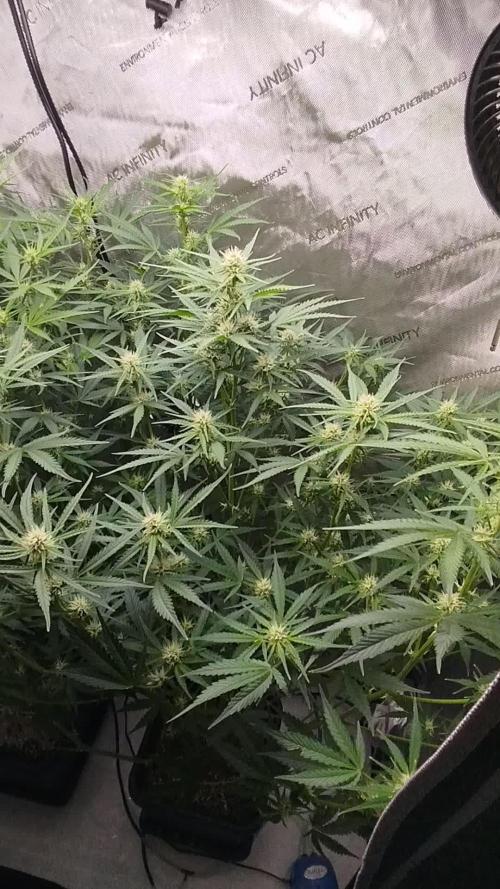
She was grow at a rapid rate until she got nute burn then she slowed right up learnt my mistake for next time still had 5 oz but was particularly dense but still moderately strong



Likes
4
Share

@Smoking_Joe_Frazier
Follow
26.05.2026
Hi Growmies!
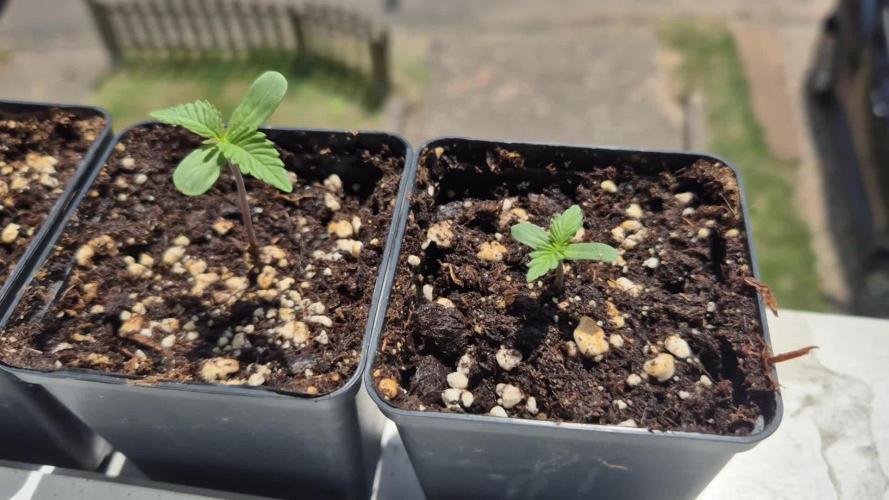
Finally, it’s that time again, my friends! The grow season has begun, and I’m so excited to take this journey with you. This year, I’m growing three Fast Buds strains (Leftovers from last year): Apricot, Tangie, and Papaya Cookies. The germination kicks off on my windowsill, in small pots of about 0.25 liters, filled with Biobizz Light Mix. I can’t wait to see them sprout as I add mycorrhiza to the planting hole. Once they’re strong, I’ll transplant them into 15-liter fabric pots with Plagron Bat Mix. After that, they’ll move outside into my greenhouse, where they’ll fully flourish under the sun. I can’t wait to see what this season brings!
All three seeds germinated (as always) although the seeds are from last years grow.I don’t use any additional lights; the natural sunlight is perfect right now. I keep them on the windowsill in the morning, and during the day, I move them to the back of my balcony where they get plenty of sun.
Alright fellas, thats it for now, catch you late
Smoking_Joe_Frazier