


Likes
Comments
Share


Likes
5
Share


@GrowLegend
Follow
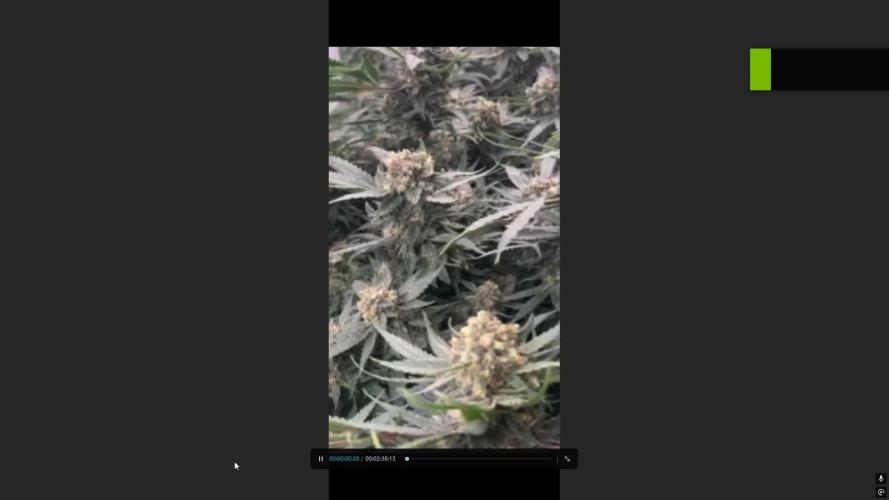
Bien aquí esta el día esperado la cosecha, es mi primer cultivo y considero que lo logre. En muchos medios de lectura y en especial en vídeos mencionan que no puedes esperar mucho es tu primer cultivo. En mi caso es falso y lo demuestro ya que si aprendes, investigas por cuenta y lees lo suficiente, obtendrás un alto porcentaje de que los resultados se den. Muy contento con mi plantas y sus tonos morados. Puntos a mejorar tener una carpa de cultivo y por su puesto un extractor de humedad para que baje la humedad preferiblemente a 45 grados
Vendrán mejores contenidos y cosechas mas abundantes. Gracias a todos por su vistas y comentarios. Saludos y bendiciones!

Processing
Likes
13
Share


@Silverback_Guerilla
Follow
SUNDAY 5/5:
Rearranged the gardens..have 17 plants in the 4 x 5 now...yowsa!
MONDAY:
Plucked some dead leaves and did a trichrome check on her. She's getting close now! Prolly about 80% cloudy and 5% amber! I'll start flushing her tomorrow or the next day if she's not dried out yet.
TUESDAY:
I observed some white spots on a few leaves here and there, so I sprayed her today with Trifecta Crop Cure, a concoction of a bunch of natural plant oils. I already decreased the humidity in the room to 45% with my new 70L dehumidifier, so I think she'll be fine. I'll spray her again tomorrow and the next day, then I'll have to hope that did the trick, because she is already in the harvest window.
WEDNESDAY:
I flushed her today with about 4 gallons of ph'd spring water and bembe. It was her last dose of any nutes...flushing with only spring water from here on out.
THURSDAY:
Took a couple of photos and tried installing my new Solacure FlowerPower UVB light, but it was dead on arrival.😢..back to the 15.0 reptile UVB lights for now I guess...

Likes
8
Share


@Hawkbo
Follow
Pics and video were taken a few days ago been busy as shit lately so the update is a little late. I'm gunna put the video up first on all of them then go back and upload the pics so if come back if the pics arent up yet.

Processing
Likes
51
Share

@Silverback_Guerilla
Follow
12/28 - 1/3:
Another busy week with life...
Last fed on Sunday 1/3
The plants are all budding up well and frosting over quite early!
I am hoping to remove the smallest three plants from this closet and move them into the tiny tent in the next couple of days..flushing the autos in there today (1/3). That will hopefully give the bigger girls a little room to spread their wings.


Likes
23
Share


@PrairieFrostGrow
Follow
*
********* Week 11 - June 20 to 26, 2020 - Days 71 to 77 from germination ***********
*
It is the end of flush week and she went into darkness on Wednesday night, day 75, for two days. Saturday will be harvest day and start and the dry process👍
She has certainly been going through the beautiful stage of senescence and her fade is gorgeous. The purples and yellows coming out are great......covers up the brown spots😂😂 Her buds are densing this week as we work on bring down the humidity. Running in the mid 60’s for humidity late in flower is a different experience and one that takes some getting used to. Bring down further to low 50’s has really helped to bring out her frost as well. Kept the humidity high to form big buds......now lowering to make them more sticky👍👍
I am feeling very strongly that the big part of the pH issues this run was a change in feed water. I have always used bottled RO water for all my grows, except outdoors, but this grow I switched to tap water. Dechlorinated the water with air stone and gave it 24 hours min before using. Wanted to save some money and tired of lugging bottles downstairs a couple of times a week☹️ This is worked out nicely and a lot more convenient. However, the city must be putting some crap in the water that is causing issues in my media and raises the pH after the watering. Out of the tap it is 8.4pH and 275ppm. Since ppm were not too bad in my opinion I moved forward without filtering the water.......oops🤬🤬🤬 Out of options on what is causing the issue, I switched back to RO water late last week........all the girls are happier!!!! F......missed the cause for weeks. Always learning from this plant and my own mistakes to get better every run😉👍
Also wanted to add a little more stress to girl to help push out some increased resin. I drilled a 5/16” hole into the main stem to cause her stress. I did this rather than trying to break a branch and will see how it goes this run. Sterilized a new bit in Alcohol and went for it. They went into darkness about a couple of hours later. Excited to see what happens when she comes out to get chopped😃😃
Little more detail......
June 20/20 - Day 71
- Rezin and Liquid Weight @ 2ml/L = 285ppm and 4.0ph
- 8L given to get a good flush
- Runoff in pots already were 7.8pH and 485ppm.
- after 8L water runoff was 7.0pH and 370ppm.
- she is 29” tall and 30” wide.
- tricombs still mainly cloudy.....review again in couple of days.
June 21/20 - Day 72
- Dry out day
- buds are firming up......squeezed a couple🧐
- temps are nice outside so tent able to hold 75 degrees and 51% humidity.
June 22/20 - Day 73
- Rezin @ 1ml/L = 120ppm and pH the water to 2.7!!!!!!!!!
- Given 2L watering.
- No runoff water and I am good with that as I want the low pH water to stay in the medium.
- She will be ready soon. Thinking darkness on Wednesday and harvest on Saturday??
June 23/20 - Day 74
- 2L plain water feed - 80ppm and pH to 2.4!!!!!!
- not excited about these crazy low pH numbers but doing what we can
- her tops are getting really pointy now and her leaves are very yellow.
- checking tricombs, I think we are done and tomorrow will be her last day so that I can take down on Saturday.
June 24/20 - Day 75
- 2L plain water feed - 80ppm and pH to 3.0
- Going into darkness tonight so this was her last bit of moisture.
- drilled a hole into the stem.....was going to do a couple of holes but not trying this method before I decided to leave it with one hole.
- into darkness tonight
So we finish up the week with her in the dark. Next update will be the harvest!!
Thanks very much for taking the time to review my diary!! Sorry for running behind often on this run.........everyone has had a busy life the last couple of months in the world and its been no different here...........a huge Kudos to all the Growmie‘s that are able to keep up with their diaries on daily basis on GrowDiaries.......its a commitment😃👍👍
Mephisto has bread a very nice girl. She is big and sticky and grown very well considering the environment she has been given. Battling the high pH and still turning out as she has is awesome and much respect!!!! Great job Mephisto, can’t wait to run her again.......just so happens I have several more seeds of her😃👍


Likes
11
Share


@Tuki3
Follow
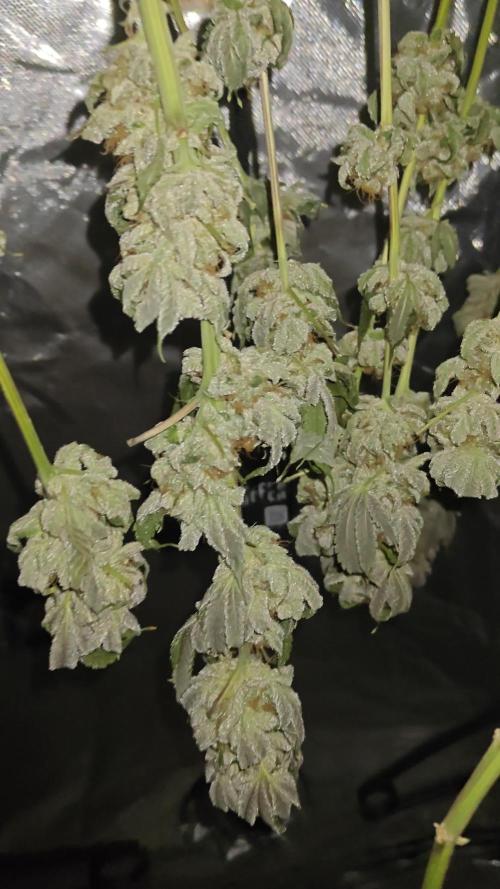
Buenas gente, vienen tomando buena formita los cocos! muy contento con su aroma como ya he mencionado, y ahora que estamos arrancando las 6ta semana se empieza a ver la parte mas linda (a mi parecer) que es el engorde.. es esa semana crítica donde uno piensa que los cogollos se estancaron, que algo le pasó, y ahí es cuando aguantas 2 o 3 días más, y te das cuenta que empezó a engordar 😍😍😍😍
Veremos estas semanas como sigue!

Likes
45
Share


@GreenHouseLab
Follow
So we have one in week three of flower and the other is currently still in veg do to vegetables and other #AUTOs started for friends. It’s going to be interesting to say the least having that hydro in flower will be insane, almost need to remove half in clones just to be able to maintain. From what I’ve from her sister the stretch is easily manageable.
Cheers to good Budz & Buds
Likes
26
Share


@MrJones
Follow
Strawberry Pie Auto
~~~~04.20.23~~~~
Day 13 - Above Ground
🔸05.06.23 -So these girls continue to be amazing, scuffed up the soil today, and added airstones to my reservoir, even though it is just water maybe the plants will enjoy the extra oxygen!, the Medic Grow Smart 8 LED is doing very well, at 40% the plants are getting plenty of light and not showing any signs of over-stretching!
🔸05.03.23 - Just over the last 4 days these plants are just growing vigorously and healthy, first real watering today and the plants are starting to eat that Gaia Green amended soil and loving it, the Medic Grow Smart 8 LED is doing very well, at 40% the plants are getting plenty of light and not showing any signs of over-stretching!
~~~~~~~~~~~~~~~~~~
📝Strawberry Pie Auto
📝Grown By: MrJones
📝@fastbuds_official
📝Soil - ProMix HP
📝Medic Grow Smart 8 LED - SETTINGS 40% V1
📝@medicgrow420
📝@gaiagreenorganics
~~~~~~~~~~~~~~~~~~
📝 A true delight with a delicious aroma and a stunning 26% THC. This eye candy of a cultivar boasts unique colors and reeks of red berries and cookie dough that will leave your mouth watering.
~~~~~~~~~~~~~~~~~~
Likes
8
Share


@Tweak
Follow
Not much to talk about this week. Stretch is over, buds are beginning, only GG12 has any smell yet. Say hi and come again next week.


Processing
Likes
20
Share


Likes
9
Share


@Herbie
Follow
*Edit: dry weight and pic added 41.6g on the scales, plus a healthy 15g..... erm... product testing.... ahem!
I''ll call it 2oz dry all in. I'm happy with that.*
My second Purple haze auto from sensible seeds and again very happy with the plant. I have so many more strains to try, so I may never grow one again, but if I could only grow one strain again, from my short experience this girl would be the one for me.
I could have harvested this girl a few weeks ago but I thought I would risk a few more weeks to see how her buds developed.
I certainly made the right choice in doing so as these buds just got fatter and fatter.
I trained her with a mixture of lst and the now traditional for me super cropping.
I have had a shape her due to limited space in the grow cupboard to a more rectangular shape maximise the canopy size for the light. I have shown this in a video on my Bruce Banner #3 diary as Mrs B is being shaped.
My biggest buds to date without a doubt. Hitting 200g wet with stems my fingers were aching holding the stems while trimming so they were very bud heavy.
probably 50cm tall max from soil to top bud and a canopy space of around 60cm x 40cm available to her.
Grown under 3 x £1 / €1 / $1 Standard shop bought LED bulbs (cool white and warm) around 10w each converted.....
...Sorry light companies...
I think this a good yield and a proud growing moment personally.
I do often say that I will update when I have a dry weight but I don't honestly think I have yet.
I will still make the claim don't hold your breath.....
*Added root pictures


Likes
1
Share

@LokalGrenz
Follow
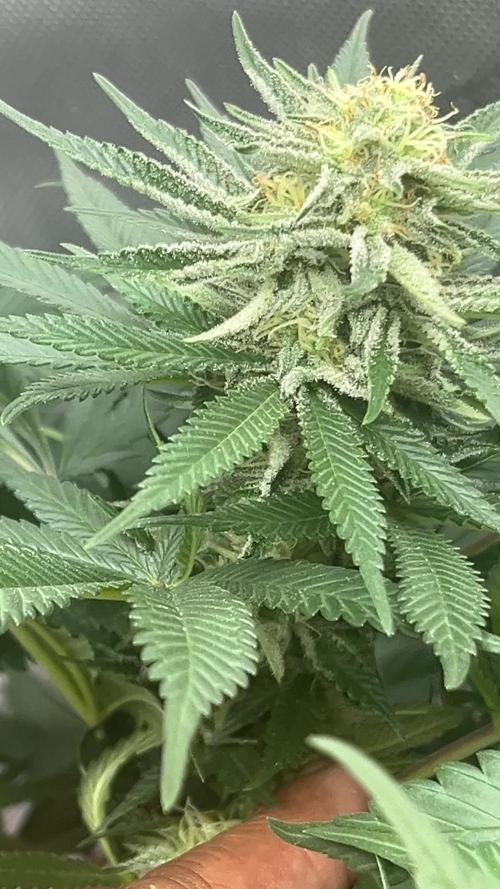
8/11 should had did more defoliation feels like I’m bit late don’t want to stunt growth. But besides that frosty and no real amell


Likes
83
Share

@Schnabeldino
Follow
📅 Week 13 | Days 92–98 📅 🌼🌸🌺 Flowering Phase 🌼🌸🌺
Day 98 🌞 – Oreoz
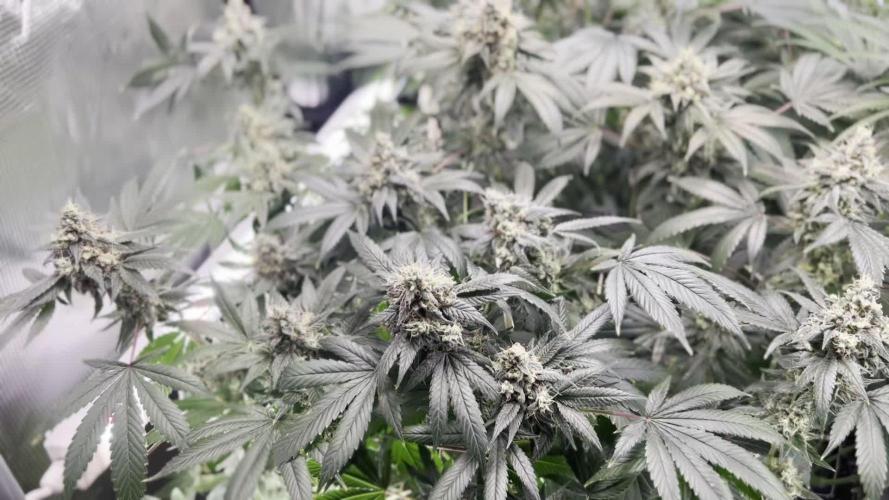
🔸 Oreoz is looking like an absolute showstopper this week. The buds are incredibly dense and completely frosted with thick, glistening trichomes – it almost looks like they’ve been dusted with snow. Resin production is off the charts, especially on the top colas. Trichomes: Mostly milky with some still clear – no ambers yet. She's not quite ready, but getting close.
🔸 Climate control has improved. Humidity started the week at 63%, but with the dehumidifier now running and all clip fans at full power, it's being maintained steadily between 50–60%. That little climate shift is definitely helping – the buds are chunking up without any signs of stress. The slight 2–3°C increase in tent temperature is worth it.
🔸 Nutrients: 1 week of Overdrive (Advanced Nutrients) before the flush phase. Water intake has already slowed down noticeably – another good sign that the end is near.
📈 Current Conditions
🌡️🔆 = 27°C
🌡️🌜 = 20°C
💨 VPD Target = 1.4 - 1.6
💨 Humidity = 63% → Target: below 60%
🔦 PPFD = 900 µmol (12/12)
🔦⌚ DLI = ~38
🛠️ Setup (unchanged)
💡 Lights: 2 x Sanlight Evo 4-120 @ 90%
⛺ Tent: 120 x 120 x 180
🍯 Pot Size: 18 liters
🌱 Medium: Bio-Bizz Light Mix
💊 Nutrients: Advanced Nutrients
💧 Water: Tap water (EC 0.5)

Likes
4
Share

@Fyno_TH
Follow
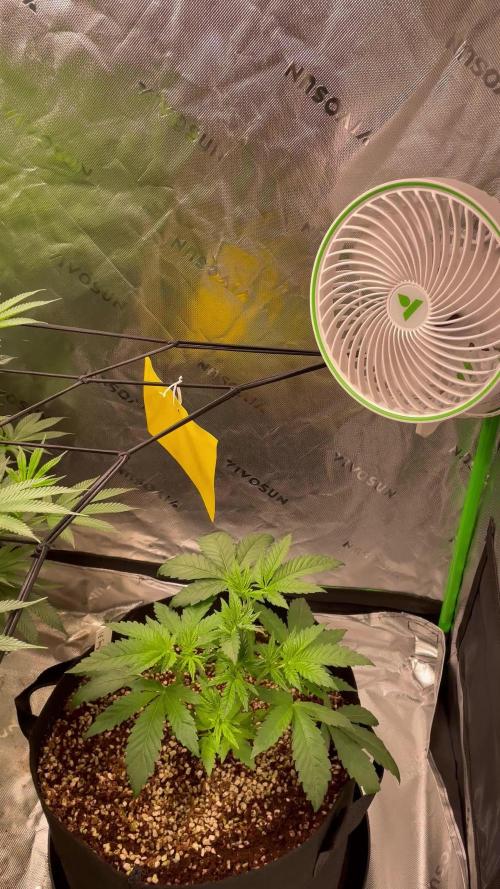
Week 7 ✅ — the final week of veg! Main plant is drinking heavy now, taking around 15L with 10–20% runoff. Roots are exploding and the canopy is filling the net perfectly 🌱🔥.
Main plant is wide and strong with a bushy structure from all the topping + LST. The second plant is still smaller but pushing steady new growth and looking healthy 💪.
Feed mix (per L):
• Corex 1.5 g/L
• Eldex 2 g/L
• Terra 0.4 g/L
• CalMag 1.3 ml/L
• Mira 0.5 ml/L (pH adjust)
• Bud Candy 2 ml/L
• Terpinator 5 ml/gal (~1.3 ml/L)
Ppm around 1400 @ pH 6.0. With 15L per plant and proper runoff, coco is staying clean and roots are thriving.
Environment has been consistent: 26–27 °C / RH 60–65%. Leaves are praying strong under the Spider Farmer G3000, no burn, no deficiency 🌬️🌿.


Likes
123
Share


@MrHightimes
Follow
I just cant get over how well things are going!!!! I've come so far in only 3 generations of plants!
Today I did my FIRST DEFOLIATION EVER!!!!! It went so well!!! Shout out to Bill Ward for having some good views to brush up on!
My first grow I didnt have enough leaves to defol and last grow I was to scared to lol. This time I made them my bitch!!!! It was EASY!
NEVER BE AFRAID OF YOUR PLANTS!!!!
I'm tinkering with the light so they aren't super happy atm. I turned on the exhaust and the Vaporizer. I also raised the light to 2ft and will try to consistently keep the light at that distance.
I bumped up the nuets to 2ml. I'm a little lower than my schedule called for but i might bump it this week. Gonna watch the ladies!
I tested the runoff and its 6.1, perfect. Starting to see how the plant is gonna look.
__________________________________________________________________________________________
The plants came down with some spots. i did some reading and i came to the conclusion that they needed a bit more cal-mag. I also had noticed some of the newer growth had reddish stems too. I checked my discords and that's what they thought too!!! I was going to bump it anyway bc I've seen alot of diaries on here with ALOT more Cal-mag than me.
Otherwise they look great! I got them out tonight for a light watering and noticed they had grown like 4or5 inches! Go Baby Go!
__________________________________________________________________________________________
I fed them this evening and gave them a small haircut for some light penetration. I put a few spacers in that I printed and they seemed to help salvage my LST. I think the stakes dont hold up to the plant. Next Grow I will use wire. Still monitoring the leaves and while its slowly spreading I don't think I will see the effects of the extra calmag for a while. I have double downed on my videos, working on editing and hope to really develop my dairies!
__________________________________________________________________
Things are going great as we wrap up the week. The plants are almost fighting for space in the tent, and i'm dialing in how much water the pots hold, I think this is the sweet spot size. Defoliated about 20 leaves, just a trim and tuck. I didn't do well at LST at all this round, i noticed all the main stems are ramrod straight, but using the spacers seems to be making the plants into pretty nice lil trees. I think the best part is right around the corner!!! Its about to get very pretty up in there!