


Likes
Comments
Share

@GermGrowFox
Follow
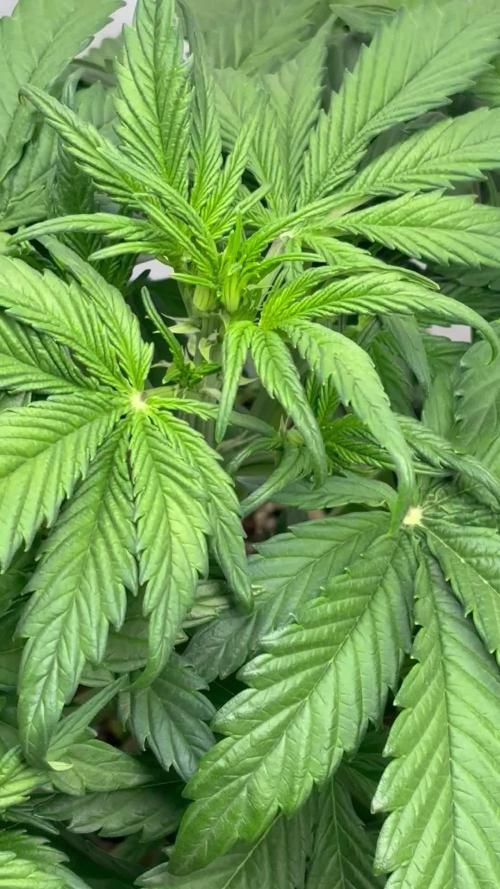
Lampe mittlerweile auf 60% hochgefahren.
Die Purple sieht gut aus, die ak macht mir immer noch Sorgen. Wird wohl zu viel Erde im Topf sein😅
Ich giese mittlerweile jeden zweiten Tag und da gute 2-3l pro Topf.
Hab jetzt das erste mal etwas entlaubt. Nachdem ich von Sauerstoffmangel ausgehe erhoffe ich mir dadurch etwas Besserung

Likes
26
Share


@pifflestikkz
Follow
Day 43
12/08/24 Monday
Feed today, it was warm again so they drank the whole 300ml each so I have topped up another 150ml to see run off to prevent salt build up.
All thriving 😍✌️💚
ACOP and Melonade Runtz structure is stunning 💪
Divines Overdose is getting chunky and showing nice stack potential 👌
Leaving these to just run there natural course, will allow me to best pick my next SOG run with micro autos indoor 😎
Video update
Day 45
14/08/24 Wednesday
De-chlorinated tap water pH 6 only today.
Day 48
17/08/24 Saturday
Another watering today using de-chlorinated tap water pH 6 only.
Orange bud is tall!! Top her next time.
Critical orange is lovely and compact.
Overdose is nice and compact,
Melonade Runtz nice compact structure also.
Picture and video update ✌️ 💚


Likes
47
Share


@S2340420
Follow
It came into my head last night a migjt have been under feeding them by mixing enough feed for 10 litres of water instead of the 20 i meant to account for i will give them a full dose on the same feed as last week 4ml per 10 litre and 1ml of pk for the 1st feed tnis week and see how they look 🤯

Processing
Likes
62
Share


@DudeGrowsWeed
Follow
Overall everything is doing great. The Critical+ has the most trichrome coverage so far, but the DinaMed CBD+ has the thickest and densest buds. The Cream & Cheese CBD+ is somewhere in the middle - medium trichome coverage, medium density. But the Cream & Cheese CBD+ is the bushiest with the most amount of sugar leaves down the stalks with the buds. The 3 Cherry CBD Hemp plants are doing great also. They are the smallest 3 plants in group, but starting to show some red hairs.
I think I'm about a month away from harvest. I'm not going to rush it, but that's what my guess is for now. I transplanted my babies from dixie cups to larger nursery pots. There are a variety of seedlings and clones going. I'll start a new diary for these babies soon with details on which strains, etc...


Likes
5
Share


Likes
25
Share


@Jimmy89
Follow
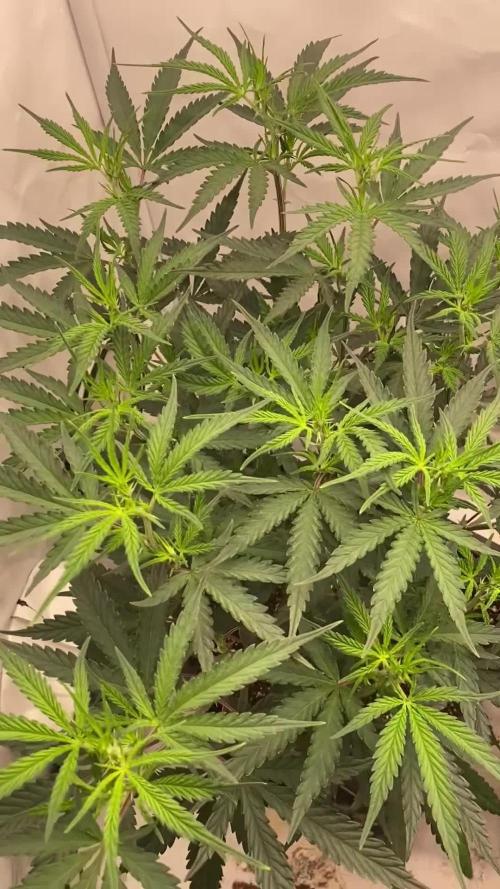
All photos taken day 25 of flower. Started to develop a nice aroma now, I’ll have a little de leaf in a day or two to help lower humidity and uncover some flower sites. Can’t wait for it to warm up so I can switch my heaters off! ✌️

Likes
27
Share


@RDWCGrowing
Follow
3/25/2023
Week 6- Day 1 of Veg (Day 52 overall)
Added my first between changes SILICA Top offs. Was worried that when you add it to pre mixed Nutes that it can make the whole thing turn into a gummy looking substance. I was ready to drain the system and start it over for the week if needed, but no issues adding it to the tank. the Silica going into the Res didn't gummy the system up, it did drop my PH by quit a bit causing me to have to bring it back in balance.
36 Gallons in the Tank
Silica
Add .5mil/Gal = 18Mil
I topped some that needed to be topped, I defoliated some that needs to be defoliated. Since I have moved into Week 6 I have increased the light intensity up to just over 500 maxing it out for Veg Cycle. Next increase will be Week 1 of Flower.
3/26/2023
Week 6- Day 2 of Veg (Day 53 overall)
All conditions looked great. Other than me not putting one of the humidifiers back right which means it didn't work last night so Humidity was lower than I like. But got the Humidifier back on it's stand correctly and it is now pumping away. With that I decided to give the plants a day off from any stresses, no topping, no FIMing, no Defoliation for today. Just some good old soaking up the light rays and the ability to get all the Nutes they would like..
3/27/2023
Week 6- Day 3 of Veg (Day 54 overall)
Looking kind of Bushy today, so I defoliated some, and topped some.
3/28/2023
Week 6- Day 4 of Veg (Day 55 overall)
PH was a little lower than I like 5.74 so I added a few Mil of PH UP and brought it back up to 5.94.
Not much else at this stage, just I topped a little and I defoliated a little.
3/29/2023
Week 6- Day 5 of Veg (Day 56 overall)
Topped a little, Defoliated a little Watched them grow!!
3/30/2023
Week 6- Day 6 of Veg (Day 57 Overall)
Main action today was breaking down my old tent and setting up a new tent and getting my second RDWC system setup and ready for clones. I Topped a little, I Defoliated some and started taking a good look at what I would like to take for clones in the coming days. I have a few bottom branches that look every promising for my clone material on each.
3/31/2023
Week 6- Day 7 of Veg (Day 58 overall)
#3 is at 16" Tall
#2 is at 13" Tall

Processing
Likes
39
Share


@Belverde
Follow
Ola 🙂... the two sisters grow up very well ... first time I try them.. the seeds were given to me by the boy from the grow shop, after buy some Barney's seeds ..
With them, under the 205 BD LED light, there is also the sister, who can actually find in the diary SUPER SOIL LED (if you want to see the differences) 😉...
5th week started by giving him a nice lunch based on banana macerate (10 days to macerate), about 0.5 in 1.5l h2o ..
pH I never check it when I am using a ready-made soil .. the water I use is quite good and does not contain chlorine (fundamental in organic) .. it has a pH always around 6.5 / 7.5 and is ok ... afterwards I only gave h2o to drink for once, again without letting it come out of the bottom of the vase .. two days after treacle-based sweet like the past week .. this time I gave 1 teaspoon apiece (they will be about 5ml, I think, but that's okay) in 1.5l h2o ... time after still water .. and today, Friday 27th, I finely chopped a bit of barley malt and I made a top dressing, wetting with water in mix with 3ml topmax for 3l h2o, to increase the malt action ..
I see just one or two thrips every now and then, but I'm under control .. I have not used anything to drive them out .. only the fan always on and the humidity left slightly higher ... They start to smell good and very sticky too ..
I don't know how to describe the aroma at the moment .. sweet .. but complex .. we'll see .. hi, thanks for the time 🙏 and tell me if you like it ... See you next week😉✌️
Likes
11
Share


@HegauHillsFarmers_M11
Follow
Tag 49 - Ende der 7. Woche.
In dieser Woche haben die Blüten nochmal ordentlich an Volumen dazu gewonnen und produzieren eine dicke Harzschicht. Auch der Duft der Blüten wurde in dieser Woche intensiver.
Da sich die Pflanze nun vollkommen auf die Produktion der Blüten konzentriert, habe ich den Dünger nochmal etwas angepasst/verändert um der Pflanze alle Nährstoffe zu liefern die sie für die Produktion der Blüten benötigt.
An Tag 43 wurde die Pflanze gedüngt.
Nährstofflösung:
2 ml/l - B-52 Advanced Nutrients.
4 ml/l - pH Perfect Sensi Bloom Part A
4 ml/l - pH Perfect Sensi Bloom Part B
2 ml/l - Bud Candy Advanced Nutrients.
2 ml/l - Big Bud Advanced Nutrients.
Davon hat die Pflanze 1l an Tag 43 erhalten.

Likes
11
Share

@420DeepGrow
Follow
📆 Semana 3
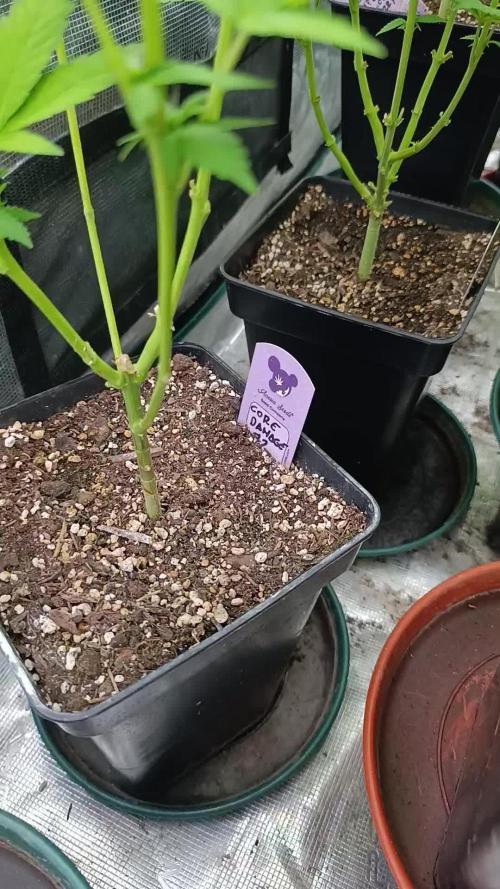
La floración avanza con fuerza y el estiramiento alcanza una de sus fases más intensas. Ambas plantas muestran un crecimiento vigoroso, incrementando notablemente su altura y expandiendo las ramas secundarias hasta formar una canopia cada vez más uniforme y eficiente para la captación de luz.
La planta que perdió la punta principal continúa demostrando una excelente capacidad de recuperación. Las ramas que asumieron la dominancia han desarrollado una estructura equilibrada, reduciendo progresivamente las diferencias con respecto a la planta que mantuvo su crecimiento apical original.
Los puntos de floración se multiplican por toda la estructura y los grupos de pistilos comienzan a hacerse más densos y visibles. El consumo de agua y nutrientes aumenta de forma significativa, acompañado por una intensa actividad metabólica y una rápida producción de nueva biomasa.
⚡ EC: 1.6 – 1.7
💧 pH: 6.2 – 6.5
🌡️ Agua: 21°C
🌫️ Humedad: 45–50%
💡 Intensidad: 900–1000 PPFD
🔥 Nota de cultivo: La tercera semana suele representar el tramo final del gran estiramiento. Una estructura bien distribuida y una canopia uniforme permiten maximizar la penetración lumínica y sentar las bases para una floración abundante, favoreciendo el desarrollo homogéneo de todos los sitios florales.
Seguimos creciendo fuerte 💪!

Likes
17
Share

@Comfrey
Follow
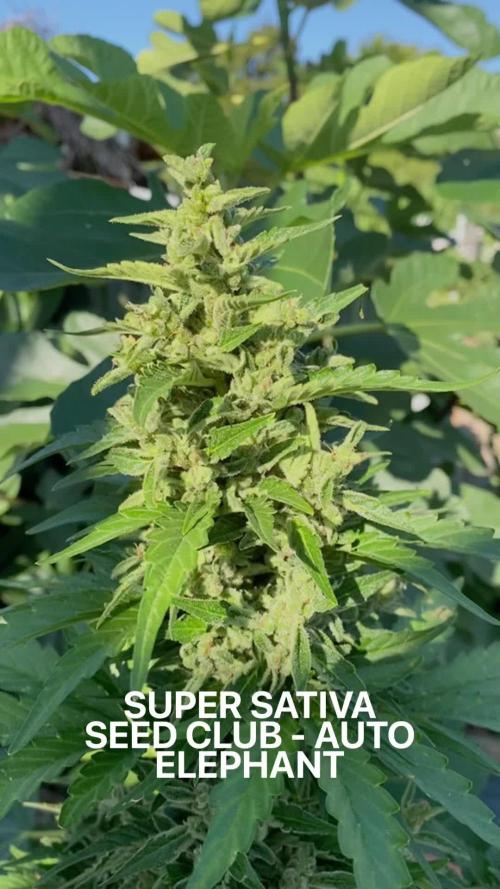
Leider musste ich auf einer unteren Blüte Kot von irgend einem Tier entfernen. Ich vermute dass es eine Weinbergschnecke war. Oder hat von euch jemand eine Idee? Nicht das am Ende jemand Rattengift darauf verteilt hat. Ich bin mir nicht sicher was das sein könnte.
Ansonsten entwickelt sie sich sehr schön weiter. Der Duft ist wirklich sehr angenehm.

Likes
10
Share

@Prilyfe13
Follow
11/25/2025
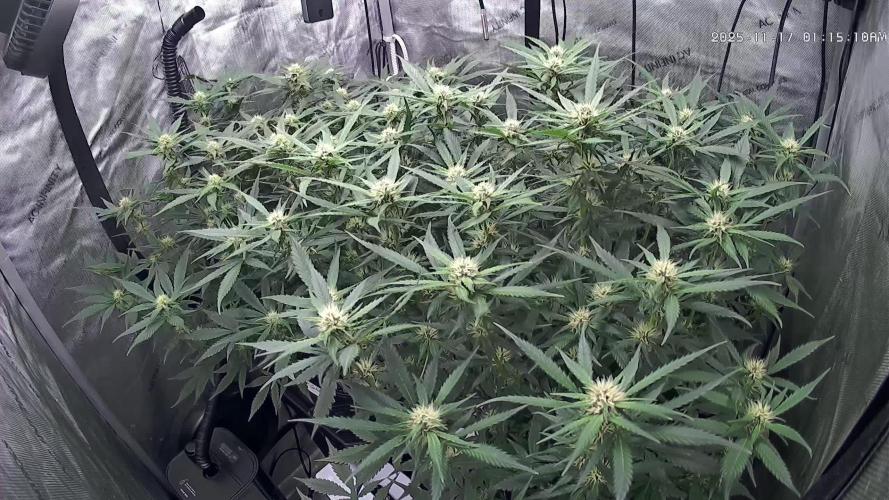
New week and new water. I can't figure out why my pH is so messy. Always swinging super wide. This morning for example was 4.6 pH on both plants. The mix concentration went up to 1000 ppm on both as well.
The big difference I'm seeing is what's in the water. Papaya Cookies has clean nutrient water while Lemon Cherry Cookies has root debris in it. No clue why it's happening. Hell I don't even know if this is a thing. But it's happening. Hopefully with the water swap, it'll go away.
Maybe I'll have to dunk the roots in a different bucket to try and clear the stuff off. It's too bad I can't bring the whole plant to the sink. Lol.
I could spray the roots down. As it is, that's never gonna happen. So aside from having my cousin come over and hold the plant up while I clean out the roots, I think I'm stuck with this and have no idea what it is or how to fix it.
Personally I think the roots are self pruning. Why? Maybe the concentration is too high and it's eating away at the roots. I doubt it, or it could be not enough oxygen. Don't know how to fix that. My air stone is bad ass. But it's the same air stone and setup in Papaya Cookies, but no debris or old roots. Could it be because the size of the root ball? The one in Lemon Cherry Cookies is massive while the other one is big, but not massive like this one. Could that be it? Who knows. All I know is I need to figure it out. Any ideas anyone?
Other than that, it's a new week and a new bucket of water. I think I'm gonna cut the nutes back a little bit from last week. Maybe they will actually show issues if there are any. I'm only cutting back a little bit. Just the bloom nutes. Instead of 1.25 teaspoons per gallon, I'm gonna cut it back to 1 teaspoon. If it shows signs of deficiency, I'll add a little bit more. But I have a feeling they will be happier with a lighter dose.
Now I can't tell when these ladies will be done. I'm saying another 2 weeks. I said the same thing last week, but I'm not so sure now. They still have tons of white pistils. Especially Lemon Cherry Cookies which is odd. That's the one who should be done first. However, Papaya Cookies has more orange pistils and denser nugs. I really hope both plants come out masterfully. And I really hope they finish at the same time. I'm using this tent for drying. I don't have space for my 2x2 anywhere. Small apartment. Anyway, so yah, drying on the 3x3.
Speaking of 3x3 tents. I'm pretty sure either one of these plants would have filled this tent out. They both filled out wide and deep. Luckily they aren't too deep where I can't access the back, but one of these would have filled out the tent. Especially with the training I could have done with that much room. I think they stopped growing where they stopped because of the size of the space. I bet if they were in a 4x4, they would be much bigger. Because they grow to fit the space. Or at least that's what I'm discovering.
Of course there's the one off that grows to be a beast, but that was a one time thing. And I'm pretty sure the seeding had something to do with it.
Anyway, I'm getting. A 4x4 eventually and will find out if my theory is correct. At least with autoflowers, that is.
Photoperiods may be a whole different story. Actually based on how they grow, it's a completely different story. We can manipulate photos in how they grow and even when they get switched to flower. It would make perfect sense that a photo grow as big as they can in in a smaller space with manipulation.
Anyway, rambling over.
Alright everyone. I have changed the water and this reads. 5.85 pH for both.
Papaya Cookies has an EC of 1.458 and TDS 725 ppm
Lemon Cherry Cookies EC 1.65 and TDS 809 ppm
We'll see what it's at in the morning. Don't really know why the mix is higher in Lemon Cherry Cookies, it's still low enough though. I have a feeling I should dunk both of them in plain water just to get the rest of the debris off. And maybe some of the nutrient buildup off. At least I think that might be the problem.
11/26/2025
2 days over the deadline, but whatever. I'm gonna get some damned good bud if I can fix this issue I'm having.
Specs:
Papaya Cookies:
EC: 1.701
TDS: 838
pH: 5.5 pHed to 5.85 2 hours ago now it's 6.1 (ummmmmm?)
Lemon Cherry Cookies:
EC: 1.765
TDS: 885 ppm
pH: 6.1
Well that's not good. I changed out the water and cleaned the buckets out. It has to be the roots. How the hell do I clean the roots? Or well, rinse the dead stuff off? I changed the water. I made sure the water they went into was clean as well. I have questions. Questions that need answers. To the forums! Hopefully I find a solution.
Good morning. Afternoon for us.
Lemon Cherry Cookies:
PH: 6.05
EC: 1.77
TDS: 885
After pH: 5.8
EC: 1.80
TDS: 888
Papaya Cookies:
pH: 6.44
EC: 1688
TDS: 837 ppm
After pH: 5.8
EC: 1.70
TDS: 848 ppm
11/27/2025
Papaya Cookies:
Before:
pH: 6.35
EC: 1.955
TDS: 977 ppm
After:
pH: 5.75
EC: 1.634
TDS: 829
Lemon Cherry Cookies:
Before:
pH: 6.5
EC: 1946
TDS: 967
After:
pH: 5.85
EC: 1.693
TDS: 843 ppm
Lost power last night while the lights were on. 11 hours of no light and now it's lights out, so another 4 hours of dark. Not too sure what I should do. Should I turn the lights on? Or should I leave them in the dark until lights on? I feel like turning the lights on now when it's not lights on time would really mess with the light schedule and possibly cause some issues. I'm gonna leave them off.
As we can see above, the concentration of the mix is still rising. But the plants aren't showing any signs of real stress. Or at least stress that could be seen. Still not sure what to do. I'm hoping the top off of plain water will help. But I think I need to dunk them both in a bucket of clean water a few times to get all the excess salts off the roots. That's what I think is causing the problem. The roots somehow have buildup in them and it's releasing it in the water. Or something like that. Maybe? I dunno. I think I figured out the debris in the buckets. It's from handling the roots when I remove the plant for pHing. Only Lemon Cherry Cookies though, her root ball is so large I have to lift half of it out of the bucket to put it in the reserve tank. Maybe the oils on my hands are causing issues? Maybe?
So the two issues combined today with the power outage and the water mix still out of whack, I'm afraid there will be some sort of stress that we can see when the lights turn on. Let's hope it's mild.
The environment was also pretty bad this morning. It was 56° in the house this morning. Apparently I lost heat and power last night. So it was cold and without the fan on, it was really humid too. Like 74% humid. But I think it was cold enough for nothing to start to grow. At least that's what I hope.
I might have to change Lemon Cherry Cookies water though. There's a subtle smell about the water. I might change it today. We'll see how it turns out when lights come on. If I'm having the same issue with the increased EC and TDS I'm swapping out the water. I might have to buy some hydrogaurd or something. Maybe that will help clear out whatever is going on. I was thinking peroxide, but I'd rather use things that are designed for Hydroponics.
I might change Papaya Cookies water as well, there's nothing funky about it, but the concentration is still rising. I'll pump a gallon out and replace it with plain water... Again. Maybe I'm just giving them to much to start. It's about 20% lower than the regular dose. Now that I think about it, that's pretty high. And these plants aren't big. Maybe I still need to drop the bloom down. Maybe the boost as well? I dunno. I'm gonna drop the Bloom nutes to 0.75 teaspoons per gallon. Should be 3 teaspoons for the 4 gallons of water. Let's see if I can get it to drop below 800 ppm and stays under there.
11/28/2025
AM readings.
Papaya Cookies:
Before:
pH: 4.9
EC: 1.857
TDS: 945 ppm
After:
pH: 5.8
EC: 1.816
TDS: 934 ppm
Lemon Cherry Cookies:
Before:
pH: 6.35
EC: 1.865
TDS: 934
After:
Didn't do anything. Will top off with pHed water this afternoon.
I want to see if they will do their thing with the higher concentration. Still, I know it's not good, but I really don't want to keep pulling Lemon Cherry Cookies out and mess up the roots. Btw, I've decided the issue with the debris in the water is because of me handling the roots when I pull the plant out of the bucket. I have to left about 2/3 of the roots by hand. So if I leave it alone in the bucket, and pH with top offs, I should be fine for the rest of the week. If the mix reads any higher, this afternoon, after lights out, I'll pull a gallon and replace it. But that means I have to handle the roots. I guess we'll see.
11/29/2025
I forgot to record today's measurements before I adjusted. Papaya Cookies had plummeted pH. 4.6. the EC and TDS were actually not too far off.
Lemon Cherry Cookies on the other hand swung super high, guzzled a ton of water and spiked both the EC and TDS. We are talking a TDS of 1200. How?! I dumped a gallon of plain water in. It fixed it for the most part. This thing is taking in like zero nutrients. I've been advised that the issue with the pH swing is probably the size of the roots compared to the bucket. They said it is most likely shedding roots due to the size. I assumed that is based on a ratio.
Ok, done. Lights turned off before I could get to Lemon Cherry Cookies. However I did dump the gallon of water in. Should be fine. 3 more days and we can change out the water and do a much lighter dose. Here's the afternoon specs.
Lemon Cherry Cookies:
pH: 6.5 (high)
EC: 1.794
TDS: 882 ppm.
Papaya Cookies:
pH: 6.3? (Apparently I did not do my measurements right.)
EC: 1.644
TDS: 820 ppm
So that was just after lights out. So I couldn't take them out and adjust the pH again. But, Papaya Cookies keeps crashing, so this should at least get through all the nutrients she needs.
Lemon Cherry Cookies on the other hand has been swinging up. With her pH up at 6.5, it's gonna spike even more. Maybe not though. I did add that gallon of plain pHed water. I need a bigger bucket. Lol.
Anyway, the environment has been pretty good these past few days. Very happy with that. I've been following the VPD for the most part. So far it's right on the money beteeen 1.49 kPa and 1.59 kPa. While lights out hangs out around 1.30 kPa. Temp is 68° and humidity is 44% for a perfect environment.
Day temp is 75° and the humidity at 45%.
11/30/2025
Morning Readings:
Papaya Cookies:
pH: 4.68
EC: 1746
TDS: 866
Lemon Cherry Cookies:
pH: 6.49
EC: 1904
TDS: 950
Adjusted:
Papaya Cookies:
pH: 5.6
EC: 1519
TDS: 760
Lemon Cherry Cookies:
pH: 6.2
EC: 1753
TDS: 876
So let me explain the way I did things today. Plain water for each. I left the water completely alone for Papaya Cookies and added that with its pH of 8.0. That mixed in pretty nicely. Not good enough, but close. After lights out, I'll probably pull both plants and pH them properly. But I'm trying to avoid lifting, moving or agitating the roots of both plants in any way. Obviously I'll have to pH properly at some point today or tomorrow.
12/01/2025
Measurements this morning were off. This time though, Lemon Cherry Cookies pH swung down to 5.6. That's new. But of course her EC and TDS were high again. So still not taking in nutrients. But she drank a gallon of water. Something is going on. I only lifted her a little bit to see where the air stone was.
Papaya Cookies had a super low pH as per usual. Which is really bad. Her leaves are starting to show signs of serious deficiency or pH damage. I don't know the difference yet. But I do know there's definitely an issue. Anyway, her EC and TDS weren't that far off. So I dumped half a gallon of pH rich water to bring the lower pH mix up. Spot on at 5.8. it also lowered the EC and TDS. Not much though. Unfortunately, my water pump is too big for the access panel. I need to get a smaller one. Then I could pump the water out, pH and pump it back in. Oh well. Next time.
Environment is good.
Likes
80
Share


@Hawkbo
Follow
Soaked 7.27 for 36ishhrs, into paper towel for 12 hrs then into a solo cup with greentree garden supply pro ultra (coco/perlite). No plan on veg time I dont know when I'll have an open tent for flower but it could be a very quick veg kinda pheno hunt deal. First feed was a diluted leftover feed from my auto youngins. Basically about 1 ml/g of grow, 7ml/g humid acid, 1ml/g more roots, 1ml/g orca, cannazyme, hydroguard and a sprinkle of living organics in the nutes and on the top of the coco. Usually the ppm will be higher than I want it so I just dilute with r/o water until I'm down to 200-250. It makes it so I cant be accurate on ratios so that's why I'm tellin ya, but it's how I always do it no matter what nutes I use.
Likes
7
Share


@Thigh
Follow
Shes getting bigger 😄 weather is also slowly gettin better👨🏽🌾 she is a little bit younger as my Zkittelz plant, but i think she is a Little Bit Slower as the Zkittelz. Maybe too much Stress.
Likes
101
Share


@Ferenc
Follow
Day 80, 2nd of December 2020:
Hi there! Ladies are cool everything is alright. In one week buds strated doubeling and the developement is dope haha.
The 2 Zamnesia ladies are pretty Gelato is so nice bushy and the smell is great as well.
Kalini Asia will be a green pheno I think and she my be hermied a bit on me.... I am still waiting to see I see some strange develepement lets say.
Sweet Seeds girls are dope unfortunately Red Mandarine and Tropicanns poison don't show any sign of colouting yet but it is okay even if they green phenos.... It may happen in the end of the flowering cycle let's see.
Basically that's all I wanted to share.
Oh yes... this one:
All good the lamp is now on 11 hours and off 13 hours. Every week 15 minutes was taken off and after 4 weeks here we go. Strated 12/12 and now 13/11 wanted try to imitate the nature as the light days are getting shorter.
Fertilization has changed no more epsom salt from this week and I will stop giving nitrogen as well from next week.
Great job Sweet Seeds and Zamnesia! Nice genetics :) Lovely plants!


Likes
15
Share


@GYOweed
Follow
Nothing special. Its sis in south facing solo cup smells amazing and sticky but that one is farther ahead. Gonna do just organic ferts and water see what happens im getting lazy
Likes
8
Share

@MrsHinduGod
Follow
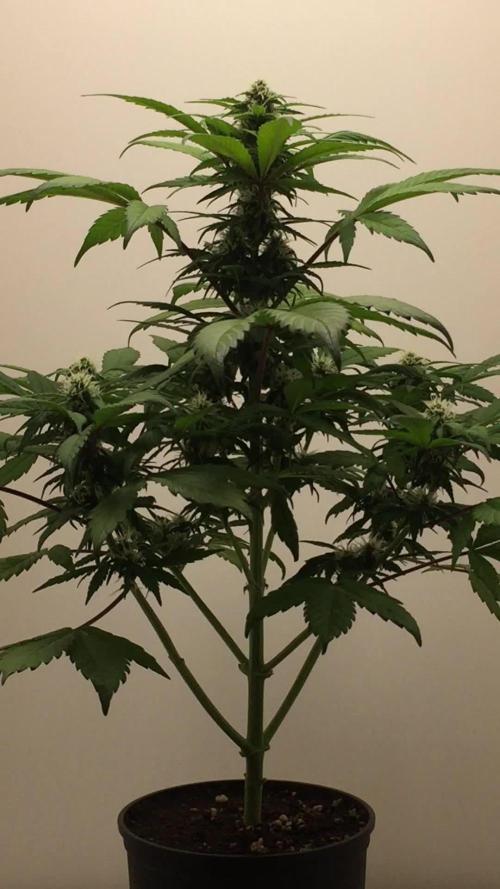
wow look at dat!!! da plant leaves are getting lighter in da color!!! so i added a tablespoon of da homemade worm castings to da top of da soil!!! i used a spray bottle with water to work it into dat soil!!! castings are very very good and should give a little boost to da plant!!! da plant is getting top water 2 days and butt chugging 5 days per da week!!!
Likes
14
Share


@GoldenWeedGrower
Follow
D08/V04 - 08/04/23 - Nothing
D09/V05 - 09/04/23 - Nothing
D10/V06 - 10/04/23 - Nutes added EC 0,6
D11/V07 - 11/04/23 - She's ok
D12/V08 - 12/04/23 - New water and some nutes EC 0.6
D13/V09 - 13/04/23 - Nothing
D14/V10 - 14/04/23 - Nothing
Likes
18
Share


@Stonyways
Follow
flower week 8,
2nd week of flush and my 15th week of crappy sleep due to this VIVOSUN 4"high cfm fan. I would just get rid of it as it does not owe me anything (2 full grows) but I am planning on gifting my old complete set up to someone I know that's in need.
and shit.... Spider Farmer never even got back to me....so my next grow will include my first HLG to supplement the Spider....
no contest this month due to...... well I gotta move. I don't think id be winning any contest but on the off chance I would.... address change. lol
HAPPY FRIDAY
Likes
9
Share

@Mimi420
Follow
Day 50 – The Home Stretch
Plant Health & Progress:
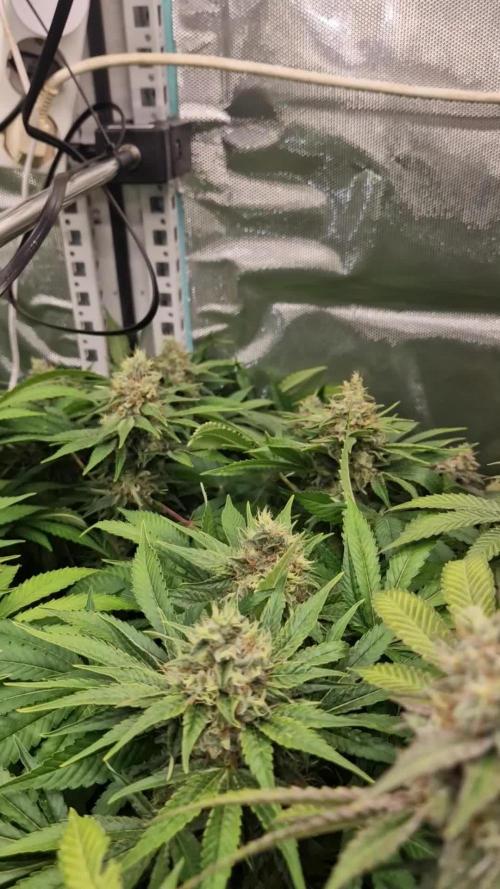
We’re at Day 50 and the girls are looking absolutely fire. The flowers are packing on serious weight, looking super dense and stacked. Everything is looking clean, and the SCROG setup is definitely paying off—the canopy is perfectly even and maxing out the light penetration.
Genetics & Phenos:
Paradise Seeds: Have to give a huge shout-out to Paradise Seeds for this run—their genetics are rock solid. You can tell they’ve been bred for stability and performance.
Nebula Phenotypes: It’s interesting to see the two different phenos on the Nebulas. They have slight variations in structure, but both are showing that classic elite vigor. It’s cool to watch them develop their own unique traits while keeping that top-tier quality across the board.
Caramba:
Status: She’s officially on the home stretch. She got her last heavy feed yesterday, so it’s straight water from here on out to start the flush.
Goal: Time to let her finish strong, drain those remaining nutrients, and prep for the cleanest smoke possible.
Nebula:
Status: Still pushing hard on the feed schedule.
Observation: Based on the trichome check, she’s lagging just a bit behind the Caramba. She’s still got too many clear heads, so she needs another week or so to really let those trichomes ripen up and cloud over.
General Observations:
Terpenes: The smell is straight-up insane. Every time I pop the tent, the terps are loud and complex—a real testament to the genetics being dialed in.
Vigor: The plants are thriving. Those red stems are just showing how hard they’re hitting the light; no signs of stress or nutrient issues.
Environment: Airflow is on point. The buds are getting thick and frosty, so keeping the humidity in check at night is now the top priority to avoid any mold issues this late in the game.
Yield Expectations:
If they keep stacking like this, we’re looking at a serious harvest. Everything is dialed, and the fade should be coming on nicely as we get closer to the chop.
