


Likes
Comments
Share

@Drtomb
Follow
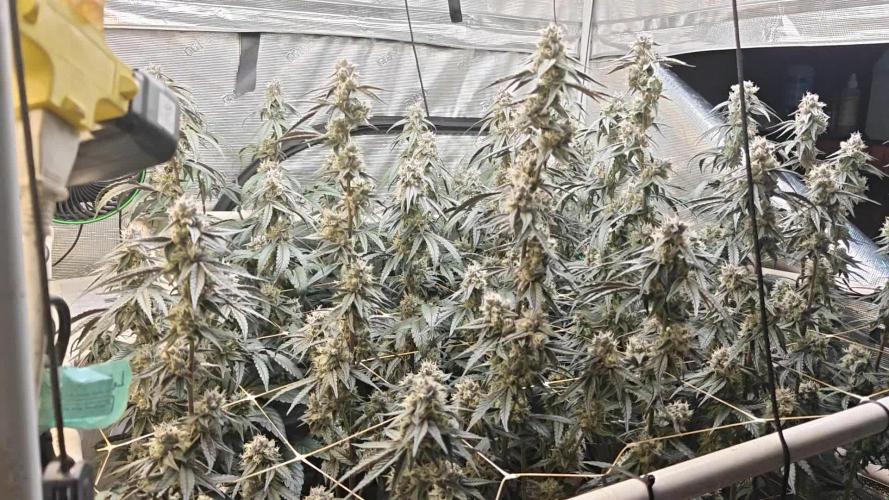
Watching these lava cakes grow is a nice privilege. Ill be pushing them 1 week longer do to a trip change. But I think things will end nicely. 2 more weeks until I start flushing.


Likes
13
Share

@Kirsten
Follow
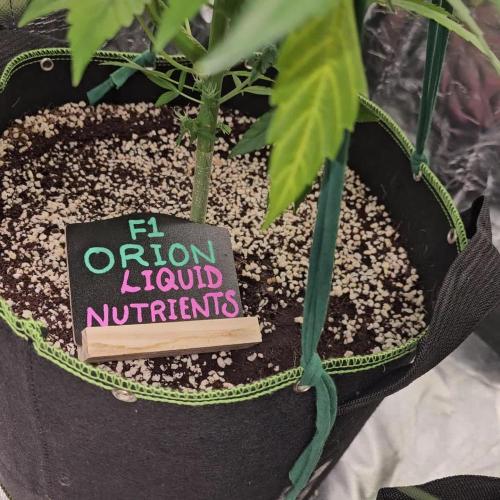
The plant is coming along nicely, building the flowers.
Here's what I did this week.
21.7.25:
I watered with 2ltrs of dechlorinated water PH'd to 6.1, containing the following nutrients;
💜 1/2 TSP Mega Crop Part A
PH: 6.1
PPM: 767
24.7.25:
I watered with 3ltrs of dechlorinated water PH'd to 5.9 with;
💜 1 TSP Cal-Mag
💜 1 TSP Mega Crop Part A
PH: 5.9
PPM: 1360
31.7.25:
I watered with 2ltrs of dechlorinated water PH'd to 6.6, containing the following nutrients;
💜 1 TSP Sea K
PH: 6.6
PPM: 509
+
I watered with 2ltrs of dechlorinated water PH'd to 6.2 with;
💜 2ml Trace
PH: 6.2
PPM: 368
Thank you for checking in this week and hanging out in the comments 😁💚✌️🌱🙌


Likes
166
Share


@iMeus
Follow
~Update~
Hello everyone! I'm excited to see progress with the girls. I'm going to re-pot them soon (5 gallon fabric pots). The lst is working like a charm too!
I do have a question, is it normal to smell dank stank this soon? My garage smells awesome! And there are no buds, I'm honestly surprised by this, just a thought.
Anyways thanks for the support and as always my friends, good grow'n (:

Likes
Comments
Share


@Dankmark420
Follow
Just transplantere into the autopot system and the girls didnt even slack for one day before bouncing back and starting to grow some more🤩😍
After two days we put up a trellis🙌🏼

Likes
28
Share


@UnitedStrainsGermany
Follow
🌱🔥 Eternity Cup 2025 – Runtz Autoflower Woche 10 – Die Mädels brennen! 🚀💨
Wir sind in Woche 10 und das Zelt explodiert fast – jede Pflanze hat jetzt ihren ganz eigenen Charakter entwickelt und es fühlt sich an, als würde man gerade drei völlig verschiedene Biester großziehen!
Runtz #1 bleibt die Schönheitskönigin – lang, elegant, Buds dick und kompakt, überall Harz, die Härchen jetzt richtig schön orange. Geruch? Süß, cremig, klassisch Runtz – einfach zum Verlieben. Die könnte straight aus’m Katalog kommen. Stabil, easy, läuft einfach.
Runtz #2, die getoppte, war von Anfang an kompakter unterwegs – und das zahlt sich jetzt aus. Buschig, viele dicke Seitentriebe, überall feste Buds, schön verteilt und voll mit Harz. Sie hat sich still und sauber hochgearbeitet – richtig solides Handwerk. Der Geruch ist süß und leicht würzig, nicht ganz so laut wie die anderen, aber sehr fein und lecker. Die ist zuverlässig und wird safe stark ballern.
Runtz #3 – ey, was soll ich sagen: DIE ist der Star! Klar, ihre Struktur ist bisschen crazy, sieht nicht so typisch aus, bisschen wild vielleicht – aber holy sh*t, die ballert in Sachen Terpene und Potenz alles weg. Jedes Mal, wenn du sie berührst, riecht der ganze Raum nach süßem, fruchtig-gasigem Candy-Mix. Die ist komplett überzogen mit Trichomen, überall Glitzer, richtig böse.
Optisch kein Standard – aber energetisch einfach die Endgegnerin. Die wird am Ende die Leute umhauen. #NoCap
Ich persönlich geb allen noch 2 bis 3 Wochen. Die Trichome sind auf dem Weg – viele noch milchig, paar schon amber – aber das kann noch fetter werden. Wir geben den Ladies die Zeit, um komplett zu explodieren. Finale Phase = maximaler Geschmack, Wirkung & Optik.
Das Finale wird legendär. Drei Pflanzen, drei Vibes – aber alle auf Killermodus.
#EternityCup2025 #RuntzAuto #Week10Update #TerpeneTornado #Nr3IstDieWaffe #Nr2SolideAF #Nr1ModelVibes #GrowLove #ZeltBrennt 🔥🌱💨

Likes
2
Share


@Solocultivo
Follow
29 macetas de 20-18 litros aproximadamente
Dia 32 de Floracion Super Suelo
Sin fertilizantes
Apoyado con biortilizantes @bioinsumoschakrana
Melaza
Te de Bokashi
Humato Postasico
Potenciado
@Knactive
Knactive el mejor bioestimulante 100% orgánico para todo tipo de plantas , el cual activa la autodefensa contra el estrés oxidativo y potencia la síntesis interna de todas las fitohormonas.
https://instagram.com/knactive_?igshid=MzRlODBiNWFlZA==
Vital Juice
Es un producto Chileno hecho en base a algas: durvillaea antarctica y ascophyllum nodosum.
Likes
2
Share

@420DeepGrow
Follow
📆 Semana 6
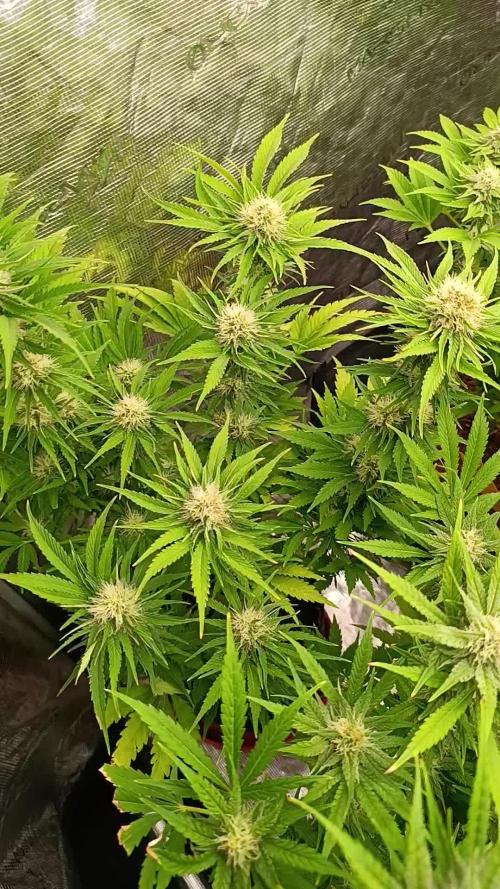
Los cogollos siguen ganando volumen y el apilado de cálices se hace más evidente. La resina empieza a cubrir con más intensidad las flores y hojas cercanas, mientras los pistilos continúan activos.
La planta mantiene una asimilación estable y el aroma comienza a ganar profundidad, confirmando que el engorde está en marcha.
Semana de transición hacia la consolidación del volumen floral.
Seguimos creciendo fuerte 💪!


Likes
Comments
Share


@Deepgrower
Follow
Las dos primeras filas son weddingcake y las otras dos son Skywalker Kush. 12 esquejes por variedad perfectamente enraizados. Los mantendremos una semana más en crecimiento y serán pasados a macetas de 3.5L y entrarán a floración!

Likes
14
Share


@eldruida_lamota
Follow
Vamos familia cuarta semana de vida de estás Tropical Zmoothie de SeedStockers.
Que ganas tengo de ver el progreso de esta variedad, las plantulas están sanas, se ven con buen color.
La cantidad de agua cada 48h entre riegos.
Esta primera semana ya añadimos nutrientes de la gama Agrobeta.
Tuve problemas de trips en un indoor y tengo todas plagadas pero ya las e tratado con aceite de neem y un insecticida genérico, además añadí varias tiras de color azul, trataré esta semana y la siguiente.( pronto llega aceite de neem y jabón potásico para terminar con ella)
También realicé el trasplante a maceta definitiva, 7 litros.
Estas próximas semanas veremos cómo avanzan.
Mars hydro:
Code discount: EL420
https://www.mars-hydro.com/
Agrobeta:
https://www.agrobeta.com/agrobetatiendaonline/36-abonos-canamo
Hasta aquí todo, Buenos humos 💨💨.

Processing
Likes
2
Share


@Lil_Queazy
Follow
Start of week 2. Everything seems to be ok. The bottom left and right seem to have taken the lead. I switched the two biggest plants into the center. And raised the pots off the ground to help with airflow and temps. Plants are doing good. Two centers are taking the lead. Using RO water. Currently watering when top two inches are dry.


Processing
Likes
3
Share


@123THC
Follow
This week the growth has been explosive, I thought by the end of last week that it stopped growing but I was obviously wrong! I’ve done a little more light LST and also tucking the leaves behind one another in order to expose the bud sites to as much light as possible. I’ve stopped giving the plant the Madame grow Jamaican bloom 28-25 PK now and I’m just feeding it the canna A + B with CalMag every other day and this seems to be a good amount. Although I think I will increase it to every day soon as the plants are getting far less run off than they used to so I assume the plants are drinking a lot more and drying the coco out much quicker than before

Likes
11
Share


@GrowShock
Follow
Эта неделя пик цветения, растение пьёт очень много воды, несмотря на то что ppm 1700 выходит с дренажа, горшок полностью сухой через 24 часа. Поливаю каждый день во время рассвета ( у растения ), так же повышаю немного влажность из-за летней жары.

Likes
1
Share

@Loudpackfiji
Follow
Running into some deficiencies, don’t think it’s any pests but if you have any recommendations what it is plz let me know. Already fed a compost tea looks like it fixed the problem. Could be PH haven’t tested the soil yet.

Likes
8
Share


@Totogrowuk
Follow
I was a little disappointed with yield but do have about 60g of trim that was too fluffy to bother with trimming . I’m thinking of making bubble hash

Likes
5
Share


@AestheticGenetix
Follow
6/13/25 everything is coming along smoothly for the black opium autos. I had to pick a seed shell off of the more scraggly looking one but they’re green and happy In their environment.
6/15/25 day 3 and there's noticeable growth
Stay tuned for what comes next. Also check out my X account and YouTube for any extras that I can’t post here. I have a full seed planting video on YouTube of these strains, that is too Long to post on here.

Likes
15
Share


@Uwish
Follow
Hello guys,
Here I am again to present you a new run, still with the best leds of the market nevertheless as I changed my growing space from 120x120 to 150x150. So I had to update the material inside...
I will run with 3 EVO 5-150 lamps of 320W or 960W with Bluetooth dimmers.
For the Hydro system, it will be the V-SYSTEM from Alienhydroponics.
In fertilizers I am always with Advanced Nutrients.
I work with osmosis water.
Currently, 4 clones took on 4.
Once the roots are ready, I will transfer the cuttings from the propagator to the V-SYSTEM.
------------------------
since the 16/08, when I transplanted the plants in the RDWC system, I noticed some points that I will mention below and correct next time.
1. The cuttings are too small, allow enough time so that I can completely fill my pots with clay balls.
2. Cut out the bottom of the pots from the cuttings.
3. 3/4 of the cuttings are touching the water, so one is late. Next time when transplanting, add more water, up to the basket in order to immerse all the plants and not to create a difference between each one, consequence now I have 3 that are ready to explode and one that will struggle behind, problem corrected today by increasing the volume of water.
4. The b-52 is a real pain in the ass in RDWC, you have to clean the 2 filters almost every day, with this new soup I'm testing without and I think I'll continue like this just with the base sensi grow A and B, as I use Root rot X, I won't use voodoo juice since all the bacteria would be killed.
5. Use of Voodoo Juice is useless if using Root Rot X which will kill the bacteria.
I don't know why but when I transplanted in the RDWC, I put my set up in growth mode, except that the plants were not ready for it, moreover, I made a FIM on each. So I lost some days, these last days I went back to a ppdf of 150, now that my roots touch the water, I declare growth 0 on 22/08, I will do between 21 and 28 days of growth. And as my roots are doing well and touching the water I'll go to a PPFD of 300
++

Likes
2
Share


@Albanymedicinalgarden
Follow
Good growth, Blueberry powering through cal mag issue. Skywalker will be first to harvest for sure. Insane amount of frost on that plant. Glueberry og continues to require fairly frequent defoliations to open up canopy. Blueberry starting to get some subtle berry coming through.

