





Likes
2
Share


@Elmike
Follow
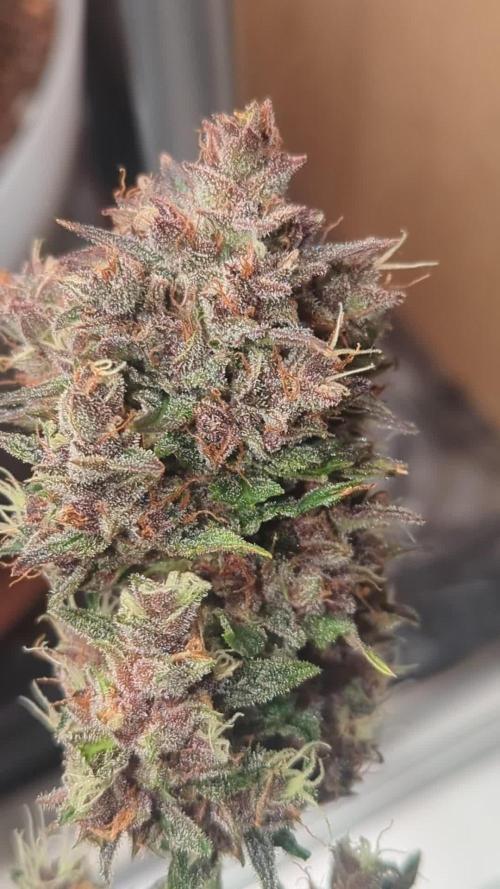
Excellente odeur, beau givre bien collant et de belle grosse cola bien dur. Je suis jusqu'à présent satisfait du rendement de cette superbe génétique 👍👈👌

Likes
5
Share


@Ninjabuds
Follow
The pound cake auto so far is an amazing plant. It has grown great and is super strong. Honestly it might be the strongest growing plant I have ever grown
The weather is starting to warm up a bit it has been below freezing for over 30 days and now the snow is starting to melt finally it’s a lot easier to keep the humidity on point when it’s like 32 outside compared to 10
Likes
9
Share

@Ninjabuds
Follow
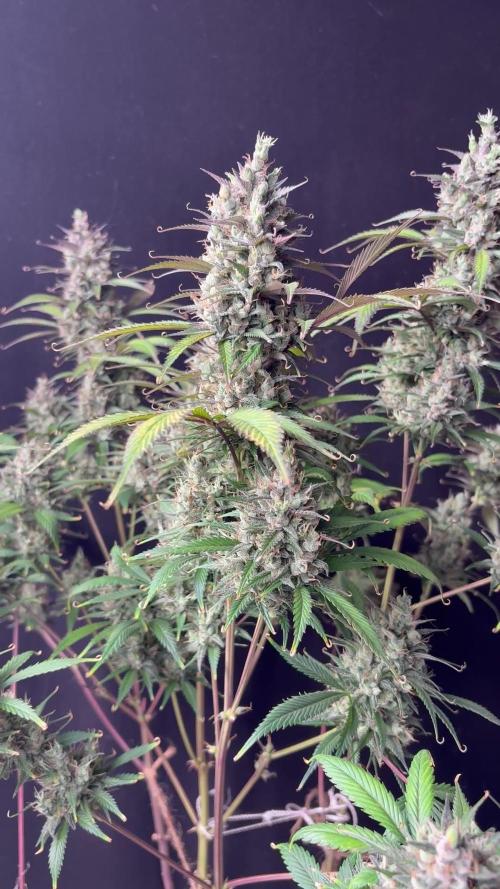
Strawberry gorilla from fastbuds buds has a great gorilla smell with a strong fruit smell that’s just like strawberries no lie. The plant doesn’t grow super tall but it does stack colas really nice. I didn’t grow the plant out as big as possible but it has big colas as long as half my are and smaller nugs all over that were the size of a fist. A great producer. Buds are spongey perfect for drying easily.
Likes
5
Share


@GANJALORD420
Follow
1st day of week 7 fresh air exchange, deleafed to get more light and airflow then fed.
3rd day of week 7 fed just water (Ran out of feed)
Likes
Comments
Share

@GERGrowDesigns
Follow
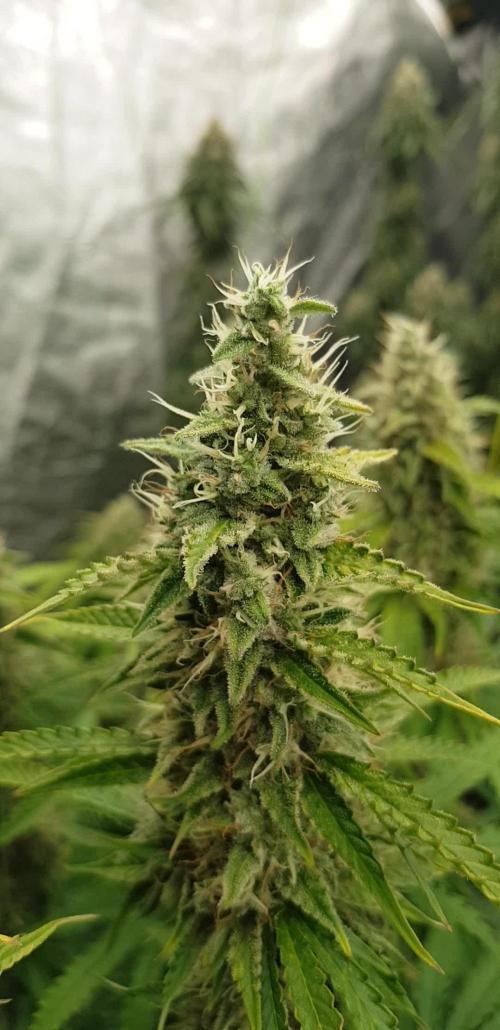
Welcome to Flower Week 8 of Divine Seeds Auto White Widow
I'm excited to share my grow journey with you all as part of the Divine Seeds Autoflowering Competition 2025. It's going to be an incredible ride, full of learning, growing, and connecting with fellow growers from all around the world!
For this competition, I’ve chosen the Feminized Automatic strain: Auto White Widow
Here’s what I’m working with:
• 🌱 Tent: 120x60x80
• 🧑🌾 Breeder Company: Divine Seeds
• 💧 Humidity Range: 50
• ⏳ Flowering Time: 58 Days
• Strain Info: 20%THC
• 🌡️ Temperature: 26
• 🍵 Pot Size: 3
• Nutrient Brand: Narcos
• ⚡ Lights : 200W x 2
A huge thank you to Divine Seeds for allowing me to be a part of this amazing competition and Sponsoring the Strains. Big thanks for supporting the grower community worldwide! Your genetics and passion speak for themselves!
I would truly appreciate every bit of feedback, help, questions, or discussions – and of course, your likes and interactions mean the world to me as I try to stand out in this exciting competition!
Let’s grow together – and don’t forget to stop by again to see the latest updates!
Happy growing!
Stay lifted and stay curious!
Peace & Buds!

Likes
32
Share


@Arcadium
Follow
Finally feel like she's headed into flower, thickening of bud sights, growth has slowed, she must of shot up 2' over the last month that flower stretch is real. This will push her to mid October unless I have a miracle, I'm really banking on nice weather.
I did a heavy defoliation on the inside, clean it up for better airflow and to make it easier come harvest.
I have to battle mold and mildew in the fall, I used to just use a foliar spray of apple cider vinegar, which works great for mildew, but I need something stronger for mold.
As such I've started a Lactobacillus Serum, that with a few drops of organic food grade cinnamon oil in a foliar spray has said to reduce instances of botrytis by 90%, anyone have experience with Lactobacillus in battling mold /mildew?

Likes
17
Share


@Naujas
Follow
She is much prettier than she was a week ago :) I remembered that I have my first grow light, which is more compact and it will give me more space, so I changed my light, now the girl's side branches get light too:) I add a lot of video memes, because I really want to win Iphone16 pro ;) and those who don't take risks don't drink champagne:) good luck to everyone.
Likes
17
Share


@Nicogreen
Follow
Super flot uger igen og har lige været kommet hjem fra ferie igen.. Men jeg har ikke mere ferie nu, så nu kan jeg forkusere 110 procent på. Min små børn. Og jeg får ny lampe i morgen engang. Håber i andre har det godt og god konkurrence til alle jer der deltager.
Likes
1
Share


@Ogchemst
Follow
She's a nice big bush i wonder what I'm going to pull off of her... there's so many bud sizes i don't know which one to look at they are all beautiful.
The strategy i took kinda payed off a got a big bush with alot of bud sizes topping and keeping just 2 main is interesting... I love playing around with those plants they are amazing
Anyway we got a deficiency so I'm burping up the cal mag and a +b let's see what it brings us next week.
Day 19 bloom update, we are at 90cm... that's with topping and lst and this is a little bit crazy this og kush I taking over the tent...

Processing
Likes
8
Share


@taylordarling
Follow
Forgive me AGAIN I have started logging this actual journal several weeks after I have started the grow, but never the less, I still have dates on photos to help me track the growth so far.
I decided this grow that I would try reusing my dirt from the last grow and was able to sterilize it by cooking it in the oven🙌 I did loose a little bit of dirt but decided I would just combine coco coir that I had around with the soil 1:1 to even things out.
Week 1 wasn't particularly interesting. This time around I choose to only plant 2 Super Skunk (fem) seeds because I needed have a "do over" with this strain. Last grow (mid flower) I lost control of my plants and I am looking to redeem myself because this strain grew beautifully up until that point. I went ahead and germinated seeds the last week of October and had sprouted seeds by Oct. 31.
The first week was pretty typical with the exception of one seedling who's shell was causing the plant difficulty in releasing. For several days I tried to just allow nature take it's course but, then I became incredibly impatient and attempted to remove it myself (BAD MOVE). The whole head snapped off of the fragile seedling and I had to immediately start over. Also the humidity in SOCAL has extremely low (in the teens) which made getting regulating humidity even more challenging.
*P.S. I only gave my plants distilled water from a spray bottle to ensure that there was no over watering*

Likes
22
Share


@DrGanj
Follow
Gave both these girls approx 46 hours darkness before the chop but wish I hadn't. All it did was cause all the sugar leaves to dry out and make the trim so much more work haha!

Likes
8
Share


@Jays_Not_Here_Man
Follow
Love ❤️ my AC infinity tent! 2x4 is soooo easy to control. Just a simple humidifier, two small clip fans, and of course my AC infinity 4” fan and digital controller. All I have to do is fill the reservoir for the RH, and mist the seedlings 🌱 once per day. AC tech takes over and maintains the environment so easily. Using distilled water still, no nutes, nothing added. Just coasting and maintaining the environment for some healthy root development 🙂

Likes
4
Share

@birdmountain
Follow
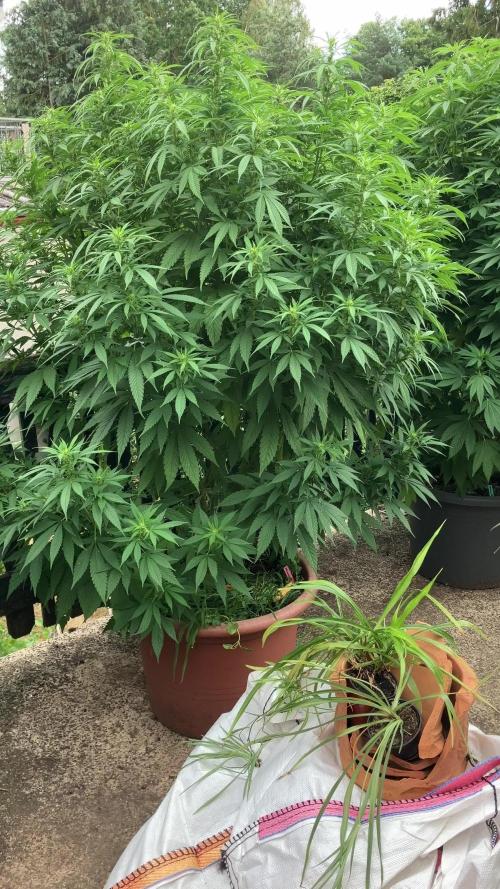
Die Seven Freeze scheint sich von nun an ziemlich auf ihre Blüten zu konzentrieren, sie ist in dieser Woche nur 1 cm gewachsen. Dafür treten ihre Blüten immer deutlicher hervor.
Bestäubt wurde sie bisher mit Durban Poison, Seven Freeze und Erdbeer IBL.
Wenn es so bleibt und sie nach Standard nach maximal 10 Wochen Blütezeit fertig wäre, dann wäre das in der ersten Septemberwoche. Eine sichere Bank vor Eintritt in die Schimmelphasen mit hoher Luftfeuchtigkeit. Aber wer weiß, wie sich das Wetter entwickeln wird...
Ihre Blüten zeigen sich nun deutlich, die Internodien, aus denen die Blütenbüschel wachsen sind sind recht kurz, es sieht nach Kolbenblüten aus.
Die bisherige Düngung war sehr Stickstoff- und Kalium lastig, Phosphor fehlte komplett, deshalb habe ich mit Fledermaus-Guano zugelegt, der einen sehr hohen Phosphoranteil hat. Zwei Esslöffel auf 9l. Wasser, mit Staubmaske im Gesicht. Vorsicht kann bei solch einem Stoff geboten sein!
Horrorstories aus dem Internet. 😱
Auch die Feigen wurden damit gedüngt, hoffe sie werden groß und saftig.
Nächste Woche kommt die Ausrüstung zur Erstellung von Komposttee (eine kleine Druckluftpumpe und das passende Rohr zur Umwälzung). Das soll viele, viele Mikroben aus meinem Wurmkompost vermehren, die sich fleissig am Pflanzenwachstum und deren Gesundheit beteiligen. Es ist eine Neuheit für mich, wenigstens wird der Wurmkompost hier sinnvoll verbraucht. Etwas Humus vom Boden der Benjeshecke kommt auch noch rein.
Alle 2-3 Wochen möchte ich mit Komposttee gießen.
Und es wird Zeit für ein Top Layer in den Töpfen mit Hornmehl, Rinderdungpellets, Wurmkompost und etwas Erde.
Es wird Bilder und Blubbervideos geben.
Vielen Dank für euren Besuch, ich wünsche eine schöne, entspannte Grow-Woche!🍀
Likes
4
Share


@AgroCultiveta
Follow
Holaa, cuarta semana de la Negra44.
Esta semana hubieron varios cambios. Primero hice el segundo y ultimo transplante a una maceta de 7 lt al hacer esto aplique Great white en contacto directo con las raíces.
Luego le hice LST y al día siguiente le realice una defoliación para dar mas espacio a las ramas que pretendo mantener.
Hago los riegos 1/1, uno solo con agua(EC: 0.4) y el otro con los fertilizantes.
En los riegos estoy utilizando Sensi cal-mag para llegar a una EC base de 0.4 y luego aplicar los fertilizantes.
Regulo el PH con los reguladores de BioBizz.
Decidí sacar la malla para Scrog por la poca homogeneidad de las plantas en la carpa. Pretendo hacer esta semana la primera aplicación de Delta9 (estimulante floral) la cual será de manera foliar, está se hace 10 días antes de cambiar el ciclo de luz a 12/12. Va quedando menos para la esperada floración.
Estos días está haciendo más frio por lo que la temperatura en mí carpa a bajado, no puedo hacer mucho frente a esto así que espero que no afecte tanto. La única solución seria alguna fuente de calor pero la cuenta de luz se me dispararía.
Por lo demás todo va bien, no presenta carencias ni ningún posible problema. Se a adaptado muy bien a los cambios de esta semana y ya esta creciendo con mas vigorosidad.
Cualquier recomendación sera bien recibida!!
*Great White se mide en gramos. (Dosis: 1gr/3lt)


Likes
16
Share


@GreeneScene
Follow
Let’s see , humidity is an issue . It’s higher than I’d like it to be . I added drip pans & two different miniature forms of dehumidifiers one electronic and the other passive .
I need recommendations on affordable dehumidifiers before I run into mold issues .
After breaking the apical dominance there was one or two issues but it gave me all the more admiration for the genetics to take a beating and still remain unbothered & WHOLE .
A main top was bound too tightly & broke in half trying to pull itself back up . It remained broken and unnoticed for atleast 3 days before I saw the damage and taped it .
She is now almost fully scarred over & healed .
Vertical growth was decent this week I wouldn’t describe it as fast or explosive.
Still watering to activate the dry amendments I can tell they haven’t began taking it up quite yet.
Holy shit do they stink when not premixed into the soil before planting !
Just monitoring & trying to get as much dense continuous resin packed bud stacked up in there .
Likes
13
Share


@elevensixty6
Follow
Sticking with a Seedsman strain this run as they seem to be the most consistent in my personal experience. Seeds always sprout, have had a 100 percent success rate germinating seeds from Seedsman after popping at least a couple from 4 different strains of theirs. On top of that the quality has been there each harvest so we are giving one of their most popular strains a go and we shall see where it takes us. Although this run I will be trying amended coco coir instead of my usual peat based mediums in an attempt to avoid a pH fallout when the dolomite lime wears out or is used by the plant and allows the peat to become more acidic mid flower. At least this is my theory.. I guess Ill find out. Another thing to note is that for germination I start in a glass of water for 12 hours and then transfer the seeds into the paper towel method by placing them in a damp paper towel until the tap roots are long enough to plant into starting pots.. by far my most successful method personally.

Likes
44
Share


@Unkraut
Follow
Again a easy week...just refilled NS every 2 days (about 20L each time)
PH was constant @5.9-6.0 and EC was 1.3-1.2 all week
It's very humid inside the tent and i was afraid of mold so i decided to defoil alot to reduce transpiration...and actually found mold on one of the buds...i removed all mold widely..like 10g of bud...
I removed like 25% of leaves...almost all big leaves are gone now
Set up another ventilator from below...so now 4 vents inside
Replaced 80L NS (half of the rez) at the end of the week
2 weeks till harvest
