

Likes
9
Share


@Budzalot
Follow
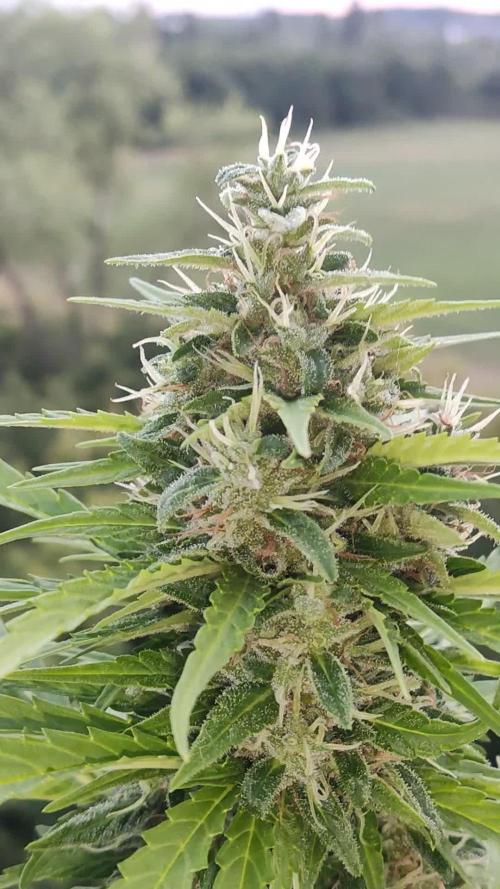
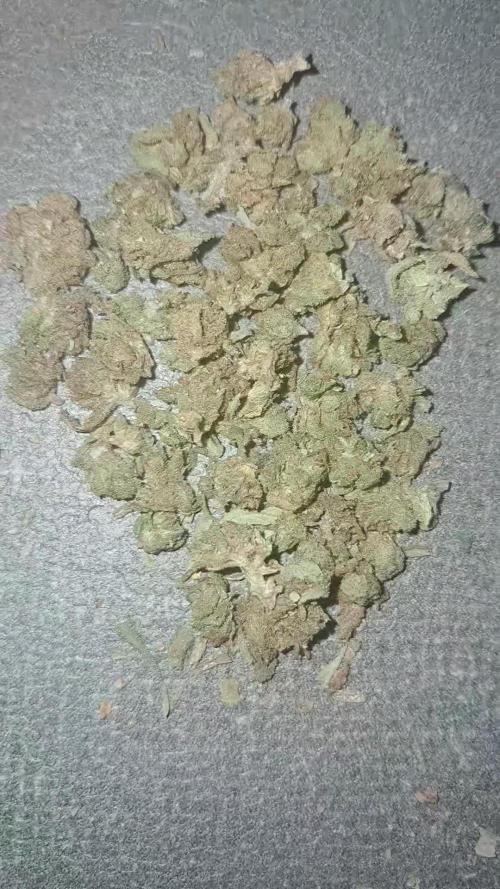
Day 56 of flower. Kept all the same. Thinking should be done with in ten days

Likes
3
Share

@MrHazeAmaze
Follow
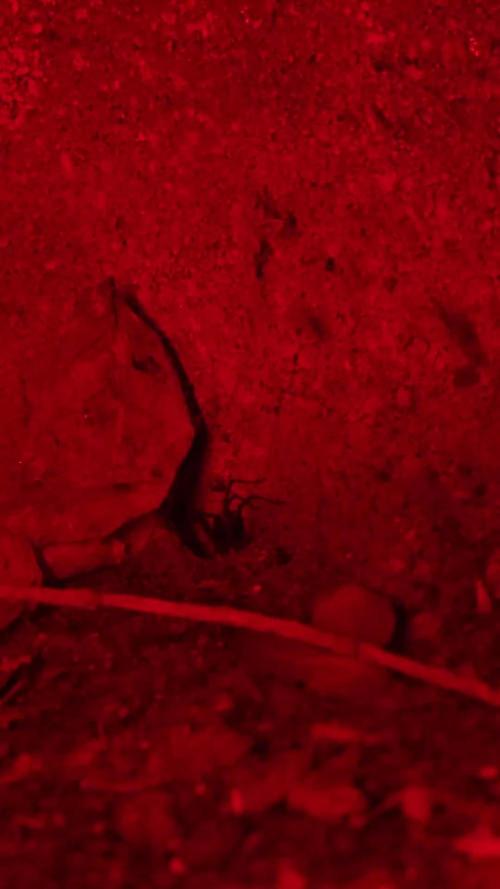
I grew her in a skull, and I made her suffer. Left outside in heat, then cold, dragged back inside, forgotten more often than cared for. Spidermites gnawed at her leaves, yet left the flowers untouched — as if even they sensed something sacred in her final work. When she bloomed, it was not despite the struggle, but because of it. The flower is always a farewell, and every grow is only complete in death.

Processing
Likes
19
Share


@Fire_Farmer
Follow
I'm like 5 days late with this update so I have had to pin videos that I took the same week while I was communicating with TRYHARD so ignore any dialogue that's out of context they aren't diary logs they are simply correspondence between myself And TRY, oh and sorry about my language I'm common as muck me.
The pictures are just random pics I took that week as oppose to my usual more organised method but hey ho I'll do a more tidy job next week.
The week went swimmingly barring some nitrogen deff on the lowers which I initially put down to the hot weather drying the pots too quickly and causing nute lockout with the salt buildup so I flushed then gave them a nice feed after they dried the pot at which point I noticed the most heavily afflicted by the N deff were also the quickest drinkers and had lower EC on the runoff so I have been giving them a slightly stronger feed than the others and it seems to have solved everything so I'm happy with that.
Bud development is nice, frost is nice, terps are through the roof right now.....
Zkittlez ones are really stinking of lime and candy bubblegum
Punch ones are stinking berry berry nice!
Grandpas Crush is smelling kinda hazey right now but I'm hoping the berries comes out of her too.
Little else to report really.
Thanks for reading
One Love 💚
Fire Farmer🔥👨🌾
Likes
25
Share


@Ultraviolet
Follow
ANTHOCYANIN production is primarily controlled by the Cryptochrome (CR1) Photoreceptor ( !! UV and Blue Spectrums are primary drivers in the production of the pigment that replaces chlorophyll, isn't that awesome!
1. Diverse photoreceptors in plants
Many civilizations, including the sun god of ancient Egypt, thought that the blessings of sunlight were the source of life. In fact, the survival of all life, including humans, is supported by the photosynthesis of plants that capture solar energy. Plants that perform photosynthesis have no means of transportation except for some algae. Therefore, it is necessary to monitor various changes in the external environment and respond appropriately to the place to survive. Among various environmental information, light is especially important information for plants that perform photosynthesis.
In the process of evolution, plants acquired phytochrome, which mainly receives light in the red light region, and multiple blue light receptors, including his hytropin and phototropin, in order to sense the light environment. .. In addition to these, an ultraviolet light receptor named UVR8 was recently discovered. The latest image of the molecular structure and function of these various plant photoreceptors (Fig. 1), focusing on phytochrome and phototropin.
Figure 1
Ultraviolet-visible absorption spectra of phytochrome, cryptochrome, phototropin, and UVR8. The dashed line represents each bioactive absorption spectrum.
2. Phytochrome; red-far red photoreversible molecular switch
What is phytochrome?
Phytochrome is a photochromic photoreceptor, and has two absorption types, a red light absorption type Pr (absorption maximum wavelength of about 665 nm) and a far-red light absorption type Pfr (730 nm). Reversible light conversion between the two by red light and far-red light, respectively(Fig. 1A, solid line and broken line). In general, Pfr is the active form that causes a physiological response. With some exceptions, phytochrome can be said to function as a photoreversible molecular switch. The background of the discovery is as follows. There are some types of plants that require light for germination (light seed germination). From that study, it was found that germination was induced by red light, the effect was inhibited by subsequent far-red light irradiation, and this could be repeated, and the existence of photoreceptors that reversibly photoconvert was predicted. In 1959, its existence was confirmed by the absorption spectrum measurement of the yellow sprout tissue, and it was named phytochrome. Why does the plant have a sensor to distinguish between such red light and far-red light? There is no big difference between the red and far-red light regions in the open-field spectrum of sunlight, but the proportion of red light is greatly reduced due to the absorption of chloroplasts in the shade of plants. Similar changes in light quality occur in the evening sunlight. Plants perceive this difference in light quality as the ratio of Pr and Pfr, recognize the light environment, and respond to it.
Subsequent studies have revealed that it is responsible for various photomorphogenic reactions such as photoperiodic flowering induction, shade repellent, and deyellowing (greening). Furthermore, with the introduction of the model plant Arabidopsis thaliana (At) and the development of molecular biological analysis methods, research has progressed dramatically, and his five types of phytochromes (phyA-E) are present in Arabidopsis thaliana. all right. With the progress of the genome project, Fi’s tochrome-like photoreceptors were found in cyanobacteria, a photosynthetic prokaryotes other than plants. Furthermore, in non-photosynthetic bacteria, a homologue molecule called bacteriophytochrome photoreceptor (BphP) was found in Pseudomonas aeruginosa (Pa) and radiation-resistant bacteria (Deinococcus radiodurans, Dr).
Domain structure of phytochrome molecule
Phytochrome molecule can be roughly divided into N-terminal side and C-terminal side region. PAS (Per / Arndt / Sim: blue), GAF (cGMP phosphodiesterase / adenylyl cyclase / FhlA: green), PHY (phyto-chrome: purple) 3 in the N-terminal region of plant phytochrome (Fig. 2A) There are two domains and an N-terminal extension region (NTE: dark blue), and phytochromobilin (PΦB), which is one of the ring-opening tetrapyrroles, is thioether-bonded to the system stored in GAF as a chromophore. ing. PAS is a domain involved in the interaction between signal transduction-related proteins, and PHY is a phytochrome-specific domain. There are two PASs and her histidine kinase-related (HKR) domain (red) in the C-terminal region, but the histidine essential for kinase activity is not conserved.
3. Phototropin; photosynthetic efficiency optimized blue light receptor
What is phototropin?
Charles Darwin, who is famous for his theory of evolution, wrote in his book “The power of move-ment in plants” published in 1882 that plants bend toward blue light. Approximately 100 years later, the protein nph1 (nonphoto-tropic hypocotyl 1) encoded by one of the causative genes of Arabidopsis mutants causing phototropic abnormalities was identified as a blue photoreceptor. Later, another isotype npl1 was found and renamed phototropin 1 (phot1) and 2 (phot2), respectively. In addition to phototropism, phototropin is damaged by chloroplast photolocalization (chloroplasts move through the epidermal cells of the leaves and gather on the cell surface under appropriate light intensity for photosynthesis. As a photoreceptor for reactions such as escaping to the side of cells under dangerous strong light) and stomata (reactions that open stomata to optimize the uptake of carbon dioxide, which is the rate-determining process of photosynthetic reactions). It became clear that it worked. In this way, phototropin can be said to be a blue light receptor responsible for optimizing photosynthetic efficiency.
Domain structure and LOV photoreaction of phototropin molecule
Phototropin molecule has two photoreceptive domains (LOV1 and LOV2) called LOV (Light-Oxygen-Voltage sensing) on the N-terminal side, and serine / on the C-terminal side. It is a protein kinase that forms threonine kinase (STK) (Fig. 4Aa) and whose activity is regulated by light. LOV is one molecule as a chromophore, he binds FMN (flavin mononucleotide) non-covalently. The LOV forms an α/βfold, and the FMN is located on a β-sheet consisting of five antiparallel β-strands (Fig. 4B). The FMN in the ground state LOV shows the absorption spectrum of a typical oxidized flavin protein with a triplet oscillation structure and an absorption maximum wavelength of 450 nm, and is called D450 (Fig. 1C and Fig. 4E). After being excited to the singlet excited state by blue light, the FMN shifts to the triplet excited state (L660t *) due to intersystem crossing, and then the C4 (Fig. 4C) of the isoaroxazine ring of the FMN is conserved in the vicinity. It forms a transient accretionary prism with the tain (red part in Fig. 4B Eα) (S390I). When this cysteine is replaced with alanine (C / A substitution), the addition reaction does not occur. The effect of adduct formation propagates to the protein moiety, causing kinase activation (S390II). After that, the formed cysteine-flavin adduct spontaneously dissociates and returns to the original D450 (Fig. 4E, dark regression reaction).
Phototropin kinase activity control mechanism by LOV2
Why does phototropin have two LOVs? Atphot1 was found as a protein that is rapidly autophosphorylated when irradiated with blue light.
The effect of the above C / A substitution on this self-phosphorylation reaction and phototropism was investigated, and LOV2 is the main photomolecular switch in both self-phosphorylation and phototropism. It turns out that it functions as. After that, from experiments using artificial substrates, STK has a constitutive activity, LOV2 functions as an inhibitory domain of this activity, and the inhibition is eliminated by photoreaction, while LOV1 is kinase light. It was shown to modify the photosensitivity of the activation reaction. In addition to this, LOV1 was found to act as a dimerization site from the crystal structure and his SAXS. What kind of molecular mechanism does LOV2 use to photoregulate kinase activity? The following two modules play important roles in this intramolecular signal transduction.
Figure 4
(A) Domain structure of LOV photoreceptors. a: Phototropin b: Neochrome c: FKF1 family protein d: Aureochrome (B) Crystal structure of auto barley phot1 LOV2. (C) Structure of FMN isoaroxazine ring. (D) Schematic diagram of the functional domain and module of Arabidopsis thaliana phot1. L, A’α, and Jα represent linker, A’α helix, and Jα helix, respectively. (E) LOV photoreaction. (F) Molecular structure model (mesh) of the LOV2-STK sample (black line) containing A’α of phot2 obtained based on SAXS under dark (top) and under bright (bottom). The yellow, red, and green space-filled models represent the crystal structures of LOV2-Jα, protein kinase A N-lobe, and C-robe, respectively, and black represents FMN. See the text for details.
1) Jα. LOV2 C of oat phot1-to α immediately after the terminus
Rix (Jα) is present (Fig. 4D), which interacts with the β-sheet (Fig. 4B) that forms the FMN-bound scaffold of LOV2 in the dark, but unfolds and dissociates from the β-sheet with photoreaction. It was shown by NMR that it does. According to the crystal structure of LOV2-Jα, this Jα is located on the back surface of the β sheet and mainly has a hydrophobic interaction. The formation of S390II causes twisting of the isoaroxazine ring and protonation of N5 (Fig. 4C).
As a result, the glutamine side chain present on his Iβ strand (Fig. 4B) in the β-sheet rotates to form a hydrogen bond with this protonated N5. Jα interacts with this his Iβ strand, and these changes are thought to cause the unfold-ing of Jα and dissociation from the β-sheet described above. Experiments such as amino acid substitution of Iβ strands revealed that kinases exhibit constitutive activity when this interaction is eliminated, and that Jα plays an important role in photoactivation of kinases.
2) A’α / Aβ gap.
Recently, several results have been reported showing the involvement of amino acids near the A’α helix (Fig. 4D) located upstream of the N-terminal of LOV2 in kinase photoactivation. Therefore, he investigated the role of this A’α and its neighboring amino acids in kinase photoactivation, photoreaction, and Jα structural change for Atphot1. The LOV2-STK polypeptide (Fig. 4D, underlined in black) was used as a photocontrollable kinase for kinase activity analysis. As a result, it was found that the photoactivation of the kinase was abolished when amino acid substitution was introduced into the A’α / Aβ gap between A’α and Aβ of the LOV2 core. Interestingly, he had no effect on the structural changes in Jα examined on the peptide map due to the photoreaction of LOV2 or trypsin degradation. Therefore, the A’α / Aβ gap is considered to play an important role in intramolecular signal transduction after Jα.
Structural changes detected by SAXS
Structural changes of Jα have been detected by various biophysical methods other than NMR, but structural information on samples including up to STK is reported only by his results to his SAXS. Not. The SAXS measurement of the Atphot2 LOV2-STK polypeptide showed that the radius of inertia increased from 32.4 Å to 34.8 Å, and the molecular model (Fig. 4F) obtained by the ab initio modeling software GASBOR is that of LOV2 and STK. It was shown that the N lobes and C lobes lined up in tandem, and the relative position of LOV2 with respect to STK shifted by about 13 Å under light irradiation. The difference in the molecular model between the two is considered to reflect the structural changes that occur in the Jα and A’α / Aβ gaps mentioned above.
Two phototropins with different photosensitivity
In the phototropic reaction of Arabidopsis Arabidopsis, Arabidopsis responds to a very wide range of light intensities from 10–4 to 102 μmol photon / sec / m2. At that time, phot1 functions as an optical sensor in a wide range from low light to strong light, while phot2 reacts with light stronger than 1 μmol photon / sec / m2. What is the origin of these differences? As is well known, animal photoreceptors have a high photosensitivity due to the abundance of rhodopsin and the presence of biochemical amplification mechanisms. The exact abundance of phot1 and phot2 in vivo is unknown, but interesting results have been obtained in terms of amplification.
The light intensity dependence of the photoactivation of the LOV2-STK polypeptide used in the above kinase analysis was investigated.
It was found that phot1 was about 10 times more photosensitive than phot2. On the other hand, when the photochemical reactions of both were examined, it was found that the rate of the dark return reaction of phot1 was about 10 times slower than that of phot2. This result indicates that the longer the lifetime of S390II, which is in the kinase-activated state, the higher the photosensitivity of kinase activation. This correlation was further confirmed by extending the lifespan of her S390II with amino acid substitutions. This alone cannot explain the widespread differences in photosensitivity between phot1 and phot2, but it may explain some of them. Furthermore, it is necessary to investigate in detail protein modifications such as phosphorylation and the effects of phot interacting factors on photosensitivity.
Other LOV photoreceptors Among fern plants and green algae, phytochrome ɾphotosensory module (PSM) on the N-terminal side and chimera photoreceptor with full-length phototropin on the C-terminal side, neochrome (Fig. There are types with 4Ab). It has been reported that some neochromes play a role in chloroplast photolocalization as a red light receiver. It is considered that fern plants have such a chimera photoreceptor in order to survive in a habitat such as undergrowth in a jungle where only red light reaches.
In addition to this, plants have only one LOV domain, and three proteins involved in the degradation of photomorphogenesis-related proteins, FKF1 (Flavin-binding, Kelch repeat, F-box 1, ZTL (ZEITLUPE)), LKP2 ( There are LOV Kelch Protein2) (Fig. 4Ac) and aureochrome (Fig. 4Ad), which has a bZip domain on the N-terminal side of LOV and functions as a gene transcription factor.
4. Cryptochrome and UVR8
Cryptochrome is one of the blue photoreceptors and forms a superfamily with the DNA photoreceptor photolyase. It has FAD (flavin adenine dinucle-otide) as a chromophore and tetrahydrofolic acid, which is a condensing pigment. The ground state of FAD is considered to be the oxidized type, and the radical type (broken line in Fig. 1B) generated by blue light irradiation is considered to be the signaling state. The radical type also absorbs in the green to orange light region, and may widen the wavelength region of the plant morphogenesis reaction spectrum. Cryptochrome uses blue light to control physiological functions similar to phytochrome.
It was identified as a photoreceptor from one of the causative genes of UVR8 Arabidopsis thaliana, and the chromophore is absorbed in the UVB region by a Trp triad consisting of three tryptophans (Fig. 1D). It is involved in the biosynthesis of flavonoids and anthocyanins that function as UV scavengers in plants.
Conclusion
It is thought that plants have acquired various photoreceptors necessary for their survival during a long evolutionary process. The photoreceptors that cover the existing far-red light to UVB mentioned here are considered to be some of them. More and more diverse photoreceptor genes are conserved in cyanobacteria and marine plankton. By examining these, it is thought that the understanding of plant photoreceptors will be further deepened.

Likes
5
Share


@Tony_Montana84
Follow
So die 11 Woche hat angefangen, seit ca 5 Tagen gibt es kein Dünger mehr für die Lady. Täglich gieße ich mit 1.5 Liter und das Wasser hat einen PH Wert von 6.5. Noch eine Woche und dann steht die Erste Ernte an. Bin echt gespannt wieviel Trockene Buds auf der Wage sind.


Likes
55
Share


@pifflestikkz
Follow
Day 165
14/10/24 Monday
De-chlorinated tap water pH 6 with calmag today
Starting to see new growth showing no signs of new seeds!!
She is spitting out new pistils again, I may run nutes for this week then flush , as trichomes are looking clear still with only spots of cloudy.
Picture's (over exposed to light) 📸
Day 167
16/10/24 Wednesday
Feed today 😁 using de-chlorinated tap water phd to 6.3.
Her pistils keep maturing rapidly, but then I check twice a day and each time I check, they look either orange and almost showing finished signs... Then she slaps out another round of pistils and trichomes are coming cloudy still.
She may well be a 12 week flower.
I'll keep feeding till I see majority cloudy.
Picture and video update 📸💚
Day 168
17/10/24 Thursday (End of week)
Damn!!!
Found two tops, overnight turn brown hairs, and sugar leaves yellow and dry.
Needless to say two tops had been attacked by mould.
After a heavy detailed inspection of plant, it is only these two tops. So I have removed, bagged and hoping now no new mould is spotted 🤦♂️
Rest of the plant looks and smells fantastic 💚
I have update pictures and a video 📸💚
Day 169
18/10/24 Friday
Damn, she has lost another 2 tops due to mould. I'm gutted, so to stop any further disappointment, I am chipping her tonight before lights on 💚✌️
Note to self- lesson learned when doing Scrog, Lollipop MORE. I have left too much on and it has reduced airflow causing humidity to stay above 62%.


Likes
8
Share


@TrexyTame
Follow
So they're finally done. Really pretty stuff here and serious nose behind it. Every day it's developed and now it reeks like vanilla and lemon candy. There's a pheno that smells like bubblegum and another smells like a sweeter lemon tree. They're similar smelling but very very different. Makes it fun to sort through. The looks are pretty off the charts too but I don't have to say that. I'm excited to do my first smoke report! May not get to it until everything's done curing but my guess is these are gonna be burning phenomenally. I'm looking forward to getting my keeper and getting some beans of my own soon. Anyway thanks for checking in!
Likes
37
Share


@MrJones
Follow
MrJones Pink Sugar Breath F2 by VMAN - ViparSpectra XS2000 240W Infrared Full Spectrum LED Grow Light
´🌿⊱╮🌿╰⊰🌿 WEEKLY GOALS 🌿╰⊰´🌿╰⊰´🌿
🏡Indoor - 3"x4"x8" Custom Built Grow Closet
🌞Environment - 80F and 65% Humidity - using Humidfyer as needed.
🌾This strain likes to stretch during flower, so a heavy training regiment will be needed.
🗓️Vegging
⚱️1-Gallon 📊6.4 / 6.8 PH
💧 Feeding / Dry Amendments using Dr. Erth Live all Purpose and Using Up my Mr. B's Green Trees ORGANIC BLOOM 2-8-6
🌞ViparSpectra XS2000 240W x2 Infrared Full Spectrum LED Grow Light
🕷️ IPM - We will be using Green Cleaner" 1 OZ per Gallon, and CannControl from Mammoth alternating between products each month for Integrated Pest Management.
🌿╰⊰´🌿╰⊰´🌿 PLANT UPDATES 🌿╰⊰´🌿╰⊰´🌿
📝 Notes - A good friend of mine gave me some of his crosses, please read below for his amazing details, I am very excited to see what I can accomplish with these genetics and my cannabis gardening approach.
╰⊰´🌿 ╰⊰´🌿 ╰⊰´🌿 ╰⊰´🌿 ╰⊰´🌿 ╰⊰´🌿 ╰⊰´🌿
🗓️Sunday 09/05/22 - A week in their new pots and this strain is doing very well, they are stacking very tightly. odd because they have a strong Sativa trait, so I am still trying to figure out my training process, I started a compost rea yesterday and will be ready tomorrow, and hope the plants have dried out a bit from my watering on Friday. I have placed a recipe for my Nitrigeon Rich Tea Below, I am hoping it really supports the natural organic soil and activates the microbes to help the plants blow up! The plants are starting to develop a nice sweet smell, very fresh!
🗓️ Wednesday 09/07/22 Fed the Sugarbreath the Compost tea on Monday, they are looking great, decided to do defoliation on Tuesday, and the plants are bouncing back and looking amazing! I am going to give them the remainder of the week and decide if to top or just do some LST, the plants are stacking, the internode spacing is very tight, and would like to see how I can open this up. Stay Tuned!
📝 Saturday - 09/10/22 Thursday I topped dressed with the first-time feeding of Dr. Earth Life, watered in with dechlorinated H20, these ladies are really starting to explode!
╰⊰´🌿 ╰⊰´🌿 ╰⊰´🌿 ╰⊰´🌿 ╰⊰´🌿 ╰⊰´🌿 ╰⊰´🌿
Breeders Notes by VMAN
Pink Sugar Breath is a creation of Platinum Kush Breath x Pink Sugar cookies originally Bred by UFO Genetics.
Pink Sugar Breath F2 is the second filial Generation that was hunted and creates by Visions.
The vigorous cultivar takes 63 to 75 days to flower with various phenotypes. These phenotypes can express terpene profiles ranging from Bakery Dough, Sugar, Og Funk, Fruity, Gas, Dank, Chemical Floor Cleaners, and much more. Expect Purple and Pink Phenotypes to pop up fairly easily. Color starts to show within 7 to 8 days of flower for the purple and pink phenotypes. Green phenotypes have more of an OG Funk/Floor Cleaner presence
╰⊰´🌿 ╰⊰´🌿 ╰⊰´🌿 ╰⊰´🌿 ╰⊰´🌿 ╰⊰´🌿 ╰⊰´🌿
Compost Tea
1 Cups Worm Casting
1 Cups Lobster Compost
1 Cups Home Made Compost
2T Molasses
2 T Alfalfa Meal (DTE)
2 T Kelp Meal (DTE)
1 T Bat Guano (DTE)
1 teaspoon Rootwise Bio Elixir
I used a small paint strainer to hold my composts, placing an air stone right in the bag and zip-tie it nice and tight - this allows air bubbles to really agitate the micro matter off of the compost and into your tea
I like to mix in the molasses (microbe food) and start my main air stone, the dry amendments and Rootwise can be just measured in the bubbles
Keep the temp of the water warm 75F/85F - too cool and the microbes reproduce too slowly and too hot will kill them.
I do not delete my teas and let the plant pots dry out slightly before feeding.
I try to do this weekly - as we get further into the growth during the flowering stage I will add DTE Seagull Guano increasing the phosphorus.
If any questions post up in the comments and will do my best to answer them for you
Processing
Likes
69
Share


@TOTEM
Follow
When you show love to a plant, she will do the same to you. That’s what’s happening! This gorgeous Euphoria is a gift from nature (and RQS 😄). Not much to say about the ferts, which are doing their job. Flowers are getting bigger, so yeah, cool!
Likes
46
Share


@Mosquito_Haarlem
Follow
Echt een dikke koningin.
De Power Buds van Plagron doet echt wat het beloofd, superveel bloemknoppen!
Ik heb wel schutbladen weggeknipt die veel licht blokkeerden voor de lager buds.
Laten we kijken hoe ze zich deze week ontwikkeld.
Ik zal gedurende de week nog verse foto's updaten dus hou het in de gaten 🧐

Likes
12
Share


@Bryankush
Follow
Giorno 6 Lei sembra matura ed è molto profumata
In tutto ci ha messo 9 settimane a maturare niente male. Le cime a causa del freddo a settembre non si sono espanse molto ma sono sicuramente gelide e profumate
Likes
3
Share


@NocturnalGardner44
Follow
Caught up... things are going well, Bruce stretched like crazy and has evened up its canopy to the others idk if it's that big bud in it or what. Lilac has looked a solid week and half ahead of the others since flower, she looks wicked though, trichromes are starting to build. I've done my last training, I usually go hard on thinning but I'm trying to be conservative and only uncover buds under leaves. Still same feeding routine.. looking forward to the finish line but know this is an important time with terms and trichromes beginning to resonate... I sick at this guy's but I want to get better at chronicling my grows.. so hourly I will improve in the process of Journaling.


Likes
5
Share


Likes
5
Share


@SkunkyDog
Follow
Hallo zusammen 🤙.
Sie wächst sehr schön und riecht schon leicht nach Haze 😜

Likes
Comments
Share


@Santaclaus
Follow
Día 40 me ha dado carencias de calcio magnesio y posforo y potasio, me he dado cuenta un poco tarde... Las hojas estaban caídas y se me estaban poniendo amarillas con manchas marrones...les puse calmag y empezaron a buscar la luz ... También me di cuenta, que las Lili que no veía se me ponían las hojas moradas, creía que era exceso de nitrógeno, pero no era posforo y potasio... Así, que lo que no quería hacer, lo he hecho he metido a tope de nutrientes y más... Espero no liarla más...