


Likes
Comments
Share


Likes
19
Share


@Papablob
Follow
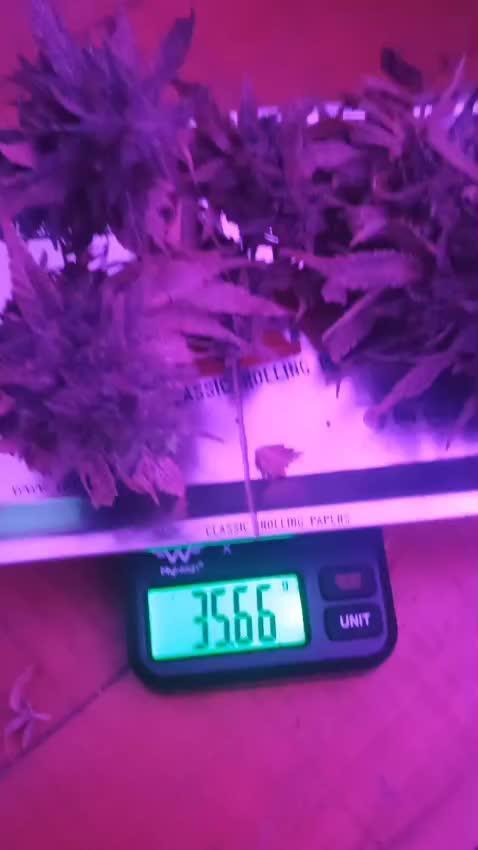
19/09 Elle commence à passer à l'ambre tout gentiment.
21/09 celle là, je veux la pousser bien à l'ambre, un 40/60 bien compté. Genre Fumette qui scotch bien profond dans le canapé. Un truc qui m'envoie au dodo directe quoi. Avec mes horaires de boulot de dingue c'est important pour moi si j'arrive à bien murire. Il va Falloir que je teste de nombreuses fois de nombreuse plante..😁🤤 Youpi!

Likes
3
Share


@BestBudsGrow
Follow
Flush her at the beginning of the week and stop feeding she really faded out into a dark purple 😍


Likes
38
Share


@Green_Mountains
Follow
I took the tiny plant out of the tent due to state laws. She is happily sitting in a window... we'll see what happens with her!
Massive growth for both plants this week! They both doubled in size! I don't know whether to call my plants vegging, pre-flowering or flowering. I figured this was the last week of veg and next week is full on flowering!!
They both stink! Gassy for sure! I'll need to turn start using my carbon filter soon... I caught a few cool time lapse videos this week. Especially after feeding them last night!!
I fed them twice this week. The first time was at a third recommended dose and I jumped it to half yesterday. The leaves are clawing at the top of the plants... I think it is a lack of phosphorus due to me only watering them the last 2 weeks. Any thoughts out there?
I'd love advice about defoliating... I have a couple massive fan leaves I could remove to open the canopy for flowers... I just don't want to stunt the plant or rob the main cola of a major energy source... Thoughts are definitely welcome!
I tried my hand at LST... I think a few are working and a few aren't doing the job... Definitely need to figure this out! Again advice is welcome!
If you've made it this far... thanks!! Cheers!
Likes
21
Share


@deFharo
Follow
🖐️👨🌾 Bienvenidos entusiastas de la marihuana clandestina y orgánica!
Esta delicada sativa asiática ha cumplido 12 semanas de vida y ya comienza a mostrar las pre flores, ha completado la segunda semana en horario 12/12h con un estiramiento de 9cm... esta semana probablemente haga un cambio importante en las luces de la carpa de cultivo, en cuanto compruebe que todas las plantas están centradas en la formación de flores y paren de estirarse.
Muy buena la evolución de esta semana, la planta claramente esta preparada para hacer crecer grandes flores, la masa foliar se expande y grandes ramas sobresalen orgullosas, el metabolismo está disparado, he ido aumentando la cantidad de agua de riego conforme la planta lo ha ido pidiendo, esta temporada estoy siendo más paciente y precavido con la cantidad de humedad en maceta que en otras temporadas, para intentar desarrollar las raíces lo más posible, cuando acabe los cultivos comprobaré como fue el desarrollo radicular, sólo a partir de ahora es cuando voy a inundar el sustrato con el máximo de humedad que tengo asignado para esta maceta, durante todo el cultivo hago riegos de precisión, pues peso diariamente las macetas y sólo riego cuando llego a ciertos niveles de consumo, la idea es mantener el sustrato oxigenado y lo más suelto posible durante las semanas de crecimiento vegetativo para favorecer la movilidad de las raíces.
Esta semana dos riegos suaves y estimulantes, estoy preparando la planta para entrar en el gran juego de la flor, en cuanto pare el estiramiento comienzo con riegos más concentrados y específicos para la etapa de floración... sin contemplaciones!
Con el último riego hice un aporte de una mezcla de enmiendas secas al sustrato, en ese mismo riego incluí melaza para dar energía extra a los Microorganismos y que comiencen a comer el aporte extra de materia orgánica.
Esta temporada estoy limitando el uso de melaza en riegos, hasta ahora la usaba en todos y en cada uno de los riegos, desde el inicio hasta el final de los cultivos. pero esta temporada he usado la melaza sólo en las primeras semanas de cultivo para potenciar la proliferación de la Microbiología en el sustrato y la expansión de las raíces, y desde hace dos semanas dejé de añadir melaza cuando las plantas han tenido un volumen importante, ahora, del aporte de azúcares para dar energía a los MM se encargará la propia planta, no es que haya observado anomalías evidentes por el uso continuado de la melaza, pero no quiero influir en el sabor ni en los aromas originales de las plantas.
Y mirando hacia los cultivos del 2025 y siguientes, he preparado unos litros de dos nuevos Bio Fertilizantes basados en frutas, minerales y etc., éstos los tendré en fermentación anaeróbica hasta las temporadas del 2025... hacer es comprender!
HASTA LA PRÓXIMA...
SALUDOS A TODOS!
================================
Info de la cepa Thai Fantasy de Kannabia seeds: https://www.kannabia.com/es/semillas-marihuana-feminizadas/thai-fantasy
"Nuestros paladares occidentales se abren a nuevas dimensiones cuando nos adentramos en los universos exóticos de Tailandia o Camboya." Kannabia Seeds
- Genética: Thai x Black Domina
- Sativa 80%, Índica 20%
- Tiempo de Floración - 58-65 días
- Rendimiento en interior: 500 g/m²
- THC: 18,6 %
- Sabores: Dulce y terroso
================================


Likes
104
Share


@SmokingTiki
Follow
This week, I continued the LST on each plant everyday. Unfortunately, I broke one branch of the Cashew Kush by pulling too hard on it. Since it was one of the double branches (see last week photo), I'm curious to see if the other smaller branch will now increased its growth to compensate the loss.
The growth is good despite some probable nitrogen excess (curled tip + dark green leaves) on the Blackberry Cake and the Cashew Kush. This is not the first time I'm facing this with Sensi Seeds plants in this pre-fertilized soil, but they always turned out fine in the end! I added a bit more water to these two plants to try to eliminate a bit of nitrogen excess. I also increased the watering frequency.
I wanted to give some light to the lower branches without defoliating too much, too soon. So, I get the idea of removing only some leaflets on all the plants. I don't know if this technique has a name and if it's useful. If your heard about it, please let me know 😎
Plants heights at the end of the week :
-------------------------------------------
Blackberry Cake : 21cm
Jack Herer : 25cm
Cashew Kush : 25cm

Likes
6
Share


@stephandjo
Follow
53th day of flowering.
A good finish also for this fast-flowering strain.
A strain that I particularly like.
The buds are well formed and begin to thicken.
The smell, so recognizable among all, is super strong. No doubt it's Skunk ; )

Likes
8
Share


@Dapper_Buds
Follow
Week 6 and these girls got a scrog net added. As the plants are getting extremely heavy. Started to unfold an open up eagle spread style. So had to lend a helping hand. They got a scrog net added an the untrained plant got tied up from tents upper support bars an lower branches got some support also from the net. So far everything is going smoothly. The e680s light is putting in that work work

Likes
59
Share


@Jsammy09
Follow
The beginning of week 5! I think we are going into flower this week, signs are there.
7/22 (Day 35) - Started off week 5 with the most LST and Defoliation I have done and I was nervous. They needed it though, I was getting worried about mold and airflow through these bushy ladies, so I did my best and kinda followed my instinct. I did watch and read a ton of videos and articles and tried to put what I learned to use. I think these ladies are about to go into flower as well, started noticing the white pistols and where potential bud sites are going to be so I did my best to make those available to light and as even as possible. Will be letting them rest for a few days and reassess then. Everything continues to stay in check and the new dehumidifier worked awesome last night keeping the humidity in check.
7/23 (Day 36)- Didnt get any pictures this day. Pretty normal day, they drank 2 gallons and just continue to grow. I feel like they are just growing like crazy still and I think im starting to see them start stretching a bit more.
7/24 (Day 37)- Did the res change this morning, they are definitely starting to stretch and the bud sites seem to becoming more obvious. I went with more Veg neats after doing some reading, I may switch to bloom next week depending on how they are stretching. They fully recovered from the LST and defoliation two days ago. I decided to do a bit more today and focus on opening up light to sites that need them. Everything gets covered up so fast and I am having to defoliate a bit almost every other day it seems.
7/25 (Day 38)- Everytime I defoliate and do some LST they seem to bounce back so fast like next day. I did a bit more with the front left plant, she is lagging behind the others a bit, but that one has always seemed to be the runt. They are starting to form buds, especially back left plant which seems to have taken off a bit faster than the others. They are drinking almost 3 gallons a day! Everything continues to stay in check. I am debating if I should try scrogging or not, or just continue to LST and defoliate. Any input is welcome!
7/26 (Day 39) - Just kind of checked in on them and topped up the res today, Everything looks nice and healthy, all conditions are staying consistent and everyone is looking healthy.
7/27 (Day 40)- Did quite a bit of defoliation this morning. They needed it badly, a lot of the light was not getting through to under the canopy. Going to just keep an eye on them and see how they recover the next few days.
As always, tips and recommendations are always appreciated!
Likes
6
Share


@GrowingSA
Follow
This week was great took some more cuttings .....testing wich method is more successful .... airoponics vs coco perlite mix
Same light same hours ...no nutrients ....lost 1in the coco perlite dome

Likes
5
Share


@VividLeaf
Follow
This week the flowers really started to bulk up.
I was worried about having very loose buds as the development starts off very slow but eventually they really bulk up nicely!!
The topped plant is about 2 weeks behind in flower but has way more main collas! Check the last video for both plants

Likes
13
Share


@EasyGoing420
Follow
The preflower stretch starded and some future bud sights are starting to show . Plants look like healthy and happy teenagers ! The canopy is even and has almost completely filled out the tent surface thanks to the topping, the lst'ing, and the scrogging : )
I added a second trellis net to support the future BUDS, plants look healthy and happy !
Happy growing y'all !

Likes
18
Share

@LittleBigTrees
Follow
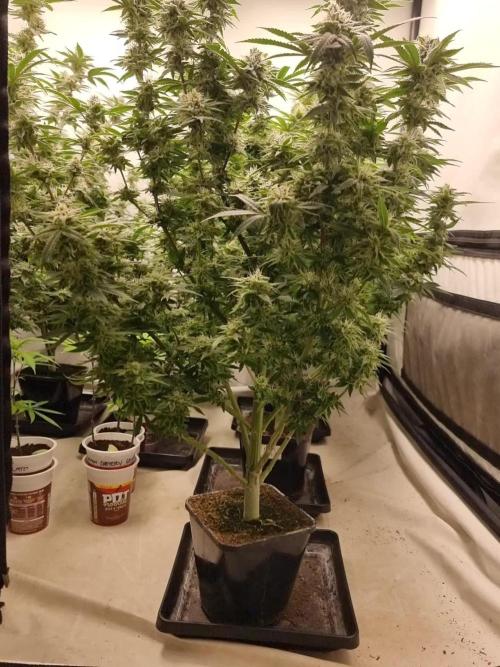
I've pulled a few fan leaves, feeding full strength with 20% run off.
The smell is getting stronger by the day, very over powering when I open the tent.

Likes
26
Share


@elevensixty6
Follow
All went well in the germination process, 100 percent success rate per usual with Seedsman seeds. Dropped the seeds in spring water for 12 hours and then transferred into the paper towel method until the tap roots were a half inch or so. Then planted into solo cups of Jiffy starting mix and watered with RO water with about 150ppm of CalMag.

Likes
34
Share


@PEAKYPLANTERS
Follow
hi to all, brothers of the weed!
my orange juice is nice and ready to be harvested!this beautiful plant was really very strong and resistant, in a short time it dominated all the cousins that were in the room! as always we will perform a dry trim and we will do a lot of good content and other reviews on the smoke so stay up to date!


Likes
28
Share

@PEAKYPLANTERS
Follow
Hello everyone, brother gardeners.
welcome back to queen peaky's diaries
this week we saw how autoflowering plants reacted to the high stress technique
now the buds are re-emerging from under the scrog net
Likes
6
Share


@nonick123
Follow
Día 30 (10/06) Sigue creciendo. Tendrá un tamaño medio me parece
Día 31 (11/06) Sigue el stretch y empieza a florecer
Día 32 (12/06) Come on! Tendremos una planta más o menos decente
Las Autos deben germinar en Light Mix antes de que las raíces lleguen al Super Soil! (30% Light Mix - 70% SuperSoil)
Día 33 (13/06) Sigue creciendo
Día 34 (14/06) Riego 150 ml de H20 pH 6,5
Día 35 (15/06) Se ha quedado una planta de tamaño medio. Algo saldrá
Día 36 (16/06) 500 ml de Té de Floración con Healthy Harvest 8 ml/L + Insect Frass 16 ml/L + Melaza 1 ml/L
💦Nutrients by Lurpe Solutions - www.lurpenaturalsolutions.com
🌱Substrate PRO-MIX HP BACILLUS + MYCORRHIZAE - www.pthorticulture.com/en/products/pro-mix-hp-biostimulant-plus-mycorrhizae
Processing
Likes
19
Share


@Fire_Farmer
Follow
Not much to report really, everything is in order and on track✅
The tallest plant has grown 16cm end of week 2 so 1 last week of potential stretch at that rate or hopefully less and it should all remain manageable 🤞
Facing some heat issues but it doesn't seem to be stressing my ladies they are loving life right now 🌞
Its been 25celcius here last few days and that translated to 28celcius in the tent🌡️
Gonna steal a few leaves here and there this week but nothing major, I'm happy enough with the canopy and its bud-sites 👌
Buds are developing nicely, hopefully I'll still get some dense nugs even though they are only wearing 6L shoes 👠
In the end though my main goal is clean and tasty smoke and ive been getting some nice fruity smells from the stem rub, especially the Zorro x Zkittlez #1 I'm getting a lot of lemon and lime from her 🍋🍇⛽
As for clean that's on me, in the great debate of flushing I'm all for it. I get that true organics is a different story but in coco which is what I'm using I notice the difference 🥥
I use bottled nutes which aim to be as close to organic as you can get in a bottle, Cellmax Bio always give me nice flavour and I'm just testing Buddha's Tree Organicus now alongside Cellmax Additives but I still always flush 🌊
Well that's all folks 🐰
Thanks for tuning in🙏
One Love💚
Fire Farmer🔥👨🌾