


Likes
Comments
Share

@all_about_420
Follow
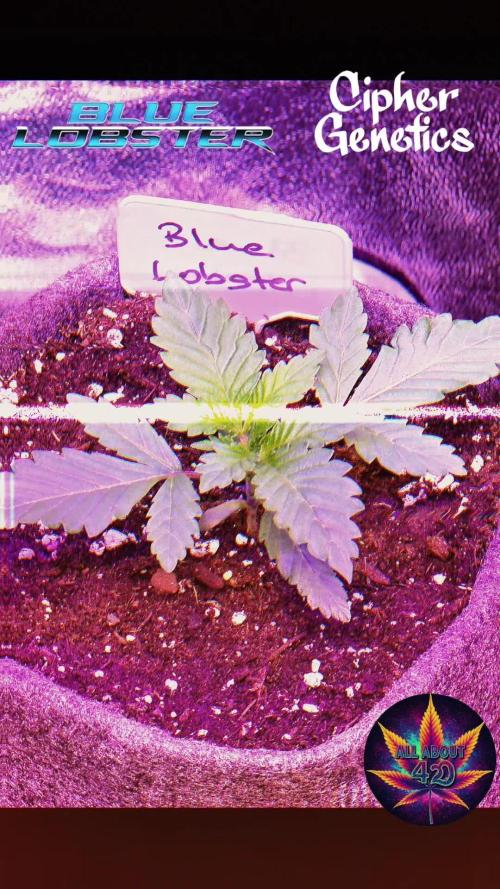
Die Blue Lobster hat sich schon an den ersten Tagen sehr gut entwickelt.
Gesunde Farbe, schöne Blattstruktur und ideale Internodien.
Das Umtopfen hat sie überhaupt nicht gestört, da das sehr früh passiert ist und so noch keinerlei Wurzeln davon betroffen waren.
Gab also keine Stresssituation, im Gegenteil, jetzt kann sie sich schön entfalten...
Likes
38
Share


@Green_Mountains
Follow
I took the tiny plant out of the tent due to state laws. She is happily sitting in a window... we'll see what happens with her!
Massive growth for both plants this week! They both doubled in size! I don't know whether to call my plants vegging, pre-flowering or flowering. I figured this was the last week of veg and next week is full on flowering!!
They both stink! Gassy for sure! I'll need to turn start using my carbon filter soon... I caught a few cool time lapse videos this week. Especially after feeding them last night!!
I fed them twice this week. The first time was at a third recommended dose and I jumped it to half yesterday. The leaves are clawing at the top of the plants... I think it is a lack of phosphorus due to me only watering them the last 2 weeks. Any thoughts out there?
I'd love advice about defoliating... I have a couple massive fan leaves I could remove to open the canopy for flowers... I just don't want to stunt the plant or rob the main cola of a major energy source... Thoughts are definitely welcome!
I tried my hand at LST... I think a few are working and a few aren't doing the job... Definitely need to figure this out! Again advice is welcome!
If you've made it this far... thanks!! Cheers!


Processing
Likes
6
Share


@xAK47FULLx
Follow
Some nuts deficiency but fixed right away
Snaped while training
But she is a survivor

Likes
11
Share


@Cockneycultivar
Follow
This week she has grown so tall. I am so regretful for not scrog’in her or done any low stress training.
Although I do have a nice size tent with the grow light on adjustable rope so it’s not that much of a problem.
Although when I flip her to 12/12 into flower I know she’s gonna stretch even more.
The size of her leafs are impressive.
I read that your not meant to use biobizz grow and fish mix at the same time but I went against it and she’s showing no signs of stress or nutrition problems.
I even have an 11 fingered leaf now!!
She is beginning to smell very nice too, so all good so far. Can’t wait till she packs on some bud now.

Likes
21
Share


@NSABND
Follow
today was the day 🙏
time was running out and i have to harvest "Hilde" 😏
summary of "Hilde" 92 days in under 3 min. enjoy 😅🙏
I dry the plant in the boiler room because the climate there is very good. I also darkened the room so that no sunlight disturbs the drying process.😏
"Darkroom" Day 2 for "Hilde" 😏😄😜
Likes
6
Share


@flitflitz
Follow
KarmaIntraveritisGrow
Cada vez tengo más claro que este cultivo no será nada del otro mundo. No están creciendo especialmente. Y hay un motivo.
Mi otro cultivo es prioritario y el espacio disponible es el que es.
Reciben muy poca luz directa, apenas un par de horas, están todos el día a la sombra. No puedo luchar contra eso. Y se lo noto, las pobres parece que quieren pero que no pueden.
De todas maneras seguiremos hasta donde sea que lleguemos.
Tnt complex 2 veces/semana a razón de 2.5 ml/l
Powerzyme 1 vez a la semana, 2 ml/l
Supervit 1 vez/semana, a razón de una gota cada 4 litros
Lo estipulado por hesi pero no, me he vuelto a colar y les he doblado la dosis de tnt un dia, se me va la olla, estare pendiente de la reacción. La última vez no pasó nada...veremos
MP - ✅ . ahí va, parece que va a su ritmo
GZP - ✅ . Habrá dos fenotipos distintos, también? uno con la distancia internodal más corta que el otro que parece que tira más pa' arriba. No sé... Apreciación mía🤷🏻, me estaré volviendo loco?.
Seguimos!
Likes
39
Share


@Kirsten
Follow
7.9.24
I had to some major jungle patrol! Everything is going crazy!
I was adjusting the plants around to maximise light exposure.
One branch bent. FBP1, the branches are getting heavier. I had to add my last 2 stakes. I used duct tape and some imagination, tying with string, for the rest of it, too. I'm not going to be able to move them again, so tick, toc ladies!
I added 3ltrs of dechlorinated water PH'd to 6.2, containing the following nutrients:-
♡1ml per litre of Ecothrive Flourish
♡2ml per litre of Xpert Nutrients Bloom Booster.
♡2ml per litre of cal-mag.
After watering each pot with 3 litres in each, with the above nutrients. FBP3. She has again spilled out, run off. I might have mixed my soil, and used less perlight or coco. I've overwatered that plant twice now, fairly recently I'll only give her 2 litres in future. Continuing to give the others 3 litres.
I've continued to defoliate.
The leaf in the photo was the only one and it was like halfway up the plant. Not sure what it was, so if you know, tell me in a comment please!
8.9.24
Have not needed to adjust any ties. I watered each plant with 1ltr of dechlorinated water, PH'd to 6.2. With the following nutrients.
♡1ml of Ecothrive Flourish
♡2ml of Xpert Nutrients Bloom Booster
♡2ml of cal-mag
I don't want to overwater, I also need to not let the soil dry enough to kill the microbes.
I'll keep an eye on it, and adjust it as necessary.
8.9.24
I had to adjust ties and support for several branches. The fruits are getting heavier. I really hope they get done before anything breaks under the weight.
I keep checking the trichomes daily through the jewellers loupe, each plant, and different bud sites.
9.9.24 Dijons birthday 💔
Ok, today another branch on FBP1, Branch wasn't snapped open, just fell under the weight. I tied it back up.
I have some potash, which arrived today. I was going to top dress, however I've decided to cut all nutes now.
I'm just watering with dechlorinated water PH'd to 5.8-6.0. "Final flush". I will continue this for next watering or so, then switch to straight RO water. Also I'm slowly lowering the temperature of the water, to about 70°F.
When I see any amber, I will throw into the dark period for 48h.
10.9.24
After having my last question answered, I have decided to go ahead and call it a day on this grow.
The plants had a final watering last night, with regular dechlorinated tap water PH'd to 6.0.
This evening I have put all equipment inside the tent, like the dehumidifier, tower fan. I have split the stems, I mean why not? 😅 I will leave in the dark period for 48h then chop the whole grow, to dry together in the tent.
FBP2 I am satisfied with the readiness. FBP1 and FBP3, are mostly glassy still but they need to come down too.
I need to get it done and dried, if it's not the best smoke, it's my fault for being incompetent due to inexperience.
I just don't want to risk messing up my FBP2, due to waiting on the others. So it is what it is I guess. We'll have to wait and see.
This was quite possibly the worst time imaginable to do this run.
I've had so much personal tragedy and upheaval, (of course we never know when these things will strike); combined with the unexpected conditions, including temperature and humidity throughout the grow.
This being my FIRST grow of any plant at all, and these being autoflowers was particularly stressful.
Fingers crossed that it works out in the end.
All I'm concerned about now is drying in the closed conditions of the tent environment, and avoiding mould issues. The finish line is in sight. I'm so glad, now I can get back to my life.
Will update, when I harvest! 🙂

Likes
9
Share


@Zengrower
Follow
The Titan is creating more buds by the day and the smell is great. Flowery with hint of citrus. Beside a few bugs eating her leafs there is no problem at all. With temperatures rising in the greenhouse during the day she drinks a lot. This is not an issue as I can check up on her a few times a day and provide water when needed. The ant infestation has been solved thanks to the neem oil and I see no signs of thrips and other pests. So far so good 😊
Likes
9
Share


@Chubbs
Follow
Week 5 on these amazing girls. They're full into the flower stage and the smells are starting to come through super strong. I've switched over to bloom nutes and they seemed to never skip a beat. All in all excited to see what the coming weeks have in store.
Happy Growing.
Processing
Likes
4
Share


@MallorcaBreeders
Follow
Los Riegos con abono son alternados, ay semanas que riego 4 días y otras de 3 días, Los riegos con bnzym y prosilicate los realizo a parte del resto de abonos, en esos días que alterno.
The irrigations with fertilizer are alternating, ay weeks that I irrigate 4 days and others of 3 days, the irrigations with bnzym and prosilicate I realize them to part of the rest of installments, in those days that alternate.


Likes
17
Share


@Naujas
Follow
it's amazing, this growth looks much better than my first attempt, my decision was to put a smaller pot and change the light - the girl really liked it, FastBuds goriilla cookies with a small space manage perfectly:).
Likes
109
Share


@buddha61
Follow
Day 141 - Made the decision I am going to chop Sunday morning, and giving 24 hours of darkness before. The net was cut out of the plant, and the light removed from the tent. I wanted to wait a bit longer, but there were bright yellow tipped sugar leaves trying to poke out of the buds, so I figure it was time. She was set to be watered Saturday, but that will be foregone and chopped Sunday morning. The tent is going to double as the drying chamber.

Likes
5
Share


@Rizza78
Follow
Good week of growth. NeXT defoliation on the 11th. Will strip near 75% of the leaves. Can’t wait for the new growth! Going to start adding Bud Candy and Carboload on my next feedings.


Likes
7
Share


@420Germany
Follow
Start of ML + LST
The Green Poison Auto XL goes strong.
I feel like its the stronger one but we might see maybe the other one will over take.


Likes
5
Share

@PavementPunk
Follow
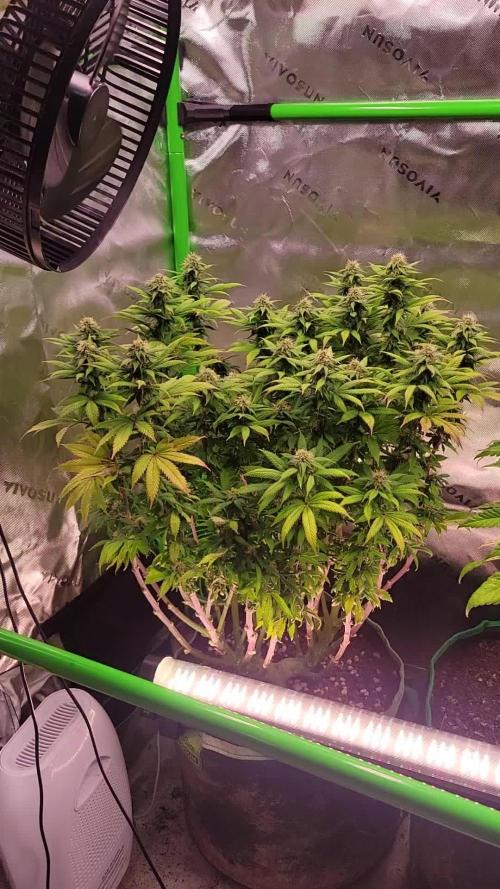
7/8/26 this poor baby was another caterpillar victim. Besides the stunting damage she shook it off ok. Not the biggest and probably not gonna produce a ton but shes doing her thing and looking pretty healthy. Happy growing friends ✌️


Likes
12
Share


@Hawkbo
Follow
On cruise control now, done some defoliation here and there but that's it, feeding every 2-3 days and they are swelling up very nicely. I took a nice slow video instead of photos of each plant individually below is the order they appear in the video.
1st is 31?
2nd is #29
3rd is #35
4th is Orange Sherbert
5th is #33
6th is Wedding Cheesecake
7th is Wedding Cheesecake #2
8th is #37
REMEMBER , IF YOUR SHOPPING FOR GEAR YOU CAN USE THE CODE “BANGDANG” FOR 10% OFF YOUR ENTIRE PURCHASE FROM ANY OF THE FOLLOWING COMPANIES.
@greenbuzzliquids
@rainscience_growbags
@gorilla_grow_tent
@growlightscience.led
NEW* @Rocbudinc Seeds on his website *
*****Gorilla grow tent discounts extend to all companies affiliated with grow strong industries which include..*****
@super.closet
Lotus Nutrients
Kind LED grow lights
Likes
104
Share


@Schnabeldino
Follow
_____ Week 10 | Day 71 - 77 | 3rd week of Flower ______
Day 71 🌞
- I mounted a fan below the net for more air circulation i need more defoliation 😅
Day 72 🌞💧
- 24 liters were mixed and distributed among the 8 plants / each plant 3 liter, at the moment I can water them every 4 days
Day 76 🌞💧
- It remains every 4 days 3 liters of water each plant
____________________________________________________________________________________________
Light - 12/12 h - 560 Watt
- 2x 200 Watt Toplight
- 4 x 40 Watt Lightbars
PPFD - 900 - 1000 µmol
Temp. avg. - 22,9°
Hum. avg. - 61 % RLH
