


Likes
Comments
Share

@GoodTimesOrganics
Follow
Welcome Back!💚
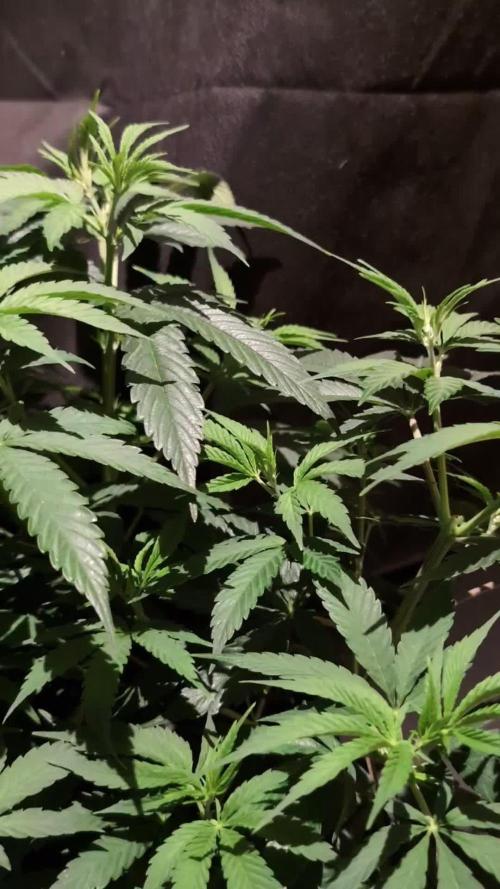
Nach der siebten Woche des Wachstums und dem zweiten Topping, war es Zeit die Pflanze am 07.02.2026 in die Blüte über zu leiten.
Sie hat inzwischen eine richtig buschige und breitgefächerte Struktur.
Durch das anwenden der LST Technik wird das Höhenwachstum gut im Zaun gehalten.
Die Umgebungsgegebenheiten sind OK:
—————
🌞 Temp: 21°C
🌚 Temp: 18°C bis 19°C
💨 RH: 54%
VPD: 0,85 kPa
—————
Viele Grüße 👋

Likes
13
Share


@shwable
Follow
Everything looking fine so far.
I gave them a little amount liquid grow enzymes with distilled water on 19.04. what seemed to boost the growth.
If You have any tipps or recommendations feel free to let me know.

Likes
3
Share


Likes
2
Share


@LoganatorDude
Follow
I absolutely love to watch them grow! Especially that moment they hit their first growth spurt.
I started with RO water that is remineralized for drinking purposes. The ppm is only 18! My tap is 156! So considering they don’t need much water, I’ve been stealing some of our drinking water. The RO water starts at pH of 7. After I add the nutrients, ppm of 249 @ pH of 5.8 while soil is still sweet @ pH of 7
I think my days are off as a new week begins on the last day of the previous week. I am going to leave that for consistency.
04/21 - Noticing some possible nutrient issues with the Fruity Pebbles for several days now. Going to see what she needs. Up front I’m thinking maybe just a super small amount of Amino Acids with a little Epsom Salt. Maybe she is struggling to access the nitrates from the neem cake. IF it’s a issues with nitrogen. We will see. Maybe she would benefit from some extra calcium?… Any ideas are greatly appreciated.
Day 22 and I am noticing how these girls have been burning up a lot of potassium lately, dealing with the wind and sun 💨 ☀️, getting pushed around all day.
I plant to top dress with some Kelp Meal pretty soon.
Day 24 -> 4/22/22- a quote from the weather on today’s red flag warning and dust storm warning.
“ HAZARD...Less than a quarter mile visibility with damaging wind in excess of 60 mph. SOURCE...Satellite imagery. IMPACT...Dangerous life-threatening travel.”
I’m keeping the girls inside today.
Day 26, I was planning to check the runoff on some of these girls, especially the fruity pebbles, however I messed that up as I also top dressed WAY too much of the seaweed bliss. So I flushed with plain RO water at pH of 7 until there was only slight coloration in the runoff. I didn’t check the runoff as a lot has changed with all that flushing. So next watering/feeding I will make sure I check the runoff on multiple plants.
So the seaweed bliss with its 17 on potassium, seems to be the most likely culprit for why there is a bronze-ish color on the inside of the new growth. Hopefully a foliar feed of Epsom salts can correct the problem. Inside tent, lights on LOW. Noticing similar pattern in all of them to a degree, most noticeable in the fruity pebbles.


Likes
4
Share


@SlickCityOrganics
Follow
Done some light defoliation. To get more light to bottom leaves. Looking good so far.
Likes
38
Share


@MadeInGermany
Follow
Info:
Unfortunately, I had to find out that my account is used for fake pages in social media.
I am only active here on growdiaries.
I am not on facebook instagram twitter etc All accounts except this one are fake.
Have fun with the update.
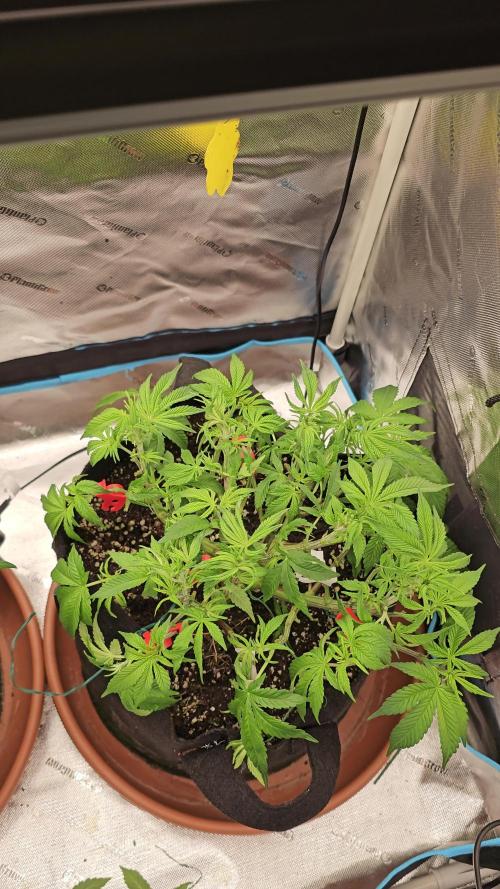
Hey everyone 😀.
Another nice week goes by with a great development :-).
Next week it will be placed in the flower chamber with a time interval of 12/12 hours.
1 g of GHSC enhancer was added per liter of water.
I sprayed neem oil again as a preventive measure, hence the dark shine :-)
The tent was completely cleaned and the humidifier was refilled.
I wish you all the best 🙏🏻
You can buy this Strain at :
https://www.zamnesia.com/de/4532-zamnesia-seeds-gorilla-glue-feminisiert.html
Type:
Gorilla Glue
☝️🏼
Genetics:
Chem's Sister x Chocolate Diesel
50% Sativa/50% Indica
👍
Vega lamp:
2 x Todogrow Led
Quantum Board 100 W
💡
Bloom Lamp :
2 x Todogrow Led
Cxb 3590 COB 3500 K 205W
💡💡☝️🏼
Soil :
Canna Coco Professional +
☝️🏼
Fertilizer:
Green House Powder Feeding
☝️🏼🌱
Water:
Osmosis water mixed with normal water (24 hours stale that the chlorine evaporates) to 0.2 EC. Add Cal / Mag to 0.4 Ec Ph with Organic Ph - to 5.5 - 5.8 .

Likes
13
Share




Likes
60
Share


@SooSan
Follow
12/12 + 40 jours
Vu qu’il y a 16 plantes mais que sur growdiaries on ne peut mettre que 8 variétés j'ai divisé en 2 diaries pour le bas de la tente
1️⃣
🏠 90x60x90
☀️ FC-E 4800 => puissance a 20%
🍁
1x Black Bomb / Philosopher Seed
2x Amnesia Lemon / PEV Seeds
1x Blueberry / PEV Seeds
1x Blueberry / 00 Seeds
1x Wappa / Paradise Seed
1x Dark Phoenix / Green House Seed
1x Quick Sherbet / Exotic Seeds
1x Mango Cream / Exotic Seeds
1x Banana Frosting / Sensi Seed
1x Hindu Kush / Sensi Seed
3x Fast Mix / Sweet Seed
📎 https://growdiaries.com/diaries/122084-grow-journal-by-soosan
📎https://growdiaries.com/diaries/124052-grow-journal-by-soosan
2️⃣
🏠 30x60x50
☀️TS1000 => puissance a 50%
🍁 4x Quick Sherbet - Exotic Seed
📎 https://growdiaries.com/diaries/122080-grow-journal-by-soosan


Likes
20
Share


@eldruida_lamota
Follow
Que pasa familia, traemos nuevo diario, en primer lugar dar las gracias a Nara hydro que sin ellos esto no es posible.
Os enseño la primera semana de esta farm cheese de genofarm, una semilla con más de 3 años de conservación, tuvo un germinado en 48 horas sin problemas aparentes.
La introducimos a 0,5 cms en medio del sustrato, una maceta pequeña unas semanas mientras Coje fuerza.
Las vamos a crecer esta vez bajo un led TS-600 de la marca Mars hydro.
.
no olvidéis que comprando con el código an420 en mars-hydro.com obtendréis un pequeño descuento en cualquiera de sus productos.
.
Nos vemos la semana que viene con más familia 💪

Likes
9
Share


@41310a
Follow
Essa semana elas continuam crescendo bem e eu cortei a alimentação.
estão tomando muita agua tambem.

Likes
75
Share


@DogDoctorOfficial
Follow
Greetings, Green Champions!
We're diving headfirst into the first-week update of our vibrant Panty Punch Auto, and the journey has been nothing short of spectacular. Building on the magic of germination, the little one has truly taken off, and I couldn't be more thrilled.
As I transitioned into the feeding phase, my trusty partners at Aptus Holland have been steering the ship. A heartfelt shout-out to them for being my main sponsor and providing the only organic mineral line I trust with my green companion. The regimen includes 0.15ml/L of Regulator, 0.5ml/L of CaMag Boost, 1ml/L of All-in-One Liquid, and a touch of 0.25ml/L from Startbooster.
Maintaining a TDS of 260, a pH of 5.9, and a solution temperature of 21 degrees has been my recipe for success. The Panty Punch Auto is thriving in this carefully curated environment, and it's fascinating to witness the impact of these precise conditions on her growth.
Aptus Holland Nutrients :
Regulator (0.15ml/L): This vital component has been the guardian of my plant's health, ensuring optimal nutrient uptake and resilience against stressors.
CaMag Boost (0.5ml/L): Playing a crucial role in bolstering calcium and magnesium levels, this has fortified the plant's structure and overall health.
All-in-One Liquid (1ml/L): The all-encompassing elixir, providing a balanced blend of nutrients essential for every stage of growth.
Startbooster (0.25ml/L): The kickstarter for early development, contributing to robust root formation and vigorous vegetative growth.
A monumental shout-out to Trol Master for blessing this grow with their Tent-X System Main Controller (TCS-1). This innovation is a game-changer, and I feel incredibly blessed to be one of the fortunate few testing it out during this run. Stay tuned for updates on this cutting-edge technology!
To the brilliant minds at Seedstockers, who crafted the genetics that sparked this green symphony, your ingenuity is truly appreciated. Grow Diaries, you remain my go-to platform for sharing this and all my journeys, connecting with fellow cultivators, and gaining insights that elevate my cultivation game.
To my followers and the entire green community, your support fuels this journey. Each like, comment, and share is a reminder of the shared passion we have for cultivating life.
Here's to the Panty Punch Auto, to Aptus Holland, to Trol Master, to Seedstockers, Grow Diaries, and to the incredible community riding alongside me. Together, we grow!
Genetics - Panty Punch Auto - https://seedstockers.com/
Plant nutrition - Aptus Holland - https://aptus-holland.com
LED Photons - Lumatek - https://lumatek-lighting.com
Controls - Trol Master - https://www.trolmaster.eu/
Watering - myself
Love and attention - Me, myself and i
As always thank you all for stopping by, for the love and for it all , this journey of mine wold just not be the same without you guys, the love and support is very much appreciated and i fell honored and blessed with you all in my life, With true love comes happiness. Always believe in your self and always do things expecting nothing and with an open heart , be a giver and the universe will give back to you in ways you could not even imagine so
More info, the ocasional give-away and exclusive updates from all my adventures can be found - links in the profile description
Friendly reminder all you see here is pure research and for educational purposes only
Growers Love To you All 💚 💚 💚

Likes
1
Share

@Organic_G
Follow
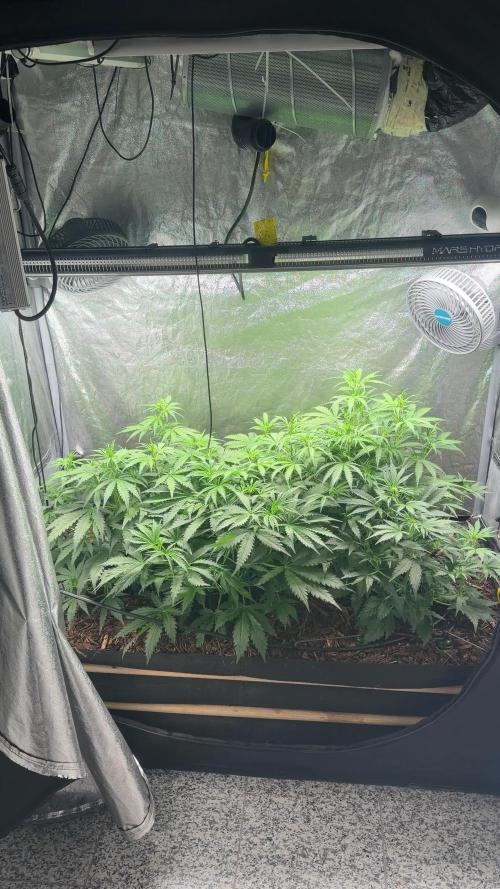
Scheinen gut auf Kurs zu sein, VEG Phase lief top auch wenn ich bei zwei Pflanzen reingeschissen habe aber man lernt…
Bin gespannt wann die fertig gewesen da die bisher ziemlich zügig unterwegs waren.
Likes
21
Share

@therealgrowmie
Follow
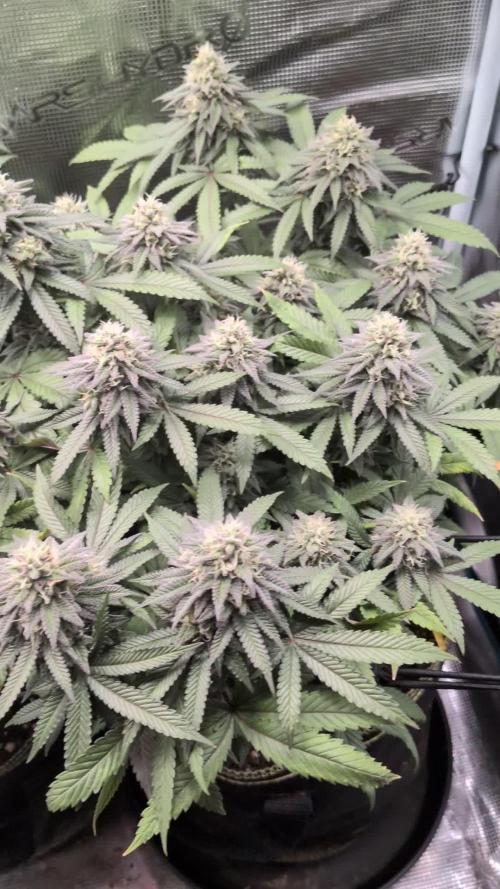
The buds are really starting to stack and bulk up, and man… the frost is coming in nicely. Some of those tops are getting properly coated, and the smell hits you the second you open the tent.
You can clearly see the contrast between the plants — the NLs are staying nice and dark green with heavy frost, while the Critical Mass fades out into those limey/yellow tones. Not perfect, but at this stage I’m letting them ride. The flowers themselves are developing well, and that’s what counts.
Structure-wise, I’m pretty happy. The canopy is fairly even, multiple solid tops across the board, and everything is getting good light exposure.
Stats so far:
💧 Watering: Every third day
🌡️ Temp: 26–28°C
💦 Humidity: 60% RH
📈 VPD: ~1.18 kPa
💡 Light: ~700 PPFD

Likes
3
Share

@AbbyCat
Follow
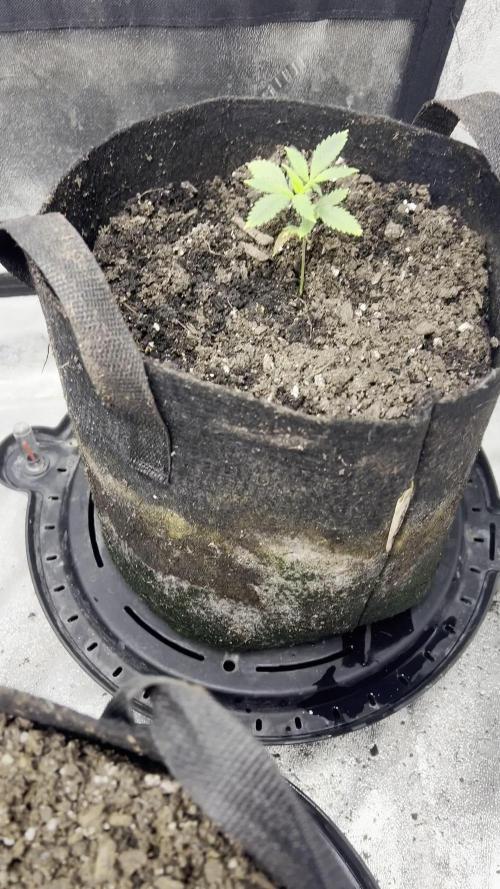
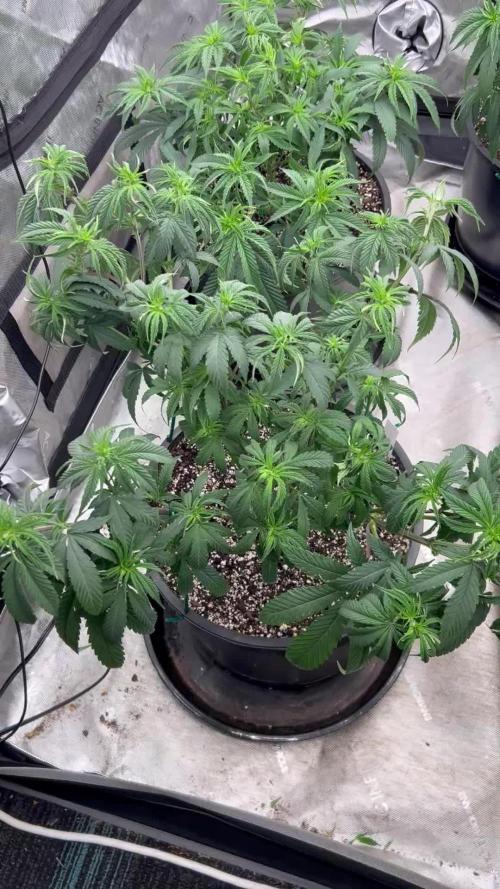
The sick ones are looking stronger and still really behind, but I think they will all bounce back. The new growth looks healthy, and they look strong for the most part. Just really small compared to the healthy sisters. 4 week veg starting with nut change, removed Voodoo Juice.




Likes
16
Share


@osmrducks
Follow
Day 57: Girls looking good and healthy. Got the HLG turned up 100% pumping 500 watt to em! We shall see. Still only given around 500ppm nutes.
Day 58: Got mostly cloudy with just a couple amber it looks like. I'm thinking I need to start flushing. Albeit, only on one plant. I will wait a few days more until I make a decision.
Day 59: Still looking beautiful! Buds are getting thicker! Decided I will give MOAB till week 10 and check the tric's at that time. Prob start flushing at that time. Only time will tell.
Day 60: Girls looking good. 👊 Not gonna lie, getting nervous as I do not want to cut em too soon or too late. This is a tough spot. The one has a ton of red hairs. It looked as if there was just a couple of amber that I found the other day. I was looking on the outside of the buds, also. So I know the inside is where I need to look. Just not wanting to jack with them too much. I will check again at end of week.
Day 61: Busy. No updates.
Day 62: These girls are starting to smell amazing!! I don't see any noticeable growth here lately. I'm hoping they start to bulk even more though as I think I am still seeing some clear trichomes.
Day 63: Welp, all is well and no new updates. I been feeding pretty heavy so I will back off and just water tomorrow.

Likes
7
Share

@Bud_vista
Follow
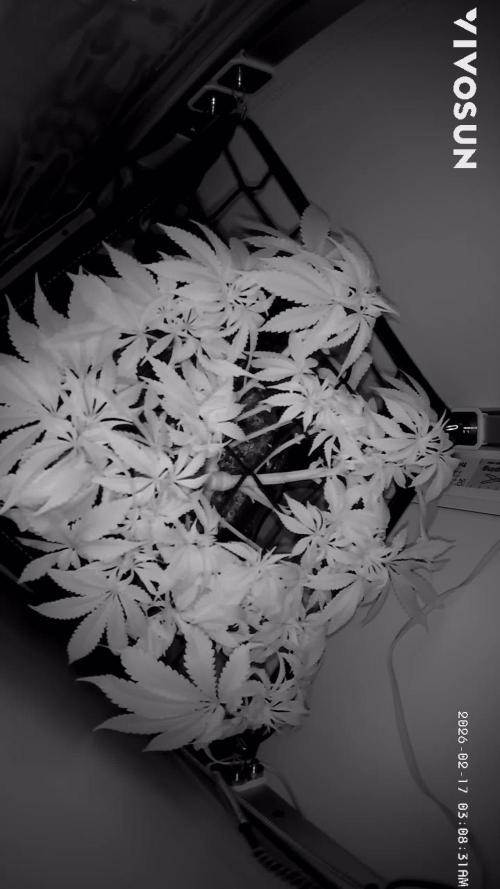
Welcome to week 7 of my White Truffle grow!
I switched to flowering 5 days ago, 12/12 light cycle. No signs of pistils yet, it's growing nicely, but no crazy stretching. Since this is my first grow with photos, I'm really excited to see how the week goes ✌️
Update: First pistils showing up after 9days of switching to 12/12.
Likes
20
Share


@Mrs_Larimar
Follow
2025-07-09
Bay Burger doing very well, we are entering week 3 of Flower and you can see
how the flowers are developing.
Girls look happy and green
The outdoor Girl had a hot week, but what to say then, she loved it
xxxxxxxxxxxxxxxxxxxxxxxxxxxxxxxxxxxxxxxxxxxxxxxxxxxxxxxxxxxxxxxxxxxxxxxxxxxxxxxxxxxxxxxxx
Breeder Information
Bay Burger Early Version is Delicious Seeds' new ultra-fast flowering variety. This mostly indica strain boasts a THC percentage exceeding 26%. The Bay Burger results from crossing a mythical plant with the indica Donny Burger (itself a cross of GMO and Han Solo Burger), enhanced with fast-flowering genetics from their bestselling automatic variety, Eleven Roses Auto.
Flavor Profile
This exotic, USA-made strain offers a complex flavor journey:
Initial notes: Pine, Lemon, and Kush
Mid-palate: Earthy flavors with forest nuances
Finish: Explosive metallic kush flavor - truly a sensory experience
Effects
The relaxing, indica-typical effects come with an inevitable urge to laugh that lasts over time.
Growing Characteristics
Classic Afghan-style canopy
Moderate vegetative growth with stretching in final vegetation weeks
Dense floral clusters covered in abundant resin glands
Resin production continues even in recent weeks, covering all leaves
Impressive appearance and easy cultivation
Low nutrient requirements
Resistant to pests and fungi
Suitable for inexperienced growers
Requires full sunlight for maximum potential
Strain Specifications
AttributeDetailsGenetics20% Sativa, 80% Indica
THC Content26%
Flowering Time (Indoor)45 days (Early Version)
Harvest Time (Outdoor)Early SeptemberFlavor
ProfileKush, Lemon, Pine
Yield600+ g/m² Indoor | up to 2,000 g/plant Outdoor
Aroma IntensityHighEffectNarcotic/RelaxingSeedsFeminized
LineageBay 11 × Donny Burger × Eleven Roses Auto
