




Processing
Likes
2
Share


Likes
4
Share


@GeminiCQC
Follow
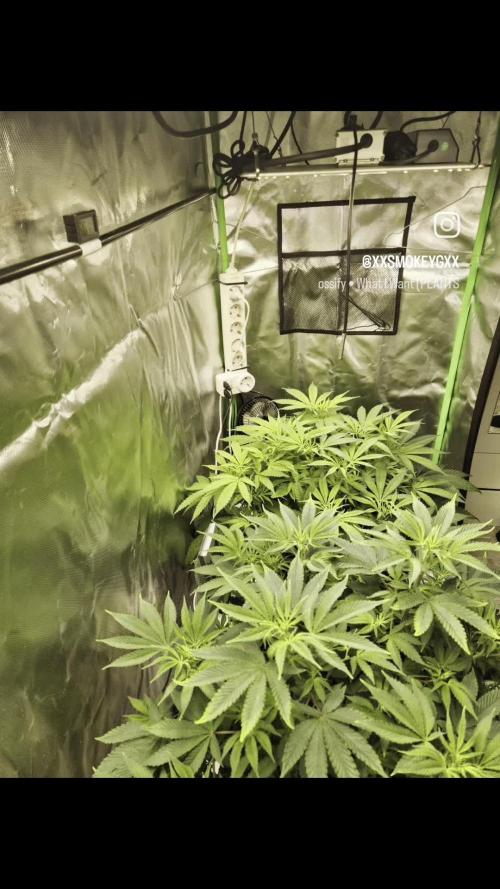
ABxRKO is about 42.5" tall, and has been top dressed with about 3tsp of grow dots to give it a phosphorus boost in flower
HBSS is about 26.5" tall and has been top dressed with about 2tsp grow dots as I believe it is fighting a phosphorus deficiency. She is giving all the smells, a bright red starburst like fruity smell with a stark citrus note.


Likes
9
Share


@datrobspeoria
Follow
Plants are maturing this week but are yet to put on more weight.. .However they are good size already! One bud on my Banana Krumble is mutated and I am not sure what it is?


Likes
3
Share


@I_Identify_As_A_Dan
Follow
Day 70...
Shes actually not changed very much from last week, was thinking of harvesting her but dont want to jump the gun😂
Going to start feeding her Cake from crop salt likely in 2 days time.
Still almost no odour off her :(

Likes
50
Share

@German_GrowLab
Follow
Einen wunderschönen guten Tag, liebe Grow-Community, und herzlich willkommen zur Woche 18 und damit BW 6 – Season Vol. 2 meines kleinen Outdoor-Projekts 2026.
Und da habe ich doch glatt mal die Quittung für mein euphemistisches Gerede letzte Woche erhalten …😅
Wenn einen das Wetter nicht kleinkriegt, schickt einem der liebe Herrgott einfach einen kleinen Sturm, welcher sich mal eben ein gutes Drittel der Peach and Gas einverleibt hat. Und das, während sie gerade richtig am Stecken war.😭
Aber da hatten wir schon mit mehr Gegenwind (ungünstige Formulierung an dieser Stelle)😬 zu kämpfen. Also aufstehen und weitermachen …💪
Und wir haben allen Grund, weiterzumachen. Die Ladys sind on fire!!!!
Ich muss zugeben, heute Morgen war ich wirklich kurz davor, panisch die Schere zu zücken und so gut drei Viertel des Gartens zu köpfen.
Aber was war passiert?
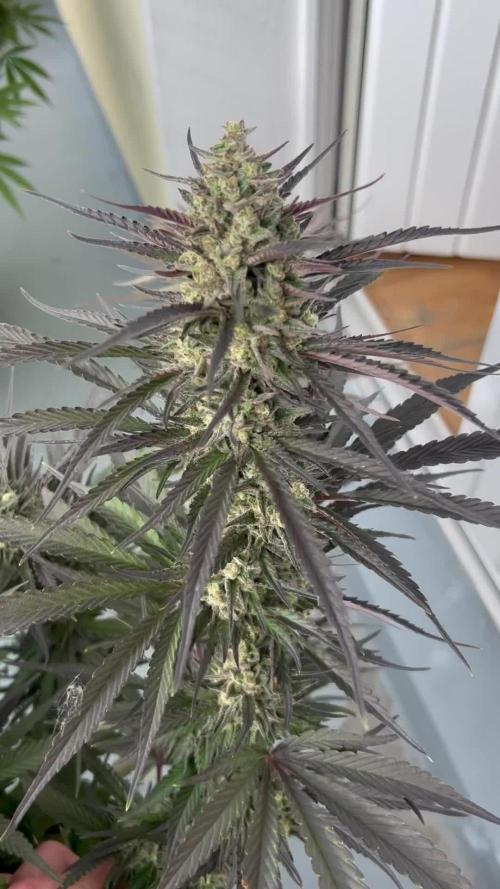
Ich hatte mir an diesem schönen Sonntag mal die Zeit genommen, mir mit einer Lupe ein Bild der Trichom-Situation zu machen. Und da ist mir fast selbige aus der Hand gefallen. Bei fast allen Pflanzen hatte ich an den Sugar Leafs einen erheblichen Teil bernsteinfarbener Trichome wahrgenommen – teilweise fast 50 %, was ich als überreif beschreiben würde.
In einem Moment der Klarheit habe ich mir dann – Gott sei Dank – nochmal eine zweite Meinung eingeholt. Und was soll ich sagen: Ich habe etwas überreagiert. 😅
Zwar waren die Sugar Leafs optisch schon mehr als so weit, allerdings habe ich in voller Panik keinen Blick auf die Blüten an sich geworfen. Hier sah die Sache schon ganz anders aus. Also die Schere wieder eingepackt und lieber nochmal gewässert.
Es wäre auch wirklich schade, die Ladys jetzt schon zu ernten.
Einerseits, weil die nächsten Tage doch nochmal richtig schön werden sollen, und zum anderen hatte ich ihnen erst vor einigen Tagen einen Flowering Compost Tea verabreicht. Welcher dann ja etwas umsonst gewesen wäre. Dieser wurde für gut 38 Stunden „gebraut“, um den Fokus eher auf die Inhaltsstoffe als auf die Konzentration der Mikroorganismen zu legen.
Meine Prognose sieht so aus: In den nächsten Tagen macht die Pink Guava den Anfang. Sie ist wirklich ein Freak. Sticky, stinky und Blüten in der Größe einer Ein-Liter-Flasche. Ungebraucht lässt sich sagen:
„She checks all the boxes.“ 😁
Sooo, das soll's für diese Woche mal wieder gewesen sein. Ich versuche jetzt mal, die Jungs zwecks der finalen Verkostung der „Betreutes Growen“-Blüten zu aktivieren.😅
Euch wünsche ich noch einen schönen Restsonntag und einen guten Start in die nächste Woche!
Peace!




Likes
Comments
Share

@AestheticGenetix
Follow
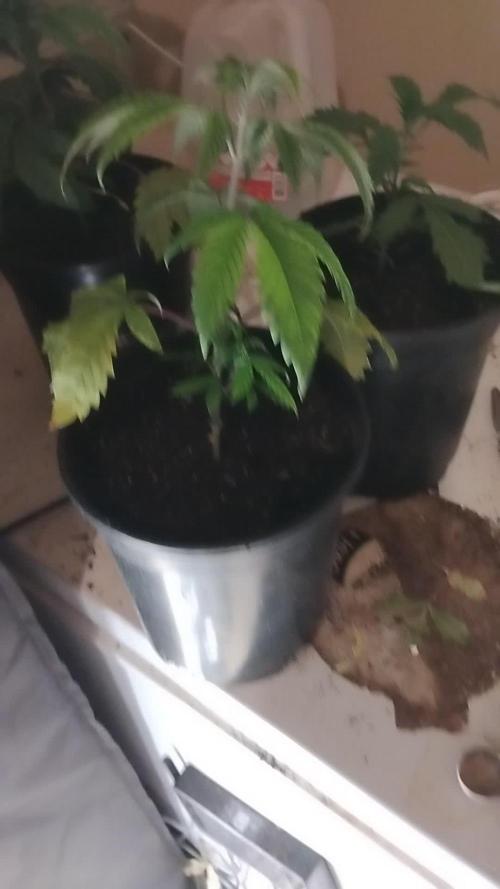
Have worms living in the tiny starter cups which is crazy.
They'll hopefully start to bounce back soon with nutrients and transplanting
Likes
14
Share


@dekss
Follow
8 semana
la mejor parece ser que la cortare en la 9vena como dice el fabricante
la planta se ve tapada en escarcha❄️❄️❄️
hay otras 2 que ya entraron a floración(a una le di 0.04 de monster bloom)
las lollipop van mejor pero no creo que las deje si corto las otras antes


Likes
8
Share


@LieutenantKushman
Follow
this week i realized that my two black sugars were sitting below the white widow and bruce banner so i raised them using some art canvases/old video game boxes. now all the plants are receiving about the same amount of light and hopefully this issue won’t affect yield too much since i corrected it before week 6 ended (since buds fatten up the most between weeks 4-6)

Likes
27
Share


@Endriu
Follow
Hi Bros&Sis! CIAO!
I'm terrible at keepin diaries, I know, forgive me I'll do my best for the next growth, promise! 🙏
This journey has come to an end, and I am really proud of what the settings and my skills had created. I was really worried that my lights wasn't enough for a decent yield, but luckily I was wrong!
And FINALLY I've harvested this wild, beautiful, big lady! 😍 After 2 months of growth and 2 months of bloom, 66 days from switch, exactly.
I've already talk about this amazing strain created by @James and his team at Royal Queen Seeds, and I confirm what I wrote in my review, this is a strain good for beginners and experienced growers as well, she will grow fast and take all the space you give her, takes massive doses of nutes (first time with coco, seems legit using max power for my baby😜) and in response her flowers are big, dense and compact, she mantain the sweet floral fragrances present in the mother...
All in all, it was a great experience, first time scrog, first time coco and first time with a clone in full force. I think I've harvested a good amount of rock candy bud, and when the dry is over I'll weight the total and put to cure.
Bros and Sis, thank you for following this growth and for the nice and kind words you told me... See ya next time, love ya, CIAO!
(hey, hempy bucket maybe?😝)

Likes
134
Share


@BigDaddyK
Follow
Well she has definitely recovered, the frost is starting to appear....
Day 64 - Tuesday 18/12/18 - Added 3 litres of water, 6ml A+B - ph is stable.
Day 65 - Wednesday - changed reservoir for fresh solution
Day 66 - Thursday - added 1 litre of water , smells lovely
Day 67 - Friday - added 2 litres of water and 6 ml A+B
Day 68 - Saturday- added 2 litres of water and 6 ml A+B
Day 69 - Sunday - added 2 litres of water and 6 ml A+B
Day 70 - Monday - added 2.5 litres of water and 2 ml A+B
Looks very frosty ,smell s very strong lemon

Likes
15
Share

@TrickzGrowz
Follow
Servus Moin!
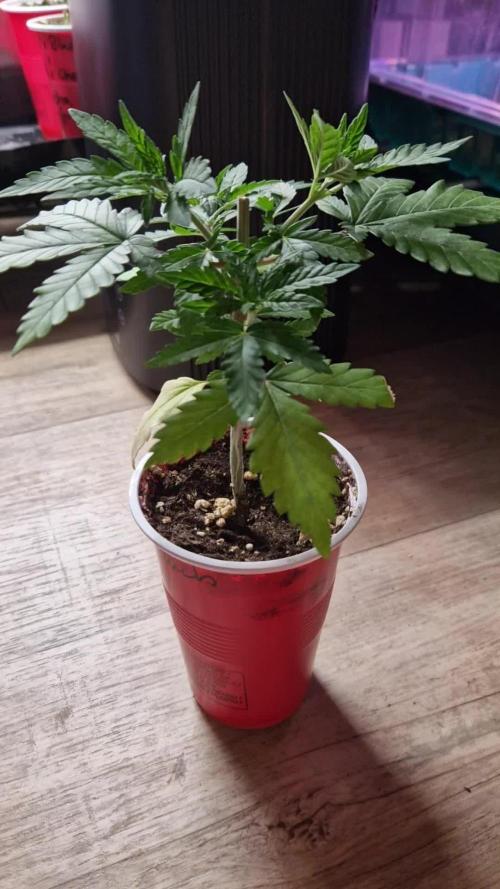
Die Sun of a Peach sieht prächtig aus. Die Triebe sind super hoch gewachsen und können sehr schön trainiert werden.

Likes
34
Share


@ertaverd
Follow
everything is fine, the rains have stopped and it seems that the plants are quite mature, I think I will harvest them next week. It has been 2 weeks without watering with fertilizer, making the washing of roots as natural as possible. They have developed a very beautiful purple color in just 2 weeks, because of the stress caused by the cold. I have also found some worm and some rotten bud but usually it is holding very well. I found a leaf of a very powerful pink color, much more than I had ever seen, and that color is not repeated throughout the plant, I leave some photos. chekit

Processing
Likes
21
Share


@Fullmeltalchemist
Follow
5.23 F60
5.27 F65 - Everything has been going well this week. The plants went through a feed cycle that should carry them through flower no problemo. Started with the AACT Tea, then a bokashi drench with Fish Shit from Fishheadfarms and plain water from here on out. They are drinking quite a bit. 1.5-2 gallons a plant every 3ish days. The terps in my tents smell out of this world. The ScrOG and 3x3 are like a candy store. Passion Berry has mango/guava citrus terps while Deadstar v2 has strawberry watermelon terps. The 4x5 is much more varied, but in general the sweet pink dominates with it's grape candy terps and the dread bread cuts through with it stanky gassy lemon while the prayer pupil smells like moth balls and a bit of GMO. Very lucky to get to experience this much variety.
5.29 F67


Likes
22
Share


@Aedaone
Follow
Temperature and measurements listed in grow conditions are averaged for the week. The listed pH is the soil pH. Nutrients listed in nutrients section are ml/per gallon of soil.
Day 1 we had rain showers in the morning and throughout the day. They showed first sign of flower.
Day 2 we had rain in the morning, drizzle and showers in the afternoon. The ferrous sulfate reduced the soil pH from just above 7 to just below. I added 10ml blood meal and 10ml ferrous sulfate top dressed to each pot. The nitrogen should boost the stretch during early flower. The additional ferrous sulfate should keep the pH in the 6.5-7 range and help with chlorosis during early flower.
Day 3 we had more rain, drizzle, and mist all day. The soil pH is coming down slowly. It's 6.9 on day 3.
Day 4 it rained all morning. The pots are soaked.
Day 5 we missed the scattered showers but it was 80-90% humidity all day. We did have lots of sunshine
Day 6 we had lots of sunshine and temperatures above 80°F.
Day 7 we had sunny skies. Temperature was in the mid 80'sF. I had to water about .5 gallons directly from the hose. 7.6 pH and 50°F
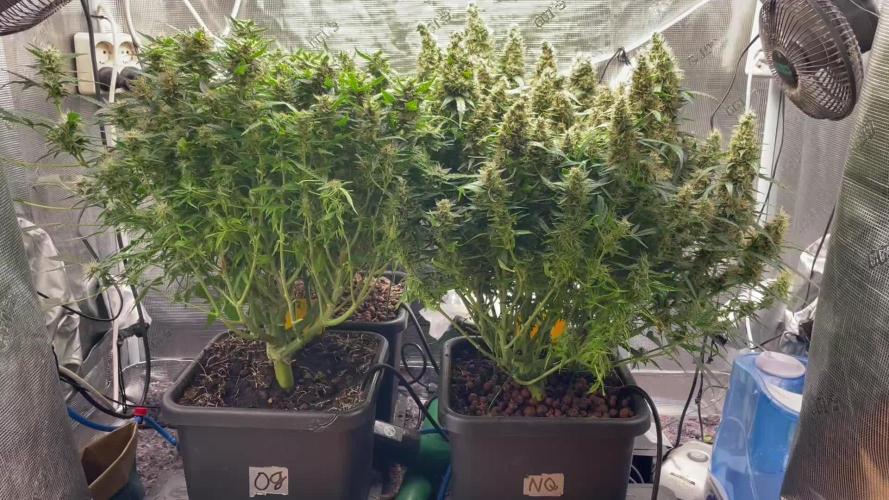
Both plants doubled in height. There's still a small excess of phosphorous in the soil. The plants will grow into the phosphorus during flower. Overall a successful week.



Likes
14
Share


@ao_grows1978
Follow
The OG Kush has wrapped up week 4 of flower. She got a healthy defoliation to expose bud sites, and is now on track to bulk up. She's been moved to the center of the tent for the rest of the grow. She's recharged and on cruise control from here on out...only removing dead leaves. Starting to smell like a funky citrus fruit. Still pretty light on the nose and trichome production has been minimal.


