Check the winners The Grow Awards 2026 🏆 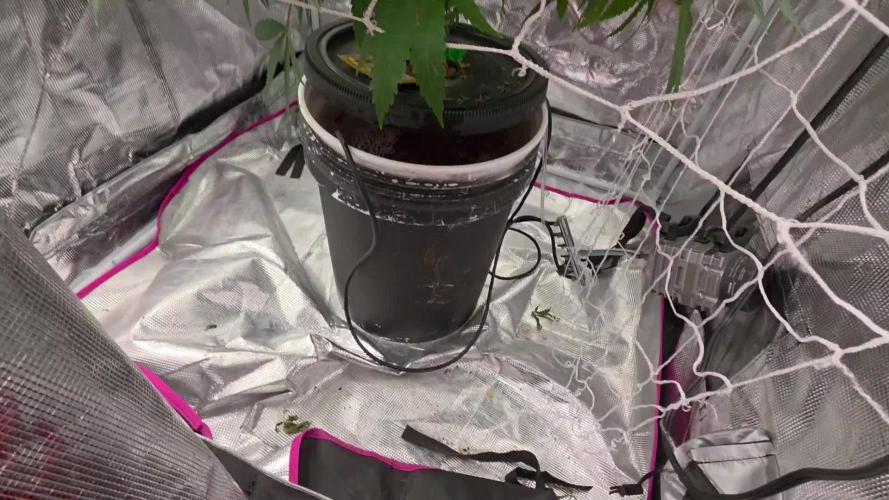







Likes
Comments
Share
@Daidai
Follow
The plant has been drinking and growing faster then i expected. The plant has gotten away from me but its nothing i cant get back on track once I figure out where to start defiliating. Ive been enjoying the mess I created lol.

Likes
5
Share
@pzwags420
Follow
On week 5 of actual flowering the plants are coming along nicely and HSC GSC is looking the best so far but its still early :) WW is slow to start flowering just small amount of pistils so far small buds looks more like week 3 or 4 as far as flowering progression.


Likes
24
Share
@Ultraviolet
Follow
The cannabis strain Grape Guava can be a purple strain, depending on its specific phenotype and genetic makeup. While not all phenotypes of Grape Guava are purple, some variations, such as the Zatix Grape Guava, are noted for their striking purple appearance due to the genetic expression of anthocyanin pigments.
In a garden of green, Grape Guava gleams,
With its fruity aroma, enchanting dreams.
Clusters of grapes, guava's sweetness ignite,
A strain so divine, in purple and white.
Euphoria whispers, a lush fruity haze,
Grape Guava's embrace, a tranquil daze.
Off and away.@1400ppm. The increased CO2 allows plants to thrive at higher temperatures, which in turn necessitates higher humidity to maintain the ideal VPD for healthy growth and transpiration. 80F -5F = 75F LST with 70% RH = 0.72 kPa. Higher temperatures and humidity promote rapid growth, nutrient uptake, and photosynthesis while maintaining a lower stress level. Temperature influences the rate of enzymatic reactions involved in aerobic respiration. Enzymes, such as those involved in glycolysis, the Krebs cycle, and the electron transport chain, work most efficiently at an optimal temperature range. In low temperatures, enzymatic activity will slow down, thus reducing the rate of aerobic respiration. In high temperatures, enzymes can become denatured, thus impairing their function and stopping the process of aerobic respiration. Glucose is the primary fuel for aerobic respiration. The rate of aerobic respiration increases with the availability of glucose, as it is the starting point for glycolysis. If glucose levels are low, cells may rely on alternative energy sources such as fatty acids or amino acids , but these processes may yield less ATP or be less efficient. To determine this effect, carbon dioxide volume was measured (as carbon dioxide is an output of aerobic respiration)
A seed germinated via skotomorphogenesis (in the dark) will generally develop faster in its initial stages to reach light, though it will be etiolated (elongated and weak) and will switch to slower, more robust photomorphogenesis (light development) once it emerges into light. While skotomorphogenesis is a rapid, growth-oriented process for soil escape, it's a temporary phase; photomorphogenesis is a more sustainable development program that prepares the seedling for photosynthesis.
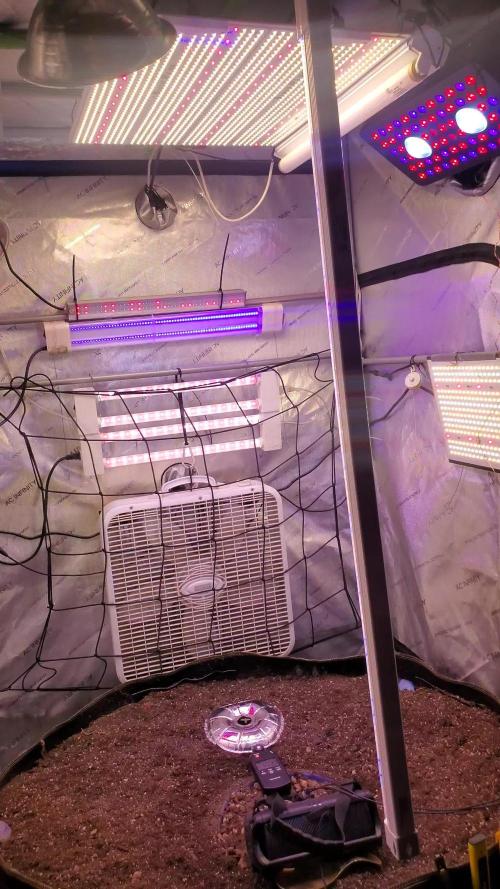
18/6 with the 6 being IR instead of darkness, keeping temps overnight a neat 77F-80F. PPFD overnight 1.8.
Think of my tent as a lung. What goes in must come out. When the rate of air going out exceeds the amount of air coming in, it creates a negative pressure. Tent concaves (bends in). If set up correctly, your RH will begin to drop slowly to the desired level you set, and the extraction turns off when it reaches 50% RH. The plant, as it performs cellular respiration, will always be releasing more water into the air, so the RH% of the tent overnight will always increase, so long as oxidative phosphorylation is occurring. As soon as the RH% creeps back up to 55%, the extraction turns back on, over and over, this creates a strong pressure differential which will work wonders on your grow. replicating high and low pressure fronts in nature, critical for oxygen diffusion, but more importantly, full control of your RH%.
Moisture will not transfer from a saturated atmosphere to another if that air is already at or above its saturation point, meaning the air can't hold any more water vapor. Once I understood that water is produced as a by product during cellular respiration, specifically at the very end of the electron transport chain (ETC) where electrons are finally transferred to molecular oxygen, the higher the RH of the air, the more resistance there is for more moisture to be added to that environment, and effects the ease with which it does so. But none of that water comes from the pot; it's pulled from the air. If you run high daytime RH, your medium/pot is 100% reliant on transpirational root pull to move water. ZERO evaporation happens across the atmosphere if the tent air has high RH%, the medium cannot release its water through evaporation. Once a canopy develops, light no longer slowly wicks and evaporates from the topsoil. The Soil-Plant-Atmosphere Continuum (SPAC) describes the continuous pathway and process of water movement, driven by a gradient in water potential, from the soil, through the plant's roots, stem, and leaves, and finally evaporating into the atmosphere through transpiration. There is evaporation, there is transpiration, then there is evapotranspiration; Evapotranspiration (ET) is the combined total of two processes: evaporation (water lost directly from soil and surface water into the atmosphere) and transpiration (water released from plants to the atmosphere through their leaves). Evapotranspiration represents the total amount of water that moves from the medium into the air. There is no such thing as a medium with too much water, only a medium that retains too much for too long.
The water must always flow efficiently from one atmosphere(Medium) to another(Air) in a timely manner. Moisture is a critical factor for bacterial growth and decay. Dictating how long it's allowed to sit in any one location for any given period is a key preferred control. To ensure a net reduction in a bacterial population, the rate of removal (ET) must exceed the rate of bacterial growth (decay rate), which is often modeled as a growth rate for the specific bacterium under the given conditions. By optimizing daytime VPD, we also optimize conditions for bacterial growth to explode exponentially above 77°F.. If water is allowed to sit in a medium without an escape within a timeframe, nothing good will happen. IF High RH is maintained overnight as well as during the day, placing 100% of water movement at the behest of daytime transpiration, roots can only pull where they can reach, and if soil is compressed above a certain point, moisture will become trapped in a medium with no way of moving day or night. This will begin the countdown for decay to take hold. When water stagnates in a medium, it loses oxygen, creating anaerobic conditions that foster the growth of harmful microorganisms like bacteria and fungi, which can produce toxins and disease vectors.
Thigmomorphogenesis, the process by which plants respond to mechanical stimuli like touch by altering their growth and development, resulting in significant morphological changes to improve survival against mechanical perturbations. This complex response involves sensing touch and initiating physiological and genetic responses, leading to changes in form and structure over days or weeks. The process is triggered by physical forces such as wind, rain, or touch. Plants adapt to these stimuli by changing their shape and structure, which may include slower growth, thickened stems, or altered leaf development. Plants possess sophisticated mechanisms to detect even subtle mechanical stimuli and initiate responses. A variety of molecules, including calcium ions, jasmonates, ethylene, and nitric oxide, are involved in signaling these mechanical inputs. Touch can induce the expression of genes that encode proteins for calcium sensing, cell wall modification, and defense mechanisms. A plant exposed to constant wind may become shorter and sturdier. A plant that is touched frequently might grow slower to conserve energy and develop thicker cell walls. These changes increase a plant's resilience and ability to survive in harsh environments.
Let's get Thiggy with it.
Likes
10
Share
@Shefman93
Follow
Defoliated and lollipop the bottom of the plant at the end of week 2. Plant seems healthy, did an early top dress of 80% bloom 20% veg and I have began using the tribus bloom microbes inoculant at every watering. I will also be making banana peel tea to feed a boost this week.


Likes
5
Share
@CanarianGrow92
Follow
Week 5 already, thats why they call it fastbuds... In no time its harvest time! We had some bugs (trips) running around, i think i took them from outside as i was working on my garden, my outdoor plant is also affected, that happens for being a dirty old man 🤦🤷 but not much we can do now, i tried to clean the leaves a bit and remove some, but i think its better to harvest and clean the room as i dont eant any pesticides on the buds, but for the rest quite ok, we gave aome extra pk and bloom this week so lets see how the plants do next weeks 😁
Processing
Likes
4
Share
@Thomas12477
Follow
Lots and lots of tops.
Spider mites, I sprayed everything in the greenhouse.

Likes
5
Share
@Mr_Puff_N_Stuff
Follow
Start of week 7 and all plants are looking great. Added the net to hold them later but I may take it out.
Ran into a slight issue…my plants got so tall that I was not able to provide enough PPDF to the lower stems (I need a bigger tent and better lighting…in time). As a result a caused light burn on the top leaves. Additionally, early in my grow I was using Mass Pro. That alone with amendments and I foliaged early with Foop. I believe the Foop and Mass Pro were too much for these plants to handle.
Still rocking though…
Likes
8
Share
@Mahali
Follow
Going into flower on 4/10. Plants have been growing and inch or two every day. Suspect front middle and back middle to be males.

Likes
11
Share
@TherealNICOGREEN
Follow
Alle 3 vokser som de skal, jeg har valgt tage en i 12/12 telt:) og en 18-6 telt:) og den 3 er i 18-6 telt også men , er i en 3.5liter potte. Også ser vi på forskellen igen om en 5-7 dage :) Jeg er SIKKER PÅ DEN I 12-12 telt giver størst uds men mindst ud bytte! Og om vendt ved 18-6. Timer! Håber i nyder at følge med og godt nytår husk NU DE SMP BANGE DYR ! Og HINDANDEN OG JER SELV OG LAD NU VÆRE TÆNDE KRUDT MED JERES JOINTS DET SMADER DEN BARE;) JEG taler DESVÆRRE AF EFARING ;)


Likes
5
Share
@RastaRick
Follow
Tok off large fan leaves on day 24. Seeing preflower starting. Decided to try out a natural shape instead of doing LST. I hope this doesn't backfire... The blackberry gum on the right is getting big. I like how autopotamus has natural shape... But he also has much more light haha


Likes
4
Share
@GoodTimesOrganics
Follow
Nach dem letzten entlauben und leichtem Biegen der Äste, entwickelt sich die Pflanze etwas homogener. Allerdings hat sie im Stretch nochmal ordentlich an Höhe dazu gewonnen.
Auch bei ihr ist ein leichter Tripsbefall vorhanden und Raubmilben wurden eingebracht.
Processing
Likes
49
Share
@Guerilla_Jack
Follow
Hello to all you growers!its end of second week of flowering.the plants straching nicely.i remove some new branches and leaves from the bootom,and branches witch ones will not fit too the light..Soma sacred seeds Somango its a littlebit behind other three.watering every second day.have a nice day to all of you!!😃


Likes
42
Share
@AutoCrazy
Follow
All I can say is that this thing is a beast. She likely only has a week or two left so I did one last small top dress with dry amendments as well as some ewc and super soil to top it off.
Cant wait to watch this girl really fatten up. She’s already having trouble holding up the colas.
😎🍿🍻🌱
Likes
12
Share
@Wicked_Stix
Follow
The end of week 1 has arrived. We all know how it goes. Just playing the waiting game. At this stage these girls are just working on building their root system. The roots should be hitting the reservoir in the bottom of the buckets soon then they should take off. Got the water pumping and the lights beaming 24 hours a day. Running a low dose of maxigro. Keeping the ph around 6. Will probably be topping them around day 12. Would be amazing if I can get them ready to switch to flower at the end of week 3. But for now I'm just going to check on them 420 times a day hoping they don't die. Might be back next week if they are alive. Happy growing!