


Likes
Comments
Share

@Wilstang
Follow
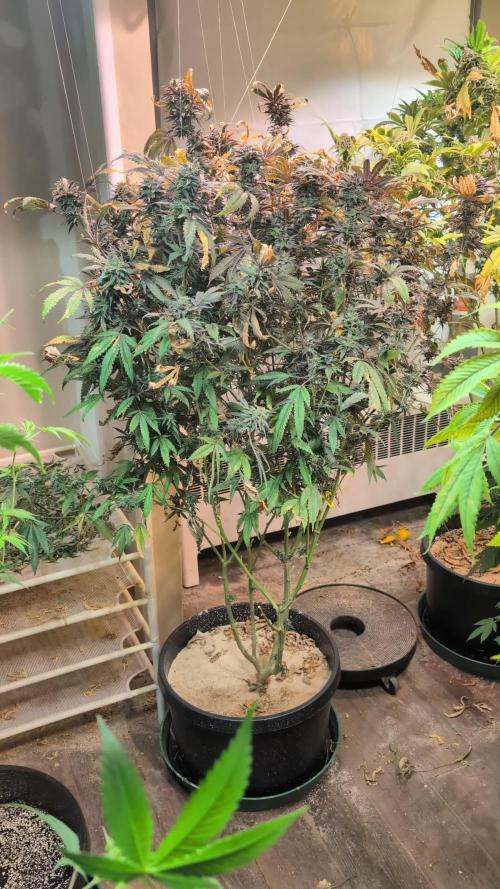
IPM
https://www.arbico-organics.com/product/mite-predator-phytoseiulus-persimilis-plus-sachets/mite-predators
https://www.arbico-organics.com/product/spidermite-destroyer-stethorus-punctillum-adults-larvae/pest-solver-guide-mites

Likes
6
Share

@Phatlad187
Follow
Week 4 of flower now plants are stoped the strech now and growing and packing on some size. Av struggled with some heat stress due to weather but they seem to be growing good and fine
@growerchoice
@SHOGUN COCO A 4ml/L 160ml
@SHOGUN COCO B 4ml/L. 160ml
@SHOGUN ACTIVE BOOST 2ml/L. 40ml
@SHOGUN CAL MAG 1ml/L 20ml
@SHOGUN PK WARRRIOR 1ml/L 20ml

Likes
23
Share


@Al_kuhl
Follow
some issue with the super bud, my reserce i find out it was mangan/magnesium problem.
Flush the roots with ph 6.34 water , now few days later it starts to recover again.


Likes
294
Share


@StarLorr
Follow
Welcome to my Ðivine ØĠ Ķush diary.
In this diary:
Seeds: sponsored by Ðivine Șeeds
Media: Promix HP
Nutrients: Advanced Nutrients, Diablo Nutrients, Gaia Green Power Bloom.
Light and Weather: Şun☀️and Mother Earth.🌎
___________________________
Feeding:
Tue 17Sep: 9L water not pH'd
Thu 19Sep: 4L Flawless Finish not pH'd
Fri 20Sep: 4L Flawless Finish not pH'd
Sat 21Sep:4L water not pH'd
___________________________
*please note that watering are from the top.....since i smashed the saucers with the weed wacker*🤦🏻♂️
______________________________
Amazing weather throughout the week! Again☀️Sunny 26°C 😎"Except for today Monday 23-Sep-24 as per cloudy☁️photoshoot🙃😄
______________________________
Did my flushing thing, it's happening😉
______________________________
Thanks for stopping by, likes and comments are appreciated!👊🏻😎
Keep on growin!
Keep on tokin!!!
😙💨💨💨💨💨

Likes
9
Share


@Mr_nugs_lover_David
Follow
It's been a beautiful plant to grow, I thought she was gonna be a little bigger, however she has produced an amazing quality flowers, very sticky, terpy and stinky, the citric aroma it's absolutely wonderful just because of that I could grow her again and again. You definitely need to try this strain if you lovd weed.💚🌱🤤

Likes
1
Share


@Russian_Scrog_King
Follow
120x240 1200watt
Very strong and hardy plants, the potential of which remains a mystery to me.
The automatic watering system will help me find out their maximum.
Stress and training are tolerated very well, the genetics are very stable and interesting.

Likes
2
Share


@CanarianGrow92
Follow
The last week for this fatty girls 😁 soon its harvest date, nice strain to grow, really easy, typical old school vigorous and stable! Nice kush smell, since the end of last week we only gave water

Likes
2
Share


@High_Grade_Dadli
Follow
So far nothing to complain about buds sites are putting on some size....clone piece is holding up pretty good....hoping she get some roots this upcoming week...never really clone before
Likes
4
Share


@TS_Greens23
Follow
I had to succumb to the Apricot Auto,,dwarfing on me,,due to me probably being a bit heavy handed earlier on and snapping her leader,,,which caused her to dwarf and flower way too early,,,so she went outside
Likes
16
Share


@Sadhus
Follow
Rempotage en 13 litres, pleine santé rien a signaler, jolie feuille fine et pointues avec de belles dentelure bien prononcé , plantes très élancé, les sept sont très belles, encore une semaine ou deux et floraison et j'ai hâte de voir sa !
#kannabia
#madamegrow
#trolmaster


Likes
2
Share

@42breeding
Follow
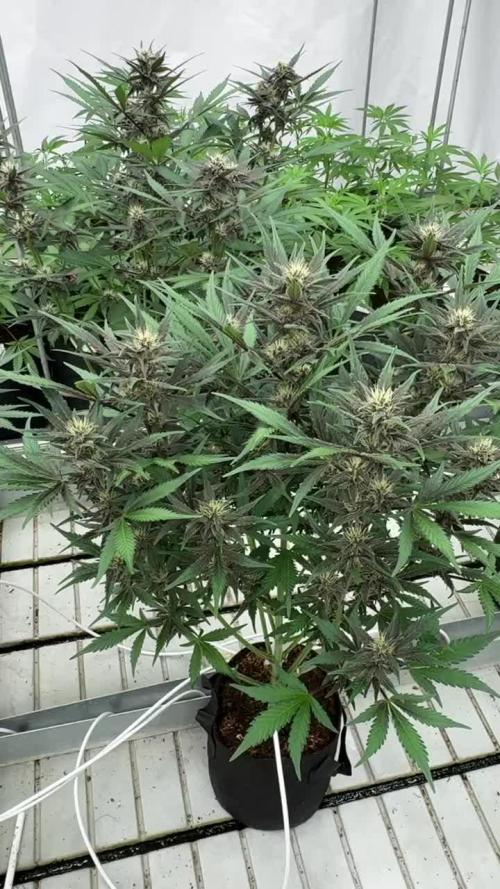
The buds are actively forming, with more pistils developing each day. You can clearly see them swelling day by day. defoliation along with lollipopping was done to remove excess foliage and open up the bud sites for better light penetration. 6 of 6 purple


Likes
14
Share


@Lazuli
Follow
The pictures and video are from day 15 since the flip. however i think the plant is now really in day 7 flower as i flipped early to keep the flower space under one square meter. so the plants vegged another week after the 12/12 anyway
as you can see they have 0 defincies and a very nice even cannopy, not much space between the nodes is what i like a lot.


Likes
Comments
Share


@Robom069
Follow
Going into the last weeks iam very happy with my plants
they´re almost too big
but i love the big buds and hope they get very dense
left acid dough
right black domina

Likes
12
Share


@CheeRz
Follow
We finally made it ladies and gentlemen. It is an honor to introduce you to the beautiful Lady Wedding Cake and the beautiful Cookies Kush twins. Even though I'm pretty sure cookies kush #1 would have needed another week, she had to go under the knife,too. The ladies finished just in time for the super bowl 🏈. We need the space in the tent asap because of the Eternity Grow Cup. Next Stop Zami Runtz and Blue Gelato 41

Likes
10
Share


@I_Identify_As_A_Dan
Follow
Week 13 for White Widow by greenhouseseedco,
Shes still coming along pretty great. She actually hasn't overly grown by height in the last week but her branches are defenetely toughening up to hold her weight.
Fed plain water once this week.
Processing
Likes
13
Share


@Cheesefarmer420
Follow
This plant has a solid stench of pure ripe lemons. So much aroma and color in every bud, purples, to dark green, to lime green, to solid frost. This one definitely a fun strain to watch grow and tend too for the last few months. She’s definitely a hungry girl, seemed to be the only strain out of the three that accepted and thrived with full feed nutrients. Would definitely recommend this Strain to someone For a nice uplifting day smoke, also seems to do me good for some pain and stress relief.
Likes
39
Share


@Theia
Follow
All has gone well for the urkle this week. She pushes close to 1.5m and is stacking flowers.
Big thanks to lassos for putting me right on my high pH run off. It was the golden tree I used. After advice I removed it and decreased base feed pH to 5.8.
A week on and run off has settled and progress appears on track.
Thanks for looking.
Coco is the bomb...💪👍
Grow well🌿🌱🌼
Stay safe😷😷
