


Likes
Comments
Share
@Chrisandweed
Follow
Novena semana de floración de 11 que van a llevar casi casi seguro todas.
Fuah, todas parece que tienen una gelatina de tricomas por encima, espero que salgan riquisimas!

Likes
4
Share


@Mr_nugs_lover_David
Follow
She looks very healthy and strong,think she's gonna grow very good without any issues,she's being 100% organically fed by biotabs organics with bactrex,mycotrex and 2 tablets of slow release organic fertilizer by biotabs. Looks fantastic on day 14I hope to not have ant bad issues tje rest of the journey! 💚🌱🤞

Processing
Likes
6
Share


@Greenwizhun
Follow
First grow in My own soil(less) mix. Peat+vermiculite+lime+gypsum

Likes
52
Share


@SomeLikeItGrow
Follow
Hey hey hey! What's up? The flowering has begin! This is so amazing 😍 I little bit defoliation and the tea has been changed as well. Keep flowering and waiting for the rocking buds 💪😂

Likes
76
Share


@DogDoctorOfficial
Follow
🌸 Week 8 Flower – The Trichome Symphony Begins 🌸
Eternity Grow Cup
This week… it’s all about the frost. ❄️
We are diving deep into the universe of trichomes, those magical crystal-like structures that define potency, aroma, and visual beauty. Each pheno this week is presented with its own dedicated video — so everyone can witness the uniqueness and evolution of these genetics firsthand. The photos? Focused close and true on the trichomes and their stalks, the very essence of the plant’s protective and expressive language.
💎 What Are Trichomes?
Trichomes are tiny resin glands that cover the surface of cannabis flowers and sugar leaves. They’re responsible for producing and storing cannabinoids (like THC and CBD), terpenes, and flavonoids — the compounds that create the plant’s effects, scents, and flavors.
They act as the plant’s natural defense — from UV rays, pests, and environmental stress — and in return, they gift us with beauty, medicine, and art.
Why So Many Trichomes Here?
This room has turned into a crystal forest thanks to a harmonious mix of tech, care, and nature:
🔹 Spectrum Tunings:
Using the TrolMaster system, we’ve dialed in a spectrum rich in reds, far-reds, and UV at precise times to stimulate trichome production. The plants are responding in full.
🔹 Lighting:
The under-canopy power of the ICL 300s, combined with the canopy-level intensity of the Model 1s, is creating full-spectrum saturation from top to bottom. Buds are stacked, frosty, and glowing from every angle.
🔹 Nutrition Synergy:
The tag-team of Aptus Holland and Plagron has been flawless. The clean base, balanced micro and macro elements, and biostimulants have driven these girls into full expression mode. You can see the nutrition working in every crystal.
🌿 Where Are We Now?
We’re likely one week to ten days from harvest, but of course we’ll follow the plants’ signals. They’re still swelling and building — it’s the final stretch, and they’re sprinting.
Nerdy Note:
Trichomes can be bulbous, capitate-sessile, or capitate-stalked — and in this run, the capitate-stalked ones are standing tall and loaded. Expect a full cannabinoid and terpene profile when it’s time for analysis.( bro talk not lab hihihihi)
🌟 Let’s take a moment to recognize that we’re witnessing the peak of this cycle. This is living art, frozen in time by a camera lens but alive in scent and energy.
This Week’s Feeding Program
To support this explosive trichome production in Week 8 Flower, we’re feeding with precision and purpose. Every drop counts now, and here’s the clean, efficient mix we’re running:
• Aptus Holland – Regulator: 0.15 ml/L
• Aptus Holland – System Clean: 0.25 ml/L
• Aptus Holland – RO Water Condition: 0.8 ml/L
• Aptus Holland – All-In-One Liquid: 1.25 ml/L
• Plagron – Green Sensation: 1 ml/L
• pH set at 6.2
💧 We’re keeping it clean, clear, and consistent. No extra PK boosters or unnecessary additives. Just smart nutrition, tuned spectrum, and stable conditions to let the plants express themselves naturally. The synergy between Aptus Holland’s Clean Program and Plagron’s Green Sensation is clearly showing in every frosty bud.
This week, we’ve fine-tuned the spectrum to push the plants into full resin-production mode. I’ve reduced the white light intensity to 40% while keeping the reds and UVs running at 100%. This shift focuses energy on the wavelengths that directly stimulate secondary metabolite production—especially trichomes. Red light enhances flower development and density, while UV exposure encourages plants to produce protective compounds, like cannabinoids and terpenes, as a natural defense. This balance between lower photosynthetic pressure and high-spectrum stimulation is helping the girls finish strong, frosty, and full of character.
🙏 Massive thanks to all sponsors, followers, friends, and growers in the community. To the ones competing, to the ones just watching — THANK YOU. This is almost the end of the road, and every diary, every plant, every effort deserves respect.
💬 Don’t forget to follow the full 4K experience on YouTube, and for behind-the-scenes action and updates, join us on Instagram.
With Grower’s Love,
DD 🌱
Genetics - Runtz https://www.zamnesia.com/6000-zamnesia-seeds-runtz-feminized.html
Nutrients - Plagron https://plagron.com/en/hobby
- Aptus Holland https://aptus-holland.com/
Controls - Trol Master https://www.trolmaster.eu/
LED - https://www.futureofgrow.com/en
LED - https://www.thinkgrowled.com
Soil - https://www.promixgardening.com/en
Germination - Cannakan https://cannakan.com/?srsltid=AfmBOopXr-inLXajXu3QFgKXCXXos4F1oEvScjMKIB5MR5dk8-GJ-F49
DOGDOCTOR 15% off
Smoking Papers - https://ziggioriginal.com/
Terpene saver - https://grovebags.com/
As always thank you all for stopping by, for the love and for it all , this journey of mine wold just not be the same without you guys, the love and support is very much appreciloved and i fell honored with you all in my life
With true love comes happiness Always believe in your self and always do things expecting nothing and with an open heart , be a giver and the universe will give back to you in ways you could not even imagine so
As always, this is shared for educational purposes, aiming to spread understanding and appreciation for this plant. The journey with nature is one of discovery, creativity, and respect. Let’s celebrate it responsibly and continue to learn and grow together!
Growers Love To you All 💚
#EternityGrowCup #RuntzHunt #GrowersLove #CannabisCommunity #AptusHolland #ProMixSoil #TrolMaster #Zamnesia #Plagron #ZiggiPapers #Grovebags




Likes
10
Share

@SuiXideGhXsT
Follow
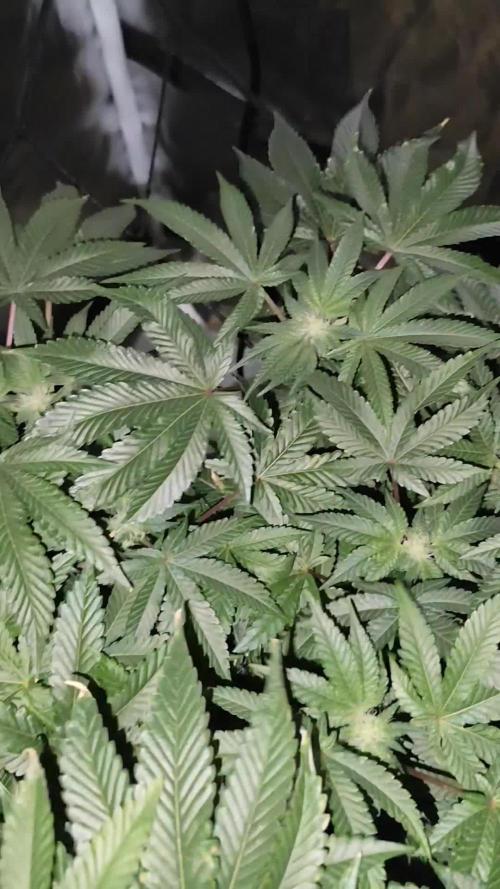
And arrived again the next week.
The lady now drinks more than 5 liters in less than 24 hours. It's busy forming beautiful blossoms and stretching. The smell is already like a bag of Skittles candy. I have never been so excited about a plant as I am about this one. No other plant has produced such great terps and flowers after just two weeks of flowering (today is the beginning of the ). None of my plants have ever been like this.
Likes
114
Share


@Natrona
Follow
Week 10
6/9-15 Lemon ladies love the outside. Both are showing yellowing leaves so everyone is getting nutrients with feedings.
6/13 heavy defoliation and limb removal for lemon cake since she's now in flower. Repositioned the scrog after defoliation so the thicker limbs are in the mesh. Drizzle, got light defoliation mostly yellowing fans. Before and after pics and vids.
I saw a Japanese beetle on my Lemon Cake and some small holes in the leaves so I added 1/2 tsp neem to the feed solution 6/12. Also started using fish & kelp.
I'm still watering 1 gal per plant when I feed. With the heat and humidity, I water daily.


Likes
165
Share


@Tropicannibis_Todd
Follow
💩Holy Crap Growmies We Are Back💩
So what do you say we have some fun 👈 We got some EXOTIC SEEDS 👉 👻👻👻MONSTERMASH👻👻👻 😛
Well my friends we are just at the end now , shes been flushed so her days are numbered 💀💀💀
👉 So folks , she's been quite the little monster , and she's building some nice buds 👈 Shes the only one that hasn't had any real issues 😎
Lights being readjusted and chart updated .........👍
👉I used NutriNPK for nutrients for my grows and welcome anyone to give them a try .👈
👉 www.nutrinpk.com 👈
NutriNPK Cal MAG 14-0-14
NutriNPK Grow 28-14-14
NutriNPK Bloom 8-20-30
NutriNPK Bloom Booster 0-52-34
I GOT MULTIPLE DIARIES ON THE GO 😱 please check them out 😎
👉THANKS FOR TAKING THE TIME TO GO OVER MY DIARIES 👈

Likes
8
Share


@Sorelone
Follow
Eine wundervolle Woche, habe erlaubt, was soll ich sagen viele Blüten zeigen sich, meine Art scrog scheint eigen aber es bringt denn Flächen Effekt 😁😁😁
Habe denn Lady ein bisschen Erde ausgestreut und lasse sie mal ihr Leben Leben



Likes
21
Share


Likes
37
Share


@steadfast_grower
Follow
--------------------------------------------
Week 14 // Dec 4 - Dec 10
--------------------------------------------
- Dec 10th puts us at day 96 from seed and everything is going smoothly for the most part - but they still need to mature a bit more.
- i'm definitely seeing the difference in the phenos; one plant going yellow and another is going purple.
- Sage #2, the smaller plant, really hasn't shown me any issues and is fading out to purple and still looks great today.
- Still running beneficials and enzymes: Microbial mass every two weeks and Orca twice a week and Z9 once a week.
- Plants are eating and drinking as top off is dropping daily and PPMs dropping as a result.
- I'm still alternating Overdrive (15ml) and AN Coco Bloom (10ml) and shooting for a high target of 750ppm each dose.
- I'm giving a dose at about the 690ppm mark. The dose brings ppm back up to 750ppm. I've been doing this daily with a top-off bucket with plain RO maintaing the water level.
- I'm checking trichomes daily, just getting milky now on the calyxes (bracts). But, I'm still not seeing much amber yet and still lots of clear trichomes on the lower growth.
- Sage #3 leaves are getting pretty brittle. The RH is way too dry for a rust fungus issue and would have spread by now to the other plant (Sage #2) I'd imagine. I don't know if it was salt build-up or calmag deficiency in early flower with a combination of nute burn, but now I'm leaning toward nutrient burn and CMH light burn even though it was the bigger plant of the two. Sage #2 doesnt have any issues. Balancing the needs of two phenos in RDWC can be challenging. - I'll admit I did push the ppms for a bit of tip burn, but it is weird why the bigger plant would burn if that is the case. - Either way, the upper sugar leaves have on Sage #3 are rusty, breaking off, and brittle on the top of the flowers. I need to figure it out so I can correct it next time. Plenty of PK between overdrive and bloom, calmag really isn't needed in late flower so the deficiency shouldn't have progressed if it was a calcium or magnesium issue in the early flower.
- RH is dry enough I'm not too worried about any rot and trying to clean up any dead leaf matter when i see it.
- I'm not rushing anything for the sake of harvest, but I do need these plants need to finish up... I'm worried I may in trim jail on Christmas after a 10 day dry.
- Expecting to harvest any day, but who knows at this point could be another 10 days until mostly milky and I feel the THC content is optimal.
Thanks for checking out my diary!

Likes
29
Share


@Hashdestroia
Follow
Overall i'm really happy with this strain. First i thought i wouldn't get a high yield but i'm pretty happy with it i got 250grams of top trimmed buds 2g of hashoil 2g of bubblehash and another 80grams of dry plant material for making bubblehash. Super potent strain with an amazing flavour, definitely nit the last time growing this strain.
Likes
26
Share

@Dottgreenthumb
Follow
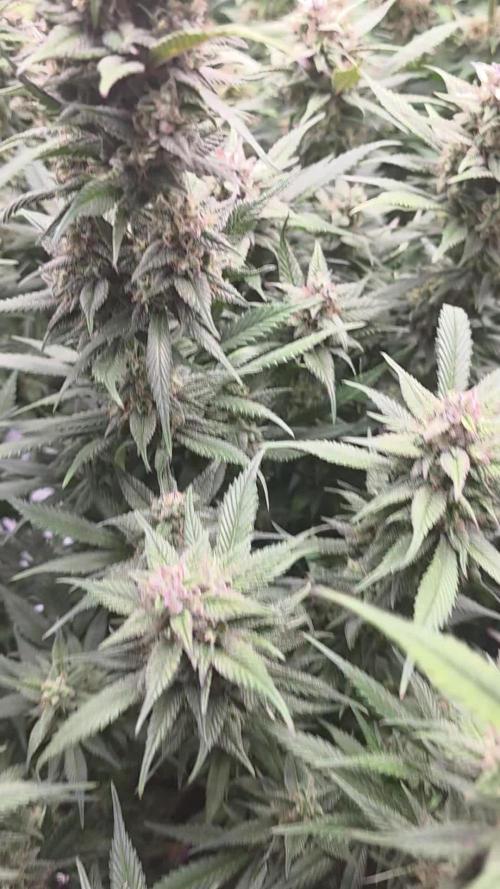
I fiori crescono e si riempiono sempre di piu , le infiorescenze stanno sviluppando abbastanza resina
Questa settimana è l ultima di ferrilizzazione dalla prossima sono pronti per il flush
Run off 2.1
Ph 6.2


Likes
3
Share


@Willy_Balls
Follow
Two very resistant phenos. It was my first go with rockwool. Definitely going to use it again.
Likes
20
Share


@eldruida_lamota
Follow
Que pasa familia, vamos a añadir la octava semana de floración de estas Apple Fritter de RoyalQueenSeeds, empezamos con la temperatura que la tenemos entre los 21/25 grados, la humedad está entorno al 50%, el ph está en 6.2 , el foco actualmente lo tengo encendido 12 horas y la potencia es al 100% de lo que da el foco.
También añado la gama de nutrientes de Agrobeta, que no falla, sin duda de la mejor alimentación que hay para tus plantas.
Las flores estan tricomandi
Muy bien y se están formando buenas flores, estas semanas acabarán de madurar.
Mars hydro:
Code discount: EL420
https://www.mars-hydro.com/
Agrobeta:
https://www.agrobeta.com/agrobetatiendaonline/36-abonos-canamo
Hasta aquí todo, Buenos humos 💨💨💨
Likes
11
Share


@CanarianGrow92
Follow
Week 2 vegetation for the banana purple punch from fastbuds 420.
All good at the moment, we are testing the xpert line with these girls.
1ml of master grow A+B
1ml of master root
We removed the 2 lowest sets of leaves and branches. We do this because we have the girls in 7 liters and quite some plants together, so i prefer to concentrate on the main bud and only some side buds