


Likes
Comments
Share

@GoodTimesOrganics
Follow
Welcome Back!💚
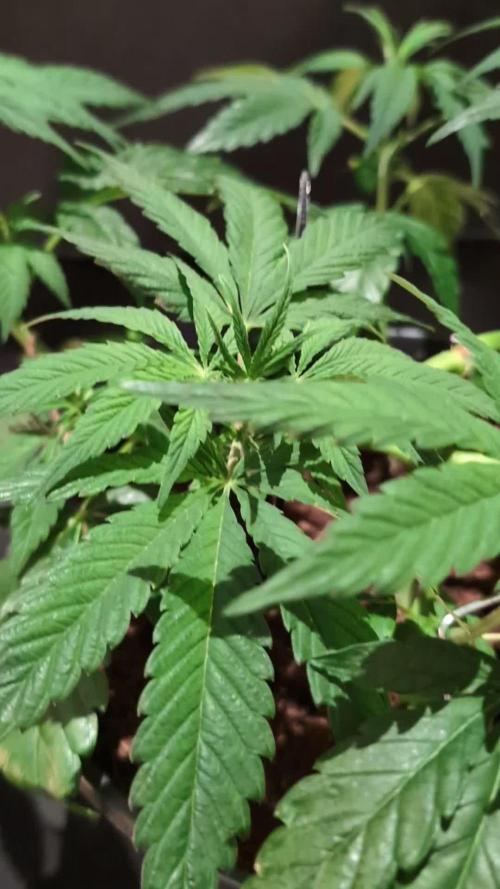
Nach der fünften Woche des Wachstums entwickelt sich die THC-V weiterhin wie gewünscht.
Durch das topping und das anwenden der LST Technik wird das Höhenwachstum gut im Zaun gehalten.
Ich habe die Triebe mit Erdnägeln nach unten gedrückt, damit die Pflanze nun besser in die Breite wachsen kann.
Ich denke, das die Pflanze nun noche eine Woche in der Vegetativen Phase bleibt und dann in die Blüte übergeleitet wird, da es sich um eine reine Sativa handelt.
Ich habe die Pflanze zudem die Woche noch mit Orgatrex gegossen
Die Umgebungsgegebenheiten sind OK:
—————
🌞 Temp: 21°C
🌚 Temp: 18°C bis 19°C
💨 RH: 54%
VPD: 0,85 kPa
—————
Viele Grüße 👋

Likes
26
Share


@gottagrowsometime
Follow
Welcome: thanks for dropping by. Drop a like so I know you came so I can view your diaries, if you what to of course.
Was able to go full steam ahead with this 1. And apply the 3 recommend nutrients to be used for seedlings.
La Calavera is the exact same formula as Voodoo Juice. How can this be you ask..(As it would be copyright), well it would be if it wasn't for the fact that these ppl, (Terra Power), are the ones who own and hold the pattens to voodoo juice, tarantula and Piranha, which made AN famous. They decided to break away and all the formulas they made for AN over the years they taken 90% of them and used modern day research with autos/ruderails in mind. Their base nutes alone will blow you away. Have a look at their claims. Led-grower.eu/terra-power/.
As for the plant, new strain, new nutes, new whole entire set up with a 90% controlled environment, I say 90% cause I'm waiting to get the air exchange and AC installed in my grow room. Soon it'll be 100% be able to bring temp up as high as 28c and as low as 17c. Atm I can control RH. I can bring it up to 70 by just closing my door/tent windows and then by adding a damp towel and after a few days of the grow room door closed the RH will go up to 70+% and I'll only open the door every couple hours to swap out air until my air exchanger is installed. I can get the RH as low as 35% with a full tent 30 with 1 or 2 plants. So, hoping this time I can grow top A grade bud, as the last stuff was nice my 1st harvest was C grade weed. Was still half decent though. The others were B grade for sure. Hoping this time with the money I'm going to be putting in electricity it's goman be A grade. As I'll be looking at nearly 1kwh every 2hrs. That's 7e a day when the dehuimifier will be running when in flower. But as I'm vegging everything in a 70x70 with 1 light I'll get 4-5 wks for only having to pay 80cents a day. And I'll have great high RH. And as soon as some start to flower they'll be put in the 150x150 and I'll bring the RH in the room down but it'll still stay high in the 70x70 once I have the windows sealed up. If I can't get the RH below 45-55% for pre flower I'll have lots of room in the 150x150 to put the dehumidifier in and bring down the tents RH while keeping the Rooms RH high for the small tent. I'll just run the intake fan for the 150x150 from outside the grow room up in to the attic which the RH is 50% so air intake from the room will be too high for the big tent to use.
30/4/22 Veg started: first signs of life popped up today. Going to keep em on root stims and enzymes for now. Haven't fed since planted so will water with .1 300ppm today. All the EC comes from La Sirena. Makes
Will just sit back for now and let em do their thing hopefully in 48hrs will have some leafs or shell pushing up. She's growing straight up. So for now, it's just watching for any signs, (such as browning of the stem, bent stems and any early on diseases if any will hamper the plants formation of her 1st 2 fan leafs. You wanna see them no later than 24-48hrs after she pops her head up out of the ground).
1/5/22 VD 2 really at to coming on. Went from .5 to nearly 3cm.
4/5/22 Growing really well. Her first 3 days she put on 7cm her 3rd she put on 4cm of them 7. She hasn't grown up today but her face has filled out, another 2 days I reckon before she splits.
6/5/22 So, it's begun. I've created a negative pressure environment, 1st time, let's see if it makes an impact. On wk 3 onwards I'll be running the intake extraction for 5mins every 30mins and I'll have 2 co2 bags up. If the RH becomes a problem or temp I'll put the extraction/intake back on 100% of the time. The extraction fan/intake is set at a ratio of 2 to 1. (100% extraction 50% intake) making a negative pressure environment, best way to show you have done this, the walls in your tent should bow in lightly
Same Day. Okay, so this my last update. Going to run fans the same right up until flower and then I'll be sealing up my tent and adding 2 co2 bags. And will be adding a dehuimifier and setting at 45% And it checks every 30mins and if it's gone up it'll turn back on and bring down to 45 or set RH, so no co2 will escape. The temp will be bordering 30-33c and then when they go into their rest window they'll be transferred to to a negative pressure environment with low temps and 45-50%RH. I'll only be able to do this for the 3 weeks of pre flower. And maybe some more, it depends how hard the dehuimifier will be working, but i want dense buds and only way to improve that is by introducing Co2 and then a negative pressure cold environment for terps. Then I'll be putting them back into full negative pressure environment and the Co2 will be useless, again all depends how it's gonna affect my bottom line. That and I only have 2 intake fans. I'll be going into detail about my Co2 adventures the week before I'll be prepping them to be able to withstand high temps, so I'll gradually bring up the temps the last wk of veg 28c max and that way when I push it to 30-32c in pre flower she won't stress as much in the high temps as they'll be in a sealed tent for 18hrs in 30-32c I'll have the dehuimifier in the sealed tent and will be set at 45% And will keep it in that range for all of pre flower and then I'll put it back on to negative pressure environment 21c in the dark window and after all plants come out of pre flower Co2 will be left in the tent but will be useless without a sealed tent/grow room.
Thanks for reading, this will be the last update for this week other than pics.
gottagrowsometime

Likes
23
Share


@nonick123
Follow
Día 13 (06/05) Nos acercamos al final de la fase plántula. A ver si ahora empiezan a crecer de forma explosiva!
He sido muy estricto con los riegos, dejando que el top hasta el nudillo se seque completamente!
Día 14 (07/05) Hago una mejora en la tienda. Hasta ahora tenia intracción pasiva, pero ahora he instalado una turbina para que impulse aire fresco dentro de la tienda
Día 15 (08/05) Con el calor que hace me sorprende que las macetas sigan aguantando la humedad, pero al hundir el nudillo sigue húmeda. Mañana haré un riego de nuevo
Día 16 (09/05) Relleno el top con sustrato para compensar la compactación y dar mas soporte a las plantas
Riego con 300 ml solo H20 - pH 6,2
Día 17 (10/05) Baño de sol de dos horas.
Día 18 (11/05) Baño de sol de dos horas
Día 19 (12/05) Riego 750 ml H2O + Regulator 0,15 ml/l + CaMg-Boost 0,25 ml/l + Startbooster 0,25 ml/l - pH 6.2
💦Nutrients by Aptus Holland - www.aptus-holland.com
🌱Substrate PRO-MIX HP BACILLUS + MYCORRHIZAE - www.pthorticulture.com/en/products/pro-mix-hp-biostimulant-plus-mycorrhizae

Processing
Likes
12
Share


@Greenthumbguru
Follow
I'm excited n sorta disappointed this is gone be my first harvest but I wish my buds was fatter i hope they pack on some weight
I may be impatient over excited but we gone see
Likes
7
Share


@DenDv1d
Follow
I’m going to start flushing this gorilla, almost all trichomes are milky and I want enough flush before they start leaning towards amber. Buds will probably ripen a bit more this last week as well. It's nice and crisp springweather, perfect to add some more frosting to those budstickles.
Likes
10
Share


@Beardacious_buds
Follow
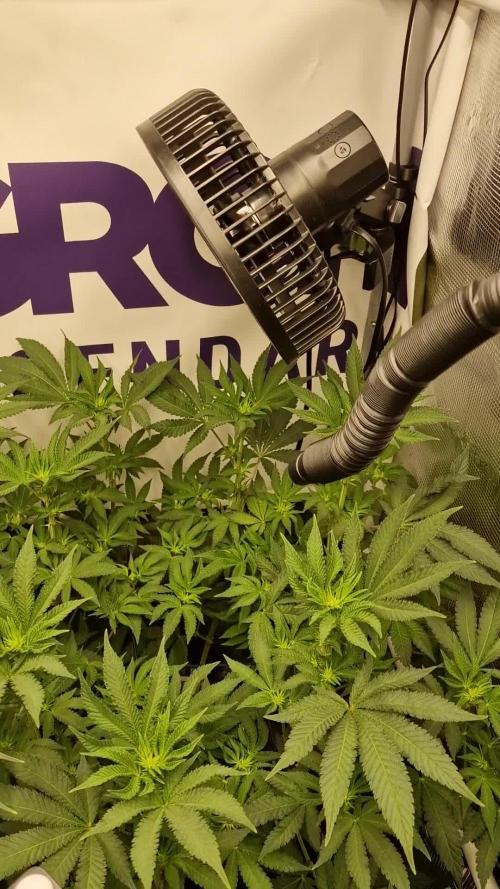
Packing it on. Starting to color up. Anvil already showing her beautiful colors. Aliens Berries is a shorty and not getting as much light and starting to get a little airy… way she goes.





Processing
Likes
3
Share


@Longmountain
Follow
2nd week in flower from clone taken on 3/11 so today she is 1 month old as a clone. And this is one of the better clones I have taken and grown.
Likes
4
Share


@LittleBigTrees
Follow
I've been pulling the top fan leaves to stop the main stem growing any taller and repotted them into 4L pots, once they show roots I'll flip them over to flower.
They've all outgrown their mutations but the apple fritter has a slight varigation.
Likes
10
Share

@CheeRz
Follow
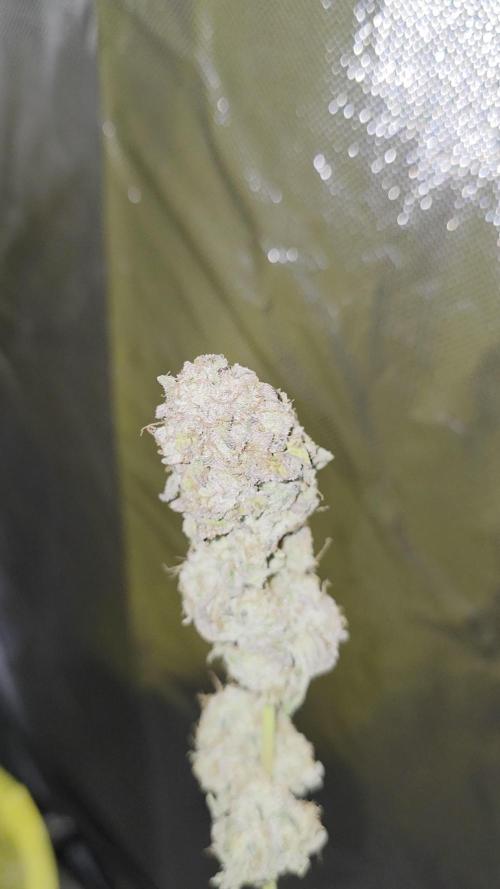
After 13 weeks of flowering, Lemon Cherry Gelato is finally ready. I haven't watered her for the last three days. Her buds are extremely sticky and shiny. 🍋🍒🍦
Likes
2
Share


@pichacultiva
Follow
Primera semana en la que se ve una mejoría en general de las plantas.
Me hubiese gustado anotar aquí el día de germinación y transplante a tierra, datos a considerar.
Likes
1
Share

@Mo_Powers
Follow
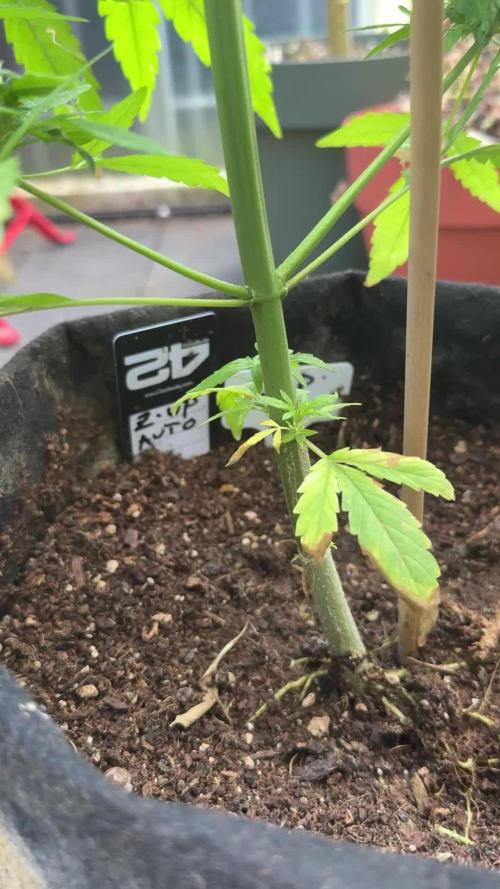
What a beast! The main bud has really plumped up and looks absolutely gorgeous. I’ve trimmed off a few of the larger leaves. It smells delicious and looks very healthy.


Likes
Comments
Share


@High_Grade_Dadli
Follow
Did some defoliation this week also had some worm attacks one of the luxuries that comes with outdoor n they always seem to wait until the buds start to get pretty
Likes
6
Share


@GanjaDjarin
Follow
For the Grow section on my page: Throughout the germination stage, I explored three distinct seed germination techniques: the direct soil implantation, immersion in a hydroponic medium, and the classic paper towel method. My tests involved the Gods Gift autoflower from Premium Cultivators, Northern Lights from Royal Queen Seed Bank, and the F1 Epsilon strain, also from Royal.
My primary focus, however, has been on the F1 Epsilon strain. As part of my shift towards commercial operations, I'm currently pushing the potential of these seeds to achieve maximum efficiency and productivity. I'm in the midst of identifying the optimal strains for my commercial venture.
My objective, quite simply, is to strike an optimal balance between quality and yield for my future cannabis crops. With astute business planning and leveraging emerging laws, I plan to provide these products at a significantly lower price than my competitors. End of Germination Stage - Staring Vegetation Stage
Day 9 - I inadvertently oversaturated my plants with nutrients, which led to the immediate demise of two plants. A key lesson learned was that utilizing old woolite medium is not advisable. Instead, using dirt plugs proves to be a more effective method. Moreover, it's crucial to ensure that nutrients are introduced directly into the water supply to avoid any potential harm to the plants.
Additional Note: For enhanced root stability and quicker access to the water supply, it's important to situate the dirt plugs deeply within the pebbles.
Also ensure germination process as follows: 12 hour soak, drop into soil plug deep into hydroponics pebble medium.

Likes
42
Share


@Pr3m_85
Follow
I'm back to home 🙂 !!! I was hospitalized for my Crohn 😔. The next time, I'm good at having a piece of my stomach cut off ✂️✂️✂️
If not, girls seems to be fine without my presence 🤷🏼🙂.
Peace to all ✌️✌️🏼✌️🏿✌️🏾✌️🏻✌️🏽
Day 36 : flush with ph'd water 💦


Likes
17
Share


@Rangaku
Follow
FB is getting phat and healthy , just keeping up the defol and trying to get my bud sites organised , the next week should see her stretch out some . Same same next week

Likes
2
Share

@NoProbation4Weed
Follow
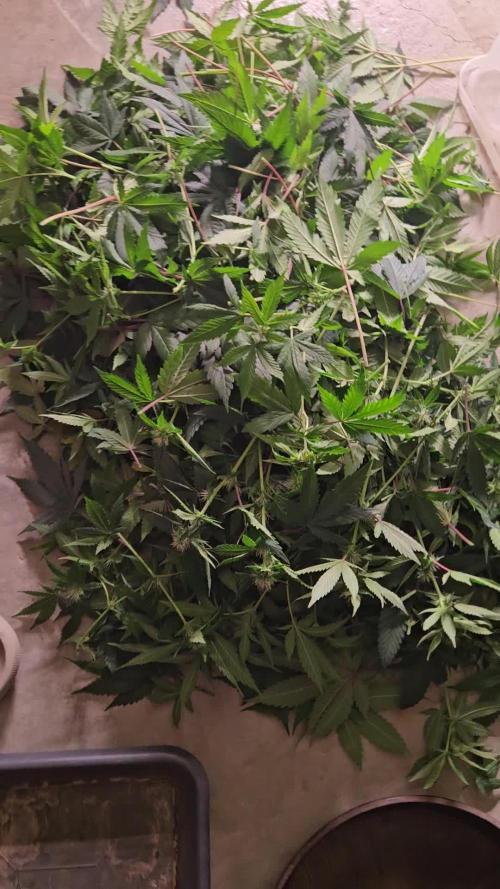
on day 21 of flower the lady have got a new Haircut.
Also some composttea on day 22 of flower.
Light hits the plants with around 950 PPFD.
She grows healthy and vigorous.
