


Likes
Comments
Share

@Trichoma
Follow
@ 1.5-1.6 kPa
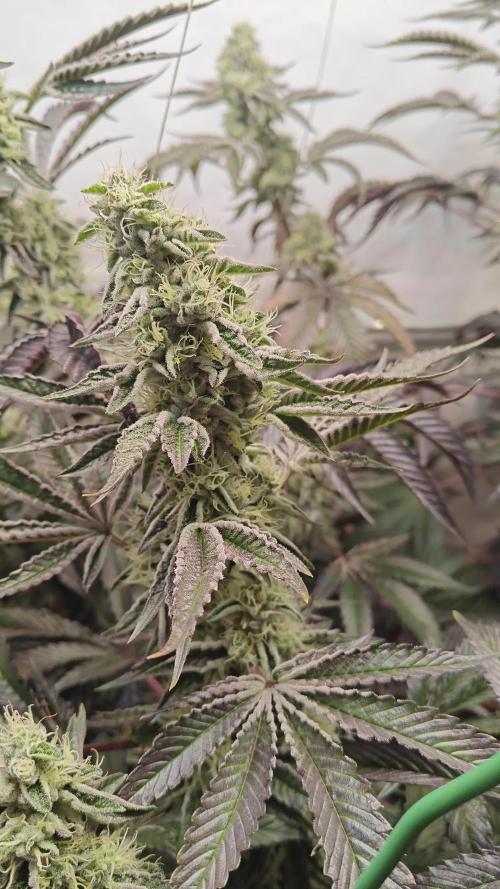
The plants have a strong, sweet skunk aroma, and when you smell the flowers directly, you also detect a zesty orange scent.
The buds are quite heavy for the plant, it would have benefited from a ScrOG net or additional support.

Likes
1
Share


@Blessed
Follow
Cured for 1 month, nice trichomas covering, smell good, nice THC level (not for beginners), easy to grow, long cycle, needs long term veg time.

Likes
17
Share


@BLAZED
Follow
W15 (8-5 to 14-5)
8-5
Temperature: 26.5 degrees (lights on) 20.1 degrees (lights off)
Humidity: 58% (highest) 45% (lowest)
Opened the reservoir for a couple of minutes.
Set the light to 80% strength.
9-5
Temperature: 28 degrees (lights on) 21 degrees (lights off)
Humidity: 61% (highest) 42% (lowest)
No pictures.
10-5
Temperature: 28.6 degrees (lights on) 21.4 degrees (lights off)
Humidity: 60% (highest) 40% (lowest)
Added 10L to the reservoir.
Dry weight:
Chemdog #1: 3.6 kg.
Chemdog #2: 4.1 kg.
11-5
Temperature: 29.8 degrees (lights on) 20.7 degrees (lights off)
Humidity: 59% (highest) 31% (lowest)
No pictures.
Opened the reservoir for a couple of minutes.
12-5
Temperature: 30.1 degrees (lights on) 21.2 degrees (lights off)
Humidity: 51% (highest) 36% (lowest)
Opened the reservoir for a couple of minutes.
13-5
Temperature: 31 degrees (lights on) 21.8 degrees (lights off)
Humidity: 53% (highest) 40% (lowest)
No pictures.
Opened the reservoir for a couple of minutes.
14-5
Temperature: 28.7 degrees (lights on) 20.6 degrees (lights off)
Humidity: 60% (highest) 39% (lowest)
Dry weight:
Chemdog #1: 4 kg.
Chemdog #2: 5.6 kg.
Added 8L to the reservoir.
Opened the reservoir for a couple of minutes.

Likes
6
Share


@Frosty905budz
Follow
Flushing with pure r20 ph@ 7.4
Flushing about 10g of water per plant until
Overflower water comes out clear
One more week of flushing and will harvest on the 16th week
Likes
11
Share


@Fettsgrow
Follow
I began the second week with 1/4 soil feed of NITRO that is added to the top layer of soil. I'm using Bigbudjuice throughout with a wet feed, and soil application. Day 9 is when the growth really started to happen as the seedlings seem to have good roots.
Day 11 the girls were then given a 1/4 of budjuice watering which has resulted in some awesome growth over 3 days.
During this week I've slowly increased the intensity while watching how the react and have shown no issues. Currently sitting at 350 Par and will being to.lower slowly to increase par to 450 PAR as the start into Veg. Also lowering RH slowly as well.
I am a new grower, and I'm going slowly and steady while learning not to try to much or be crazy ambitious as a beginner. I also began a pre pest control spray on foliage with neem oil/Dr Bronners dish soap/water mix applying every 10-12 days.
Thanks for stopping by and if you have any tips or advice it is all welcomed.
Super stoked to keep learning as I go, and read the leaves as they are the first warning sign of what is happening.
Happy growing 🤙🤙
FYI not sure what went on with #1 leaves but seems to be growing fine, and all other leaves are growing out right.

Processing
Likes
21
Share


@GRow_M8s
Follow
- We had a flying start until 7-10 days ago when we noticed some toxicity early signs,
* Dark green leaves,
* Slow bud progress
* Burning tips,
* Crispy leaves.
⚠️ PH testing at mediums(soil) run off and the confirmation was there.
Too low PH (<4) & the roots started to lock down = (slowing nut - water uptake) -> slowing transpiration -> showing ☝️ toxicity-deficiencies.
- We stopped feeding and started to flush with tap water at 7 PH (3 waterings -7l/plant), at first run off was really low (under 4 PH) and after the flush we were at 5 PH.
- From now on we will adjust our waterings at 6.5 PH and start microdosing atami PK and snacks.
- The plants responed quickly after the first flushings and we will be back on track fast.
- Room smells like sparkling lemonade 🍋 only when teasing the buds, the humidifier/ionist keep the smells low and fastening the transpiration.
* Update at half week 6.👇
- After flush we start feeding with the atami duo and some snacks, the PH steady at 6.5.
- Buds fattening faster the last days.

Likes
2
Share


@TTerpz
Follow
Buds starting to form!!!!
Day 2 of week 8
4/3/25 UPDATE:
Flushed with Fox farm sledgehammer ph’d at 6.8
Soils were low at 5.8
4/5/25 update: fed with nutes
4/7/25: watered with plain water ph’d at 6.5
4/8/25: did a slight heavy defoliation to get ready for week 9!
Likes
10
Share

@carlitoshaze44
Follow
Otra semana más
Creo esta semana hoy día 27
Anunciando así el próximo día 28 inicio de esta quinta semana de floración del calendario de mis niñas,semana en la que comienzo subiendo la cantidad de comida y con ello de agua para mis niñas.
En los últimos riegos de la cuarta semana fui subiendo hasta alcanzar los 1700.
Las plantas mayoritariamente lo aceptaron,así que con ello subiré esta semana hasta alcanzar los 2000.
No defoliaré ninguna planta
Hoy ajuste la luminaria a una altura de 30cm con respecto a los 45 de la anterior semana.
Esta semana pegarán un buen apretón con la subida de PK,y la ayuda de los azúcares.
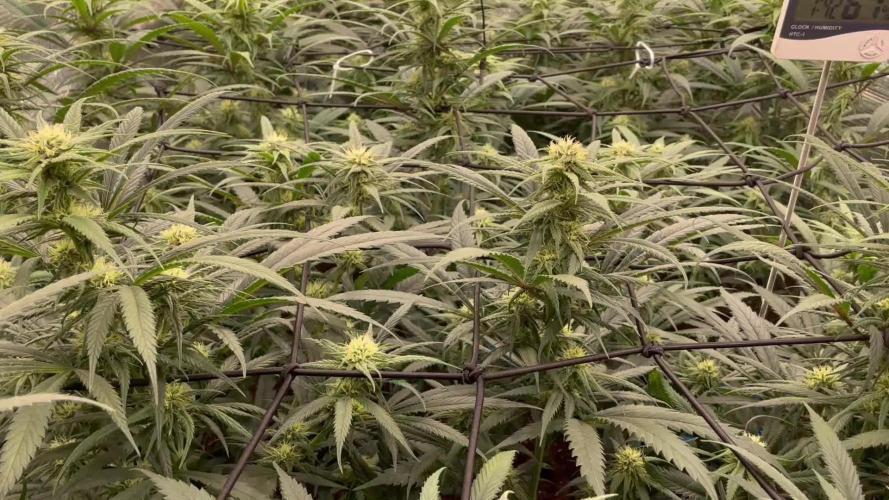
Seguimos con muchas lluvias y una humedad muy alta que dentro del armario se combate entre ventiladores extractor y desumificadores pasivos de sales de silicio.
Que me mantienen un 35% menos de la que tengo en el exterior llegando muchos días a los 45/50% de humedad.
Tengo que añadir que vivo a un kilómetro de la playa.
Día 28
Di un pequeño fumigado, de agua con ajo y jabón potásico en la entrada al cuarto de cultivo.
Como preventivo ante cualquier insecto que quiera acercarse atraído por el aroma.
Hoy e podido ver que el último riego de 1700EC,no causó ningúna sobre fertilización apreciable en el cultivo casi nula,viendo esto en el siguiente riego subiremos a 1900Ec.
Día 29
Primera impresión al abrir el armario es que había una humedad alta dentro del almario.
Un 72% que una vez encendí el pequeño desumificador de 8l de casa,a mejorado a 53%
Hoy compré la gama de completa de aptus.
Iré añadiendo alguno de estos componentes de la fase de floración,para ver qué tal se combinan con la gama de plagron.
Hoy le metí un riego de 55litros,una Ec de 1900
Sin carga de pk,desorbitada.
Este riego me centro en los azúcares junto con algunos aditivos como silicio,aminoácidos,azúcares,encinas,sulfatos y manteniendo el nitrógeno en pequeña parte el potasio y el fósforo,calcio y magnesio que nunca falte en cada riego!,las lámparas están bajas y a toda potencia.
Quiero en estos días conseguir mejorar con grandes empujones .
Saludos compañeros!
Día 30
Todo bien,todo correcto y me alegro!,buenas tardes,buenas noches.
El cultivo aceptó muy bien la subida de EC 1900,esta variedad come de buena manera!.
De esta manera seguiremos subiendo para ver,hasta donde llegan.
Obviamente no vamos a sobrecargarlas,pero vamos a ver hasta donde llegan.
El siguiente riego lo haré trabajando con pk,mineral y algunos aditivos más orgánicos-minerales.
Tengo que decir que el aporte del té frío de plátano junto a la melaza le habrán venido fantástico también a las lombrices!
Día 31
Todo perfecto dentro del cultivo ,veo que las 9 semanas de floración son fijas..
Un gran punto a favor,es que el clima empieza a ser más favorable a partir de este fin de semana..
Subirán más las temperaturas y las lluvias van a detenerse por unos días.
Espero contar con una humedad ambiental más baja para poder seguir tranquilo con el desarrollo de las flores.
Dia 1
Lo comentado en el día anterior,bajo la humedad ambiental,tenemos buenos parámetros!
Una temperatura con luz de 21 grados y una nocturna de 16.
Va aumentando mucho la resina!,eso me gusta!
Hoy le metimos una EC2100 en el riego.
Mañana veremos qué tal lo reciben las niñas.
Va aumentando de buena manera el engorde,no me puedo quejar!
A ver si llegamos al 1,7g/w que es el rendimiento que se está obteniendo con esta configuración en los cuartos de los compañeros! Sin Co2 obviamente.
Día 2
Ya veis,todo viento en popa!
Hoy hice una prueba en el cultivo con el riego ya que en el último riego cogió aire el sistema.
Aún sigue así,en el día de mañana lo purgaré.

Likes
6
Share


@Krautbauern
Follow
The chimera has grown extremely large. It has perfect internodal spacing so that the light can penetrate deep into the plant. Now the flowering starts, we increase the addition of Prosper the flowering fertiliser.
Likes
189
Share


@Legendaryseedthumb
Follow
Day 57: not much to say but she’s very healthy at this point and producing buds everywhere.
All good, getting closer to harvest each day!🌱
Day 59: she has started to smell really nice! Everything is going fine but I’m having some humid troubles again…
Day 61: I just installed the second net and did a light lollipop and trim!

Likes
2
Share

@StonedRAGE
Follow
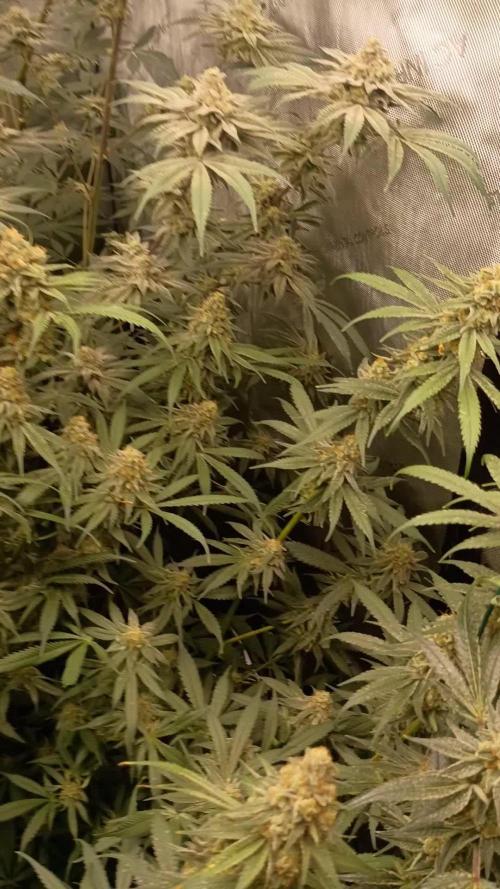
Everything is growing beatifully. Just The bubblegum has alot of White marks on The leafs that i donst really Unterstand since No other is doing this. Even The Clone of her in The veg tent is doing The exact Same.
Anyway im Happy with how everything is going.
Just a few more weeks and We have done it.


Likes
35
Share


@bmvape
Follow
This is my first grow. I needed something very stealthy so I'm growing in a 16" x 9" x 36" cabinet.
- Simple hydroponic system. Basin filled with about .75 gallon, small air pump and air stone.
- LED is 216watts (UFO full spectrum)
- Wifi outlets for control and timer on fans and LED. Also have camera so I can always have eyes inside.
- Crop King Seeds - Autoflowers - White Widow and Northern Lights. Read that these are good for beginners
and smell isn't as strong as others.
- Germinated using paper towel method. Soaked 18 hours, after 3 days put taproot down in soaked (spring water) jiffy pellet. Kept dark for 48 hours.
- After sprout, began 18/6 light schedule. No nutes for first week.
- Per instructions from the cabinet maker, I mixed 1 tsp of Maxigro in 1 gallon of water. After 1 week, I added 1/8 cup of this solution into the basin with .75 gallons of water. (Seems like a very small amount of nutes, but said go slow).
-PPMs are stable ~400 since feeding started.
-Added 1/2 cO2 pellet during week 3.
-pH was high during first week (as high as 8.3) but have been controlling with GH pH down since. Avg 6.1.
-Roots look healthy. Changing water in basin once a week. Using syphon to drain.
- Started LST. NL has been growing faster, was able to bend an expose to more light.
Sorry, no photos for first 2 weeks (just found this site!)

Likes
95
Share


@DogDoctorOfficial
Follow
Week 4 day 2 since i start germination, and i think they are evolving quite ok. CS1 is for now the queen in all aspects, shes the stronger, the most beautiful formation with no problems what so ever , CS2 is following and CS 3 also but with mutant leaves all over her, i will however keep giving her love and dedication, mb in the end she compensate with some beautiful flowers 🤞
As for the Tropicannas, TP2 its an amazing girl, no mutations and growing as it should, TP1 is recovering fast from her accident 😅🤞 and she is on the way to become a strong and beautiful girl.
They are adapting super well to the new ligth 😅 one less solution to find 👌
Day 27 veg And I’ve been kind off busy, sorry i miss 2 days of updates, but between this 5 girls, my veg room and harvesting my flower run, time only stretches so much since one still have a life beyond the love gardens 😅 but non or less here we are and they look fantastic 🤩😆 all showing strong genetics and i thing i will have different phenotypes on the Chocolate department lets see😁 so far the strongest CS still is number one and number three still mutating her self from day one 😆 but she will take all my love till the end ( we never know ) on the Tropicana department, both looking amazing, number one completely recovered from the led accident 😅 end growing in a way t hat i start to think that she will catch up with the rest pretty soon 🤞TP2 is now the tallest plant of them all With 16cm high 👏
Day 28 veg No updates , all going as it should 😅🤞
Little battle between Topicanna Poisen from @sweetseeds vs Chocolate Skunk from @00Seeds (just for fun)
TP = Tropicana Poison
CS = Chocolate Skunk
All i grow is medecine for myself, nothing to sell, dont even ask !!!!
Stay safe and do it with love for the love ❤️ 🙏


Likes
4
Share

@sunshinegroww
Follow
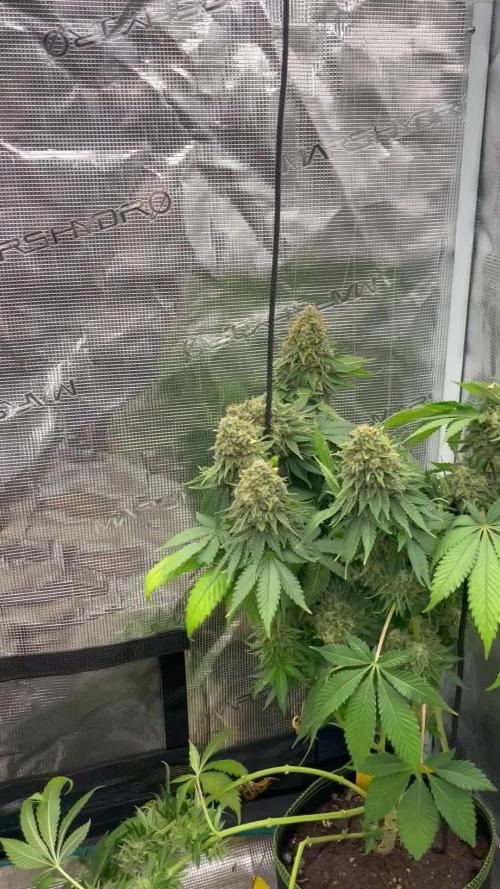
Super girl got the chop as super heavy and struggled to keep her upwards she is ready ready with a lot of ambers now off to dry for 14 days ❤️
Likes
1
Share

@4hundert20
Follow
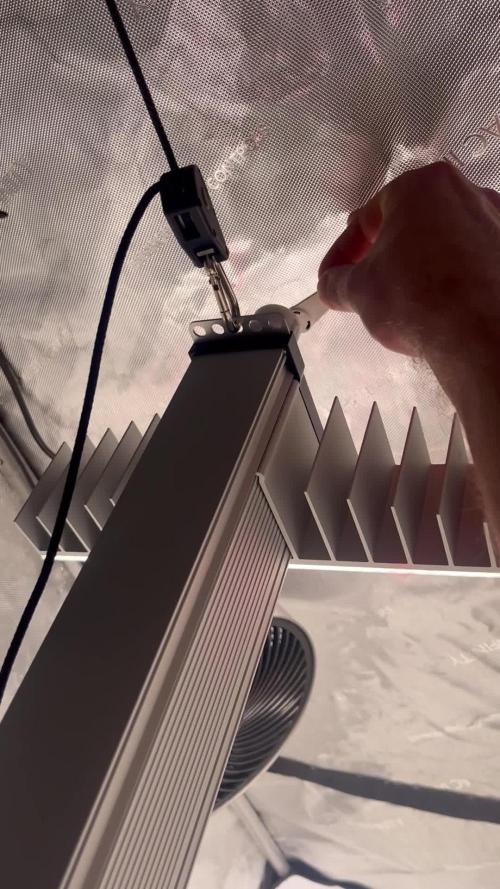
Das Setup war eigentlich vollständig, sodass ich die andere Lampe und des Rest installiert habe.. letztendlich ließ sich nicht mehr manuell dimmen. Bald macht das der Controller.. nun heißt es warten, während meine Pflänzchen leiden.
Zum Glück bin ich so beschäftigt, dass mir das Verdrängen und die Ohnmacht nichts ausmacht haha


Likes
14
Share


@Crazy_Doofus
Follow
Small plant, but fat top, so 20-ish grams it looks like 👍 can't wait!! ♥️

Likes
19
Share


@heythere12345
Follow
They've grown leaves and i started using nutes today. Day 15 from seed to now. They are both wilting for some reason. I watered less frequently because of the Fongus gnats. and now i watered 500ml to each pot11L. I dont have a run off but i don't know if its necessary. I also added cinnamon at the top soil cause i read it helps with eliminating gnats.
Likes
28
Share


@cheetah844
Follow
Definitely one of the taller ones out of the 12. I need a few good daytime strains with energy & no anxious paranoia. I'm working on finding more of them for daytime motivation.
Likes
14
Share


@LokalGrenz
Follow
Had some humidity issues been watering with spring water until I get something to filter the tap water
Jan.8th amnesia haze 1 got bit taller so I did some more LST
