


Processing
Likes
Comments
Share


@BigHorn
Follow
First week budding. Definitely starting showing signs of female the first 2 days you can see the hairs com in at the bot of the stocks. Looking forward to next week

Likes
10
Share


Likes
6
Share

@420DeepGrow
Follow
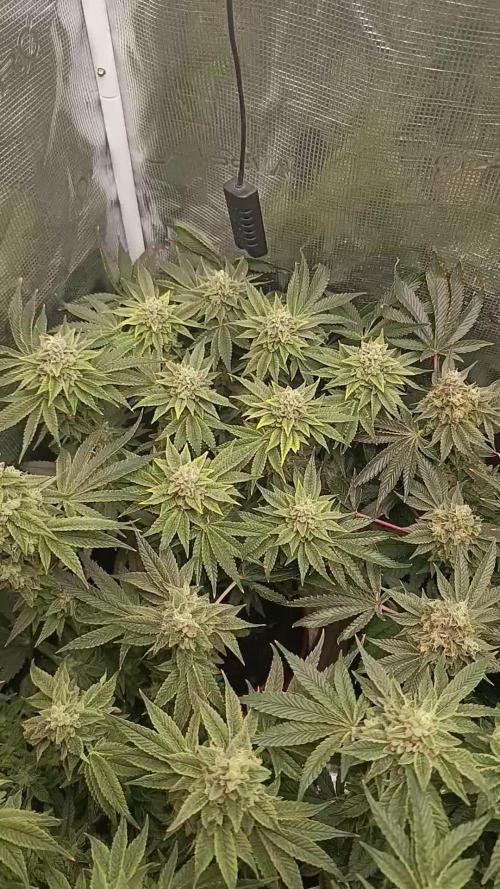
📆 Semana 9
El engorde continúa su curso, con los cogollos ganando densidad y peso de forma constante, apretando bien los cálices y acercándose poco a poco a su forma final. La estructura ya está completamente formada, centrando ahora la energía en la compactación y el volumen.
La resina sigue acumulándose en capas más gruesas, aportando un aspecto cada vez más cubierto y brillante. El perfil aromático se vuelve cada vez más complejo, combinando notas increíblemente ácidas con matices de lavanda, melón y un fondo amaderado que empieza a marcar el carácter final de la genética.
Seguimos creciendo fuerte 💪!
Likes
37
Share


@RFarm21
Follow
Boas growmies! Penso que a royal gorilla #1 quando completar 10 semanas posso começar o flush.
10/08/2021 - O gráfico representa a nutrição misturada em 2,5L de água da Royal Gorilla 1. EC = 1,32; pH 6,2
;10/08/2021 - Alimentaçao das Royal Cheeses (4L): CE = 1,34mS; pH 6,2
-BioGrow - 7ml; BioBloom - 5,5ml; TopMax - 5ml; BioHeaven - 6,5ml; Activera - 6,5ml; Calmag - 1,5 ml
Alimentação Royal Gorilla2 (2L): CE = 0,67mS; pH 6,4
- BioGrow - 0,5ml; BioBloom - 3,5ml; TopMax - 12ml; BioHeaven - 1,5ml; Activera - 3ml; Calmag - 1ml;
Reduzi o nitrogenio (biogrow e bioheaven) porque as folhas parecem muito verde-escuro.
---------------------------------------------------------------------------------------------------------------------
13/08 - Alimentaçao da Royal Gorilla #1(2,5L): CE = 1,37mS; pH 6,1
-BioGrow - 3,5ml; BioBloom - 5ml; TopMax - 3ml; BioHeaven - 6ml; Activera - 5,5ml; Calmag - 1 ml;
13/08 - Alimentaçao das Royal Cheeses (4L): CE = 1,33mS; pH 6,3
-BioGrow - 8ml; BioBloom - 7ml; TopMax - 5ml; BioHeaven - 8,5ml; Activera - 9ml; Calmag - 2 ml;
Alimentação Royal Gorilla2 (2L): CE = 0,70mS; pH 6,1
- BioGrow - 0,5ml; BioBloom - 4ml; TopMax - 2ml; BioHeaven - 5ml; Activera - 4,5ml; Calmag - 1,5ml;

Likes
3
Share


@Northern_Ent
Follow
May 31 Day 15: Tropicana Cookies FF was the last one started of my domestic four plants but she is a fast grower and will catch up quickly.
She might be up to five nodes and ready for the first topping later this week.
This was supposed to be the Sativa Wagon, but without Durban Poison it’s really more another Hybrid Wagon.
June 1 Day 16: compost tea video but i seem to have lost the audio in the upload somehow. Compost, molasses, coco coir for the bacteria to grow on and a serving of Monster Maxx. Leave overnight for bacteria to grow but not so long that the dissolved oxygen is used up. You want the aerobic bacteria that need oxygen to live.
Some of the brew was diluted 1:1 and used as a foliar spray.
The air is very dry here during the day and misting the plant leaves is equivalent to a higher humidity that you could control indoors.
June 6: Tropicana Cookies is doing great. She staryed late but she’s catching up to the other plants.


Likes
18
Share


@raulmoat123
Follow
Extra few more days then these girls will be coming down , happy with how everything has gone . Blue gelato and inhouse genetics are my favourite . Will update soon


Likes
6
Share

@_grower_rosinjuice
Follow
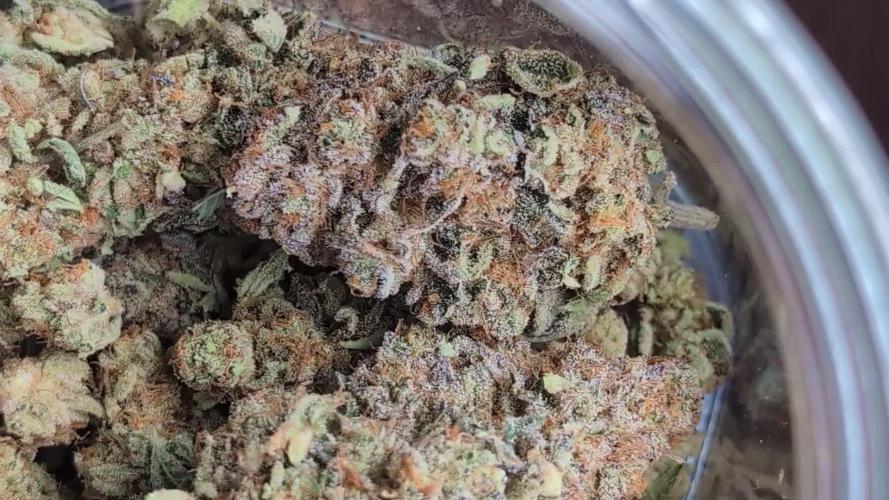
Smell likes Cherry with Gas🍒🍒🍒🍒⛽⛽⛽The cultivation of Arctic Cherry has been a complete success. The plants proved to be incredibly strong, stable, and resilient throughout the entire cycle in their 11L pots. The flower structure is impressive, with dense, rock-hard buds that show the elite quality of Perfect Tree genetics
Likes
2
Share


@Ninjabuds
Follow
My Gorilla Cookies seedling is looking healthy with its deep, dark green leaves. I've been gradually increasing the light intensity over the past few days, which is crucial for autoflowers at this stage. It's definitely time to ramp up the light now, and I'm excited to see how it responds
It's been a challenging week with the constant rain and ridiculously high humidity. Keeping things dry indoors has been a real struggle. Despite the weather, I managed to flip all my feminized photoperiod plants to flower this week. I'm hoping the switch will go smoothly, but with this humidity, it's going to be tough.
Processing
Likes
3
Share


@LittleBigTrees
Follow
Placed the seed about 2mm under damp soil within 48hrs she was above ground 👍


Likes
2
Share


@MT_Farmer
Follow
The plant in the front is showing some sort of stress symptoms. All corners of all leaves are bend upwards. Generally also very interesting to see how different the phenotypes are of the two seeds. I have been feeding as recommended but havent been able to check the EC of the runoff as my meter hasnt arrived yet. So might be to do with the nutrients, maybe light or heat stress. As it is summer right now the temperatures have been quite challenging high
Likes
Comments
Share

@GoodTimesOrganics
Follow
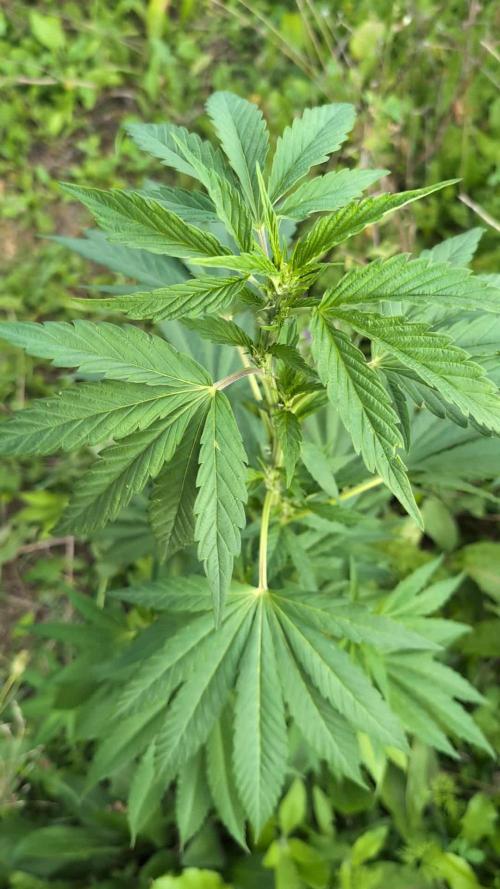
Nach meinem heutigen Besuch an dem Guerillaspot, war ich sehr angetan, wie schön sich der Outdoor Steckling bis jetzt entwickelt hat. Der Steckling war allerdings sehr klein und Jung, dass merkt Mann der Pflanze auch an.
Ich denke die Pflanze hat ihr Höhenwachstum abgeschlossen, da in dieser Woche nicht mehr viel an Stretch passiert ist.
Klar wird der finale Blütenstretch noch ein paar CM bringen, allerdings ist auf Grund der Wetterelage da vermutlich nicht mehr viel drinn.
Jetzt beginnt die Blütezeit und ich bin gespannt wie die genetische Komposition mit den deutschen Wetterverhältnissen zurecht kommt.
Stay Tuned!💚
Likes
6
Share


@Flex1
Follow
Week 7 day 52: Ladies are not drinking as much it seems. Probably will continue to water 1.5gal every 3 days. Gave it some build a bloom today 6/29/22 as a final push. Just water from now on. They are just working on fattening up. Still throwing some white hairs but it is not much and trichomes are 20 % clear, 70% cloudy with the remaining 10% amber from what i can tell. I learned today, while using a microzoom hand held camera, that i am very shaky! I need to rig something up to hold the camera in place to get better pics.

Likes
23
Share


@PapasGrow
Follow
Used 300 watts, produced over 400 grams of dry, extremely dank cookies.
Thanks to top quality genetics, lights and nutrients.

Likes
11
Share


@masterofsmeagol
Follow
6/30 I messed up and put 8 days last week so I'll have tp do a six day week to get back on schedule. Pounded rain last night I guess. Very intense but very brief. As you can see in the video the plants are found great. A few have revegged so I'll need to defoliate the middle. I could make a TON of clones but it's pretty late for that. I might clone a couple outstanding plants to keep the genetics. Still seeing some pillar damage. Might do bt tonight. I'll keep this updated.
7/1 Super hot yesterday. Reached 90°. We are getting SOME rain today and thunder showers day after tomorrow. Bags still had some heft and everything looked good. I went back aroundcand found about half were at the point of needing water. He'll, they probably all did. My watering can is 2 gallons not 1.5 as advertised. So that means I used 5 gallons on the garden (not watering the 50) focusing the more water on the lightest bags. That tenth planet I'm seeing more septoria like leaves. This makes enough for me to be fairly positive ill need to treat it. I have plant doctor but I think copper works better. I also see more pillar damage so I've gotta apply something. I also need to lst more and I keep to clean put the interior of the plants so they don't get pm.
EDIT: IT WAS 80° and no rain at 6:30. Humidity close to 100% bit plants look AMAZING! I'm hoping this may be my best year yet! I won't grow a bigger plant than tjat blue cheese in the 50 but so far everything is looking good. I may add some nutes to the pink kush in the 50 due to tje slightly less green color. I assume it's just because the other soil is all New amd this was a mix. I defoliated lightly to prevent pm but I have more to do. I just wanted to get a video of the girls looking good.
7/2 82° at 9am. Glad I decided to water even thoughvi watered yesterday. I need to up my volume. Thirty degree temp swings don't help much either. I said I used 4 gals but I used 5. I had one phed already. I'm hoping this will be one of my best years. IT looks like it! I won't have that MONSTER blue cheese in the 50. It was the smallest plant anyway and shows the difference between using NEW soil and mixing old soil WITH new soil. It's a much lighter green. Still need to apply bt and do a little more defoliation.
EDIT: IT'S 90° WITH LIKE 100% RH. PLANTS LOOK A LITTLE HEAT STRESSED BUT OTHERWISE PRETTY DAMN GOOD. EVEN MY FATHER MENTIONED (KNOCK ON WOOD) "THAT I DONT HAVE ANY SHOT ON THEM THIS YEAR." LOL. I UPLOADED A VIDEO TO SHARE. HOPE YOU GUYS ARE HAVING AS MUCH FUN AS I AM!
7/3 83° at 9:40a.m. I need to increase my watering volume so I don't need to water every day. I used 5 gallons to water everything but the 50. I think I'm underwatering. However it was supposed to be severe thunder storms with torrential rain, high winds and hail. I'll gratefully take this hot sunny day instead. However in the future I think I'm not goingvto add in the predicted rainfall in my schedule. Unless it's a torrential down pour obviously. Everything g is still looking good and I've still got some work to do.
EDIT: ITS 5PM AND NO "GOLF BALL SIZED HAIL. WE GOT A BRIEF RATHER INTENSE SHOWER. AT LEAST THE GIRLS GOT SOME WATER. IM GERY GRATEFUL THAT WE DIDNT GET THE STORM AND HAIL THAT WAS EXPECTED.


Likes
3
Share
@Chrisandweed
Follow
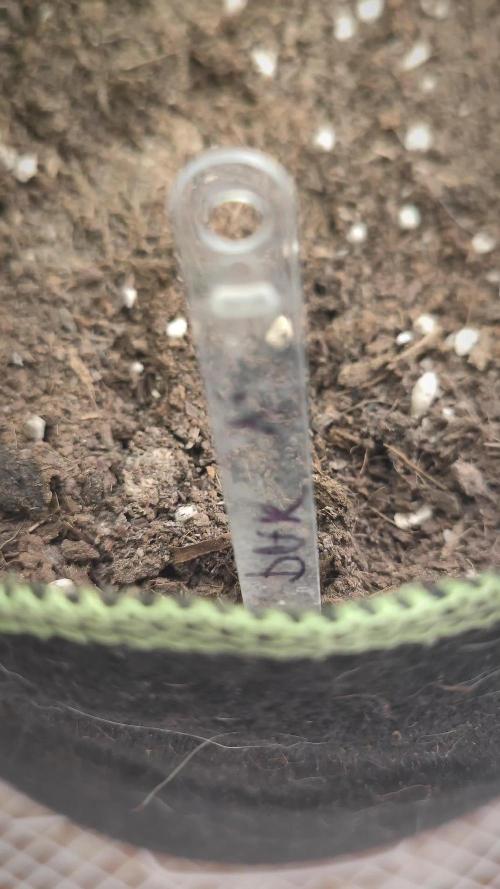
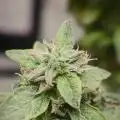
Puues ya va quedando menos y se noota. Ahora si empiezo a ver que están engordando y da gusto verlo jajajaja a ver si las corto en breve que llevo el detox desde finales de abril y fuah! Jajajajajaja le tengo ganas a esto xD
Hoy les toca agua con el Enzym y el Resin, voy a meterle bien para que drene y medirle la EC. Ya va quedando muy poco para acabar con la fertilización y empezar el lavado.

Likes
26
Share


@arkhive
Follow
Hey there! Been so busy that I had to skip week 11. So this will be a summary of weeks 11 and 12.
The plants have employed me alot. We are talking about operation defoliation.
I defoliated half of the plants in 10 hours.
First I was a little bit scared that I may have taken off too many leaves, but when I finally got the whole job done (about 1 week), the first ones had already started bushing again so I'm not worried anymore.
Root rot seems to have been dealt of, which is a relief.
Unfortunately tho, I'm paying a price for fucking up in the first place, in the form of some seeds emerging.
This doesn't move me much tho, even I know what a pain in the ass it will be in the post trimming phase.
I'm glad we got over the root rot and a couple of seeds here and there can't stress me out right now.
I mean look at these BEAUTIEZ!!
There's a couple of mid defoliation photos, they look harsh especially when tied up so I really can get in there.
The hairs have gone very brown from all the touching I had to do defoliating. Even tho I used gloves, they got so brown, but I noticed also new white hairs growing after one week

Likes
16
Share


@Ladyblazed
Follow
Started the 12/12 schedule hoping to see preflowers soon, starting a little sooner with the bud ignitor let’s see what happen

Likes
15
Share


@Flavors
Follow
🌱 Week 4 Update! 🌿
The girls are growing healthy and strong 💪💚
Even with the high temps 🔥, they’re pushing through like champs!
Leaves are lush, stems are sturdy, and vibes are HIGH 😎🌞
💬 How’s your grow handling the heat?
Drop your tips, tricks, or just show off your plants below! 📸👇
Let’s help each other grow better! 💬🧠

Likes
10
Share


@Herbz_Unkraut
Follow
everything looking good so far, plants are quite healthy
check www.sr-organics.com and get a 10% discount on this great 5in1 fertilizer with "UNKRAUT10"
