


Likes
Comments
Share

@GREENPHOENIX6262
Follow
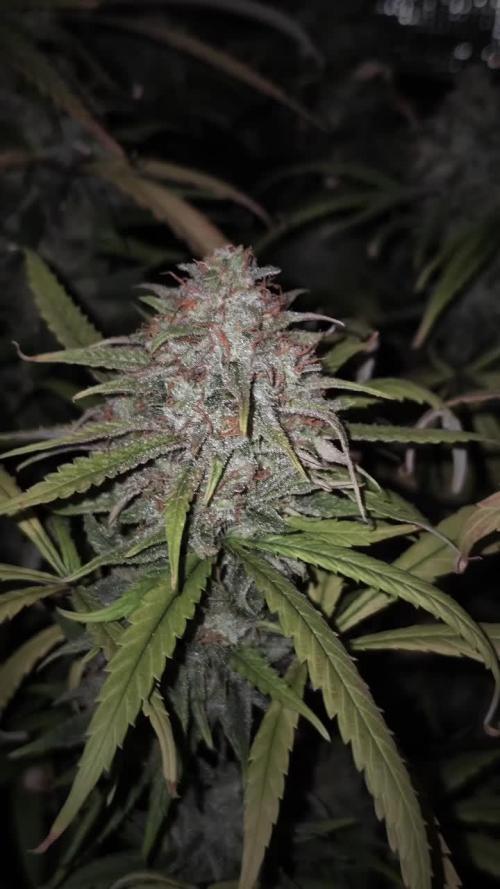
01/06 - Week 5 of flower - Increased nute feed to daily micro-dosing and increased Silica feed - temps running 72 (F) 65% humidity - Using light brown sugar as carbohydrate.
01/08 - Flowering coming along nicely - Light brown sugar for carbohydrate subs seems to be working effectively - micro dosing has continued with one morning feed before lights out and another 2hrs after lights on. Feeding solution temps are approximately 35 (F) - Drop in water feed temps has increased trichome production.
01/11 - Closing out week 5 of flower strong - light brown sugar feeds continue - amber color setting nicely in all the colas - Approx 3 to 4 weeks before cut-down😎😎😎😎🙌🙌🙌

Likes
15
Share


@Siriuz
Follow
I think she is all set now
But I could have waited one more week
But I ran out of soil foxfarm ocean forest
And some other stuff which makes me
Recycle this pot and transplant red poison auto who is right now flowering very fast and good so it is the end for sweet Gelato our first sweet Gelato from sweet seeds
Thanks a lot guys for helping me out. Thanks a lot grow diaries for all your support blessings and lets get this girl harvest alright my dudes will be uploading more content soon at the mean time we will be showing you the bud quality against Quantity and hopefully you will see how STRESS this girl was for an auto we know now that they are good for LST and HST better than any other techniques and just some auto like the ones you mix with thai Legendary genetics will grow very fast and recover very good reason why its better to apply fimming to autos that can run fast over recovery because without that gap you Cant use those techniques since the plant wont allow you its genetics are going to get STRESS and wont yield as much as it is supposed to
But other than that is the real fact that this lady was under phlizon lights 600W
And sadly we found out those are not
Full spectrum lights so we are
Very eager to join contest and try to win
With the support of the whole community
So we can continue to grow and show
The world ah educational and real
Pot smokers team all active in all social networking to point out this is love
For all the world back and forth
Thanks a lot please join me
Please like share Comment
Leave your thoughts
I do appreciate every single one
Hope you guys have a happy growing and happy harvest as well
Enjoy SuMMer will come soon
Are you ready?

Likes
45
Share


@Frosty_Organics
Follow
🗓️Week 4 VEG
´⊱╮🐢╰PLANT UPDATES ╰⊰´🐢⊱╮
📝 Notes - She is looking great. On week 3, I made a Boo Boo with the Neem Oil and forgot to rinse the residue off. Yup, You got it burn 🔥 lol. For the rest of week 3 light was at 60% @ 30” off canopy. Monday she snapped out of my mistake and went back to 75% @ 30”” off canopy. Set me back a week for flower . DLI is 20-24, PPFD 320-400. This seems to be the sweet spot for her in my opinion. VPD is on point 1.2- 1.4 😎 Friday I decided to give the lady a Foliage Spray with Silica and a little Cal-Mag to help get ready for more light. Was at 25%@30” while she was drinking the spray. After I kicked it up to 85%@30” 400-450 PPFD, DLI 24-26 👌 see if she can take it lol. Nope she did not like the extra ☀️, back to 75%@30” until flip, this is definitely this strains sweet spot for veg. That’s all for this week 🤗
🔶Sunday 12-5-21, LST and removed a few lower fan leafs
🔶Monday 12-6-21, NA
🔶Tuesday 12-7-21, Top Fed with 1/2 gallon Tea, 2G tea made, 1tsp Terp Tea Veg, 3tsp Kelp meal, 1tsp Ful-Power Humic Acid.
🔶Wednesday 12-8-21, Top Dress for Flower, 2 weeks before flip. 4 cups Malibu Compost, 1 cup Kelp meal, 1 Cup Rose and flower mix, 1 Cup Granular Humic Acid, 5 tsp Build a Bloom. Mixed well. Water in just a bit. Topped off with 1 cup ClackamasCoot Gnarly Barley.
🔶Thursday 12-9-21, LST, remove inner top 2 new branches to keep mainline.
🔶Friday 12-10-21, Leaf wash today, made 1/2G, 2 mill Por Tec silica, 1 ml Cal- Mag. Ramped up light to 85%@30”.
🔶Saturday 12-11-21, Turned light back down to 75%, showing a little light stress. Filled Earth Box reservoir 2G plain water.
🐢Crop Kings Blueberry Badazz OG Fem- ViparSpectra XS2000 240W Infrared Full Spectrum LED Grow Light🐢
🏡Indoor - 36”x36”x70” Vivosun
🌞Environment - 78 and 65%Humidity - using Humidfyer as needed.
🌾LST and Defoliation
⚱️10-Gallon, DIY Earth Box, No Till 3rd run
💧 Feeding / Using Down to Earth Dry Organic Amendments - Kelp Meal,Rose & Flower Mix, Azomite, Granular Humic Acids, Roots Organics Terp tea VEG & BLOOM, Build A Bloom, ClackamasCoot Gnarly Barley, Ful-Power Humic Acid.
🌞ViparSpectra XS2000 240W Infrared Full Spectrum LED Grow Light
🕷️ IPM - Will be using Neem Oil, 1 Tsp per Gallon, and Aloe for Integrated Pest Management.
╰⊰🐢╰⊰🐢´⊱╮╰⊰🐢╰⊰🐢╰⊰🐢´⊱╮╰⊰🐢╰⊰🐢╰⊰🐢⊱╮
🐢Strain Overview
Stimulating yet relaxing, just a few qualities that you should expect when you grow Blueberry Badazz OG. This feminized strain offers a full-body relaxing effect, as this is a dominant indica strain. It will make you feel alive, joyful, happy, and focused with its steep THC levels at 24%. You’ll also love its satisfying berry, sweet, and earthy aroma.
🐢More About Blueberry Badazz OG (fem)
Blueberry and OG kush in One Exciting Package! Would it be possible to savor and enjoy the invigorating tastes and effects of OG Kush and Blueberry? Yes, you can! The answer is Blueberry Badazz OG. Save the name in your mind as you learn what you can get out of her.
Blueberry Badazz OG induces a stimulating but relaxing full-body relaxation because she’s indica. She can also make you feel alive, happy, joyful, and focused but only for a limited time. Her THC content is quite impressive, as it plays between 19-24%. She is incredibly potent!
For aroma and flavor, Blueberry Badazz OG will satisfy you with a combination of tantalizing notes and hints. These include berries, citrus, sweet, and earthiness.
Cultivating her would be a rewarding experience for anyone. With her medium height and compact structure, she can be grown indoors under controlled conditions. Growing her outdoors is also okay. The flowers are ready to harvest in 7-9 weeks. Massive yields will come on your way!

Likes
8
Share


@MadeInGermany
Follow
Flowering day 13
since time change
to 12/12
Hey guys :-)
The ladies are developing really well 😊.
Was poured 2 times with 1.2 l each (groundwater see description at the bottom)
It was started with the bloom fertilizer.
Everything was made clean.
Fresh osmosis water is applied and the plants are sprayed and checked.
Stay healthy 💚🙏🏻
👇🏼👇🏼👇🏼👇🏼👇🏼👇🏼👇🏼👇🏼👇🏼👇🏼👇🏼👇🏼
You can buy this Nutrients at :
https://greenbuzzliquids.com/en/shop/
With the discount code: Made_in_Germany you get a discount of 15% on all products from an order value of 100 euros.
👇🏼👇🏼👇🏼👇🏼👇🏼👇🏼👇🏼👇🏼👇🏼👇🏼👇🏼👇🏼
You can buy this strain at :
Greenhouse seeds Company
Water 💧 💧💧
Osmosis water mixed with normal water (24 hours stale that the chlorine evaporates) to 0.2 EC. Add Cal / Mag to 0.4 Ec Ph with Organic Ph - to 5.8 - 6.4
MadeInGermany

Likes
22
Share


@Smith420
Follow
Haven’t been able to really check in daily. Been letting it go too dry I think and then messing up by over watering to try and compensate. I added nutrients in hope to make things healthy again but it seems to back fire yet again 😂. At least with this being my first grow I’m learning about the plants life cycle, the environment and myself. I will not be making the same mistakes. A part of me wants to dump all the existing plants and just start over fresh but I want to learn about the curing and harvest as well so if I do so then I’ll be taking away from the new growth in learning being my first time. I also ordered 2 books to help me get a little more educated. I will post the books later on I can’t recall the names of the top of my head rn. Anyways best of luck and blessing to everyone out there trying. 😎


Likes
7
Share


Likes
17
Share


@Silky_smooth
Follow
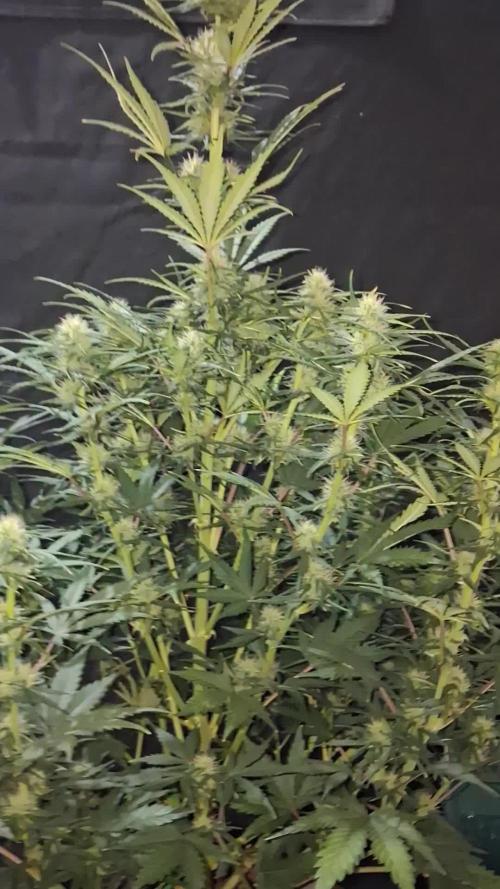
She is doing lovely
She has been grown under the amazing powerfull xs2000 by viparspectra and if you decide to order at viparspectra feel free to use the code SILKY and get Some discount
https://www.viparspectra.com/?aff=435&utm_source=affiliate

Likes
2
Share

@Elguacho420
Follow
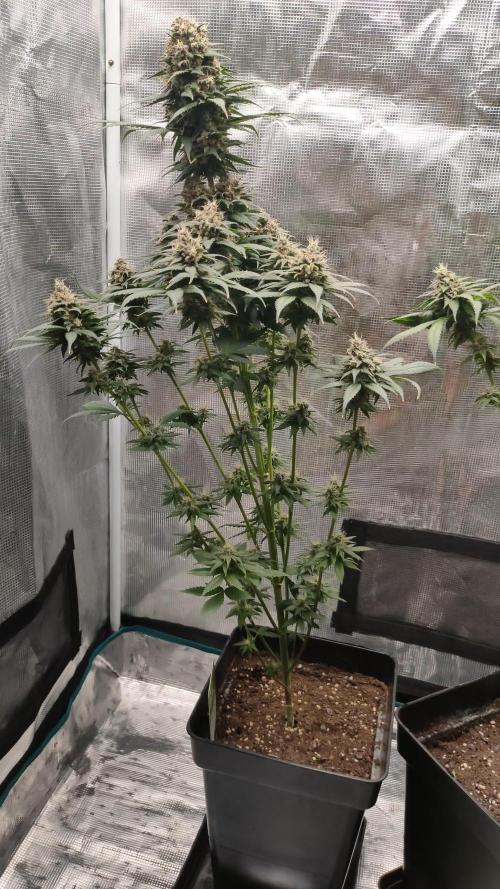
Buenas a tod@s.... Última semana de estas preciosas niñas, se han vuelto demasiado grandes, cogollos duros como el acero y pesdos como rocas... Entre hoy y mañana ya le doy el último riego con agua sola y después corte y a secar, con la calma... Cómo cada cultivo es hermoso ver crecer estás plantas, aunq las variedades son las mismas son muy diferentes q, como los hermanos o los dedos de la mano... Me pone contento y al mismo tiempo triste terminar con ellas, pero para eso están... Espero q les halla gustado el proceso de mi humilde crecimiento, espero sacar buen gramaje y llegar a un buen número, el próximo diario ya será de cosecha... Buenos humos para todos... Un saludo... 💨🙏🏻💪🏻🤗
😎💀🇦🇷🤝🏻🇪🇦

Likes
13
Share


@Limelight
Follow
This week completes the first week of flower for unknown. Stretched a little bit and I assume there will be more so, I’m continuing to weave her through the net for middle and final stretch. This also starts a new 3 week nute feed (thanks to dr earth 👏👏) so honestly I’m just continuing to lower humidity and slow rolling it.
The wwa however is coming along quite well I might say. The main issue if any at all has been low ph and I’ve been watering with higher ph to correct that but, she’s been stretching and doing her own thing. Really wish I would’ve waited to see her full potential under better lighting and time but, this is a first grow (also excuse 😏) and I’m honestly more excited to get the first grow under the belt, rather than maximum yield (though max would be nice 😎) hopefully next time… Thanks for stopping by this week ✌️.
Likes
26
Share


@Bakeryguy420
Follow
Everything is moving along so nice!! 11 outta 12 are flowering . Running my lights 24 hours ! Temps around 74 and 78 . Tangie , sweet creme and gg4 are getting really frosty and starting to fill in. Ogesus number 1 is 5feet tall very impressed excited to to see what they all look like in the next month :). Very pleased with this run .

Glueberry Auto · Expert Seeds
Gorrila Glue #4 Auto (Expert Gorilla Auto) · Expert Seeds

Tangie Auto · Fast Buds
Sweet Cream Auto · Expert Seeds

Amnesia Haze Auto · Vision Seeds

Amnesia Gold · Pyramid Seeds
OGesus Auto · Expert Seeds

Royal Haze Automatic · Royal Queen Seeds

Caramella Auto · Custom Breeder & Strain
Rhino Ryder Auto · Fast Buds

Fugue State · Mephisto Genetics
Processing
Likes
16
Share


@MG2009
Follow
12/20/2018
Got some Omaha Steaks in mail today so I put a little dry ice in tent to see what happens, temps maybe too low to utilize extra c02 but we will see. Other than that all is well . I have chosen 2 distinctly different phenotype to grow out
#1 is short stocky, fat leaves
more Indica leaning. #3 is more pale green more lanky, thinner leaves more
Sativaish, but definitely some Indica traits as well.
#1 very healthy , #3 a little behind, but in my opinion sativas are slower than indicas, to grow any way. Maybe need different feeding schedule as well we will see.
12/26/2018
Was planning to flip on Jan. 1, but I want to clone the Indica leaning one she is showing great growth and structure,and grows twice as fast as her sisters,(maybe a male?) Hope not cause,she is fastest growing plant i can remember growing. Beautiful fat chunky leaves, and great internodal spacing,and a nice lush green leaves.
Likes
6
Share


@LX1977
Follow
J36 arrosage avec engrais (1,5 litre/plante)
J38 arrosage eau (1,5 litre/plante) légère defoliation.
J40 arrosage avec engrais (1,5 litre/plante)
J42 arrosage eau (1,5 litre/plante)
Likes
151
Share


@PEAKYPLANTERS
Follow
Hi guys, Welcome back to Queen Peaky's Grasslands
This week we will dedicate it to just rinsing the soil to discard all excess nutrients😎
You can already perceive some excellent smells👻
If you liked my work leave a like 😉

Likes
13
Share


@Sativa974
Follow
Dos si dos 33 naissance le 7 février, passage en floraison le 24 avril.
Plante vigoureux tige forte tout va bien pour le moment...rempotage une semaine avant le passage en floraison dans un pot de 30 litre, mélange de batmix, humus de lombric,terre et guano chauves-souris. Arrosage seulment à l'eau du robinet, que j'ai laissé reposer 24heure,arrosage entre 2 et 3 jours environ 2.5 litre d'eau.
Likes
6
Share


@Terp_Derp
Follow
Do far so good. Fattening nicely. Going to give last nutrient feeding this week and flush around 04/04

Likes
15
Share


@Bluemels
Follow
Tag 77: Seit heute die volle Düngemenge!
Nur das Klima ist ein Krimi 😱 wir haben aktuell hier viel Regen, zwischenzeitlich recht warm, also ein ewiges hin und her.
Gestern hatte ich dann schon die ersten Trauermücken 😩 Da hab ich nicht lange gefackelt und Entfeuchter in die Grow Boxen gestellt, dafür ist es nun aber mindestens 1°C wärmer in den Boxen. Wenn es draußen nicht zu warm wird könnte es klappen.wenn.....
Tag 80: Aktuell haben wir hier ein Subtropischen Klima, ich habe Temperaturen in der Box von bis zu 28°C, Abkühlung in der Nachtphase ist auch nicht mehr möglich.
Doch meine Pflanzen stecken es soweit gut weg, sie sehen sogar noch vitaler aus 😍
Likes
11
Share


@TheBulldozerSicily
Follow
Martedì 22/11/2022
innaffiato con solo acqua a PH regolato
Giovedi 24/11/2022
innaffiato con solo acqua a PH regolato
Venerdi 25/11/2022
Upgrade Lamp fc-e 6500 > fc-e 8000 (Black Friday 😅)
Sabato 26/11/2022
8 lt demineralizzata 800ml rubinetto ec 369
Aggiungiamo 16 APT 8pl enzimi ¾ cucchiaino silicate 8g m eda bud
ottendo Ec 1768 Ph 6.3


Likes
10
Share

@ThatsmyGrow
Follow
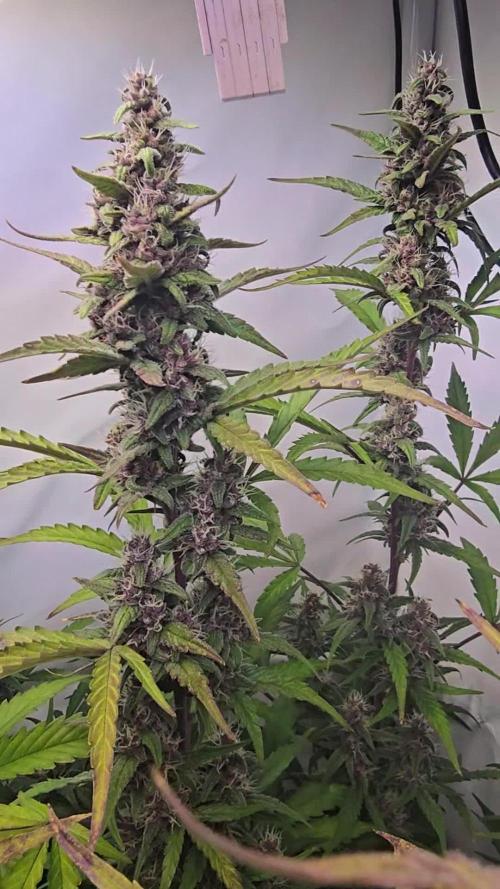
I like how the buds get bigger and bigger.
Its a very special strain, need to grow the banana purple punch more.