


Processing
Likes
Comments
Share


@CityFarmer
Follow
Hello everyone,
Not much to say about this girl. This week I started giving her some nutrients so lets see how she turns out now...
See you guys next week.. 🤘🤘👊👊👊

Processing
Likes
10
Share


@Naturalist
Follow
Still perplexed with the tip burn but I don't think its a disaster, 2 more weeks until harvest or 3? no rush.

Likes
4
Share


@Organic473
Follow
Defoliated the inner leaves and noticed her stretch was inevitable. This could be her last week in veg mode as her stretch is extreme and I would like to avoid breaking when shows up the buds.

Likes
2
Share


@Autower
Follow
Week 10 not long now these smell amazing like sweet blueberry and there's definitely something I've had before when I've bought some personal but can't quite get my head round the smell. started introducing overdrive now as they start to finish fattening and ripening up can definitely see swelling going on over the last 3 days thanks for viewing and happy


Likes
13
Share

@GreenEldritchGardens
Follow
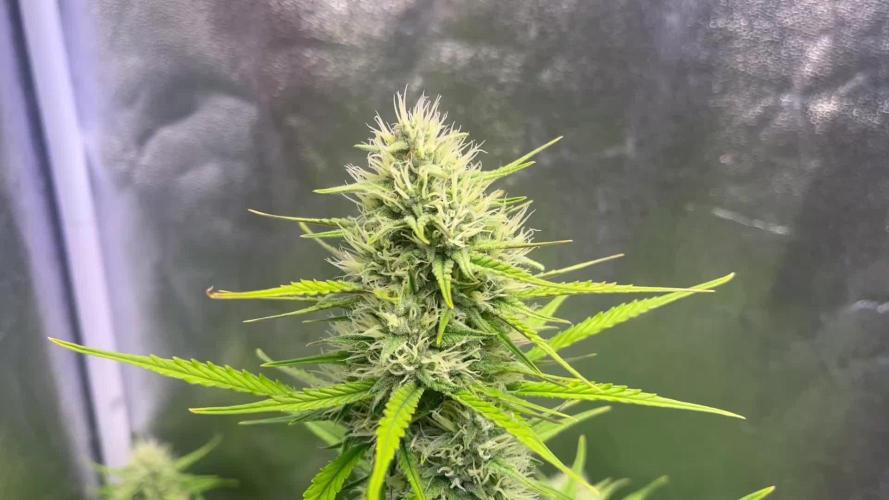
The smell is amazing, some Zkittles with gelato, very Sweet but with some Diesel background. Very fat buds and strongest smell in the tent so far!
Likes
11
Share


@TheUk420Show
Follow
Hi Guys Sorry I havent got around to updating this Ive been moving stuff around and having a clear out in my flat we have decided to kit out the room and try to get a little bit more yield from some more plants which new diary will be created for both rooms :) starting with jack herer clones around 28 I have :) around 4 LED lights so far 2 10 inch extractors and a shit ton of fans lol these plants had to be moved to a friends house in order to set them up but they are still alive and kicking that is my friend on the video the first two plants are mine :) the first one is the melon and the larger one is the gorilla :)
Likes
6
Share


@SonGoku848
Follow
Fine 4 settimana di flow procede tutto bene 2 LH2P mangiano di più rispetto le altre, alla fine le due ermafrodite dopo aver eliminato i rami con i fiori maschi non se ne sono più formati quindi ottimo ormai dovrei essere fuori pericolo ma continuo a controllare

Processing
Likes
7
Share


@Kushizlez
Follow
Day 70-77
(Day 71) Not exactly sure why but node spacing on bbb 6&7 is super tight still. Their stems are also harder and less bendy, almost like they’re root bound.
Bbb #5 in my veg tent is looking bizarre and I’m at a loss for what to do. I’ve been looking up and asking around about the leaf crinkle and no one seems to know what’s wrong. Trashing a pheno of this would hurt. It could be a keeper too as I don’t think the problem is genetic. It’s definitely root bound but that doesn’t cause contorted new growth like that. I’ve concluded that it’s my dense soil coupled with root bound issues, overwatering and high RH.
(Day 72) Later tonight I’m going to give bbb 5 a bath tub flush until it’s reading 200ppms, drain it well and then transplant into a 3g pot with lightly amended soil. I’m also going to give it a light defoliation. I don’t mind stressing the shit out of this plant right now because I won’t be flipping for another week at least. With the small container it will run out of amended nutes mid flower so I will hit it with a few synthetic feedings around then to test out the smokabilty and taste compared to organic nutrients.
I might as well give the rest a good defoliation on the rest of the plants too. I will try to get most of what is under the trellis.
(Day 73) I definitely defoliated #7 waaay too much. Since it’s tucked away in the corner and a really bushy plant I can’t train it as well as the others. I cut most of the sucker branches and the majority of the lower fans. This should prevent the need to defoliate at all until week 3 of flower.
(Day 74) I’ve been reading that higher temperatures with a high RH can affect growth big time. It could be what’s causing all the crinkling and twisting. And now that the plants are in very late veg they could probably benefit from a lower RH. When I was running my temps around 74-78F and 70% RH I was in the perfect range. Now that I’m around 82-86F with the same 70% RH that could be what’s causing it. Hotter air holds more moisture than cooler air and proper vpd at 84F is around 75-80%. I’m going to turn up the speed on my carbon filter and set my controller to 75%. If I don’t see a difference or it gets worse I will drop to 65 and go from there.
(Day 76) I finally got the lights raised up another 4 inches or so. It’s not much but it should help reduce the intensity and stretch the nodes more.
I’m starting to think the super tight node spacing and droopy/contorted growth has more to do with something I’ve been reading about called ‘soil compaction’. Apparently farmers often deal with compacted soil in fields from running tractors over it all day. When I potted the plants I gave them a good little jiggle to compact the soil down further so I could fit a bit more in the container. I think this could be the culprit as they don’t seem to be drying out evenly. Even the plants in my other room are not drying out like they should and it’s probably from compacting too. With the addition of rock dust and dry amendments the soil can become sandy/clay like and retain a lot more moisture. Wish I would have added a few more liters of perlite and packed the soil a bit looser. Either way I need to get this problem sorted ASAP before I get root rot.
Earlier in the season when I overwatered, I stuck a fish tank air pump into the soil and it aerated the soil enough to prevent overwatering. The only reason I discontinued it is because it didn’t have much effect in the 1.7g pots. I just ordered a 36w 6 way fish tank pump that is way more powerful. It was 50 bucks and I’m willing to take a gamble on it. It seems to be my only option at the moment because I can’t just repot. Worst case scenario I can use it for brewing compost teas if it doesn’t work. I’m not sure how well this will work in a giant fabric pot but it’s worth a shot. I’ve heard of people supplementing additional air into raised garden beds with great results.
I’m picking off some of the new auxiliary branches to try and widen the node spacing. Growth is definitely slow and stunted but no signs of deficiencies.
I just thought of another theory on the node spacing... and the more I think about it, the more I think it’s the mystery problem. I’ve been foliar spraying with 1-1-1 VeloKelp at pretty high concentrations 2-3 times per week. I have heard in passing that kelp and seaweed can somehow reduce stretch. A quick google search reveals that Ascophyllum Nodosum Seaweed and other marine algae extracts contain large amounts of hormones and auxins that reduce plant height and stretch. *facepalm*
Guess I’ll stop that for the rest of the cycle. As far as I know there is nothing I can really do but wait for the plant to use up all those excess hormones and nutes. The recent 0-0-15 seaweed extract and 1-0-3 kelp meal I bought is derived from the same kind as the velokelp. I guess I won’t use it again until week 3 or 4 in flower. Tight nodes are very useful in flower but aren’t desirable at all in when trying to scrog in veg. Especially when they’re like a half inch apart. It slows the shit out of a grow. Vietnamese and biker gangs in my area used to grow SOG style and use a synthetic PGR hormone (meant for bonsai trees) called ‘paclobutrazol’ that would make the weed rock hard dense so they wouldn’t have to pay people as much to trim it. I’ve heard that in recent years they have made the switch to using kelp extracts because paclo is getting harder find and is not meant for food crops let alone smokeable crops. I’m ashamed of it but I have smoked pounds of PGR weed long before I knew what a PGR was. 🤷♂️
(Day 77) One more theory. Ever since raising up the plants up onto that shelf the root zone is probably significantly warmer and the bottom of the pot (where most of the roots are) drys out way quicker. It’s possible that the warmer root zone could not be holding dissolved oxygen at the proper rate resulting in that over/underwatered look. Or it could be that I’m not watering enough at once to reach the bottom of the pot where the roots are and it’s indeed under watered. I’m going to water in a gallon when I get my new air pump and see if that makes any positive change. If I see the new air pump making a difference, I will flip on the 21st of April. If I don’t see a difference, I will carefully untangle the plants from the scrog net and remove the shelf. That extra foot should make a massive difference with ppfd and will cool down the roots significantly too. I’m thinking about grabbing a simple soil/compost thermometer to check the temp of the medium. Better safe than sorry.
Rough week. Hopefully everything get smoothed out in the next little while before I flip.
Likes
27
Share


@LockDownGrow
Follow
this girl grew close too the same size and same shape as the California snow and looks the same and is growing the same rate ,
she is also drinking about 8 pints of feed a week , bud production is coming along nicely but i really hope she swells up alot more before she ripens up ,
but so far so good with absolutely no problems at all and looking a picture of health as are they all ,
Likes
5
Share


@FourVentiFarms
Follow
So since I had the mold and bud rot problems I had to divide my schedule of harvest and divide the product as well.
- Healthy buds are ones belonging to branches where there are no signs of rot/mold.
-Mid-healthy buds are untouched by disease but still belonging to a branch where there was some disease.
-Last category are the salvaged ones, where I cut them from bigger buds that had disease or they were in some part affected.
These 3 categories each have their own drying space and where harvested in this order to prevent spreading of spores and stuff. For the salvaged buds every time I removed a part with disease I cleaned the scissors with alcohol.
I only removed the sun-leaves + penguin leaves and will be doing a dry trim for the sugar leaves later on.

Likes
7
Share


@FruitBud
Follow
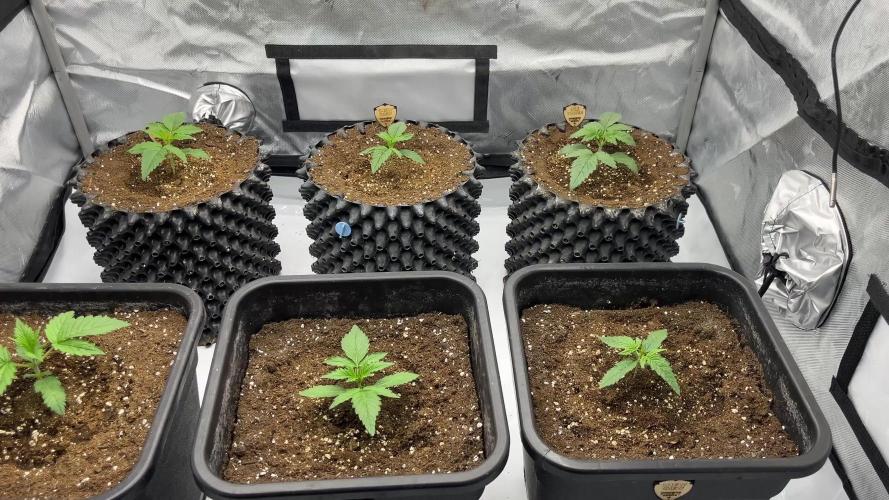
Un video della moby mi scuso per la qualità e il rumore fastidioso sotto,devo dire che sta fiorendo bene sono contento comincia a brillare come piace a me.🐋❄️




Likes
47
Share

@Terp1
Follow
07.02.2026
Trichome 10% klar / 80% milchig / 10% Bernstein
Yippie 👋 das Erntefenster ist erreicht. Ich werde die beiden in den nächsten 3-5 Tagen wahrscheinlich ernten. Sie haben das bis hierhin großartig gemacht. Das war ein astreiner Grow. 💪
Die Terpene der Papayton sind wild. Frucht, süß, zitronig sauer, Orangensaft, etwas Gas und Keks.
Biscotti Gelato legt auch langsam nach. Sie riecht lecker nach Erde, Gas und Teig. Geht aber neben der Papayton deutlich unter.
Terp 👽
Likes
241
Share


@Tropicannibis_Todd
Follow
💩Holy Crap We Are Back At It And Loving It💩
Growmies we are at DAY 14 and she's doing really well👌
So I'm starting to pull her over and do some low stress training 🙃
She now gets full feeding from this point 👉 NutriNPK
Lights being readjusted and chart updated .........👍rain water to be used entire growth👈
👉I used NutriNPK for nutrients for my grows and welcome anyone to give them a try .👈
👉 www.nutrinpk.com 👈
NutriNPK Cal MAG 14-0-14
NutriNPK Grow 28-14-14
NutriNPK Bloom 8-20-30
NutriNPK Bloom Booster 0-52-34
I GOT MULTIPLE DIARIES ON THE GO 😱 please check them out 😎
👉THANKS FOR TAKING THE TIME TO GO OVER MY DIARIES 👈
Likes
7
Share


@WakeAndBake
Follow
I'm surprised 😮 about the difference between now and last week ...they became really 😳 monsters 👻 👽 I'm very happy with this grow I can say #RipperSeeds are one of the best 👌

Likes
9
Share


@TiRobotProds
Follow
8e Semaine de floraison impeccable grossi bien chargé en résine irrigation a l'eau uniquement durant les 2 dernières semaines. J'ai vérifié les colas es celle-ci c'est fait polinisé par le male Sour tangie dawg mais rien de grave quelques graines, cela me permettra d'avoir une nouvelle génétique issue de ces deux plantes donc a voir ne pas ce précipiter. Elle dégage une plus douce odeur durant ces derniers jours.

Likes
6
Share


@Headies
Follow
I topped and trained them two more times. I also lolipopped them, that is cut the bottom 2 sets of leaves and branches.
Likes
Comments
Share


@Kanokush420
Follow
these 2 girls have been a wonder an a half to grow. !!
#2 is finishing alot faster than #1 but its about half way through flower and #2 has just taken off from the beginning rich thick colas with dense stinky purple nugs.
#1 is a real tall with a few thick long colas really showing off her legs this one.🤙😁