Likes
Comments
Share
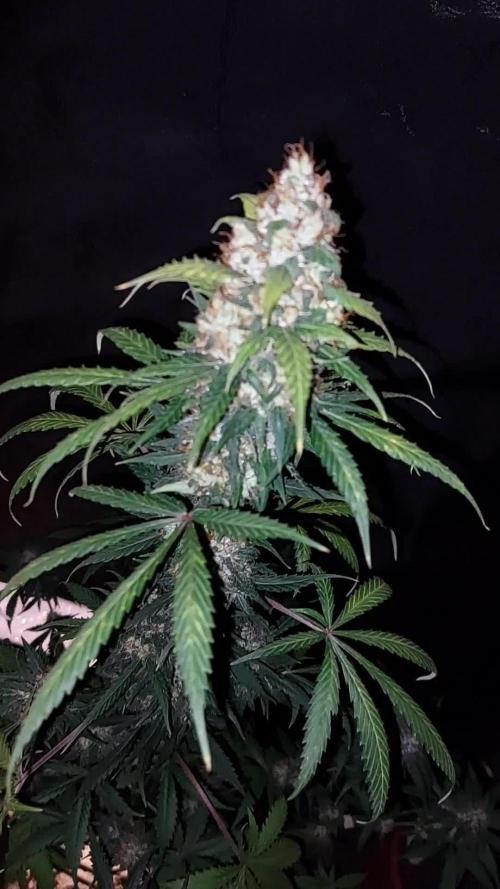
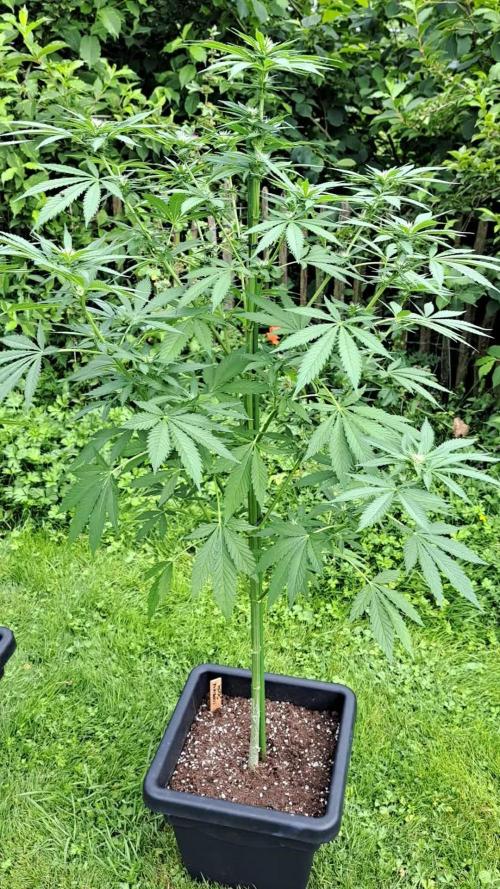
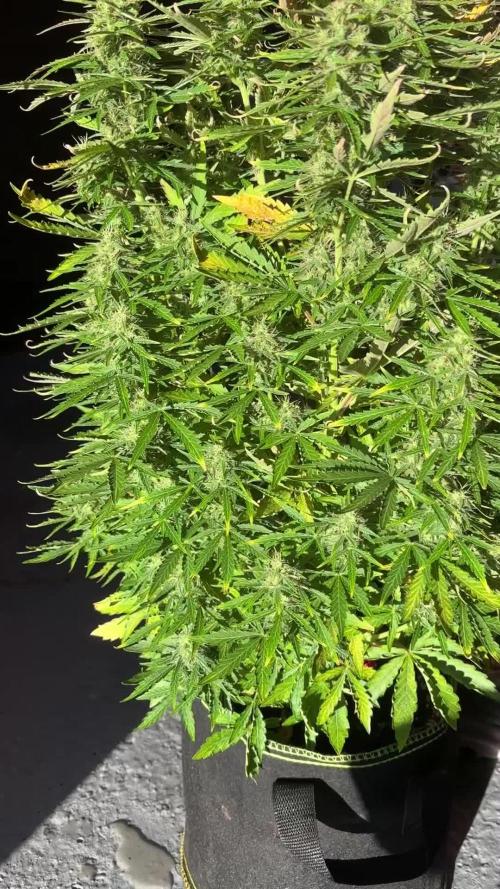
Day 57. I’m going to alternate water only and 50% feed now to finish. All 3 have their own minor issues but nothing of concern I don’t think. Hopefully they continue to swell. Still lots of white pistils. A good 20 days left as yet if the plant lets me push that long.
Likes
8
Share
We continue to mix our own nutes, but I started also testing Nutra Hydro . One rack only for now. Next project is upcoming for organic beds or huge pots. STAT TUNED BROTHERS ANS SISTERS ! Grower love ❤️❤️❤️!!!!
Likes
7
Share
This was a very pleasant strain to grow!. It kept short, bushy and controllable. It would of yielded more if it wasn't taken over by the sativa dominant love potion, which I'm fine with because I enjoy the variety. I also made a couple newbie mistakes which effected yield and I'm hoping to avoid them next round. It was exactly what I was looking for flavour wise, which I'm very happy about, and they were completely loaded in trichomes and the smell is amazing. The flavour in my vape is exactly how they smell accompanied with earthy taste and a potentcy shutter. This will definitely keep me satisfied until next variety is ready.
Likes
54
Share
@MrJones
Follow
MrJones Cream Mandeiran Auto XL - ViparSpectra XS2000 240W Infrared Full Spectrum LED Grow Light ´🍪⊱╮🍪╰⊰🍪 WEEKLY GOALS 🍪╰⊰´🍪⊱╮🍪 🏡Indoor - 3"x4"x8" Custom Built Grow Closet 🌞Environment - 80F and 60%Humidity - using Humidfyer as needed. 🌾LST and Defoliation - this strain likes to stretch! 🗓️Week 6 Flower ⚱️5-Gallon 📊6.2 PH 💧 Feeding / Using Dr. Earth Dry Organic Amendments - Home Grown & Bud / Bloom Booster 🌞ViparSpectra XS2000 240W x2 Infrared Full Spectrum LED Grow Light 🕷️ IPM - Will be using Green Cleaner" 1 OZ per Gallon, and CannControl from Mammoth alternating between products each month for Integrated Pest Management. ´🍪⊱╮🍪╰⊰🍪 PLANT UPDATES 🍪╰⊰´🍪⊱╮🍪 📝 Notes - Started the week off with a Treatment of Mammoth CannaControl - Looks like the ladies are done with their stretch, time to focus on VPD and Bud Growth, with the ViparSpectra XS-2000's should no problem supplying the light needed, these girls have just blown up! ╰⊰🍪╰⊰´🍪⊱╮🍪╰⊰🍪╰⊰🍪╰⊰´🍪⊱╮🍪╰⊰🍪╰⊰🍪╰⊰🍪⊱╮ 🔶Sunday 07.18.21/ Just watering with H20 PH-6.2 🔶Monday 07.19.21/ This run continues to be easy peasie! Just add water! 🔶Tuesday 07.20.21/ Using H20 PH 6.2 / 6.6 🔶Wednesday 07.21.21/ Buds are starting to fatten up starting to get SATINKT! Using H20 PH 6.2 / 6.6 🔶Thursday 07.22.21/ Dr. Earth and Water - Did not think it would come out so nice 🔶Friday 07.23.21/ Just using H20 PH to 5.8/6.2 🔶Saturday 07.24.21/ Just using H20 PH to 5.8/6.2 ╰⊰🍪╰⊰´🍪⊱╮🍪╰⊰🍪╰⊰🍪╰⊰´🍪⊱╮🍪╰⊰🍪╰⊰🍪╰⊰🍪⊱╮ Cream Mandarine XL Auto®️ Information Tall-stemmed auto-flowering strain. This high-yielding 4th generation auto-flowering strain is the resulting hybrid from the cross between selected specimens of our Cream Mandarine Auto®️ (SWS29)) and a Super Tai’98 elite clone. The genetic coming from the Super Tai’98 elite clone contributes with interesting Sativa characteristics to this hybrid, such as bigger size, but also subtle aromatic and spicy tones with hints of wood and nuts. The so much appreciated Cream Mandarine Auto®️ genetic contributes with traits from the Indica side, such as high flower and resin production, but also sweet and fresh aromas with tones of citric fruits of the mandarin orange type. DATA SHEET Variety SWS55 Indica: 35% / Sativa: 63,4% / Ruderalis: 1,6% THC: 18-23% · CBD: 0,6% Indoor Yield: 450-650 g/m2 Outdoor Yield: 50-300 g/plant Indoor/Outdoor Harvest: 9 weeks from germination Height: 110-150 cm
Likes
17
Share
@MG2009
Follow
07/30/2023 Begining week 3 of veg and growing. AK #1 up to 9.5", AK #2 is up to 6.",, Bruce Banner is up to 9". Hope for big growth this week🙏🏻 I will do no training for fear of slowing them down. But top dress with 5-2-4 and will change to flowering food 08/03/2022 Week #3 day 4 Bruce Banner is showing some pistols, starting to feed Big Bloom, first of her biweekly feedings Description of Bruce Banner Auto - Ganja Farmer Seeds Are you in search of a real hidden strength and power? The solution is an autoflowering strain Bruce Banner Auto from Ganja Farmer Seeds. It is an extremely productive Sativa-dominant plant. The concentration of THC can reach even 25%! Those traits do not come as a surprise as it is based on Bruce Banner and Gorilla Cookies Auto. It can grow up to 130 cm. These feminized marijuana seeds are unusually productive. What is the aroma of this potent strain? A delicate fruity and flowery aroma combined with earthy notes. The effect is surely strong and affects mind and body. It is long lasting and will stimulate imagination of every cannabis enthusiast. Data sheet of Bruce Banner Auto Genetics: Bruce Banner x Gorilla Cookies Auto Flowering type: Autoflowering Strain type: Autoflowering Sex: Feminized Indica/Sativa/Ruderalis: 41,1/58,7/0,2 % From seeds to harvest: 9 weeks Height Indoor: 50-110 cm Harvest Indoor: 400-500 g/m2 Harvest Outdoor: 50-150 g/plant THC: 18-25 % CBD: 0,1 % Taste: Fruits, Sweet, Earthy, Diesel, Floral Effect: Happy, Creativity boosting, Stimulating General specification of Bruce Banner Auto Brand Ganja Farmer Seeds Seed type Seed type Autoflowering Sex Sex Feminized (100% females) Flowering type Flowering type Autoflowering From seed to harvest From seed to harvest Very short (up to 65 days) Indica or Sativa Indica or Sativa Mostly Sativa Height Height Short Yield Yield High THC content THC content Very high (+20%)
Likes
28
Share
First week of flower👏 They got 2 hours extra darkness before flip. Not because of scientific evidence, but simply practical. Still looking back to the first weeks of veg. WHAT A MESS and WHAT A MIRACLE 🙏 Coming into flower, they had two defoliation and the latest one was 7/10. Last feed 8/10 Introducing Biobizz CalMag(0.5ml/l) + BioBloom(0.25ml/l)+Topmax(0.25ml/l)+Rootjuice(0.25ml/l) Still 2ml/L Fishmix+BioHeaven(Fishmix will be switched out with BioGrow) 👽👉10/10 VPD is 1.2,-1.3. good airflow above and below canopy. 👽👉11/10 Mild signs of light stress. They will get used to the VPD. Can't wait to feed in a couple of days and see the reaction. Im sure they are really hungry! 👽👉12/10 Waterday** Introducing higher doses of bloom nutes. The Run off PH and EC are all within the limits 👽👉13/10 They lit up after some nutes. They look happy! Let the stretch begin 👽👉14/10 Already see fast growth. Just monitering factors, to make sure the climate is optimal and their are no symptoms. 👽👉15/10 Waterday* Thirsty ladies 👽👉16/10 Last day of week 1 of flower. Everything is going fine, Good airflow, None of the small symptoms has gotten worse, so overall happy ladies! How ever one has a little stunned growth or maybe just a bit behind of going into stretch
Likes
7
Share
Smoke report! 10/10/20 Tastes like heaven 😍 the beauty tastes like pure joy lemon dessert 🍨 sweet and mellow vanilla honey cream flavours! Has pink tones and a beautiful look on the nug! She’s a beauty makes you feel it instantly every hit is to the head! Put you into deep thought great feelings dreamy almost 😅 Can’t believe I got 12g off a solo! Was grown in a 300ml pot! Dried for 5 days in brown paper bags at 52%rh 18c (64.4f) very strong pungent lemon flavour and smell and that’s before cure so be so much more stronger in 2-4weeks! Can’t wait to grow her properly in a 10-15L pot
Likes
5
Share
@Todzilla
Follow
SoCal Outdoor, 3.9g Autopots, coco, jacks RO Blue Gelato 41 is in week 3 of flower and still stretching. The plants range from 68-78 inches tall with thick 2” trunks. Two months old, unbelievable….. 3.9 gallon pots. Defoliated the plants twice this week to promote lollipoping and airflow. Little signs of nute stress as I added some koolbloom to punch the PK up. No pests, but the caterpillars 🐛 are definitely gonna show in a few weeks for sure. The Autopots are holding up pretty well. But I think the 3.9g pots will stunt the gelatos growth possibilities. My runtz is in a 15g fabric pot stuffed into an Autopot XXL and although it was about 6”tall 4 weeks ago - it is almost as big as the gelatos and growing faster every day. I have to move these to my secret spot and get them out of sight before they start stinking. Next, I’m gonna have to net them to keep the caterpillars out.
Likes
14
Share
Hello ! Gracias a mis amigos de sweet seeds, por sus semillas Esta es una nueva cepa en mis diarios espero que sean muy prospero el crecimiento de esta semilla. Fue germinada en exterior 3 días ( cosecha 12/2020) y posteriormente una semana puesta al sol natural y a hora en indoor 😃 . Feliz + feliz CHARLY GROWER 👨‍🌾💚
Likes
44
Share
*****New time lapse Day 25-88***** Mar 4, 2018: Did lots of staking and tying, after my removal of overcrowding fan leaves had many colas falling over. ... Mar 2, 2018: Gonna have to spend some time staking the smaller stalks, the larger colas are doing ok as their stalks are thicker. Underestimated how the stretch effected stability, have near 2' of just stalk below the canopy, could be genetics could be I had the light too high. ... Feb 29, Mar 1, 2018: Nothing new, more watering more swelling. Main cola's are approaching the size of soda can and some as large as a pint glass! ... Feb 26,27,28; 2018: Been a few days, Been out of town and am finally uploading the start of week 13. Feb 28 marks the end of week 6 of flowering. Due to my seeding issue the garden will probably go long on flowering, I'm guessing at least 3 weeks left, I'm still seeing all clear trichomes and the first batch of seeds are ripening so hopefully the pistils that the buds are now starting to produce will be the start end of flowering. Might try reducing the light from 12/12 to 11-11.5 light/12.5-13 dark to help signal the end of the season. Upon inspection of sample buds it seems seeding might be less than initially thought. .... If anyone has experience harvesting seeded bud please sound off in the comments, from what I've read the timeframe for seeded buds tends to run long, I'm not all that interested in harvesting the seeds, but I want the buds to develop to their full potential
Likes
9
Share
TRIPPLE G by ROYAL QUEEN SEEDS Week # 17 overall Week #16 Veg No issues this week she looking good looks like she is about to start to flower!! Stay Growing!! Royal Queen Seeds TRIPLE G
Likes
1
Share
Likes
4
Share
@Northfork
Follow
Week three all the girls are strong and healthy no problems. Besides the sherbet cream cakes seem to have some problems with the transplant possibly you know what I’m not exactly sure of what went wrong with them, but they both are smaller, but much slower growth rate in all other strains I have planted Besides that everybody is still nice and happy. The girls are still getting foliage fed every four days with pure protein, soluble kelp meal as well as getting boogie brew, heavy harvest tea every seven days. I added two videos to this week to kind of show how the girls really look it’s hard to get a good look at them with a photo but they’re all growing well and healthy but they’re kind of just trees right now and we want bushes so as of this week, I think after I give them their tea tomorrow, I will tie everything down and start stretching and we want at the end of this grow to have at least 10 foot of width on all four big girls. Well, still achieving a strong height of hopefully 8 feet..
Likes
52
Share
Lacewings seemed to have mostly killed themselves by flying into hot light fixtures. I may have left the UV on which was smart of me :) Done very little to combat if anything but make a sea of carcasses, on the bright side its good nutrition for the soil. Made a concoction of ethanol 70%, equal parts water, and cayenne pepper with a couple of squirts of dish soap. Took around an hour of good scrubbing the entire canopy. Worked a lot more effectively and way cheaper. Scorched earth right now, but it seems to have wiped them out almost entirely very pleased. Attempted a "Fudge I Missed" for the topping. So just time to wait and see how it goes. Question? If I attached a plant to two separate pots but it was connected by rootzone, one has a pH of 7.5 ish the other has 4.5. Would the Intelligence of the plant able to dictate each pot separately to uptake the nutrients best suited to pH or would it still try to draw nitrogen from a pot with a pH where nitrogen struggles to uptake? Food for stoner thought experiments! Another was on my mind. What happens when a plant gets too much light? Well, it burns and curls up leaves. That's the heat radiation, let's remove excess heat, now what? I've always read it's just bad, or not good, but when I look for an explanation on a deeper level it's just bad and you shouldn't do it. So I did. How much can a cannabis plant absorb, 40 moles in a day, ok I'll give it 60 moles. 80 nothing bad ever happened. The answer, finally. Oh great........more questions........ Reactive oxygen species (ROS) are molecules capable of independent existence, containing at least one oxygen atom and one or more unpaired electrons. "Sunlight is the essential source of energy for most photosynthetic organisms, yet sunlight in excess of the organism’s photosynthetic capacity can generate reactive oxygen species (ROS) that lead to cellular damage. To avoid damage, plants respond to high light (HL) by activating photophysical pathways that safely convert excess energy to heat, which is known as nonphotochemical quenching (NPQ) (Rochaix, 2014). While NPQ allows for healthy growth, it also limits the overall photosynthetic efficiency under many conditions. If NPQ were optimized for biomass, yields would improve dramatically, potentially by up to 30% (Kromdijk et al., 2016; Zhu et al., 2010). However, critical information to guide optimization is still lacking, including the molecular origin of NPQ and the mechanism of regulation." What I found most interesting was research pointing out that pH is linked to this defense mechanism. The organism can better facilitate "quenching" when oversaturated with light in a low pH. Now I Know during photosynthesis plants naturally produce exudates (chemicals that are secreted through their roots). Do they have the ability to alter pH themselves using these excretions? Or is that done by the beneficial bacteria? If I can prevent reactive oxygen species from causing damage by "too much light". The extra water needed to keep this level of burn cooled though, I must learn to crawl before I can run. Reactive oxygen species (ROS) are key signaling molecules that enable cells to rapidly respond to different stimuli. In plants, ROS plays a crucial role in abiotic and biotic stress sensing, integration of different environmental signals, and activation of stress-response networks, thus contributing to the establishment of defense mechanisms and plant resilience. Recent advances in the study of ROS signaling in plants include the identification of ROS receptors and key regulatory hubs that connect ROS signaling with other important stress-response signal transduction pathways and hormones, as well as new roles for ROS in organelle-to-organelle and cell-to-cell signaling. Our understanding of how ROS are regulated in cells by balancing production, scavenging, and transport has also increased. In this Review, we discuss these promising developments and how they might be used to increase plant resilience to environmental stress. Temperature stress is one of the major abiotic stresses that adversely affect agricultural productivity worldwide. Temperatures beyond a plant's physiological optimum can trigger significant physiological and biochemical perturbations, reducing plant growth and tolerance to stress. Improving a plant's tolerance to these temperature fluctuations requires a deep understanding of its responses to environmental change. To adapt to temperature fluctuations, plants tailor their acclimatory signal transduction events, specifically, cellular redox state, that are governed by plant hormones, reactive oxygen species (ROS) regulatory systems, and other molecular components. The role of ROS in plants as important signaling molecules during stress acclimation has recently been established. Here, hormone-triggered ROS produced by NADPH oxidases, feedback regulation, and integrated signaling events during temperature stress activate stress-response pathways and induce acclimation or defense mechanisms. At the other extreme, excess ROS accumulation, following temperature-induced oxidative stress, can have negative consequences on plant growth and stress acclimation. The excessive ROS is regulated by the ROS scavenging system, which subsequently promotes plant tolerance. All these signaling events, including crosstalk between hormones and ROS, modify the plant's transcriptomic, metabolomic, and biochemical states and promote plant acclimation, tolerance, and survival. Here, we provide a comprehensive review of the ROS, hormones, and their joint role in shaping a plant's responses to high and low temperatures, and we conclude by outlining hormone/ROS-regulated plant-responsive strategies for developing stress-tolerant crops to combat temperature changes. Onward upward for now. Next! Adenosine triphosphate (ATP) is an energy-carrying molecule known as "the energy currency of life" or "the fuel of life," because it's the universal energy source for all living cells.1 Every living organism consists of cells that rely on ATP for their energy needs. ATP is made by converting the food we eat into energy. It's an essential building block for all life forms. Without ATP, cells wouldn't have the fuel or power to perform functions necessary to stay alive, and they would eventually die. All forms of life rely on ATP to do the things they must do to survive.2 ATP is made of a nitrogen base (adenine) and a sugar molecule (ribose), which create adenosine, plus three phosphate molecules. If adenosine only has one phosphate molecule, it’s called adenosine monophosphate (AMP). If it has two phosphates, it’s called adenosine diphosphate (ADP). Although adenosine is a fundamental part of ATP, when it comes to providing energy to a cell and fueling cellular processes, the phosphate molecules are what really matter. The most energy-loaded composition for adenosine is ATP, which has three phosphates.3 ATP was first discovered in the 1920s. In 1929, Karl Lohmann—a German chemist studying muscle contractions—isolated what we now call adenosine triphosphate in a laboratory. At the time, Lohmann called ATP by a different name. It wasn't until a decade later, in 1939, that Nobel Prize–-winner Fritz Lipmann established that ATP is the universal carrier of energy in all living cells and coined the term "energy-rich phosphate bonds."45 Lipmann focused on phosphate bonds as the key to ATP being the universal energy source for all living cells, because adenosine triphosphate releases energy when one of its three phosphate bonds breaks off to form ADP. ATP is a high-energy molecule with three phosphate bonds; ADP is low-energy with only two phosphate bonds. The Twos and Threes of ATP and ADP Adenosine triphosphate (ATP) becomes adenosine diphosphate (ADP) when one of its three phosphate molecules breaks free and releases energy (“tri” means “three,” while “di” means “two”). Conversely, ADP becomes ATP when a phosphate molecule is added. As part of an ongoing energy cycle, ADP is constantly recycled back into ATP.3 Much like a rechargeable battery with a fluctuating state of charge, ATP represents a fully charged battery, and ADP represents a "low-power mode." Every time a fully charged ATP molecule loses a phosphate bond, it becomes ADP; energy is released via the process of ATP becoming ADP. On the flip side, when a phosphate bond is added, ADP becomes ATP. When ADP becomes ATP, what was previously a low-charged energy adenosine molecule (ADP) becomes fully charged ATP. This energy-creation and energy-depletion cycle happens time and time again, much like your smartphone battery can be recharged countless times during its lifespan. The human body uses molecules held in the fats, proteins, and carbohydrates we eat or drink as sources of energy to make ATP. This happens through a process called hydrolysis . After food is digested, it's synthesized into glucose, which is a form of sugar. Glucose is the main source of fuel that our cells' mitochondria use to convert caloric energy from food into ATP, which is an energy form that can be used by cells. ATP is made via a process called cellular respiration that occurs in the mitochondria of a cell. Mitochondria are tiny subunits within a cell that specialize in extracting energy from the foods we eat and converting it into ATP. Mitochondria can convert glucose into ATP via two different types of cellular respiration: Aerobic (with oxygen) Anaerobic (without oxygen) Aerobic cellular respiration transforms glucose into ATP in a three-step process, as follows: Step 1: Glycolysis Step 2: The Krebs cycle (also called the citric acid cycle) Step 3: Electron transport chain During glycolysis, glucose (i.e., sugar) from food sources is broken down into pyruvate molecules. This is followed by the Krebs cycle, which is an aerobic process that uses oxygen to finish breaking down sugar and harnesses energy into electron carriers that fuel the synthesis of ATP. Lastly, the electron transport chain (ETC) pumps positively charged protons that drive ATP production throughout the mitochondria’s inner membrane.2 ATP can also be produced without oxygen (i.e., anaerobic), which is something plants, algae, and some bacteria do by converting the energy held in sunlight into energy that can be used by a cell via photosynthesis. Anaerobic exercise means that your body is working out "without oxygen." Anaerobic glycolysis occurs in human cells when there isn't enough oxygen available during an anaerobic workout. If no oxygen is present during cellular respiration, pyruvate can't enter the Krebs cycle and is oxidized into lactic acid. In the absence of oxygen, lactic acid fermentation makes ATP anaerobically. The burning sensation you feel in your muscles when you're huffing and puffing during anaerobic high-intensity interval training (HIIT) that maxes out your aerobic capacity or during a strenuous weight-lifting workout is lactic acid, which is used to make ATP via anaerobic glycolysis. During aerobic exercise, mitochondria have enough oxygen to make ATP aerobically. However, when you're out of breath and your cells don’t have enough oxygen to perform cellular respiration aerobically, the process can still happen anaerobically, but it creates a temporary burning sensation in your skeletal muscles. Why ATP Is So Important? ATP is essential for life and makes it possible for us to do the things we do. Without ATP, cells wouldn't be able to use the energy held in food to fuel cellular processes, and an organism couldn't stay alive. As a real-world example, when a car runs out of gas and is parked on the side of the road, the only thing that will make the car drivable again is putting some gasoline back in the tank. For all living cells, ATP is like the gas in a car's fuel tank. Without ATP, cells wouldn't have a source of usable energy, and the organism would die. Eating a well-balanced diet and staying hydrated should give your body all the resources it needs to produce plenty of ATP. Although some athletes may slightly improve their performance by taking supplements or ergonomic aids designed to increase ATP production, it's debatable that oral adenosine triphosphate supplementation actually increases energy. An average cell in the human body uses about 10 million ATP molecules per second and can recycle all of its ATP in less than a minute. Over 24 hours, the human body turns over its weight in ATP. You can last weeks without food. You can last days without water. You can last minutes without oxygen. You can last 16 seconds at most without ATP. Food amounts to one-third of ATP production within the human body.
Likes
Comments
Share
@Budhunter
Follow
Week 2 Flowering - day 13 of flower - day 69 of life Jealousy is another one I am happy with. Leaves seem to be praying 😍 Bud sides are not looking big but overall the plant is great(in my point of view). I will do a nice defoliation and lollipoping once they complete 3 weeks of flowering. For now trying my best to help them fatten up and get tasty 🙏🏼
Likes
9
Share
@Haoss
Follow
Buds should be dried in the dark at 50% humidity at 20 degrees 😍💚
Likes
22
Share
1/11/2024 Vegetation Week 1 Day 1- I have a root almost in the water.. Yay!! Top feeding is almost done. she is looking a little sad as I work the transition Top feeding but once the roots are fully in the water she will start to take off. Ensured my PPFD is set between 250-300 it is set to: 258 1/12/2024 Vegetation Week 1 Day 2- I have a root in the water.... NO TOP FEED TODAY SIR!!! now that a root is touching the water and she looks stable, I am not going to topfeed, I will see how she looks tomorrow and as long as everything looks good I am going to go ahead and do a change and week 1 fill on Nutes.. I know it is a couple of days in but the same Nutes go through Week 2 and get changed at Week 3 So I should be good to go.. I will just ensure I fill to root touching the water when I change tomorrow. 1/13/2024 Vegetation Week 1 Day 3- Water Change Day!! I added 36 Gallons of Water to the system: Silica= .5mil/gal= 18mil CalMag= .75mil/gal = 27mil FloraMicro=3.0mil/gal = 108mil FloraGro=2.0mil/gal = 72mil FloraBloom= 2.0mil/gal = 72mil PH DOWN= 30mil Very important thing with this system is to now wait the 24 hours for the system to adjust.. Do not make any further adjustments to your PH up or Down for 24 hours to allow time for the system to balance. 1/14/2024 Vegetation Week 1 Day 4- Today I just adjusted the PH to ensure that it was right at 6.0 1/15/2024 Vegetation Week 1 Day 5- Today I Cleaned up the lower damaged leaves from the transition from top feeding to roots in the water. She looks good today. 1/16/2024 Vegetation Week 1 Day 6- Today I just took a picture of the beautiful lady for Log. Other than that just normal day to day operations, check the pH, check the Humidifiers and fill as necessary, check level of water in the Res. Everything looks great. onto Tomorrow!! 1/17/2024 Vegetation Week 1 Day 7- Today I filled the humidifers, checked the PH and just let her grow.. Grow baby Grow.....
Processing
Likes
8
Share
Bueno, aquí están estas candy caramelo de Zambezaseeds, la verdad que esta genética me está gustando tienen bastante densidad y son algo chatas , los nudos están muy juntos y eso me gusta porque el cogollo compacta más a mi parecer. Sigo regulando las condiciones del ph en cada riego en 6,2 y actualmente no supera el 50% de humedad ni sube de 26 grados. Estando a finales de mayo not bad por las condiciones climáticas pensé que sería algo más complicado 🤷‍♂️. Gracias a Mars hydro y a Zambezaseeds por hacer posible estos proyectos. . Www.mars-hydro.com web: http://bit.ly/2uJAjgy ts600: http://bit.ly/3cnv0Ev code: an420 . Buenos humos fumetillas , las semanas que viene más y mejor 💪🖤.
Likes
12
Share
Checkout my Instagram @smallbudz to see the Small budget grow setup for indoor use, low watt, low heat, low noise, step by step. 17/11/2019 - Pot feels light and the is bottom dry to the touch time to water, gave her 1,5l of water PH 6.2 with 0.5ml Grow, 1ml, Bloom and 0.5ml Max Biobizz reduced the dosage from last time, watered util some runoff appeared. 18/11/2019 - Mixed another batch of Alg-a-Mic 2ml per liter to spray on lights off PH 6.2