






Likes
14
Share


@AndrewC
Follow
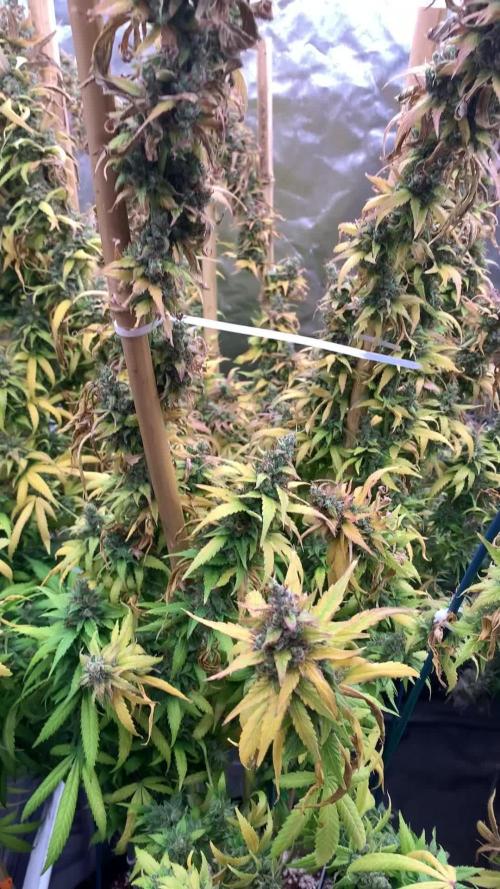
This week was still about recovery from last week. Given the phase this plant is in, this week was a stand still... but I'm glad it did not move backwards.
We did a heavy defoil in the middle of week, as some of the sites where blocking each other quite a bit. The air flow and color has returned the middle of these plants. I was getting worried about bud rot.
All for all, these plants are doing well and smell like yummy weed! When we defoliated I went outside to take out the garbage and the whole neighborhood smelt like these ladies 😂😂😂
I hope that they keep growing and thickening up. They are putting weight on, I hope Week 12 is huge on that front. I am probably only giving them up until 13/14 before I give them the chop.
I wont be flushing. I will be feeding up until the last res before harvest.
Likes
2
Share

@Lvnsource
Follow
Feeding log pasted below 👇
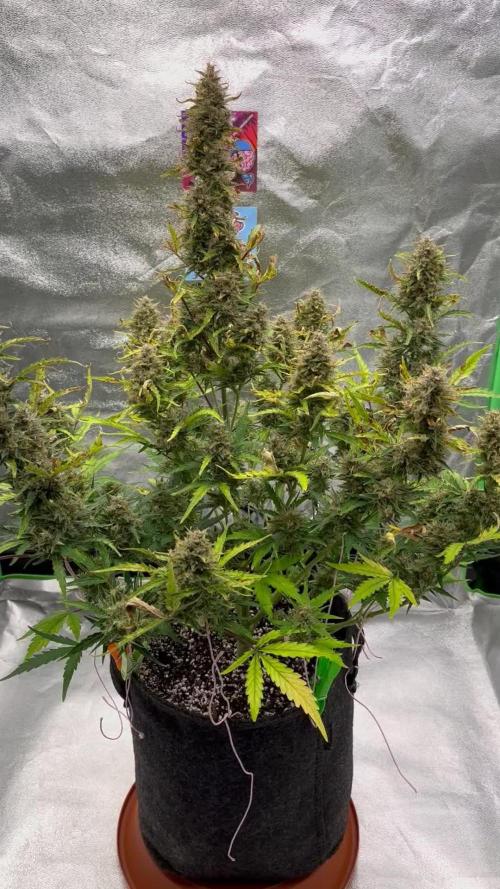
#1: D: 66 - 8.5L - [ph 6.2] SI[6ml] ,Vega[7ml] , Flores[25ml],Ca/Mg[4.5g & 2.5g ] INPUT; [1.77 EC] OUTPUT; 2.5L ,6.2 pH , 3.0 EC
———————————————————————————
#2: D: 65 - 7.5L - [ph 6.2] Si[6ml] ,Vega[6.2ml], Flores[22ml], Ca[4g]/Mg[2.2g] INPUT; [1.58 EC] OUTPUT; 2.5L pH 6.3 [2.398 EC]
———————————————————————————
Aiming to lower the EC for these 2 plants as well 🌱
Once the root zone sits at (1.9-2.0) I’ll resume my normal feeding of (2.0-2.1)
Other than that (#1) is starting to throw out some purple which is neat
Number #2 is still hanging on; she will finish just fine

Likes
28
Share


@Felloffthegrid420
Follow
So it’s been hot and dry storm came throw didn’t seem bother any of the feed some blood meal and bone mean and the same stuff I use lee do it smell o so sweet can’t wait

Likes
14
Share


@Jays_Not_Here_Man
Follow
Another easy week for the Runtz ladies ❤️ I’ve been watching closely and counting down, they are getting so close but could still go a little further without getting too much amber. I’m trying to time the harvest to go along with my other strain I have going as I have no other space available 🙈
I switched to straight PH water the end of last week, and they have gotten three feeds with runoff since, there will probably be 2 more. They are taking less water now, or rather, it’s lasting longer now. RH was dropped to between 48-50 % and temps have been between 76-79 degrees, and about 69 degeees at night. Thanks for checking the grow out, Happy Gardening 🇨🇦👊❤️🌱

Likes
21
Share


@Oyziphar
Follow
👍 Amnesia Haze pheno #1 has everything it takes to be a keeper. Hazy genes mixed with subtile sweetness and a bit of citrus. Outstanding 😵
👍 Amnesia Haze pheno #5 is much more hazy. Buds are relatively small 😏 Let's wait a while.
👍 Shining Silver Haze pheno #2 (75cm) it is the smallest plant, but despite its height a very beautiful plant. Her buds are foxtail-style, long buds that still form nice clusters. Her smell is sensational 😍
👍 Shining Silver Haze pheno #5 (135 cm) is the tallest plant and is an extreme sativa. She smells spicy, peppery and a bit of licorice. She has gone a bit mad : her buds are too loose and have kinky shapes 😜
👉 The plants stille consume a lot of water, despite their small sativa-style leaves.
👉 I did some defoliation of the lower leaves, who are turning a bit yellow.
👉 I repositioned the plants to new levellers to get a flat canopy
👉 The plants consume a lot of water. Three times a week I water the plants from above with GEN 1:11 care products (3 times 5l with nuts). The rest of the water comes from the water tank (no nuts).
Likes
10
Share


@Hawkbo
Follow
They are all putting on weight quickly and taking shape very impressed with all of them and they prob have another week or so before flush/harvest.
REMEMBER , IF YOUR SHOPPING FOR GEAR YOU CAN USE THE CODE “BANGDANG” FOR 10% OFF YOUR ENTIRE PURCHASE FROM ANY OF THE FOLLOWING COMPANIES.
@greenbuzzliquids
@rainscience_growbags
@gorilla_grow_tent
@growlightscience.led
NEW* @Rocbudinc Seeds on his website *
*****Gorilla grow tent discounts extend to all companies affiliated with grow strong industries which include..*****
@super.closet
Lotus Nutrients
Kind LED grow lights

Likes
34
Share

@All_our_small_plants
Follow
Bewässerung: 30000 ml jeden 3 Tag in der dreiundzwanzigsten Woche
pH-Wert: 6,3
EC-Wert: 1,6 mS/cm
Temperatur: 24ºC
Luftfeuchtigkeit: 60%
Schädlingsbekämpfung: Raubmilben
Düngemittel: Sie bekommen ab jetzt Brenneseljauche da sie im Outdoor Bereich ist.
Besonderheiten: Der Boden um den still herum wurde mit Holzasche behandelt gegen Meltau.
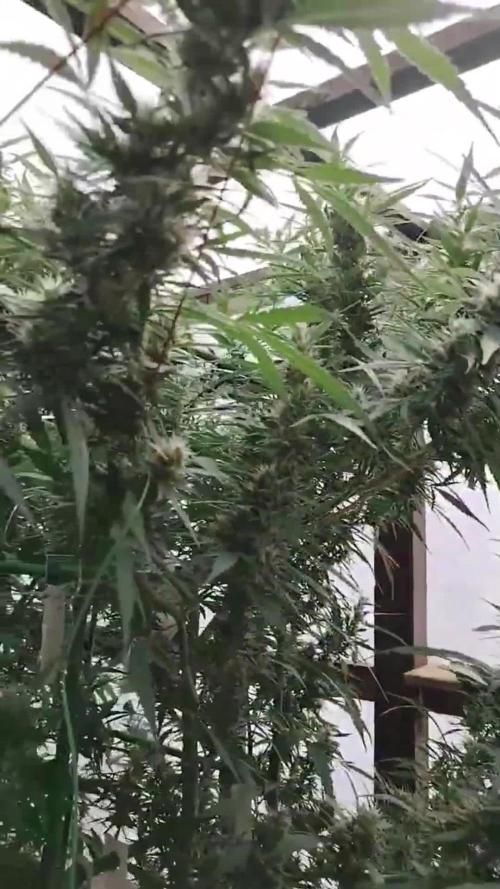
-Tag 152 Heute haben wir sie nochmal etwas gebunden damit die Blüten mehr auseinander gehen und sich nicht berühren, das Wetter ist weiterhin sehr schlecht und es sieht so aus als ob der Rest der Woche nicht viel besser wird.

Likes
8
Share


@Mikeyc420
Follow
Week 2 of flowering
Growing better then my first one now I have learnt abit more about the F1 hybrid
Good amount off bud sites growing with steady feed of shogun fertilisers
Any advice would be appreciated 👍
Likes
17
Share


@Greenbean420
Follow
Can’t believe I got 78g of bud of her! That’s nearly double what I usually get of 1 plant 😂 maybe it was due to giving her 7 weeks of veg, rather than the usual 4 weeks!? Either way I’m buzzing
She’s coated in sugar and stinks!! The high is strong giving a massive couchlock and the munchies! She smelt and tasted like usual cheese but obviously much nicer and stronger 😌
Likes
62
Share

@wolfvb
Follow
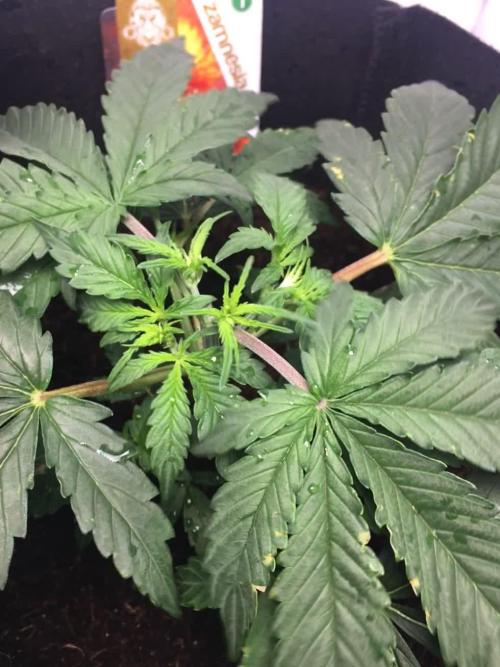
I think the star of our diary will be the Pineapple Express, she took the toping like nothing happened and already looking great and she already has a week smell,
The other girls are doing great, and the white runtz have some mesmerising colour to her leaves the kind from a shroom trip

Likes
28
Share


@eldruida_lamota
Follow
Venga familia que ya viene la cosecha de estas Apple Fritter de ZamnesiaSeeds, que ganas que tenia ya de darles machetazo.
No veas que pinta que tienen estas plantas.
Las flores aparte de prietas se ven bien resinosas.
a sido una genética con la que disfruté mucho cultivarla, es algo complicada cultivarla pero merece la pena si eres cultivador con experiencia no te será problema cosechar.
Agrobeta:
https://www.agrobeta.com/agrobetatiendaonline/36-abonos-canamo
Mars hydro:
Code discount: EL420
https://www.mars-hydro.com/
Hasta aquí es todo , espero que lo disfrutéis, buenos humos 💨💨.
Likes
14
Share


@4F1M6
Follow
I started germination of 3 Crystal Candy fv beans on 29/12/2020. I pre moistened my rockwool cubes with ph balanced water to 6.4. Made sure the plugs were just damp and not soaked. Using a small wooden dowel I increased the size of the plugs pre made holes. Than I sowed my beans into the holes. Ripped off a small piece of rockwool and mulched it up. Lightly filled the holes in with the mulched rockwool. Than stuck the plugs into a misted humidity dome, to complete germination.
Shouldn't take anymore than 4-5 days to see some sprouts. Once I see some cotlydon leaves bursting to the surface. I will get the plugs planted into some 1 gallon pots. Plus get these ladies situated into their home. Cant wait!
This is my first look at this variety so I have no background information on experience for this one. But I will get some from this grow, and if shes blessed. There could be a second run in the future.

Processing
Likes
3
Share


@dirty_jay
Follow
I've noticed these guys drink a lot more water and I'm going to have to up each one to probably 3L of water per every 2 days. I've increased fertilizing from every 3rd watering to every 2nd on Day 50 because it looked like many of the leaves were showing signs of deficiencies. I hope I read the signs properly but the plants have not got worse and look like they are showing improvements I think.
I pulled out my DSLR to get some better pictures as my cell phone just does a meh job.

Likes
23
Share


@Ksouth1
Follow
Last week went well. Not much happening besides watching her fattening up daily. Had to up cal-mag another.5 mL per gallon because I noticed the start of some minor spots on a couple of the top leaves. She is drinking a decent amount. About a gallon and a half of water every other day. The buds are getting big and I am going to get a decent yield. Until next time happy growing to everyone!


Likes
11
Share


@hanzSour
Follow
68 days of flower
sticky frosty solid buds
branches supported
becomes big
dark green buds covered with frost

Likes
12
Share

@J4kpvp
Follow
Hello:)
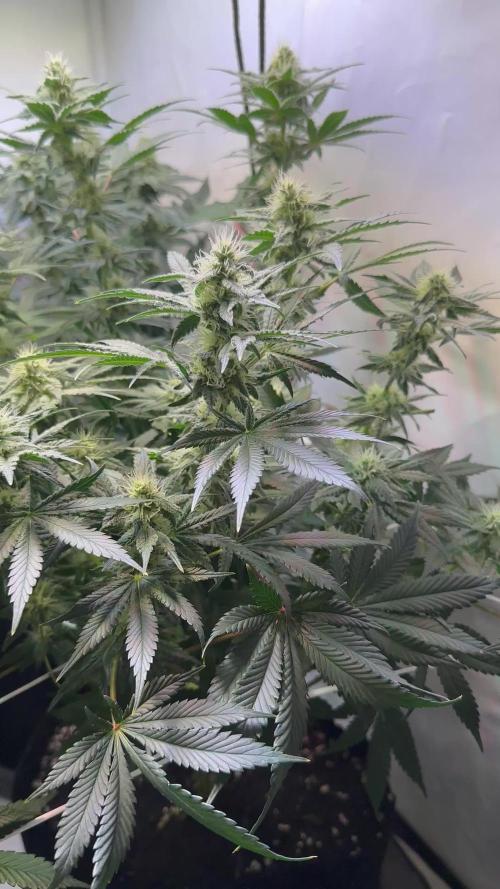
Good week again:) they are developing great. My biggest concern is temperature and rh… At the moment I‘m at 30c and 60rh and I can‘t get it lower without compromising light intensity so we‘ll see. Other than that the tropical cookies (back right) is the furthest along and the amnesia (front right) seems a little behind the rest. Looking forward to the next weeks when they start bulking:)



Likes
33
Share


@Southwest_budders21
Follow
She's packing on some weight now shocked how chunky she is after the shock of the transplant. She's definitely a strong girl that's for sure