


Likes
Comments
Share

@Growbody
Follow
Herzlich Willkommen zu meinen neuen Grow mit der Tangerine Dream Auto von Zamnesia Seeds. Der Name klingt schon nach Musik 😜
Die URL zum Strain findet Ihr hier:
https://www.zamnesia.com/de/10967-zamnesia-seeds-tangerine-dream-automatic.html
Es gibt dieses Mal wieder was neues: Zum ersten Mal verwende ich die neuen Air Pots 7.Gen mit 20 Litern Inhalt. Als Unterlage verwende ich einen Untersetzer mit Blähton der Körnung 4/8mm, der Topf läßt sich so besser ausrichten aus mit der gröberen Körnung. Das blaue Unterteil des Topfes habe ich mit einem doppellagigen Stück Insektenschutznetz versehen, damit die gute Erde nicht so schnell rausrieselt.
Damit sind wir beim 2. Punkt der Neuigkeiten. Diesmal verwende ich die Bio-Hanferde von Sonnenerde. Die Aussicht, meine Pflanzen in Living Soil ohne Düngergefrickel anzubauen, stimmt mich neugierig. Auch die Aussicht, die Erde mehrfach benutzen zu können gefällt mir ausgesprochen gut. Zum Mulchen habe ich von Sonnenerde die Bio-Faser vorgesehen.
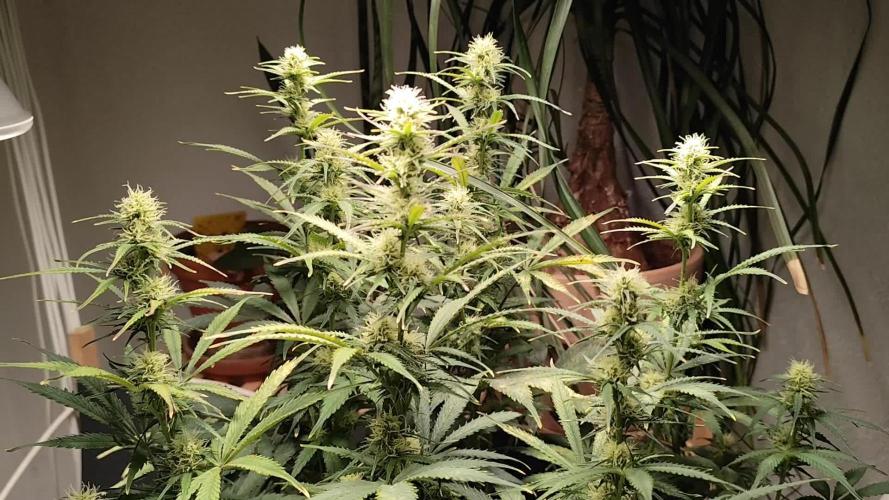
Tag 79: Die Tangerine Dream Automatic von Zamnesia Seeds ist unglaublich vital. Die Blüten duften fein und haben einen guten Zuwachs.
Schön, dass du dir meinen Growbericht der Tangerine Dream Auto angesehen hast. Schau mal wieder rein ✋🌱❤️😎

Likes
36
Share


@Dr_Boom
Follow
Another steady week. These girls continue to bulk up. Many of her buds are showing some nice genetic foxtailing. I have noticed that some of the leaves only have one or three fans. The humidity continues to be a concern, but at this point I don't think there is much more I can do. I have been leaving the tent open as much as I can and running a de-humidifier, but I'm still having limited success.
Likes
19
Share


We had a bit of a high PH when testing last night so managed to get her balanced out back to 6.3 but some yellow leaves on her. At the same time she's looking buddy and nice, we have cooler and less sunny days this week so hopefully she'll still make the most of the light and plump up some good fill on those colas. I can't see how she'll go to 10+ weeks but hey, we'll soon find out!
Learning as I go on these. First grow, first outdoor grow, so all very much an experiment and learning from reading on here, so thanks to you all!

Likes
3
Share


@Lesjardiniers420
Follow
These are from Jamesloudgenetics first time i ever try them , 54 out of 55 seeds popped with 51 out of them looking healthy , fingers crossed for a good season .
Likes
8
Share


@Dabking
Follow
Plant 1: 2.40 Oz dry (chopped day 84)
Plant 2: 4.85 Oz dry (chopped day 88)
Happy with them so far. Will update post cure and smoke report.

Likes
37
Share


@eezeegrow
Follow
Plants are growing fast and and buds are quite big in this stage. Leaves are green and the grower is happy... 😬

Likes
17
Share


@eldruida_lamota
Follow
Que hay familia, actualizo la segunda semana de floración de estas Runtz F1 automáticas de Zamnesia.
Vemos que las 5 están en perfectas condiciones, tienen un buen color y van creciendo a buen ritmo.
Empezaron a brotar flores hembra, ya estamos en floración.
Empiezo por supuesto abonando una pequeña cantidad de la gama Agrobeta.
La temperatura está 25 grados y la humedad anda entorno al 50%. Riego cada 48 horas.
Hasta aquí es todo estas próximas semanas veremos cómo van avanzando.
Agrobeta:
https://www.agrobeta.com/agrobetatiendaonline/36-abonos-canamo
Mars hydro:
Code discount: EL420
https://www.mars-hydro.com/
Os comento que tengo un descuento y para que compréis en la web de Zamnesia de un 20%, el código es ZAMMIGD2023
The discount 20% and the code is ZAMMIGD2023
https://www.zamnesia.com/
Hasta aquí es todo, buenos humos 💨💨💨
Likes
5
Share

@MindFlowers68
Follow
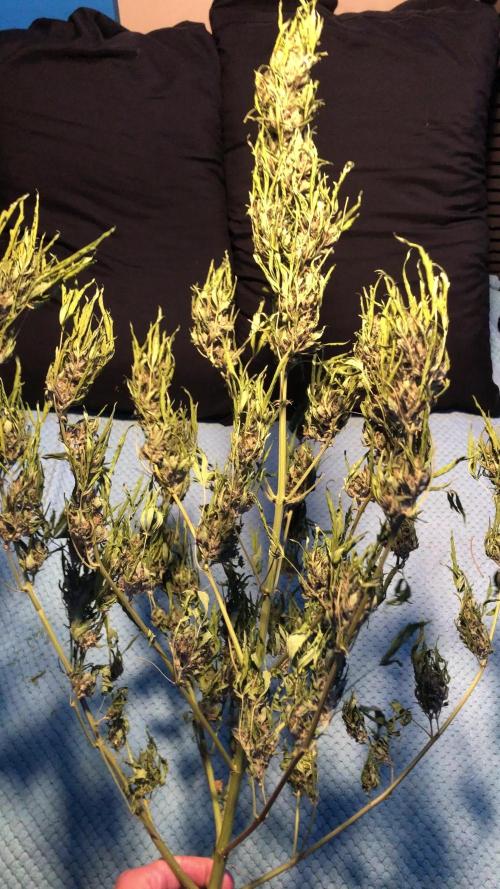
Drying ended on day 9. The temperature was between 60-68 degrees. The humidity was 55 percent for the first two days without my humidifier then i set it the 3rd day to stay around 60 percent humidity. They dried fairly quickly with lots of terpenes preserved. Plants are very greasy and potent. I will l give a few weeks to get a smoke review after i smoke them over the next few weeks. So far though already smoke pretty damn good. I tend to like my bud fresh as well. This outdoor round of autos dispute having several triple digit heat waves out outperformed my indoor autos from last round on potency.

Likes
6
Share

@kevxyn
Follow
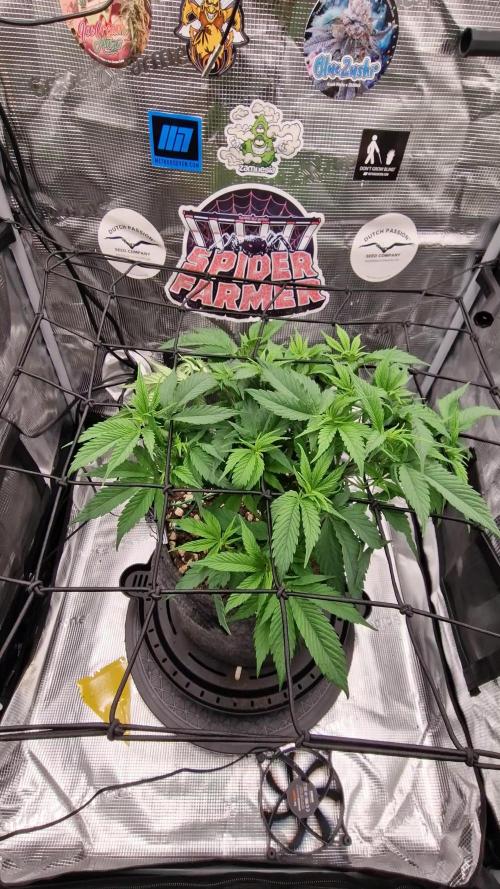
Die Kleine hat sich nach der Entlaubung letzte Woche wieder super gemacht! Ich lass sie noch ’ne Woche schieben, dann geht’s in die Blüte 😎🌱
Likes
21
Share


@KentuckyOG60
Follow
Growing nice and easy. No issues just doing a little lst and letting it grow

Likes
48
Share

@Pheno_Minds
Follow
📋 Nach 16 Wochen Gesamtlaufzeit ist heute der Tag der Ernte für die Mimosa x Orange Punch von Barneys Farm gekommen. Die Pflanzen stehen voll im Harz und haben ihr biologisches Ziel erreicht. Ich beende den Run punktgenau und bereite alles für die Trocknung vor. Die Genetik hat über die gesamte Zeit eine beeindruckende Stabilität gezeigt und liefert jetzt zum Abschluss genau das optische Bild, das man von einer Top-Sorte erwartet.
🌡️ Die klimatischen Bedingungen in der Zielgeraden waren stabil und auf den Punkt. Der CO2-Wert lag im Schnitt bei 736 ppm, was den Pflanzen geholfen hat, die Blütenmasse bis zum letzten Tag kompakt zu halten. Maßnahmen gab es diese Woche außer der Kontrolle der Werte keine mehr, die Pflanzen haben nur noch ihr restliches Wasser verbraucht.
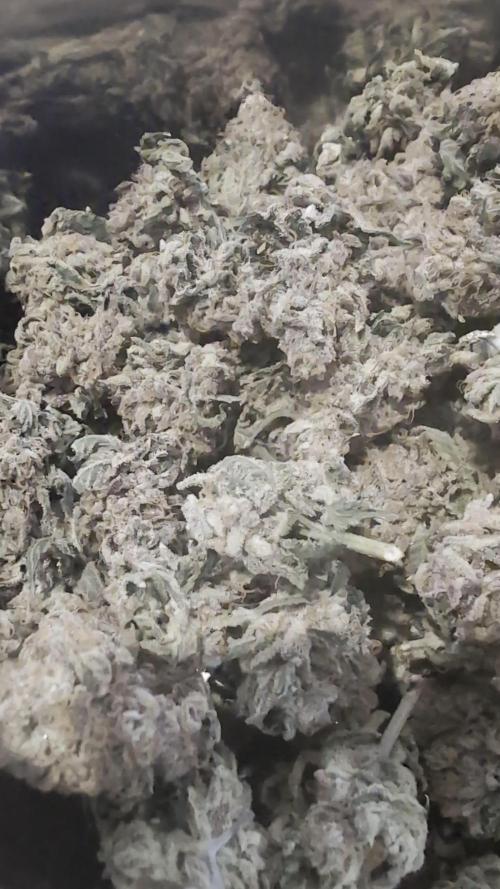
📸 Ein Blick auf die Fotos zeigt den hervorragenden Zustand der Buds. Die Blütenstruktur ist extrem dicht und zeigt die typische kompakte Form mit leichten Ausstülpungen an den Spitzen. Die Harzproduktion ist massiv, die Trichome überziehen nicht nur die Blüten, sondern auch die Zuckerblätter wie eine dichte Schicht aus Puderzucker. Farblich hat die Pflanze ein wunderschönes Spektrum von tiefem Violett bis fast Schwarz in den Blättern entwickelt, was einen starken Kontrast zu den hellen, harzigen Blüten bildet. Die Stempel sind fast vollständig braun und zurückgezogen, was das Ende des Reifeprozesses markiert. In der Nahaufnahme sieht man, dass die Trichomköpfe perfekt milchig mit ersten bernsteinfarbenen Einschlägen sind.
✂️ Jetzt geht es in den Trockenraum. Die Buds sind beim Zerlegen extrem klebrig und verströmen ein schweres Aroma von Zitrusfrüchten und süßem Treibstoff. Die Dichte der Blüten ist beeindruckend, da gibt nichts nach, wenn man sie leicht zusammendrückt. Die nächsten Tage verbringen sie bei kühlen Temperaturen und kontrollierter Luftfeuchtigkeit, bevor es ans Curen geht. Ich bin sehr zufrieden mit dem Harzbesatz und der allgemeinen Vitalität bis zum letzten Tag. Das Ergebnis im Glas wird sicher ein Genuss.

Likes
52
Share


@WhiteEdge
Follow
26.03.2024
Continue into week 4
Update firmware on TrolMaster Tent-X (3.6)
Replace all filters, remove and clean drain buckets and tubing.
Mix new batch with 56ml AN connoisseur AB + 4.5g Big Bud Powder + 7.5ml Silica - total 30l @ 1.34EC. NPK Ratio is 1-2-3 , Cal/Mg ratio is 4-1.5
Target EC for this week is 1.2 start and end week with 1.3. Checking plants will determine timing of strength
Donne one pass off long misting (3min) with diluted solution @ 0.84@C
Finally have time for managing canopy, pull down taller branches and position all tops to fit under screen without touching. Try to spread them evenly across the net, top per square of net
Defoliating all girls, remove all fan leaves and prune lots of smaller branches from middle. Lot of foliage is removed!
After stripping humidity drop significantly (41%) , need to install humidifier again to keep RH @ 50-52%
Set dehumidifier thermostat to work @ 50% RH. Reduced light intensity for this day, let girls recover from stress
PAR map 850max/650min PPFD, VPD -1.2-1.3, DRH 50-54%, NRH 45-49%, NT-20-21c, DT-24/25.5c, Leaf temperature 22-23c, Light distance 45-55cm, CO2 700+ppm
HLG Scorpion Diablo @ 65-75% - 45-55cm distance
60s ON time 20min OFF time @ Day Time
60s Off time 30min OFF time @ Night Time
NT-Nutrient Tank - PH -5.90-, EC -1.32, Temp-20-21
27-28.03.2024
All girl looking great after defoliation,)
Clean benches and floor in box
Replace all filters
Set dehumidifier thermostat to work @ 47% during night times, 50% @ day. Humidifier is also connected and set @ 49% Day and 45% @ night, if needed
Inkbird humidity controller stop executing's automation for day/night settings. Start manually to change day/night values for now
Next several days, until weekend, temperatures outside will be high , 29c max. Hope it will not raise temperature in box to much.
Light is set on TrolMaster TCS-1 controller to dimmed at 28c
AC Infinity fans are set to AUTO mode with height temp set at 26c and high RH set at 54%
Top up tank with 25ml AN connoisseur AB + 4.5g Big Bud Powder + 7.5ml Silica - total 75l @ 1.34EC
PAR map 980max/650min PPFD, VPD -1.2-1.3, DRH 50-52%, NRH 45-48%, NT-21-22c, DT-24/25.5c, Leaf temperature 22-23c, Light distance 45-55cm, CO2 700+ppm
HLG Scorpion Diablo @ 80% - 45-55cm distance
60s ON time 20min OFF time @ Day Time
60s Off time 30min OFF time @ Night Time
NT-Nutrient Tank - PH -5.90-, EC -1.32, Temp-21-22
29-30.03.2024
Refilled the tanks with 20l of fresh mixture. 25ml AN connoisseur A+B + 3g Big Bud Powder + 7.5ml Silica - total 20l @ 1.21EC
Refilling is done in two passes, one time before light up, and second time early in morning, two houres before night time.
This give additional nutrient cooling without running water chillier. Refill soulution is @ 18c
Checking EC and PH 2-3 times a day. The electroconductivity values are around 1.24EC.
I maintain the strength until it drops or rises. For now, I’ve caught the perfect strength, the liquid is almost static with very small oscillations in electroconductivity and PH.
Replaced all filters in the system, replaced on washing… Every other day is enough, during daily cleaning there is no dirt on the filters.
The girls are handling the environment well, leaves are raised as they should be, they seem like very happy plants.
Formation and enlargement of flowers can be noticed with the naked eye.
The wave of warm weather continues all this week. Expected temperatures for the next seven days range from 25-29c. Need to pay attention to that
Raise light 10cm, top of canopy now is around 50-55cm
PAR map 980max/650min PPFD, VPD -1.2-1.3, DRH 50-52%, NRH 45-48%, NT-21-22c, DT-24/25.5c, Leaf temperature 22-23c, Light distance 45-55cm, CO2 700+ppm
HLG Scorpion Diablo @ 80% - 50-55cm distance
60s ON time 20min OFF time @ Day Time
60s Off time 30min OFF time @ Night Time
NT-Nutrient Tank - PH -5.95-, EC -1.24, Temp-21-22
31.03.2024
Girls totally recovered from defoliation. Almost all gig leaves grow again on all girls.
Tropicana Cookies is joy to grow , its pleasure to watch this girls haw fast and beautiful it is!
Tropical condition continue. Temperatures going from 26-29c, night temperatures still colder and stay around 16c
Outside temperatures affected water temp in nutrient tank, will se if i need for a water chiller or i will cool with adding cooler nutrient solution.
Lower wattage on light , set Diablo @ 75%
Replaced all filters in the system, replaced on washing…
Refilled the tanks with 15l of fresh mixture. 25ml AN connoisseur A+B + 3g Big Bud Powder + 7.5ml Silica - total 15l @ 1.21EC
PAR map 1180max/680min PPFD, VPD -1.2-1.3, DRH 48-52%, NRH 42-48%, NT-22c, DT-25/25.5c, Leaf temperature 22-23c, Light distance 50-55cm, CO2 700+ppm
HLG Scorpion Diablo @ 80% - 50-55cm distance
60s ON time 20min OFF time @ Day Time
60s Off time 30min OFF time @ Night Time
NT-Nutrient Tank - PH -5.95-, EC -1.21, Temp-22-24
01 04.2024
Outdoor Climate: It’s hotter outside. I’ve set the Diablo at 73% to maintain temperatures in the box within the 25-26°C range.
Humidity: After defoliation, the humidity is low, which is great! The dehumidifier hardly worked this week.
Misting Routine: I start the day with a 3-minute misting session; this will be the routine for now.
Nutrient Solution Temperature: I’m keeping the nutrient solution temperature between 20-23°C. I refill the tank twice a day to cool down the solution.
Light Parameters:
PAR Map: Maximum PPFD is 1080, minimum PPFD is 650.
VPD: Ranges from -1.2 to -1.3.
Daytime Temperature (DT): 25-26°C.
Nighttime Temperature (NT): 22°C.
Leaf Temperature: 22-23°C.
Light Distance: 50-55 cm from the plants.
CO2 Levels: 700+ ppm.
HLG Scorpion Diablo: Set at 73%, positioned at a 50-55 cm distance.
Lighting Schedule:
Daytime: ON for 60 seconds, followed by 20 minutes OFF.
Nighttime: OFF for 60 seconds, followed by 30 minutes OFF.
Nutrient Tank (NT):
pH: Maintained between 5.9 and 6.1.
EC: 1.18.
Temperature: 20-23°C.
Week 4 off Flowering in Summary
120 litter off RO water,
210ml+210ml AN connoisseur A+B, 18g Big Bud Powder, 45ml Growth Technology Liquid Silica
70kW electricity in total for light, Pumps and AC Infinity Fans. 63kW for Light + 2kW Dehumidification + AC Infinity ventilation
Week start @ 1.31EC, nutrient strength., keep strength @ 1.24 till the end of the week
Girls look superb all time, Wedding Cheesecake have two pheno, really like buds on one girl
Tropicana Cookies fill bud sites this week a lot, Purple Lemonade is going to be tallest from all three stains. Nice bud formation also.
PH was stabile and move from 5.90 min to 6.2 max.
Light distance for this week - 50-55cm from tallest top , PPFD levels around 1100 in center, trough whole week. Lowest reading 680 @ corner
Temperature are from 23c at start off day to 26c max at some points. AC Infinity T6 extracting fan program in AUTO to kick in @ 26c
Night temps around 21-23c, dehumidifier work less this week. Outside humidity is low this week
Water temperatures in middle off week start to rise, refilling solution is cooled to bring temp back from 23-24 to 20c
Defoliate girls on first day off this week, pruning off smaller branches, lots off foliage is removed
After defoliation humidity drop immediately in box. Need to bring back humidifier for couple of days. RH was low trough whole week
Day RH is moved from 45% to 50% max, at night times drop to 40-45%
Next week outside temperatures continue above average for this time of the year.
Continue in next week, starting probably with one more light defoliation, bigger fan leaves only
Likes
11
Share


@Growing420Dreams
Follow
A principios de semana se aplico poda apical en las 6 plantas y ayer defoliación.
Likes
12
Share


@ChiTaN
Follow
Due to the speed of growth, breaking was necessary.The girl got through it without any problems.Three branches were ultimately broken.From today I change the light spectrum to harvest (UV light will join).

Likes
19
Share


@Cardiffgrown
Follow
Lovely shorter bush smells strong and lovely dence buds defo enjoyed the autopot more ill update this once dry

Likes
3
Share


@macrocefalo
Follow
First week cultivation of the 5 BlueDream seeds. I broke the dormancy of the seeds in a container with water for 30hrs. After that I used the napkin technique to germinate the seeds for another 16 hours. In this cycle I will use 4 3-gallon pots and 1 2-gallon pot which I hope will have enough light with my 1000W Greens Indoor LED panel. I prepared 2 liters of water with 0.4 ml of GHE rapid star and kept the water PH at 6.2 and 1.8 mS /cm EC. I left a plastic with some openings to try to increase the humidity of the air.
Likes
101
Share


@DogDoctorOfficial
Follow
All going kind off as planed, appart from the SuperGlue Girl. just did a big 2,5 gallon Flush on her and now waiting for the soil to dry and start over the feedings. clean her good so i'm hopping for the best 😅 lets see how they react and if they cacth up 😍😋
Loving this LED Tec 😍
Girls:
1-BlueBerry
2-Alaskan Purple
3-Poyote Gorilla
4-Hindu Kush
5-Whitw Mango
6-Super Glue
7-Badazz Cookies
8-S.A.D.
tent -8x8 / 2.4x2.4 but i'm only using 1/2 so 4x4 / 1.2x1.2
Led - Lumatek 465w Compact Pro at 100%
All i Grow is medicine for myself,
Stay safe, stay tuned and B Happy
Peace out
D


Likes
7
Share


@Tio_Shuni
Follow
Como pasan de rápido las semanas!
Las señoritas bien.
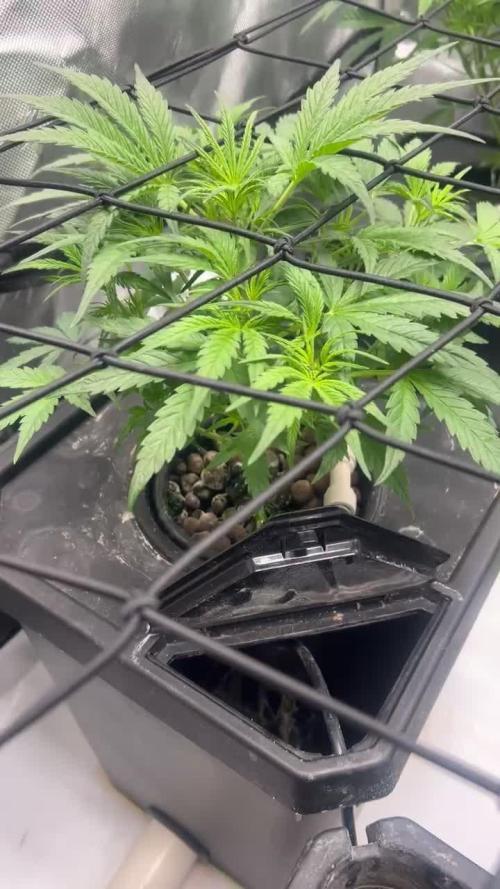
Ya en la semana 6 de crecimiento, pensaba en dejarlas hasta la semana 8 vegetando, pero la sharkshock de la parte superior izquierda me tiene algo indeciso, siento que me quedará corto el espacio de 1.80 en la carpa, espero no sea el caso. Es la que más toma agua 🤭
Veremos hasta la semana 7 que tal y viendo eso veo si las pongo en flora, hasta ahora con el riego de 6.2 esta todo super, abonando con productos orgánicos, esperando a tener una buena cosecha.
Pronto les seguiré contando que tal :D



Likes
37
Share


@TheIceCreamParlour
Follow
If you pheno hunt you will be rewarded!
Big yields
Medium/Manageable height
Fast speed of growth
Medium flower cycle
Rock density buds
Sweet/sour/lime/apple smell and taste
Must keep temps low 26c 80F sweet spot
100% I will grow again when I have space. A great grow despite some silly errors by myself and one crazy pheno weathered the storm to produced some serious quality cannabis that showcases the best award winning genetics that Royal queen seeds have meticulously bred. I'll always have a royal queen seed plant in my tent from now on.

Likes
42
Share


@MadeInGermany
Follow
Flowering day 37
since time change
to 12/12 h.
Hey guys :-)
The buds have developed incredibly nicely this week.
The smell is getting more and more extreme :-) .
The whole plant itself looks perfect 👍.
The growth has slowly stopped as the full energy goes into the production of the buds.
This week it was watered 3 times with 1.2 l each (nutrients see table above)
They were individually inspected and checked for their health.
Osmosis water for the coming week was refilled in a 100 l tank 👍.
Have fun reading the diary and stay healthy 💚🙏🏻
👇🏼👇🏼👇🏼👇🏼👇🏼👇🏼👇🏼👇🏼👇🏼👇🏼👇🏼👇🏼
You can buy this Nutrients at :
https://greenbuzzliquids.com/en/shop/
With the discount code: Made_in_Germany you get a discount of 15% on all products from an order value of 100 euros.
👇🏼👇🏼👇🏼👇🏼👇🏼👇🏼👇🏼👇🏼👇🏼👇🏼👇🏼👇🏼
You can buy this strain at :
Clearwater Seeds
Water 💧 💧💧
Osmosis water mixed with normal water (24 hours stale that the chlorine evaporates) to 0.2 EC. Add Cal / Mag to 0.4 Ec Ph with Organic Ph - to 5.8 - 6.5
MadeInGermany
