


Likes
Comments
Share

@Canna96
Follow
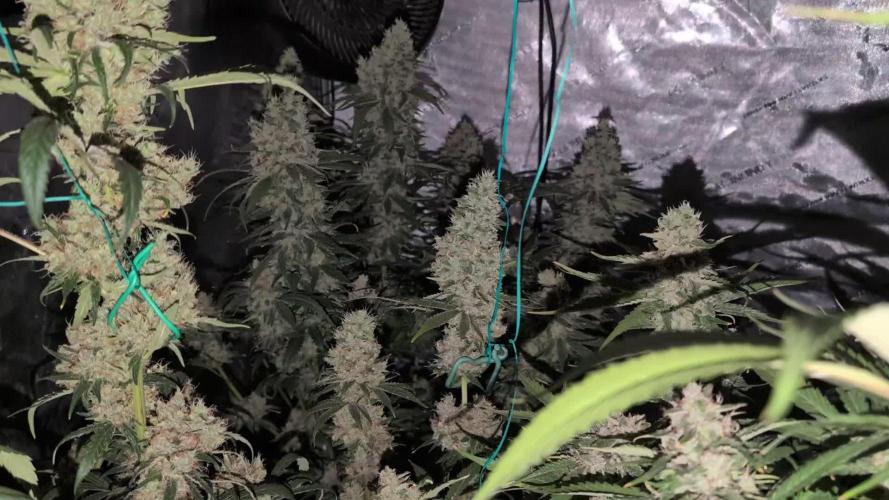
Hey now, I hope everyone is having a relaxing weekend. The ladies are getting close, all trichomes are white and milky with very little amber, so I decided to start the flush today, and I will harvest the Apple Fritter and Durban Thai X C99 next Saturday. I did harvest the Donuts and Cherry Gar-See-Ya and I will post some pics and a smoke report once cured. Thanks for stopping by and Blaze On....



Likes
459
Share


@Ju_Bps
Follow
Hello my friends 👨🌾👩🌾,
Continue to grow well 🌲🌲, very easy strain,
Only one issue this week, I've broken 1 stems during the train 🤦♂️🤦♂️.
The stem is broken more than 75%, I don't think will recover.
But it's ok I've saved 3 nodes on this plants before topping.
I'll could transplanted them next week in 11l and definitive pot, the Fat Banana should harvested ✂️✂️.
And we'll have a better idea to prepare the scrog.
Because still in 2l start to be very little lol...🤦♂️🤦♂️😳😳😅😅
💦 I give water each 2 or 3 days
350 and 400ml/plant
Water + rhizo + tera vega
Water + Rhizo + canazym
PH@6
Lamp is 100%
Thanks community for follow, likes, comments, always a pleasure 👩🌾👨🌾❤️🌲
Happy new year 🎉 🥂 family farmer 👨🌾👩🌾
See you next week 👊👊
Mars Hydro - TS 1000
https://www.mars-hydro.com/ts-1000-led-grow-light
Mars Hydro - FC3000
https://www.mars-hydro.com/fc-3000-samsung-lm301b-led-grow-light
Mars Hydro - SP3000
https://www.mars-hydro.com/sp-3000-samsung-lm301b-greenhouse-led-grow-light
The High Chameleon - Vannila T
https://www.thehighchameleon.com/shop/vanilla-t-5

Likes
84
Share


@Doc_Homegrow
Follow
One week has past since I put the seed in the earth. I water the plant as soon as the earth feels dry (not completly dried out). I just use about 100-200ml water (because I don't want to "drown" her). My lamp is at 50% because it seems to be a little to intense for the small seedling at 100%.
UPDATE:
My first mistake
Found out that the leafs of my seedling rolled up, because the light was too intense for the young plant. So I put my light again on 25% (around 6.200 Lux). I have read that a seedling just can take light between 5.000 and 7.000 Lux. My lamp was around 18.000 to 19.000 lux! So I am very glat, that I haven't killed my plant 😅

Likes
4
Share


@stolen_cheese
Follow
Ende Woche 7. Ich habe die Gute ordentlich entlaubt, mini Buds entfernt und alles so hingebogen, dass es gut Licht bekommt.
An Tag 48 gab es 2,5 g Pflanzengeflüster (Harpin-Protein) auf 1 L Wasser als Wurzeltränke, da ich so weit in der Blüte nichts mehr sprühen möchte, obwohl Harpin über Blattdüngung viel besser wirkt.
Beim ursprünglichen Mix der Erde hatte ich einen Denkfehler bei der Düngermenge, daher wurden die fehlenden 200 g jetzt noch oben aufs Substrat gegeben und dann mit frischer Erde abgedeckt.
Likes
42
Share


@Ultraviolet
Follow
Thank you. Gave her a cocktail to help with stress. Added 1st net for lateral support, not so much now, but for later. Blue light is absorbed by photoreceptor proteins called phototropins, which trigger a hormonal response that causes cells on the shaded side to elongate, making the plant bend toward the light. Try and fill this side a little. She is quite big already, just needs to find her stride again after the undue torture.
5 apex stems with 20-30 mini cola, let them develop a little, with the apical dominance shattered, all those 20-30 will all compete with each other as soon as that stretch is initiated. Key to a good stretch is making sure the plant is cycling efficiently, with large ATP conversions occurring lights out.
For now, I'm keeping light intensity high. A plant will slow its vertical growth in very high light intensities, leading to a more compact form with thicker stems and leaves. This response is a protective mechanism against light stress, which can damage the photosynthetic apparatus and lead to symptoms like leaf scorching, yellowing, and brittleness. Instead of growing taller, the plant invests its energy into creating a more robust, stress-tolerant structure.
Providing plants with necessary antioxidants helps protect the photosynthetic apparatus by scavenging reactive oxygen species (ROS) that cause damage from excess light.
UV light exposure can impact the xanthophyll cycle by either enhancing its photoprotective role or causing damage, depending on the intensity and type of UV radiation. UV exposure can trigger the synthesis of more xanthophyll cycle pigments to increase the plant's capacity to dissipate excess energy, but it can also cause direct damage, particularly to Photosystem II, and may lead to a decrease in the de-epoxidation state (DEPS ratio) which indicates a reduced capacity to dissipate excess energy.
Plants can respond to UV stress by increasing the synthesis of xanthophyll cycle pigments, such as violaxanthin and zeaxanthin, to improve their photoprotective capacity. UV-induced changes in xanthophyll cycle pigments can be linked to a plant's overall tolerance to high radiation stress. The xanthophyll cycle helps protect against photoinhibition, which is especially important when the plant is exposed to high levels of both UV and visible light. High doses of UV radiation can directly damage photosynthetic components, including the proteins, lipids, and pigments in the thylakoid membranes. Exposure to UV radiation can have a mixed effect on the de-epoxidation state (DEPS ratio) of the xanthophyll cycle pigments. In some cases, UV can inhibit the conversion of violaxanthin to zeaxanthin, resulting in a lower DEPS ratio and a reduced capacity for energy dissipation. However, the total pool of xanthophyll cycle pigments may increase, and this enhanced pool size could provide a greater potential for photoprotection despite a lower DEPS ratio.
The xanthophyll cycle works alongside other mechanisms, such as the accumulation of flavonoids (UV screens), to protect the plant from UV-induced damage.
Blue light repairs 100% UV-induced damage in plants through a process called photoreactivation, which uses a light-dependent enzyme called photolyase. This enzyme uses energy from blue and UV-A light to directly reverse the damaging pyrimidine dimers in the DNA caused by UV-B radiation, a key mechanism for maintaining the plant's genetic integrity.
After carbon, light, water, temperature, and nutrients, the limiting factor of a plant's growth is often its own internal factors or the amount of a key ingredient. Chlorophyll concentration is one such factor, as the amount of this pigment limits how much light can be captured for photosynthesis. Other factors include chloroplast number, respiration rate, and the concentration of carbon dioxide in the atmosphere, as plants are often in a CO2-deficient condition.
60x60x18=64800seconds x 700 = 45,360,000moles. 45DLI
Exposure to 165 µW/cm² of ultraviolet-B (UV-B) light for 3600 seconds = 1 hour, a extremely high, acute dose triggering stress responses and protective mechanisms.
.
The plant's photoreceptor protein, UVR8, senses the UV-B radiation. This triggers a signaling cascade that activates specific genes to protect the plant from damage. In response to the UV-B signal, the plant ramps up the biosynthesis of protective compounds like flavonoids, phenolic acids, and anthocyanins. These compounds absorb UV radiation and accumulate in the epidermal layers of leaves to shield inner photosynthetic tissues. The plant may increase leaf thickness or deposit more cuticular wax, creating a physical barrier to the radiation. The plant will produce more enzymatic and non-enzymatic antioxidants to neutralize the reactive oxygen species (ROS) produced by the UV-B radiation. The plant activates enzymes, including photolyases, to repair DNA damage caused by the UV-B. These repair mechanisms are critical for preventing permanent genetic mutations.
While protective measures are activated, a high dose delivered over a short period can cause stress that overwhelms the plant's defenses.
Photosynthesis is highly sensitive to UV-B. A high dose can inactivate Photosystem II (PSII), damage thylakoid membranes within the chloroplasts, and reduce chlorophyll content, which lowers the plant's overall photosynthetic capacity. Despite repair mechanisms, high UV-B doses can inflict persistent damage on the plant's DNA. The overproduction of reactive oxygen species can cause oxidative stress, leading to the oxidation of lipids and proteins and disrupting cellular function.
Likes
4
Share


@GarciasGarden
Follow
This is the first day of the first week of flower in the first video and the 6th day of flower in the second video.. you can see me shit myself when I saw that one of my main top sights snapped from tying the branch down … the lights were using are lights we designed and are testing at the moment also we are trying to keep a good distance between the tops and the lights to keep the temps down around the bud sites ! You can tell there are a couple other strains thrown in there the one purple punch from Barney’s farm is just Caking on nodes upon nodes like it’s impossible to get light to them unless they are pulled down in really liking the structure of the ocean fruit and am looking forwards to the finish!

Likes
10
Share


@StarletBud21
Follow
All in all not bad I have had some problems with my room being really cold which has obviously effected the temp but buds seem to still be growing not sure how long left or when to flush but we’ll wait and see !! Added bambo sticks in cause some buds were leaning wayy too much As you can see some close up of the buds as well was pretty unsure on two because it looked like there was Little balls On the bud also noticed a lot more yellowing off leafs
Happy growing


Likes
18
Share


@Pennuts
Follow
Harvest time has come. It was an excellent cycle without any problems, in fact the plants were doing great and produced some beautiful buds. Now I will dry for 2 weeks plus cure for 1 month.


Likes
9
Share


@Vet4weed
Follow
Final week before harvest. Pistils have turned brown all over on one plant, but not the other. Been trying to take close-ups of trichomes with phone, but can't tell if they are clear, milky or brown. Caved in and bought a hand-held microscope with light. Beautiful ❤️ just hard as heck to stay in focus doing hand held. Not sure if I should be clipping samples to look at on a flat surface. Stopped fertilizing and flushed the more mature plant last week. The other one is showing signs of ripeness now, so flushed it to early this week.

Likes
14
Share


@Lykantar
Follow
Baby Don't worry cause everything gonna be alright!
nothing to say more, the roots are strong I can see them through the pot
I just cut the top
This is regular seeds so some of them will be killed

Likes
3
Share


@fabialien
Follow
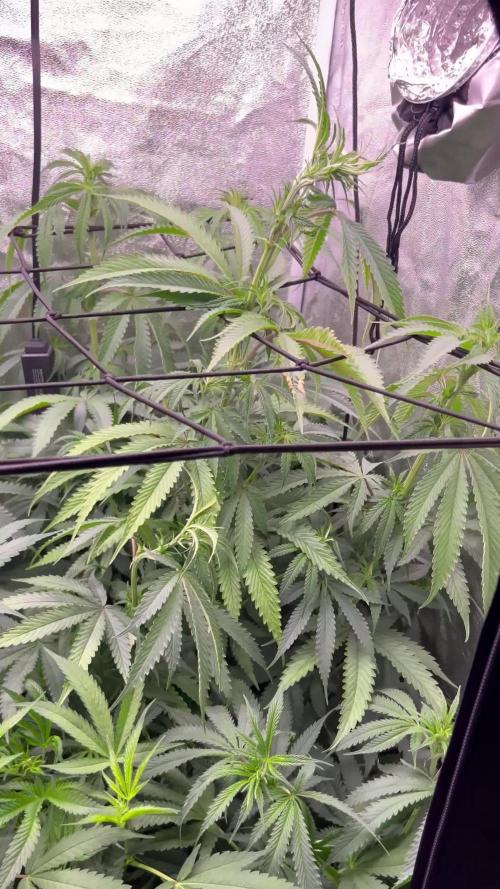
Después de qué las dos sherbet no se dieron, aprovechamos la llegada de un par de Gorilla auto BSF y procedimos a germinarlas. Asi van al dia de hoy! 8/07/2024





Likes
15
Share


@I_Identify_As_A_Dan
Follow
Week 8 for Gelato 41,
This girl has been topped yet again... shes now got 16 tops 😎, also gave her a nice strip on the lowers to show some stretch to the tops.
Really looking forward to putting her in her 250L pot outside which will be coming up in the next 3 days or so as she's getting a little too wide to be in my indoor tent😂 Been giving her 4/5 hours of sun to get her ready for those 33 degrees+ outside temp.
She's also now being fed with FPJ every watering which ATM is probably every 3/4 days.
Processing
Likes
8
Share


@Max1973
Follow
Day 28 - lookin good.... checkin everything daily, adjusting as nessec. ....
might start lookin at a top/trim/bend/flower plan.....
Day 32 - post some ... watch the vid.. pretty sure u know whats about to happen here... lol
i'm a pretty good grower... :)
check out the base on both those super silver haze... that last video... shows u the perfect base and stalks and stems .....
those stalks are each going to be for a beautiful long bud... lol
didn't really start with a clean glow solution.... so just kinda been winging it.....
in the next week or 2 i'll think about flush both out completely, start with fresh new flower solutions,
and switch to 12hr lights.......
getting some awesome growth out of the 60 W on each plant..... thats 6 x 10w household led light globes..... 👍😎

Likes
17
Share


@SuperGlue
Follow
Все отлично , визуально выглядит здоровым растением , не смотря на мои манипуляции с ним , в замедлении роста замечен не был :) в течении следующей недели плавно переходим на 12/12 . Свет программируемый на ежедневное сокращение часов освещения, так же как это и происходит в естественных природных условиях.
28.10.20 последний день Веги , завтра переходим на 12/12

Likes
1
Share


@TheCH
Follow
Срезал после 5 дней засухи и 48 часов темноты. Сушил в боксе 4 дня в полной темноте. Результат: 152 грамма шишек и 57 грамм попкорна. Пахнет вкусно. Дым попробую через месяц лечения. Недельку побуду в холодильнике. Открываю банки раз в день.

Likes
5
Share

@ShinWeed
Follow
.
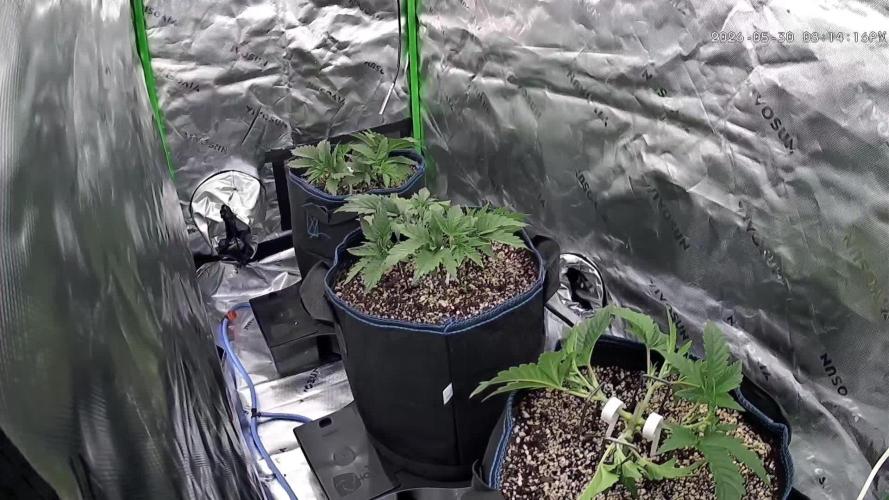
🌱 Tag 28 - Eine Woche, die sich endlich wie Routine anfühlt
Seit dem letzten Update ist eine Woche vergangen und trotz kleiner Unruhe in den letzten Durchgängen hat sich das Setup diesmal deutlich stabilisiert. Kein pH-Chaos, keine Mischfehler im Tank, einfach konstante Versorgung und gleichmäßiges Wachstum.
Wir merken deutlich, dass sich unser Wachstum gerade verändert. Es geht nicht mehr nur darum, größer zu werden, sondern darum, Struktur aufzubauen. Die ersten Anzeichen der Blütephase sind da und der ganze Rhythmus verschiebt sich langsam in diese Richtung.
Noch ist es kein kompletter Wechsel, eher ein Übergangszustand. Aber wir arbeiten sichtbar anders weiter als noch vor einer Woche.
Wir wachsen weiterhin gleichmäßig und ohne Stresssignale. Die Blätter werden dichter, die Struktur klarer und intern passiert deutlich mehr, als man von außen direkt sieht. Diese Phase fühlt sich ein bisschen so an, als würden wir uns neu sortieren, bevor es richtig losgeht.
Das Wasser und die Nährlösung passen aktuell gut zu uns. Der pH wird konsequent auf 5,7 eingestellt und driftet über ein bis zwei Tage auf etwa 6,3, wo er sich dann stabilisiert. EC liegt konstant im Bereich 1,6–1,8.
Bisher kommen wir damit sehr gut klar und zeigen keine negativen Reaktionen.
👨🌾 Gärtner:
Diese Woche war unangenehm unspektakulär.
Ich hab mittlerweile den Dreh mit dem Wasser wirklich raus. pH-Management läuft inzwischen bewusst und reproduzierbar, nicht mehr nach Gefühl und Hoffnung. Die anfänglichen Probleme durch Hydrogencarbonate im Leitungswasser sind jetzt eingeplant statt überraschend.
Wichtigste Erkenntnis der letzten Tage:
Wenn man den pH sauber auf 5,7 einstellt und die EC-Spanne 1,6–1,8 hält, ist das System deutlich weniger anfällig.
Der leichte pH-Anstieg über 1–2 Tage auf ~6,3 ist inzwischen kein Problem mehr, sondern einfach ein bekanntes Verhalten des Systems. Nichts, was Panik auslöst. Eher so ein: „Ja gut, du bist halt so“-Moment gegenüber dem Wasser.
Und das eigentlich Beste:
Die Pflanzen reagieren darauf bisher stabil und ohne Beschwerden.
Likes
2
Share
@Thedibber
Follow
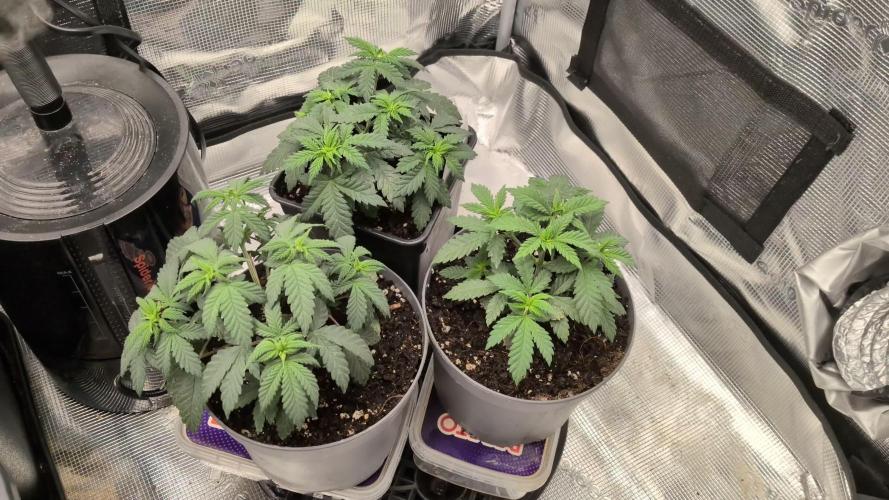
Waiting for more 20l pots for the blood moon gelato transplant should be done for new year
Likes
9
Share


@HUMO_Cultiva
Follow
We start week 3 of bloom!! Goofiez 2 amor compound genetics it’s the champions!!

Likes
12
Share


@PhinolaGreen
Follow
9. Woche
Glowberry Rush Auto Anesia Seeds entwickelt sich soweit gut, sie hat ordentlich an Höhe zugelegt. Ich werde diese Woche noch einen Lollipop machen und sie oben rum bisschen ausdünnen von den Blättern. Sonst gefällt sie mir wirklich sehr gut. Interessant wie sie wächst 😊💚
Edit 2 Tage später:
Ich habe im unteren Bereich ein bisschen ausgedünnt und überflüssige Triebe abgeschnitten, die eh zu wenig Licht kriegen, um Popcorn Buds zu vermeiden. Oben rum habe ich ein bisschen defoliert, damit die unteren Etagen mehr Licht bekommen und die Dame sich entspannt auf die Hauptblüten konzentrieren kann. Ich habe die Additive angepasst und habe den Fokus jetzt auf Blütenbildung. Sie bekommt jetzt 2x die Woche Dünger, das ist einfacher zu handeln mit den Spitzen im Medium. Ich verplan manchmal das Gießen und dann wäre es nicht gut wenn der EC vom Drain noch zu hoch wäre und sich Salze im Unterboden ablagern und anreichern. Bis jetzt kriege ich das gut gelöst aber es kommt halt manchmal vor, bis jetzt verzeiht sie mir das 😌💚
