


Likes
Comments
Share

@GERGrowDesigns
Follow
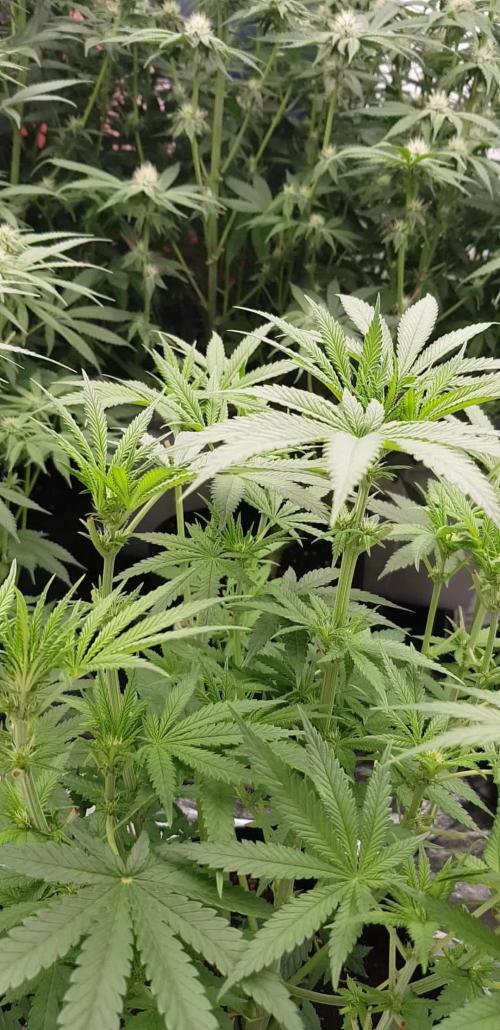
Welcome to Flower week 2 of Fast Buds LemonPaya
I'm excited to share my grow journey with you from my
FastBuds Project . It's going to be an incredible ride, full of learning, growing, and connecting with fellow growers from all around the world!
For this Project , I’ve chosen the Feminized Photo strain Lemonpaya :
Here’s what I’m working with:
• 🌱 Tent: 120x60x80
• 🧑🌾 Breeder Company: Fast buds
• 💧 Humidity Range: 50
• ⏳ Flowering Time: 58 Days
• Strain Info: 30%THC
• 🌡️ Temperature: 26
• 🍵 Pot Size: 16l
• Nutrient Brand: Narcos
• ⚡ Lights : 600W x 2
A huge thank you to Fast Buds for allowing me to try my Best with this amazing collection from Automatic and Photo Strains they managed to Sponsore . Big thanks for supporting the grower community worldwide! Your genetics and passion speak for themselves!
I would truly appreciate every bit of feedback, help, questions, or discussions – and of course, your likes and interactions mean the world to me as I try to stand out in this exciting competition!
Let’s grow together – and don’t forget to stop by again to see the latest updates!
Happy growing!
Stay lifted and stay curious!
Peace & Buds!


Likes
7
Share


@XoticGROW666
Follow
( RUNTZ X F1DURB X GUSHERS )🍬🌈🍨🍧
PURP KICKIN INN END #WEEK4
CANT WAIT TILL THE BUDS SWELL UPP!!
SUPA INTENSE CANDY TERPS THIS ROUND
NOT BIG BUDS BUT SUPA HIGH IN BRIXX LEVEL WITH ALL THE ORGANIC CARBON INPUTS!! PPM 900/1200 1.2 max
(Face Off OG x Watermelon Zkittlez) X (Runtz x F1 Durb x Gushers) 🍉🍬🌈🍧🍨🍦
LIL PRUPLE TINT WIT MOUTH WATERING SUGARY TERPS KICK INN END #WEEK4 BY WEEK 7/8 SHE WILL BE PURPLE PURPLE WIT SUPER INTENSE CANDY MOUTH WATERING TERPS CANT WAIT TILL SEE THEM BUDS SWELL UPP!! PHENO A/B
NOT BIG BUDS BUT SUPA HIGH IN BRIXX LEVEL WITH ALL THE ORGANIC CARBON INPUTS!! PPM 900/1200 1.2 max

Likes
51
Share


@Chumpkilla
Follow
11/16/23 - Day 10 - Here we are on day 10 and she had a root hit the water over night. About 8 hrs later she had two roots in the water and her leaves are starting to perk up. From here on out I expect a rocket ship. Shes getting access to all the nutes now.
11/18/23 - Day 12 - The roots are going about as I expected in this Leaf Box. Shes always sad until her roots hit the water, then the fuse has been lit! There is no going back. When I looked at the water today there was one root that was floating about 7 - 8 in long that surprised me. Yesterday it was long maybe 4" but today it's at least doubled. 😀
Its so much fun growing in this Leaf Box. You really get to experience the joy in it, rather than the stress of trying to figure out some technical issue. Here the techical issues are close to none. I really get to focus on the training part. It also allows me to be more observant and I get more time to think about the little changes that I see. Usually my mind is so clouded with some engineering issue with her life support that I dont usually get the time to really focus on the plant. Its a whole different feel growing in the Leaf box.
I posted a video up top. If you watch it you'll understand my above statement. Choosing the option to move to the next phase in the software is about as hard as it will ever get (aside from harvest, thats ALWAYS a bitch) Watch the video and if your feeling some kind of way let me know what you think.
Likes
17
Share

@Bncgrower
Follow
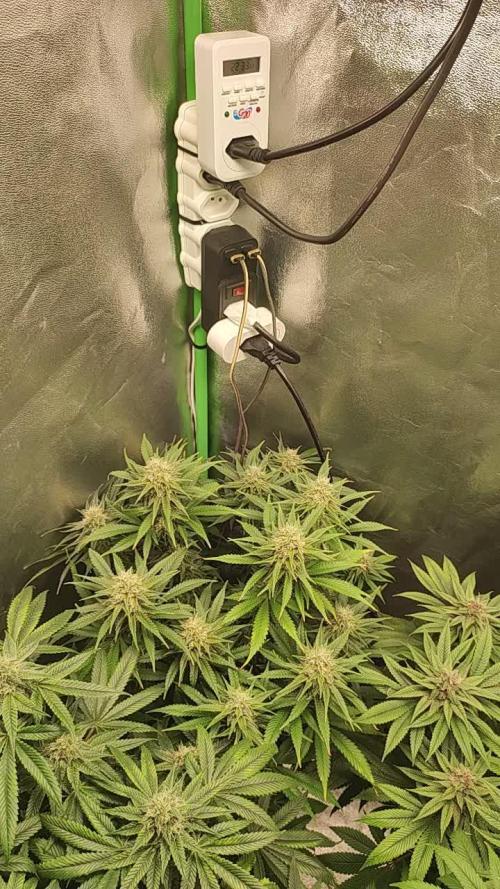
This girl is really doing very well, I loved the development and more by the color of the trichomes I would say that it would already be a great time for harvest, but it doesn't seem ready to me.. I will follow the schedule this is the last week with the hand well loaded with nutrients.. and in the next weeks I will slow down the pace and in the other I will do the wash.. I had never grown with mineral before, I had no idea how much salt accumulates, even using the cleanse a few times a week.. it is surreal so the wash in the last week has to be very well done.. It will be an excellent result, I am sure.
Thank you for taking a little of your time to pass on my humble diary. 🙏✌️👊🌿🌿🌿
Likes
74
Share

@Schnabeldino
Follow
_____📅 Week 7 | 📅 🌼🌸🌺Pre-flower🌼🌸🌺 ______
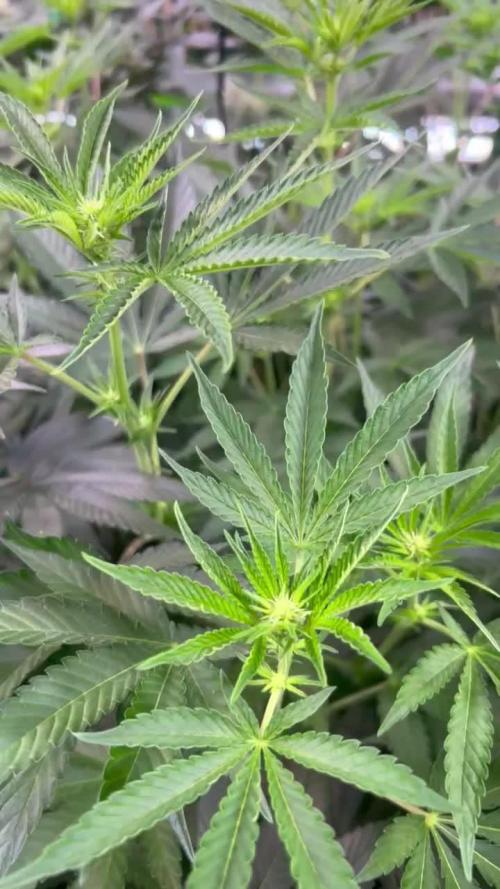
🔸The red lady 💃 is doing great since I put her in the big tent below the sunlight lamps, but it looks like the light is still too strong. But as I have 5 other plants in there I won't change anything and see how she continues to do.
🔸This week I have watered it twice again, 2 x 2,5 l
______________________________________________________________________________________
current conditions
🌡️🔆= 24-25°
🌡️🌜= 18-19°
💨 Hum. = 67%
🔦 PPFD = 800 umol 12/12
🔦⌚DLI = ~ 34
_________________________________________________________________________________________
Equipment to use:
💡 Light: 2 x Sanlight Evo 4- 120 on 90%
🌬️ 3 osziling clips fans
⛺ tent:: 120 x120 x 180 Spider-Farmer
🍯 Pots: 15 liter pot
🌱 Soil: Bio-Bizz light mix
💊 Nutrients: Advanced Nutrients
💧 Water: Tap Water 0,5 EC

Likes
35
Share


@DutchFarmer
Follow
She has returned with two 2 tops
Lets hope she gives me sativa dreams ! 💤 😴
She is so strong 💪 and stable im impressed with Kannabia Genetics !
I LOVE YOU KANNABIA GENETICS! 😍😘
Check out my Cannabis Community, please👇like👇, follow, comment, and subscribe to my YouTube channel👇. ❄️🌱🍻
https://www.youtube.com/@DutchF4rmer
Join our cannabis community community for weekly giveaways 👌
(Discord Server)
https://discord.gg/VMu6rH4a7V
It will be appreciated! ❤️
Happy Growing 🌱🌱🌱

Likes
38
Share


@LittleBigTrees
Follow
I've increased the feed and light now.
I will repot soon .
I've pulled the browned leaves from the lower stem and the new growth is slowly turning green .
They'll burst into stretch mode once I repot them next week .
Hope everyone's grow is going well and the sun is shining on you 🌞


Processing
Likes
12
Share


@Fabii
Follow
Let’s see how good is Emerald Harvest with Flowering time after 10 Weeks of Veg from seed
Hopefully a couple of Comments my page has been dry lol

Likes
9
Share


@41310a
Follow
Cultivation was very easy in terms of vegetation and up to half of flowering, where I encountered difficulties and ended up postponing their harvest.
drying Purple presented 220g wet and 39g dry. I can smell a fruity scent on it and I see a lot of resin. I'm happy with the result but I still want a 50g plant.


Likes
13
Share


@Robeeriegenetics
Follow
Plants recovering well …heat is causing some problems in the indica room otherwise all is well …1 more week till flush then 1 more week after that til harvest
Likes
49
Share


@Roberts
Follow
RSV11 grew really well. She has some big musky smelling colas on her. Lots of sagging in the branches from the weight. She has a musky earthy smell. Nice layer of frost as well. I will try to get more information on her by the final weight video. Thank you Spider Farmer, and Terpyz mutant Genetics. 🤜🏻🤛🏻🌱❄️
Thank you grow diaries community for the 👇likes👇, follows, comments, and subscriptions on my YouTube channel👇.
Thank you Happy Growing 🌱🌱🌱
https://youtube.com/channel/UCAhN7yRzWLpcaRHhMIQ7X4g


Likes
10
Share


@Kali_DC
Follow
pH fluctuate daily sending the PPM to spikes to higher. Minor tip Burns, plants are healthy and eating all It can.


Likes
14
Share


@Bread_n_Buds
Follow
It was a lot of work to collect two of these young ladies, many leaves, many sugar leaves to separate for the extractions. The product is very pleasant, this plant is very well balanced. It probably has numerous phenotypes but who cares it's great. Another great work from the guys at Seeds Mafia.
https://seedsmafia.com/en/
https://www.mars-hydro.com/
Likes
12
Share


@DBQush
Follow
Dear diary,
Week 9 marks the last week of veg as it ends with us finally transitioning into the flowering phase. As we embark onto flowing, I continue to fine-tune the environmental conditions and adjust nutrient levels to support optimal development.
🍀🍀🍀🍀🍀🍀🍀🍀🍀🍀
⏰ Day 60:
I administered a feeding with a nutrient strength of 1.66ms and adjusted the pH to 5.8. Additionally, I increased the light intensity from 20 to 25 dli (daily light integral).
To maintain the desired humidity levels, I turned on the air conditioner to dehumidify the space, successfully bringing it back down to 58% as it started slipping up to the 70s again. However, this adjustment caused a slight drop in temperatures to 24.5 degrees Celsius.
⏰ Day 61:
During the evening feeding session at 18:00, the plants received a feeding with a nutrient strength of 1.66ms and a pH level of 5.8. Furthermore, I elevated the light intensity from 25 to 28 dli, positioning the lights 50cm above the canopy.
The night temperatures have also stabilized at 22.5 degrees Celsius after the AC change.
⏰ Day 62:
I provided a feeding with a nutrient strength of 1.67ms and a pH level of 5.6.
I also conducted some light low-stress training and removed any growth on the horizontal stems, as each stem already possesses its intended 16 tops. These adjustments will help maintain an even canopy and ensure optimal light penetration.
⏰ Day 63:
During the evening feeding session, I administered a feeding with a nutrient solution at a strength of 1.67ms and adjusted the pH to 5.7.
To enhance light exposure, I increased the light intensity to 32 dli/500ppfd and positioning the lights 48cm above the canopy.
⏰ Day 64:
At 11:55, just before lights off, I applied pesticides to address any potential pest issues.
During the evening feeding session, I provided a feeding with a nutrient strength of 1.67ms and a pH level of 5.7.
Additionally, I removed some excess growth and increased the light intensity to 37 dli/580ppfd, getting to the optimal levels before flowering starts.
⏰ Day 65 (Day 1 Flower):
I initiated the flowering phase by switching the lights to a 12/12 cycle and provided a feeding with a nutrient strength of 1.85ms and a pH level of 6.1.
As the plants enter the flowering stage, I have adjusted the nutrient composition.
The calmag has been reduced to 1.5ml/l, Bud Candy has been added at 1ml/l, and the A+B mix has been increased to 3ml/l.
The plants water consumption has also increased, now reaching approximately 2 liters per day, which aligns well with the timing of the light cycle change.
The temperatures have stabilized around 25 degrees Celsius during the day, and the relative humidity ranges between 55-60%. I have also set up the scrog net in preparation for the upcoming stretch phase.
⏰ Day 66:
During the evening feeding session, I administered a feeding with a nutrient strength of 1.85ms and adjusted the pH to 6.0.
Likes
7
Share

@Bread_n_Buds
Follow
White Truffle is a very promising new strain from Zamnesia, let's see how it goes.
** Remember that we are growing a plant worked with the techniques indicated and another left to grow without pruning to preserve its speed; in the previous/next diary you will find the other plant of the same variety.
In this diary we find the plant worked with the Main Lining and here we immediately noticed that it is a plant with irregular internodes, that is, the mini branches are not parallel on the main branch and are in spurious numbers and strangely positioned, a big gamble to decide what to keep and what to leave. I hope I have not cleaned too much, because I have done it but it seems wise to me to try to leave everything that can see the light better.
We are in a 100% organic configuration, the soil is recycled Promix + 1/3 fresh soil + 10% Perlite + RQS Mycorrhizae Mix (4 g in the mix, 1 g under the small fiber pot).
We have switched to the early flowering program We feed with // 1 ml/l Power Roots - 1 ml/l Pure Zym - 1 ml/l Sugar Royal - 3 ml/l Alga Bloom - 1 ml/l Power Buds
We spray 5 ml/l Vita Race Foliare once a week.
For all the information: https://plagron.com/
All nutrients are available from Zamnesia: https://www.zamnesia.io/it/531-growshop/476-fertilizers
We always have the excellent mycorrhizae from RQS flowing in the soil. https://www.zamnesia.io/5778-mix-micorrhiza-easy-roots.html
Try this strain, it's an autumnal delight ---- // https://www.zamnesia.io/11184-zamnesia-white-truffle-seeds.html
Zamnesia Brief Description // The product of crossing GG with Peanut Butter Breath, White Truffle boasts a first-class genetic line, taking the best from some of the best American cultivars. And as you'd expect, it has a lot to offer: a high THC content, an irresistible flavour and a relaxing, carefree effect. Oh, and let's not forget that it's incredibly easy to grow too! Buy your seeds today and enjoy easy harvests of delicious, US-grown bud.
And as you'd expect, it has a lot to offer: a high THC content, an irresistible flavour and a relaxing, carefree effect. Oh, and let's not forget that it's incredibly easy to grow too! Buy your seeds today and enjoy easy harvests of delicious, USA-grown bud.
The whole world of growing and more is here at Zamnesia - check out the site for "nature's best" in all shapes and colors.
The new strains are amazing and the old ones are no exception...
-- // www.zamnesia.com
Likes
16
Share


@SeshHouseCannabis
Follow
This week we lost one of the Slurricane due to rotten root that were caused by the electricity blackout. Other plant were doing fine. Hope everything will be good until harvest.


