


Likes
Comments
Share

@All_our_small_plants
Follow
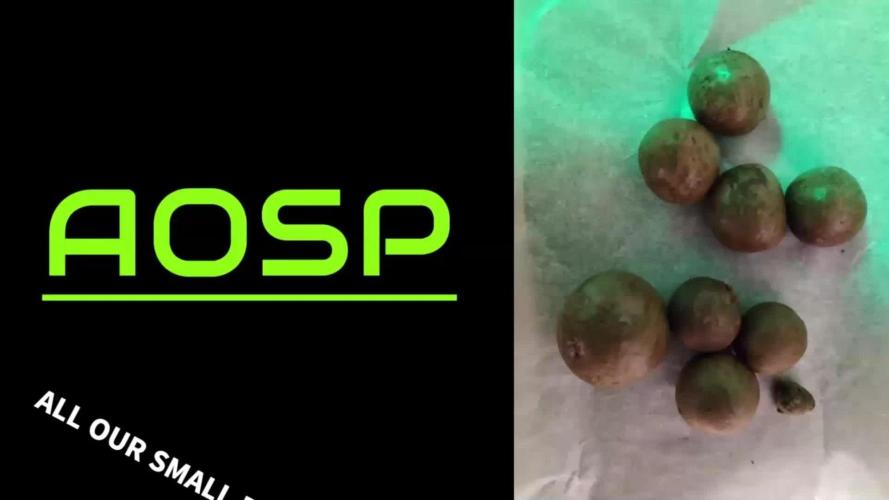
Tag 167 heute haben wir nach einer Kontrolle bemerkt das es vermehrt zu Schimmel Bildung kam, und wir haben ein paar Bananen in den Blüten Gefunden, Vermutlich ist es zu viel Stress für die Lady. Mal warm dann wieder kalt, Hohe Luftfeuchtigkeit die ganze zeit. Wir haben nun ca.2,5 KG Nass Gewicht geerntet und werden aus diesem Hash machen, sobald es gefroren ist und wir es verarbeitet haben folgt nochmal ein update hier.
Alles in allem war es eine Interessante Pflanze und wir werden sie nochmal im indoor Testen.
Wir haben nun aus den 2,5 KG Frozen Hash gemacht. Dabei werden frisch geerntete Cannabis-Pflanzen sofort eingefroren und anschließend mit Eis und Wasser verarbeitet, um die Trichome (Harzkristalle) zu lösen und zu Haschisch zu pressen.
Wir haben dazu Bubble bags genommen, diese haben verschieden Micron-Größen: Typischerweise zwischen 25 µm und 220 µm. Je kleiner die Zahl, desto feiner das Sieb und desto reiner das Endprodukt.
Wir haben dazu ein kleines Video hochgeladen wo man den Ganzen Prozess sehen kann.
am ende haben wir dann ein paar schöne Temple Balls erhalten und diese waren einfach genial!!!

Likes
35
Share


@MadeInGermany
Follow
Info:
Unfortunately, I had to find out that my account is used for fake pages in social media.
I am only active here on growdiaries.
I am not on facebook instagram twitter etc All accounts except this one are fake.
Flowering day 56
since the time
change to 12/12 h.
Hi everyone :-)
The next 15-20 days are harvested because the trichomes are 60% milky, 30% clear and 10% amber.
She continues to develop her buds well and the smell is getting sweeter and sweeter :-).
She doesn't cause any problems.
As always, the tent was cleaned this week and all containers refilled.
Stay healthy 🙏🏻👍
You can buy this Strain at :
https://www.exoticseed.eu/
Type:
Quick Sherbet
☝️🏼
Genetics:
75% Indica / 25% Sativa
Sunset Sherbet X Black Lemon
👍
Vega lamp:
2 x Todogrow Led
Quantum Board 100 W
💡
Bloom Lamp :
2 x Todogrow Led
Cxb 3590 COB 3500 K 205W
💡💡☝️🏼
Soil :
Canna Coco Professional +
☝️🏼
Fertilizer:
Green House Powder Feeding
☝️🏼🌱
Water:
Osmosis water mixed with normal water (24 hours stale that the chlorine evaporates) to 0.2 EC. Add Cal / Mag to 0.4 Ec Ph with Organic Ph - to 5.5 - 5.8


Likes
6
Share


Likes
18
Share


@valiotoro
Follow
Hello everyone 😎
Week 6 of flower for the Amnesia Zkittlez🍭
Only 1 plant left then finito✔️
Very nice smell super sweet🤤
The buds are super sticky🔥

Processing
Likes
11
Share


@MELs_Garden
Follow
Semana 4 (del 23 al 29 de abril)
Los espacios para las flores estan preparados, y las flores estan en pleno crecimiento.
25 de abril
Riego con 1.2l x planta
2A + 2B + 1.5 Candy + 1.5 Big Bud + 1 overdrive + 1 B-52 + 0.16 Mammoth P + 2.5 Calmag
Ph 6.1
EC: 1.2
T:20°C
Periódicamente quitamos hojas que vamos viendo tocadas o que estorban.
25 de abril
Los trips siguen ahí, no son muchos y parece que no prosperan demasiado pero estan ahi. Riego foliar con spruzit y tec fort para mantenerlo controlados y hoy esperamos que nos llegue diatomea para erradicarlos del todo.
Quitamos las hojas que vemos que molestan o que son un poco inútiles porque no les da demasiada luz.
Cada día que pasa se ven más flores y más grandes.
• Malas noticias, el medidor de EC se averio y los vores del riego pasado fueron erróneos, pero ya tenemos nueva herramienta y solucionaremos los pequeños problemas causados.
29/4
Riego con 1.1l por planta
2 A + 2 B + 1.5 Big Bud + 1.5 Overdrive + 1.5 Candy + 2 Sensizym
PH 6.1/6.2
EC 1.72/1.8 ms
18/19.8°C
Ayer pusimos varias trampas adesivas azules para trips por si hay alguno que no vaya dando saltos de planta en planta. Hoy realizamos ultimo ( esperemos) riego antiplagas, usaremos 1.5ml•l de aceite de nem y 20g por litro de tierra de diatomea que por lo que dicen es mano de santo.
Esta semana las temperaturas han subido un poco; en encendido oscilan entre 25-27°C, estos últimos días siendo más de 26-28°C.
Todo sobre la marcha, algunas plantas como la bubba parece que se está adelantando porque es bastante rápida 50-55 dias, la Muffin berry ( que la teníamos en 1.2m ) la hemos tenido que doblar 45° para que no se nos vaya de altura. Por lo demás vosotros diréis 😁




Likes
16
Share


@SeshHouseCannabis
Follow
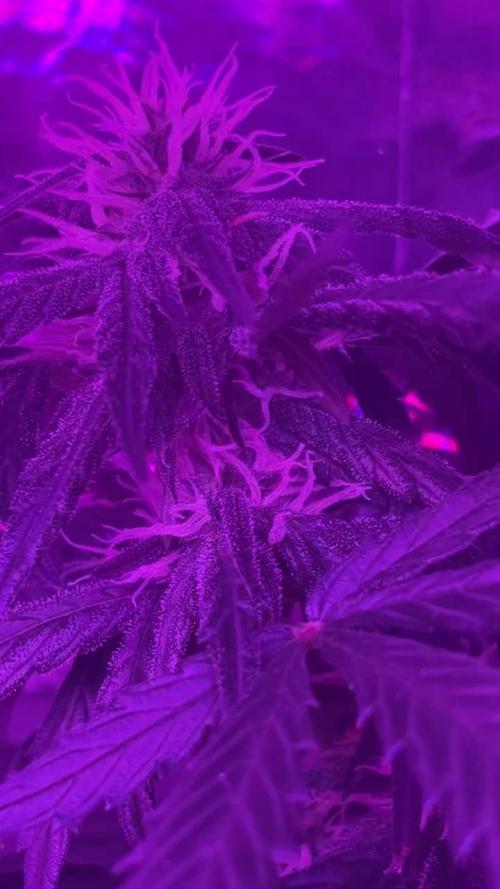
Been doing a lots of defoliation in this week(Especially on ETHOS-Lilac Diesel) and all the plant are looking great. Still waiting for the bloom fertilizer and then we will start flowering stage as soon as we received the fertilizers.


Processing
Likes
2
Share


@Ld966
Follow
Well she seems to be getting along very well for her 4th week in flower. Nothing exciting done this week i keep feeding her about 5 litres of water with 30ml canna A and 30ml canna B with a ph of 6.3 on average water schedule about every 24hours.

Likes
29
Share


@Basementganja
Follow
This C4 auto was very fast to flower, and stretched up to produce some very pretty, berry smelling/tasting nugs!
The buds didn't flower very dense, they formed as fox-tail shapes.
Yield is on the low-end of acceptable, but good considering the bud structure!
I'm growing another next run, to compare phenotypes!
Likes
3
Share


@KcKush
Follow
* Looks like we got 2 males so far number 2 and 6.
*Soil Ph climed back up to 6.2 by adding about 1TBs of lime.
*On one of the males I believe #2 I did find what appears to be thrips. So I sprayed down everything no sign of anything on any plant. Now that i see it they are small aphids
*Increased PH from 450 to 550


Likes
7
Share


@HylianGrass
Follow
ITs finally tine to cut the girl . After checking all around for trichomes I’ve decided it was about damn time. She took longer to flush , i keep her in the dark for a good week until i felt like she used up all of her locked down nutes . Just by doing my bud manicuring and trimming i got a good half gramm of resin that turned to delicious fingerhash . The buds show a bit of foxtailing but i really dont mind it , and it doesn’t affect the taste or quality’s of the end product. As you can see lst training gave results. This yield is definitely a good one with amazing results, the smell is really strong but i doesn’t smell like typical weed if i can say so . All around fastbuds genetics goes hand in hand with my set up, a real blast growing this strain
Likes
16
Share


Likes
81
Share


@NugLife420
Follow
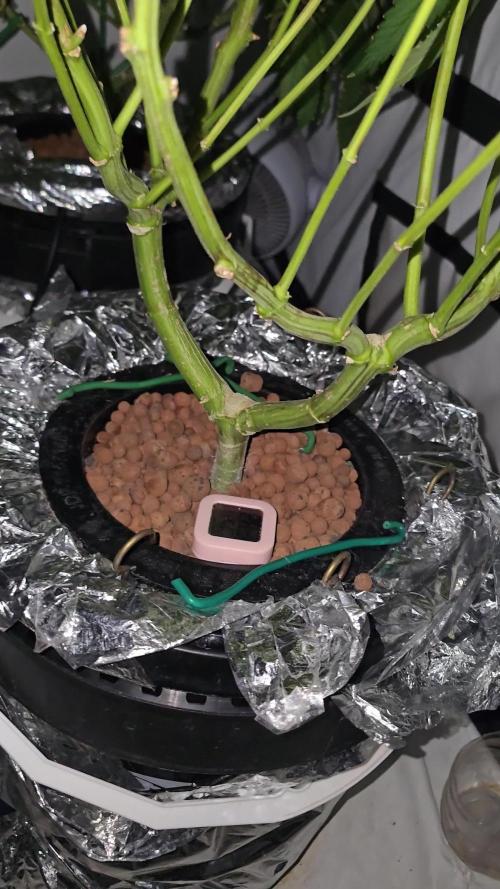
So far I am really happy. The ladies are definitely packing on some weight and swelling up nicely. Looking nice and frosty up close. I can't wait to upload more pics. 😃

Likes
35
Share


@Rangaku
Follow
The big girls have the tent to themselves after the GZ auto was harvested this week , looks to be around 5oz when dry so a nice little bonus smoke .
Tied the girls out into final positions and they are looking and feeling chunky some of these colas are over a foot long and getting smelly as .

Likes
21
Share

@DogDoctorOfficial
Follow
🌌 Cosmic Noodles — Week 9 From Seed
(≈ Week 5 Flower | 12/12 From Seed)
Divided Report — Growth vs Stress
⸻
Quick Recap — How We Got Here
This run continues under 12/12 from seed, now entering:
• 🌱 Week 9 from seed
• 🌸 ≈ Week 5 of flowering
At this stage, plants are expected to be:
• Fully transitioned into flower
• Actively stacking buds
• Stabilizing structure after stretch
However, this week became something more than a standard update…
👉 It became a controlled contrast experiment
We now have three distinct expressions in the same environment:
• Plant A → Stretch-driven structure
• Plant B → Open, balanced, high-performance plant
• Overwatered Plant → Intentionally stressed (root zone)
Same room. Same feed. Same conditions.
Different outcomes.
⸻
🌊 The Overwatered Plant — Controlled Stress
What was done
This plant was intentionally overwatered to observe:
• Root response
• Recovery potential
• Impact on flowering progression
⸻
🔬 What overwatering actually does
• Saturated medium → oxygen depletion in root zone
• Roots lose function → nutrient uptake collapses
• Plant shows deficiency symptoms without deficiency
• Metabolism slows → flower development stalls
⸻
👁️ Current Observations (Week 9 / Flower Week 5)
From the visual timeline:
• Heavy, swollen leaf droop (not thirst-related)
• Necrotic/burnt leaf edges
• Weak flower formation
• Overall loss of vigor
• No strong signs of recovery yet
👉 This is consistent with root hypoxia stress
⸻
🛠️ Corrective Actions Taken
• ✅ Full drainage of excess water
• ✅ Substrate allowed to dry
• ✅ Feeding paused (critical decision)
• ✅ No additional stress applied
This approach respects one key principle:
🌱 “Recovery is biological, not forced.”
⸻
⚖️ Current Status — Honest Assessment
At this moment:
👉 The plant is not showing a strong rebound
And that’s important to state clearly.
⸻
🔮 Possible Outcomes
🌱 Scenario 1 — Late Recovery (possible, but limited probability)
• New growth improves
• Leaf degradation slows
• Buds continue developing (reduced yield expected)
⸻
☠️ Scenario 2 — Progressive Decline (more likely)
• Continued leaf death
• Minimal metabolic recovery
• Poor flower development
⸻
👉 Either way, this plant has already fulfilled its purpose:
It became a living demonstration of root zone importance
⸻
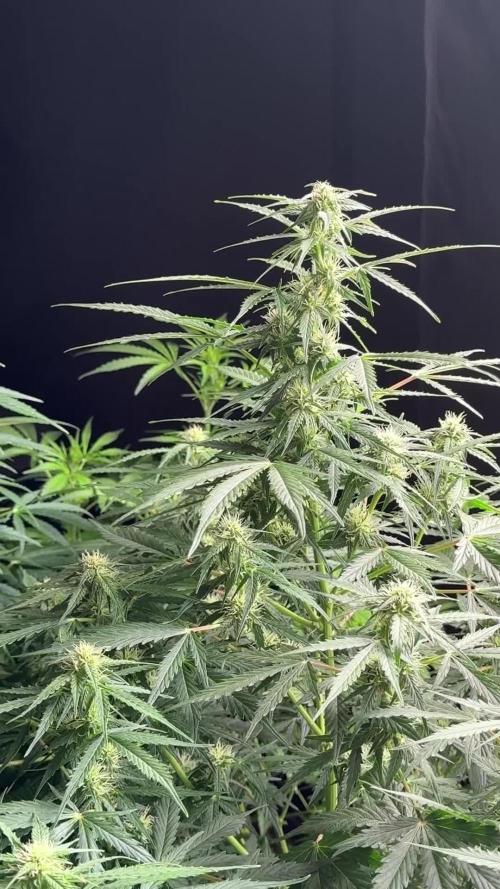
🌿 Plant A — Stretch Expression
Structure
• Taller, more vertical growth
• Longer internodal spacing
• More “reaching” behavior
Current State (Week 5 Flower)
• Healthy foliage overall
• Bud sites forming consistently
• No stress signals
👉 This phenotype leans toward:
🌱 Structure over density
⸻
🌿 Plant B — The Balanced Beast
This one stands out immediately.
Structure
• Open architecture
• Excellent light penetration
• Strong lateral branching
Response to Defoliation
• Fast recovery
• No visible stress
• Continued aggressive development
Flowering Progress
• Clean bud stacking
• Strong formation across canopy
• Uniform development
👉 This is:
🌿 A plant fully aligned with its environment
⸻
✂️ Defoliation — Outcome Analysis
Defoliation was applied to the healthy plants.
Results:
• No slowdown
• No shock response
• Improved light distribution
• Strong continuation of flowering
👉 This confirms:
• Timing ✅
• Intensity ✅
• Plant health baseline ✅
⸻
🌡️ Environment & Feeding — Stability Check
• 🌡️ Temperature → unchanged from previous week
• 💧 Feeding → same regimen maintained
• ⚖️ No variable changes introduced
👉 Critical insight:
Differences observed are not environmental
They are root-driven and plant-specific
⸻
🧠 Key Lesson of Week 9
🌱 “In flower, roots dictate everything.”
Even under identical conditions:
• Healthy roots → explosive growth
• Stressed roots → systemic collapse
This week shows clearly:
👉 The plant is not just what you feed…
👉 It is what it can absorb and process
⸻
🎥 Mr. Baggy — Introduction
This week also marks:
🎬 The arrival of Mr. Baggy
Even if limited visually in this update, his presence is now part of the journey.
And honestly… perfect timing.
Because this week represents:
Real growing
Not just pretty plants
⸻
🔮 What to Expect — Moving Forward
🌿 Plant A & B
• Continued bud stacking
• Increased density over next 1–2 weeks
• Gradual nutrient demand peak
• Structure already defined → now focusing on weight
⸻
🌊 Overwatered Plant
Two paths remain:
• 🌱 Slow stabilization (best case)
• ☠️ Continued decline (most likely)
No intervention planned beyond:
Observation + stability
⸻
🙏 Closing Words — From Grower to Growers
To everyone following this journey:
• The supporters
• The silent watchers
• The experienced growers
• The beginners
• The sponsors
• The platform
• The community
👉 Thank you.
Not every week is perfect.
Not every plant is beautiful.
But every moment teaches something.
And that’s the point.
📡 DELETED @ 1K Please stay tuned.we never quit https://www.youtube.com/@thedogdoctorofficial NEW
🙏 Thank you for your patience and continued support.
FOR DISCOUNT CODES AND MORE JUST FOLLOW THE LINK https://website.beacons.ai/dogdoctorofficial
📲 Don’t forget to Subscribe and follow me on Instagram and YouTube @DogDoctorOfficial for exclusive content, real-time updates, and behind-the-scenes magic. We’ve got so much more coming, including transplanting and all the amazing techniques that go along with it. You won’t want to miss it.
GrowDiaries Journal: https://growdiaries.com/grower/dogdoctorofficial
Instagram: https://www.instagram.com/dogdoctorofficial/
YouTube: https://www.youtube.com/@dogdoctorofficial Deleted by Youtube
Vimeo : https://vimeo.com/dogdoctorofficial Under construction stay tuned ⸻
Explore the Gear that Powers My Grow
If you’re curious about the tech I’m using, check out these links:
🔆 Lighting & Environmental Control
• Future of Grow — Advanced LED lighting technology
https://www.futureofgrow.com/
DISCOUNT CODE: DOG20
• Lumiflora — Under-canopy LED lighting
https://lumiflorade.com/
• TrollMaster — Environmental controllers and automation gear (past collaboration)
⸻
Genetics
• Zamnesia Seeds — Genetics used in this project
https://www.zamnesia.com/
⸻
🌱 Soil, Substrates, Boosters & Root Support
• Plagron — Substrates, bio mixes, and supportive products
https://plagron.com/en/
⸻
🎒 Storage, Curing & Preservation
• Grove Bags — Curing and storage solutions
https://grovebags.com/
⸻
📸 Photography Equipment & Tools
(Not sponsors, but part of my creative toolkit)
• Sony A6700
• Sony full-frame macro lens + few more
• Stacking photography workflow - learning
• iPhone (for behind-the-scenes shots)
We’ve got much more coming as we move through the grow cycles. Trust me, you won’t want to miss the next steps, let’s push the boundaries of indoor horticulture together!
As always, this is shared for educational purposes, aiming to spread understanding and appreciation for this plant. Let’s celebrate it responsibly and continue to learn and grow together.
With true love comes happiness. Always believe in yourself, and always do things expecting nothing and with an open heart. Be a giver, and the universe will give back in ways you could never imagine.
💚 Growers love to all 💚
📸 P.S. – The Eye Behind the Lens
All photos in this diary (for now — except for the ones showing the camera, which I took with an iPhone) are taken with a Sony A6700 paired with a Sony full-frame macro lens and a few more.
Photography is part of the story — it’s how we share the fine textures, the glow, and the quiet details that words can’t always capture.
I’ve also started experimenting with photo stacking — a technique where multiple images, each taken at a slightly different focus point, are layered together to create one perfectly sharp image from front to back.
It’s not digital enhancement or AI; it’s pure photography — a way to reveal the plant’s beauty in microscopic depth, from trichome to petal.
You’ll even see a few shots of "ghost me" capturing the shots — camera, lens, setup — because every grow deserves not just to be cultivated, but documented like art.
FOR DISCOUNT CODES AND MORE JUST FOLLOW THE LINK https://website.beacons.ai/dogdoctorofficial
NEW DISCORD - Official Server Invite Link : https://discord.gg/ksjAkA5T74
Likes
6
Share

@420Junglist
Follow
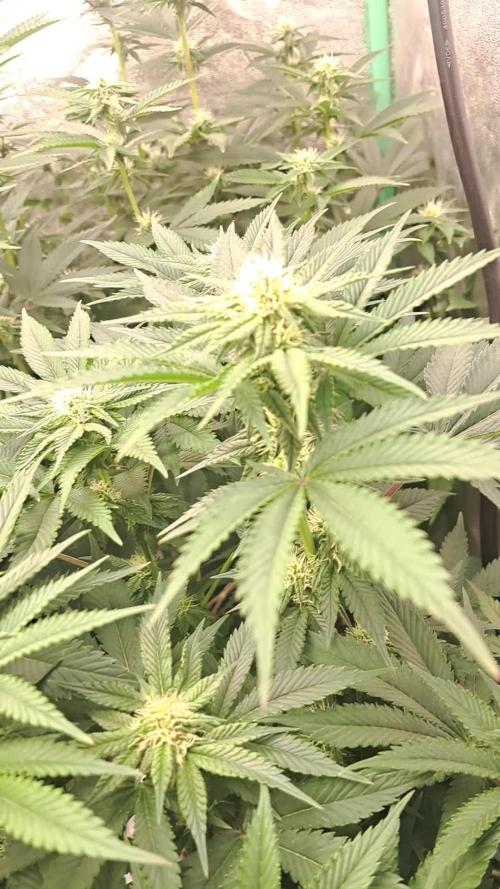
Here we are at roughly 3.5 weeks ane everything looks to be on track. These fastbud genetics are top notch. Cant wait for them to finish up.
Likes
10
Share


@Dreadnug
Follow
Plant has been getting straight pH balanced water this last week and minimal nutes.
It is showing some slight nute burn so I let off a bit and raised the light canopy about 6”. I discovered that what I thought was a calcium or potassium deficiency was actually a rookie grower error by me. I have an RO system that I use to water all my strains in the grow room including this one, but when adding nutes to the water, it takes too long so I had been filling them up with well water. When I had originally tested the well water, I must had used a faulty testing agent as after testing it this last week, I was showing a pH of 7.5 vs. my RO of 6.2. Thus, every time I was adding nutes (multiple times a week) I was significantly fluctuating the pH between regular feedings and nutrient additions. To make matters worse, when I originally thought it was nute burn, I flushed each plant with well water and likely caused additional stress.
Anyway, I have since learned that the well water needs to be treated, I only utilize RO water the last few days and plan to do so over this next week.
Also, I have turned off the CO2 system as I was starting to see signs of heat stress on a couple of the strains (not this one). The literature I have reviewed suggested that these strains might be able to handle heat closer to 90F but it was also causing issues with high humidity so when I added a dehumidifier, it pushed the day temp to between 90-92F and the overnight temps were not getting low enough (maybe 85F or so). Maybe I could leave out the dehumidifier, but I was getting rH of 70% and didn’t want to risk any bud rot or mildew growth. So for now, I have turned off the CO2 and am getting high temps of 81F with 60% humidity and overnight temps of 74F and 50% humidity.
The Future #1 has shown the least signs of stress and is fattening up its buds very nicely. Over the next few weeks I will start monitoring the trichomes for a nice milky color for harvesting.