


Likes
Comments
Share

@punktkomma
Follow
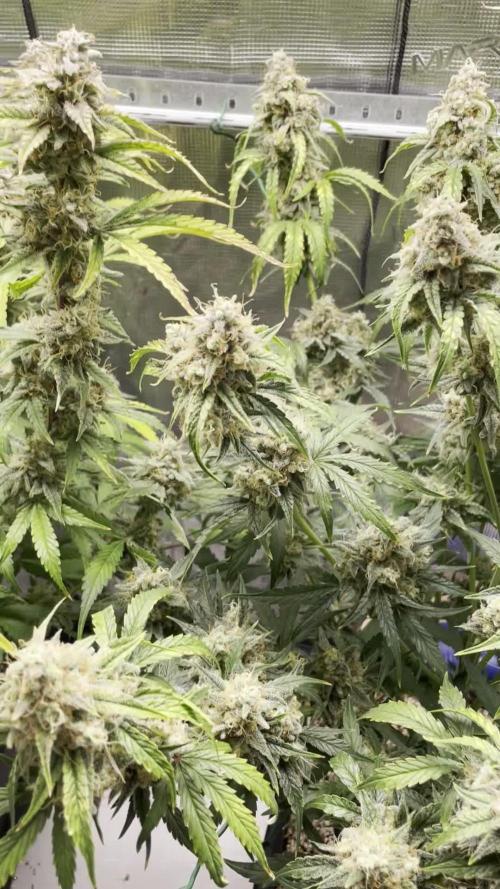
The last week went great.
This time I didn’t mess anything up, haha.
#1 is already pretty ripe... I’ll probably wait until the weekend, maybe a few extra days.
#2 is also ripening nicely, no complaints there.
Sour Stompers are really great strains, just super fun to grow.
The tent smells super sour right now, haha
PH5.8 | EC1.4 | DLI55 | VPD1.2-1.5

Likes
86
Share


@PapaNugs
Follow
Big week here. Got the girls transplanted to their 7 gallon pots. First time with pots this big. Gonna really let them grow. Got a little water with BT and mycorrhiza.

Likes
35
Share


@MadeInGermany
Follow
Info:
Unfortunately, I had to find out that my account is used for fake pages in social media.
I am only active here on growdiaries.
I am not on facebook instagram twitter etc All accounts except this one are fake.
Flowering day 1
since time change
to 12/12 h.
Hi guys :-) .
The time has finally come 👍
You have been switched to 12/12 hrs and are ready to flower.
Of course, cuttings were cut beforehand to keep the genetics.
For 4 days now she has also been getting Fast Buds from GreenBuzzLiquids.
They were also sprayed again with GBL Fast Plant spray.
She is very healthy and I am excited to see how she gets going again in bloom :-).
This week it was poured twice with 1.2 l each time (for nutrients, see nutrient table above).
Then I filled canisters with fresh osmosis water for the next few weeks 👍.
The tent was cleaned and every plant was checked for health.
At the moment I am tinkering with the ventilation because there are currently 4 fans with 4 activated carbon filters running, which I want to make more efficient by putting a hose through 2 tents.
These are the things about which you desperately at the beginning but learned from them in the end.
I wish you all a nice week.
Stay healthy 🙏🏻
You can buy this Nutrients at :
https://greenbuzzliquids.com/en/shop/
With the discount code: Made_in_Germany you get a discount of 15% on all products from an order value of 100 euros.
You can buy this Strain at :
https://greenhouseseeds.nl/
☝️🏼☝️🏼☝️🏼☝️🏼☝️🏼☝️🏼☝️🏼☝️🏼☝️🏼☝️🏼☝️🏼☝️🏼
Green House Seeds Company Cup Clone 🏆
Type:
Wonder Pie
☝️🏼
Genetics:
Wedding Cake x OG Kush
👍😍
Vega lamp: 2 x Todogrow Led
Quantum Board 100 W
💡
Flower Lamp : 2 x Todogrow Led
Cxb 3590 COB 3500 K 205 W
💡💡☝️🏼
Earth: Canna Coco Professional +
☝️🏼
Nutrients :
Green Buzz Liquids :
Organic Grow Liquid
Organic Bloom Liquid
Organic more PK
More Roots
Fast Buds
Humic Acid Plus
Growzyme Big Fruits
Clean Fruits
Cal / Mag
Organic Ph - Pulver
☝️🏼🌱
Water: Osmosis water mixed with normal water (24 hours stale that the chlorine evaporates) to 0.2 EC. Add Cal / Mag to 0.4 Ec Ph with Organic Ph - to 5.8


Likes
12
Share


@YourStonedBuddy
Follow
The girls have filled my space very nicely! i'm heavy handed on the defol trying to optimize bud sites & trying my best to keep everything even as i know these girls will stretch hard!
Girls have been enjoying plain water and foliar sprays including EM1


Likes
9
Share


@nurari
Follow
Из 6 растений, 2 уже собрано. Сейчас потребуется пару дней чтоб разобрать 3е, очистка пройдена.
2 растения дозревают, 1 ждет харвеста и уже пьет только воду...
надеюсь завтра будет время и оборву все веерные листья...
Likes
3
Share

@IndigoMist8
Follow
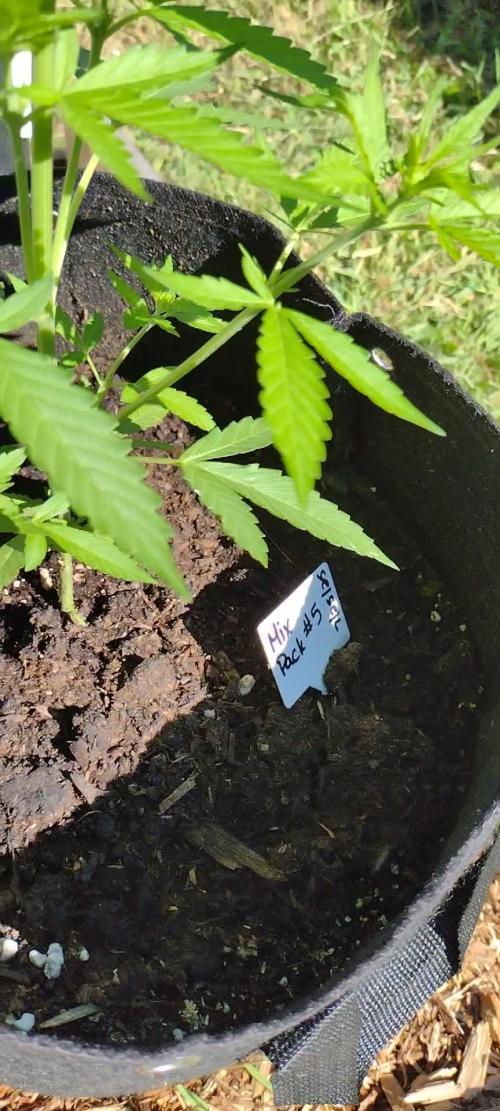
Temps have been on the cooler side lately, with a few days close to 80° .
Likes
13
Share


@STAYINGONMYMAINCBATORUNTWO
Follow
Doing amazingly! Actually started flush literally today! So stay tuned to see how chunky these flowers are going to get! They smell delicious! Candy shop in my tent with all these flavours!

Processing
Likes
14
Share


@Mr_Og_GreenThumb
Follow
Today 7/30/19, day 57 and the start of week 9. I'm still continuing to alternate between days with my pesticide treatment (especially after finding that bug living on one of hulkberries fan leaf) and thrive alive green daily foliage spray as a prophylactic solution against any possible pests or mold going into these last few dog days of veg. I will flush them with distilled ph'd water for two days this weekend in preparation for flower. Then I'll start them on some "flower fuel" bloom booster on top of my secret for success flower recipe at 1/4 of the recommended strength.
Outside of that still no adverse issue to report for the end of the 8th week. After my last trim, they both have responded very nicely, I was kind of worried about fat banana stalled growth. But one thing I noticed when I topped her at the 6th node, yes the main stem stopped growing but it developed many bud sites up and down every stem. Whereas hulkberry was topped at the 8th node, she has mainly focused on developing long stems and only 2 or 3 bud sites along her stems. Even though hulkberry in structure, is much bigger than fat banana and has a way bigger root system. Fat banana is bushier and has developed way more bud sites than hulkberry. I can't tell which strain will yield the most at this point only time will tell!
Also, a big shout out to "J"@RQS, thank you for the excellent customer service. Another reason why Royal Queen Seeds is top 3 in breeding!!

Processing
Likes
61
Share


@Dunk_Junk
Follow
This week She grew 13cm. Flowering stretch slowing down.
Her flower sites look absolutely lovely!!!
No sign of any purple as of yet though 😭


Likes
28
Share


@GanjaGecko
Follow
In der Woche hat es wieder scheiße geregnet. Ich musste zwar nur einmal gießen, allerdings mussten nach der Woche ⅓ vom Mainbud und zwei Teile der sidebuds weg, weil sich dort schimmel bemerkbar gemacht hat. Kann man sicht viel machen wenn die Ladys der Witterung komplett ausgesetzt sind.
Ich hatte die Woche nur einmal gegossen. Zusätze waren 1g/L BioEnhancer von GreenHouseFeeding, 1ml/L PowerBuds, 0.3ml/L GreenSensation von Plagron und 0.8ml/L BioBloom von BioBizz. Das ganze auf einen ph-Wert von 6.8 gebracht. Jede Lady bekam unterschiedlich viel. Je nach Gewicht des jeweiligen Topfes.
Ich hoffe das sich das Wetter langsam an den Sommer anpasst und die restliche Zeit ohne schimmel verläuft und mit mehr Sonne als Regen🍀💚


Likes
8
Share


@Kirsten
Follow
31.12.24:
I have been readjusting the LST pegs and wire daily. Sometimes, twice a day! (I know, too much time on my hands)! 😆
The plants have responded fantastically! I'm so glad I gave it a go. Some plants have been a bit too tall, and I snapped Do-sì-dos P3, pulling the stem down. Audibly snapped 😬I let it be, though. It seems to have healed mostly, in only 2 days.
I have increased the lighting to 70%. They're getting watered a few times a week, with 1 litre of Dechlorinated water, containing the following nutrients and additives;
1ml of Biobizz Bio-Grow,
1ml Biobizz Top Max,
1ml of Biobizz Bloom,
2ml of cal-mag,
1g of Ecothrive Biosys.
The plants are responding well to this concoction, so it's all good so far. The leaves are looking greener and are getting darker.
Will be monitoring to continue readjusting the LST ties. Also, to monitor the increased lighting level, to make sure they can handle that yet.
1.1.25:
Happy New Year!
I have continued to readjust the LST wire and plant pegs. Several times a day.
Coincidence would have it, I have a 6ft tropical aquarium which was time for cleaning! I always water my Acer tree in the front yard with this water, with beautiful results 😍 👌 🍁 I decided to try it out in my indoor garden. I'll post photos of before and after to see the difference, good or bad 😅
3.1.25:
Plants are doing very well, except for PPP3 I'm quite disappointed in that one, as I feel like it's wasting a space. I guess I'll have to keep it, along with the Do-sì-dos that I snapped twice, which refuses to die 😅
I started to lightly defoliate, which is difficult because I always get carried away with it.
I'm going to water again with the nutrients in description of this week.
4.1.25:
Continuing to defoliate and adjust the LST pegs and wire.
Watered today with 1ltr of dechlorinated water PH'd to 6.0. With the following nutrients;-
2ml Biobizz Bloom,
4ml Biobizz Bio-Grow,
2ml Cal-Mag,
2ml Ecothrive Flourish,
0.2 g/ltr of Ecothrive Biosys.
I've increased the Nitrogen by adding double the amount of Biobizz Bio-Grow. I'm trying to keep them growing for as long as possible! I really want to keep the strength up and keep the leaves nice and lush green! 💚
Will update here with more photos and videos.
Thanks for checking out my diary 🍃 ✌️
Likes
209
Share


@BioBuds
Follow
It was finally time to harvest her, what good times we had with her. Amazed with how beautiful this plant is, how easy to manage and train and how rewarding Orange Hill Special is.
So we said our thanks and goodbye, thanked her for all the joy she gave while growing her. I realize more and more how I love growing them even more than the end-product.
It takes my mind of all going on for a while, in my miniature jungle world in the attic.
Im sure all of you just sometimes sit there and watch them, in wonder, dreaming away with a good buzz on, watching them wave in the wind of the fans.
So with a heavy hart I apologize, play them their last music, sit with them and feel them and smell them, watch the glistening of the cristals.
In the end we had 209 gram dried Orange Hill Special, I will know the total of the grow, in a few days, since the final big whopper still has to dry: my XtraKush, be sure to check the harvest of that one *in couple of days) and see a one-dollar seed outperform two 10 dollar seeds.
I probably go over 500 grams for the total grow, which would be 1.6 grams per watt. Big success!
Consider an SP-3000 for your next light, you won't be disappointed! Check www.mars-hydro.com for the latest discounts!
Thank you @MarsHydroLED for letting us try out your light, it made this successful grow possible!
Greetings and all the best! Thank you to our friends here, our followers and the whole Growing Diaries community for just being there.
Big Hug,
Sunshine and BioBuds

Processing
Likes
1
Share


@Guzgrown
Follow
Really hot week with some showers early in the week, but chucking along. Fed with bloom once and a compost tea. 1-1.5 gal of water daily. Smelling some wonderful tropical smells. Cant wait to smoke it and figure out what it is.


Likes
5
Share

@Pot_Portraits
Follow
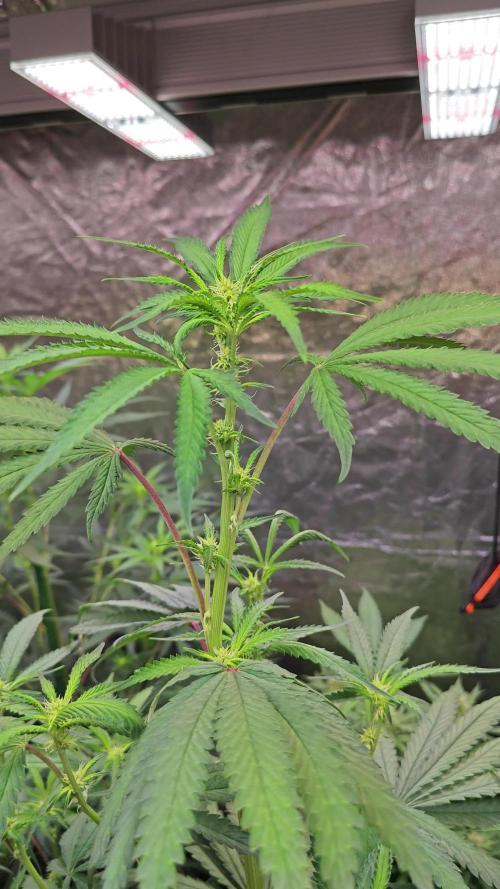
Flower week 2 ! She is doing amazing, tallest plant in the tent, she is much happier now with lower water moisture levels.
She is growing super fast, every day she puts in weight !
Very happy with this one !
Processing
Likes
19
Share


@Skunk_Life85
Follow
Did some tie down on the side branches to help with light penetration. When I touch her, she gives off a amazing lemon sweet fuel smell, very intoxicating can't wait to cure it. Hairs are starting turn. She has been loveing a 6.8- 7 ph as well.
Had a healthy feed. Added norish-L (humic acid). @ 2 drop/L


