


Likes
Comments
Share

@Roberts
Follow
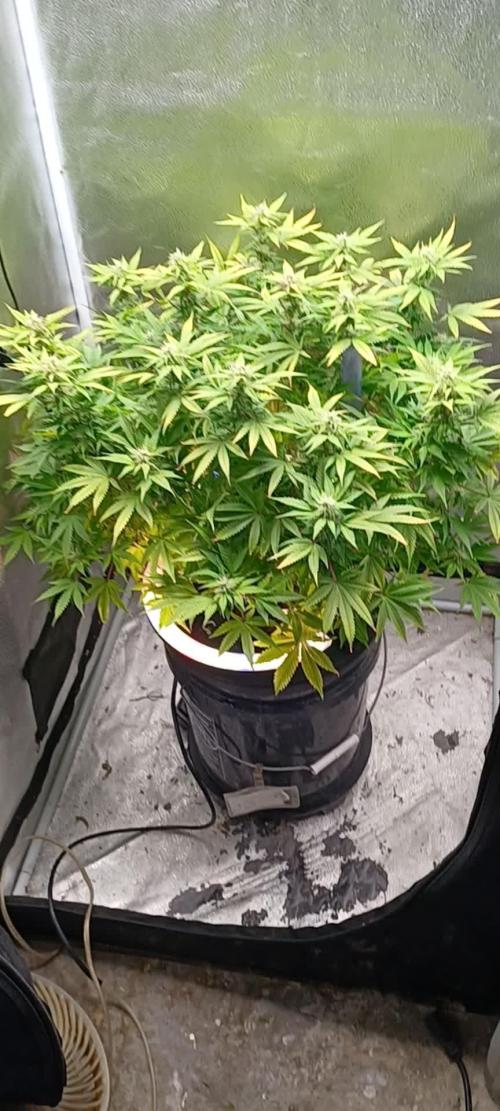
Mintz runtz auto is doing okay, she is building her colas and starting to get a aroma. I did a solution change on her today, along with some defoliation. It was looking like the light was too strong. So I turned it down to 75 percent. Thank you Elufah, Spliff, Atami, and Spider Farmer. 🤜🏻🤛🏻🌱🌱🌱
Elufah (Power by Growpros solutions) UAP1500,Die-cast radiator and featuring an optical lens design(Uniform PPFD),150W,PPE3.0μmol/J,PPFD1500umol/s/m²,Use the verified commercial-grade spectrum;Full/Epar Boost Spectrum adjustable,A very excellent grow light;
By entering the discount code, you can enjoy an additional 10% price reduction when making the purchase.
Amazon discount code:SAVEURCASH10
product Link:https://a.c1ns.cn/uap1500
Thank you grow diaries community for the 👇likes👇, follows, comments, and subscriptions on my YouTube channel👇.
❄️🌱🍻 Happy Growing 🌱🌱🌱
https://youtube.com/channel/UCAhN7yRzWLpcaRHhMIQ7X4g.

Processing
Likes
6
Share


@Weedzoks
Follow
La plante a fortement jauni cette semaine et des taches sont apparues
Flo 23: Arrosage eau
Flo 24: Pulvérisation de 3ml de Vita Race

Likes
25
Share


@Kush_queen
Follow
So my beautiful babies have had a busy week they had a trim got rid of the big fan leaves covering new bud sites and today they had monkey nutrients bloom A and Bloom B plus stress, rootshoot and calmag and they had there first day of 12 hours light and 12 hours dark I added another fan so they are loving life and the humidity is finally lower
The smell is amazing inside the tent and the filter is keeping the smell inside the tent thankfully


Likes
34
Share


@BelSun_420
Follow
I would like to express my gratitude to Plagron and Zamnesia for organizing this incredible contest, providing the community with the opportunity to participate, showcase their skills, and learn from one another for free.
Initiatives like this strengthen the spirit of the community and highlight the talent of so many unknow dedicated growers.
I am BelSun, a 34-year-old guy who started planting in 2018, mainly focusing on autoflowers,indoor setups and organic grow .
Hope you enjoy my Journey on Eternity Grow Cup 2025 🏆💚
The main setup and a simple recipe on this journey as a thank you to Plagron and Zamnesia 👨🏻🌾
Runtz Automatic Zamnesia (3 seeds)
Fabric Pot 3x15L
RoyalRoom Classic C100
Electric Sky 180w v2
Plagron - Seeding & Cutting Soil
Plagron - BatMix Soil
Plagron - Perlite
Plagron - MegaWorm
Lurpe - Earth Vibes Super Soil
Lurpe - Volcanic Ash
Cultivers - Basalt Powder
THC - Epson Salt
THC - Delomite
Vithal - Bokashi
Mycoterra - Alfalfa Meal
Canna-BioRHIZOTONIC
Agrobactérias - Bactomatik Rex
Plagron - Alga Bloom
Plagron - GreenSensation
*Plagron Schedule 100% Natural
*Topdress amendments along the way if needed.
*Light Schedule: 20h
*Watering System: Manualy
*Paper Towel MethodI
I'm going to start in the middle of January, for now I still have some plants finishing flowering in the tent.
Good luck for all!
💚
-------------------------------------------------------------------
#10/01/2025
I’ve prepared my Super Soil mix, and it’s now cooking until I start germination, which will be in about 3 weeks.
-------------------------------------------------------------------
#03/02/2025
For germination, I leave the seeds in a bottle of water for 12 hours, then transfer them to a paper towel until they sprout a root. This method has worked well for me!
-------------------------------------------------------------------
04/02/2025
I’ve transferred the seeds to the paper towel method!
Now it's time to Pot preparation!
For my pots, I use a three-layer method, filling each layer while shaping them with different-sized pots:
- First layer: Super Soil
- Second layer: Regular fertilized soil (BatMix by Plagron in this case)
- Third layer: A light soil with mycorrhizae (Seeding Soil by Plagron)
-------------------------------------------------------------------
#05/02/2025
I’ve planted the seeds!
I'm using a cheap LED light from Amazon just to kickstart germination and gain a few extra days to finish flowering the plants in my tent. As soon as they sprout, I'll transfer them to the tent, where my old but fantastic Electric Sky 180W is waiting for them!
-------------------------------------------------------------------
#08/02/2025
Two of them have already germinated, but one still hasn’t. I’m struggling with low temperatures, as it's been only 12°C during the day and between 3°C and 7°C at night.
Unfortunately, I had a bit of bad luck—my lamp fell onto the pot, disturbing the soil and seeds of two plants. One of them is the one that hasn’t germinated yet.
Just in case, I’ve put two more seeds in the paper towel method as backups. If I don’t need them, I’ll give them to a friend!
🙂
-------------------------------------------------------------------
#10/02/2025
I placed them in the tent on the 10th. Two of them germinated on the 8th, while the other was affected by the lamp falling.
I’ll probably replace it with one of my backup seeds and offer #R03 to a friend, but it all depends on how things go in the next few days.
-------------------------------------------------------------------
#12/02/25
I replaced the seed that went into shock with one of my backups. So, from now on, #R03 will be the backup seed, and it will be about a week behind the others.
---------------------------------------------------------------------
#13/02/2025
The backup seed has sprouted! 🌱
---------------------------------------------------------------------

Likes
9
Share


@DoctorCannas
Follow
Good morning friends of growdiaries,
As you can see in the photos it is a real jungle.
In bloom.
3 of the 5 plants exceeded 150 cm, I had to bend them strongly so that they remained under the lamp.
For the rest you have seen, the plants are strong, robust and healthy.
The central stem is really large, and having stretched from the beginning in each internode to product various branches, which are already filled with inflorescences.
Let's see what comes out.
Given the damned and damned fact that I will not even be able to taste the harvest, the flowering will be 100% complete

Likes
422
Share


@Crashoverite
Follow
Hi all 🧑🌾
Welcome to my 🍌💜👊 week update.
Hope everyone keeping well and having a great week😁
Thank you so much for so much support on this bananas ride 🙏💜💚💜💚
Everything still going pretty well. Girls are developing and stretching like crazy. Athena currently Dec 14 90cm and main stem of Xena is not far of this height either. Unfortunately noticed first signs of calcium deficiency(my opinion) on Athena. Thankfully started feeding both girls with calmag weeks back but the dosage wasn't not enough for Athena. Started small treatment very next day on Dec 11 (see description below) I belive got my baby back on right track.
Week 9
Dec 11-17
Dec 11
Watering was planned for Tuesday but due to calcium deficiency decided for a little treatment. Watered both girls with mixture of reduced content of growth nutes by 50% calmag at 1.2 ml per ltr. Reduced solution PH to 6.2 as apperently it's ideal for calcium consumption. Over period 4h I have watered Athena with 5ltr with couple runoffs. Xena 3ltr. Total of 7-10 leaves affected mainly at top colas close to the light.
Dec 12-13
Purely observation and all looking well. Of course all affected leaves will progres of showing signs but good news is that growth and development booming and don't see any new leaves with symptoms.
Very nice trichomes development in recent days and more and more colours.
Dec 14
Second watering for this week 6.5l Increased calmag to 1.4ml per ltr and if still things will be looking well reduce to 1 or 1.2 on next feeding.
Dec 15
Very nice respond on yesterday feeding. They definitely fatten over night and getting more and more frosty. Will need to remove some foliage soon as getting extremely bushy again.
Dec 17
Xenas main stem top cola almost touched the light today. Tied her to left side of the cabinet, applied selective defoliation on both girls, tied few branches to netting and on the end of this busy day a third watering for this week. 7 ltrs beetwen both. Runoffs Xena PH6.4 Athena 6.3.
Very nice week have to say. I belive that calcium deficiency on Athena is no longer a case here and both girls developing very nicely. Both are still stretching, buds are gaining in size and both girls started exploding with trichomes,
Thank you all again for such amazing support 🙏peace and love brothers and sisters ✌️💚💜💚💜💚
Stay tuned for new week update 😉🧑🌾✌️💚
Likes
12
Share


@TheNotoriousWeed
Follow
Esta es la segunda semana cambiamos a bases de floración y las chicas se vienen comportante exelente ya han sexado todas y no hay machos :D. Peyote purple 2 parece que tiene alguna enfermedad? parece como si poco a poco sus hojas se consumieran solas, será intolerancia a los abonos? si alguien me pudiera ayudar estaría agradecido. Saludos y buena semana colegas


Likes
14
Share


@Peeman
Follow
Dealing with very strong winds this week. Also morning temperatures are below 15°C causing quite a bit of morning dew. Clear tarps are a big help as long as the strong wind doesn’t blow it away ha ha
Likes
6
Share

@420DeepGrow
Follow
📆 Semana 2
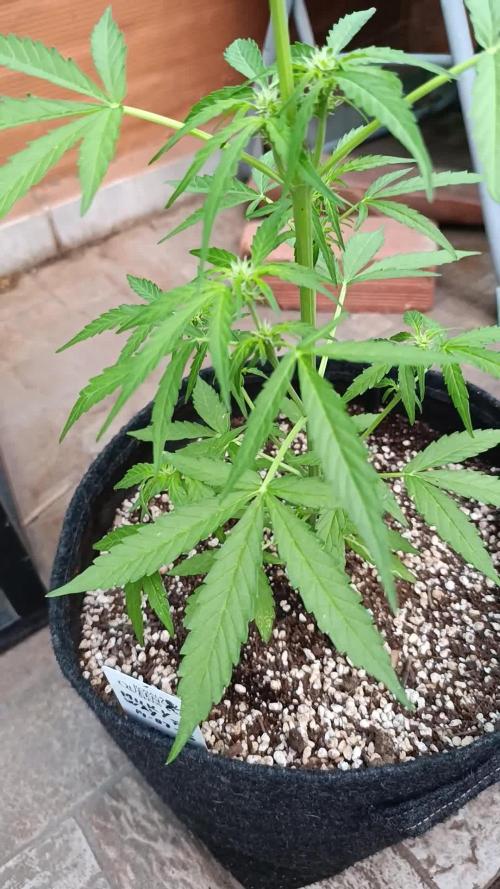
Durante esta segunda semana, la planta ha experimentado un estirón increíble, aumentando rápidamente su tamaño y desarrollando una estructura mucho más amplia. La floración continúa avanzando y las primeras flores empiezan a definirse con mayor claridad, aprovechando el impulso de crecimiento de esta etapa.
La recuperación tras el estrés sufrido durante los incendios sigue siendo muy positiva, mostrando una gran capacidad de adaptación y un desarrollo cada vez más vigoroso.
⚡ EC: 0.6
💧 pH: 6.2
🌡️ Agua: 21°C
🌫️ Humedad: 45–55%
💡 Intensidad: Luz directa del sol
🌱 Aporte nutricional: Se mantienen Silica Force y Sugar Shot, junto con dosis bajas de Master Root y Master Grow. Además, se continúa con Sticky Finger en dosis bajas, permitiendo que la planta lo vaya asimilando progresivamente durante esta etapa de floración.
🔥 Nota de cultivo: El estirón de esta semana ha sido espectacular, con un crecimiento vertical y estructural muy marcado. La planta continúa recuperándose a gran velocidad y empieza a mostrar todo su potencial en esta nueva etapa de floración.
Seguimos creciendo fuerte 💪!
!

Likes
10
Share


@Dunk_Junk
Follow
11cm vertical growth this week.
Loads of new growth coming out!!!!!
Thinking she will enter flowering during the coming week..
Likes
9
Share


Likes
26
Share

@Bncgrower
Follow
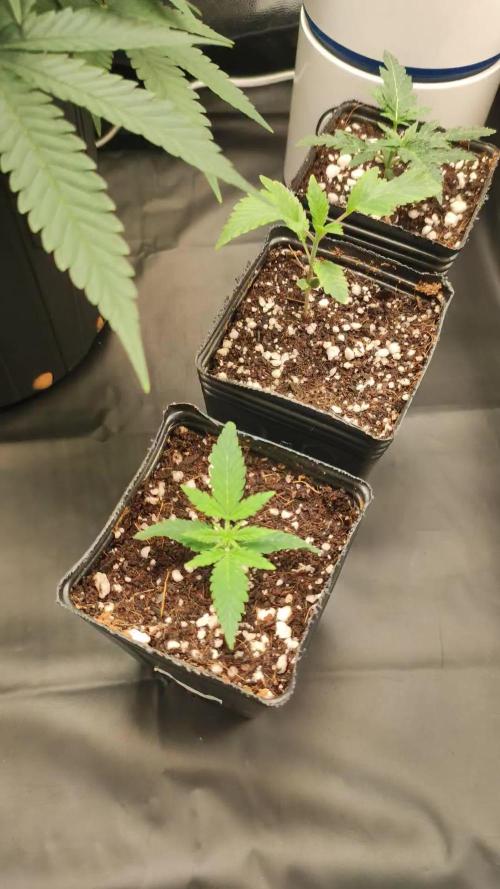
Everything is going very well as expected, good progress. I had the transplant on the last day of the first week..✌️🌱
Processing
Likes
5
Share


@MichaelMan
Follow
I took these clones from my first grow. I took clones for my “lemon lemon lemon” grow from these mother plants.
Likes
8
Share


@420cfm
Follow
Buds are really coming on now. Stretch is slowing. Very happy with the new lights and fan. Not sure I'll do scrog next time as its hard to keep up with all the grow and pruning/defoliation required. Adjusted my lights to get everyone even coverage. Light meter would be nice at some point!


Processing
Likes
21
Share


@DogterB
Follow
Week 8
Day 50 (9/4)
Honestly, not much to talk about. She's thickening up at her bud sites some, and will probably need water tonight or tomorrow morning. My fan & carbon filter SHOULD be in today, so I hope to work her into her new home tonight in my legit 2x2 tent. I've been shopping around for lights for my 4x4 for the future...😀
Day 51 (9/5)
This morning I checked her weight to see if she needs watered. She seemed pretty good still. I'm guessing giving her the whole gallon soaked her enough to get her by a few days. I'm toying with the idea of if a gallon lasts 3-4 days, maybe giving her nutrients each time. Idk, I probably won't but it is a thought. I wasn't able to get the fan & filter set up last night, wifey decided she wanted a date night so the tent got put off until today. I do need to get some 4" ducting, the ducting I have is dryer ducting and doesn't really fit.
Day 52 (9/6)
Got her all settled into her new home last night. I still need to figure out how to rig the oscillating fan in there for her. After running the lights for 3 hours or so this morning, her temp was 74F and humidity was 58%. I turned down the exhaust fan some to see if the temp goes up a bit. I only have one air intake opening open and have my humidifier sitting in from of it. This morning I fed her a gallon of water with Soil A&B, Top Booster, Bud XL, Drip Clean, and some Cal-Mag Plus. I did see that the pistils that had browned on some of the lower bud sites that I had noticed a week or two ago have been replaced with all new white ones, so she seems to be getting back on track.
Day 53 (9/7)
It looks like fall has finally rolled in. It's going to be nice and cool this entire week, so the windows will be open and she'll be getting fresh air. So far, the tent has been great. Holding good temps and humidity, even though I don't have the humidifier in the tent. Still working on a way to get my oscillating fan in there...
Day 54 (9/8)
Nothing much new going on, just playing the waiting game. Her last feed/water was two days ago. I checked her weight last night and she was good. I'll check again tonight and see where she's at.
Day 55 (9/9)
Her pot was still pretty heavy this morning. She hasn't been watered in 3 days (day 52), so she'll probably be getting light tonight or tomorrow. I'm sure the cooler temps have been helping her conserve water. Yesterday she stayed pretty cool, so overnight I stuck a space heater in the room and opened up the tent vent flaps. This morning she was at about 80F. I will keep the heater going and the humidifier going today to keep her nice and warm and humid.
Day 56 (9/10)
So far I've been able to maintain the temp and humidity in the tent pretty well. I have an exam this afternoon, but once I'm done I'll probably head home and mix her up some feed.
Likes
6
Share


@FlowerBloom09
Follow
Plant is doing amazing! This is my first grow & I am so excited , I’m in the process of practicing LST , I am not the best but you learn as you go! Let me know what you all think! Do you think my light should be highered?


Likes
42
Share


@Master_weeda
Follow
Bonjour à tous les padawans et maîtres jedis
Tout d'abord merci à Tom de seedsman pour ses graines ainsi que greenhouse de me permettre de faire cette culture en m'offrant le feeding greenhouse
Je rappelle que cultive simultanément 9 pots de 10 et 11 litres dans une box prévu pour 4 et que je n'utilise que le strict minimum du matériel nécessaire à une culture correcte au prix le plus bas possible
MATÉRIEL CONFIGURATION
Box 80×80×160
Lampe led Lampwin 300 watts ×2
Ventilateur à pince 15 watts
Xiaomi Deerma humidificateurs 5L
Hygrometre thermomètre
Extracteur PROFAN 107 m3/h - 100
Prise programmable électronique ×2
1 pot carré noir 10 litres
Green house feeding enhancer
Green house feeding biobloom
Green house feeding biogrow
Substrat biobizz ligthmix
Fil de fer et pince coupante
Microscope
Petite balance de précision
CULTURE ÉTAPE PAR ÉTAPE
J'ai tout dabord fais germé ma graine avec le easy start de Royal queen seed et je suis agréablement surpris car franchement le taux de réussite est très élevé (17 graines sur 19) simple d'utilisation et très efficace.
Une fois la plantule sortie et d'une hauteur de 2 ou 3 centimètres je la prend délicatement et la place directement dans son pot définitif. Je préconise des pots allant entre 10 litres et 15 litres pour des autofloraisons cultivées en intérieur.
Le pot aura été préalablement préparé (video dans diarie) avec 30 grammes d'engrais greenhouse feeding biobloom et 30 grammes de greenhouse feeding biogrow, soit l'équivalent de 3 grammes par litre de substrat.
Je dépose donc la plantule dans son pot définitif je recouvre un peu de avec de la terre je tasse légèrement et j'arrose pour garder le substrat humide pas plus
Je place ma lampe led 300watts à environ 90 centimètres de la plantule avec un cycle de lumière de 24/24 pendant une semaine. Au début de la semaine 2 le cycle de lumière passera en 20/4 grace a un programmateur car c'est pour moi le cycle de lumière qui offre le meilleur rendement pour une autofloraison.
Jour1: léger arrosage
Jour2: léger arrosage
Jour3: la plantule commence à être plus vigoureuse mise en place de la ventilation pour augmenter sa masse racinaire et léger arrosage
Jour4: arrosage avec un litre et demi d'eau ph6.3 à laquelle j'ai ajouté 0.9 gramme de greenhouse feeding enhancer (soit 0.6 gramme par litre d'eau)
Jour5: aucune technique spéciale
Jour6: aucune technique spéciale
Semaine agréablement calme sans problème ni carence apparente
Que la force soit avec vous !

Likes
4
Share


@TwinExotics
Follow
Lemon Cherry Pops are in it’s own 4x4 along with the Smile now Cry Laterz x 1
FX3 is in its own 3x3 now. Topped


Likes
86
Share


@Ageddd
Follow
Last feeding with Top Bud at the beggining of the week, and then 2 weeks irrigating only water
The Blueberry started yellowing leaves ..
And... look at that beautiful chemicals called chemtrails, which are sprayed from the air, penetrating directly in our lungs, plants and soils
If someone needs a proof, well, these strange chemicals look like spiderwebs but if you check it closer and you touch it you know it is not made by an animal,
( and i am even more sure when the plant has like 5 or more spiders around making webs,they are completely different ) it is like shaving gel when you touch it .
Got no more to say, better watch..( They still processing loool )
Feeding Schedule
Added Micro Vita to the soil again, to clean the roots and help the nutrients break
WATER / TOP BLOOM + TOP BUD + TOP CANDY / WATER / TOP BLOOM + TOP CANDY / WATER
Song of the week : SIRENS | Z1RENZ - Denzel Curry