


Likes
Comments
Share

@Grow_Mary_Green
Follow
Hi meine lieben, 🤗
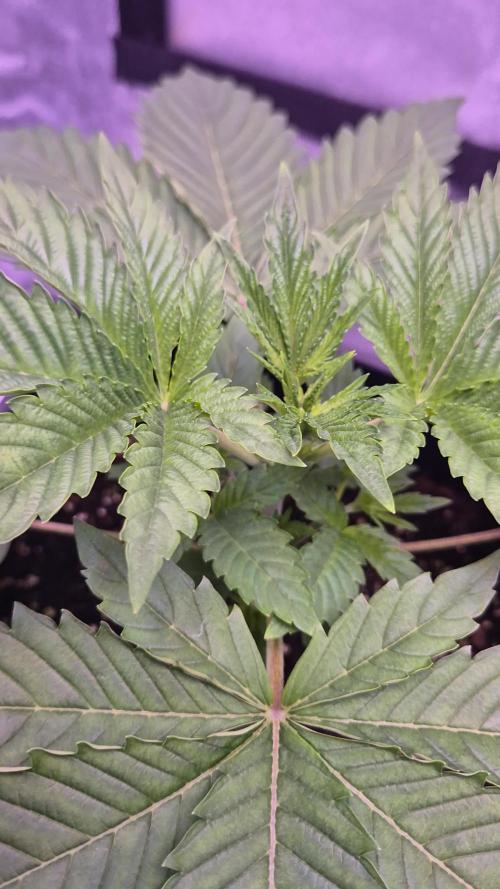
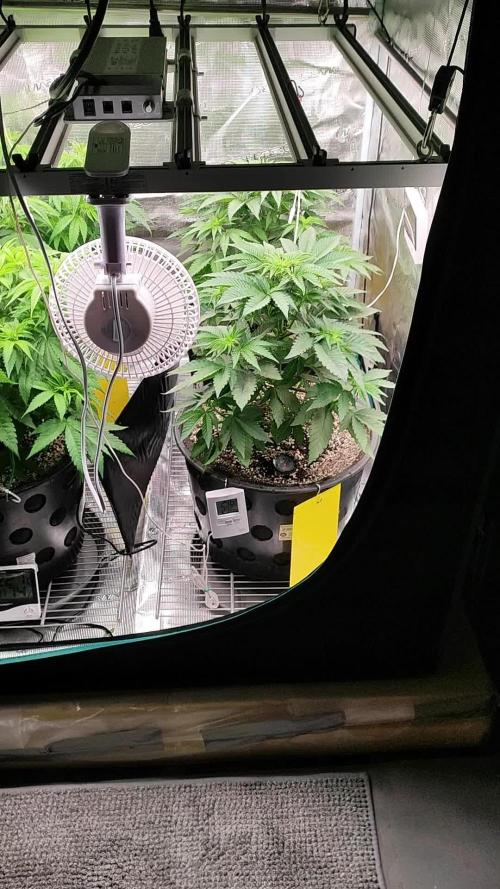
Die 2. Woche der Wachstums-Phase steht an...
...und die realität schlägt zu.
Hatte versucht diesen Run mit einem höheren VPD-Wert und dadurch ohne zusätzliches CalMag hinzufügen zumüssen, laufen zulassen. Da laut einer Studie, man durch einen erhöhten VPD, kein zusätzliches CalMag unter LED's hinzugefügt werden müsste. Allerdings gieße ich noch mit Leitungswasser.
Also hatte ich mir mal die werte meiner Stadtwerke angeschaut. Und in meinem Wasser habe ich Calcium = 78 mg/l und Magnesium = 5,3 mg/l und somit ein verhältnis von 14:1😰. Was von einer Optimalen versorgung von 2:1 - 4:1 CalMag etwas entfernt ist... 😅
Beste Lösung wäre ein Filtersystem wie der Watertrim zu nutzen. Günstiger ist es Mono-Magnesium (oder bei bedarf Mono-Calcium) zu besorgen und das Wasser im richtigen Verhältnis auszugleichen.
_________________________________________________________
Optimale CalMag-Versorgung in den einzelnen Phasen:
Sämling:
Cal: 50-60 mg/l
Mag: 20-30 mg/l
Wachstum:
Cal: 80-100 mg/l
Mag: 30-50mg/l
Blüte:
Cal: 100-120 mg/l
Mag: 40-60mg/l
______________________________________________________________
Wie mein Ablauf in dieser Woche genau aussah, habe ich auch diesmal für uns Dokumentiert. Ich wünsche dir viel Spaß & Happy Growing 🌱🤗:
_______________________________________________________________
Umgebungswerte der Woche:
- Temperatur: 25°C
- Luftfeuchtigkeit: 65%
- VDP (Room): 1,1
_______________________________________________________________
Tag 8:
- Nur beobachtet 😋
Tag 9:
- Pflanzenhöhe gemessen: 17 cm 🌱
- Stamm-Durchmesser gemessen: 0,57cm = 5,7mm Ø
- Licht Intensität eingestellt - PPFD: 320µmol / DLI: 21 Mol
Tag 10:
Bewässert 👇 (Leitungswasser):
- Volumen: 1000ml
- PH-Wert: 6,15
- EC-Wert: 0,46
- Temperatur: 20°C
Run-Off (Drain) gemessen 👇:
- PH-Wert: 7,0
- EC-Wert: 3,7
- Temperatur: 21°C
- Volumen: 150ml
Tag 11:
- Nur beobachtet 😋
Tag 12:
Bewässert 👇 (Leitungswasser):
- Volumen: 1200ml
- PH-Wert: 6,1
- EC-Wert: 1,52
- Temperatur: 20°C
Run-Off (Drain) gemessen 👇:
- PH-Wert: 6,7
- EC-Wert: 3,24
- Temperatur: 22°C
- Volumen: 265ml
Pflanzen Training: Topping, Vor-Lollipopping
Lampenabstand eingestellt: 50cm
Licht Intensität eingestellt - PAR - PPFD: 285µmol / DLI: 18,5 Mol
Pflanzenhöhe gemessen: 18cm 🌱
Tag 13:
- Nur beobachtet 😋
Tag 14:
Bewässert 👇 (Leitungswasser):
- Volumen: 1200ml
- PH-Wert: 6,1
- EC-Wert: 0,48
- Temperatur: 21°C
Run-Off (Drain) gemessen 👇:
- PH-Wert: 6,42
- EC-Wert: 2,6
- Temperatur: 21°C
- Volumen: 360ml
Pflanzenhöhe gemessen: 22 cm 🌱
Stamm-Durchmesser gemessen: 0,73cm = 7,3mm Ø
Lampenabstand eingestellt: 45 cm
Licht Intensität eingestellt - PPFD: 320µmol / DLI: 20,8 Mol


Likes
54
Share


@Roberts
Follow
Gorilla Cookies is doing great. 6 days into flowering. She is growing fast. I increased light from 30 to 60 percent at switch. The G3000 is doing good. Some good stretching should start up soon. Everything is looking great. Thank you Spider Farmer, and Pure Instinto Seeds. 🤜🏻🤛🏻🌱🌱🌱
Thank you grow diaries community for the 👇likes👇, follows, comments, and subscriptions on my YouTube channel👇. ❄️🌱🍻
Happy Growing 🌱🌱🌱
https://youtube.com/channel/UCAhN7yRzWLpcaRHhMIQ7X4g
Spider Farmer G300w: https://amzn.to/3S2zvsd
Spider Farmer 10X20 Heat Mat Kit - https://amz.fun/lsa0J
Spider Farmer Amazon Store: https://www.amazon.com/spiderfarmer
Spider Farmer Official Site: https://spider-farmer.com
Discount code: saveurcash (stackable)

Likes
285
Share


@Tropicannibis_Todd
Follow
👉Alrighty Then👈
So we are at DAY 42 with the Sugar Larry 👈 And she's doing fantastic 👍 It's now stretching alot 7 inches last week alone 👌
😀 decided to showcase pheno #2 , definitely has different traits then #1 very interesting 😀 thoe both are killing it 👈
Hedgehogs incoming 👈
Except for some slight watering , ive been doing some defolation as well as some LST manipulation to pull branches to the side 👌
👉I had to Top her during the middle of 4th week 👍 she gonna be a tall girl with long legs 😛
👉WeeklyRoundup Video is finally posted 😕 😒 😪 😢 Happy Growing
👉Soil Provided by ProMix.ca
👉Nutrients Provided by Agrogardens
👉Lighting Provided by MarsHydro.ca
Thanks my friends for the great support over the years 🙏 Happy Growing

Likes
6
Share


@eldruida_lamota
Follow
Que pasa familia, vamos con la cosecha de estas Wedding cheesecake Fast Flowering, de FastBuds.
Por dónde empezar, las flores son bien compactas , y van repletas de resina, tienen tonos por dentro muy bonitos, y tiene un aroma súper dulce aunque engañar engaña porque saber sabe más tropical y cremosa.
Es muy sencilla de cultivar, es de ciclo bastante corto aunque también si le dais una semana más no pasa nada agradecer se agradece al final.
Mars hydro:
Code discount: EL420
https://www.mars-hydro.com/
Agrobeta:
https://www.agrobeta.com/agrobetatiendaonline/36-abonos-canamo
Hasta aquí todo, Buenos humos 💨💨💨
Likes
Comments
Share

@DogDoctorOfficial
Follow
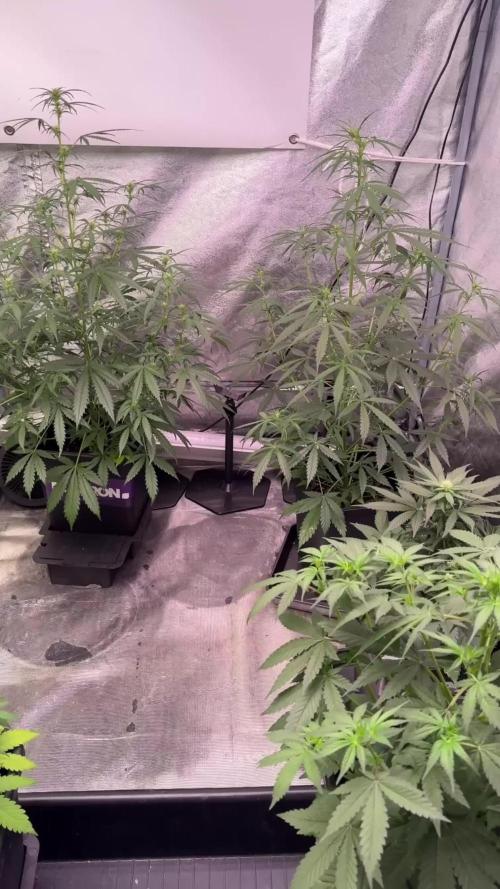
💜 Week 5 – Purple CousKush Auto (Pheno A)
Every Plant Has Its Own Rhythm
One of my favourite parts of growing from seed is watching each plant develop its own personality.
This Purple CousKush has shared the exact same environment, feeding schedule, lighting, and care as the rest of the project since day one. She germinated under the same conditions, transitioned into the same 12/12 flowering schedule from seed, and has been treated exactly the same throughout her journey.
Yet, despite identical conditions, she’s chosen her own pace.
While several of her roommates rushed head-first into flowering, this young lady has taken a more measured approach, focusing first on building a solid structure before fully committing her energy to bloom.
And honestly… I’m perfectly happy to let her tell her story.
⸻
🌱 Plant Development
This week she continued her steady transition into flower.
Standing at approximately 66 cm, she has developed an elegant, open structure with excellent internodal spacing and strong vertical growth. Rather than producing large clusters of pistils all at once, she is introducing flowers gradually across every branch, giving the impression that she’s carefully preparing her framework before beginning the real work of stacking buds.
The LST performed during the previous weeks continues to pay dividends, allowing multiple flowering sites to receive excellent light exposure while maintaining a balanced canopy.
Her stems have thickened nicely, the branching remains symmetrical, and every day she seems just a little more confident.
Some plants explode.
Others simply keep making quiet, consistent progress.
This Purple CousKush definitely belongs in the second category.
⸻
🌿 Environment & Growing Conditions
Like the rest of the Project Blue Tent, environmental conditions remained stable throughout the week.
* 12/12 lighting schedule from seed
* Future of Grow Black Series LED delivering approximately 850 PPFD
* Mammoth Pro tent with excellent airflow
* Day temperature around 31°C
* Relative humidity averaging 72%
* CO₂ around 639 ppm
Even under these warm summer conditions, she has remained healthy, vibrant and stress-free, showing no signs of environmental discomfort.
Although she hasn’t advanced into flowering quite as quickly as some of the other phenotypes, her overall health leaves absolutely no reason for concern.
She’s simply moving at her own rhythm.
⸻
💧 Feeding Program
Unlike several other plants in the room, this Purple CousKush is also being hand-watered and is not connected to the AutoPot system.
Growing in a 15 L Plagron Lightmix container, she received approximately 0.9 litres of nutrient solution per watering.
This week’s feeding consisted of:
• Terra Grow – 1.8 ml/L
• Terra Bloom – 1.9 ml/L
• Pure Zym – 1 ml/L
• Power Roots – 1 ml/L
• Sugar Royal – 1 ml/L
• Power Buds – 1 ml/L
The feeding program continues to provide everything she needs. Her foliage remains a healthy deep green, new growth is vigorous, and the root zone appears to be supporting strong, uninterrupted development.
At this stage there is no reason to change something that is clearly working.
⸻
🌸 Phenotype Notes
This phenotype is another wonderful reminder that growing is never about comparing one plant against another.
It would be easy to look across the room and notice that several plants have already pushed further into flowering.
But that’s not the point.
Every seed carries its own expression.
Some begin flowering earlier.
Some stretch more aggressively.
Some invest additional time building structure before stacking flowers.
This Purple CousKush seems determined to build patiently before asking for the spotlight, and I have complete confidence in allowing her to follow that path naturally.
Growing isn’t a race.
Harvest day eventually arrives for everyone.
⸻
🔍 Looking Ahead
The coming weeks should be very exciting.
Now that flowering has clearly begun, I expect to see the stretch gradually slow while the energy shifts toward developing larger flower clusters across every branch.
Her open structure should provide excellent airflow and light penetration as the buds begin to bulk up, and I’m looking forward to seeing how this phenotype expresses the beautiful colours and aromas Purple CousKush is known for later in bloom.
Until then, the plan remains wonderfully simple:
Stay patient.
Stay consistent.
Let her do what nature intended.
⸻
💭 Final Thoughts
Not every plant needs to be the fastest to become memorable.
This Purple CousKush reminds me that one of the greatest lessons gardening teaches us is patience. We can create the ideal environment, provide balanced nutrition and careful training, but ultimately each plant decides the pace of its own journey.
Right now she looks healthy, balanced and full of potential, and that’s more than enough for me.
The flowers will come.
The stacking will come.
The weight will come.
For now, I’m simply enjoying watching her become exactly the plant she wants to be.
⸻
🙏 Thank You
As always, a huge thank you to everyone following along with this adventure. Your comments, encouragement, questions and shared experiences make these diaries far more enjoyable than if I were growing alone.
A special thank you to all of the incredible companies helping make this project possible:
💜 Zamnesia for the genetics.
💜 Plagron for the nutrition.
💜 Future of Grow for the amazing lighting.
💜 TrolMaster for helping keep everything under control.
And finally, thank you, the GrowDiaries community. Whether you’ve been here since the very beginning or you’ve only just joined this journey, I truly appreciate every visit, every comment, every like and every bit of support.
Until next week…
Growers Love and happy growing! 🌱💚
Likes
45
Share

@Hempface86
Follow
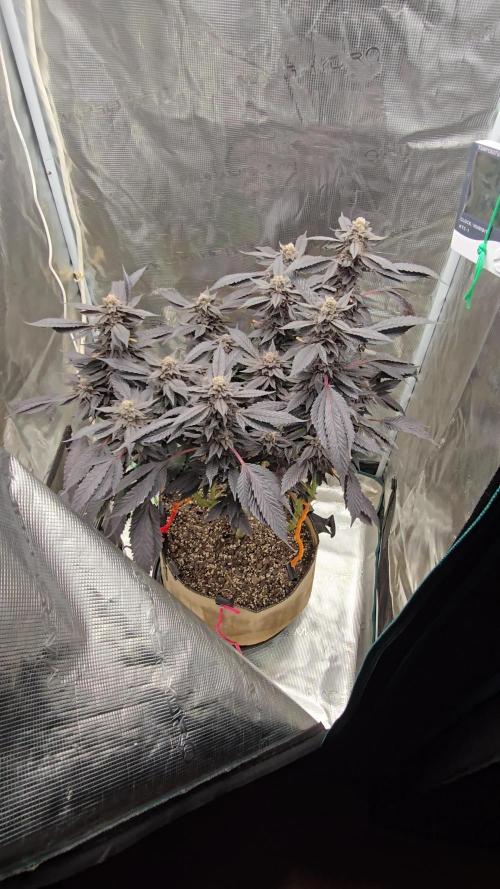
To be honest I have not been counting days.Put my guesses around 10 weeks of flower or so... i've been giving her ice Waller. The last week to try to bring some colors out... These buds are the hardest nugs.I have ever felt in my life... Might not be the most girthiest, but they are rock solid... Thank you @Grow4releaf.. God bless and happy growing 🙏

Likes
13
Share


@Eldorado_ed
Follow
Well after splitting the Girls up due to space it’s looking like the HPS Ladies are almost ready looking we’ll ahead of LED ones also buds are fatter with HPS but would say the LED ones look healthier looking if that makes sense

Likes
6
Share


@Nune2021
Follow
Hey Leute die Pflanzen machen sich sehr gut wie ich finde ich muss nur die unterschiedlichen Größen Händeln aber das passt schon duften tuen sie auch schon


Likes
58
Share


@AsNoriu
Follow
Day 97. Fast Buds Thank You !!!!
Day 109. Girl is in jars and waiting for Christmas ;)))
Happy Growing !

Likes
2
Share

@Pipapole
Follow
Heute entdeckte ich Anzeichen für einen kleinen Phosphor Mangel an den Blättern und an den Stängeln also gab es das erste mal die halbe Portion blütendünger plus Boost von Hessi da in vier Tagen eh die Blüte eingeleitet wird ist das sicher nicht verkehrt.

Likes
9
Share


@masterofsmeagol
Follow
6/22 Some pictures didn't upload but that's probably a good thing. As long as the video went up its good. I need to take less pictures. I'm glad I watered the plants in the back with a premixed gallon last night as we didnt get nearly the rain I thought we would. It's small showers throughout the day. The plants are getting enormous. A couple have revegged. Mostly the 10th planet. The others aren't anywhere near as impacted. Boy are some of these stalks thick. I chose to keep a couple plants that could be grown naturally without topping or fimming. I like to see the structure of the tree bit with humidity like this 98%rh it's easy to get botrytis. That's why it's good sometimes to have multiple bid sites so your proverbial eggs aren't all in one basket. But you do end up with a massive cola. I think that mk ultra with the big fan leavescis just going to be one giant bud. That's what it's looking like. Oh and today is the summer solstice. Longest day of the year.


Likes
Comments
Share


@TheCannaHouse
Follow
6/21/22-Placed in water fro presoak
6/22/22-Placed into damp paper towel
6/23/22-Seed cracked open so it went into its medium. Watered with about a shot glass of H2O.
6/25/22-Germination!!
Processing
Likes
Comments
Share


Likes
20
Share


@420DeepGrow
Follow
Así finaliza una increíble cosecha de Papaya Zoap de Sweet Seeds !
Desde el inicio, esta planta demostró ser robusta 💪 y fácil de cuidar, con un crecimiento rápido y resistente. Durante la floración, los aromas tropicales empezaron a destacar, anticipando lo que Sería una experiencia única. Los cogollos están densos, cubiertos de resina y con un aroma increíblemente dulce, con toques cítricos y exóticos. En cuanto al rendimiento, ha sido bastante satisfactoria, y la calidad de la hierba es de primera
Likes
21
Share


@Gilgamesh15
Follow
Il "super cloner" aeroponico, svolge il suo compito eccellentemente!!!!
Sviluppo vegetativo e radicazione esplosivi!!!
I fertilizzanti"Advanced Nutrients" si confermano i migliori (la spesa vale l'impresa).
Il controllo totale dei parametri di coltivazione, si confermano vincenti!
I cloni sono pronti per essere trasferiti nell'impianto RDWC di crescita vegetativa e fioritura.

Processing
Likes
12
Share


@Greenthumbguru
Follow
Shes really sprouting i been keeping a close
i seen something lookin. Like a spider in my tent so i will be gettin sum organic
insecticide other then that Everthing is great


Likes
24
Share


@Weedganja420
Follow
Increíble el crecimiento de esta cepa, ha crecido casi 20 centímetros en la semana. Solo lleva 12 días en floración, aún tiene que crecer algo más pero ya se nota que está cerrando la punta con pistilos. :)
Espero que os guste.

Likes
12
Share


@Metamorph
Follow
Hello again, dear growers! 🌱👋
We’ve officially stepped into Week 10 of this wild and fragrant journey! Last week ended with a little makeover for the girls—I defoliated about 30-40% of the leaves again. ✂️ The Gorilla decided to keep me on my toes by showing some nutrient deficiencies on her leaves—guess she didn’t get enough food after the flush. 🍌🌿 (Lesson learned: don’t keep a Gorilla hungry!)
Now, let’s talk about Runtz! 😍 She’s an absolute queen—so photogenic that even my struggling phone can’t capture her real beauty. 📸✨ She’s forming into one giant, luscious bud, and her fragrance is something else entirely! 🕵️♂️ The carbon filter is fighting the good fight, but if the room isn’t aired out every 8-9 hours, a little aroma starts sneaking through.
But opening the tent… oh, my friends, that’s where the magic happens! 🌬️💫 The aroma is intoxicating—imagine diving headfirst into a field of flowers while bees whisper secrets in your ears. 🌺🐝 I just sit there, enchanted, savoring the smell, and staring at these beauties like a hypnotized gardener. Honestly, it’s hard to walk away. 😂
Here’s their menu for the week:
🍵 Feed: A+B 4ml/L, Micro Chum 1ml/L, Big Bud 2ml/L
📊 PPM: 1050 | pH: 5.8
💧 Runoff: PPM 1000 | pH 6.0-6.3
Now, for the not-so-great news…
I’m struggling with humidity levels—daytime sits around 65-77%, and at night, it can climb to a stubborn 80%. 🌫️ Temperature-wise, it’s 23-25°C during the day and drops to a cool 16-18°C at night. ❄️🔥
Despite the challenges, the endgame is near, and I’m savoring every moment of this grow! 🌟 🙌 Happy growing, everyone! 🌱🔥