Likes
Comments
Share
@PapaBlob
Follow
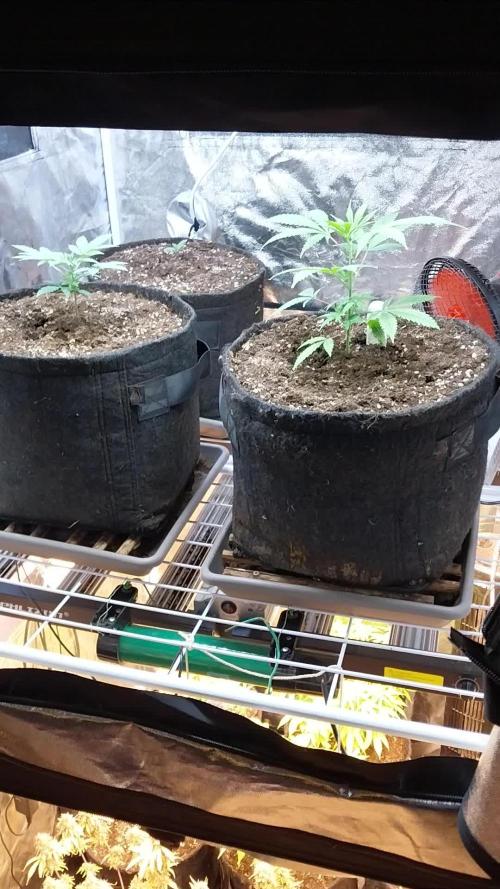
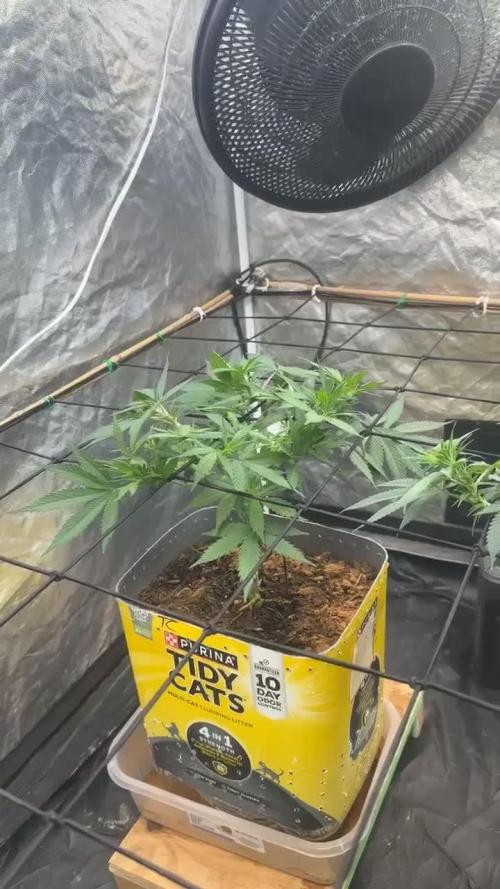
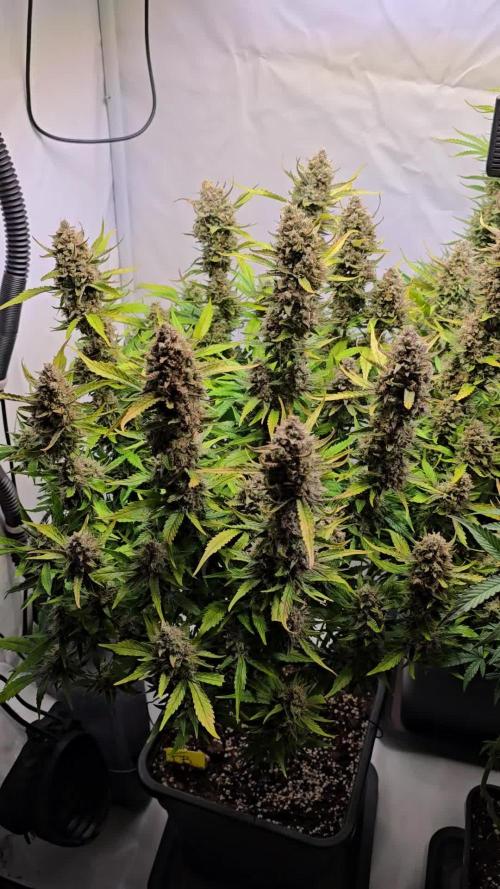
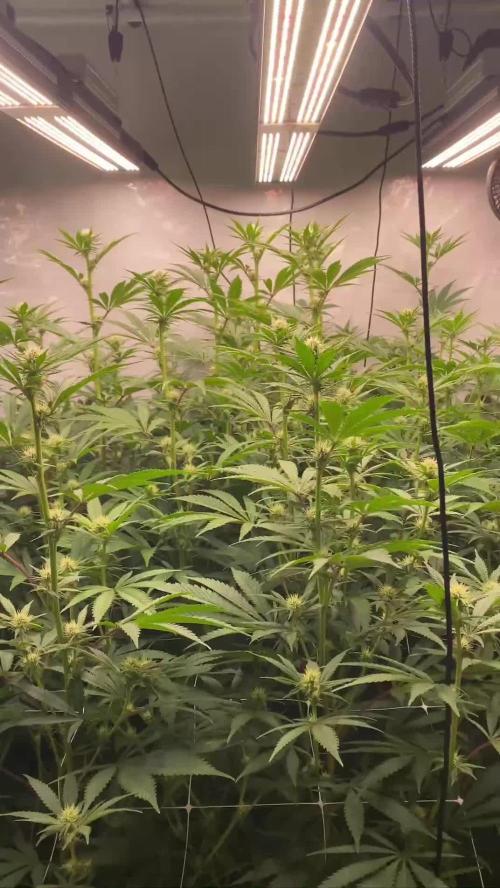
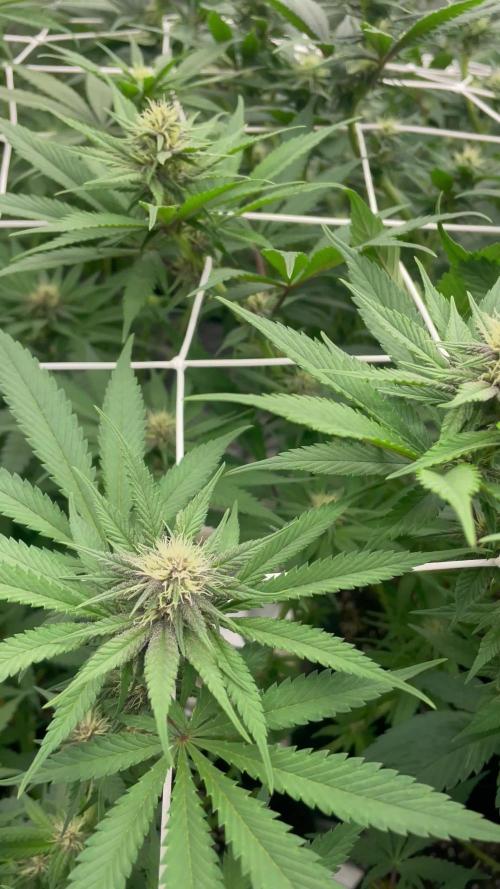
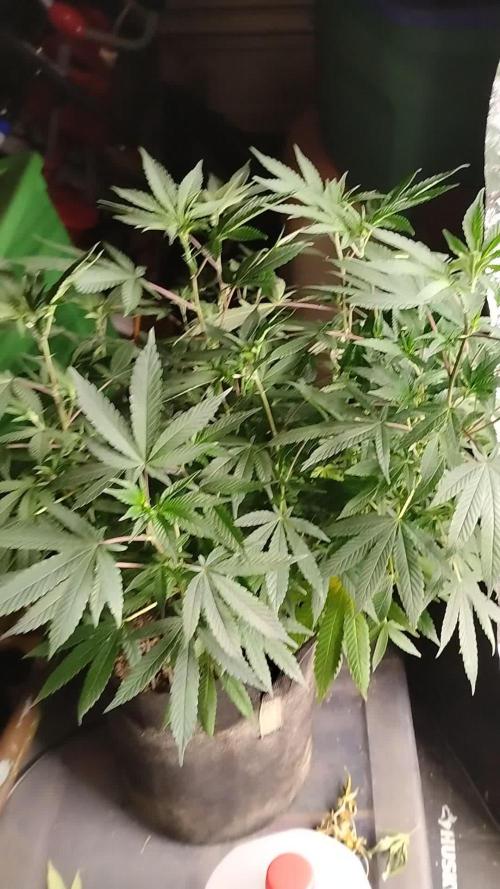
02/11 Elle se porte assez bien je pense. 😁👍 Merci encore à Divine Seeds pour toutes ces superbes souches. Que l'ont peut trouver là : Divine Seeds : https://divineseeds.net/
Processing
Likes
29
Share
@Grey_Wolf
Follow
Ginger Nut cookies & Aussie music Videos Grow Diary update 27th Feb 2020 The preflowering Stretch has well and truly begun with every branch that wasn't tied down , shooting upwards a few inches. The plant itself looks very healthy and content. Once flowering starts I'll begin to add P+K to the feeding regime. We have had bugger all sunlight here for over a week and also we have had lots of rain and wind. Daily max temps have been around the 24-25 celcius range and the minimums around 15 c. RH has been high 67% on average. That is about it for this weeks plant update . Now for the weekly Music videos. ** Last week I posted the links to three different artists who were picked by fellow growers thru the Grow question that I posted asking for requests. ** This week is back to just the one featured Artist from Australia. This week's artist is Mr Paul Kelly who is an Australian rock music singer-songwriter and guitarist. He has performed solo, and has led numerous groups, including the Dots, the Coloured Girls, and the Messengers. He has worked with many other artists and groups and is considered one of the finest singer songwriters to have come from Australia. Once again I couldn't narrow it down to just one song as he's had many great tunes but I have chosen the two with the best Music video as that is the main criteria for my Diaries Theme. So please prepare to enjoy some of Mr Kellys finest The first song is a brand new one called Sleep Australia Sleep in which he evokes many emotions and anger with his poignant ords and the haunting images of destruction of our beautiful country thru both natural and man made disasters such as the recent horrific bushfires and floods, plus also the damage to our ecosystem from pollution, rubbish and envionmental terrorism performed in the name of industry ( mining, oil drilling coal power stations etc etc This song really touched a nerve in me being a true blue Aussie and passionate Animal lover so I urge you all to actually watch the video and listen to the song. this is the video link https://www.youtube.com/watch?v=-hY1w_c7nO4 the second song is on a much lighter note & is called "Dumb things " https://www.youtube.com/watch?v=ZR-eTR3Dcps which apparently was quite popular in the US at the time of it's first release. I really hope you are all enjoying or atleast liking my weekly music videos so please leave a like if thats indeed the case. I'll be back next week with another plant update and Aussie artist and music Video . Cheers 👊👍👊
Likes
2
Share
Vamos familia cuarta semana de estás Pink Runtz de RoyalQueenSeeds. Que ganas tengo de ver el progreso de esta variedad, las plantas están sanas, se ven con un color espectacular. La cantidad de agua cada 48h entre riegos. Esta semana ya añadimos nutrientes, el tetra 9 se aplicó vía foliar, estas próximas semanas veremos cómo avanzan. Agrobeta: https://www.agrobeta.com/agrobetatiendaonline/36-abonos-canamo Hasta aquí todo, Buenos humos 💨💨💨
Likes
11
Share
@gsimd
Follow
Day 62 - Last week was a rinse. This week I returned to watering with the Fox Farm nutes, adding the Bembe and Cha Ching to the trio and Cal Mag. Day 68 - Stacking nicely and the pistols are turning red. Watered with the Fox Farm Big Bloom, Tiger Bloom, Cal Mag, Bembe and Cha Ching .
Likes
2
Share
We become aware at such times of man's wonderful ability to bring seemingly unrelated elements into harmonic balance, and receive a glimpse into a world where everything exists in conscious sympathetic attunement to everything else. When we listen to a piece of music that seems to strike a beautiful chord somewhere inside us, or view a painting that simply glows with harmonic awareness well executed, we probably do not spare much time to contemplate the wonderfully intricate combination of vibrations that our sensors make it possible for us to perceive. We tend to appreciate the relationship between the parts of something by an awareness of the harmony or dissonance of the whole. This ability enables us to say "what a beautiful house!" instead of "analysis has proven that this collection of building materials exhibits certain elements of harmonic proportion." While this ability to instinctively appreciate the beauty of true harmony has an important role to play in evolution, a more analytical understanding of the laws involved can be most useful. This is especially so if we wish to create works of art where each part exists in true harmony, not only with the other part of that particular whole, but with the universe within which the creator and the created exist. Everything vibrates. From the most dense matter to the most subtle cosmic rays, everything which our senses allow our thoughts to become aware of, can be specified in terms of wavelength or frequency of vibration. These two terms define the same thing, but from different points of view. The following are the approximate wavelengths of various energy carriers: Cosmic rays 0.000,000,001 mm Gamma rays 0.000,000,1 mm X rays 0.000,500 mm Ultraviolet rays 0.003 mm Visible light 0.006 mm Infrared 0.01 mm Sound waves 1 meter Radio waves 300 meters Violet light 400 nm to 450 nm Blue light 450 nm to 500 nm Green light 500 nm to 570 nm Yellow light 570 nm to 590 nm Orange light 590 nm to 610 nm Red light 610 to 700 nm 1 nanometer (nm) = 0.000,000,1 cm = 1/10,000,000 cm If a guitar string is plucked and we hear a sound, it is not too difficult for the human mind to associate this sound with the vibration of the guitar string. With color it is quite different. It is difficult for us to conceive that the color of a substance is not an inherent property of the substance itself, but an indication picked up by our senses of that substance's ability to absorb or reflect the light which happens to be shining on it at that moment. Neither the matter nor the light is colored. What happens is that the brain learns to differentiate between the frequencies reflected or transmitted by the substance the eyes are focused on. The same thing happens with sound. When we say "Oh! Listen, they're playing my favorite song," what we really mean is: "My brain has stored within it a particular pattern of frequencies. I have compared the new information being received with this stored pattern and have deduced the answer that the two patterns are similar within certain specified tolerances." The 'pleasure' involved could have something to do with our running the pre-recorded pattern at the same time, in 'sympathy' with the new pattern as it is received. The word sympathy describes very well our ability to appreciate color and sound. It also describes the reason behind certain elements of harmony. For instance, if a substance vibrating at 100 cycles per second (tone 1) is in the proximity of another substance vibrating at 200 cycles per second (tone 2), we could perceive, if we had the right equipment, a certain sympathetic relationship between the two. We will see from this that there is a uniform doubling of the first tone seen in the second. At various points along the waves, the two are the same in amplitude. At other points, they are at opposite poles to each other. This doubled frequency has more points of similarity to the original than any other frequency except the original itself. If the equipment we had available for measuring these two frequencies was a soundboard amplifier and a pair of ears, then we would hear what would sound to us like one tone. If we had the opportunity to hear one at a time, we would hear that although they sound the same, one is higher in pitch than the other. This characteristic of 'the same but different in pitch', musicians have called the octave. Any two tones produced where one has exactly doubled the frequency of the other is called an octave. Speaking in ratios, an octave would appear then as the ratio 2:1 or 1:2, depending on whether we are talking of an octave up or down. A single note produced by almost any instrument will contain more than one wavelength or frequency. It will have a dominant frequency, the wavelength of which we would call the note's 'fundamental' or 1st harmonic. It will also have a varying number of upper harmonics, gradually fading in intensity into infinity or silence. Natural harmonics always have the same pattern of intervals between them. The interval between the 1st and 2nd harmonic is a perfect octave; between the 2nd and 3rd a perfect fifth; between the 3rd and 4th a perfect 4th; and so on, the intervals becoming smaller and smaller until they lose any relationship with the western 12 tone scale as it exists at the moment. Just as an octave has certain elements of sympathy with its fundamental, so some intervals have been noted to be more perfectly in sympathy with the fundamental than others. The ratio of the 'perfect 5th' or interval of 7 semitones, as it occurs in the harmonic series, is 3:2 or 2:3, while that of the 'perfect fourth" is 4:3 or 3:4. All the tones in the western 12 tone scale can be expressed in terms of the ratio between the upper tone and its fundamental. This would seem to be an ideal way of generating a scale from any given fundamental and several attempts have been made to do this, the Pythagorean system being probably the most well known. Although when working with a single tone instrument playing on its own, the Pythagorean formula works wonderfully well, if we had several instruments tuned this way together and asked them to play almost any western music, we would find that at times they sounded quite out of tune to each other. The lack of flexibility of the various scale systems based on the harmonic series has led to what is known as the 'tempered' scale. This uses as its primary unit of interval the ratio of the octave or 2:1. It then proceeds to divide the interval between any fundamental and its upper octave into 12 smaller intervals by applying the ratio: two to the one-twelfth power, to one (21/12:1). This equals 1.059463094, so by multiplying any frequency by this number, we will obtain the tempered semitone next up from our fundamental. We will also find that any tone twelve semitones up from any other tone, in a scale generated in this way, will have exactly double the frequency. If we took the note middle C on a piano and halved the wavelength, we would have the note C one octave above. If we halved this, we would have the C above, and so on. However, within about 6 octaves, we would find that although a 'sound' was being produced, no human ear could perceive it. If we kept on going, halving and producing upper octaves of our fundamental C, we would proceed through the infrared band, into the visible light spectrum. If we happened to be outside during the day, we would, for one octave only, see the note C with our eyes. The next octave above would already be in the ultraviolet band, and outside the eye's sensitivity range. If we can think of color as being an indication of a substance's vibratory rate or wavelength, we may begin to see a relationship that could exist between the color and sound spectrums. The logical extension of what has so far been said is that there exists a scale in the color spectrum that corresponds exactly to the scale in the sound spectrum, each color tone being an octave of the equivalent note in the sound range. This is not the end of the story but only the beginning. If we can for the moment accept that any wavelength in one band has upper and lower octave stretching out to infinity, then the next question is 'fine, but what shall we use as our fundamental? A particular color? A particular sound frequency?' The musicians among us will probably say 'A 440'. This means that the note A should vibrate at 440 Hertz, or 440 times per second. They would tell us that this is standard pitch has been adopted by most orchestras around the world; pianos are tuned to it, instruments are constructed to formulas based on it, and so to them it would probably seem the most appropriate place to begin. Some of these musicians may know of the battle that is still raging with regards to this being the standard, but few would know why A = 440 Hz was chosen except that it worked when it was set to be a suitable compromise between the many different pitches in use at the time. 432 Hz is said to be mathematically consistent with the patterns of the universe. Studies reveal that 432 Hz tuning vibrates with the universe’s golden mean PHI and unifies the properties of light, time, space, matter, gravity, and magnetism with biology, the DNA code, and consciousness. When our atoms and DNA start to resonate in harmony with the spiraling pattern of nature, our sense of connection to nature is said to be magnified. Another interesting factor to consider is that the A=432 Hz tuning correlates with the color spectrum, while the A=440 Hz is off. Audiophiles have also stated that A = 432 Hz music seems to be non-local and can fill an entire room, whereas A=440 Hz can be perceived as directional or linear in sound propagation. Once you adopt the idea that sound (or vibration in general) can have an equalizing and harmonizing effect (as well as a disturbing effect), the science of harmony can be applied to bring greater harmony into one's life or tune to specific energies. There is a form of absolute and relative harmony. Absolute harmony can, for example, be determined by the tuning of an instrument. The ancients tuned their instruments at an A of 432 Hz instead of 440 Hz - and for a good reason. There are plenty of music examples on the internet that you can listen to in order to establish the difference for yourself. Attuning the instrument to 432 Hz results in a more relaxing sound, while 440 Hz slightly tenses up the body. This is because 440 Hz is out of tune with both macro and micro cosmos. On the contrary, 432 Hz is in tune. To give an example of how this is manifested microcosmically: our breath (0,3 Hz) and our pulse (1,2 Hz) relate to the frequency of the lower octave of an A of 432 Hz (108 Hz) as 1:360 and 1:90. It is interesting to note that 432 Hz was the standard pitch of many old instruments and that it was only recently (19th and 20th century) the standard pitch was increased. This was done in order to be able to play for bigger audiences. Bigger audiences (more bodies) absorb more of the lower frequencies, so the higher pitch was more likely to “cut through”. One of the oldest instruments of the world is the bell ensemble of Yi Zeng (dated 423 BC), tuned to a standard F4 of 345 Hz, which gives an A= 432 Hz. The frequency of 345 Hz is that of the platonic year! Similarly, many old organs are tuned in A=432 as well; for example, St. Peter’s Capella Gregoriana, St. Peter’s Capella Giulia, S. Maria Maggiore in Rome. Maria Renold’s book “Intervals Scales Tones and the Concert Pitch C=128 Hz” claims conclusive evidence that 440 Hz and raising concert pitch above scientific “C” Prime=128 Hz (Concert A=432 Hz) disassociates the connection of consciousness to the body and creates anti-social conditions in humanity. The difference between concert pitch A=440 Hz and Concert A=432 Hz is only 8 cycles per second, but it is a perceptible difference of awareness in the human consciousness experience of the dream we share called existence.
Likes
21
Share
@Chubbs
Follow
420 Fastbuds Week 2 Amnesia Zkittlez Auto This has been a good week. One has really taken off on growth. The other is a but smaller but I think it is due to spouting upside down and having to be fixed. All in all both are super healthy with no signs of issues. Will keep up the same schedule we're on at the moment it seems to be working out good and plants seem to enjoy the environment. Happy Growing everyone
Likes
64
Share
@Prof_Weed
Follow
Heute startet die 9. Woche,nicht wie hier vermerkt die 12. Woche. In paar Wochen starte ich dann mit Final Part von Terra Aquatica und Flash Clean um zu flushen. Anscheinend braucht die 11 Wochen Blütezeit laut FastBuds Website. Die Buds werden langsam fetter und die Pflanze ist super gesund. Ec Wert des Wassers steigt von anfänglich 1.5 immer auf 2.5 sobald der Wasserstand runtergeht. Muss nach 2,3 Tagen immer ein wenig Wasser dazugeben. Die Temperaturen sind für Indoor immer noch zu hoch,die Luftfeuchtigkeit ebenfalls. Werde das nächste Mal Indoor erst im Oktober starten, wollte aber mal sehen wie das im Sommer funktioniert.
Likes
5
Share
So jetzt habe Ich meine erste Ernte hinter mir. Das Ergebnis hat mich überrascht. Mit so einem kleinen Setup und eigentlich Keine professionelle LED Lampe, Habe ich solches fertig bekommen. Nach dem groben befreien der Blätter habe ich auf der Waage 577 g nass. Ich bin gespannt wie viel es circa trocken sein werden. Ich denke mit 100 g kann ich wohl rechnen. Sobald sie trocken sind werde ich mich noch mal melden.
Likes
21
Share
August 18, Day 28. Had to flush on Friday due to nutrient lockout. There were purple stems which caught my attention to a possible nutrient deficiency. Coupled by the dark green older fan leaves and bright green of new growth, my Apera TDS meter confirmed nutrient lockout. Kaboom was flushed a total of 4 times Friday night, then foliar fed at 25% strength the next morning. She was given 1.1 liters of pHd water since the top inch was already dry despite flushing the night before. I am taking her thirst to mean she is recovering well. I plan on resuming the GH least aggressive feed schedule tomorrow and will begin feeding with every watering. Now that she's on the mend from the nutrient lockout I can tell she's thirstier than what she used to be, I'm taking that to mean she's hanging in there. Friends, growmies, cousins, comrades, colleagues and cultivars. Updates last week were minimal because this plant mama came down with COVID. Flushing a plant during COVID fever is no joke. Stay well and healthy everyone. August 19, Day 29. Fed at least aggressive strength today until 25% runoff. Included a new supplement to the nutrient line up, silica. Today is the first time I use it so I went easy and used the weakest dose. Plant has 5 main sites so far, yahoozie. To top a second time? No se todavia, deja lo pienso jajaja August 21, Day 31.Topped one more time, clipped the tallest point to give the others time to catch up. I know I will need to defoliate a tiny bit, soon, but I'm a bit scared to remove either too much or a mega vital leaf. I'll watch videos about it and aim for next week. I sprayed the top inch with pH'd water and will feed and water tomorrow morning. August 22, Day 32. Fed and watered, no recharge since I used it on Day 29. As I repositioned the kabob sticks, I noticed a couple of milestones - she is in the very beginning stages of forming pistils and she is beginning to smell. I plan on keeping her in veg for at least 2 more weeks, hopefully this isn't super ambitious for a plant named Kaboom lol 😂 August 24, Day 34. I checked on Kaboom and found that the top inch was totally dry so I fed and watered her. I used everything except recharge, but will use it at next feeding since I'm aiming for 10 days in between applications. I think Kaboom is looking fabulous
Likes
22
Share
@RBGreenry
Follow
Start of a new week, week 12! I was originally going to cut this morning but with using the flushing additive I am using it does contain sugar etc so just to make sure the lady uses up everything, I'll be doing an extra 3/4 days of just plain PH adjusted water to finish her off then pull her down and get her ready to dry n cure ✌️
Likes
82
Share
🏆The First Grow Cup Diary🏆 _____📅 Week 8 | 📅 Day 50 - 56 | 28.02 - 07.03 Feb. ______ 05.03.25 | Day 54 🌞💧 🔸 So this week just a little video of the three cuties. The first time they had a radical haircut. This is the last week on 18 hours of light, next week I will switch to 12/12. 🔸 I topped a few main branches that were sticking out too far, I'm relatively happy with the way they look. 🔸 I can't do much LST with Runtz 3 because the main branches on the stem are a bit broken and I don't want to break them off completely...shit happens hehe. 🔸 each Plant 3 l __________________________________________________________________ 🌡️🔆= 25-26° 🌡️🌜= 18-19° 💨 Hum. = 65% 🔦 PPFD = 600 umol 18/6 🔦⌚DLI = ~38 ___________________________________________________________________ Equipment: Veggie 💡2 x 200 Watt Cosmos LED 💡4 x 40 Watt Spider-Farmer ⛺120 x 120 x 200 Tent (4 x 4 x 8) 🍯 18 liter pots
Likes
26
Share
Growing great in week 8 day 2 bloom fed her the last time going to do winter frost and straight water out the gate I started supplementing phosphorus and it fatned them buds up some these girls are heavy eaters
Likes
112
Share
hi to all, masters and beginners! welcome to a new week of cultivation with the peaky queen let's cook these flowers a little more to make sure they have more powerful effects and to make the lower part develop well stay up to date!! we will begin by removing some of the excess nutrients in the soil and then giving only water on the next round 😎👽
Processing
Likes
12
Share
Checkout my Instagram @smallbudz to see the Small budget grow setup for indoor use, low watt, low heat, low noise, step by step. 13/12/2019 - Change the light schedule to 12-12h after 8 weeks of no signs of flowering I think is a photo not and auto. 16/12/2019 - Fed her 1.5l of 6.5PH water with 0,5ml of each: Grow, Bloom and Max, and 1ml of each: Heaven, Alga-mic and Vera, noticed about 10% run off, I use about 1/3 of the nutrient dosage on the chart, to achieve about 200/300PPM (500 scale). 17/12/2019 - Did some defoliation on the lower branches mainly.
Likes
42
Share
@Dr_Boom
Follow
I just let her grow this week. Her buds are starting to get very sticky and I can tell the branches are starting to get heavy. I anticipate adding some additional support soon to keep her from drooping. No problems at all this week. She just continues to grow strong.
Likes
3
Share
Getting chunky and frosty. Some very nice specimen in these. Lovely terps and I feel they are going to be a looker. Some colors are already poppin. And they still have a lot to go.
Likes
4
Share
Early flowering on these pretty ladies!!! And deep purple within the buds! These started showing flowers at around 23 days. Which is a touch earlier than id like. However, we will roll with it! All 5 started showing the same day, so I'm positive its genetic with these purple lemonade. The plants had some impressive growth this week, and I fed them a light dose of nutrients as well. Around 400ppm. They took it in stride, and showed zero ill effects. So far, these have been very easy to grow. Im looking forward to seeing the bud development in this strain. The have developed a very fruity smell all their own. I have taken and posted several photos from throughout the week of my LST training method. I use 6 inch garden staples from Amazon, they work very well. Very nice trichome development on these ladies already in week 4!
Likes
46
Share
@Chubbs
Follow
420 Fastbuds Week10 Gorilla Punch Auto These beauties are about as done as I think they're going to get. Definitely will be chopping them in the upcoming week. They smell super strong so can't wait to see how they'll finish and dry. Being sticky would be an understatement for sure. Both did get a little crispy on a few of the leafs but I think thats do to lowering the lights in the tent. All in all Happy Growing.