


Likes
Comments
Share

@RealGrowDiary
Follow
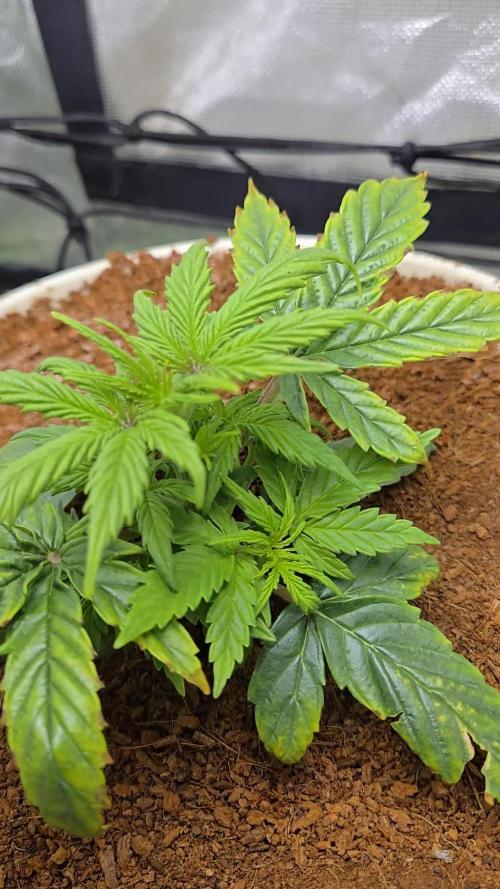
Day 21
She had a rough start, but now shes growing good , but not perfect
Lets wait for 1 week more how she goes

Likes
29
Share


@Prilyfe13
Follow
May 17, 2024 Day 92
We are at the end. Tropicana Cookies is in the dry tent having a nice 48 hours of dark. Tropicana C is now in the back of the tent with the 4 Sour Diesels up front. Yes I Tetrised the shit out of it to get them in. But everything is snug.
Tropicana Cookies is officially done with the main tent and is now in the dry tent for dark. I defoliated her up yesterday and only left the sugar leaves on. No sense in keeping the fan leaves on the plant if it's going to be pitch black for 2 days. Plus it's much easier to manage. And will be much easier at trimming time. She is also nearly dried out. Just perfect timing for this part. I just hope I'm not too early. Trichomes are almost all cloudy and there's a good 10% amber. A couple more days and in the dark should help them mature right along.
Tropicana C is still a hot floppy mess, but the tops have some potential. I think the majority of this plant will end up being pressed for concentrate. I wish I had a bubble washer. Oh well. Pressing flower is the option then.
Anyway, she isn't quite fading still, so I'm hoping for that over the next couple of days. If not, then I'll defoliate and put her in the dark for a couple days as well. Her buds are all purple and that's what matters.
She has about 5% amber trichomes and maybe 10% clear. Not enough cloudy for my taste. 4 more days? Maybe. 2 in the main tent and 2 more in the dark tent. I'm still trying to free up space for the Sour Diesels.
The light doesn't matter really anymore. She isn't growing at all and her buds are probably as big as they are getting. It's just a matter of ripening now. Don't really need a lot of light for that part. But still, I'm leaving the light as it is. Especially now that the Sour Diesels are in there.
The environment pisses me off. How the holy hell can I change the temp by 5 degrees and have no impact whatsoever on the humidity? Seriously. The temp is climbing a bit. I have to keep an eye on it as it's going above 78° and I don't want to melt my trichomes. Back down to 74° with the stupid humidity stuck at 62%. Annoying.
Grow System Environment:
Temp: 76.4°
RH: 61.4%
VPD: 1.17 kPa
Quick update: I had to increase the light power to accommodate the Sour Diesels now in the tent. They needed 200 to 25 mol/m²/d, so the light power as increased to 80%. The DLI only increased a couple points. No at 38 mol/m²/d. Everything looks fine.
May 18, 2024
Nothing going on today.
Tropicana Cookies is finishing up day 1 of dark. The humidity is a nightmare in the tent. It keeps climbing over 66%. I've tried everything at my disposal. Leave the tent door open, dehumidifier in the bedroom, dehumidifier in the tent? I don't think I tried that yet. I have 2 dehumidifiers in the main tent trying to keep the humidity down in there to no avail. I'm not bothering with trichomes today. I'll check trichomes tomorrow afternoon when she finishes up day 2 of dark. I may have to keep her in for a 3rd day. We shall see.
Tropicana C needs to get out of the tent ASAP. Her floppy tops are flopping right over the sour Diesels, which are growing vigorously. 2 of them grew 2" last night alone. They need the room now. Tropicana C just isn't ready for the dark tent yet. Maybe a few more days? She's just starting to show signs of fading now. I'll check trichomes tomorrow as well.
The lighting is of no concern. It's making the tent too hot, but it doesn't seem to be doing anything to Tropicana C. Tropicana Cookies doesn't have light. Lol.
The environment is a nightmare. Humidity is WAY too high. And now the temp is too high. No matter what I do, I can't control it at all. The temp is 77° and the humidity is still ridiculous at 66%.
Grow System Environment:
Temp: 75.4°
RH: 64.2%
1.05 kPa
Update: so I was researching other issues high humidity can cause. It slows down production and the plant won't drink because there is too much moisture in the air. It makes total sense. All of the flowering plants are taking forever to finish up. Now I think I know why.
Also, I added 1/2 gallon of plain water to Tropicana C reservoir. As she isn't quite done yet, I would rather her have a source of water if she needs or wants it.
I added one of the dehumidifiers to the dark tent with Tropicana Cookies. Now the humidity is around 51% with the temp hanging out around 76° to 77°. It spiked into 79° earlier, but I was messing with the heat in my room.
May 19, 2024
Busy day today. No watering or anything, but a very busy day.
Tropicana Cookies was wet trimmed and chopped down today. It took 94 days total from seed to harvest. After wet trimming, her total wet weight was 14 oz. A bit surprising to me. I was honestly thinking closer to like 9 oz, but I'll take it. Trimming took roughly 4 hours. I'm not sure why, but it did. I'm slow I guess.
There was no sense in trying to keep the trimmings for this round. There really wasn't much and I need a bigger table to catch it all. Messy. I've also discovered that the majority of the buds are a bit loose. Mostly the lowers and some of the middles, but the tops are mostly good.
I think based on my own mistakes, I'll be using the majority of this plant for concentrate. Maybe the whole plant. We will see. It all depends on how it dries and what the end result is. Both plants were not very happy with my nutrient regimen. Oh well. A lesson well learned.
Tropicana C is still floppy as ever, but now instead of a near black purple, she's almost like magenta or something. Dark pink? Lol. Something like that. She's starting to fade now and most of her tops are all colored. I'm just waiting for the fan leaves to catch up. I'll keep her in the tent for as long as I can. Maybe 3 more days? Maybe.
Her buds are definitely loose in the bottoms. The mids and tops are pretty nice. We'll see how they look after wet trimming.
The dry tent is hanging out at 70° and 61% humidity. I'd love it to go down to 65°, but for some reason it won't. I'll get it right in no time.
Grow System Environment:
Temp: 72.5°
RH: 68.3%
VPD: 0.84 kPa
May 20, 2024
We have fade! Tropicana C is finally starting to fade. Light green leaves coming in with purple hues. The buds are basically pink, it I expect them to get darker as she moves along.
Tropicana Cookies Day 1 Drying.
She looks good. Not much to report. She's drying. It could take between 5 and 7 days. Due to her smaller buds and the wet trim I did, I don't expect her to take very long to dry. And it seems that the environment is pretty nice. 61% humidity and 68°. The temperature could be lower though.
Tropicana C looks good. Still super floppy, but she has pretty buds. Not very tight buds. I'll do the same wet trim as well. She should end up drying after about 5 days. For now, she's drying her soil out and fading at the same time. I might give her another half gallon just to tie her over until harvest. I also plan on defoliation in the next few days after the fade is well underway.
The light is the same. No changes there.
The environment is still wonky. The temp is at 74° which I finally got control of again. The humidity on the other hand is still super high at 65%. I really don't understand. It was 40% humidity out yesterday and even with the outside door wide open, the humidity did nothing to drop. Nothing at all. It's weird.
It's back to being humid today, so no opening the door. Hopefully I can get it to clear up ASAP.
Oh, I did just learn that the central air isn't working either. And that is the main source of cool dry air. With none, I'm stuck using a portable AC that just blows wet air back into the room when the condenser is off. Stupid design. Very stupid. Even the dehumidifier function doesn't work right. It does the same thing except with heat. So my room gets too warm but the humidity stays the same.
Grow System Environment:
Temp: 72.6°
RH: 67.7%
VPD: 0.86 kPa
May 21, 2024
Day 2 of drying for Tropicana Cookies. The whole plant shrunk to half its size. Small tight buds. As I said before, the majority of this plant will most likely be pressed. We shall see.
Tropicana C is showing way more fade now. Like twice as much as yesterday. It's coming on fast and hopefully that means she's finishing up fast.
I checked her trichomes today. Looking good. She definitely needs way more amber though. But has much less clear. So it's mostly cloudy, but definitely nowhere near enough amber.
What's funny is how floppy she is. One would think those buds wouldn't develop properly, but they are swelling and getting more purple just like the rest of the plant. Interesting. I still don't know what happened here, but I'm guessing it has all to do with the nutrients this run. Bad timing.
This plant may also be mostly pressed. Her buds aren't as dense as Tropicana Cookies and they are definitely not tight. Unless by some miracle, they blow up and fill in over the next few days. We shall see.
The environment is finally leveling out now that the central air is on. Finally. It won't drop the humidity all the way to the low 40s%, but it will drop it below 55%. And that's keeps the tent below 60% and put of the danger zone for mold. However, I know it's still too high for the plant to perform at max potential, but it's the best I can do for now. Once it kicks on again, the humidity will hopefully drop to 50%, then maybe my dehumidifiers will start working as they are meant to.
Grow System Environment:
Temp: 72.7°
RH: 62.9%
VPD: 1.00 kPa
May 22, 2024
Tropicana Cookies day 3 of drying. I haven't weighed her up yet to see how far along she is. I'm really not expecting her to take very long at all. Her buds are small so she should be done in a couple more days.
Tropicana C is fading quite quickly. Looking really close to finishing up. However, the Sour Diesels in the tent are already in pre-flower and are starting to stretch. The need space ASAP. So I think I'll harvest her whole tomorrow she's not very leafy and I don't think she will get mold at all. She still has super loose buds so she will dry up within 5 to 7 days I think. Even at 60% RH, I think.
On the other hand, she was way too dry, so I added a half gallon to the reservoir. I was planning on harvesting in a couple days, but I don't think I have that much time anymore.
Originally I was going to wet trim Tropicana C just like Tropicana Cookies, but her branches are way too weak and floppy to trim without snapping branch after branch. So as I said earlier, I'll be dry trimming her instead.
The environment is back to being wonky. The central air hasn't turned on yet today and it's 85° out. So my room is suffering a bit with my crappy portable AC. It blows wet air when the compressor turns off. So the humidity is back up above 60%. The temp is fine at 75°, so I'm opening the tent periodically until the AC turns on.
I also added a new trichome video for Tropicana C. Getting really close. Let me know how close I am? Or does it not really matter at this point?
Update: I decided to completely defoliate Tropicana C. I don't know I will do. Full wet trim. The buds are small and so are the branches. So there shouldn't be any issues with the higher humidity. I'll be doing it in sessions as not to stink up the whole house. But basically anything with a stem I can access is getting cut off. Who knows, maybe I'll finish defoliating fst than I think and will wet trim anyway. She is definitely getting harvested tomorrow. I'm completely out of space for the Sour Diesels.
Grow System Environment:
Temp: 75.7°
RH: 59.4%
VPD: 1.20 kPa
May 23, 2024
Tropicana Cookies Day 4 Drying. I have a moisture meter for the stems and will be using that tomorrow to see how far along she is. Still a couple more days I think.
It might be Harvest Day for Tropicana C! Honestly, I would have liked a little more time, but I have other plants that need the space.
So I'm wet trimming her today and will harvest later tonight or maybe tomorrow. We shall see. Either way, she is done even if she's not.
I'll take one last Trichome Video after I'm done trimming. Then I can see if she's actually ready or not. Maybe she is. I don't think so though.
Not much else for today. Unless I harvest, then I'll update.
Grow System Environment:
Temp: 76.2°
RH: 60.6%
VPD: 1.18 kPa

Likes
25
Share


@XperencdGmanXG
Follow
this should be the last week of vegetation. Flowering should be starting soon. Seems like no end to this drought we are suffering from in Southern Ontario.

Likes
20
Share


@Xabii
Follow
PH is going down down down, corrected it with PH up up up.
I don't know why it dropped ~0.1/hr when EC stayed pretty much stable, roots look fine, no smells so... ???
Did defoliation as usual, the NL #1 + 2 need it every couple of days, the Ori is just fine, doesn't need anything.
Also did LST and lollipoping.
Smells get more intense


Likes
19
Share


@Mission420
Follow
This week I moved them into bigger pots, which is why I think now they were not growing as big as I hoped. They seem to be doing well, and I have added the net now and will let the canopy build up. Since I moved to bigger pots, I did not need to water for a bit, but I think it will be back to normal this week. Check out the video I did today of the room.

Likes
3
Share


@RandA
Follow
Hi there! I'm so satisfied of results until now. Third Generation SPEED AUTO has a growth fast and vigorous, thanks to Rhizotonic support also, what gives them necessary boost to the increase.😎

Likes
7
Share


@Eddjack
Follow
Inizia a esplodere di gemme non sono molto grandi ho sbagliato in passato e la piccola ne ha risentito. Ora però si e ripresa e piano piano si sta facendo valere. manca ancora un po' alla fine del ciclo non vedo l'ora di fumarla tutta !
Dajeforte growes
Likes
3
Share


@Rabidreject
Follow
Tuesday
Ok so the plants are doing really well. One of the kalini Asia plants is in the only regular pot I’m using now. It’s a little larger than the AutoPot XL’s so therefore the plant is slightly bigger but spread out because I topped it a while ago and today I took all the bottom leaves as well as quite a few of the lower lateral branches that well small and weak. Hopefully this will encourage the energy to where it want it - The main growth tips!
I think it was the other kalini Asia that is in the AutoPot XL that I ended up ‘super cropping’? Do correct me if I used the wrong term.
The main growth stems were quite a lot higher than the large lateral branches so I squeezed the stem with my finger and flopped the main colas over then taped them and tied them to support them.
The canopy is MUCH more even across all plants now. They look a bit bent over at the moment but I bet when I look tomorrow they are all facing the light again.
Magic!
They are def in the stretch phase now. They are growing like crazy. I’m really glad I did the nasty job of pulling each plant out and tying it down and cutting off the shit that won’t grow anything good.
Oh I also gave them a watering from the top using lots of microbes (ecothrive biosys) and molasses dissolved into warm water. The res was basically empty and honestly the AutoPot XL’s don’t even look wet at all on top even though they are getting all the water they need. They don’t react negatively when I occasionally water goodies in from the top so it’s all good!!

Likes
11
Share


@m0use
Follow
Memes for the fastbuds meme contest
Memes for the fastbuds meme contest
Memes for the fastbuds meme contest
Memes for the fastbuds meme contest
Likes
8
Share


@JohnnyBarrel
Follow
Week 4
All are growing good. 3 nodes, correct and solid stretch .
Daylight 6h30 / 21h25 = 14h55
Rainy days - 19°C … globally bad weather in May
Low water
Weekend: changing pots — 17L for all + 20L for BreakPadBreath…Geo textile
Soil= Patchamama (rich Mix) + Coco + Worm humus
Adds = algamycor + guano + mycorrhiza
Topping on GMO and Flash Back: 4 nodes
Now the plants have a reason to be stressed 😬

Likes
9
Share


@d0cterstrain
Follow
successful bending into the net. it'll be an uneven stretch but I'll be preparing with a second net. grower love lezgoo
Likes
2
Share

@Organic_G
Follow
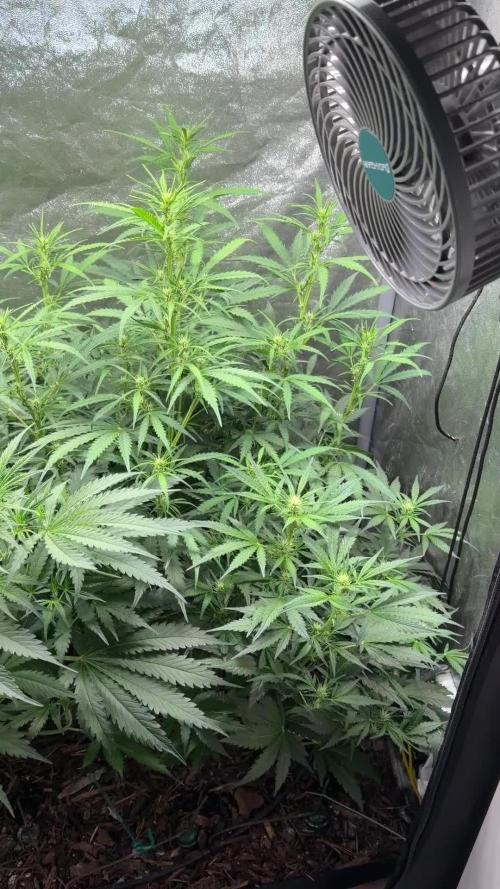
Wachsen wirklich perfekt, keine Mängel, super fette Stämme, extrem vital und gut am Stacken die Ladys…
Die Automatics sind auf einem Rekordrun wenn es so weiter geh, für 2. Woche Flower sind die extrem robust geworden…
Likes
13
Share


@RoyColt
Follow
Always R.O. Water
Last Week:)
-Day93 Flushing 15 ppm R.O water 13 liter with Flashkleen 2ml/L Ph 6,5
-Day95 Flushing 15 ppm R.O water 8 liter with Flahkleen 2ml/L Ph 6,5
-Day96 Flushing 15 ppm R.O water 9 liter only dring water and last drain 150 ppm it is good.
-Day97 in the dark room
-Day98 in the dark room
-Day99 Harvest!
Likes
10
Share

@GoodTimesOrganics
Follow
Hi liebe Community and Welcome Back! 💚🌱
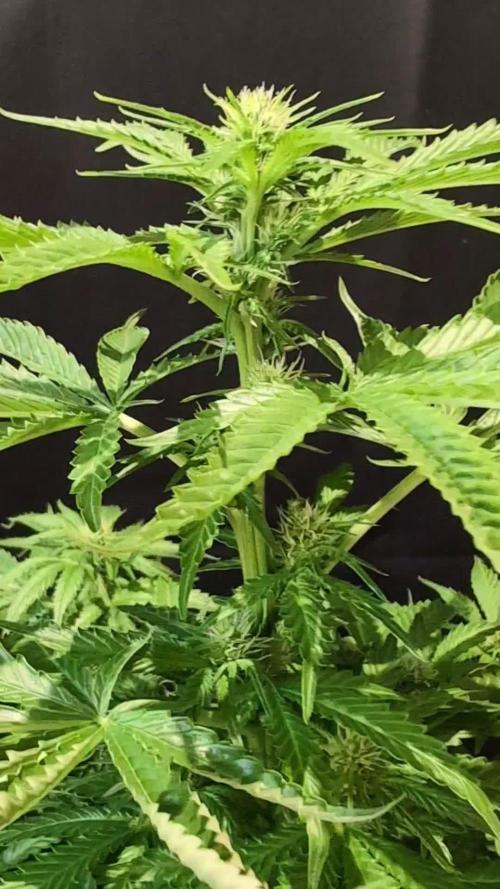
Ersteinmal beschreiben ich eine erstmals aufgetretene Problematikbin der zweiten Blütewoche.
Die Pflanze hat Lichtstress! Das liegt an der Überleitung aus dem Wachstumszelt in das Blütezelt.
Mann kann es gut an den sich nach oben kreuselnten Blättern erkennen. Die Pflanze will sich vor Austrocknung schützen.
Zuvor war die Pflanze einem PPfD von 280 ausgesetzt und ist nun direkt in die 830 PPfD Beleuchtung ohne Abstufung gekommen.
Normalerweise erhöhe ich den PPfD über einen zwei Wochenrythmus von Stufe zu Stufe.
Ist aber aufgrund der anderen Pflanzen in der Blüte aktuell nicht möglich gewesen.
Sie wächst dennoch gut weiter und hat nochmal etwas an Höhe dazu gewonnen.
Außerdem habe ich die unteren Triebe etwas gesäubert und nochmal etwas Blattwerk raus genommen.
Ihr Wuchsverhalten ist bis jetzt sehr Indica orientiert.
Die Umgebungsgegebenheiten sind aktuell zu hoch für das Stadium:
—————
🌞 Temp: 27
🌚 Temp: 18°C bis 19°C
💨 RH: 49%
VPD: 1,42 kPa 🏜️
💡ppfd: 830 mpm
—————
Viele Grüße 👋


Likes
6
Share


@CalGonJim
Follow
8/26 Monday morning 12am They are doing good. The camera fell into a plant...so lucky it didn't hurt the plant..that never happened before. My grow is HAUNTED!!!! Dark Devils are doing pretty good. All the others are great. I need more dirt in Blueberry Auto by Seedsman I'll do top filling later this week.
2am got the microscope 👍👍👍👍 I swear she is like a pet and she’s playing dead with her tongue hanging out. It’s hilarious. I’m really enjoying this one. This is gonna be a lot of fun.👻👻👻👍👍👍👍. 11 am I ordered a new microscope!!!
8/27 Dark Devil looks pretty cool. All other plants are doing just great!!
8/28 turned lights up to 52 looking good 4/28 Dark Devil Auto Monster crawls out of Hell!!!! Dark Devil Auto looks like the war boy that figured out Furiosa stole the War Rig. !!!!
I put a light tent over Dark Devil monster. I will need to trim the roots and make sure the trays aren't in standing water. Blueberry is in mostly Perlite doesnt take up water the same.
New microscope nice picture but no zooming in, I got the kind with the wider mouth, narrow mouth is better getting close to plants.... after 2 years I just NOW figured out the plastic cover comes off?? not the lens cap....im retarded there's just no other way to explain it
8/29 She's ALIVE and wow! got some amazing pics a little blurry and shaky but Dark Devil Auto by Sweetseeds is the coolest thing ive seen. Doing the seed surgery worked.
8/30 Some amazing progress on the Dark DEvil. The others are great Medusa F1 is the strongest followed by Gorilla Strawberry. The lights on the right side of the Mars Hydro light dont seem to be as strong as the ones on the left is ill rotate the plants today.
8/31 5 am lights up to 55 Watts. They are doing good. RSQ Medusa F1 showing the strongest so far, not a surprise there! Fast Buds Straw Gorilla taking off strong next. Pink Kush CBD and Blueberry Auto by Seedsman up next and surviving in almost all Perlite. I will put more dirt in when she gets taller. Dark Devil is going steady and very strong just amazing.
9/1 Growing nice now I will top them all above the 3rd node to keep the grow small

Likes
12
Share


@GYOweed
Follow
Gave it 3 days dark and dry.
Cut it today to hang and quick dry.
Probably get 2oz.
Sadly the lowers are very soft.
One of the main reasons iI hate indica grows.
Very bushy even trimming fan leaves lowers still have no light and inners in the middle too.
She looks like a bitch to trim hopefully i can use my silicone brush.
Next time Ill ask for their most sativa meow strain.
Likes
4
Share

@MartianFarmer
Follow
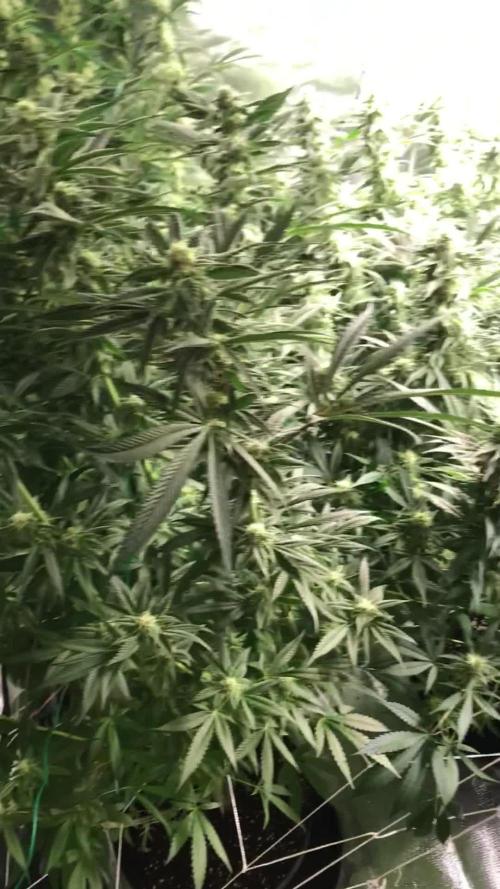
End of week 5 going into week 6 looks like one of the cheeses it a sativa lol 😂 🤦


