


Likes
Comments
Share



Processing
Likes
3
Share


@Silverback_Guerilla
Follow
MONDAY:
Taking all those cuttings last week seems to have really triggered her auxins, all branches are stretching, even the ones I cut from, but her main is reeeaaalllly stretching..
I think I'm gonna have to either top her or supercrop her. I've got to keep her height down so she isn't too much of a pain to deal with in a tent full of her little clones. this fall. Or maybe I'll just stick her in a closet somewhere and keep about 15 watts on her all winter long, then take some more cuttings to put outdoors? I wish I know for sure how well she smelled/tasted/intoxicated. I'd hate to learn she's a super-plant and not be able to grow her again...
WEDNESDAY:
I gave her a drink of water with bud candy and calimagic and started foliar feeding with Flower's Kiss.
THURSDAY:
I checked her clones today...4 have rooted very well and going into 3 gal pots tomorrow.
Foliar fed her and told her how beautiful she looks.
FRIDAY:
I gave her a gallon of grow nutes including Microbe Brew and also started her on Terpinator.
I planted 7 of her clones in 3 gallon (white) fabric pots today. They are sharing the 4 x 4 tent with the 6 x White Widow + 1 x Candy Cane seedlings for now.
SATURDAY:
I planted 7 of her clones today in 3 gallon (white) fabric pots.
I added two new blue/cold white LED panels to the 4 x 4 tent. They are kickass. Very low heat and excellent coverage. The 2 lights is overkill for this space, but I like it....a lot. So much so, that I will order 4 of them in 660nm deep red for flowering..two for the 4 x 4 and two for the 5 x 4.
I also bought and installed a 16' string of 300 Cold White (7000k)/Warm White (2800k) strip lights(150 each). It has a remote control which lets me change over to warm white for flowering...or have steady cold white and pulse warm white..or whatever. I think that they will serve as excellent low-heat side/corner lighting. Kinda pricey because in addition to the lights, you have to buy a controller and power supply, but they seem very effective.
I plan to order another set for the 4 x 4 tent. But, it's a double-row set (600 leds) ..one row of lights is warm white, and the other is RGB adjustable, so I can run 440nm blues for veg and 660nm reds for flower. I plan to keep them just below the canopy so as to illuminate the secondary and tertiary buds as much as possible.
Once this concept is proven (and once I save the money), I'll do the same thing in the 4 x 5 tent.
Update: Ok, so I've decided I'm only kinda happy with the strip lights..
I've decided to try velcroing 4 of those 4' integrated led tube lights in cold white for veg and warm white for flower to my horizontal poles. The cold white(6500k) are 2-rows of lights that pull 36w and put out 3000 lumens each and the warm white(2700) are single row pulling 24w at 2200 lumens each.

Likes
11
Share


@Papastroumf
Follow
Day 43 : Watering with co2 tab / 5L. Also added food again because i think they need it. Increased ppm to 850. Maybe the next one will be pure water. Ventilation works all the time when lights are on. Temp and humi are stable and this is good for the girls. 5 cm in 3 days. Patience is the key always. Also removed some burned leaves from all ladies.
Edit (Day 47) : Watering with co2 tab every 5L. I watered with juices again at 850ppm because i felt that they need it. Only DsD drank pure water because of burns. Also 4cm in 4 days. She will be low yielder with good stuff. It smells sickkkk.

Likes
27
Share


@DeepRootsGrowTrees
Follow
Week #16 Gelato-K By Kannabia
Week #5 Flower
She's about mid way through 🌼 covered in trichomes and you can smell her aroma it's strong 💪!! Great 👍 genetics at Kannabia Seeds!! Thank you for checking the diary much appreciated!!


Likes
33
Share


@burnerac
Follow
Day 64: unquestionably in flower. Added one gallon of pH 6.5 water with nutrients.
Day 65: No picture.
Day 66: yikes! Left her in the dark for 24 hours. Forgot to turn the light back on after day 64's Glamour shots. On the opposite side, the damaged branch is upright. Perhaps it won't be lost.
Day 67: looking thirsty. Added one gallon of water with early flower nutrients. One leaf has holes in it (not pictured). Will have to watch for pests.
Day 68: Man this plant is thirsty. I don't want root rot so I will wait one more day for watering. One leaf has odd holes in it. It is directly in the path of the fan so I wonder if it is related to that.
Day 69: added one gallon of ph6.0 water no nutrients
Day 70: Nothing remarkable to report

Likes
9
Share


@Unnamed
Follow
The ORP probe is not calibrated and values are to be taken with a grain of salt.
Values are average of the day.
DATE - °C - RH% (Tent Temp/RH)
20240905 24.3 70.9
20240906 24.7 65.5
20240907 23.9 69.5
20240908 23.2 62.9
20240909 22.4 62.3
20240910 22.5 61.4
20240911 23.0 55.4
DATE - PH
20240905 5.91
20240906 5.85
20240907 6.04
20240908 5.75
20240909 5.85
20240910 5.88
20240911 5.79
DATE - ORP (mV)
20240905 61
20240906 41
20240907 66
20240908 82
20240909 30
20240910 18
20240911 18
DATE - EC(us/cm)
20240905 2209
20240906 2260
20240907 2218
20240908 2297
20240909 2200
20240910 2165
20240911 2202
DATE - CF
20240905 22.09
20240906 22.60
20240907 22.17
20240908 22.97
20240909 22.00
20240910 21.65
20240911 22.02
DATE - °C (Reservoir)
20240905 21.5
20240906 22.0
20240907 21.7
20240908 21.7
20240909 20.6
20240910 20.4
20240911 20.6


Likes
4
Share


@DarkVarein
Follow
Smells likes Candy and Orange, really good strain, and hits really hard.

Likes
2
Share

@SugarandTerps
Follow
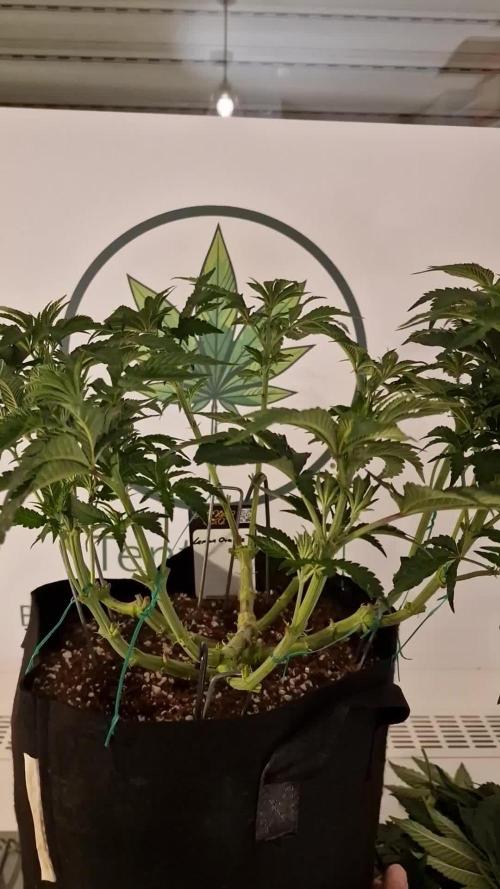
Vegi W6
12.2.2026 Gießwasser 2L, Ph-Wert 5,8, EC 3,0
14.2.2026 Gießwasser 2L, Ph-Wert 5,8, EC 3,0
17.2.2026 Entblätterung und unter Triebe entfernt. Vorbereitung für die Umstellung in die Blüte. Neues Reservoir angemischt.

Likes
11
Share


@SteffenX
Follow
week 27
18.10.2024
near harvest
19.10.2024
2nd partial harvest
20.10.2024
ca. 4g of dry buds

Likes
10
Share

@Leprechauns_Garden
Follow
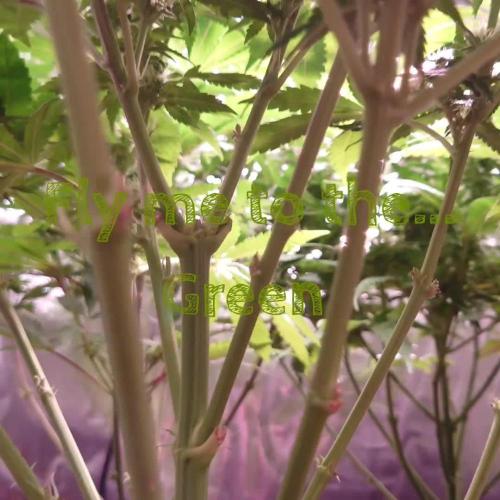
Wochenupdate ...🌱🌿🍭
Start der Woche 5 der Blüte 🏵️
Alle Ladys sind gesund und ordentlich am blühen.
Es sind schon Trichome und schöne Zuckerblätter zu sehen.
Habe das Gießverhalten ein wenig erhöht. 💧Sie bekommen aktuell 3,5 - 4 Liter NL alle 4 Tage, möglichst ohne Drain.💧
Bis jetzt klappt es perfekt und sie trinken es auch zackig weg.
Ab jetzt füge ich Plagron *Green Sensation* hinzu.
Habe das Gefühl dass ein bisschen zu viel Stickstoff im Boden ist ... Sie sind ziemlich dunkelgrün. Aber eine
N-Claw ist nicht zu sehen, ich denke es passt noch.
Licht bleibt gleich. Und sie beten fleißig weiter 🙏💯😊
In diesem Sinne..
Let IT grow 🌱 🌿 💚

Likes
422
Share


@Crashoverite
Follow
Hi all😁
Hope everyone keeping well.
So far everything going very good.
Girls are developing very well.
Will keep updating each week progress🍌💜👊 every couple of days.
Have a wonderful week brothers and sisters. ✌️💚
Light setting 20 watts
16/10 day 8
Introduction of root juice and fish shit. I hope girls will like this starter dish.
18/10 day 10
Girls are developing very well. Second watering with approx 250ml per pot on entire surface.
20/10 day 12
Everything going as planned. Steady development. Another watering of same as on the 18th. Except watering I am spraying soil surface with water every few hours.
22/10 day 14
I would called a perfect week. Athena it's a bit faster than Xena in early growth but this early faster development means nothing. Xena it's a princess warrior anyway so all good 😂😎
Really enjoying this early growth 😁
Wish everyone a great week coming!
Peace and love brothers and sisters ✌️💚
Likes
7
Share


@DOE_JUJU
Follow
8 weeks in & Buds are growing in size, lovely purple colour and the fruity/berry smell is lovely 👌🏽
Likes
1
Share

@DannyGNYC
Follow
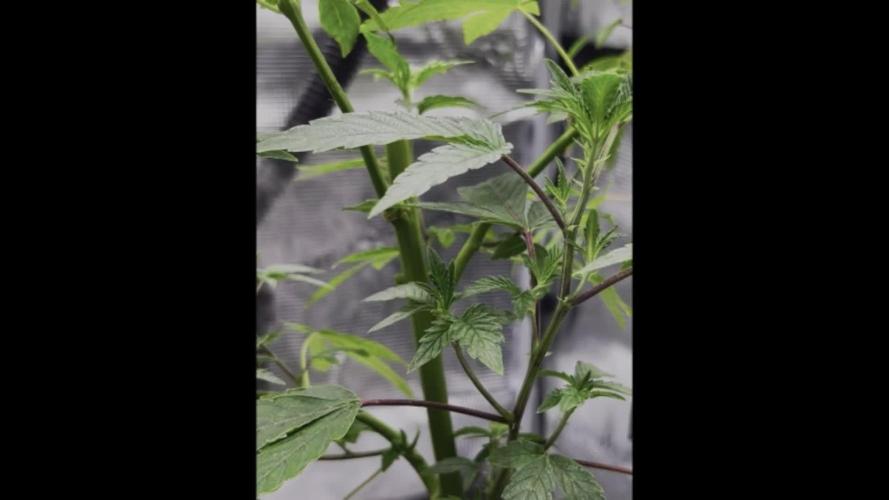
Oh boy, what a week have they got Sick PH was very high. Didn’t know what to do so the last week and a half. I’ve been flushing them bringing the pH down little by little trying to go gentle eventually the last flash show PH at 6.8. Which is OK anything between six and seven is considered optimal range for cannabis plant.
Likes
21
Share


@hydro_newb42
Follow
I added the 2nd SCROG this week, though the plant has not grown up to it yet. There was a good amount of stretching this week to go along with a lot of loli-popping. Great run so far.

Likes
5
Share


@Dunk_Junk
Follow
~3cm vertical growth this week.
I decided to put her in her 10 Litre fabric pot forever home.
Processing
Likes
62
Share


@OwlGang_Uk
Follow
Time Is Winding Down On The Girls Scout Cookies In The 3 Gal Pot It’s Starting To Show A Nice Purple Color On The Buds. All The Girls Are Highly Scented And Frosty. The Lemon OG Looks Like It’s Going To Be The Frostiest Of Them All. . .The Purple Power Is Still Drying But It Shrink Up Pretty Bad I’ll have An Update For You Next Grow.
Height Chart:
Girls Scout Cookies: 31 inches (3gal)
Stardawg: 35 inches
Girls Scout Cookies: 40 1/4 inches (5gal)
Gorilla Glue: 33 1/4
Lemon OG: 42 inches


Likes
21
Share


@FrostRailz
Follow
Ran 10 weeks
Whole plant hang dry 18 days
Easy to grow would recommend to beginner or advanced
Best Genetics

Likes
6
Share


@GrapevineGrower2
Follow
Days 42 through 49 of flower and all three Phenos are expressing themselves differently. Pheno #1 continues to express darkened fan leaves almost purple and much more frosty than her sisters. Pheno #2 is the other end of the spectrum remaining green, but less frost. Pheno #3 seems to be a mix of the other two and its fan leaves are turning colors of autumn. Those are my visual observations as we head into week 8 of flower with harvest just around the corner.
No nutrients or grow techniques used during week 7 flower. Other than a watering to saturation on day 42, I really haven't done anything other than observing and maintaining health of plant. For me, that involves tracking VPD to ensure optimal plant performance. Able to track VPD with recent upgrade to the AC Infinity Cloudline Pro fan system. The integrated environmental controls managed on my smart phone has been a game changer. So, happy that I made the upgrade.
Thanks again for stopping by and checking out the diary.

Likes
16
Share


@Ladyblazed
Follow
Started a little training, cut down the older fan leaves and topped up. I’m adding a tiny bit of root stimulator cause changed the pot size last week so it will to promote a faster growth. Gotta keep this lady low cause the box is quite small. So excited 😆
