


Likes
Comments
Share


Likes
9
Share

@EllysGrow
Follow
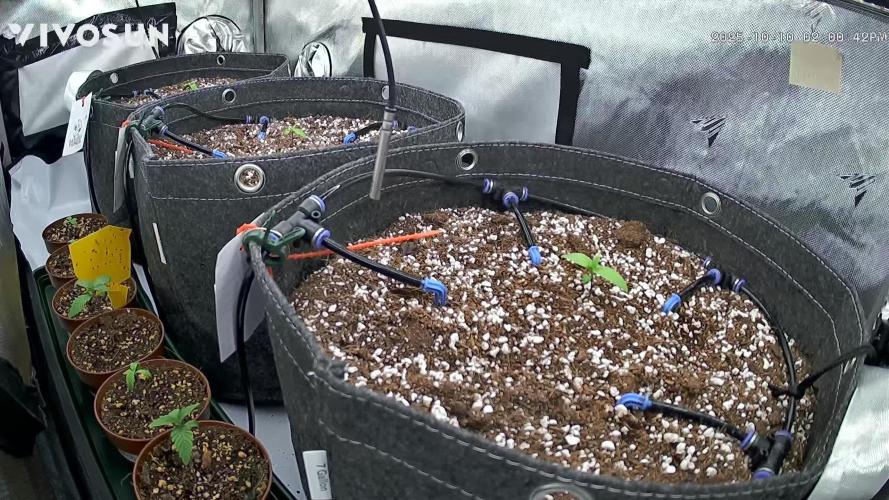
Mega am Stretchen meine Lady's. Haben heute noch Seitenlicht hinzubekommen, da die Blüte nun langsam losgeht. Etwas Duft kommt beim Öffnen des Zeltes heraus, verzieht sich aber sehr schnell.

Likes
3
Share

@Spy-Nello
Follow
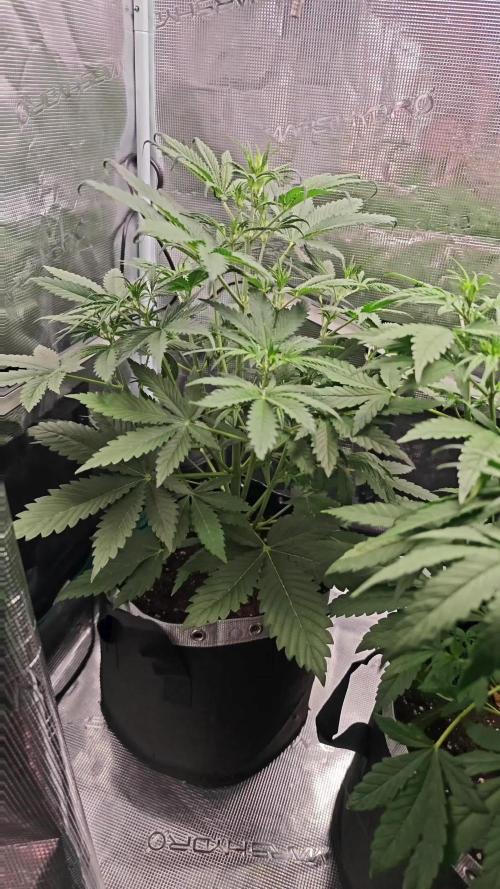
Le 3 genetice dichiarano tutte 56/63 gg di fioritura ma Zillions è chiaramente piu' avanti di tutte come maturazione e ha iniziato il Flawless Finish , Polar Gelato e Persian Pie continuano col bulk.
La scorsa settimana ho avuto dei piccoli problemi di temperatura risolti con un condizionatore portatile tuttavia, questa settimana è l'umidià a preoccuparmi, sto facendo fatica a mantenerla sotto il 55%.
Devo prendere una decisione, a breve taglierò Zillions, mentre per Polar Gelato e Persian Pie volevo aspettare almeno un'altra settimana ma, se continuerò ad avere problemi di umidità nel box credo che anticiperò... il rischio di rovinare tutto sarebbe troppo alto, i profumi ci sono e la sostanza anche, le cime sono dei sassi innevati, quindi nei prossimi giorni deciderò come comportarmi... o meglio decideranno loro😂


Likes
4
Share

@L8bloomr1008
Follow
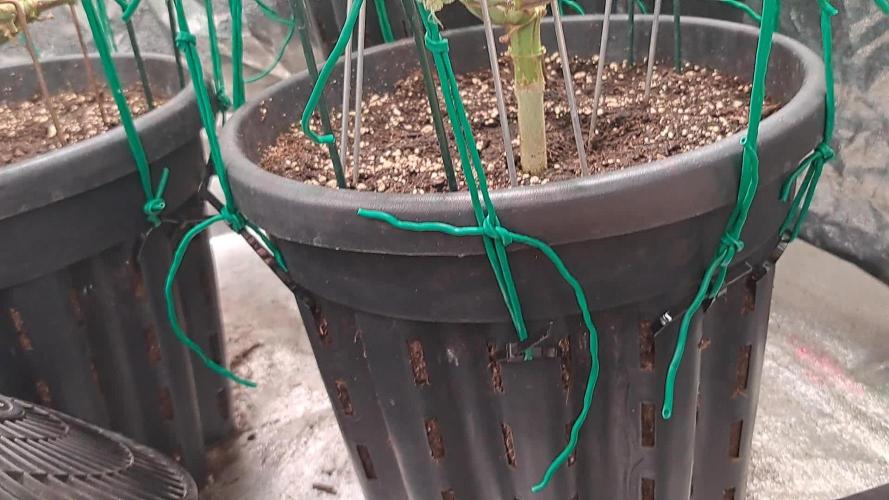
They’re starting to drink a little more. No real issues, business as usual day 42
Processing
Likes
5
Share


@Kourtney80
Follow
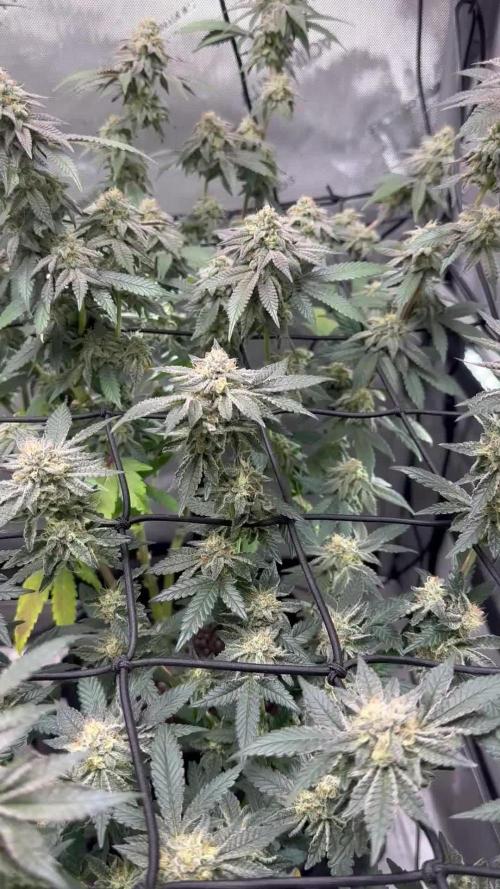
I’ve started useing rain water to water them. They still look healthy as they are keeping they’re rich green colour I jus hope they’ll survive😅
I also have a new 600w light for them

Likes
10
Share


@Arcadium
Follow
Stretch slowing down, secured the existing net for some support and to help with LST. Stretch has slowed down for sure. budlets beginning to form. Did a heavy top dress of Gaia Green, 13 TBSP Power Bloom to 7 TBSP All Purpose, mixed with a few scoops of compost. When I pulled back the mulch to top dress I snapped a few pics and videos of the soil, wow, SO much life it's incredible, one giant heap of life. I find mixing top dress with compost lets gives the roots something to adhere to, and nothing like increasing that root zone! Kept up with some light defoliation and LST with some bud clips and netting, not much else to do but wait! All the excess trim from defoliation and nearly everything you see in the background will get mulched up and added in the fall for next years crop. Circle of life yo!
Had some very very minor Powdery Mildew on some fan leaves after we have some 95% humidity roll through, I had company so skipped a spraying of Lactobacillus, and it showed. If you haven't tried it, it's EASY to make and it works wonders, plants love it as a foliar spray or a root soak, I use molasses to keep it stable, so it's double good for flowering time.
This will HAVE to get harvested end of September regardless, that gives me 7 weeks from now, so here's hoping for that FastBuds "Fast Flower" action.
Likes
55
Share


@Max1973
Follow
Day 44 - Put em in flower/bloom... 12/12... they are drinking alot.....
Day 47 - Decided to thin them out and defoliate ........ pics/vids....... (video are big files, need to pause, let em buffer)
Day 48 - Posted a pic, day after defoliation.
Day 50 - more pics, recovered from defoliation, and some pics of the beginnings of the flowering....... something interesting in the day 50 pics , is the color of the light spectrum...... it looks like a yellowy sunlight spectrum..... home made DIY LED..... 😎
Globe setup is working better,
10x click- 9w - 2700k - 8000 Lm
2x osram- 10.5w - 6400k - 2160 Lm
Lightpanel- 70w (600w) - 20x blue 6400k (2000Lm) - 38x red 2700k (4000 Lm)
Likes
37
Share


@iMpulsive_Grow
Follow
Day 65!
They are doing so well but they are super thirsty! Also the odor is a lot stronger now 💚💚
Day 66!
32”!
Day 67!
Not much to say
Day 68!
The trichomes are growing quickly and smells great 😊🌱💚
Day 69!
From being so obsessed with the plants I got carried away with the shots lol
Day 70!
Just fed them 2 days ago and gonna have to feed tomorrow. They are thirsty!!

Likes
2
Share


@Jahasus_Group
Follow
After all research of why plants are going at different rates the only conclusion Conclusion I’ve come to is to do with the fan being too close to the top left Plant and the Seeds to come from different plants but same strain. Will need to go back to royal queen seeds to ask the question???
Leaf burn from wind burn can slow growth of plants


Likes
12
Share


@Naidoo_B420
Follow
7 days since seeds came up from the soil..doing just fine I guess..need to upgrade my lights tho


Likes
17
Share


@Professor_Chaos
Follow
Beginning of week..
Gonna leave the nutes the same this week.. She seems to be doing great where she is.. In the next couple weeks I'll drop the Armor Si (Silica) and up the Kushie Kush (bloom booster) and FloraNectar FruitNFusion.. Trichome rubbing smells nice.. I think I'm beginning to smell the cheese 🧀 lol
Mid week..
She is packin on the trichomes nicely! Flowers are forming awesomely as well! Niceeee.....
End of week..
Forgot to get some pics.. But still just packin on trichomes and flowers.. The smell is really getting kinda strong already too.. For how early it is in flower.. But wow.. Niceeee.... Lol on to the next!!!...

Likes
4
Share


@420Germany
Follow
Slow groth, salad head, but its still gonna produce
An 8th Generation autoflowering strain. The stable hybridization of two excellent strains developed from US genetics. The product of crossing a specially selected very aromatic and resinous elite clone from the popular Mimosa family [Clementine (Tangie x Lemon Skunk) x Purple Punch (Larry OG x Grand Daddy Purple)] with our own Bruce Banner Auto (SWS91).
Mimosa Bruce Banner XL Auto (SWS101) is an extra-large autoflowering strain with highly resinous and aromatic buds.
These plants have a truly exquisite scent that is particularly sweet and attractive, with shades of citrus fruits reminiscent of mandarin and strawberry, fresh cypress, and pleasant undertones of smoked cheese. It has a potent, happy, even euphoric, and long-lasting effect that enhances the imagination and creativity. Some plants develop flowers and leaves with purple and reddish hues at the end of the flowering period.

Likes
12
Share


@2Stones1Bird
Follow
Checkout my Instagram @smallbudz to see the Small budget grow setup for indoor use, low watt, low heat, low noise, step by step.
07/12/2019 - Fed her 2l of 6.5PH water with 0,5ml of each Grow, Bloom, Max and Alga-mic, and 1ml of each Heaven and Vera,noticed about 10% run off, also added a green filter to the camera lens. Adjusted the light distance to 55cm again it was toooo close about 32cm.
10/12/2019 - Decided to go back and check the basics, removed led strip to give a proper 'night' time, changing light cycle to 20/4h no more 'exotic' 22/2h, re-checked the light distance every 2 to 3 days to ensure 60-45cm and I can tell all ready she is loving it.
Also added home made Co2 made with 1 tsp of yeast, 3/4 tsp of sugar 700ml of warm water in a 1l bottle with a tiny pin hole on the cap.
11/12/2019 - Fed her 1.5l of 6.5PH water with 0,5ml of each Grow, Bloom, Max and Alga-mic, and 1ml of each Heaven and Vera,noticed about 10% run off.
12/12/2019 - 8 weeks have passed and no flowers I guess I'm flipping to 1212h to see if she reacts.

Processing
Likes
28
Share


@Elysian_gardens710
Follow
Day 22 and 23:
Going easy breezy so far!! I released some ladybugs in my tents on these Chocolate Mint OG's 21st day. So far so good lol.
Last night when I watered I gave a little real growers recharge to help with the recent transplant (it definitely gave them a boost!)
Its mid summer here in MI and 84+ temps 😬 keeping the house and tents cool has been a challenge to say the least. Thankfully all my plants are in Veg and seem to like the heat. Except the Choc Mint.they are showing mild heat stress on the top fan leaves(at least that's my guess) Tent temps have been around 86 down to 84 daytime. I lowered them so they are 24" from the lights 🤞 hopefully that helps. Other than that, no problems. And some generally happy plants! The recharge and soil combo burned them a very little bit as well.
Day 25&26
Nothing too eventful. I watered #2 on day 25. With some real growers recharge. The stuff is awesome! No nutrients needed if you have good soil!
Day 26: snip 2 fan leaves from #2(the topped one) she was getting a little bushy. And tucked the other fans under to promote some lower branch growth. #1 I'm letting roll totally natural unless I clean up lower canopy to prevent pests.
Day 27:
Plants are doing great! #1 is really getting tall and # 2 is staying short and squat because of the training. We are letting #1 go naturally. Today's update is we added some LST wire to #2 to pull down her lowest branches
My equipment and gear:
2x4 vivosun
Es300 lighting
Vivosun oscillating tent fan
Honeywell Hurricane fan
6" exhaust outside
15,000 BTU air conditioner
8,500 BTU in tent air conditioning
Some sick ass Genetics 😁

Likes
47
Share


@Jimmy89
Follow
The the buds were small so it made trimming a nightmare! But it’s done and the end product is worth all the time. I have loads of trim and small popcorn buds that will be dry Ice sifted and pressed into a hash brick. Will update the diary when I have some bcp hash
Weighed up the trim at 588 grams, used my trim bins with dry ice to sift the trim and pressed it into blocks using a rosin pre press, I’ll now jar this and put it to one side. My first time doing this, definitely worth the effort!

Likes
5
Share


@Albanymedicinalgarden
Follow
Defoliating more often than expected, plants just fill in the canopy so quick this run. Slurricane didn’t stretch much and stayed on the shorter side overall so I elevated them with a riser underneath the middle two pots. Royal Jelly and PKBR easily doubled in height during stretch bringing them to a little over 3 ft. Heavy water need during the stretch for those two so I made sure to avoid overwatering the Slurricanes which were gentler sippers.
All phenos were successfully cloned (my first attempt at cloning). Kept them in the humidity dome sitting longer than I would’ve liked before up-potting but I realized most of my clones were cut too long and were getting strangled from growing by the dome. In the future, ill take my cuts shorter and be ready to up-pot after about 2 weeks
Likes
22
Share


@Aeromax
Follow
Hey 👻
After many months without updates, here's a little one.
These are the originals mother plants, i took 100's of clones out of em and then flipped to bloom 2 months ago.
Here's a few pics of different bloom stages 👆
I began flush today after aprox. 60 days of bloom, i'm looking fwd to cut in 7-10 days, depending on trichomes 👍
I'm not expecting a big harvest but at least a quality one ! I kept a few phenos of Peach Tree, Pink Gasoline and L.A. Kush Cake 🙌
I'll post a final update when i'll harvest 😉

Likes
41
Share


@TerpTurtle
Follow
15 Day dry then trimmed using the Trim Bin.
Curing with Grove bags, first harvest filled 3, 1/4lb grove bags.
*Updating with clone pictures of this pheno in late flower labeled in diary as you look through, If I pop a new seed of this strain Ill start another diary
Likes
26
Share

@squalino
Follow
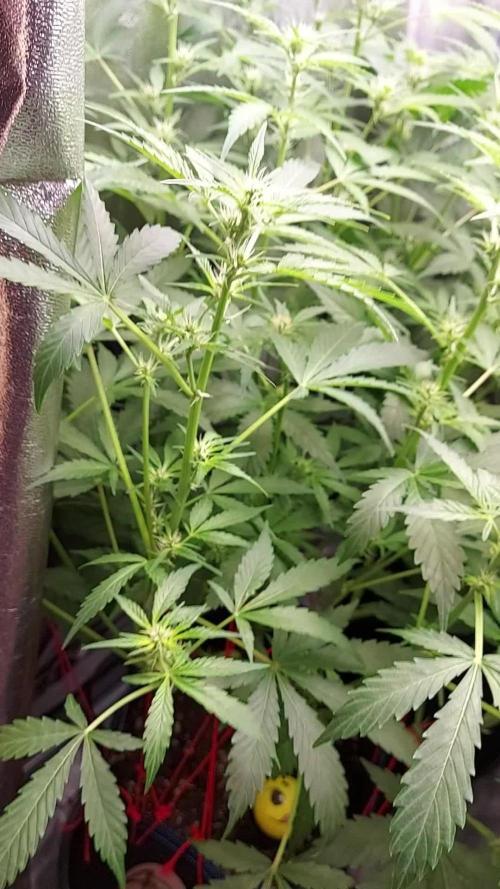
🌿 Journal de Culture : Mac 1 Autoflower – Semaine 5
On continue sur notre lancée. Cette semaine, la Mac 1 a littéralement explosé, montrant que le stretch est maintenant en plein régime. Je la laisse s'exprimer pleinement.
Un Grand Merci
Un grand merci à @Mia_BIOTABS et @Mrs_Larimar pour leurs conseils qui portent leurs fruits, ainsi qu'à tous ceux qui suivent cette aventure de près. Votre soutien fait plaisir !
Paramètres de Culture & État de la Plante
Taille :
Elle a pris un sacré volume et culmine désormais à 68 cm (+28cm)
Lumière :
la plante prend tellement de vigueur qu'elle se rapproche de la lampe , elle est maintenant à 55 cm de la canopée.
Climat :
Toujours avec 24°C le jour / 21°C la nuit
50% d'humidité.
Arrosage :
Le système Autopot fait tout le travail. La plante reçoit uniquement de l'eau claire avec un pH stable à 6,3.
Maintenance & Observations
C'est la semaine du "laisser-faire". Je n'ai touché à rien depuis 7 jours :
Zéro stress : Pas de défoliation, pas de nouveau palissage. Je la laisse se stabiliser après les manipulations de la semaine dernière.
Nutrition :
Elle vit sur ses réserves et sur ce que les Biotabs libèrent dans le sol. Aucun signe de carence, la couleur est uniforme et éclatante.
Analyse de la structure
Le stretch est impressionnant. La plante s'est bien élancée tout en gardant une structure robuste. Comme on peut le voir sur les photos, la canopée commence à se couvrir de pistils blancs de plus en plus denses, marquant l'entrée franche en floraison.
Les branches secondaires que j'avais écartées avec la ficelle ont bien profité de la lumière et rattrapent joliment la tige principale, créant une belle surface d'exposition. On commence à deviner la future formation des pompons.
L 'espacement entre les nœuds est idéal :
assez d'espace pour que l'air circule, mais assez serré pour promettre des têtes bien compactes. Elle a une allure de "sapin" parfaitement contrôlée.
Merci à tous de suivre ce journal ! La plante est en pleine forme, sereine, et commence à préparer ses fleurs sérieusement.
On se retrouve la semaine prochaine pour voir l'évolution des premiers trichomes !

Likes
3
Share


@Unculti_responsable
Follow
Bueno esta semana le dimos engorde y un riego con guano , no veo que estén engondarno mucho así que seguro lo vamos a dejar unas semanas más de lo previsto , para cosechar cuando estén bien gordos los cogollos
