Likes
Comments
Share

@Madd_Rez
Follow
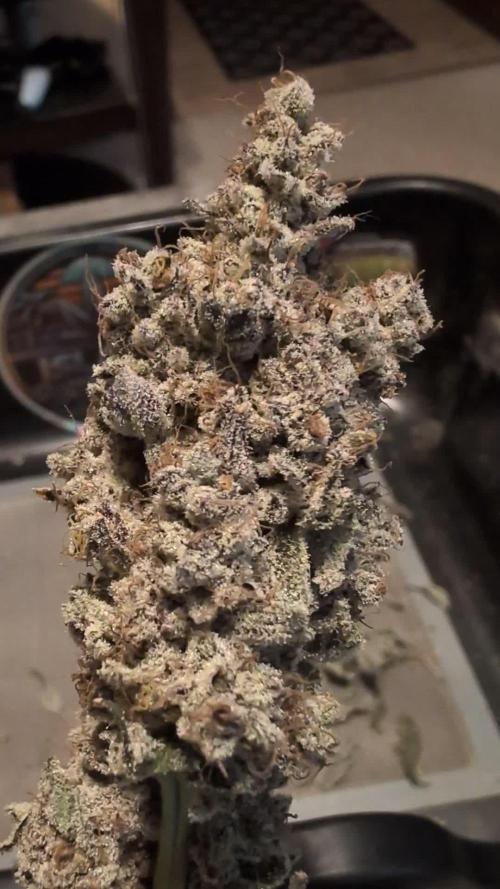
Finished out the grow with Florakleen and a simple plain water swap in the reservoir yesterday. I prefer to hang with all the fans removed so did that before chop.


Likes
3
Share


@HUUDUUH
Follow
Aaaaaa.. 😮💨
So In love with my gurls!
First week flowering and they have stratched a lot!
Beautiful green, beautiful form.
So.. I had to buy a grow box for the ladies YES! I did it. We (Bia and I ♥️)
Becuz it was realy hard to control the light thing and the umidity lvl is worring me.
Full packed now. 🔥
No mistakes 🙌 No mistakes🙌


Likes
62
Share


@SimpleGrow
Follow
Today is day 82 and start of week 9 of flower. I‘m pretty sure Nr.2 is nearing the optimal harvest time. Unfortunately I will have to wait for the other two but I tink they are getting there. The frost on Nr. 2 is much more prominent but still I don‘t see any amber colored Trichomes on the buds. Only on the leaves. Next Week I hope they get the desired look. Still a little more developement to go but i‘m very happy with the plants so far.
I hope this diary doesn‘t get Boring but I‘m actually glad the plants develop in a slower pace since thats more desireble. The buds from Nr. 1 and 2 are very dense and hard like a Rock. I hope the wheight will represent that.
Sorry for the late update, have a nice rest of the Day 😌

Likes
31
Share


@TheHighentist
Follow
26/6
-Temp 25-27day/22-24night
-52%RH (2+-)
27/6 Water day* plain water 6.1 PH
-Temp 25-27day/22-24night
-52%RH (2+-) *** Had a humidity peak because of a thunder storm 60-70RH for under 24 hours
28/6
-Temp 25-27day/22-24night
-52%RH (2+-)
29/6 Water day*
Gave it a bit extra since im leaving a couple of days
-Temp 25-27day/22-24night
-52%RH (2+-)
30/6
-Temp 25-27day/22-24night
-51%RH (2+-)
1/7
-Temp 25-27day/22-24night
-51%RH (2+-)
2/7
-Temp 25-27day/22-24night
-51%RH (2+-)
I was away from them 29/6 - 2/7, but i gave them early water before leaving which lasted :)
When i came home they had grown beautifully and was looking healhy.
I could moniter the humidity through my Inkbird humidity controller.


Likes
48
Share


@PrairieFrostGrow
Follow
********* Week 7 - January 20 to 26, 2020 (Days 43 to 49 from seed popping)
She is taking shape more this week by getting taller colas and thinning out between nodes.......oh yeah, and fattening of buds😜😎 It was also not without learning though and thats what is so cool about growing this plant.......you always seem to leave a grow feeling like you could do even better next time and therefore challenging yourself to do better......and have bowl while doing it😂
Her nodes are getting taller and giving herself room for packing on weighty buds👍 If left to one cola should be a fatty!!! But then I would be freaking about potential bud-rot....so I am cool with it. Since LST though it will be interesting to see how well she fills in six😳 She has the makings of being a good producer......its up to the grower to now to keep her happy😬 and see if she packs on the weight with roughly three more full weeks to go??
Missed opportunities in CalMag showing.😰 Left a lot of leaves and two branches that should have removed. Potassium excess contributed to by grower learning Terpinator and Massive.😰 Main stem should have been a little lower......further opportunity to improve👍💪
Got a little crazy with the PPM and felt I knew more than the nutrient company and went above the recommended max by roughly 30%😰😎😭 Yeah.......dummy! My defence.....1300 isn’t too high for Advanced Nutrients in late flower😃😃 Anyway, I screwed up and saw tip burn in week 7. Gave a quick little flush with RO water and Sensyzime to clean up the roots of the salts. Didn’t get crazy though because it was just the top leaves burnt. Been building the medium up to this point so don’t want to wash it all away just yet. She seemed to react well and nodes standing up and didn’t show much outwardly as signs of overwatering😬
Reviewing some of the photos this week I have seen the first small parts of a few hairs drying and turning colour.......no full hairs and not on every bud but enough to say they are first ones.......three more weeks?? Curious.....time will tell.....seen Jan 26, day 49. (49 + 21 = 70.......makes sense.) Feed will stop next week.....by end of my week 8.
In the week a head there will be the last push to get her medium in as good a shape as my skills will warrant. I want to get a good 10 + days of flush to see her in the beauty of senescence and how she matures. Run-off has been reasonable so will keep fingers crossed 😄🤞
Little more detail....
Jan 20/20 - Day 43
- Drinking lots right now, close to 4L per day, so 2L plain water only in AM. 6.2pH,.
- Feed in PM was light as well. Sensyzime @ 2ml and LW8 & Rezin @ 1.5ml only. 2L given with 75ppm. 5.9pH
- She was given a good feeding yesterday.
- Buds sites looking taller.
Jan 21/20 - Day 44
- AM - 3L with Dual Fual A&B @ 1.5ml/L. 725ppm and 5.9pH.
- PM hit her again - full feeding minus Rhino Skin, Sensyzime and Vitrathrive and VeloKelp. 2.5L 1000ppm and 5.9pH.
- Runoff - 950ppm and 5.6pH.
- top leaves were droopy so the extra feeding in the evening.
Jan 22/20 - Day 45
- Backing off quantity a bit and down to 3L feed in PM.
- Mass & Terp @ 3ml, Rezin & LW8 & DF @ 1.5ml, CalMag @ 0.5ml = 1300ppm
- Very perky today....standing up all the way down the plant. Liked the feed yesterday.
******this was likely the mistake feed looking back********left the ppm too high and should have added in RO water to bring down around 1000ppm! At least it seems traceable and will go with that😀
Jan 23/20 - Day 46
- Supplemental feeding only today. Happy so don't rock the boat :)
- Sensyzime @ 2ml, LW8 & Rezin @ 1.5ml = 80ppm 6.1pH
- 2L only today.....still some weight to the pot
Jan 24/20 - Day 47
- 2L feed: Massive @ 2ml, DF & LW8 & Rezin @ 1.5ml = 925ppm 6.2pH
- Nute burn on Green Poison but Zkittlez seems fine and she is fine. Maybe a slight lightening on a few tips....
- happy and praying in the evening.
Jan 25/20 - Day 48
- 4L of full strength feeding for this week.
- ppm for that was 1275 so watered down to 1100ppm.....only need 1ml of base nutes at full strength to hit roughly 1,000ppm.
- Runoff: 900ppm & 6.05pH....happy with that.
- she is 28” x 28” now
- Her cola growth was strong, taller for each of the 6 She is in fattening mode….feed her 😀
Jan 26/20 - Day 49
- So no surprise when you push a girl you find her limit. Tips burnt this morning.😥😔
- 6L plain RO water pH to 6.2
- Followed right away with 2L RO water with Sensyzime @ 2ml/L.
- Runoff: 465ppm.
- She responded very well to this and all tips were up still in the evening.....no over watering signs.
- Removed about 15 fan leaves and 4 lower bud sites.
- guessing only another 1.5 weeks of feeding.
- not falling to sleep an hour before lights out anymore either😀
Happy growing fellow enthusiasts and thanks for the time to read🙏🙏
(scrolling back through diary to update........damn.......that is a lot of bottles during these weeks!! There is an upside to organics😄)

Likes
3
Share


@Winston_Newport
Follow
Switched to a lighter feed this week, leading into flush. Did the lighter feed for 5 days, and have been flushing for 2 days now. Will play by ear this week, but I see 1 more week of straight PH'd water and then it may be time to cut them down. Very pleased with their progress. All the plants have stacked flowers, which have swollen nicely and are coasted in resin. The fade is kicking in and the flowers are starting to get some beautiful colour to them. Should be interesting to see what they look like in a week.

Likes
22
Share


@donovanliam
Follow
Changed the feeding only using two now. With more florabloom. Not much to update about growth its looking nice. Smells of cat piss but if you get super close there is some lemon

Likes
17
Share

@World_Breeders
Follow
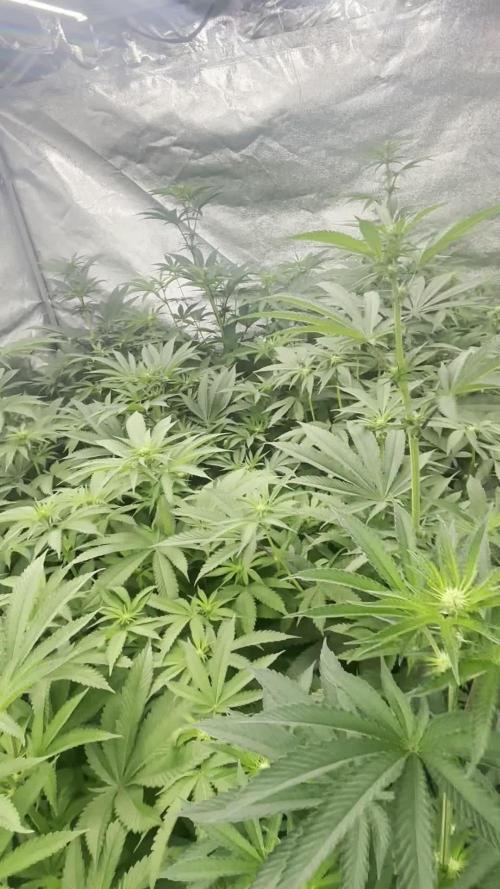
Transition week is underway.
Hokuzan has entered flowering under 12/12 and is responding with strong stretch, vigorous branching and healthy early bud-site formation.
Feedings have shifted from vegetative nutrition into the bloom regimen using Bio Flores, complemented by Hungry Bacter, Glutton Bloom and Ultra Booster, with Ultra Silk supporting the transition.
Plants remain balanced, vigorous and fully prepared for the flowering push ahead.
Likes
14
Share


@eldruida_lamota
Follow
Que pasa familia, vamos con la cosecha de estas Gorilla Zkittlez Auto de FastBuds.
Por dónde empezar, es una autofloreciente que es normalita de cultivar, tiene un periodo corto de crecimiento y de floración igual no es largo, o igual tendría que haberla dejado alguna semana más no entiendo bien.
En cuanto a la alimentación , pues la aplique una vez por semana y a sido suficiente, se a comportado bien en interior, la flor pues no es muy prieta porque no deja de ser una autofloreciente, pero es una flor que va repleta de tricomas.
El periodo de luz pues de principio a fin a 18 horas, fue suficiente para completar el ciclo de vida como esperaba.
Agrobeta:
https://www.agrobeta.com/agrobetatiendaonline/36-abonos-canamo
Hasta aquí todo, Buenos humos 💨💨💨


Processing
Likes
13
Share


@MG2009
Follow
Its been 2wks since last update had the flu.😷hope you enjoyed video. Look at those roots! She is looking great.
02/08/2018
Fed grow micro bloom + rhino skin. Light defoliation next week switch to overdrive in place of rhino skin, for next 3 weeks then flushing begins with distilled water,till leaves fade and trichomes turn 20% amber.
Likes
62
Share


@Santica_Garden
Follow
This is how things are looking for the Cheese, going really well, just need to keep on top of things and everything should go smoothly! I have uploaded a video for you guys with all the information you need 👍🏾🌱💚


Likes
1
Share


@critwat
Follow
We are officially in flower mode, folks! Switched to 12/12 for my photoperiod (the OG Glue), while the autos have already started pre flowering the week before. Got the scrog net set up to manage the incoming stretch, and plan to defoliate a bit the next week.
Wasn't able to get a good picture for this week as I was out of town, so used a timelapse video instead.