


Likes
Comments
Share

@Simba732
Follow
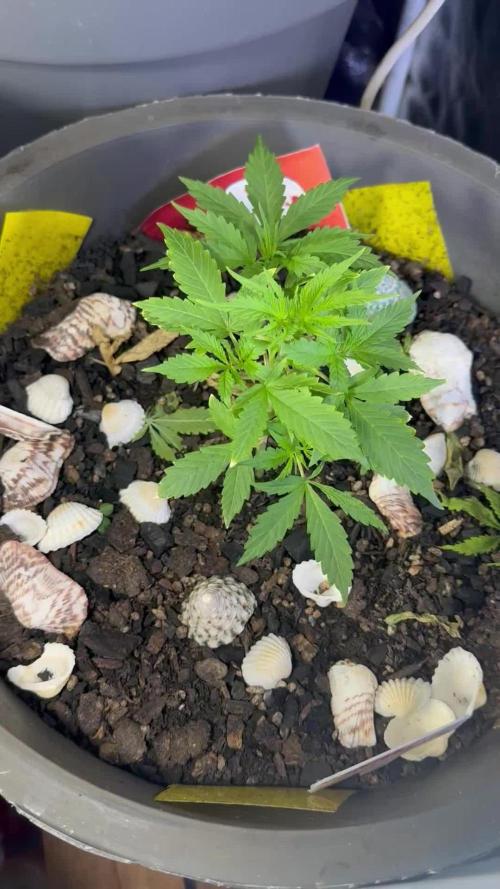
🔘 New week over
🔘Recovery from the training was prompt
🔘She’s running like track star 💫
🔘I added nutes to her water with proper ph to tackle the on going high ph issue.
🔘I can see she’s getting better and thriving
🔘happy growing !

Likes
13
Share


@Gg_kush
Follow
Bigger and bigger everyday !!
Gonna be awesome
Can’t wait to see her bloom !
I had to attach the branches, they are very long 😍

Likes
6
Share


@Lordviper28
Follow
This week went good had one plant with a ph imbalance in soil but caught early and got it corrected both strains are doing very well this start of week 2 of flowering all plants doing ggxww has done very well through whole growth no problems so far with them all smelling very good

Likes
8
Share


@Kappa420
Follow
So, every plant goes with its rhythm... I think no1 is about to be harvest or are least flush now. Small yield for sure but plants seem to be ok.


Likes
42
Share


@Ultraviolet
Follow
Thank you. Gave her a cocktail to help with stress. Added 1st net for lateral support, not so much now, but for later. Blue light is absorbed by photoreceptor proteins called phototropins, which trigger a hormonal response that causes cells on the shaded side to elongate, making the plant bend toward the light. Try and fill this side a little. She is quite big already, just needs to find her stride again after the undue torture.
5 apex stems with 20-30 mini cola, let them develop a little, with the apical dominance shattered, all those 20-30 will all compete with each other as soon as that stretch is initiated. Key to a good stretch is making sure the plant is cycling efficiently, with large ATP conversions occurring lights out.
For now, I'm keeping light intensity high. A plant will slow its vertical growth in very high light intensities, leading to a more compact form with thicker stems and leaves. This response is a protective mechanism against light stress, which can damage the photosynthetic apparatus and lead to symptoms like leaf scorching, yellowing, and brittleness. Instead of growing taller, the plant invests its energy into creating a more robust, stress-tolerant structure.
Providing plants with necessary antioxidants helps protect the photosynthetic apparatus by scavenging reactive oxygen species (ROS) that cause damage from excess light.
UV light exposure can impact the xanthophyll cycle by either enhancing its photoprotective role or causing damage, depending on the intensity and type of UV radiation. UV exposure can trigger the synthesis of more xanthophyll cycle pigments to increase the plant's capacity to dissipate excess energy, but it can also cause direct damage, particularly to Photosystem II, and may lead to a decrease in the de-epoxidation state (DEPS ratio) which indicates a reduced capacity to dissipate excess energy.
Plants can respond to UV stress by increasing the synthesis of xanthophyll cycle pigments, such as violaxanthin and zeaxanthin, to improve their photoprotective capacity. UV-induced changes in xanthophyll cycle pigments can be linked to a plant's overall tolerance to high radiation stress. The xanthophyll cycle helps protect against photoinhibition, which is especially important when the plant is exposed to high levels of both UV and visible light. High doses of UV radiation can directly damage photosynthetic components, including the proteins, lipids, and pigments in the thylakoid membranes. Exposure to UV radiation can have a mixed effect on the de-epoxidation state (DEPS ratio) of the xanthophyll cycle pigments. In some cases, UV can inhibit the conversion of violaxanthin to zeaxanthin, resulting in a lower DEPS ratio and a reduced capacity for energy dissipation. However, the total pool of xanthophyll cycle pigments may increase, and this enhanced pool size could provide a greater potential for photoprotection despite a lower DEPS ratio.
The xanthophyll cycle works alongside other mechanisms, such as the accumulation of flavonoids (UV screens), to protect the plant from UV-induced damage.
Blue light repairs 100% UV-induced damage in plants through a process called photoreactivation, which uses a light-dependent enzyme called photolyase. This enzyme uses energy from blue and UV-A light to directly reverse the damaging pyrimidine dimers in the DNA caused by UV-B radiation, a key mechanism for maintaining the plant's genetic integrity.
After carbon, light, water, temperature, and nutrients, the limiting factor of a plant's growth is often its own internal factors or the amount of a key ingredient. Chlorophyll concentration is one such factor, as the amount of this pigment limits how much light can be captured for photosynthesis. Other factors include chloroplast number, respiration rate, and the concentration of carbon dioxide in the atmosphere, as plants are often in a CO2-deficient condition.
60x60x18=64800seconds x 700 = 45,360,000moles. 45DLI
Exposure to 165 µW/cm² of ultraviolet-B (UV-B) light for 3600 seconds = 1 hour, a extremely high, acute dose triggering stress responses and protective mechanisms.
.
The plant's photoreceptor protein, UVR8, senses the UV-B radiation. This triggers a signaling cascade that activates specific genes to protect the plant from damage. In response to the UV-B signal, the plant ramps up the biosynthesis of protective compounds like flavonoids, phenolic acids, and anthocyanins. These compounds absorb UV radiation and accumulate in the epidermal layers of leaves to shield inner photosynthetic tissues. The plant may increase leaf thickness or deposit more cuticular wax, creating a physical barrier to the radiation. The plant will produce more enzymatic and non-enzymatic antioxidants to neutralize the reactive oxygen species (ROS) produced by the UV-B radiation. The plant activates enzymes, including photolyases, to repair DNA damage caused by the UV-B. These repair mechanisms are critical for preventing permanent genetic mutations.
While protective measures are activated, a high dose delivered over a short period can cause stress that overwhelms the plant's defenses.
Photosynthesis is highly sensitive to UV-B. A high dose can inactivate Photosystem II (PSII), damage thylakoid membranes within the chloroplasts, and reduce chlorophyll content, which lowers the plant's overall photosynthetic capacity. Despite repair mechanisms, high UV-B doses can inflict persistent damage on the plant's DNA. The overproduction of reactive oxygen species can cause oxidative stress, leading to the oxidation of lipids and proteins and disrupting cellular function.
Likes
5
Share


@SirBudAlotts
Follow
This week does not have that much work...
Just ensure that all the Temps and humidity remains consistent. Main factors...
She sprouted perfectly..I can not complain about a thing!

Likes
3
Share

@goatpharms
Follow
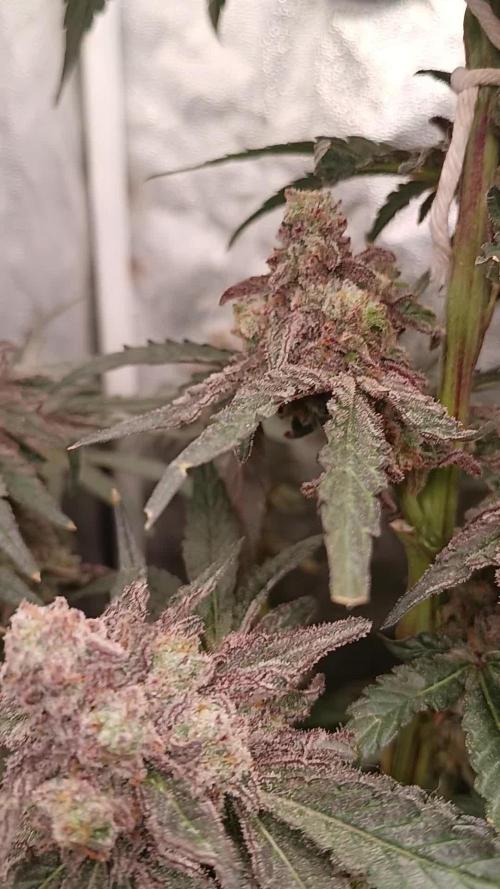
MAC is at peak maturity — buds are dense, vibrant, and resin-coated, displaying rich shades of purple, orange, and deep green. The aroma is strong and pungent (you would no it's mac straight away from the nose) , indicative of excellent terpene development. Plant health is optimal across the canopy, and all signs point to harvest readiness. Chopping her tommrow 💚

Likes
9
Share


@Tojitaamarley
Follow
Esta tercera semana hemos realizado un pocola técnica LST. Seguimos aprendiendo. Llevan 27 días desde que germinaron, algunas ya empiezan la pre floración. Muy contento con mi primer cultivo. Muchos avances y mucho aprendido
Likes
15
Share

@420DeepGrow
Follow
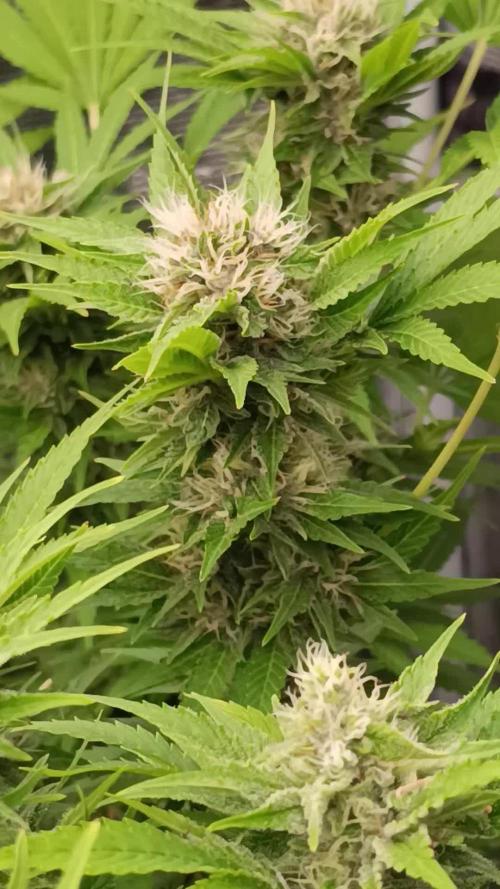
📆 Semana 7
El cultivo continúa en plena fase de engorde, con la canopia activa y las flores aumentando de tamaño a medida que los cálices siguen apilando.
Los cogollos ganan densidad y la capa de resina se vuelve cada vez más visible en flores y hojas cercanas. La planta mantiene su energía centrada en peso, compactación y producción de terpenos.
El cultivo se mantiene estable y sano, con aromas que se intensifican a medida que avanza la floración.
Seguimos creciendo fuerte 💪!

Likes
50
Share


@Mr_Motalovah
Follow
Hello growers and tokers! 👋 👩🌾 🧑🌾.🔥💨
There has been much change this week!!
First there was a big defoliation done, I cleaned the bottom of the plants.
All the growth that wouldn't amount to anything because the light doesn't penetrate that low.
Also took off the biggest fan leaves to give more room for light.
Then finally switched to 12/12..
After just 36 hours after the defoliation there was a major change.
New growth everywhere, colas started stretching upwards fast.
By far the tallest girls in the tent. Her colas are stacking up nice and tight if she keeps that up we'll have some nice dense colas. 😁
Great reaction to the defoliation and 12/12 switch.
I'm still watering every other day, After the defoliation I watered with only Enzymes 2ml/L to clean the roots a bit then started with the nutrientes again.
I dropped the amount of grow nutrients from 3ml/L to 1ml/L and started adding bloom nutrientes 2ml/L for now.
I'll slowly be upping the bloom nutrientes and after week 2 I'll no longer add grow nutrients.
That's it for this week. Stay tuned to see how they flower.
Stay safe!
Likes
23
Share


@eldruida_lamota
Follow
Buenos días familia, nos acabamos de levantar y como buen viernes , actualizamos la 4 semana de floración.
Las lemon kush en este caso, empiezan a desprender un aroma cítrico y a pino bastante agradable, las flores están formándose sin problema alguno.
El Ph lo regulamos a 6.5 siempre, está semana que viene retiramos big bud y aportamos OVERDRIVE de advanced nutrients.

Likes
Comments
Share


@StayMedicated
Follow
As you see I’m getting carried away way too soon. I’m enjoying the learning process though! Any feedback would be greatly appreciated.

Likes
2
Share


@Krautbauern
Follow
the ladies did shoot up because they have got to few light. We repotted all of them after 11 days, we also hang our led deeper.
At the beginning she got the smallest pot, now she got the biggest one :)
Likes
25
Share


@BudGardener420
Follow
This week I had almost no time at all due to family commitments - I'm also completely at a loss as to what deficiency my plants are suffering from. I would say a serious calcium magnesium deficiency. But why? I mixed every watering with calmag - I suspect that the pH value in the soil was not right at times. The deficiency came overnight with the second compost tea. Oh well - I hope I can still salvage something. I would be very grateful for help. Thank you 🙏


Likes
13
Share


@cookingwithninja
Follow
Week 9 day 1 video pheno.
Gonna chop this week
Week 9 day 7 well chop this weekend so on week 10 Day 1-2. Just waiting on a light to reveg one.
Everything is magic
Likes
25
Share


@DutchFarmer
Follow
Living da coco life
Week 6
🌿 Check Out My Cannabis Community! 🌿
👇 Like, Follow, Comment, and Subscribe to My YouTube Channel 👇
❄️🌱🍻 DutchF4rmer on YouTube (https://www.youtube.com/@DutchF4rmer)
----------------------------------------------------------
🎁 Join Our Discord Community for Weekly Giveaways! 🎁
👉 Join Our Discord Server (https://discord.gg/VMu6rH4a7V)
----------------------------------------------------------
🌟 Get Exclusive Help, Advice, and Mentoring on Patreon! 🌟
👉 Join Our Patreon. (https://www.patreon.com/DutchFarmer)
----------------------------------------------------------
📸 Follow Me on Instagram 📸
👉 DutchFarmer1 on Instagram (https://www.instagram.com/dutchfarmer1)


Likes
7
Share

@Patres
Follow
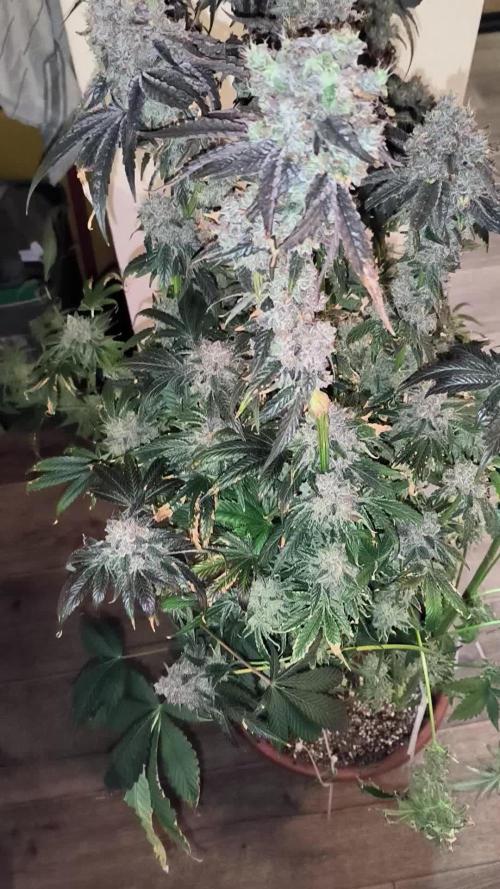
Pěstování king kartier mě bavilo. Odrůda je neuvěřitelně silná a odolná, po celou dobu vykazovala silný a hutný růst. A v pozdních fázích masivní nabývání pupenů. Byla i celkem dost tolerantní k nějakým těm chybičkám. Celkově bych doporučil na tuto odrůdu větší prostor a nějaký ten trénink. Pupeny jsou na omak tvrdé, trichomy mléčné. Konec 10. Týdne
Likes
6
Share


@mftexans420too
Follow
Week 8 Nana Boo boo we lost one of 3 & the other is recovering from epic