


Likes
Comments
Share

@kdifiori_
Follow
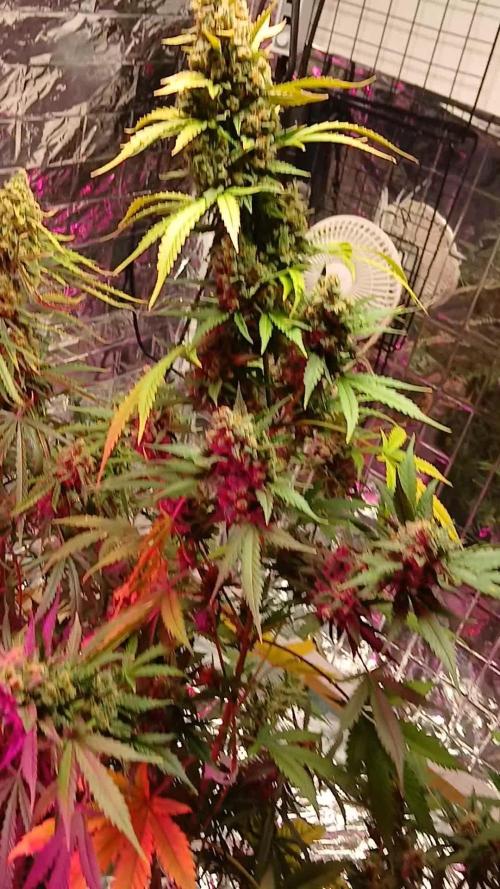
While the others have finished, for Cheese this will be the last week and he's already in flush, I'll give Bubblegum another week. What can I say? I'm so proud of these two!

Processing
Likes
33
Share


@Weird_Jimmy
Follow
✋Wk 7: Will the size difference begin to fall in line with the predictions, and rearranging the wind.
👉 This week is Day 48 thru Day 54 total. (Feb 16 thru 22). Today (day 54ttl) the 1 gallon plant is at day 21 flower and the 3 gallon is at day 9 flower.
👉 This week has shown some interesting things. The 1 gallon plant is still ahead in the physical timeline, and has also started to demonstrate how the smaller pot is limiting its size. The 1 gallon has been ahead of the 3 gallon plant in size and stature, until this week. The 1 gallon has stopped stretching and is beginning to develop its flowers. I was worried it would continue to get bigger and may become an issue vertically as well as horizontally. The 3 gallon plant has grown a few inches and isn’t really stretching up yet, but it is growing overall in size. It’s a big dome of leaves right now. Its main cola is same height as a couple of the secondary branches. I doubt the main cola will remain the same but this plant hasn’t been typical from its germination so only time will tell.
👉 The other interesting thing has actually been trending this way for a couple of weeks…the run-off for both plants has been lower than the inflow and no low EC fertigation has been needed. The 1 gallons roots are undoubtedly densely packed in the pot. It takes several minutes to apply the nutrient solution. The volume needed has also increased. The 3 gallon still readily accepts the solution, but it takes more every day and the run off takes longer to start running out of the bottom. The saturation level of both pots has increased, and the 3 gallon especially. The EC for both has stayed below the inflow EC. This is unusual because part of the volume of water in the pot when saturated isn’t absorbed by the plant, it evaporates on all sides of the pot and the top of the media. This would leave the dried nutrients wich would rinse off at each fertigation adding to the TDS. The reduction of EC in the run-off means the nutrients are being utilized by the plant. I have dropped the inflow EC of the 3 gallon a little because I was worried about burn. I have kept the EC of the 1 gallon plant at the low end of the recommended EC range of the General Hydroponics drain to waste nutrient schedule chart for the Flora series of nutrients. I use the entire line of these nutrients. For the one gallon I had been giving it only the “simple program”, and the 3 gallon the “expert” (entire line). This week when I noted that the stretch has pretty much ended for the 1 gallon, and decided that I will go ahead and give it the expert mixture as well but given at the low end of the EC range still. Ive included the Fertigation log for the week. It shows the tent temps, the outdoor temps and HVAC setting. Also, I note when a fresh batch is made and what week on the schedule it is. Each pot has the recorded time of fertigation, volume, pH, and EC of the solution given and the corresponding run-off. I mix the solutions at full strength and use a solution with just silica and Cali-magic to reduce the EC to the desired EC. I mix that in at fertigation time. I also adjust the pH if necessary at this time.
👉 The structure of the 1 gallon is very stout main trunk, and each branch is very sturdy. The bigger fan leaf production has given way to smaller leaves. The structure of the 3 gallon also has a very stout main trunk and each branch is very sturdy. The 3 gallon has some very large fan leaves and it has lots of vegetation. Its very dense and hard to peer inside. For both plants I have begun to selectively remove branches that would not be producing anything but larf. The 1 gallon only needed the lowest main branches trimmed. I also removed some of its smaller shaded secondary branches and leaves inside the canopy. The trimming on the 3 gallon is similar, however its much harder to get inside. I just do a little at a time at each fertigation. Im not sure if the first set of branches on the 3 gallon will be tall enough to keep but I want to wait till the plant starts stretching to see what they will do. Ive left as many leaves as possible in the 3 gallon…a lot of really nice fat food factories. This plant may go very large, or it may stay somewhat stunted as it did during the early veg phase.
👉 I positioned the plants I closer to the back wall. I bought a oscillating tower fan and was hoping it would be a good addition to the tent. Alas, it had too strong of a wind current (on the lowest speed) and the 1 gallon was showing signs of wind stress after 2 days. So I removed the fan and re-positioned the smaller fans I had clipped up top of the tent. Both fans are now hanging lower on adjustable ropes and point toward the plants. They are working well like this and the air flow is good. I may modify the oscillating fan and install a variable resistor to the fan motor to reduce the flow. I have added the branch support to the legs of the stand the 1 gallon is on. These posts will be used to support the weight of buds or position them as needed. I will add the support posts to the 3 gallon plant after it has gone thru its stretch, maybe another 2 weeks for that.

Likes
6
Share


@valiotoro
Follow
Hello everyone👋
Week 2 for my girl
They are doing very well,growing at fast pace and with a beautiful green colour on the leaves.
Have a nice day 😎🔥
They are under the mars hydro FCE-6500 + UV55 5min/hour💡

Likes
15
Share

@trustno1
Follow
Hi 👋
Geerntet an Blüte Tag 83
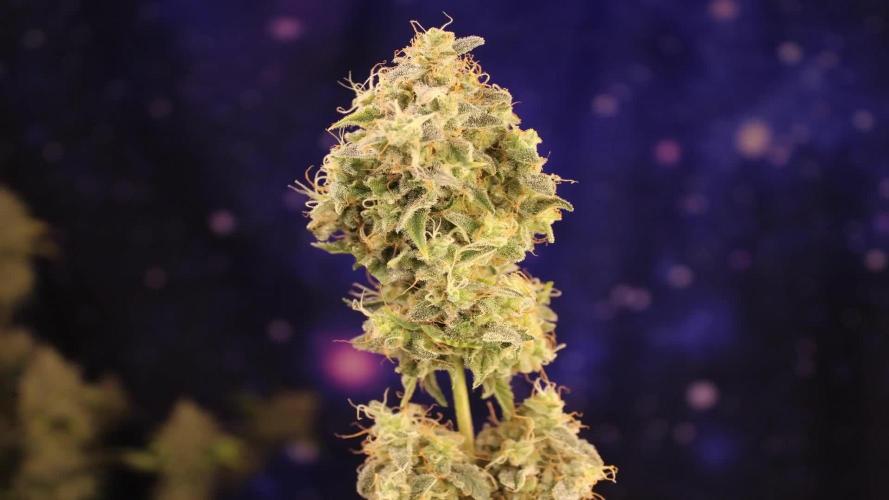
Es ist vollbracht. Lady Broccoli hat die letzten Wochen richtig abgeliefert. Die Buds sind steinhart und unglaublich schwer. Das LST hat die Gute dankend angenommen. Trotz der kurzen vegetative Phase ist das Ergebniss eindrucksvoll.
Das war ein sehr schöner Grow und ich bin wirklich positiv überrascht, und von der Lady B. verzaubert.
Vielen lieben Dank an das Team von Zamnesia und Plagron für diesen tollen Contest und die Bereitstellung der Samen und dem Dünger. Es hat wirklich Spass gemacht. Ich bin nächtes Jahr selbstverständlich wieder dabei.
Respekt an alle Teilnehmer des Contest. Ich habe ne Menge Diaries besucht, und wunderschöne Pflanzen begutachten dürfen. 👍
Gruß M.


Likes
5
Share


@Jankky
Follow
Had to use bricks to raise the height of the structure. Sapphire OG on the right. Candy Gas in the middle. And the second Sapphire OG and Candy Gas share the square on the left, the tallest of the zones.


Likes
14
Share


@eldruida_lamota
Follow
Que pasa familia, vamos con la novena semana de floración de estas Rainbow Melón feminizadas de fastbuds.
Vamos al lío, de las 3 plantas, me quede con 2 por espacio, siempre pongo alguna semilla de más por si no abriese alguna por no perder ese hueco del indoor.
También se trasplantaron a su maceta definitiva, en este caso de 7 litros que además provocó un shock que también solucione.
El ph se controla en 6.2 , la temperatura la tenemos entre 20/24 grados y la humedad ronda el 50%.
Las flores están bien prietas y resinosas, sacan unos aromas muy fuertes que no logro describir así, está acabando de madurar, los tonos que se marca son increíbles, no veas como se han puesto.
Hasta aquí todo, Buenos humos 💨💨💨
Likes
77
Share


@SooSan
Follow
Dans l'ordre:
1) Afghan Peach x Blue Monkey
2) Gelato Cake
3) Fast Critical Poison
4) Tropical Fuel
5) Hindu Kush
6) (Blueberry x Black Domina) X (Kosher Kush x Mk-Ultra)
7) Blueberry
8) Herz OG
9) (Blueberry x Black Domina) X (Kosher Kush x Mk-Ultra)


Likes
25
Share


@DrGanj
Follow
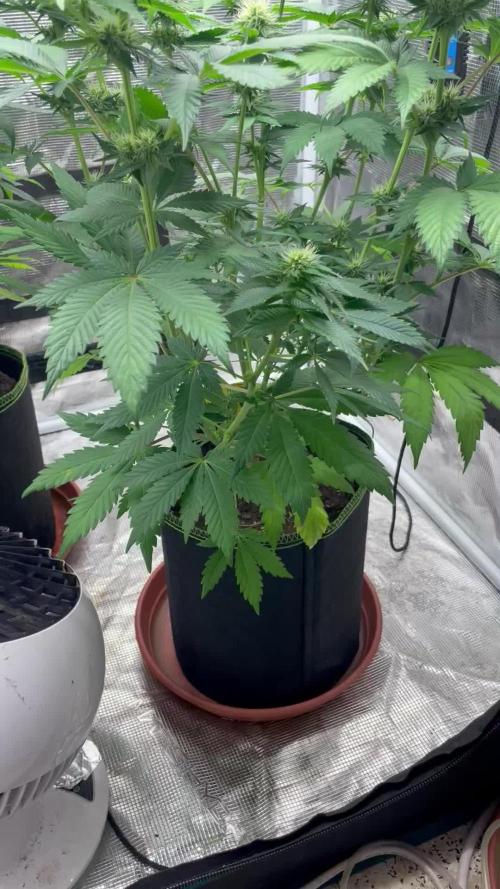
This plant was a dream to grow, wish I'd taken cuts. Halfway through dry at 7 days. Drying at 55 - 60 % RH and 17 - 19 degrees C. I anticipate she'll be done between 10 - 14 days total dry time and I'll then trim and update weights on this Harvest.
133.75g total after trim. She's a nice smoke, very happy.



Likes
15
Share

@GERGrowDesigns
Follow
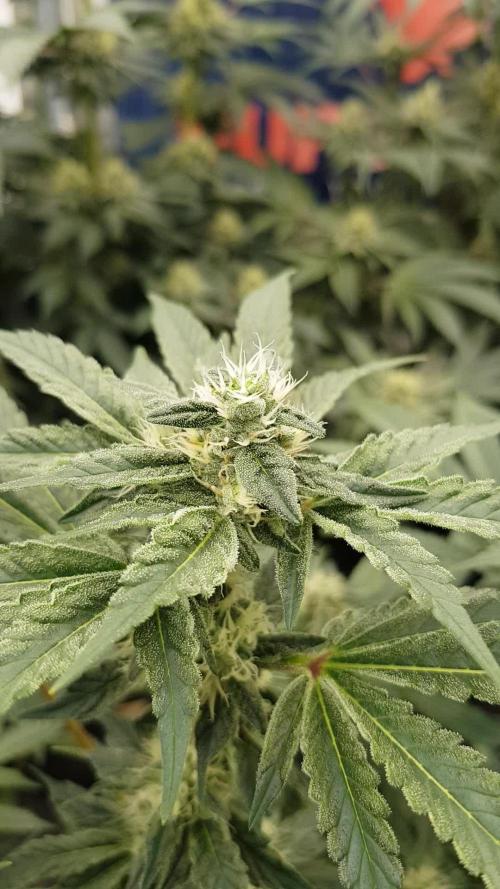
Welcome to Flower Week 4 of Kannabia Clementine Slush BioBoost Edition
Need a Fail-Safe Germination and Express Flowering?Kannabia Makes It Easy with BioBoost, Sproutly and Its Fast Genetics . More informations to find at The Kannabia Blog on GrowDiaries.
Check out Kannabia Seeds with my link [https://www.kannabia.com/de?ref=61966] and grab the germination device or the strains I used . Trust me – it’s worth it for sure !
Get another 20% Discount at all products using the code [GGD] at the checkout
For this Project , I’ve chosen the Feminized Photo Strain Clementine Slush BioBoost :
Here’s what I’m working with:
• 🌱 Tent: 225x150x150
• 🧑🌾 Breeder Company: Kannabia Seeds
• 💧 Humidity Range: 50
• ⏳ Flowering Time: 65 Days
• Strain Info: 21%THC
• 🌡️ Temperature: 26
• 🍵 Pot Size: 20
• Nutrient Brand: Hy-Pro
• ⚡ Lights : 600W x 2
A huge thank you to Kannabia Seeds for allowing me to try my Best with this amazing collection from Photo Strains they managed to Sponsore . Big thanks for supporting the grower community worldwide! Your genetics and passion speak for themselves!
Let’s grow together – and don’t forget to stop by again to see the latest updates!
Happy growing!
Stay lifted and stay curious!
Peace & Buds!
Likes
18
Share


@DaddyPrime
Follow
4/22 start of week 11. No nutes gonna start flushing
4/24 starting to get more crystally and packing on the resin
Likes
18
Share


@Grower_Of_Persia
Follow
week intel:
its time to harvest some of plants the ones that is mature enough. indica dominant plants will done first always so we should harvest them first
because my base nutrients and one of boosters was salt based, i'll do flushing this week to get some relieve to plants in the last days
stresses :
flushing
Drought stress via watering only one time with flushing this week
feeding:
day 1 : i flushed them with Advanced Nutrients Flawless finish and adjusted ph
day 3 : no more feeding from now on
day 5 : no more feeding from now on
guide of the week :
i harvest in 2 parts : first i harvest top of the branches and will let the lower buds to ripe another week then ill harvest the second wave.
indica dominant plants will get done 1 or 2 weeks sooner than sativa dominant plants that will often takes more than 8 weeks so be aware to harvest them sooner.
my dry and cure style is this:
3 days of hanging upside down to get water activity lower to around 0.6 in 50% humidity and 26 C temp (i know its a little high but we are in a hot summer right now and i cant get it lower even with air conditioner) and then after 3 days of drying i remove leaves and stalks, trim buds and move them to jar for the rest of their life :D . and in the first 4 days of curing i open the jar door and let hem get some fresh air in the jar for about 5 minutes and close the jar door again, after 4 days of curing like that buds are smokable but they will get better as they getting cured about 1 month.
im happy as hell with this harvest :D.

Likes
40
Share


@MrJones
Follow
47th Parallel Crowly's Comet
🔹⊱╮🔹╰⊰🔹 GROW Started 03.10.24 INFORMATION 🔹╰⊰´🔹⊱╮🔹
🌞Environment - Maintaining 80F and 65%Humidity
🌾Training - Nothing this week, just letting the flowers stack up; they are getting fat, sticky, and stinky!
⚱️3-Gallon 📊6.2 PH
💧 Feeding - Using Horti Grow 8-11-21, Bloom 5-15-26, Late Bloom 0-24-26, Cal 12-0-0
🌞Medic Grow Smart 8 760 Watts
🕷️ IPM - CannControl from Mammoth and Mosquito Bits as needed
🔹⊱╮🔹╰⊰🔹 PLANT UPDATES 🔹╰⊰´🔹⊱╮🔹
📝 On 05.11.24, This week, we are on Auto-Pilot and just Fertigating as needed; the ladies are stacking up nicely. I am surprised, but they are looking great!
📝Fertigation injects fertilizers into an irrigation system to supply dissolved nutrients to crops.
🗓️05.11.24 Just feeding daily, sometimes twice; today, fed with Hort-Bloom @ 2.7 GRMS Per Gal and Horti-Cal @ 2.5 GRMS Per Gal.
🗓️05.12.24 Just feeding daily, sometimes twice; today, fed with Hort-Bloom @ 2.7 GRMS Per Gal and Horti-Cal @ 2.5 GRMS Per Gal.
🗓️05.13.24 Just feeding daily, sometimes twice; today, fed with Hort-Bloom @ 2.7 GRMS Per Gal and Horti-Cal @ 2.5 GRMS Per Gal.
🗓️05.14.24 Just feeding daily, sometimes twice; today, fed with Hort-Bloom @ 2.7 GRMS Per Gal and Horti-Cal @ 2.5 GRMS Per Gal.
🗓️05.15.24 Just feeding daily, sometimes twice; today, fed with Hort-Bloom @ 2.7 GRMS Per Gal and Horti-Cal @ 2.5 GRMS Per Gal.
🗓️05.16.24 Just feeding daily, sometimes twice; today, fed with Hort-Bloom @ 2.7 GRMS Per Gal and Horti-Cal @ 2.5 GRMS Per Gal.
🗓️05.17.24 Just feeding daily, sometimes twice; today, fed with Hort-Bloom @ 2.7 GRMS Per Gal and Horti-Cal @ 2.5 GRMS Per Gal.
╰⊰🔹╰⊰´🔹⊱╮🔹╰⊰🔹╰⊰🔹STRAIN INFORMATION🔹⊱╮🔹╰⊰🔹╰⊰🔹╰⊰🔹⊱╮
Crowley's Comet / https://www.47thgenetics.com/product-page/crowley-s-comet-10-fem-birdseeds
It's everyone's favorite piece of space rock, Crowley's Comet! The culmination of reversing our Matterhorn cut off Mr. Crowley to Intergalactic Runtz, and the results were out of this world (I had to do it). These ladies were slow to start, but once they hit their stride, they put any worries we had to rest. Compact, short-framed, and robust. They pack beautifully boulder-like flowers that reek of garlic and sickly sweet cotton candy. Dark green to a mosaic of purples, yellows, and silvers. Frost production is off the charts, the internode spacing is tight, and they certainly will impress in their last few weeks of flower. This is one of our favorite crosses in the new fem lineup. If you're looking for your hype fix, here you go.
Yield: Heavy to XL
Flower Time: 63 days
Feeding Schedule: Heavy


Likes
2
Share


@I_Identify_As_A_Dan
Follow
Day 42
Shes really starting to pack on the some size, shes going to be a great yielder i think.
Have a new dehumidifer arriving next week which is needed right now.

Processing
Likes
34
Share


@DudeGrowsWeed
Follow
Seedsman Auto Sour Diesel Haze coming up!!!👍
I love the Sour Diesel strain so I'm really looking forward to this one. Also, the Seedsman Auto Lemon I just harvested was very impressive. I'm going to go lighter on the training from now on because I want to be done by end of May/early June. My grow is in the attic and its gets crazy hot there in the summer, even in VT.
My Perpetual Harvest strategy…. Originally my plan was to start 2 seeds each month, but had some seeds from one breeder that did not germinate early in my rotation. Ultimately, this caused single seeds to pop and messed up my 2 at a time plans. But, that seemed to work out OK, because now I think starting one seed every 3 weeks is a better strategy. This should provide me with 4-5 plants at a time, instead of 6. However… Since I need to shut down over the summer because my tent is currently in the attic, I’m starting 2 seeds at at time for the last couple of rounds.
Plants get fed once weekly on weekends. Seedlings get water only. Plants in vegetation get water and Recharge. Flowering plants get water, Recharge or Big Bloom (Fox Farm). Feeding is done using 2 gallon watering can. Any additional waterings during the week are given on an as needed basis per plant. I lift the plants to help determine which plants are more dry (lighter) and provide water any plants via water bottles and watering spikes.
I give each pot a quarter turn every day in an effort to make sure the plants get equal lighting from all sides. I rotate the plant in place by turning the pot 90 degrees (I am not rearranging the layout of the plants in the tent on a daily basis).
The soil is an ‘organic super soil’ I mixed myself using organic top soil, organic potting soil, organic compost, organic peat moss, organic perlite, organic vermiculite, lime, epsom salt, expanded clay pellets and Jobe’s organic fast start. I am also recycling my soil and water with Recharge when using recycled soil.
For plant training I have tried a variety of things, but my plans now are to do LST bending only, no HST anymore. I may decide to go back to HST again in the future, but I’m curious to compare LST training only to see how that goes. Around 3 week I'll do a FIM cut/pinch once there are 4-5 nodes established. And some defoliation around the 3rd week of flowering. I have been doing HST bending and having good results, but think the HST may be causing the plants to take longer to harvest. I hope LST only will help increase harvests while getting me to harvest sooner.
Setup:
1- Grow Tent 24”x48”x72”
2- Viparspectra 300W LED’s (1-V300 & 1-R300)
1- Hanging 100w CFL (26w actual)
1- Carbon Filter w/ 190cfm Fan & 4” ducts
1- 6” clip-on fan
1- 700w electric heater - oil filled radiator (in front of air intake behind tent)

Likes
10
Share

@I_Identify_As_A_Dan
Follow
Week 10 for White widow by Greenhouseseedco,
She finally got her transplant into 25L of fairly good soil mix of biobozz light mix/coco mix + a good feed of @bokashibiochar + a feeding of BioGrow by greenhousefeeding
I think a few days of adjusting and she will start to explode.

Likes
2
Share


@YAMA47
Follow
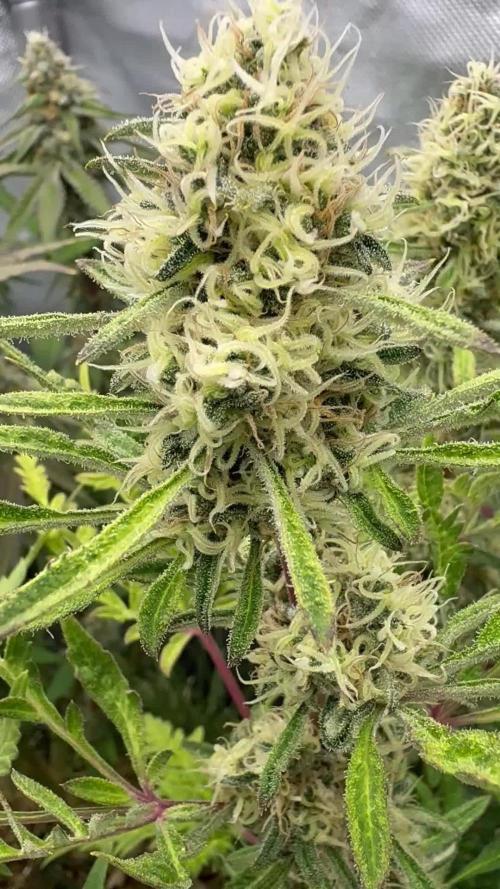
Dia 67 desde germinacio.aqui muestro las 2 mas avanzadas.comparando cultivos de bsf Arg. Con Bsf España. LLEGO A LA.CONCLUSION QUE A NOS NOS TRATAN DE SUDACAS Y NOS MANDAN SEMAS DE CALIDAD MEDIA.PROX CULTIVOS CAMBIO E BANCO¡



Likes
21
Share


@Bak2Blk
Follow
Yall see the yellowing of the leaves closest to the top? I've since switched my nutes over to Tiger Bloom and I've thrown in some Cal-mag into the mix. They'd gotten kinda droopy but since I changed their nutes up a bit, they've been perky af even tonight as it's getting close to lights out. I switched them over to flower on Sunday. They're already starting to stretch in just a few days which tells me that they're feeling much better. My last video... even though it's not loaded correctly is from tonight. It's 11pm, lights are out in an hour and they're still perky. Love it!! 😍😍😍
4/6/23: Yall.... the plant in the back right hermied!!! OMFG. The 2 tallest branches had seeds on them... just popped up because they weren't there yesterday or at least I didn't notice. The seeds were concentrated at the top, I didn't find any on the rest of the plant but with as bushy as they are, there may be more. I cut those 2 tallest branches down to below where the seeds were but I will be watching that plant and the rest like a hawk for more seeds. I didn't find any on the other 3 plants but still I'm saddened. Unsure of why this one plant is hermie'ing. Smh
