


Likes
Comments
Share

@DogDoctorOfficial
Follow
🌸 Week 7 Flower – The Calm Before the Harvest
And here we are — week seven of flower, and what a journey it has been. From the very first drops of water on tiny seeds to these full, mature blossoms now bowing under their own weight — the Gelonade girls have written their own story in green and gold.
Both phenos, #1 and #2, are stunning. Pheno #2, the unicorn with her foxtailing beauty, continues to fascinate — those whimsical towers of calyxes spiraling like dreams reaching for the light. Pheno #1, elegant and balanced, stands beside her sister with a classic structure, both radiating health and character. Together they show us two faces of the same soul — different yet equally divine.
💧 Now It’s Just Water
This week, the feeding bottles rest. No more nutrients, no boosters, no extras — just pure water. This is the flush, the gentle cleansing before harvest. By giving only water, we let the plants draw on their reserves, enhancing smoothness, flavor, and the purity of the final smoke. It’s a closing ritual — a moment of reflection and respect for everything these plants have given.
🌱 Quick Recap – From Seed to This Moment
• Germination began with The Cannakan method — simple, precise, full of hope.
• Vegetative growth brought vigor, beautiful branching, and the discovery of the now-legendary funky leaf mutation.
• Transplant into the 11L Amnesia fabric pots gave them the space to breathe and thrive.
• Flowering came like a symphony — weeks of stretch, light, and color; a perfect balance of Aptus and Plagron nutrition; canopy lights dancing from above and below.
• Foxtailing appeared on Pheno #2, transforming her into a work of art, a living sculpture of what happens when genetics, environment, and light decide to play together.
Now, the flowers are glistening — pistils curling, trichomes milky, the scent rich and intoxicating. They are close… very close. Maybe not quite harvest yet, but whispering that they’re ready to show us their final act.
🌿 What to Expect Next
In the coming days, we’ll watch for trichomes turning amber, for the pistils darkening, and for that subtle shift in the aroma that says “it’s time.” Expect colors to deepen, aromas to intensify, and the garden to take on that unmistakable aura of readiness.
What not to expect? Rush. The girls have given us everything — now we simply wait, watch, and let them finish in peace.
💚 Gratitude
To the community, the growers, the dreamers, the quiet watchers — thank you.
To the sponsors and creators who make the gear that lets us grow — thank you.
To the lovers and the haters — thank you too; you both push us to evolve.
And to the Gelonades — thank you for being the living proof that care, patience, and love can create art from soil and light.
🌸 Closing Thought
This week feels like the pause between heartbeats — the silence before the song’s last note. Everything we’ve done led us here, and everything that comes next will bloom from this moment.
“May the waters run pure,
may the buds rest easy,
and may we harvest not just flowers —
but gratitude for every step that brought us here.”
📝 PS: Pre-Harvest Notes — Knowing When It’s Time
The last stretch before harvest is all about observation and patience. Every grower wants to pick the perfect moment, but that moment is a whisper, not a shout. Here’s how to listen for it:
🌼 Trichomes
Your best guide. Under magnification, they tell the story. When most are cloudy with a few amber heads starting to appear, the flowers are at their peak — full potency and rich aroma. Clear trichomes mean “not yet,” while too many ambers mean the effect will lean heavier and more sedative.
🧡 Pistils
Watch the hairs. Early in flower they stand white and proud, but as harvest nears they curl in and darken to orange or brown. When roughly 70–90% have changed color, the plant is signalling readiness.
🍃 Leaf Fade
As you feed only water, the large fan leaves begin to pale, pulling the last stored nutrients into the buds. This is a natural and healthy fade, not a deficiency — it means the plant is completing her life cycle.
💨 Aroma Shift
In the final days, the scent deepens — less sweet, more complex. Sometimes you’ll notice earthy, gassy, or fruity tones becoming more defined. That change means the terpenes are reaching full maturity.
🌙 Energy
Even the way the plant feels changes — the branches seem to relax, the weight of the flowers makes them bow slightly, as if in quiet surrender to the harvest.
When all these signs align — trichomes milky with a touch of amber, pistils mostly curled and dark, the fade in motion, and the room filled with a full, mature scent — then it’s time.
Until then, let her dream a little longer. The last few days often bring the biggest magic. ✨
📲 Don’t forget to Subscribe and follow me on Instagram and YouTube @DogDoctorOfficial for exclusive content, real-time updates, and behind-the-scenes magic. We’ve got so much more coming, including transplanting and all the amazing techniques that go along with it. You won’t want to miss it.
•GrowDiaries Journal: https://growdiaries.com/grower/dogdoctorofficial
•Instagram: https://www.instagram.com/dogdoctorofficial/
•YouTube: https://www.youtube.com/@dogdoctorofficial
⸻
Explore the Gear that Powers My Grow
If you’re curious about the tech I’m using, check out these links:
• Genetics, gear, nutrients, and more – Zamnesia: https://www.zamnesia.com/
• Environmental control & automation – TrolMaster: https://www.trolmaster.eu/
• Advanced LED lighting – Future of Grow: https://www.futureofgrow.com/
• Root and growth nutrition – Aptus Holland: https://aptus-holland.com/
• Nutrient systems & boosters – Plagron: https://plagron.com/en/
• Soil & substrate excellence – PRO-MIX BX: https://www.pthorticulture.com/en-us/products/pro-mix-bx-mycorrhizae
• Curing and storage – Grove Bags: https://grovebags.com/
⸻
We’ve got much more coming as we move through the grow cycles. Trust me, you won’t want to miss the next steps, let’s push the boundaries of indoor horticulture together!
As always, this is shared for educational purposes, aiming to spread understanding and appreciation for this plant. Let’s celebrate it responsibly and continue to learn and grow together.
With true love comes happiness. Always believe in yourself, and always do things expecting nothing and with an open heart. Be a giver, and the universe will give back in ways you could never imagine.
💚 Growers love to all 💚

Likes
8
Share


@Alien98
Follow
Fat buds and 4 phenotypes. The first two are very similar: indica and very productive. One is a highly sativa phenotype who grows high but have large-indica leaves. At last I found a not so big yielding phenotype but it produced top buds with much resin.

Likes
16
Share


@danwho
Follow
2-24, Day 59 harvest
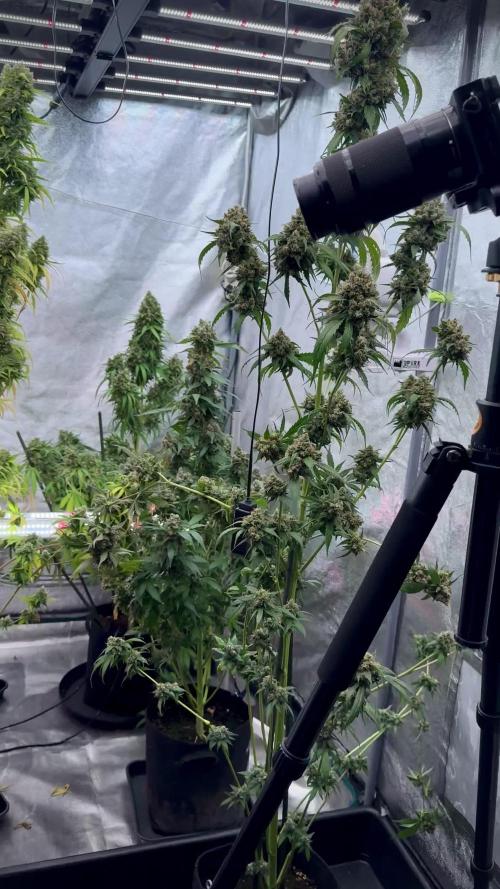
Plants were all cut down together. Hung to allow tent conversion to drying setup and reloaded into the tent. Some nicer images were taken with the R100 cannon camera, and also a mix of images from my iPhone and my buddy's Note7. Current drying environment: 62F, 62% humidity.
2-26, Day 2 drying
The tent is very stable around 60% humidity and 60F. I have the tent set up for negative pressure to pull a slight vacuum, ensuring the air will turnover inside the tent, with one oscillating fan helping to distribute the humidifier mist. I have an external air purifier running with active carbon filters to manage the smell.

Likes
19
Share


@MadeInGermany
Follow
Flowering day 11
since time change
to 12/12 h.
Hey guys :-)
The first days of this week it looked really terrible for me because it was much too cold because of the unusual temperature.
The heating mat has now also arrived for the big tent and lo and behold the plants have been developing really well since that day ☺️👍.
The temperature doesn't keep quite as well as in the small box, but at least I don't get below 18 degrees in the pots at night anymore, even though it's only 16 at the top 😅👍.
Since I switched to flowering, it was time to rinse off a bit with Clean Fruits :-) .
Did them a lot of good.
You have already received the first watering with Grow Liquid and the next in a mix with Bloom Liquid 😀👍.
Otherwise everything was cleaned and checked.
Stay healthy 🙏🏻
👇🏼👇🏼👇🏼👇🏼👇🏼👇🏼👇🏼👇🏼👇🏼👇🏼👇🏼👇🏼
You can buy this Nutrients at :
https://greenbuzzliquids.com/en/shop/
With the discount code: Made_in_Germany you get a discount of 15% on all products from an order value of 100 euros.
👇🏼👇🏼👇🏼👇🏼👇🏼👇🏼👇🏼👇🏼👇🏼👇🏼👇🏼👇🏼
You can buy this strain at :
https://gardenofgreenseedbank.com/candyland/
Water 💧 💧💧
Osmosis water mixed with normal water (24 hours stale that the chlorine evaporates) to 0.2 EC. Add Cal / Mag to 0.4 Ec Ph with Organic Ph - to 5.8 - 6.5
MadeInGermany

Processing
Likes
35
Share


@Njaak
Follow
Added 2 videos on preparing a nutrient solution and pH balancing the solution.
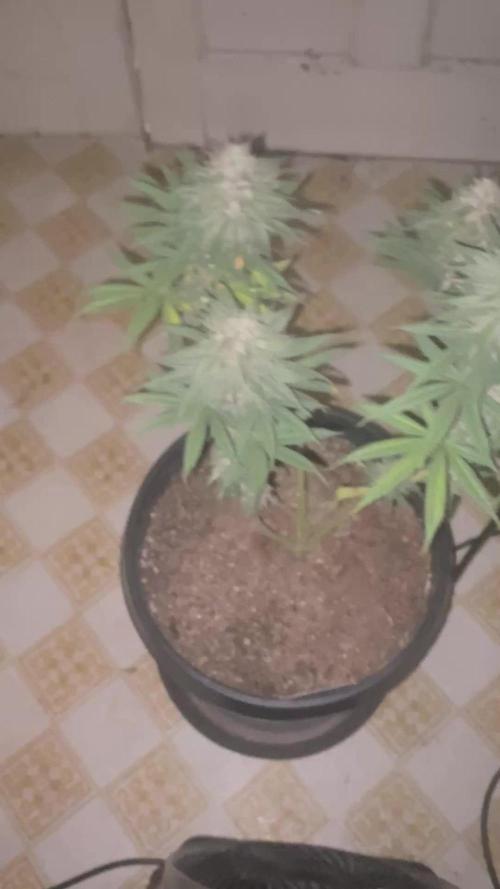
This week saw aggressive topping (mid week 4) and some serious leaf damage. Not sure if the leaf damage is from the topping, nutrients, etc. I did a flush and solution swap, cleaned the air stone and inside of the jar etc. Built the trellis and started training. I'll cut away whatever trellis doesn't end up getting used once flowering starts.
Creepy Don Santa is watching this grow closely. That cat of his is trouble.




Likes
43
Share


@UnorthadoxDude
Follow
Hello and welcome to week 7 beginning for Nesia, the largest and most advanced 6 week old plant I have ever grown.
I update daily so week 6 is now complete. Please do check it out!
I have added some comparisons shots of Karen, the oldest girl of this [G2] series to show just how impressive Nesia is. Nesia is 25 days younger than Karen and she is already a larger plant. This diary is not very popular or comment filled right now, but as this grow progresses I really think it's going to gain some attention. Nesia is going to be big.
Day 44: Nesia stretching fast now.
Day 45: Flowering is going well. I have adjusted the timer such that the main tent is now getting 20/4 upped from 18/6. After monitoring DLI at 18/6 for a week I am unhappy with the overall level but because of the varying heights of the plants I am limited in what I can do in adjusting the light height. Some areas were only getting 20 DLI. So I have rearranged to have the taller plants on the edges and the lowest in the middle and doing it this way all plants are getting between 35 and 50 DLI at 20/4 - although one or two cola tips here and there are getting 55. Will monitor for a week.
Day 46: Fertigated 5l
Day 47: Nesia is really moving into flower strongly now. Pistil development has started proper, stretching rapidly.
Day 49: Nesia starting to pose me a challenge. She is big. Now by far the largest plant. She has reached 50cm height and 70cm across.
I will add proper photos later and do a week summary.
Day 49: Nesia is stretching really fast now. I hope she doesn't stretch much more but I fear we're only halfway done. She's way bigger than Karen now. Taller, wider. Fertigated 5l
End of week summary... well what can I say Nesia has now surpassed Karen (25 days older) in every size and growth metric. She is following exactly the same pattern except without all the problems. I think she still has 2 weeks of stretching to go, on that basis I am expecting her to grow upto 25cm in the next week and the same again the week after - so I think Nesia is going to end up being about 1m tall. Honestly I hope not though, but let us see.


Likes
11
Share


@wheedtobeus420
Follow
Day 51 omg the smells she stinks so sweet straight like bubblegum. I’m stoked for her. She really started off slower and it just goes to show you even the turtle can win the race. Just a beautiful spread of leaves and buds and nice dense frosty goodness. Really happy with her.
Likes
13
Share

@StonedSteve
Follow
Zdarec✋ týden je pryč.
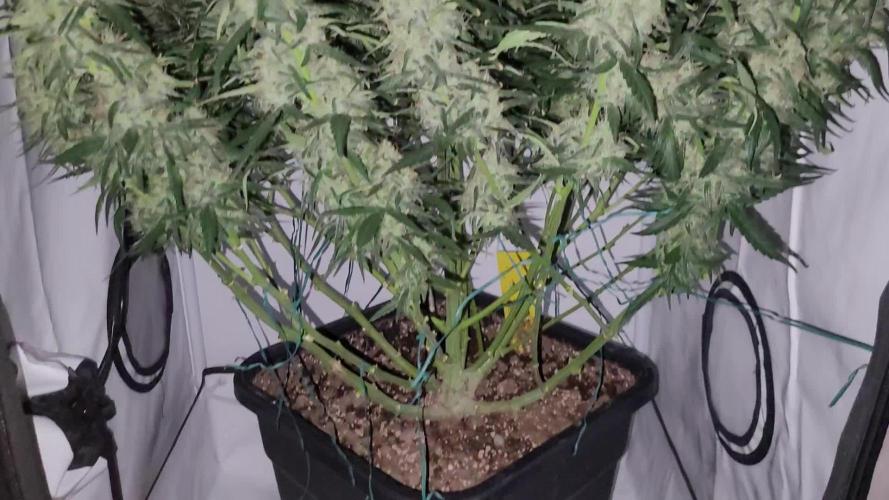
Po shlednutí diářů jsem okamžitě na rady Hombreho flipnul zálivku zpět pořád 7L, ale spíš hnojky šli zpátky hlavně CalMag jsem mu nasolil 4ml na L.
Žádná sekera se konat nebude.
Hombré děkuju✊
Trpělivost růže přináší😂
Přikládám pár fotek a jedno videjko s aktuální formou😎
Likes
8
Share


@MMVSS
Follow
Now That Everything Is On Track! I Understand Why DWC Growers Love DWC! That Being Said....Who Knew My Aquaponic Living Soil System Does Naturally What Pll PAY To Do In Organic DWC Setups!
The Risk Of Not Running Everything Sterile Right?
Well The Living ORGANISMS In My Set Up Release Tons Of Beneficial Bacteria Non Stop..Naturally.
I've Since Been Using LAB In My DWC And Whatta Ya Kno! BOOM! No Breaks!
Everything Going Well So Far! My Fish And SNAILS Are Probably Breeding By Now 😆
Still Haven't Performed A Water Change...
A Lot Of Algae....I'll Put More SNAILS And Clean Soon! Will Update System With The Light Bleeding Into The Res, In Mind! Camo 🤔 💭
And I Also Put Some Terra Power In Just To See What It Would Do!?
Likes
45
Share


@cherokee
Follow
Русские убийцы сбросили сегодня ещё 4 ракеты на мой город, также ударили дроном камикадзе Шахед.
13 часов нет света, воды, тепла....
Пострадали мирные люди.
Я удалю эту запись вечером, просто хотел поделиться как это жутко когда целый день работает воздушная тривога......
🇺🇦💪 Им не победить, нас не напугать! Добро побеждает зло!!!
У меня нет сил описать эту неделю..... Холодно, свет включают 2 раза в день по 2 часа. Мой телефон разряжен, я устал и замёрз......
Processing
Likes
Comments
Share


@Canha_Patch
Follow
This week is looking good and the babies are coming along great, I'm loving the way pheno 1 is so symmetric, large and in charge!
I started out this grow with a bit of a hick up because of the pandemic but I tell you one thing, foliar feeding saved my plants!
I foliar feed my seedlings at around 200ppm I use some micro nutes, along with amino mix to foliar feed. The foliar feeding definitely makes the plants more robust, they end up feeling hard and strong! I Usually foliar feed until I flip to flower then no more!
Likes
23
Share

@MyLittleGarden
Follow
Blütewoche 1 - 14.08. – 21.08.2026
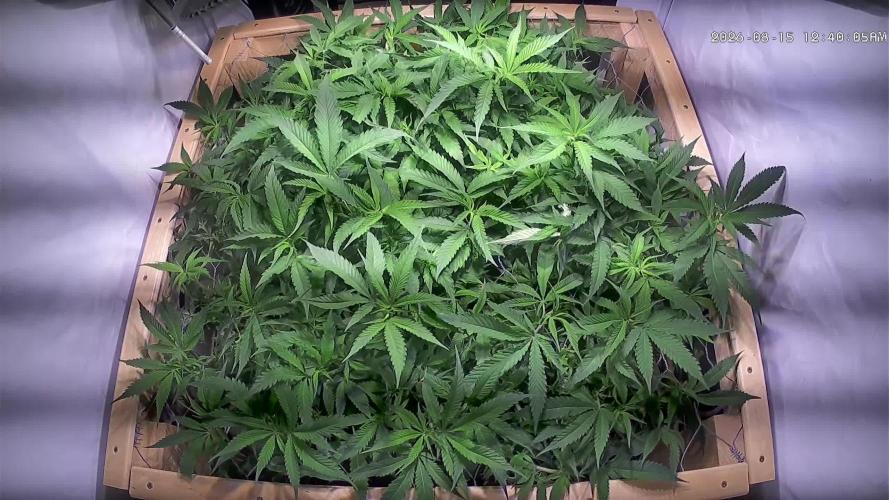
Diese Woche habe ich die Blüte eingeleitet und den Lichtzyklus auf 12/12 umgestellt. Gegossen wurde einmal mit ungefähr 9 Litern, ansonsten habe ich ihr erstmal Zeit gegeben, sich an den neuen Rhythmus zu gewöhnen.
Nach einer Woche zeigen sich jetzt die ersten weißen Blütenhärchen an den Triebansätzen. Außerdem habe noch einmal großzügig entlaubt und ein paar Triebe weiter unter dem SCROG-Netz verteilt.
Sie macht insgesamt einen sehr gesunden und vitalen Eindruck. Durch die Entlaubung wirkt sie zwar im Moment etwas kahl, dafür bekommen die zukünftigen Buds jetzt deutlich mehr Licht. Das Netz ist zwar noch nicht ganz so voll, wie ich es mir ursprünglich vorgestellt hatte, aber vielleicht schließt der Stretch die letzten Lücken noch.
Jetzt heißt es erstmal beobachten und sie machen lassen. Mit ihrer überwiegend sativadominierten Genetik dürfte das noch ein langer Grow werden.

Likes
19
Share


@Vegetoo420
Follow
This plant is ready and I flush it RN, pretty pink dress with a lotta tricomes makes her beautiful
Not a big girl so I really hope buds will be good, tasty like the smell she has

Likes
3
Share


@MotherNaturesSon
Follow
fat dense buds numerous and fuzzed out with trichomes. leaf-calyx ratio on point. Stalks tended to lean as flowering progressed so plan for some manner of support if you want. Let her flower as long as she can and she’ll reward you.


Likes
57
Share


@nonick123
Follow
Día 76 (08/07) Riego con 1 Litro H2O + Regulator 0,15 ml/l + K-Boost 1 ml/l + CaMg-Boost 0,3 ml/I + TopBooster 0,3 ml/l - pH 6.2
Ultimo riego con nutrientes. Empezamos el flush (aunque no soy muy partidario del flush, voy a probar las indicaciones de Aptus)
Día 77 (09/07) La planta empieza a llegar al final de ciclo, porque ha reducido el consumo de agua en los últimos días
Riego con 750 ml sólo H20 - ph 6.2
Día 78 (10/07) Riego con 750 ml sólo H20 - ph 6.2
La senescencia está llegando. Efectivamente solo le faltan unos días para la cosecha! 😍💥💨😁
Día 79 (11/07) Riego con 750 ml sólo H20 - ph 6.2
Revisión con el microscopio 60x! Los tricomas están 80% trasparentes + 20% de turbios.
La cosecha se va a demorar unos 4-5 días más
Día 80 (12/07) Riego con 750 ml sólo H20 - ph 6.2
He sufrido un ataque de gusanos y tengo que eliminar tres cogollos...
Los últimos días no he podido estar encima de ella tanto como me gustaría... 😞
Día 81 (13/07) Riego con 750 ml sólo H20 - ph 6.2
Vuelvo a revisar los tricomas y sigue sin estar lista....
Status tricomas: 50% turbios + 50% trasparentes
Día 82 (14/07) Hace mucho calor aqui! 37 ºC
Riego con 1000 ml sólo H20 - ph 6.2
💦Nutrients by Aptus Holland - www.aptus-holland.com
🌱Substrate PRO-MIX HP BACILLUS + MYCORRHIZAE - www.pthorticulture.com/en/products/pro-mix-hp-biostimulant-plus-mycorrhizae

Likes
25
Share


@Dingle_Dangle
Follow
28/07/2022 - Day 70 - First day of the 11th week.
Last update before harvest.
Still drinking water only.
Wish me good luck and let's hope in sunny mild days 🤞☀️
- DD
Likes
17
Share


@Naujas
Follow
To tell the truth, I am very surprised myself, how amazing she is FastBuds Gorilla cookies, she copes well with a small space:) she drinks 1 liter every day :) everything looks better than expected:) good luck to everyone.