





Likes
2
Share

@Ensign420
Follow
|»» LOG DISCLAIMER: Not intended as a grow guide. Grow log entries are usually posted 3-4 weeks later and are for my learning reference. ««|
Introduction - Week 18 Summary -
Ensign's log, stardate 17729.3,
Another grow week.
In the main tent, been defoliating a few leaves daily and checking soil moisture levels.
In the veg tent, topped a couple mother plants and transplanted a few clones. Also been keeping up with basic solo cup waterings.
Also got more genetics for the seed stash.
Onwards to next week..
[START OF WEEK 18]
==========================================================
---------- [ 3x3 VEG TENT - GR3 ] ----------
Heady OG BX1 #1 - WEEK 10 - Full Veg
TKO #2 - WEEK 00 - Transplant
Chill Out OG #3 - WEEK 07 - Full Veg
Chill Out OG #2 - WEEK 03 - Full Veg
---------- [ 4x4 MAIN TENT - GR30 ] ----------
Chill Out OG #2 - WEEK 18 - Full Bloom Wk4
TKO #2-2 - WEEK 12 - Full Bloom Wk4
Heady OG BX1 #1 - WEEK 14 - Full Bloom Wk4
03/02/26 → 03/08/26 [WEEK 18]
This Week's Estimated Goals
----------------------------------------------------------------------------------------------
DLI: ~22 mol/m²/d
PPFD: ~500 μmol/m²/s
VPD: ~1.2 kPa
This Week's Meter Readings & Averages
----------------------------------------------------------------------------------------------
Light On/Off: 16:00 - 10:00 | Wattage: ~386.3W [LV05]
Distance From Canopy: ~[21”, 3.5”, 9”]
Plant Height: ~[31”, 48.5”, 43”]
Max Plant Height: ~52” [Lamp-to-Soil Distance]
DLI: ~53.31 mol/m²/d
PPFD: ~520 μmol/m²/s
VPD: ~0.59 kPa
Soil %: ~[49.9, 45.1, 47.6, 46.3, 52.6, 60.6, 52.1, 60.4, 53.7, 73.6]
==========================================================
Day 01 - Monday - 03/02/26 - Total Days: 117
-----------------------------------
Daily Averages ~[+01:00]
- Temps: 78.5°F [25.8°C]
- Humidity: 84.0%
- VPD: 0.53 kPa
- Soil %: [46, 48, 45, 47, 52, 60, 51, 60, 53, 73]
-----------------------------------
- [22:42]: Night check on the 4x4 tent.
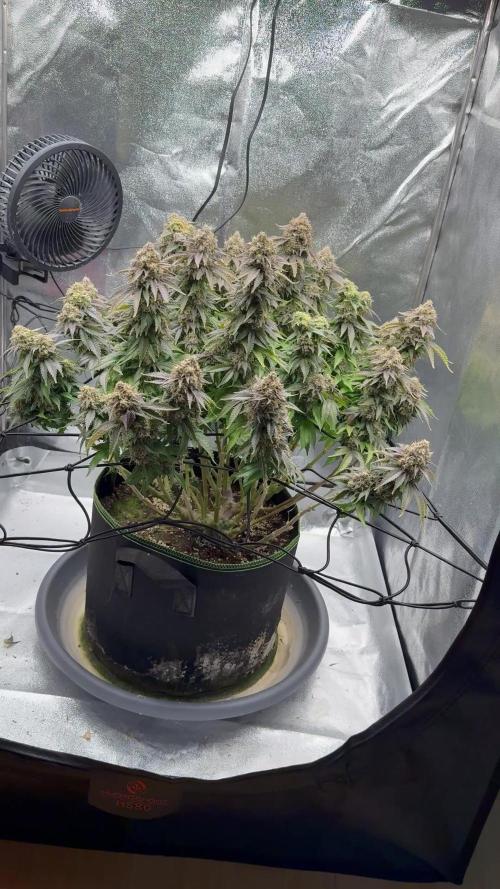
--- Wow day 36 of flower and the garden looks great.
--- Chill Out OG #2 is looking healthy and perky.
--- Heady OG BX1 #1 is slowing down on the stretch and buds are swelling up.
--- TKO #2 is also starting to focus growth more on bud development instead of stretching.
--- Terpenes are also getting louder and starting to express themselves as bud growth continues to swell. Nice.
- [22:45]: Checked on the BluMat soil moisture sensors:
------ Chill Out OG #2 » 48mbars
------ Heady OG BX1 #1 » 40mbars
------ TKO #2 » 55mbars
--------- Watering Range: [Too Wet] ~25mbars «| [Ideal Target] ~40-80mbars |» ~125mbars [Too Dry]
--------- BluMat Max Values: [10mbars «||» 750mbars]
--- Continuing on with the daily defoliations and removed more fan leaves.
--- Mainly focused on the larger ones covering bud growth.
- [21:07]: Checked the Ecowitt soil moisture sensor data:
------------------ [ 3x3 VEG TENT – GR3 ] ----------------
------ 46% - [CH01 » M1 » VBL – Heady OG BX1 #1]
------ 47% - [CH02 » M2 » VBR – Dry Soil]
------ 46% - [CH03 » M3 » VFL – Chill Out OG #3]
------ 47% - [CH04 » M4 » VFR – Chill Out OG #2]
----------------- [ 4x4 MAIN TENT – GR30 ] ---------------
------ 52% - [CH05 » P1 » FLT – Chill Out OG #2]
------ 60% - [CH06 » P1 » FLB – Chill Out OG #2]
------ 51% - [CH07 » P2 » BLT – TKO #2-2]
------ 60% - [CH08 » P2 » BLB – TKO #2-2]
------ 51% - [CH09 » P3 » FRT – Heady OG BX1 #1]
------ 60% - [CH10 » P3 » FRB – Heady OG BX1 #1]
--------- Veg: ~38%-45% | Flower: ~45%-55%
--------- General: ~30% [Dry] «| ~45-60% [Moist] |» ~70% [Wet]
- [23:12]: Checked the 3x3 veg tent.
--- Looking good in the veg garden.
--- Wow 4 clones need watering.
- [23:23]: Here are the starting initial watering ranges:
------ TKO #2-1 » 290.7g → 340.5g
------ Gorilla Goat #1-1 » 287.0g → 325.2g
------ Garlic Budder OG#1-1 » 299.1g → 340.6g
------ Garlic Budder OG#1-2 » 279.2g → 340.3g
--------- General Weight Range: [Dry] ~275g «| [Dryback] ~300g |» ~325g-400g [Wet]
--- All cups were last watered 2-3 days ago.
--- Took the starting weight of all clones before watering,
------ TKO #2-1 » 266.6g
------ Gorilla Goat #1-1 » 289.1g
------ Garlic Budder OG#1-1 » 279.8g
------ Garlic Budder OG#1-2 » 260.5g
--- While on a scale,
--- Evenly misted the top all cups with RO water.
--- Did not spray the top growth.
--- Misted 10-20 sprays. Waited a moment, then misted again.
--- Repeated this process until all cups weighted at least 300g.
--- There was no runoff.
- [+00:19]: Took the saturated weight of all cups after watering,
------ TKO #2-1 » 365.5g
------ Gorilla Goat #1-1 » 365.2g
------ Garlic Budder OG#1-1 » 365.1g
------ Garlic Budder OG#1-2 » 365.6g
--- Updated the wet weight and watering dates for each cup.
--- Placed all cups back into the tent.
--- Veg cuttings in the propagation tray look good.
--- Defoliated a few of the yellowing leaves.
--- Did not mist the top growth.
- [+00:35]: Checked the humidifiers.
--- Tanks are still full and no leaks found.
Day 02 - Tuesday - 03/03/26 - Total Days: 118
-----------------------------------
Daily Averages ~[+01:00]
- Temps: 77.8°F [25.4°C]
- Humidity: 83.6%
- VPD: 0.53 kPa
- Soil %: [47, 47, 48, 47, 52, 60, 51, 60, 53, 73]
-----------------------------------
- [21:18]: Night check on the 4x4 tent.
--- Looking great in the garden.
--- Chill Out OG is in full bloom and she is stacking up with bud colas. Nice.
--- Heady OG and TKO are about the same in growth structure and terpene profile, but both have distinct differences.
--- Heady’s bud structure is more spear shaped whereas TKO is more spherical.
--- The under canopy is looking clean and all pots look good.
--- As for terpenes, TKO has a jet fuel-earthy profile whereas Heady has a more of a lemon-gassy pine-sol cleaner profile.
--- Chill Out OG now has more of a vitamin-c grape terpene profile.
--- All phenos smell dank and the garden is looking better than ever.
- [21:21]: Checked on the BluMat soil moisture sensors:
------ Chill Out OG #2 » 48mbars
------ Heady OG BX1 #1 » 37mbars
------ TKO #2 » 54mbars
--------- Watering Range: [Too Wet] ~25mbars «| [Ideal Target] ~40-80mbars |» ~125mbars [Too Dry]
--------- BluMat Max Values: [10mbars «||» 750mbars]
- [21:26]: Checked the Ecowitt soil moisture sensor data:
------------------ [ 3x3 VEG TENT – GR3 ] ----------------
------ 47% - [CH01 » M1 » VBL – Heady OG BX1 #1]
------ 47% - [CH02 » M2 » VBR – Dry Soil]
------ 46% - [CH03 » M3 » VFL – Chill Out OG #3]
------ 47% - [CH04 » M4 » VFR – Chill Out OG #2]
----------------- [ 4x4 MAIN TENT – GR30 ] ---------------
------ 52% - [CH05 » P1 » FLT – Chill Out OG #2]
------ 59% - [CH06 » P1 » FLB – Chill Out OG #2]
------ 51% - [CH07 » P2 » BLT – TKO #2-2]
------ 60% - [CH08 » P2 » BLB – TKO #2-2]
------ 53% - [CH09 » P3 » FRT – Heady OG BX1 #1]
------ 73% - [CH10 » P3 » FRB – Heady OG BX1 #1]
--------- Veg: ~38%-45% | Flower: ~45%-55%
--------- General: ~30% [Dry] «| ~45-60% [Moist] |» ~70% [Wet]
- [21:37]: Checked the 3x3 veg tent.
--- Veg garden is looking great.
--- All mothers and clones look good and cuttings in the propagation tray look okay.
--- No need to water. Nice.
- [22:02]: Checked the humidifiers.
--- Tanks are still full and no leaks found.
Day 03 - Wednesday - 03/04/26 - Total Days: 119
-----------------------------------
Daily Averages ~[+01:00]
- Temps: 77.9°F [25.5°C]
- Humidity: 81.8%
- VPD: 0.59 kPa
- Soil %: [50, 46, 48, 47, 52, 60, 51, 60, 54, 73]
-----------------------------------
- [16:01]: Evening check on the 3x3 veg tent.
--- Veg garden looks green and healthy.
--- Wow both the Heady OG BX1 #1 mother along with the Chill Out OG #3 mother are getting big.
--- Time to top.
- [16:04]: Temporarily removed the solo cup clones.
--- Then using a pair of trimmers, cut the main stalk of both Heady OG BX1 #1 and Chill Out OG #3.
--- Removed more than half of the overall biomass. Mulched the trimmings.
--- Did not top the Chill Out OG #2 mother.
- [16:36]: Also decided to transplant 3 of the clones into the 3-gallon fabric pots.
--- These 3-gallon pots have been already pre-amended and prepped for a fresh transplant.
--- Will also be installing the BluMat watering carrots and connecting each to the gravity-fed water loop.
- [16:45]: Took a 3-gallon pot out of the veg tent and set it on a drip tray.
--- Loosened the soil and made a hole in the center of the pot.
------ Set a clear cup into the center of the pot.
--- Tucked the sides of the cup in snug with the surrounding soil.
- [16:58]: Gently removed the clear cup from the fabric pot leaving a perfect hole.
------ Sprinkled 1/16tsp of Great White
------ Sprinkled 1/32tsp of Beauveria Bassiana Plus
--- Dusted the sides of the hole.
--- Also sprinkled a bit around the top soil.
--- Time to transplant.
--- Starting with Garlic Budder OG #1-2,
--- Loosened and unstuck the rootball by squeezing the sides of the cup. Then pressed the bottom of the cup upwards.
- [17:01]: Once fully loosened, Vulcan-gripped the base of the plant before flipping the entire cup upside down.
--- Did not break up the rootball.
- [17:03]: Gently set her straight into the pre-inoculated hole.
--- Pressed and evened out the top soil.
- [17:08]: Using fresh BuildASoil Organic Straw Mulch,
--- Covered the top soil with straw.
- [17:10]: Then using a fully filled 5" BluMat watering carrot (pre-soaked and set to gold for gravity feed) along with a 5" drip ring,
--- Placed the drip ring around the base of the plant.
- [17:19]: Then gently inserted the BluMat carrot into the soil near the drip ring's fill tube before connecting it with a 3mm connector.
--- Placed Garlic Budder OG #1-2 into the veg tent.
--- Repeated this process for both TKO #2-1 and Gorilla Goat #1-1
- [18:59]: Once all cultivars were planted, connected each pot to the watering loop.
--- Shut off all flow-valves in the water loop and made sure the 8mm tubing had no water pressure.
--- Then cut the tubing and installed an RO valve-rig (with 3mm T-fitting) for each pot.
- [19:34]: Finally connected each watering carrot to the valve-rig (3mm tubing) before turning all flow-valves back on.
--- Transplant completed.
- [19:41]: Checked the Ecowitt soil moisture sensor data:
------------------ [ 3x3 VEG TENT – GR3 ] ----------------
------ 52% - [CH01 » M1 » VBL – Heady OG BX1 #1]
------ 43% - [CH02 » M2 » VBR – TKO #2]
------ 50% - [CH03 » M3 » VFL – Chill Out OG #3]
------ 46% - [CH04 » M4 » VFR – Chill Out OG #2]
----------------- [ 4x4 MAIN TENT – GR30 ] ---------------
------ 53% - [CH05 » P1 » FLT – Chill Out OG #2]
------ 60% - [CH06 » P1 » FLB – Chill Out OG #2]
------ 52% - [CH07 » P2 » BLT – TKO #2-2]
------ 59% - [CH08 » P2 » BLB – TKO #2-2]
------ 54% - [CH09 » P3 » FRT – Heady OG BX1 #1]
------ 74% - [CH10 » P3 » FRB – Heady OG BX1 #1]
--------- Veg: ~38%-45% | Flower: ~45%-55%
--------- General: ~30% [Dry] «| ~45-60% [Moist] |» ~70% [Wet]
--- Also updated the sensor names a bit.
--- Going to water in a bit of microbes for the newly planted moms.
--- Spraying 2 cups of a wetting solution split evenly amongst all pots.
--- Adding in a few extra microbes.
- [20:01]: Filled a measuring cup with 2 cups of RO water.
------ Added 1/64tsp of Quillaja Saponaria Extract [60]
------ Added 1/16tsp of Stash Blend
------ Added 1/16tsp of Horticultural Aloe
------ Added 1/16tsp of Horticultural Coconut
------ Added 1/8tsp of Mycrobe Complete
--- Mixed the solution and poured both cups straight into a pump sprayer.
- [20:05]: Misted the straw mulch of each pot with the wetting solution.
--- Briefly misted the center of each pot, but tried to mainly focus on the outer sides.
--- A Garlic Budder clone needs watering.
- [20:16]: Here is the starting initial watering range:
------ Garlic Budder OG#1-1 » 299.1g → 340.6g
--------- General Weight Range: [Dry] ~275g «| [Dryback] ~300g |» ~325g-400g [Wet]
--- Been 2 days since the last watering.
--- Took the starting weight before watering,
------ Garlic Budder OG#1-1 » 285.9g
--- While on a scale,
--- Evenly misted the top of the cup with RO water.
--- Did not spray the top growth.
--- Misted 10-20 sprays. Waited a moment, then misted again.
--- Repeated this process until the cup weighted at least 300g.
--- There was no runoff.
- [20:32]: Took the saturated weight after watering,
------ Garlic Budder OG#1-1 » 365.5g
--- Updated the wet weight and watering date.
--- Also decided to top. Using a pair of clean trimmers,
--- Cut each of the branches leaving 5-6 nodes.
--- Mulched the trimmings.
--- Placed the cup back into the tent.
- [20:47]: Checked the 4x4 tent.
--- Garden looks good.
--- Wow buds are swelling up and looking healthy.
--- All phenos look and smell great.
--- Under canopy looks clean and all pots look good.
- [21:00]: Checked on the BluMat soil moisture sensors:
------ Chill Out OG #2 » 44mbars
------ Heady OG BX1 #1 » 37mbars
------ TKO #2 » 51mbars
--------- Watering Range: [Too Wet] ~25mbars «| [Ideal Target] ~40-80mbars |» ~125mbars [Too Dry]
--------- BluMat Max Values: [10mbars «||» 750mbars]
- [21:11]: Checked the humidifiers.
--- Tanks are still full and no leaks found.
Day 04 - Thursday - 03/05/26 - Total Days: 120
-----------------------------------
Daily Averages ~[+01:00]
- Temps: 78.3°F [25.7°C]
- Humidity: 81.7%
- VPD: 0.60 kPa
- Soil %: [51, 46, 48, 47, 52, 60, 51, 60, 54, 74]
-----------------------------------
- [12:16]: My package from Sustainable Village has arrived. Nice.
--- Got more 5” BluMat watering carrots and drip rings for the veg tent.
--- BluMats do have a bit of learning curve (already flooded the main tent a few times), but once properly dialed in, keeps soil moisture at incredibly perfect levels.
--- Was using Ecowitt (WittFlows) for watering, but now switching the entire garden to run on BluMats.
--- Anyways,
- [16:09]: Evening check on the 3x3 veg tent.
--- Wow the veg garden is looking good and recovering nicely.
--- Both Gorilla Goat clones need watering.
- [16:27]: Here are the starting initial watering ranges:
------ Gorilla Goat #1-1 » 287.0g → 325.2g
------ Gorilla Goat #1-2 » 294.4g → 325.4g
--------- General Weight Range: [Dry] ~275g «| [Dryback] ~300g |» ~325g-400g [Wet]
--- Both cups were last watered 4 days ago.
--- Took the starting weight of both clones before watering,
------ Gorilla Goat #1-1 » 295.2g
------ Gorilla Goat #1-2 » 299.2g
--- While on a scale,
--- Evenly misted the top of both cups with RO water.
--- Did not spray the top growth.
--- Misted 10-20 sprays. Waited a moment, then misted again.
--- Repeated this process until both cups weighted at least 300g.
--- There was no runoff.
- [16:36]: Took the saturated weight of both cups after watering,
------ Gorilla Goat #1-1 » 355.6g
------ Gorilla Goat #1-2 » 355.4g
--- Updated the wet weight and watering dates for both cups.
--- Placed both cups back into the tent.
--- Veg cuttings in the propagation tray look good.
- [17:04]: Checked the Ecowitt soil moisture sensor data:
------------------ [ 3x3 VEG TENT – GR3 ] ----------------
------ 51% - [CH01 » M1 » VBL – Heady OG BX1 #1]
------ 45% - [CH02 » M2 » VBR – TKO #2]
------ 47% - [CH03 » M3 » VFL – Chill Out OG #3]
------ 47% - [CH04 » M4 » VFR – Chill Out OG #2]
----------------- [ 4x4 MAIN TENT – GR30 ] ---------------
------ 52% - [CH05 » P1 » FLT – Chill Out OG #2]
------ 60% - [CH06 » P1 » FLB – Chill Out OG #2]
------ 52% - [CH07 » P2 » BLT – TKO #2-2]
------ 60% - [CH08 » P2 » BLB – TKO #2-2]
------ 54% - [CH09 » P3 » FRT – Heady OG BX1 #1]
------ 74% - [CH10 » P3 » FRB – Heady OG BX1 #1]
--------- Veg: ~38%-45% | Flower: ~45%-55%
--------- General: ~30% [Dry] «| ~45-60% [Moist] |» ~70% [Wet]
- [21:02]: Checked the 4x4 tent.
--- Wow the garden is looking and smelling incredible.
--- Removed a few more fan leaves.
--- I think the defoliation has been helping with trichome production because the bud growth for both Heady OG and TKO (which are on their 2nd flower cycle), look frostier.
--- Anyways.
- [21:36]: Checked on the BluMat soil moisture sensors:
------ Chill Out OG #2 » 48mbars
------ Heady OG BX1 #1 » 37mbars
------ TKO #2 » 51mbars
--------- Watering Range: [Too Wet] ~25mbars «| [Ideal Target] ~40-80mbars |» ~125mbars [Too Dry]
--------- BluMat Max Values: [10mbars «||» 750mbars]
- [22:03]: Checked the humidifiers.
--- Tanks are still full and no leaks found.
Day 05 - Friday - 03/06/26 - Total Days: 121
-----------------------------------
Daily Averages ~[+01:00]
- Temps: 76.7°F [24.8°C]
- Humidity: 79.2%
- VPD: 0.64 kPa
- Soil %: [51, 44, 48, 46, 53, 60, 52, 60, 54, 74]
-----------------------------------
- [21:59]: Night check on the 4x4 tent.
--- Wow the garden is looking good and smelling great.
--- Buds are continuing to stack and terpenes are maturing. Nice.
- [22:06]: Checked the Ecowitt soil moisture sensor data:
------------------ [ 3x3 VEG TENT – GR3 ] ----------------
------ 51% - [CH01 » M1 » VBL – Heady OG BX1 #1]
------ 43% - [CH02 » M2 » VBR – TKO #2]
------ 48% - [CH03 » M3 » VFL – Chill Out OG #3]
------ 46% - [CH04 » M4 » VFR – Chill Out OG #2]
----------------- [ 4x4 MAIN TENT – GR30 ] ---------------
------ 55% - [CH05 » P1 » FLT – Chill Out OG #2]
------ 60% - [CH06 » P1 » FLB – Chill Out OG #2]
------ 53% - [CH07 » P2 » BLT – TKO #2-2]
------ 60% - [CH08 » P2 » BLB – TKO #2-2]
------ 54% - [CH09 » P3 » FRT – Heady OG BX1 #1]
------ 74% - [CH10 » P3 » FRB – Heady OG BX1 #1]
--------- Veg: ~38%-45% | Flower: ~45%-55%
--------- General: ~30% [Dry] «| ~45-60% [Moist] |» ~70% [Wet]
- [22:11]: Checked the 3x3 veg tent.
--- Veg garden looks good.
--- Propagation cuttings look good for the most part.
--- Culled one of the TKO cuttings (back right).
--- Misted the top growth of the remaining veg cuttings with RO water.
- [22:35]: Checked the humidifiers.
--- Tanks are still full and no leaks found.
Day 06 - Saturday - 03/07/26 - Total Days: 122
-----------------------------------
Daily Averages ~[+01:00]
- Temps: 75.9°F [24.4°C]
- Humidity: 78.9%
- VPD: 0.64 kPa
- Soil %: [52, 43, 48, 45, 54, 62, 53, 61, 54, 74]
-----------------------------------
- [20:01]: Night check on the 4x4 tent.
--- The garden is smelling great.
--- Chill Out OG is the furthest along in bud development, but wow Heady and TKO have taken over this grow.
--- The canopy is full of bud growth and getting coated with greasy trichomes. Nice.
--- The under canopy also looks good.
- [20:09]: Checked on the BluMat soil moisture sensors:
------ Chill Out OG #2 » 37mbars
------ Heady OG BX1 #1 » 36mbars
------ TKO #2 » 42mbars
--------- Watering Range: [Too Wet] ~25mbars «| [Ideal Target] ~40-80mbars |» ~125mbars [Too Dry]
--------- BluMat Max Values: [10mbars «||» 750mbars]
- [20:12]: Checked the Ecowitt soil moisture sensor data:
------------------ [ 3x3 VEG TENT – GR3 ] ----------------
------ 52% - [CH01 » M1 » VBL – Heady OG BX1 #1]
------ 43% - [CH02 » M2 » VBR – TKO #2]
------ 49% - [CH03 » M3 » VFL – Chill Out OG #3]
------ 45% - [CH04 » M4 » VFR – Chill Out OG #2]
----------------- [ 4x4 MAIN TENT – GR30 ] ---------------
------ 55% - [CH05 » P1 » FLT – Chill Out OG #2]
------ 62% - [CH06 » P1 » FLB – Chill Out OG #2]
------ 53% - [CH07 » P2 » BLT – TKO #2-2]
------ 61% - [CH08 » P2 » BLB – TKO #2-2]
------ 55% - [CH09 » P3 » FRT – Heady OG BX1 #1]
------ 74% - [CH10 » P3 » FRB – Heady OG BX1 #1]
--------- Veg: ~38%-45% | Flower: ~45%-55%
--------- General: ~30% [Dry] «| ~45-60% [Moist] |» ~70% [Wet]
- [20:17]: Checked the 3x3 veg tent.
--- The veg garden looks perky and healthy.
--- All mothers, clones, and cuttings look good.
- [20:34]: Checked the humidifiers.
--- Tanks are still full and no leaks found.
Day 07 - Sunday - 03/08/26 - Total Days: 123
-----------------------------------
Daily Averages ~[+01:00]
- Temps: 77.6°F [25.3°C]
- Humidity: 79.9%
- VPD: 0.64 kPa
- Soil %: [52, 42, 48, 45, 53, 62, 56, 62, 54, 74]
-----------------------------------
- [19:38]: Night check on the 4x4 tent.
--- Garden is looking great.
--- Terpenes are still maturing and buds are getting coated with trichomes.
--- Continuing with daily defoliations.
- [20:07]: Took the weekly general PPFD readings.
------ Chill Out OG #2 was around 520 μmol/m²/s which gives a DLI of 22.46 mol/m²/d under an 12/12 light cycle.
------ Heady OG BX1 #1 and TKO #2 were around 1234 μmol/m²/s which gives a DLI of 53.31 mol/m²/d under an 12/12 light cycle.
--------- Grow Light Intensity: LV5 @ ~396.3W
- [20:11]: Took the weekly height and light distance measurements.
------ Chill Out OG #2 was about 18" away from the grow light.
------ Heady OG BX1 #1 and TKO #2 were about 2.5" away from the grow light.
--------- Max Plant Height: ~52" [Distance From Grow Light To Top Soil]
------ Chill Out OG #2 was about 34" tall.
------ Heady OG BX1 #1 and TKO #2 were about 49.5" tall.
- [21:16]: Checked the 3x3 veg tent.
--- Veg garden looks healthy and green.
--- All clones and veg cuttings look great.
- [20:22]: Checked for roots.
--- Gently lifted the Heady OG BX1 #1-1 cutting out of the propagation tray.
--- Got roots. Nice.
--- Set her gently back into the tray.
--- The rest of the cuttings also have roots. Great.
--- Alright. Time to transplant rooted cuttings.
- [20:38]: Planting into clear cups with bottom holes cut out for drainage.
--- Will also be using opaque red cups (without holes) to protect the roots from light damage.
--- Partially filled each clear cup with recycled BuildASoil 3.0 potting soil.
--- Made sure the soil at the bottom of each cup was well compacted.
- [20:54]: Inoculated each cup with Great White mycorrhizae along with a bit of Beauveria Bassiana.
------ Sprinkled 1/16tsp of Great White
------ Sprinkled 1/64tsp of Beauveria Bassiana Plus
--- Mainly tried to dust the center of each cup.
- [20:59]: Placed a rooted Coco Coin into each inoculated cup.
--- Made sure each cup still had enough room for more soil.
--- To fully hydrate all Coco Coins, misted each with about 20-30 sprays of RO water.
- [21:13]: Gently filled each cup with more soil.
--- Completely covered each Coco Coin making sure to tuck the sides in.
--- Each Coco Coin is about 1/4-1/2 inch below the top soil.
--- Marked the names on each cup with blue painter's tape.
--- Time to add mulch.
- [21:22]: Covered the soil with BuildASoil Organic Straw Mulch.
--- Made sure the top soil was completely covered.
- [21:43]: Filled a measuring cup with 2 cups of RO water.
------ Added 1/64tsp of Quillaja Saponaria Extract [60]
------ Added 1/16tsp of Horticultural Aloe
------ Added 1/16tsp of Horticultural Coconut
------ Added 1/8tsp of Mycrobe Complete
--- Mixed and poured the solution straight into a spray bottle.
--- Time to water.
- [21:46]: Took the initial dry soil weight before watering,
------ Heady OG BX1 #1-1 » 256.9g
------ Heady OG BX1 #1-2 » 255.4g
------ TKO #2 » 252.5g
--- While on a scale,
--- Evenly misted the top of each cup with the wetting solution.
--- Did not spray the top growth.
--- Misted 10-20 sprays. Waited a moment, then misted again.
--- Repeated this process until each cup weighted at least 300g.
--- There was no runoff.
- [22:04]: Took the saturated weight after watering,
------ Heady OG BX1 #1-1 » 335.3g
------ Heady OG BX1 #1-2 » 335.4g
------ TKO #2 » 335.5g
--- Marked the watering date, pheno names, and weight ranges on each red cup with blue painter's tape.
--- Then placed each clear cup into their corresponding red cups.
--- Placed all cups into the 3x3 veg tent,
--- Have the cups resting on the drip trays on top of unused 3-gal pots.
--- Done.
- [22:51]: Checked the Ecowitt soil moisture sensor data:
------------------ [ 3x3 VEG TENT – GR3 ] ----------------
------ 50% - [CH01 » M1 » VBL – Heady OG BX1 #1]
------ 42% - [CH02 » M2 » VBR – TKO #2]
------ 48% - [CH03 » M3 » VFL – Chill Out OG #3]
------ 45% - [CH04 » M4 » VFR – Chill Out OG #2]
----------------- [ 4x4 MAIN TENT – GR30 ] ---------------
------ 53% - [CH05 » P1 » FLT – Chill Out OG #2]
------ 63% - [CH06 » P1 » FLB – Chill Out OG #2]
------ 56% - [CH07 » P2 » BLT – TKO #2-2]
------ 64% - [CH08 » P2 » BLB – TKO #2-2]
------ 54% - [CH09 » P3 » FRT – Heady OG BX1 #1]
------ 74% - [CH10 » P3 » FRB – Heady OG BX1 #1]
--------- Veg: ~38%-45% | Flower: ~45%-55%
--------- General: ~30% [Dry] «| ~45-60% [Moist] |» ~70% [Wet]
- [22:18]: Got more genetics for the seed stash.
--- Both orders from Irie Genetics and Poppin Fire (Home Grow TV / Highigan) have arrived. Nice.
--- As for genetics, from Irie Genetics, ordered and received:
------ Arise [F2 #D] = Arise [F1 #D ] x Arise [F1 #D ‘King Solomon’] » PHOTO-REG (Poly Hybrid) → Gassy/Juicy Fruit Terpenes | x10
------ Royal Pine = Pine Tar Kush x Arise » PHOTO-REG (Poly Hybrid) → Heavy Pine/OG Terpenes | x10
------ Glow Stick = Lemon Chem x Arise » PHOTO-REG (Poly Hybrid) → Lemon/Chem Terpenes | x10
------ FREEBIE: Tinfoil Hat = Durban Poison x Afterglow » PHOTO-FEM (Poly Hybrid) → Durban/Fruity Terpenes | x6
- [22:23]: From Poppin Fire, ordered and received:
------ Gorilla Mega Stank = Don Mega (by Solfire Gardens) x Gorilla Candy (by Fresh Coast Genetics) » PHOTO-REG (Indica Dominant) | x12
--- Currently gathering and prepping for future breeding projects.
--- Been hunting and have my first breeding line almost set to hunt and stabilize, but still not too sure about both Chill Out OG cultivars.
--- Depending on how the terps ripen, may consider popping some new genetics.
--- Anyways, onwards to next week.
[END OF WEEK 18]

Likes
9
Share


@DoctorCannas
Follow
Miei cari amici,
L'estate incalza e finalmente il tempoi permette di trasformare ad hoc. Secondo i gusti il giardino, la terrazza e i due balconi.
Un lavoro duro e intenso con i 25/30 gradi che il NW in questa settima sta proponendo e che spero vivamente durino tanto.
Travaso storico e professionale.
Vediamo ciò che l'armadio dice.
Questo travaso probabilmente ritardera di due o tre settimane il raccolto, ma andava fatto e ne varrà sicuramente la pena.
28/06
My dearest friends, comrades and farm partners.
Doc. Cannas is extremely happy to introduce you to the 5 wonders of Expert Seeds.
Still my most heartfelt congratulations for their genetics,
between photos and videos you have seen what a wonder these little girls are growing.
Today they have been introduced to LST, an art halfway between Astana yoga and BSDM.
Being their first time there was a need for love and passion.
So it was.
At the next update farmers

Likes
67
Share

@Tower84
Follow
Cherry Limeade von Doja – Wochenupdate 🌱
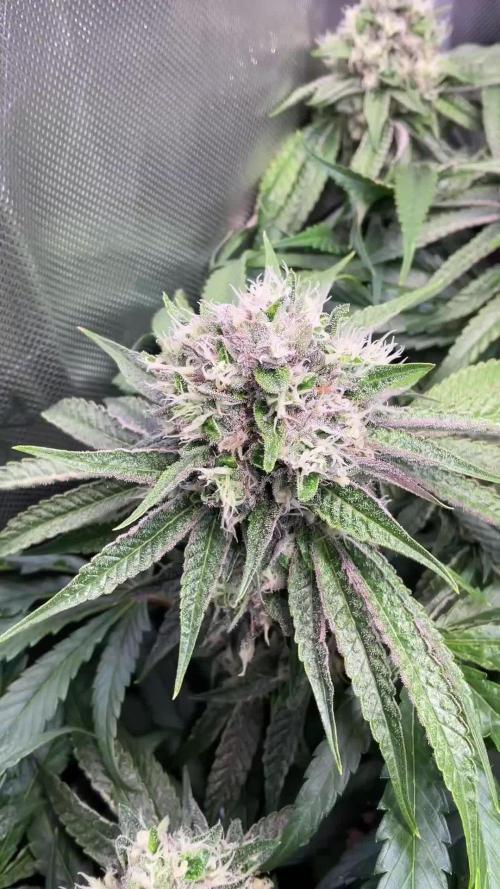
Die Entwicklung der Buds schreitet weiterhin sehr gut voran 🌸. Sie legen sichtbar an Masse zu und insgesamt entwickelt sich die Cherry Limeade genau so, wie ich es mir zu diesem Zeitpunkt der Blüte wünsche.
Auch beim Geruch hat sich wieder einiges getan 👃. Das zuvor sehr spritzige Limettenaroma ist mittlerweile etwas schwächer geworden. Dafür entwickelt sich das Terpenprofil zunehmend in eine angenehme Zitrusrichtung mit etwas Süße und Cremigkeit 🍋🍦. Genau diese Entwicklung gefällt mir sehr gut. Das erhoffte Kirscharoma ist allerdings leider weiterhin überhaupt nicht wahrnehmbar 🍒. Ich hoffe zwar immer noch, dass sich hier gegen Ende der Blüte noch etwas tut, langsam habe ich aber Zweifel, ob die Cherry Limeade tatsächlich noch in diese Richtung geht.
Beim Tensiometer habe ich inzwischen einen weiteren Versuch nach den Angaben des Herstellers durchgeführt. Leider zeigt es auch diesmal nach einigen Tagen wieder deutlich trockenere Werte an, als ich aufgrund des tatsächlichen Zustands des Substrats erwarten würde 🤔.
Ich habe inzwischen allerdings einen Verdacht, woran es liegen könnte. Mein Substrat enthält einen gewissen Kokosanteil, der bei der Herstellung der Suspension stark aufquillt. Wenn ich diese Suspension wie vorgesehen in das Loch einfülle und anschließend die Keramiksonde einsetze, scheint sich das Substrat beim anschließenden Rücktrocknen wieder etwas zusammenzuziehen. Dadurch könnte der direkte Kontakt zwischen Keramiksonde und Substrat schlechter werden und das Tensiometer anschließend zu trockene Werte anzeigen.
Diese Woche werde ich deshalb noch einen letzten Versuch mit einer entsprechenden Anpassung durchführen 🔧. Danach werde ich das Thema für diesen Grow aber auch erst einmal abhaken. Ich kontrolliere den Wasserverbrauch der Pflanze ohnehin relativ regelmäßig und habe dadurch einen zusätzlichen praktischen Anhaltspunkt 💧. Aktuell liegt der Verbrauch bei etwa 1,8 Litern pro Tag, was für die Größe der Pflanze weiterhin sehr plausibel erscheint.
Ab heute erhöhe ich den Ziel-VPD noch einmal leicht von 1,3 auf 1,4 kPa 📈. Ansonsten läuft der Grow inzwischen praktisch vollständig auf Autopilot 🤖. Alle drei bis vier Tage fülle ich den Wassertank wieder auf – viel mehr gibt es momentan nicht zu tun.
Genau so soll es sein: Die Pflanze macht ihr Ding und ich versuche, möglichst wenig daran herumzuschrauben 😎🌱.
📊 Aktuelle Parameter:
💡 Licht: 900 PPFD / DLI 39 (12/12, Stufe 6, 40 cm Abstand)
🌡️ Temperatur: 28 °C
💧 Luftfeuchtigkeit: 61 %
📈 VPD: 1,3 kPa → 1,4 kPa
🌿 CO₂: Ø 740 ppm
💦 Wasserverbrauch: ca. 1,8 l/Tag
Cherry Limeade – Weekly Update 🌱
The buds are continuing to develop very well 🌸. They are visibly putting on more weight, and overall the Cherry Limeade is progressing exactly as I would hope at this stage of flower.
The aroma has also changed quite a bit 👃. The very zesty lime aroma that dominated before has become a little less pronounced. In return, the terpene profile is developing more towards a pleasant citrus aroma with some sweetness and creaminess 🍋🍦. I really like this direction. Unfortunately, there is still absolutely no sign of the cherry aroma I was hoping for 🍒. I’m still hoping it might show up towards the end of flower, but I’m slowly starting to doubt whether this Cherry Limeade will actually develop much cherry character.
I made another attempt with the tensiometer this week, once again following the manufacturer’s instructions. Unfortunately, after a few days it is again showing noticeably drier values than I would expect based on the actual condition of the substrate 🤔.
However, I now have a theory about what might be causing it. My substrate contains some coco, which expands quite strongly when making the suspension. When I fill the suspension into the hole as recommended and then insert the ceramic probe, the substrate seems to shrink slightly again as it dries back. This could result in the ceramic probe losing some of its direct contact with the surrounding substrate, causing the tensiometer to indicate conditions that are actually drier than they really are.
I’ll therefore make one final attempt this week, with a slight adjustment to the installation 🔧. After that, I’ll probably leave the issue alone for the rest of this grow. I regularly monitor the plant’s actual water consumption anyway, which gives me another useful practical reference point 💧. At the moment, the plant is using around 1.8 liters per day, which still seems very realistic for a plant of this size.
Starting today, I’m also increasing the target VPD slightly from 1.3 to 1.4 kPa 📈. Apart from that, the grow is basically running on autopilot 🤖. Every three to four days I refill the water reservoir, and that’s pretty much all there is to do at the moment.
And honestly, that’s exactly how I like it: the plant does its thing and I try not to mess with it too much 😎🌱.
📊 Current parameters:
💡 Light: 900 PPFD / DLI 39 (12/12, Level 6, 40 cm distance)
🌡️ Temperature: 28 °C
💧 Humidity: 61 %
📈 VPD: 1.3 kPa → 1.4 kPa
🌿 CO₂: Avg. 740 ppm
💦 Water consumption: approx. 1.8 L/day
Wenn du möchtest, kann ich den nächsten Wochenkommentar wieder im exakt gleichen Stil fortführen und dabei nur die Veränderungen zur Vorwoche herausarbeiten.

Likes
27
Share


@TheBudWhisperer
Follow
Week 3 of veg. In the books and they’re all motoring along nicely. The Alaskan Thunderfuck looks to be sorting itself out so we should have 4 plants for the chopping eventually. Just gotta get em there first. They’re showing no adverse reactions to the heavier nute feed at this stage of development which is yet another feather in the cap for Druid Berkana. I’m immensely impressed with this nute line.
Just another boring week of veg. In the books. Can’t wait to see transition take over👍.
Background
Just a fem run we were able to sneak in to the dutchy cabinet for some extra bud stock. Strain details as follows:
QCS: this actually a strain of Alaskan Thunderfuck (Not AK47 as advertised). GD doesn’t have that info up yet. We’ve had it before but never grown it. I remember it being a decent and somewhat sedative indica.
Blimburn: This chocolopez strain is very interesting. We’ve been waiting at least 5 years to grow something reminiscent of a chocolate Thai. This one should fit the bill there nicely.
AMS: Their Borderliner strain caught my eye so we naturally had to… give it try! No matter how it turns out, this seed co. Has been nothing short of stellar to work with. We’ve got a whole bunch more of their stuff in the hopper for testing on the next cycle🤟.
Smiling Tiger: This is an S1 of my buddies cross called Holy Surfer. Still haven’t seen it bud out in pollinated yet but the structure is classic skunk with a big primary cola, tight node spacing and exceptionally vigorous leaf production. The smoke should be interesting and the terp profile is very pungent and sweet.


Likes
28
Share


@Paultemp
Follow
Hi all!🙂
Week 8 flower
Harvest time
I flush with nature candy
In coco coir with perlite
One plant in Hp promix
Remo nutrients
Aelius led 300gh

Likes
8
Share


@Staffedition
Follow
Привет друзья мои!
Моё растение всё таки выросло и начало цвести!
Этот малыш явно хочет жить и не сдаётся!)
Вот я понимаю стремление. Я вот тоже не выкидываю, даже те которые обречены растения.
Все выростил и скурил)
Всем мира и добра и хорошей генетики!

Likes
Comments
Share

@bigsmoke42069
Follow
10.24.25
cut Runtz Muffin
reached the limit of photos to upload, got even more.
did not weight the plant.

Likes
44
Share


@Buffynuffy
Follow
Will post more pictures and thoughts after, it’s done drying and curing


Likes
66
Share


@Experimentgreen
Follow
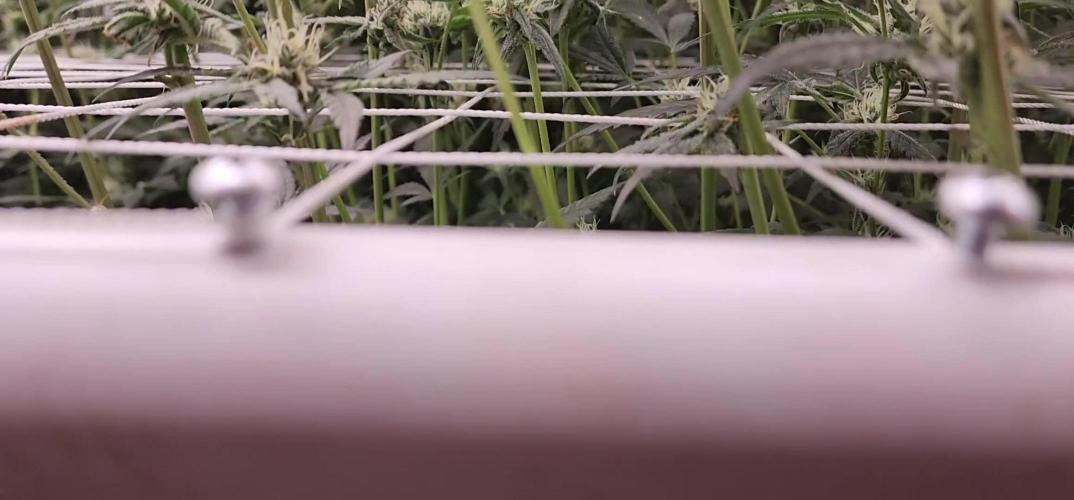
Getting ready for the flowering flip. I'm interested to see what their stretch will be like, this is my first time doing extensive LST....hopefully it helped out. I'm glad to see the plants are at least pretty even in height.
There's roots popping out of every piece of the fabric pots....i really wish i did a 5 gallon...i don't want to try to transplant them cause it's real difficult using a fabric pot or i have to cut the fabric.
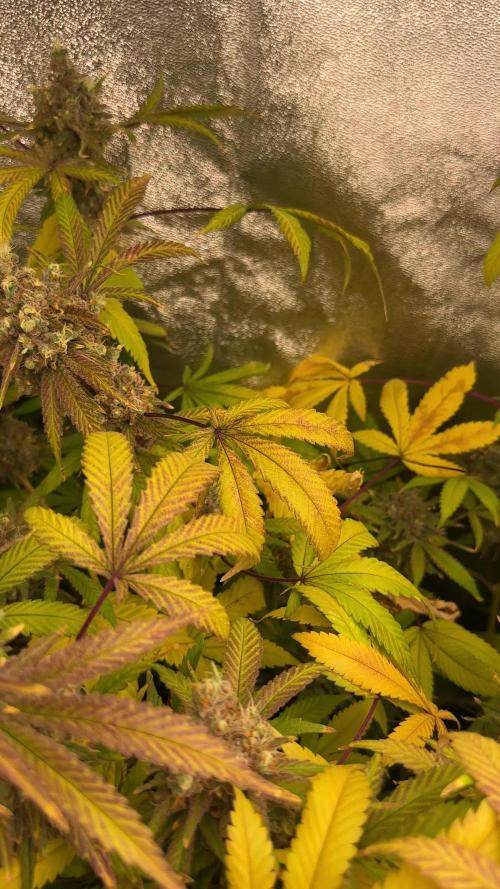
Both plants have had more yellow pale bottom leaves so I think they must be some hungry little hippos or possibly the organic nutrients need a slightly heavier dose than recommended.
Happy holidays!

Likes
11
Share


@StartGrowingShxt
Follow
Week 10
November 11
- Looking good need to up the calmag as the leaves are looking weird again like in early veg
-Will be defoliating at 21 days of flower so bout the end of this week
-flowers and bud site are looking good and flowers are forming well
- had one clone survive outta four but it’s all good at least one survived
-Will good a good top and bottom watering later this week

Likes
5
Share


@GrowCaCola
Follow
The GSCs finally hit their flowering stretch and turned from little ninja stars to nice little bushes. I think my low Humidity may have stunted growth a bit - dry winters in so cal. Overall they are doing super nice, and should start stacking and stinking here any day now. I moved them under the big light in the big tent and all the plants are reaching for it like mad. This Mars 2 1600 is a beast of a light.
Likes
16
Share


@eldruida_lamota
Follow
Que pasa familia, estamos otra vez actualizando la quinta semana de floración, y es que ya van cogiendo unos colores que ya van apeteciendo y todo, el aroma se noto esta semana la sala está llenándose de un aroma bastante dulzón.
Quite ya el big bud y empecé aportar un poco de overdrive así se van acostumbrando, y tengo que añadirles algo de Pk que tendré por el cajón esta semana que viene sin fallo lo añado.
El ph está siendo controlado y ahora mismo está regulado a 6.5 yo creo que es buen ph para que la planta absorba el Maximo de nutrientes, hasta aquí es todo nada nuevo sin problemas con este proyecto. Buenos humos 💨💨

Likes
14
Share


@CeGrow
Follow
woche 11
nr1.:
tag 73:
trichome teilweise milchig, noch keine bernsteinfarbenen
noch etwas zeit zu ernte
nr2
tag 77
noh etwas zeit zur ernte, trichome teilweise milchig


Likes
15
Share


Likes
9
Share


@RedRooM
Follow
Unfortunately this will be the last week because the threat of the red spider has returned and I cannot afford to use other chemical remedies to eliminate it so I anticipate the harvest by a week even if looking at the trichomes I am not so far from full maturity, Too bad . !

Likes
12
Share


@EARL_GRASS
Follow
Super frosty lady
Orange terpeness is a boooommmm
This is a beautiful plant compact nugs and frosty
I can't wait to set this beauty on fire