


Likes
Comments
Share


@DrewbieDoobieNoobie
Follow
48 hrs. of dark are up and its time to chop. pots have dried from the last flush. These did not stretch as much as I would have liked I will have to adjust my light better next time and there was a lot of lower development near the media, hence not enough air flow. when I flushed the pots the water level went up to the lower growth on the Think different and the bottom was wet and rotted the bottom half. I did a mild lollypop on them I'm early flower it just was not enough, LESSON LEARNED. Chopped on 2/8/20 whole plant drying low and slow 54% RH 68F for 10-14 days then will trim and jar. 981 grams wet with the lumber. lets see how they dry. I got a rosin press coming today I will squeeze all the trim and larffy buds into dabs yummy! All in all I recommend these genetics I will try the think different again I'm sure I just got a recessive dwarf gene. I have seen other grows of this same strain same breeder that are huge and stacked. thanks again to Fast Buds 420 and Green Buzz Nutrients for suppling the goods for the grow. Stay tuned for the harvest pics and vids along with the rosin squish. Be cool to one another we could really use it these days.👏 please fell free to comment on the grow as this is my first true auto flower grow. If any one out there is experienced with rosin pressing and you have any tips for beginner's let me know I will incorporate them in the next videos. thanks




Processing
Likes
26
Share


@eldruida_lamota
Follow
Bffff familia, esta cepa me tiene atónito zambezaseeds a vuelto hacer de las suyas y lograron una variedad con una floración bastante rápida, y unos cogollos bastante compactos, formación indica en el aspecto de las hojas y su morfología.
Controlamos los parámetros por encima de 20 grados y por debajo de 27,5 grados y no dejamos subir la humedad por encima de 45%.
Contando por supuesto con un sistema anti olores no solo en la extracción si no trabajando con ozono en la puerta de salida se la habitación.

Likes
25
Share


@Mr2toke
Follow
Day 68 - 21/11/23
OG Kush is doing her thing nicely!
Trichomes are looking 50% cloudy with some amber domes peaking.
She's showing me a bunch of different colours!! every other nug has a different look, different hue!
Once the medium dries up a little more, Im gonna start the flush.
it's a waiting game now
23/11/23
A lot more cloudy trichomes today. OG Kush was flushed until substantial runoff.
We're getting close!
Likes
Comments
Share


@ykscotttyk25
Follow
A new version of the classic. The old classic strain now improved and in auto version!
Just like the name suggests. Expect up to 500gr/m2 of super big buds.
Ideal for beginners. Top-quality buds without much maintenance or extra effort.
Indica-dominant hybrid. A relaxing high that comes hand-in-hand with a pleasant head buzz.
Likes
76
Share


@BB_UK
Follow
She’s almost there! A few days to a week left! I think I’ll give her 24/48hrs darkness like the rest because wow that did make a difference! Smooth deep pungent aromas And flavours! This has both sweet and sour! I am seeing pink and purple fades coming through and so much frosting


Likes
2
Share

@Fentoozler
Follow
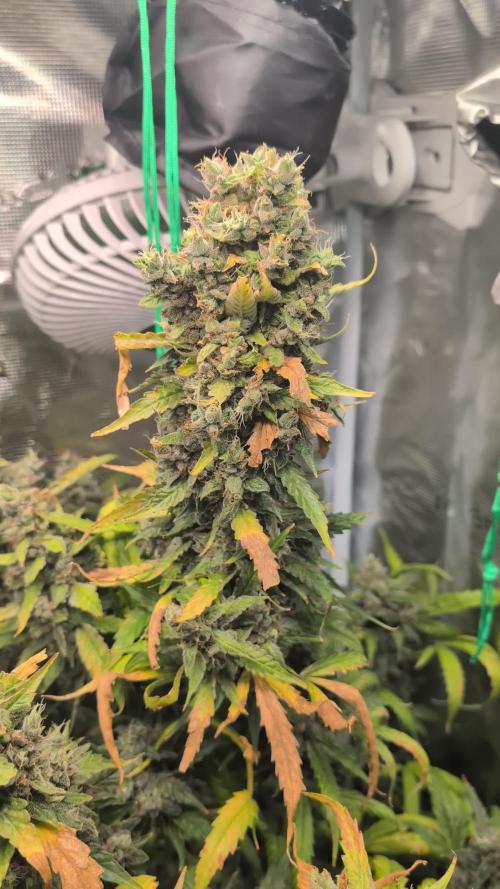
Hopefully she's getting the chop this week. She's slowing down the water drinking, only fed her water all week anyway.

Likes
12
Share

@PhinolaGreen
Follow
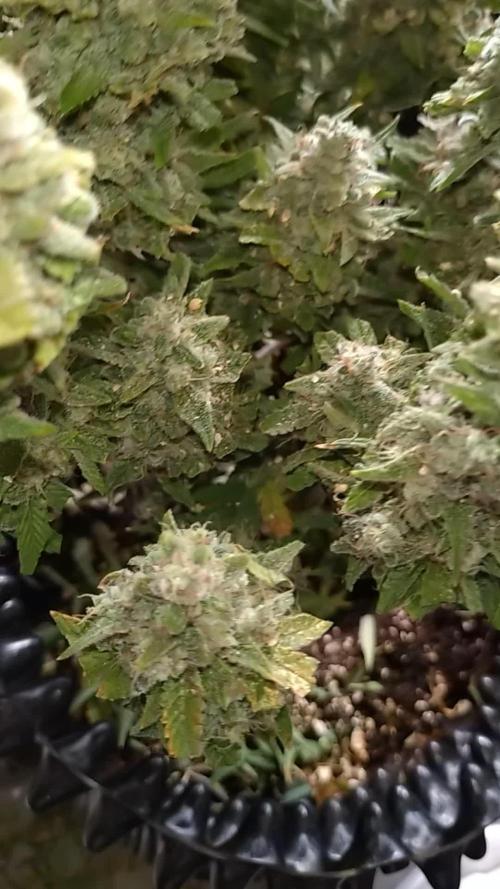
Ich habe mich dazu entschieden sie heute schon zu legen. Sie sieht einfach Klasse aus, frostig, kompakt und Fett!
Update vom 23.01.2026:
Ich habe mit meinem gecurten Guava an einem privaten Community Winter-Cup teilgenommen und habe mich gegen 4 andere Sorten durchgesetzt, darunter Zkittlez Runtz, Permanent Marker, Tangerine Dream und CBD Crack 1:1 wuhuuu 🏆
Als Gewinn gab es einen 20€ Gutschein für einen Ortsansässigen Headshop 🤤 😄🤭🥇
Freue mich total 😌👌🏻
Likes
5
Share


@Gatterzzz
Follow
Week 12 seems to be going well. Disappointed that I’m not gonna manage to fill the screen but it’s a sweet first attempt. 🙂
The plant is getting full of developing flowers 😁
Likes
50
Share


@DogDoctorOfficial
Follow
An in to soil she and her sister testers go, i know that for know everything looks the same , apart from the photos, but this will start changing with them growing. For now all of them are growing pretty much the same and now that they move in to soil and start feedings they will start showing the phenotype and genetic differences, but for now all looking great , healthy and strong af!!!
Haded a intro video from seed in to now, including how i transplant and what i use wen doing it so, and from here the moon is no limit for this babes i believe , so stay tuned as this testers they promise to be a interesting ride <3 <3 <3
She is moving fast and from all the tallest so far <3 <3 <3 need to keep this one under close attention <3 <3 <3
As always thank you all for stoping by and for supporting me on this journey, i am super passion about growing and fell blessed to have you all with me on this new journey <3 <3 <3
Genetics - Fast Buds Tester 08 09 10 11
Ligth - LUMATEK ZEUS 465 COMPACT PRO
Food - APTUS HOLLAND
#aptus #aptusplanttech #aptusgang #aptusfamily #aptustrueplantscience #inbalancewithnature #trueplantscience #fastbuds #dogdoctorofficial #growerslove
With true love comes happiness <3 <3 <3 Always believe in your self and always do things expecting nothing and with an open heart , be a giver and the universe will give back to you in ways you could not even imagine so <3 <3 <3
All info and full product details can be find in can find @
https://2fast4buds.com/ wen released
https://aptus-holland.com/
https://autopot.co.uk/
https://lumatek-lighting.com/
<3 <3 <3 Growers love to you all <3 <3 <3
Likes
17
Share


@Canna96
Follow
Hey now, hope everyone is having a great weekend,. It was a good week for all five ladies. The Red Hot Cookies is slightly ahead of the Sundae Driver and Durban Nights. The Green Crack is the slowest growing so far, and the Sundae Driver has some holes in the leaves that I am thinking are from bugs, I have sprayed her twice with neem oil so far so we will see what happens. I topped all five ladies on day 23 above the third node as I am going to build mainlines out of all of them.
I am still not able to list my nutrients for some reason, but I am feeding with all GH, Silica, Cal Mag, and Maxi Grow at an EC of 1.2 and a ph between 5.5 and 6.5. I use an auto feeding reservoir with halo feeders set on a timer to feed every 5 hours for one minute. I am hoping to get the second toppings done sometime this week, and then the final toppings done the next, and then flip to flower around week 7 or so. I am still using this Spectrum X from Medic grow, and have it cranked up to about 50% power and they are seeming to love it. We are in the midst of hopefully the final heat wave of the year and I am looking forward to cooler temps and lower humidity by the time I flip to flower.
I hope everyone enjoys the first weekend of NFL football, Thanks for stopping by, Stay Safe and Blaze On!!! 💪
Website: https://medicgrow.com/
https://growdiaries.com/grower/medicgrowled
Likes
9
Share


@KcKush
Follow
*Increased ppm from 850 to 950
*Week 3 of flowering.
*Did some defoliation will leave it as if and see how it turns out.
*Smell is weak. Just a piney smell to it.
*left one with out lolipopping.

Likes
1
Share

@Growfather1
Follow
Hello everyone,
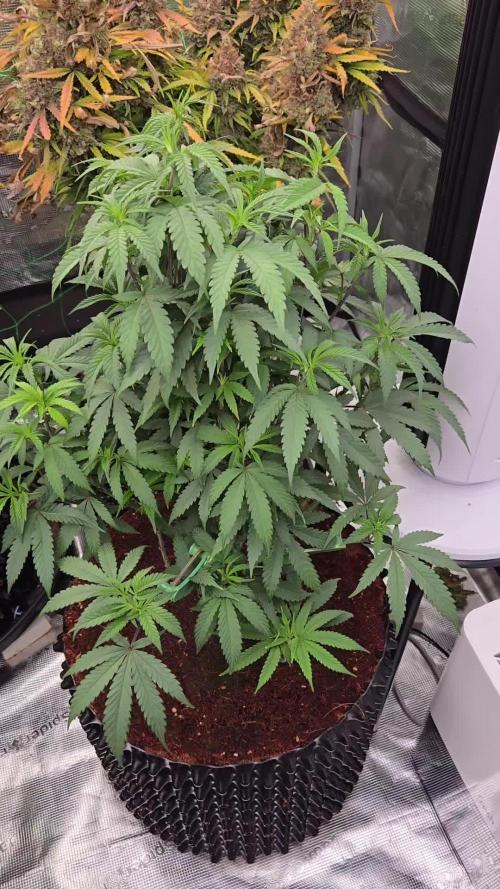
The 3 mac1 f1 hybrids are in good health and will go into flower in week 11 so they have 3 weeks to develop more roots and grow higher.
This week i had no time to trim them and will do that tomorrow.
Thanks for stopping by and have a nice day.
Best regards,
Growfather

Likes
35
Share


@Mega420
Follow
Day 64 : Week 10, I'm near of the end !! I give her less nutrient to 'wash' her and the last watering will be without nutrient.
I think I will harvest in around 10 days, I can't wait to smoke her after she will have dried 😍
Likes
16
Share


@BluHaze007
Follow
All girlz are growing super fast and healthly. I'm so confused now on who's who. I know all four plants look alike divivded into two. I think
the two very light green plants is Banana Kush and the other two is Zkittlez. I am so done on raising four plants in this tent, all future grows will be
limited to three.
Likes
7
Share


@vito_scl
Follow
Se sueltan amarras de LST y se deja de tejer en la malla.
Ramas presentan crecimiento del 100% durante la semana.
Se sube un par de cms la malla.
Defoliación selectiva en día 14.
Riego por medio con fertilizantes.
Riegos abundantes solo con agua.
Pistilos comienzan a ser más notorios.
Leve olor.
Poda de bajos en una semana más.
Ventilador en mínimo durante la noche. Al máximo durante el día.

Likes
48
Share


@Budbitman
Follow
J'ai utilisé uniquement de l'eau cette semaine pour les arrosages en terre pour commencer le rinçage, uniquement un engraissage en foliaire en début de semaines , je vais faire encore une semaine voir 2 pour le rinçage.je pense atteindre mon objectif de 2g par watt.
Un grand nombre de tête fond environ 30cm 🤩 et elle vont prendre encore un peu...💪

Likes
3
Share


@MicroHidroGrow
Follow
Día 59. Los esquejes van alcanzando a la madre, salvo uno de ellos. De todos modos, ya en 5 a 7 días estoy pasando a floración. Se va a poner bastante dificil dado que tengo que atar bastante las plantas, y parece que va a ser nuy fuerte y difícil. Pero de todos modos esta experiencia me enseñó que tengo que resolver el corte de esquejes antes. Entre tanto, por el momento no arranco con una nueva madre, dado que serán 10 semanas de floración mínimo. Y no voy a poder mantener una madre tanto tiempo en el módulo bajo. Ya ahora queda esperar. Cambié el nutriente por feeding hybrids, agregué micorrizas otra vez, y dejé de darle feeding grow y el potenciador de crecimiento green jungle. Empiezo a pensar que podría ya ponerle el bud blood, pero probablemente no lo haga.
Likes
7
Share

@valiotoro
Follow
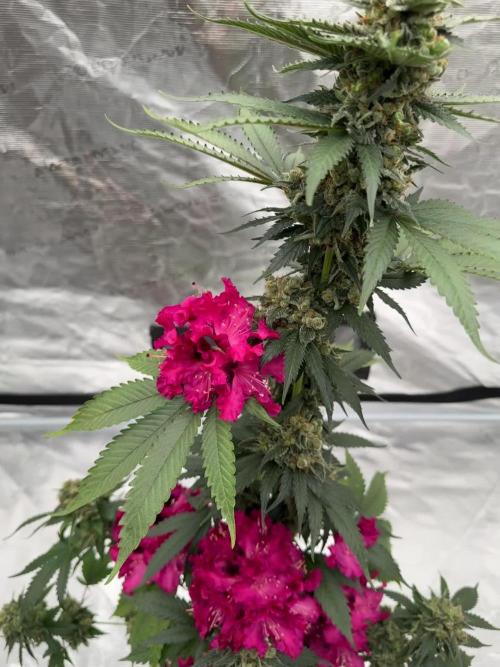
The buds are nice and chunky, completely covered in resin, and the terps are absolutely incredible 🤤🤤

Likes
46
Share


@Troy_Farms
Follow
13 ounces wet weight! Which is amazing for one auto. She grew like an absolute champ and bud sites were plentiful and filled in beautiful. Nice dense nugs and extremely pugent diesel smell which is great for the aply named Sour Diesel strain. Sticky and stinky, looking forward to the dry bud, should be around 3.5 ounces all said and done. Best autoflower to date.

Likes
Comments
Share


@mariocave
Follow
Stay tuned to see what the final few weeks in this 75 day run have in store these OG Skywalker Cookies 🍪