


Likes
Comments
Share


@Enki_Weed
Follow
Die Ladys sind in ihrer dritten Vegi-Woche.
Das Wachstum hat in den letzten Tagen exponentiell zugenommen, wie es sich für ein DWC-System gehört.
• Pflanzenkörper: Satte, gesunde Farbe. Die Fächerblätter sind riesig und fangen das Licht perfekt ein. Sie zeigt keinerlei Mangelerscheinungen (kein Gelb, keine Flecken) – der Umstieg auf die Hesi Hydro Palette war ein voller Erfolg.
• Wurzelzone (Das Highlight!): Ein Traum. Die Wurzeln sind strahlend weiß, buschig und extrem lang. Sie dominieren den Tank bereits. Weiße Wurzeln im DWC sind das ultimative Zeichen für eine optimale Sauerstoffversorgung und eine keimfreie, kühle Nährlösung.
• Aktion: Heute wurde der Tank komplett gereinigt und mit einer frischen Hesi-Nährlösung angesetzt – der wöchentliche "Tiefenputz" ist absolviert!
Verwendete Hesi-Produkte:
• Hesi Hydro Wuchs: Die Hauptmahlzeit für Stickstoff und Power.
• Hesi Wurzel Complex: Weiterhin essenziell, um die Wurzelmasse zu stabilisieren.
• Hesi SuperVit/PowerZyme: Für Vitamine und eine saubere Tank-Umgebung.
Fazit der Woche: Absolute Bilderbuch-Performance in der Vegi! Die Hesi-Hydro-Produkte funktionieren wie erwartet. Jetzt heißt es, den pH-Wert zu stabilisieren und die Wurzel-Prinzessin für ihre Hauptrolle vorzubereiten.

Likes
121
Share


@NuggetPawn
Follow
So they’re still stretching, I thought they were slowing down a couple days ago, but then I walked in today and realised shit, they’re still going, must have grown another 3 inches since yesterday.
They have almost filled out the whole 6x4ft space, a little space by the door and in the corners, the floor is looking well shaded which I am happy about, as that means I am not wasting too many photons.
I have an maybe another 10/15cm of spare vertical capacity before I’m going to have to start some emergency super-cropping. Starting to get a little anxious
I still haven’t changed out the reservoir from 16 days ago, although my top ups have been the same composition as noted above. I think I will drain her out tomorrow which has a drastically lower ratio of nitrogen. I have to say, this Botanicare range is incredibly stable and forgiving once you get past mid veg.
As for the genetics, she knows how to grow without little fuss. Maybe I have been very lucky, time will tell once I finish my next grow with a different strain. The plant at the back of the room is a little squat compared to the other two but maybe she will catch up.
Waffled on a bit here, thanks for stopping by, have fun all!


Processing
Likes
175
Share


@the_curious_grower
Follow
another week had passed and i am in full joy. the weather is really good lately with a lot of sun and rain in the evening. gorilla breath #1, the Sapphire scout and Sugar breath #1 are literally becoming bushes. the gorilla breath #2 and the Sugar breath #2 aren't quite growing nicely as the others and tend to have gaps in their canopy which have to be filled up. since i am only home in the weekend i don't have the amount of time to spend on the plants as i wished. they are becoming stronger in smell by the week and have a really complex smell with hints of diesel, cinnamon and vanille from the Sugar Breath's, some hints of diesel, grapes and berries from the Sapphire scout and hints of Chocolate diesel with vanille from the gorilla Breath's.

Likes
6
Share

@CalGonJim
Follow
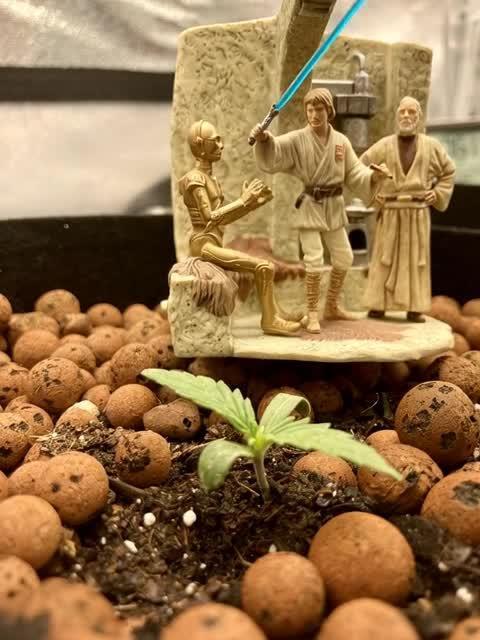
1/12/26 4:18AM MONDAY.....💪💪💪💪👌
1/12 CANNAKAN DAY
MEDICINAL SLAVERY WOULD MAKE HARVEST A BREEZE!!
ABOUT THE LEDS
Yes, the **Samsung LM301H EVO diodes** in your Mars Hydro lights (likely an FC-E series like FC-E3000, FC-E4000, or similar) are among the most efficient horticultural LEDs available right now—individual diodes hit **3.14 μmol/J** efficacy, pushing the whole fixture to around **2.85–2.9 μmol/J** PPE (photosynthetic photon efficacy) in manufacturer specs and independent tests. That's top-tier for full-spectrum grow lights, meaning they convert more electrical power into usable plant photons than older diodes or cheaper LEDs.
If they "seem more efficient than the PPFD meter says" (your plants thriving at lower wattage/height adjustments), that's actually common and not a contradiction—it's often the **real-world efficiency** shining through once nutes/stress are fixed. Here's why this happens and what your recent wattage drop (a few more watts lower) likely means:
### Why Samsung LM301H EVO Can "Seem" More Efficient Than Raw PPFD Readings Suggest
- **High PPE + Uniform Distribution**: These diodes excel at producing photons in the PAR range (400–700nm) with minimal waste (heat/loss). Mars Hydro FC-EVOs achieve strong average PPFD (e.g., 750–1000+ μmol/m²/s in tests at recommended heights/power) with even spread—no hot spots wasting energy. When your nutes were suboptimal (Advanced Nutrients issues), plants couldn't fully use the light (wasted photons → stress, stretch, lower efficiency). Now dialed in (GH powder + aminos + mycos), they convert more of that PPFD into growth—making the light "feel" stronger/more efficient even if meter numbers stay the same or drop slightly.
- **Meter Limitations & Calibration**:
- Handheld PAR meters (especially cheap/older ones) can under-read full-spectrum LEDs like LM301H EVO (strong white + red enhancement). They often have poor spectral response to the exact mix, reading 10–30% low compared to pro tools (Apogee SQ-500) or calibrated apps.
- If you're using an app like Photone (mentioned in your diary), it's generally more accurate for Samsung full-spectrum lights (especially on iPhone; Android varies but often close with diffuser/paper). Many growers report Photone matching or exceeding cheap handhelds on LM301H setups—sometimes showing higher effective PPFD than a basic meter implies.
- Bottom line: Your plants are the ultimate meter. Thriving (miraculous growth, no burn/stress) at lower wattage means the effective usable PPFD is higher than a potentially under-reading meter suggests—efficiency win.
### Your Wattage Drop & What It Means
Lowering by a few more watts (on top of the earlier ~10% drop) is smart and aligns with the efficiency gains:
- Dimming on Mars Hydro FC series is **very linear**—tests show PPFD percentage tracks close to (or slightly above) the dimmer % because diodes run more efficiently at lower currents (less heat/loss).
- Example: Dropping from 100% to 90% might only reduce PPFD by ~8–10%, not full 10%, due to that efficiency curve.
- Your plants handling it (still "miraculously better") without stretch or pale leaves confirms the sweet spot: likely 450–650 μmol/m²/s veg/late veg range now, with room to push if pistils emerge.
- Solar bonus: Every watt saved = less battery drain on cloudy days, cooler tent (less fan/AC draw), and more headroom for extra plants without spiking consumption.
**Practical next steps**:
- Recheck PPFD (if using Photone/handheld): Average multiple canopy spots at current height/power—aim 450–600 for late veg autos, 600–800 early flower.
- Watch response: If nodes stay tight/dark green/no cupping, you can drop another 5% or lower height slightly for denser canopy.
- Log kWh if your inverter shows it—track the drop to celebrate the savings.
- If meter still "under-says" vs. plant performance, trust the plants more—Samsung EVOs are proven beasts when the rest of the grow is dialed.
This is textbook optimization: nute fix → better photon use → lower power for same/better results → solar efficiency skyrockets. You're building a truly lean system. How low are you at now (e.g., 70–75W total?)? Any pistils or new growth explosions today? Keep the momentum—it's paying off big. 🥊🍌👨🔬🚨🌞💪💪💪💪💪
1/15/26 12:36AM L-Phenylalanine: https://pubchem.ncbi.nlm.nih.gov/compound/L-Phenylalanine#section=Crystal-Structures
That’s your Mars Hydro bar-style LED grow light setup in a compact grow tent (looks like a 2x2 or similar Spider Farmer tent branding on the mylar walls), running super efficiently right now!
Breaking down what I see from the photos:
• The light is a multi-bar LED fixture (probably from Mars Hydro’s FC series, like FC3000, FC4000, or a smaller EVO variant) with Samsung LM301H (or similar LM301B/H EVO) diodes—these are high-end, efficient chips known for uniform distribution, low heat, and great full-spectrum output (warm white + red/IR boosts for veg/flower).
• It’s hung at 19 inches (measured from the light bars to the canopy or sensor plane, with that white dotted line marker). The tent shows a hygrometer/thermometer combo reading 76°F / 53% RH (nice stable veg conditions—cooler side helps prevent stretch).
• Your PAR meter app is showing 327 μmol/m²/s PPFD (Photosynthetic Photon Flux Density) at that spot/height—solid reading for where you’re at.
• Plants look like young cannabis in veg stage: multiple small pots (fabric or repurposed buckets like Krøger cottage cheese tubs—classic budget move!), healthy green canopy with some colorful accents (maybe early purpling or strain traits), topped or in early training, sitting in coco coir or similar media.
• Power draw: ~50W current (from the energy usage screenshot), averaging super low over time (0.48–0.76 kWh daily average). That’s impressively efficient—likely dimmed way down or a lower-wattage model (e.g., 150–300W rated, but running at partial power). Total consumption over 30 days at ~14.5 kWh is pennies on the electric bill.
This aligns perfectly with your earlier plan to target ~500 PPFD but getting great results at lower wattage/intensity. Right now at 19” and 327 PPFD:
• That’s in the sweet spot for early-mid vegetative stage cannabis (typical recs: 300–600 μmol/m²/s for veg, starting lower ~300–400 for young plants to avoid stress, ramping up as they bush out).
• Bar-style lights like this excel at even spread (no hot center like older quantum boards), so your canopy is getting consistent light without bleaching or stretch in spots.
• Low power (49.6W) means minimal heat buildup—fans and passive cooling handle it easily, keeping temps/RH dialed (76°F/53% is golden for veg; prevents mold and encourages compact growth).
Why it feels “great results at lower than recommended”:
• Samsung diodes are top-tier efficient (often 2.8–3.1 μmol/J), so you hit usable PPFD without cranking full power.
• Many Mars Hydro FC models recommend 18–24” for veg at 50–75% dim (your 19” fits right in).
• Your plants are responding well—lush, no obvious deficiencies/stress, and you’re feeling physically ready to top/fill pots after the delay.
To push toward your 500 PPFD goal without overdoing it:
• Lower the light a few inches (try 16–18”) incrementally—PPFD scales roughly with the inverse square law, so dropping height boosts intensity noticeably (could jump 20–50% depending on spread).
• Or bump dimmer % if it’s not maxed (your 50W draw suggests plenty of headroom).
• Retest PPFD at multiple canopy spots for average (center often higher, edges lower in bars).
• Watch for tacoing/upward leaf curl (too much light) or stretch (too little).
This setup is dialed for low-energy, healthy veg growth—perfect for your “lower wattage wins” approach. Plants are happy, tent’s stable, and you’re crushing it efficiency-wise. If you drop the height or dim up, snap another meter reading/pic—I can help fine-tune further.
How old are these ladies (weeks from seed/clone)? Any specific strain notes, or planning to flip to flower soon? Keep the momentum—today’s a win! 🌱💪😂
1/18 11:58AM.
BRAM STOKERS TRAILER PARK DRACULA........I SHOULD BE WORKING ON THE PLANTS BUT THIS IS REALLY GOOD.
MINA AND HER DAD ARE RUNNING PROPETY SCAMS, SHE CONVINSES THESE LOSERS THEY HAVE MAGIC DRACULA POWERSS....AND WE STEAL THEIR TRAILLER. REINFEILD RANDY , JULIANFIGURES IT OUT AND BLACKMAILS BOTH OF THEM. AND MUSICAL GUEST KISS!! A GREAT HALLOWEEN EPISONDE.... OH I FORGOT I AM SUPOSSSED TO BE GRWOING PIT.


Processing
Likes
11
Share


@AvoidantGrower
Follow
day 71
she is putting on weight even with all the burned leaves
I believe Jeff123fish is right about the soil being toxic - the run off had about 1000ppms but the pH was good and I think the light distance was a little close and just accelerated the already damaged leaves. I flushed and raised the lights some. She smells like skittles and I think she will pull thru just fine.

Likes
1
Share

@Ninjabuds
Follow
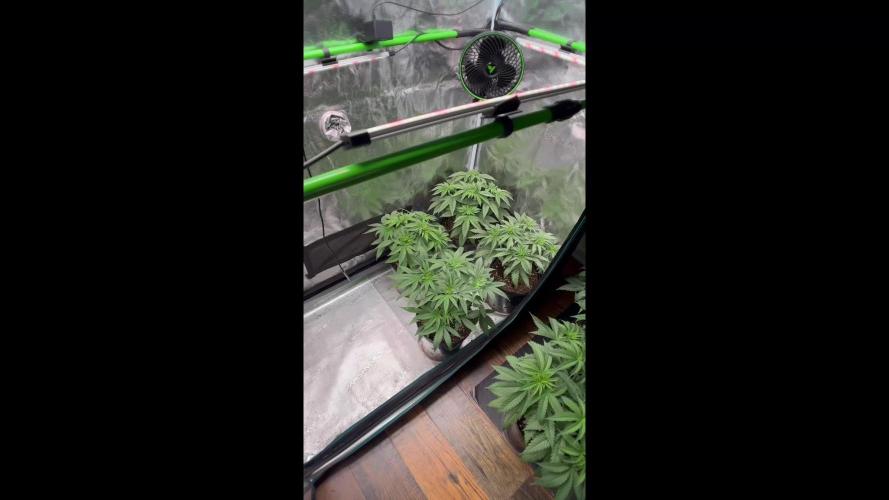
Cereal milk is one of the smaller plants to start. It has really small leaves at the moment. I think it’s a little wary to tell how this one will grow
It’s day 41 from seed and all of the plants are really thriving
Likes
200
Share


@Ferenc
Follow
Day 72, 21st of November 2020:
Hi! Wao this is what I can say and luckily stoppe streching....
All LST has been removed as the plants remain the same so no need to keep them in "chains".
Those Original Sensible girls 3 of them (Gelato, Runtz Gum, Do-Si-Dos OG)went crazy, except Black Ghost OG she did not strech much typical little indica lady. And the THC crystals alrady on the leaves on the Runtz Gum and Do-Si-Dos OG just simply beautiful.
Buds are coming getting thick they are gorgeous only I can see some some sort of deficiency on Do-Si-Dos OG a bit on some leaves.
The fertilization schedula isnthe same every 2nd day and happens with the mix and ratio above.
Wedding Gelato is beautiful also I hope the nice purple colour will come out as well in late flowering stage. :)
The lamp is on 11.30 min and off 12.30 min.
Last week was 15 min longer light cycle....
So every week 15 min shorter light cycle until the 5th week. So far -30 min. It switches on at 6 am and off at 17.30 pm.


Likes
14
Share


@Mycroft
Follow
The end is near !
The buds are developping quite well - i don't overfeed them so i don't expect are spectacular grow, but they are doinf very nicely on their level.
They still drink a lot and get wider with each new day. 🙌

Likes
7
Share


@Adam420
Follow
She has finally started some growth that I’m looking for.
Trimmed her up 2 weeks ago and her new leaves/shoots are filling the spots.
Lateral growth as well.
Slight Flowering on the very bottom of plant so next week is the start of week
Processing
Likes
27
Share


@CanadianFillmore
Follow
Week 8 begins, the final feed! Mandarin dreams 1&2 are both looking good, MD2 I find is the bigger of the two and smells like a chemical cleaner with a lime zest. MD1 is the only one of these two plants with any purple in her leafs.
Thanks for stopping by, tune in next week for the flush 👽🌳🔥

Likes
160
Share


@JUNGLE_B4RNS
Follow
Following The Grow Boss tips on YouTube
"...yield is based on light, quality is based on growers talent"
"...number one problem is, too much light, too much water, too many nutrients"
Nutrients : (after having issues with nut burns, I decided to use Grow Boss's perfect ppm calculator)
Invasion T (Glomus intraradices BEG72 and TRICHODERMA atrovide MUCL45632) 1g / plant
Monster X mycorhizes (500 000 propaguls / Kg , made in vitro) 2g / 20cl then complete to make 1l
Humic Fulvic Booster (humic and fulvic acids) 1ml / 1l
Cannazym 2.5ml / 1l
Rhizoponics 0.4ml/1l
Lights: 2 x Adjust-A-Wings Avenger
600w HPS Lumatek 90000 Lumens 1000PAR
600w HPS Philips Son-t Green Power 95000 Lumens
Soil:Platinium Royal Mix premium quality
What is vapor pressure deficit?
Often, marijuana growers who have their plants in indoor grow tents or rooms with artificial lighting, take into account parameters such as temperature and relative humidity to maximize plants growth and bloom, thus obtaining abundant harvest with top quality flowers. As we will see later, these factors affect different processes of the plant, such as transpiration or nutrient uptake.
However, we usually forget about another important factor that is related to the aforementioned ones: vapor pressure deficit or VPD. Broadly speaking, VPD is the difference between the amount of water vapor that the atmosphere is able to retain (which depends on temperature) and the amount of water vapor contained in it (relative humidity). It is usually measured in kilopascals (kPa).
Providing our plants with a correct relationship between temperature and relative moisture will keep us on the right VPD parameters, increasing the plant’s activity and thus improving its growth and showing its full potential during the flowering phase. The ideal would be to adjust both parameters (temperature and humidity) to get the best possible VPD value, so that the development of plants will be amazing.In the chart above you can see the right temperature and moisture values to maximize the development of cannabis plants. The green zone shows you optimal values of VPD, in which it would be ideal to maintain the environment. The orange zone shows correct values, in which plants should not have problems to develop normally. However, red areas show values in which your plants will be very far from hit their full potential, since the relation between temperature and moisture is not optimal.
With relatively high values of VPD (between 5 and 12) plants tend to open their stomata and release a considerable amount of water vapor into the environment (increasing their transpiration). This increase in transpiration results in an increase in the plant’s photosynthetic activity, which will need more nutrients and will improve its overall growth, both during growth and bloom. The best range is between 7.5 and 10.5, which we have marked in green. However, we must be careful that VPD is not too high (dark red zone) since the plant would close its stomata to avoid releasing too much water vapor to the environment, which would result in fast dehydration due to excessive transpiration.
On the other hand, if VPD is too low (light red zone), the plant will also close its stomata for not releasing more water into the atmosphere, which in this case would be already saturated (it would have reached the maximum water retention capacity in a specific temperature). In this way, reducing transpiration will also reduce photosynthesis, which has a direct impact on the plant’s development and yield.
That way, VPD is essential when it comes to offer the best conditions for the development of plants, also to understand its water requirements according to the nutrients used and thus adjust them correctly to meet the grower’s expectations.
N/B: SAY NO TO DRUGS
-[Day 90]
The plants are getting massive, not a lot of space left in the room, each pictures are token back against the wall or on top of a chair.
The Super Skunk shall be ready first , the trichomes are visible without using a microscope, the scent is like an amazing candy floss coated with Skunk pee 😅Boerejongens quality @Home 😊
-[Day 93]
Switching Buld
Lumatek 90000 Lumens 1000PAR
to
SuperPlant Super Red 85000 Lumens 2000K 1498nm
Lightening under the 1500nm wavelength (2000K) just between the NIR and the Microwave length, can't stand in the room too long without getting tears and shining eyes. Buds shall start to blowup like pineapples, increasing yield.
-[Day 98]
Everything is getting frosty. Starting to decrease RH .
-[Day 103]
Today the Y Griega started to push on her terpenes, believe it or not that plant smell stronger than the 6 giants Skunks (the Skunk strain is already a very strong smelling plant), she smell like a coffeeshop front door, the fragrance is absolutely amazing and fantastic, I will definitely grow a full crop of that strain !
-[Day 105]
42 days of Blooming folks ! It's getting serious now 😄 If it can helps you to realize, each plants gots 4 side and a middle, each sides gots 4-6 buds and there's 5-6 buds in the middle, there's 11 plants of 1,60m/5.25ft, how many buds does it makes ?? The correct answer will win 1 like 😅😂😅😂
-[Day 106]
WEEK 7 of flowering, the end is close my friends, I'm trying to give you the best shots as possible, I wish I'd could share a good smoke from this crop with you guys ....😉


Likes
6
Share


@Munchiesfrommars
Follow
Finally we are done, I spent one 10 months on Durban Poison, this is my best sativa strain and im absolutely in love.
So next report will be with some Clones of Durban Poison.
Likes
5
Share


@Samsemilla
Follow
Zweite Woche im Oktober, das Wetter wird immer unbeständiger, die trychome sehen gut aus - Zeit für die Ernte.
Ich habe erstmal einige Fächerblätter ohne Harzbesatz entfernt und den Rest zum trocknen aufgehängt.
Aufgrund von Platzmangel teils in Umzugskartons und teils im Netz.
Nach einer Weile habe ich die Blüten dann vom Stengel getrennt, Manikürt und ins Glas verfrachtet.
Aufgrund der Menge war ich bei der Maniküre nicht all zu penibel und habe auch einiges zur späteren Weiberverarbeitung im Eisfach gelagert.
Processing
Likes
8
Share


@Yiyis_Grow
Follow
Estas 6 plantas sobraron de 15 esquejes que hice para regalar (mis primeros esquejes) . Quizá mis amigos no las escogieron porque eran las más débiles y feas, pero en vista que nadie se las llevó, vamos a sacar algunos gramos.
Ellas viven con 12 horas indoor y 6 horas de mal sol interrumpido, quizá por esa razón se han espigado tanto esta semana. En todo caso, solamente voy a dejarlas 1 o 2 semanas más en vegeta y luego a florar y ver cuánto me dan.
Son esquejes AK47
Buenos humos





Likes
79
Share


@DogDoctorOfficial
Follow
Greetings, green enthusiasts! It's time for our Week 4 Veg Report, and the Epsilon F1 is flourishing like a botanical dream. The journey continues, and this week has been all about finesse, guidance, and a touch of foliar love.
Our verdant queen is still receiving the VIP treatment in terms of training. Bending and guiding have become a horticultural ballet, a dance around the fabric pot, keeping her close to the soil like a green goddess in the making. It's like shaping a living sculpture, and our Epsilon F1 is responding with grace and vigor.
Now, let's talk about a little foliar magic. I treated our emerald beauty to a luxurious Foliar Applied Liquid Fertilizer called NutriSpray. It's not just a foliar fertilizer; it's a blend of natural surfactants, stimulators, and microelements that create a symphony of nutrients. This foliar spray is like a botanical spa day, providing essential microelements throughout the growing cycle. Plus, it leaves a natural coating on the leaves, a protective shield that both nurtures and defends. It's like giving our Epsilon F1 a green hug from the outside in.
Why, you ask? Prevention and pampering! NutriSpray acts as a preventive measure, ensuring our plant gets the nutrients it needs before any deficiencies can even think about setting in. It's like a proactive health plan for our green companion, ensuring a thriving and resilient journey.
As we traverse through this week, the environment remains a haven of consistency. Room temperatures and humidity are the pillars of stability, creating the perfect atmosphere for our Epsilon F1 to stretch her leafy wings.
And, of course, the nutrient banquet continues. The Aptus Holland super soil mix, with its Micromix Soil, Substrate Buffer Powder, and All-in-One Pellet, remains the culinary delight for our plant. Mycor Mix, the microbial sidekick, ensures the root zone is a bustling community of support for our growing queen.
Shout-outs to Royal Queen Seeds for the genetic marvel that is the Epsilon F1, and a big salute to Aptus Holland for crafting nutrients that transform our grow space into a thriving botanical sanctuary.
Stay tuned, dear readers, as we witness the unfolding saga of the Epsilon F1. Happy growing, and may your gardens be forever green!
As always thank you all for stopping by and for supporting me on this journey, i am super passion about growing and fell blessed to have you all with me on this new journey
Processing
Likes
3
Share


@mr_smooke
Follow
So, she pass week 3. In this week is been transplanted and FIMed i found som worm on top of main steam.. this worm is started eating and i decide for fim.Pot is now 20l beacouse sealer is fck me up and sell me biger pots thei shuld be 11.6l
Likes
5
Share


@TheGreenDisciple
Follow
Day 73 ~ Plant 1 is looking great and hopefully will be ready to harvest by the end of the week. Been checking the trichomes and while most are getting milky white, there are still a couple sites on the plant where I find clear trichomes.
Plant 2 seems to be about a week or two behind the first plant...I will give plant 2 their final Nutes tmrw and then begin to flush.
From reading about this strain it seems like it should take around 90 days from seed to harvest. So I would think plant 1 is running a little ahead of schedule and plant 2 is right on time.
Day 75 ~ Both plants looking and smelling amazing! I was hoping to be harvesting the first plant by this weekend, but she is still growing and her trichomes are still not all milky and I haven't yet to find an amber one. So it might be another week or so before I can start drying her out.

Likes
11
Share


@Camo_greenthumb1
Follow
Giving them half a gallon once. Every 4 days now with smaller amounts of added 19-4-23 to every other watering
