Likes
Comments
Share
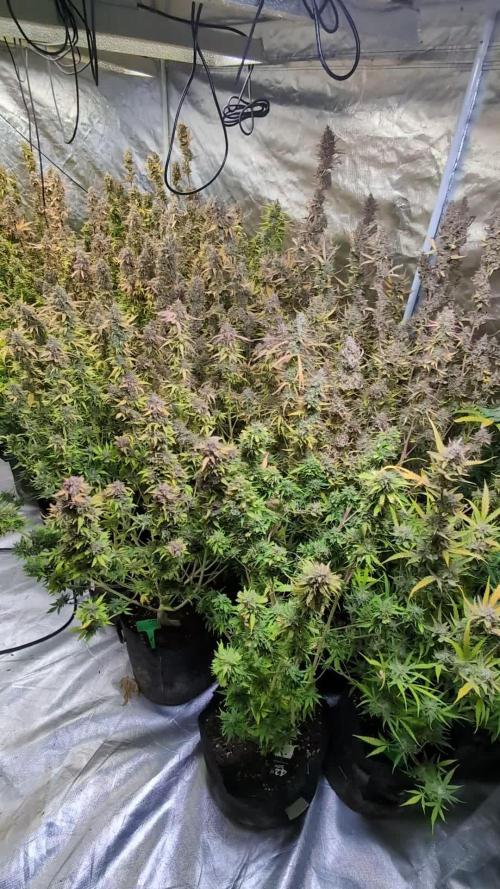
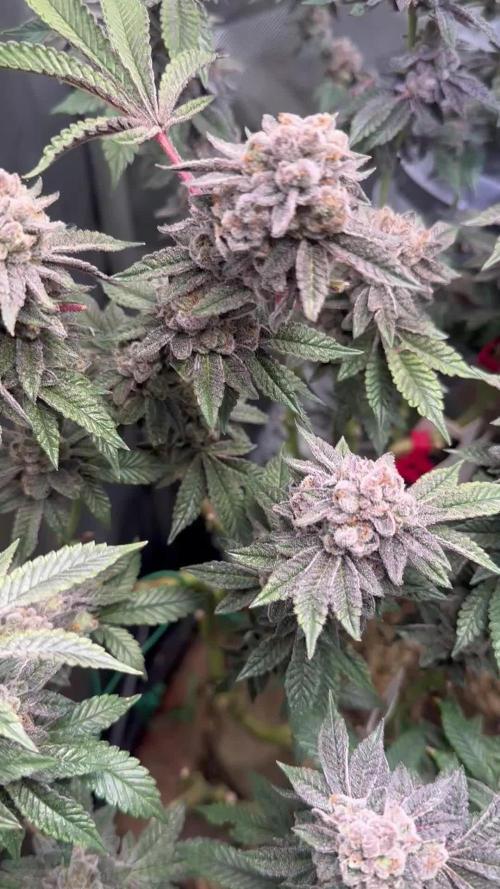
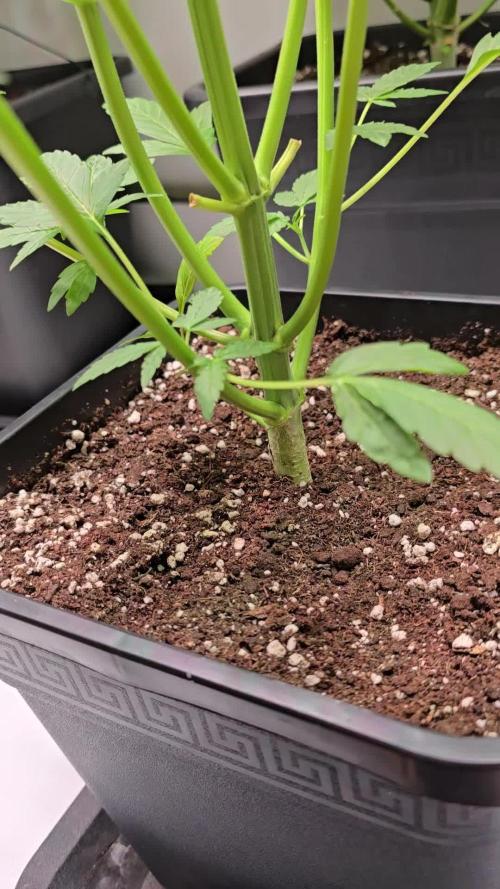
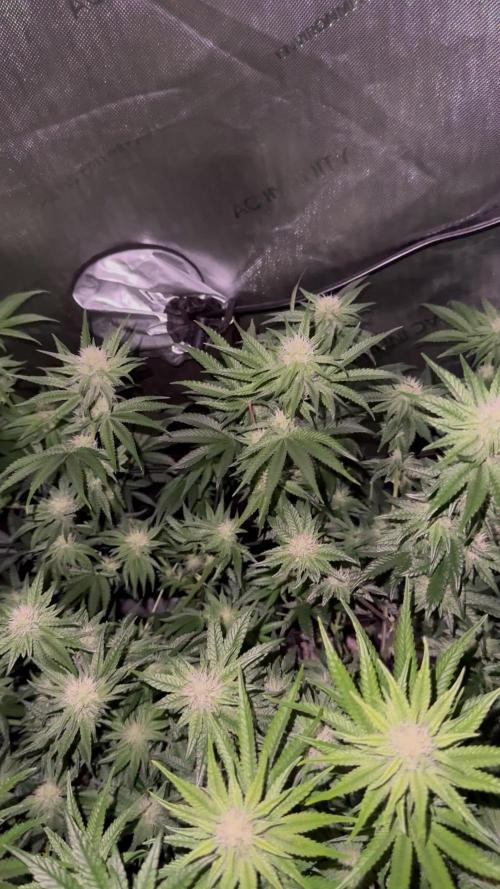
Hi growers, first week of flower is done and the plants are filling up the tent nicely. They’re looking healthy and strong, so I’m really curious to see how much more they’ll stretch. Peace and happy growing ✌️
Likes
9
Share
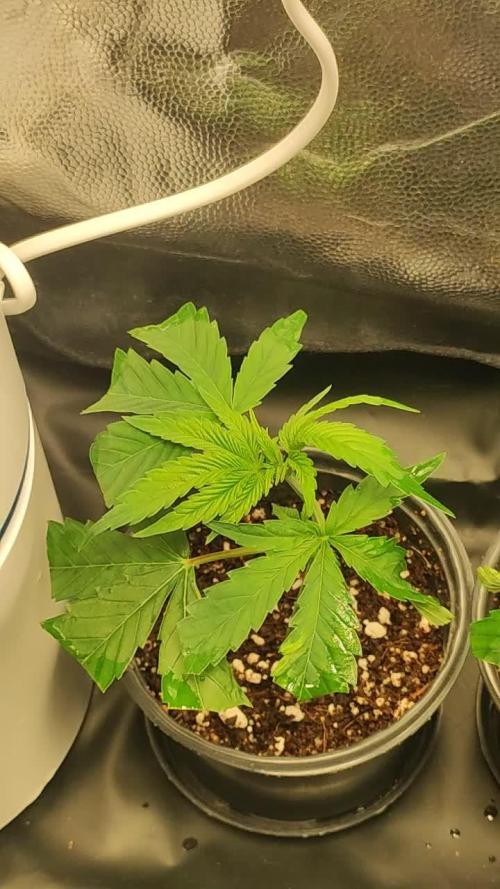
Commencing week 3 - Day 15 on December 15th Change has taken place. Switched out COBs for SolarStorm 440. Currently on VEG mode. BS is a freak. Still has 4 cotyledons and now is displaying Tri-whorled mutation 🤔😄👍 Thanks for your time and attention!
Likes
10
Share
Léger brûlures de noix sur une gorrila l'autre es en blocage de nutes. - 26/12 récolte sacs a pollen d'une super critical Bud puis reproduction avec la 1er gorrila.
Likes
Comments
Share
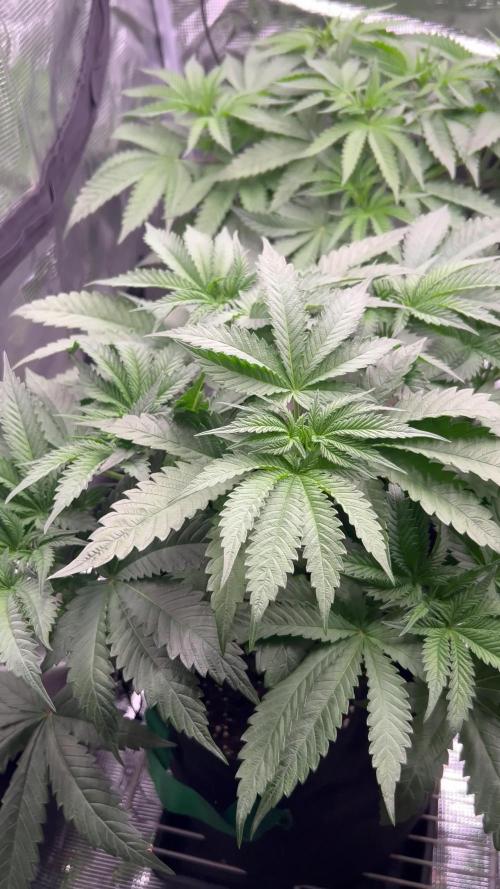
🌿 Week 4 - Amnesia Haze Auto | Different Genetics, Different Timelines Hello everyone! Welcome back to another week of my little 12/12 adventure. If this is your first time visiting this diary, welcome! Grab a coffee, relax and enjoy the journey. This project is a little experiment I’ve wanted to do for a long time. Instead of growing one or two plants under perfect conditions, I decided to fill the room with many different genetics from different breeders and simply let every plant tell her own story. Every diary follows a single phenotype individually so we can really appreciate how unique each plant can be. Even though all these ladies are growing inside exactly the same tent… • same light • same feeding • same temperatures • same humidity • same watering schedule …every genetic expresses itself differently. And this beautiful Amnesia Haze Auto is already proving exactly that. ⸻ 🌱 The 12/12 Experiment One question I receive constantly is: “Why are you growing under 12/12 from seed?” Simple. Because I love learning. Running 12 hours of light from germination allows me to compare genetics under exactly the same flowering schedule while keeping the entire room manageable. Photoperiod varieties immediately enter flowering when mature. Autoflowers don’t depend on the light cycle, but they still develop under these conditions, allowing a fascinating comparison between genetics. This isn’t about chasing maximum yield. It’s about discovering how different plants react when every environmental variable stays the same. ⸻ 🌿 Week 4 — She’s Moving Fast! This week something became very obvious. Amnesia Haze has decided she isn’t waiting for anyone. While some of her roommates are still investing heavily in vegetative growth, this lady has already entered pre-flower and is preparing for the next chapter. That’s one of the things I love most about growing multiple genetics together. You don’t just learn how plants grow… You learn how different plants grow. Some stay compact. Some explode sideways. Some stretch. Some wait. Others, like this Amnesia Haze, simply decide… “Flower time!” And honestly… Watching every plant follow her own internal clock is one of the most rewarding parts of this project. ⸻ 🌿 Structure She’s developing a lovely natural architecture. Instead of becoming extremely bushy, she’s building a more open structure with nice spacing between branches. That should become a real advantage later in flower by allowing better airflow and light penetration. The stem is already thickening nicely and every branch feels strong and healthy. The colour is rich, vibrant green with beautiful fresh growth appearing every day. Exactly what I like seeing at this stage. ⸻ 🌸 Pre-Flower Has Arrived The biggest milestone this week is definitely the appearance of the first pistils. Tiny white hairs are now emerging at the nodes and growing tips, confirming she’s officially entering pre-flower. This doesn’t mean she’s finished stretching. Actually… The opposite. The famous flowering stretch is only beginning. Over the next couple of weeks she’ll likely gain quite a bit of height before focusing all her energy into building flowers. It will be exciting to watch how much she decides to stretch compared to the rest of the room. ⸻ 🌱 Hand Watered With Love Unlike some of my other projects, this plant isn’t connected to an AutoPot system. Everything she receives comes by hand. Every watering. Every nutrient. Every little adjustment. That also gives me the opportunity to inspect her closely every single day, monitor her response, and make tiny corrections whenever needed. Sometimes there’s something very relaxing about slowing down and watering by hand. It’s just me, the plant and a watering can. ⸻ 💧 Feeding This Week This week she received: • Terra Grow — 1.8 ml/L • Power Roots — 1 ml/L • Pure Zym — 1 ml/L • Sugar Royal — 1 ml/L pH was maintained around 6.1 EC around 1.35 She has accepted every feeding beautifully without showing any signs of stress or nutrient excess. The foliage remains healthy, vibrant and full of energy. ⸻ 🌡️ Environment The environment has remained stable throughout the week. • 🌡️ Day temperature: 33°C • 🌙 Night temperature: 25°C • 💧 Relative Humidity: 63% • ? Substrate temperature: 21°C • 💦 Nutrient solution: 26°C • 🌿 Water consumption: approximately 1.1 L per day • 🌬️ CO₂: around 639 ppm Even with warmer daytime temperatures, she continues showing healthy growth and strong metabolism. ⸻ 🌿 Training I’m keeping the training simple. This project is more about observing natural genetic expression than forcing every plant into the same shape. A little Low Stress Training helps expose additional flowering sites while allowing the plant to continue growing without significant stress. The goal is balance. Guide her. Don’t fight her. Every genetic deserves the chance to show what it naturally wants to become. ⸻ Looking Ahead The next couple of weeks should be incredibly interesting. Now that pre-flower has officially begun, I expect to see: 🌿 More vertical stretch 🌿 Faster branch development 🌿 Additional flowering sites appearing 🌿 The first real stacking of future buds Every day should now bring visible changes. And that’s when the fun really begins. ⸻ Final Thoughts Watching different genetics grow side by side under identical conditions continues to be one of the most educational experiences I’ve ever had as a home grower. Some ladies are still building their framework. Others are becoming little bushes. And this beautiful Amnesia Haze has already decided it’s time to start writing the next chapter. I can’t wait to see where she takes us. ⸻ As always… Thank you to everyone who stops by, leaves a comment, shares advice, asks questions, or simply enjoys following along. A huge thank you to Zamnesia and Plagron for providing the genetics and nutrition that keeps these adventure thriving throughout the journey. To everyone reading… Thank you for being here. Take care of yourselves, take care of your gardens, and I’ll see you all next week. Growers Love and happy growing! 🌿💚
Likes
49
Share
So this plant is doing very well and fattening up nicely , she has had her last dose of pk now , Fast buds do not give anything away with there tester seeds , but I am wondering from the flower formation of this could be the gelato auto they are going too bring out this year ?
Likes
2
Share
@TowersD
Follow
3rd Week of flower and the plants have been stretching a lot. The nanaz x BBC are way taller that the Headbands. I also replace the Electric Sky 180 V2 led light for a IONBOARD S24 200W from Ac Indinity. The buds are starting to appear as well.
Processing
Likes
142
Share
Hi everyone 🤗. Everything is going great 👍. There are no defects or anything unusual :-). Today the Blue Cheese Pheno 1 became the first time rinsed, and now only gets 0.4 Ec water for the next 10 days ca :-). Everyone else needs a while. otherwise there is not much to report this week. I wish you all a nice week, stay healthy 🙏🏻 and let it grow 🌱
Likes
38
Share
This run is my first time growing with a DWC set up, and also first time growing from clones. I am super impressed with both growing in Hydroponics and growing from cuts. They had 4 weeks of veg, and it has filled out the tent as much as I intended. The mother plant was a single seed gifted to me from a buddy. This first run will be the first I see of the phenotype in flower. I am praying that i like it and am happy with it, as will seem like a waste of time and effort and money growing it to now like the pheno. I wish I was able to pheno hunt this one. I will be pheno hunting TH Seeds London Mint Cake, as I was very impressed with how that turned out.
Likes
18
Share
I don’t think I ever had white powdery mildew and I was just noid of every little dust particle that came around. All good. I’m now battling high temps as we don’t have central air and it’s mid 90s outside. Most likely about to buy an ac unit. LST seemed to go ok but we shall see. Overall very pleased w my results so far. Cheers
Likes
8
Share
Ended up pulling about 65 grams from Top Gun2, another 55 from the Top Gun1 I harvested earlier, fun grow, I was lazy with this diary as I was more excited for gorilla cookies, I’ll try to keep to one diary from now.
Processing
Likes
11
Share
@Microsun
Follow
Flowering is going amazing, this candy cane is growing some very fast weight and caking up with Trichome’s. The sweet and slightly minty berry smell is growing in power day by day, and I’m very happy with how the size of the buds are developing since adding the increase of 2-8-4 and fish bone meal, just a little bit, not too much at all and she’s reacting great, knowing that the candy cane is a larger auto in size makes me a bit sad with the total size of this plant, but in its young age as my very first auto I believe I probably stunted it, but after all this and how she looks now Im more than happy with the growth, yield and quality of it, just speaking now as I do not obviously know how much I Will revive from it, I’m guessing about a ounce. No small bud sites other than maybe one on a lower branch that already has a main top cola on it. The main cola is massive and packing on a lot of size. I’ve switched the light to a hour less now as I am growing 2 photo indica L.A grape and with the season change I am having to fix my temp and humidity more for the photos, so changing to a 17-7 schedule has actually helped quite a lot and also has helped my other autos veg slightly better. But all in all I’m very exited!
Likes
2
Share
@Ninjabuds
Follow
It’s the 1st week of flower I flipped the plants to 12/12 a few days ago. There is a lot going on and a lot of cool and amazing things coming in the near future. Make sure to check out my YouTube page. I bought me a DJI gimbal this week. Might be my new favorite toy. The temps are starting to break for the summer. I don’t see it being very long until winter is here and it’s time to use a heater and not an ac unit. All of the plants are healthy. The plants have all grown so well I turned down the light intensity a bit today the plants didn’t seem like they was starting to strech very much. Hopefully the lower light intensity will make them strech out just a bit
Likes
9
Share
@GrowerGaz
Follow
Striped feeding completely day 60 , stacking hard in the dwc and I'm excited to see the yield. Smell is lemon sweets , cough sweets lots of hazey aroma. Mars ts1000 is so big a great job and I think will hit over a gram a watt.
Processing
Likes
12
Share
Weather is getting a bit better this week. Almost no rain anymore and much more sun comparing to last week. Blueberry Ghost OG and Kali AK still don't want to start flowering, but they slowed down from growing taller at least, so there are hope of they to start flowering soon (hopefully).
Likes
21
Share
Heyókȟa I desire naught but the study of nature, to find my way back home. 12x12=144, A dodecahedron is a polyhedron with 12 faces, and in coordination chemistry, it refers to a geometry where ligands surround a central metal atom (in this case, Magnesium) in a specific, 8-coordinate arrangement. Dodecahedrane is a hydrocarbon, meaning it's composed solely of carbon and hydrogen atoms. The carbon atoms are arranged at the corners of a dodecahedron, a 3D shape with 12 pentagonal faces. The water molecules in the dodecahedron form hydrogen bonds that are individually slightly weaker than in either the dimer or the tetramer. However, because three-quarters of the O -H groups in the dodecahedron form hydrogen bonds, it has a more negative energy per molecule than has either the dimer or the tetramer. Magnesium (Mg2+) is the essential, central metal ion in the chlorophyll molecule, crucial for photosynthesis by enabling light absorption and energy transfer. It is chelated by four nitrogen atoms within the porphyrin (or chlorin) ring structure. Chlorophyll appears green because it reflects light in the green region of the visible spectrum, specifically between 490 and 570 nm. The main resonance electronic frequency of a neutral Magnesium (Mg) atom corresponds to the transition from the ground state to the first excited state. Resonance Line Wavelength of Mg2+: 285.1nm (UVB light). The central atom of the chlorophyll molecule is Magnesium (Mg2+), which is coordinated within a porphyrin ring. The electronic "resonance frequency" of this central atom—meaning the frequency at which its electrons absorb energy—is primarily driven by the electronic transitions (ETR) of the surrounding conjugated chlorin ring structure, rather than a discrete atomic transition of the Magnesium atom itself. The resonant electronic frequencies of the chlorophyll porphyrin (technically, a chlorin) ring are determined by the energy required to promote π-electrons within its conjugated system, primarily appearing in the blue and red regions of the visible spectrum. In standard physics, Chloryphyll b has peak absorption at 460nm (Blue). If we take the peak wavelength 460nm and a UV-B, UVR8 peak absorption wavelength 285nm Tryptophan-285 (W285) Sensing protein. 460/285=1.618 Φ, "natural harmony" and the "structure of light". The cryptochrome photoreceptor (CRY) is a UV-A/blue light receptor that shares this dual sensitivity with several other biological structures and functions, including significant sequence similarity and a common evolutionary ancestor with DNA photolyase enzymes. These are light-activated enzymes that use blue/UV-A light to repair DNA damage caused by UV-B radiation in plants. Dodecahedrane (C20H20) is a hydrocarbon with a cage-like structure where carbon atoms form 12 pentagonal faces (a regular dodecahedron). It is highly symmetric (icosahedral), contains no delocalized electrons (no aromaticity), and has minimal angle strain, but significant torsional strain. Water Dodecahedron (H2O) forms hydrogen-bonded cages. While individual hydrogen bonds in this structure are weaker than in the linear dimer or tetramer, it has a more negative total energy per molecule. This is because three-quarters (75%) of the groups are involved in hydrogen bonding, creating a very stable, closed-shell configuration. a 3D carbon hydrocarbon (C20H20) to stable water clusters in hydrate, while the Magnesium ion acts as the central activator within a conjugated ring in biological systems, with its electronic absorption dominated by the ring, not the atom itself. Effective quantum efficiency of photosystem II, often denoted as ΦPSII In horticultural lighting, adding 730 nm (far-red) LEDs alongside standard red/blue lights has been shown to increase canopy photosynthesis by 20–30% in several crops by acting synergistically with shorter wavelengths. However, the limitation is that excessive, pure IR/Far-red light (without accompanying red light) can trigger the "shade avoidance response," causing plants to grow tall, weak, and spindly rather than robust. Knowing is half the battle however, engineering or utilizing infrared light (specifically the 700-750 nm far-red range) is a viable method to boost photosynthetic efficiency. It acts as a bridge to allow PSII to utilize a broader spectrum of light, breaking the traditional 700 nm barrier. Extend, then multiply. UVR8-mediated signaling (often in conjunction with CRY proteins) triggers protective mechanisms that maintain the stability of the photosynthetic apparatus (including LHCII and reaction center proteins), thus ensuring that the efficiency of Photosystem II remains higher in UV-B-exposed plants compared to plants lacking this receptor. ΦPSII indictates the rate of electron transfer from water to plastoquinone, which drives the production of ATP and NADPH. There is a close link between ΦPSII and the true rate of CO2 fixation (Φ*co2), particularly in C4 plants. Effective quantum efficiency of photosystem II, often denoted as ΦPSII, represents the proportion of light absorbed by Photosystem II (ΦPSII) that is actually used in photosynthetic electron transport. It is a key indicator of how efficiently a plant is using light for photosynthesis, as opposed to losing it as heat or fluorescence. ΦPSII (effective quantum yield of photosystem II) functions primarily as a "multiplier" (a coefficient of efficiency) rather than an additive factor when estimating the overall photosynthetic electron transport rate (ETR). Multipliers are considered far more beneficial than additions because they generate exponential growth, leverage existing resources to their full potential, and create sustainable, self-multiplying capacity, rather than just incremental, linear increases. Humans, and most other mammals, rely on other mechanisms, such as nucleotide excision repair, to manage and repair UV-induced DNA damage. As such, humans do not have the direct, light-driven repair mechanism that photolyase offers in plants.
Likes
5
Share
@Lazuli
Follow
I grew in cold , the max temperature was 20 celcius day and 14 at night.
Likes
Comments
Share

Hand Watering still EC 2.0 canna coco A&B pH. 5.5-5.8 light is 24 inch above 100% added 1ml/L of calmag on day 12. Day 13 - raised lights to 36 inches. At 100% PPFD of around 400. Plants started reacting very well. Turned Autopots on as well.