






Processing
Likes
37
Share


@MG2009
Follow
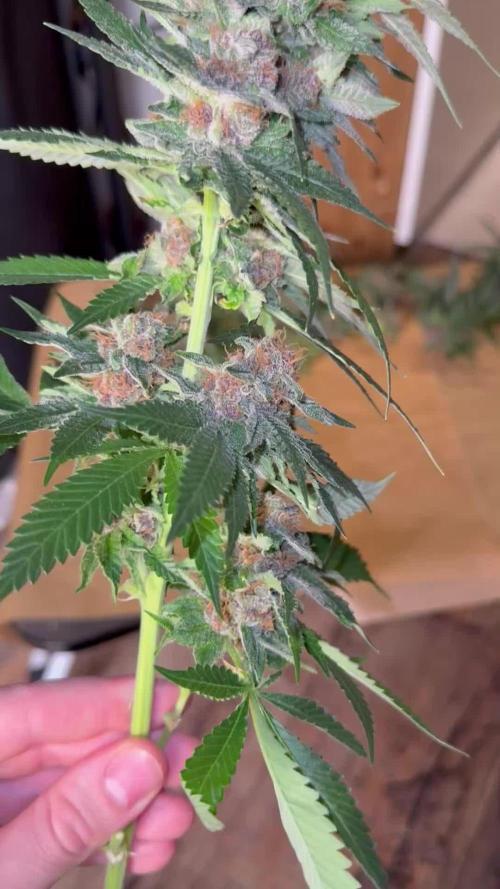
GTH SEED #1 in training, just super cropped on one side to even conopy.
The first site im recording will be a clone,it is on back side of plant and will not produce. #2,#3,#4 pics,#2 is stripped of leaves at about 12 inches.
06/16/18
#4 is showing
pre-flowers,#2,#3, no sign yet. #1 check in the morning.
06/19/2018
Still no pre -flowers on #1,#2,#3, #4 however is female so I Fimmed her to encourage side shoots to grow biggest of wider canopy. #1 reacting well to supercropping 20 tops as of today. Praying she is female🙏🙏. She is a stretchy girl in flower 2 to 3 x her vegged height so trying to be low profile as possible.👍
Likes
25
Share


@EBxAH
Follow
Seeds went into water on 1/20/22 and now an inch tall on 1/27/22. I'm super excited for this one because of the Black Widow!!! All the girls have names: Basha, Stefa, and Wandzia ❤️ I definitely like this new 5x5x6 tent that is not barn style, I won't worry about room come stretch time like I did last run! That's about it for now and as always, HAPPY GROWING EVERYONE
✌️🍀✌️

Likes
27
Share


@Bread_n_Buds
Follow
Disclaimer: Stunning trichomes here too but after so many photos come down and look...
We are in our Dark Time we really want to find colored plants to see what trichomes they have exploring the microworlds like Indiana Jones.
This time it's the turn of the new Black Diamond, just released with a very Californian heritage and even more so, ladies and gentlemen here we are again in California it could easily be a plant from the best Californian breeders but it is Zamnesia and maybe it is even better...
** Remember that for all the varieties we have at least two plants, one left to grow straight and one worked with the techniques (come back during the week to see). today we are talking about the harvest of the dark phenotype, which is also the most beautiful and picturesque to show in the hole of both the colas and the wonderful macros. Bad luck wanted the most beautiful plants to finish first so in the next few weeks you will find very nice plants but these colored ones are from another planet.
Technique used // In this case we let the plant grow straight with a bit of LST on the lower branches to widen and let it get light and a fimming at a certain point to try to keep the plants in that growbox aligned as much as possible.
Better with the techniques or normal? This time we have two slightly different phenotypes, the scent and the flower are similar but this one is really super dark and how can you not prefer it but it's a question of phenotype the yield is excellent also on the other plant that will be harvested soon.
Flower quality // From one to 10 stars + infinity. The plant has resined incredibly, the flowers are hard as marble so much that if Michelangelo Buonarroti were still alive he would sculpt a David. Truly beautiful under all points of life, the flowers are so qualitative that it seems to be in California really from the best growers in the world. To remove the stink from the top of the flowers, dust etc. we did the washing of the buds according to the procedure recommended by Luka on Zamnesia, I recommend it to you!
Check the article in your language // https://www.zamnesia.io/it/guida-growing-cannabis/333-lavaggio-delle-ceme
Fertilizers // I managed to unload this plant relatively here the black was fading on some of the sun leaves, it is not completely fading but for the photos I needed a full wild black.
For the reasons mentioned above and for an excellent flavor I prefer Organic, All the fertilizers and additives of Plagron in the green / 100% organic version have fully satisfied me. Choose your soil based on your style and calculate the sheet on the website www.plagron.com -
Bro if you are a stubborn type "I don't put anything in it" use additives listen every now and then.... and then come and tell me about it.
The nutrients are available in convenient all-inclusive packages on the Zamnesia website.
This strain is truly exceptionally Cali, usually plants bred by Europeans don't look so Cali, not this one.
---- https://www.zamnesia.io/en/11187-zamnesia-seeds-black-diamond.html
Zamnesia Description // Looking for a potent and reliable feminized strain? Look no further than Black Diamond. This wonderful hybrid crosses Blackberry with Diamond OG, resulting in 90% indica and 10% sativa plants with a respectable THC level of 23%. Growers will love these tall, productive plants, while smokers will enjoy tasty sessions full of sweet aromas and delicious grape flavours. The Black Diamond's qualities continue to shine through when you finally get to sample the flowers. Properly dried and cured, her buds are irresistible, not only for their divine smell but also for their appearance. The predominant aromas in her bouquet are sweet and fruity notes, with the fragrance of grapes taking center stage. You can appreciate these aromas by smoking her in a joint or vaping her, but they will also shine in sweet edibles, and will add a fruity note to your cannabis delights. With their high THC level (23%), these delicious flowers quickly conquer the mind and body with a relaxing and long-lasting effect. The perfect strain to enjoy before a well-deserved rest.
Music and Frequencies // For about 4/6 hours a day my plants listen to 432Hz frequencies made especially for their well-being and sometimes a bit of black music to give them those vibrations that only music can give. www.radionula.com
All the best that mother nature has to offer is at ---- www.zamnesia.com
Likes
4
Share


@DrewbieDoobieNoobie
Follow
SUCSESS! I now know for a fact that the pollen did its job. I am 2-3 weeks out from pulling the plug on the lights and giving them the axe. looks like some are starting to mature so I will let them cruse on auto pilot for the next 3 week just giving them plain water PH 6.0 this should use up the dry nuites in the coco and work as a flush as well. Some nutrient burn from the last blast feeding, but I can live with it. I think my PPM meter is out of calibration and it gave me a lower reading than what was in the feeding. I'm pretty happy my first pollen chucking experiment worked. This will be a Feminized S1 IBL " inbred line" The original female that was sprayed with the CS never got pollenated. the other 2 were by me 2 branches each, some may have popped in the tent before. I will find out how many buds got knocked up in 3 weeks. The clones will have some buds on them seedless. so that's it for now. I'm in the home stretch in reality July 17th or so should be the finish line including drying time. soooooo close.😍


Likes
18
Share


@Silverback_Guerilla
Follow
2/14:
Decreased distance between the lights and canopy. Let the maximum swell commence!
2/16:
Fed today..increased sugars/carbs. This was probably the last feeding with Beastie Bloomz..switching to Cha Ching at next feed and cutting back on the One.

Likes
16
Share


@Chocolopeison
Follow
Comenzamos la floración con estas chicas, estoy muy encantado con ellas la verdad para que les voy a mentira, muy ansioso de empezar a ver sus flores, pretendemos fertilizar solo hasta la semana 5 por ahora. Estamos solo con 1 riego diario estuvimos de 1L ahora lo subimos 2L y lo recibieron muy bien.
Algo en particular es que estamos probando cannaboost folear, se lo estamos dando 3 veces por día a la planta hace 10 días y no vamos a parar hasta el día 21 de floración para luego cambiar a dosis radicular, estamos haciendo esto para economizar cannaboost y comparar resultados con su dosis full que ya la eh testeado.
A las nenas se les hizo super cropping (en mi instagram pueden ver un tutorial @chocolopeison) hace 7 días a las cuales también le agregamos unos soportes y hoy ya la pasamos a floración recuperadas con una gran defoliación de bajos. Ahora esperaremos día 14 para hacer otra defoliación, super cropping y guiado de malla que pronto estaremos instalando.
La iluminación estamos con 540W de qb (2 @heavengrowlight y 1 @meijiu)


Likes
2
Share


@GhostBlvckPhant0m
Follow
“The Wock” 7 Weeks🤙🏾 Ladies are crushing its! I’ve for sure found 2 phenols I want to keep going based on structure and growth. The first was actually going to be a throw away. I didn’t like how lanky she was in her solocup stage. I instead topped her to slow down lateral grown and threw her in a 2 gallon bag to do her thing. She is now in a 7 gallon bag and has the best structure of them alll IMO. My 2nd pheno is a Tri-leaf mutation and it throws tops like no other! The perfect mother plant and is why I chose her as pheno #2. The 2 plants that were topped at the 5th node are bushing out more and more, just like it like it. There are 2 natural growing plants are doing great as well. They have nice bushing with one main cola. All plants will be defoliated 5 days before flip. The nose coming from these ladies is LOUD and I mean LOUD! Sour Candy and Burt Fuel! I’ll be taking cuts and flipping these ladies soon! Happy Growing PSGX Family! 🚀PSGX to the 🌕 #Phant0m
Likes
1
Share

@Amboss
Follow
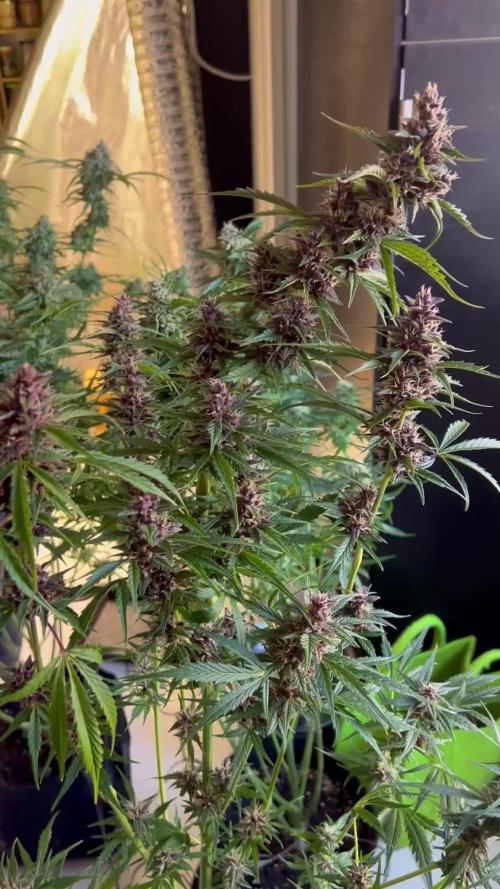
She needs a Little Bit more time
I Feed her a week longer until end of the week
She is a monster

Likes
53
Share


@XG_Jack
Follow
It was great all the way through. 10 stars… This grew into a really stellar plant and it took all of those qualities through harvest.
One of my best grows to date.
Likes
11
Share


@Mr_Motalovah
Follow
Hello Growers & Tokers!
The route to having a jungle starts with the roots!
That's why my main goal in those first 14-21 days is developing the root system.
I like to give them time to expand the roots which is very important for a healthy plant.
That also gives them more time to get bigger and stronger before going into flower.
More growth, more bud sites, more buds. Trust me the wait is worth the reward.
We'll be seeing some truly sweet and zenzational flowers.
This week they got transplanted to their final pot, 11L fabric pots.
It's one step closer to getting that jungle, zenzational!
Medium used was Light Mix from BioBizz.
Synergy from Grotek nutrients was blended in the medium to help out the roots.
Let the mycorrhizae do its job and take over the soil, then the roots just follow.
Take care out there and happy growing!

Likes
Comments
Share

@Grow4ever
Follow
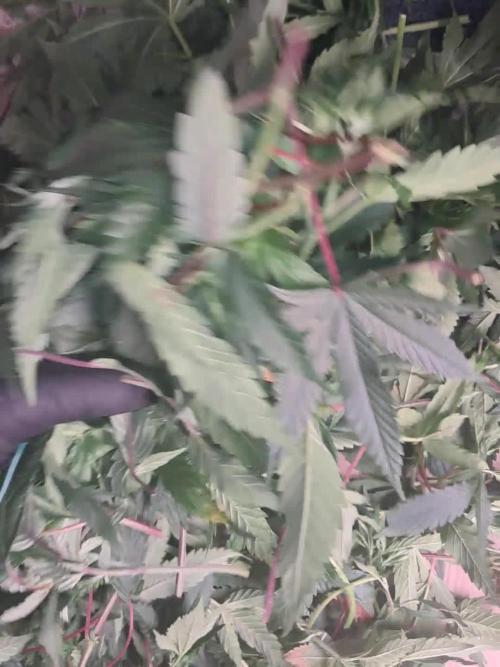
Ein paar Tage nicht da und dann solche Büsche im Zelt. Das hieß heute gehts ran ans defolieren und Scrognetz einspannen. Zudem haben Sie leider einen ganzschönen VPD Schock erlitten, auf dem einem Foto sind an der Chocholate Mint OG deutlich Calcium Symptome und nach oben gerollte Blätter zu erkennen. Habe heute morgen also erstmal eine Ladung Wasser mit Cal/Mag und etwas algamic gegossen und die Lampe höher gehängt. Heute abend ging es dann direkt ans defolieren, da ich ehrlich gesagt, die Woche sonst wenig Zeit finden werde. Jetzt sollen Sie sich erholen und ins Scrog einfügen.

Likes
21
Share


@DeepRootsGrowTrees
Follow
SATIVA DREAM by KANNABIA
Week #8 Overall
Week #7 Veg
She's doing great with the weather and the heat she's trying to stretch and get tall but I'm going to top her next week again. Overall no issues this week.
Stay Growing!!
Kannabia.com SATIVA DREAM

Likes
148
Share


@CrazyHorse
Follow
Welcome, If you are already here and reading this, you do it at your own risk !! 😃😇😎
Another week of flowering, the girl smells so intensely that the carbon filter does not cope with effective filtration. There is a real orange scent in the tent, a blend of fresh oranges and skunk scents. The buds take on size, the resin production is amazing and creates beautiful sparkling crystals on them. There are still 2/3 weeks to go, but these are the most exciting ones. In this week I added cal-mag to fertilizers, it is a preventive measure because I increased the amount of PK 13-14, so cal-mag supplementation will not harm the plant at this stage of flowering.
Update: Day 87
I lowered the height of the lamp to 17 cm, I just need to put on my helmet, fasten seat belts and hold tightly to my chair :P
Update: Day 88
I had to use wire-mode because the side branches were starting to bend more and more under their weight. It makes me very happy because the harvest will be in 2/3 weeks 🙏
I wish you all a fantastic evening, You Lovely Girls Growers 💪💪💪


Likes
4
Share


@TheGreenGroomer
Follow
The plant was harvested on day 67 of flower and is now hanging up to dry. I've got the drying environment set at around 58-60% humidity with a temperature range of 15-19°C. Hoping for a nice slow dry to preserve those terps! 👃💨 Will update once it's ready for the next step. Stay tuned! 🚀
Likes
5
Share


@Mr_nugs_lover_David
Follow
Beautiful as her sisters! The 3 phenos I have smell just exactly the same and the color is darker in one of the 3. Beautiful autoflowering strain to grow if you want citric terps very lemony and also if you wanna add some color to your garden 💜✌️🌱💚
Likes
31
Share


@Tackle123
Follow
I flushed her for 4 days and give her 24 hrs of darkness before harvest . By that time her lower leaves are yellowing and the spider mites are still posing threat so i guess this it the right opportunity to cut this huge lady down.
Thanks to my bro i was able to pre trim all the buds in 3 hrs . Doing this all alone would be a total pain in the ass .
The wet weight of the buds
stem is = 821 g , 29 oz
The dried weight of this one lady is 137g which is not bad but is still disappointing for me , she is huge i could have gained more but overall it is okay :)).
She has that mangoish and earthy smell which i really like . The high is more towards happy than a coach lock high . Some of this will be turned into tincture and will be for my dad personal use . Lets wait and cure this to see if it taste any better!