


Likes
Comments
Share


Likes
49
Share


@Roberts
Follow
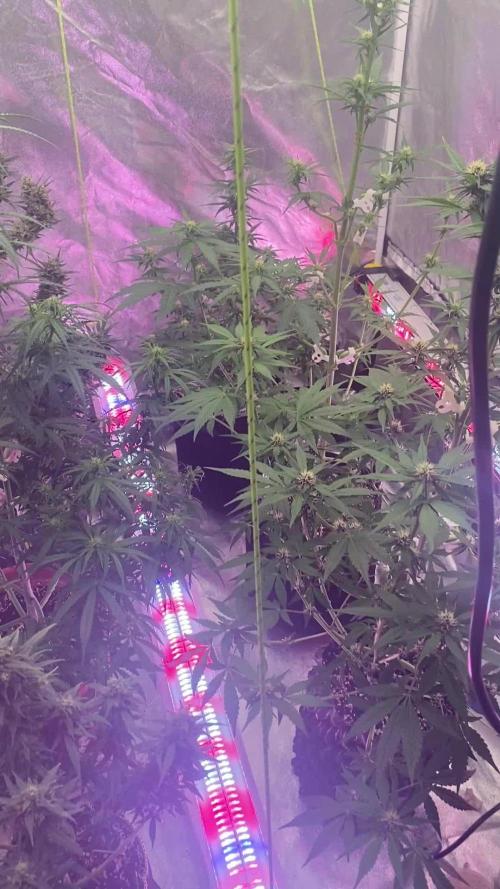
RSV11 is doing really good this week. She has gained a lot of strength and stood up on her own. She is making progress nicely. Nothing more to report at the moment. Thank you Spider Farmer, and Terpyz Mutant Genetics. 🤜🏻🤛🏻🌱🌱🌱
Thank you grow diaries community for the 👇likes👇, follows, comments, and subscriptions on my YouTube channel👇. ❄️🌱🍻
Happy Growing 🌱🌱🌱
https://youtube.com/channel/UCAhN7yRzWLpcaRHhMIQ7X4g

Likes
Comments
Share


@Robom069
Follow
Going into the last weeks iam very happy with my plants
they´re almost too big
but i love the big buds and hope they get very dense
left acid dough
right black domina

Likes
4
Share


@Adkguerrilla44
Follow
So far so good they are starting to fill out the 1/2 and 1 gallon velcro transplant bags with roots very nicely. I still havent fed them any grow nutrients just some mammoth mycos,hardy gro ultra-bio and a liquid soil inoculant i got from ebay. I will them some NPK raw grow and cal/mag next week.
Likes
5
Share


@Growfornow
Follow
Week 11 harvest
Chop chop down she goes
What an easy and rewarding plant, she done great for my mistakes also and every person NEEDS a sweet forgiving women Amen
Nice sweet spunky smell
I would grow again for sure

Likes
2
Share

@habibi
Follow
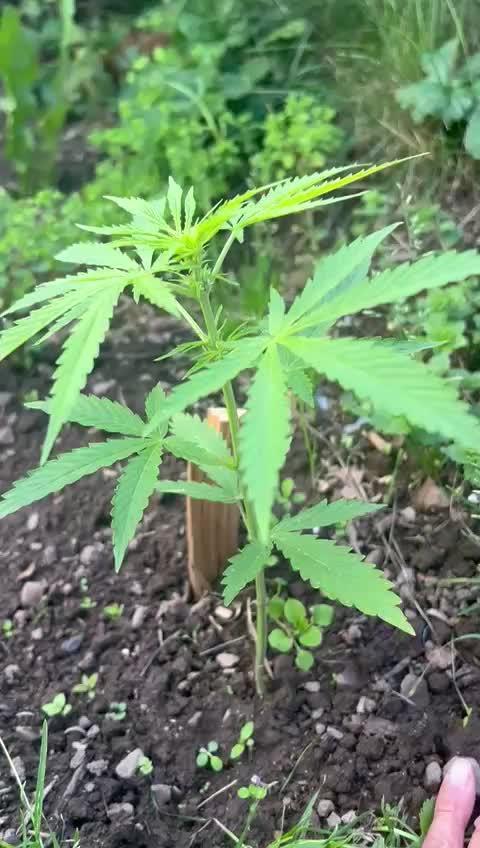
Macht Momentan sehr langsame vortschritte des es sehr kalt ist und viel regnet


Likes
11
Share


@Crwfz1
Follow
Long hard life for this babby nearly died inside under scrog due to ph problems put her out side early summer and it cane back slowly but shurely so couldnt expect as much as usual love it tho all the way around goood stuff packed with crystals it really didnt appreciate cold climate either i dont think but turnout was great

Likes
31
Share


@420DeepGrow
Follow
La aventura ha acabado antes de lo esperado, entre las condiciones climáticas y el ataque de un jabalí 🐗 han acabado con este proyecto, la próxima vez será 😃


Likes
31
Share


@JeyGanesha
Follow
Questa gorilla cookie cresce ben forte..spero arrivi al termine senza nessun intoppo....
Siamo arrivati alla fine della3 settimana. Tt procedere alla grande
Likes
37
Share


@XperencdGmanXG
Follow
well as you can see she is slowly crawling out of her previous issues. This is just not growing like the Thunderfuck genetics I have heard of. Amended for extra veg time. Gonna just leave her and feed only fish shit and humic and fulvic acids
Likes
10
Share


@Dictator
Follow
The beautiful girl has started growing right now. I haven't fertilized her yet. I've done some topping and removed the small leaves of the avemoth. She's feeling great.💚
Processing
Likes
12
Share


@BloodBath
Follow
Everything is going well still. Slight bit of nutrient burn starting as some of the tips I noticed were turning pale almost yellow or brown. So I backed off this week. Feeding just PH balanced water and some SLF100 with Herculean Harvest and Olympus up from Oregon’s Only. We’ll see what happens this next week to come. Hoping to stop the small issue in its tracks and continue to be super healthy to finish. I’ve been able to really dial in temps and humidities in the tent. The air flow is perfect. Light is just right. Another week and I’ll add my 2nd light to really get her going when she’s ready to start stretching. All in all everything’s great minus the nute burn.
Likes
4
Share


@Hommero75
Follow
The Tropicana Cookie is an awesome strain with a great sweet and woody aroma.
I had some issues in the beginning with the development and the grow of the plant but she bounced back. She got cut today and put to dry.
Likes
5
Share


@GermGrowFox
Follow
Eine neue Woche steht an. Ich hab mich jetzt nun nach vielem hin und her überlegen doch dazu entschieden die Blüte einzuleiten. Ich bin gespannt was passiert und freu mich auf die Woche.
25. November
Cookies gelato wurde mit 4l gegossen zusätzlich noch mit Green sensation und Bloom Dünger.
Tropimango wurde mit 2,5l gegossen ebenfalls mit Green Sensation allerdings ohne zusätzliche blütenährstoffe. Es sollte genügend florganics im subtratsein, dass es vorerst nicht nötig sein sollte zusätzlich Nährstoffe geben zu müssen.
Royal Runtz hat 3l Wasser mit green sensation und Blütendünger erhalten.
26. November
Pflanzen wachsen. Bin zufrieden. Heute besteht kein Handlungsbedarf.
27. November
Der dritte Blütetag. Man merkt dass die Pflanzen an Wachstum zulegen wollen.
Cookie gelato und Tropimango wachsen uneingeschränkt.
Die Runtz hat einen Bruch erlitten und ich hab kein Superkleber oder Panzertape da
28. November
Aus mir unerklärlichen Gründen scheint das bisschen Kreppband auszureichen, um den gebrochenen Ast am Leben zu erhalten. Würde behaupten zu 4/5 war er durchgebrochen und hielt eher an einem Rindefaden. Reicht scheinbar um den Ast weiterhin mit allem zu versorgen.
Habe leichte Sorge dass der ganze Stress, den die Runtz bisher schon hat mitmachen dürfen, zu Zwitterbildungen.
Cookie Gelato kommt weiterhin vorwärts.
Tropimango hat 3l Wasser bekommen. Sie hatte als einzige einen furztrockenen Topf
Cookies Gelato ist nun 46 Tage alt
Tropimango ist nun 41 alt.
Royal Runtz ist nun 30 Tage alt
Blütetag 4
29. November
Cookies Gelato 4l Wasser bis Drenage
Roy’s Runtz 3l Wasserbis Drenage
Ab- und Umluft wurde auf AC Infinity umgerüstet und läuft jetzt über ein growcontrol.
Fyta-Sensoren liefern mir jetzt aktuelle Zahlen aus dem Substrat.
1. Dezember
Die Woche neigt sich langsam dem Ende zu und es ist einiges passiert.
Die Runtz hat einen Bruch diese woche erlitten aber entwickelt sich prächtig. Der gebrochene Ast ist der stärkste. Traue mich allerdings noch nicht das Klebeband zu entfernen.
Die Cookies sieht wunderschön aus ❤️
Tropimango muss immer wieder entlaubt werden, macht sonst gute arbeit.
Das Zelt hat einige Upgrades bekommen und die neuen Möglichkeiten auf Messungen, klimabedingungen und Substratanalysen erleichtern einiges.

Likes
71
Share


@DogDoctorOfficial
Follow
Hello, friends! It's been an exciting second week of flowering in the Anesia run, and I can't wait to share all the amazing progress with you.
Our lovely ladies are well into their flowering stage, and the changes are spectacular! The transition from vegetative growth to blooming is always thrilling, and this week has been no exception.
We've adjusted the nutrient mix to support their flowering needs. Here’s what’s been on the menu:
Regulator: Keeps plants stress-free and promotes healthy growth.
CalMag Boost: Ensures they get enough calcium and magnesium for robust bud development.
Top Booster: Enhances flower production and increases the number of bud sites.
P Boost: Provides the phosphorus needed for energy transfer and flowering.
Watering pH: Maintained at 5.8 to ensure optimal nutrient uptake.
TDS: Held steady at 420, giving them the perfect balance of nutrients.
The Anesia Beauties 🌟
Each plant is showing unique characteristics, and it's fascinating to watch them develop their own personalities. The buds are starting to form nicely, and the aroma is beginning to fill the air.
Future #1: This strain is living up to its hype, with dense bud formation and a vibrant green color.
Zoomiez: Looking strong with vigorous growth and promising flower sites.
Apricot Oreo: Developing beautifully with a sweet fragrance that’s already noticeable.
Red Banana Pudding: The solo survivor is a true champion, showing great resilience and structure.
Training Techniques
This week, I focused on some light defoliation and training to ensure optimal light penetration and air circulation. These techniques are crucial for maximizing yield and preventing mold or mildew.
Maintaining the perfect environment is key. Temperature is kept at a steady 25°C, ensuring the plants are comfortable and stress-free. Humidity levels are carefully monitored to avoid any issues during the flowering stage.
I've captured some stunning shots of the girls in full bloom, which I'll be sharing on Instagram. The sight of those trichome-covered buds is truly a feast for the eyes.
A huge thank you to:
Anesia Seeds for these amazing genetics.
Aptus Holland for providing top-notch organic nutrients.
Future of Grow LED for the incredible lighting that keeps our garden thriving.
Grow Diaries for the platform to document and share our journey.
The Grow Diaries Community for your constant support and inspiration.
Stay tuned for more updates, and don’t forget to check out the latest episode of Welcome to the Green Oasis on YouTube, where I dive deeper into the garden's progress and share more tips and tricks.
Keep growing, keep glowing!
Genetics Red Banana Pudding = RBP
Apricot Oreoz = AO
Zoomiez = Z
Future#1 = F
https://anesiaseeds.com/
Plant nutrition - Aptus Holland - https://aptus-holland.com
LED Photons - Future of Grow - https://www.thefuturofgrow.com/
Controls - Trol Master - https://www.trolmaster.eu/
Watering - Autopot - https://autopot.co.uk/
Tent - Mars Hydro - https://marshydro.eu/
Love and attention - Me, myself and i
As always thank you all for stopping by, for the love and for it all , this journey of mine wold just not be the same without you guys, the love and support is very much appreciated and i fell honored and blessed with you all in my life, With true love comes happiness. Always believe in your self and always do things expecting nothing and with an open heart , be a giver and the universe will give back to you in ways you could not even imagine so
More info, the ocasional give-away and exclusive updates from all my adventures can be found - links in the profile description
Friendly reminder all you see here is pure research and for educational purposes only
Growers Love To you Al

Likes
8
Share

@KritischeMasse
Follow
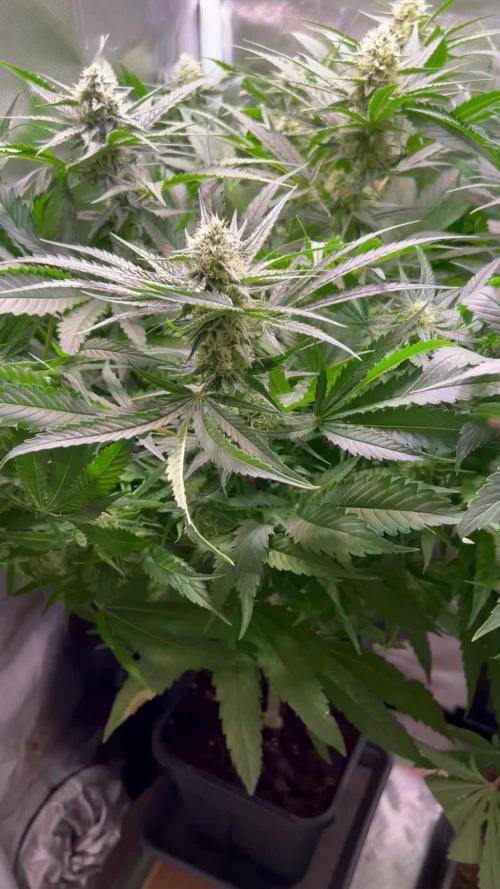
Aktuell bessert sich das Wetter und die Luftfeuchte geht runter.
Ich gieße nur noch mit Wasser, die Blätter sind noch sehr dunkelgrün vom Dünger.
Es passiert nicht viel, gieße weiterhin 3-4l alle 3-4 Tage.
Geruch ist kaum zuvermerken. Bin noch nicht wirklich von der Sorte überzeugt in Sachen anbauen. Fühlt sich an wie white label Wundertüte Genetik an.
Likes
17
Share

@CannaArchive
Follow
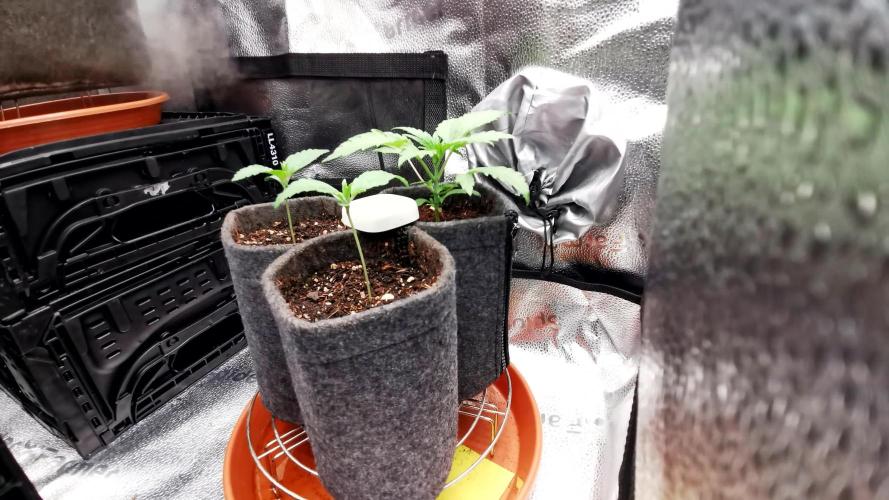
Growth Stage: Early Vegetative
Environment:
Temperature: ~23 °C
Humidity: ~65 % RH
Light cycle: 20/4
Light intensity: ~250–300 PPFD
Watering / Feeding:
The plant was grown in a 1 L pot and watered carefully with around 300 ml per watering, depending on pot weight.
Only water + CalMag (Advanced Nutrients) was used during this week. No base nutrients were added.
Observations:
During Week 2, the Jelly Donutz was moved into the grow tent, which helped the plant recover very well from the difficult seedling stage. Growth stabilized quickly, and the plant continued its development in a much more normal and healthy way.
Leaf color looks healthy, structure improved noticeably, and overall vigor increased throughout the week.
Even though temperatures were slightly cooler, the plant adapted well and showed no further signs of early stress.
Training / Work Done:
No training was applied. The focus was fully on recovery and establishing stable vegetative growth.
Notes:
Week 2 was an important recovery phase. With stable conditions and gentle feeding, the plant built a solid foundation for stronger vegetative growth in the following weeks.

Likes
10
Share


@DeepRootsGrowTrees
Follow
MIMOSA ZKITTLEZ FF / GANJA FARMER
WEEK #6 OVERALL
WEEK #5 VEG
This lady is getting big she taking to LST extremely well I've topped her and she's recovered and started new growth quickly she's easily manipulated and just continues to grow you can take clones from her as well!! Stay Growing!!
Thank you for stopping by and taking a look it's much appreciated!!
Thank you GANJA FARMER!!!
MIMOSA ZKITTLEZ FF GANJA FARMER

Likes
16
Share


