


Likes
Comments
Share

@Flavors
Follow
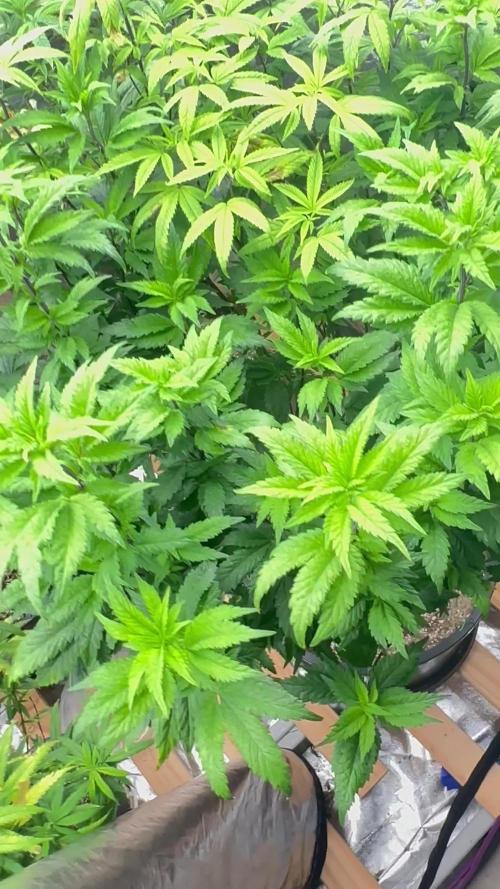
🌱 Week 15 Update (Veg)
Just gave the girls a solid top feed 🍽️💧 and they’re loving it 💪🌿. Growth is lush and strong 🍃✨, canopy looking full and ready for the next stage 🌳🔥.
Still spotting a few thrips


Likes
30
Share


@Roberts
Follow
Runtz auto is found well. She is shifting gears into flowering and showing her first pistils. She is looking good and she should start stretching very soon. Thank you Plagron, Medic Grow, and Zamnesia. 🤜🏻🤛🏻🌱🌱🌱
Thank you grow diaries community for the 👇likes👇, follows, comments, and subscriptions on my YouTube channel👇.
❄️🌱🍻 Happy Growing 🌱🌱🌱
https://youtube.com/channel/UCAhN7yRzWLpcaRHhMIQ7X4g.

Likes
29
Share


@MarsHydroLED
Follow
Sundae Driver- (Fruity Pebbles x Grape Pie) - The start of flower stage.
.

Likes
12
Share

@Comfrey
Follow
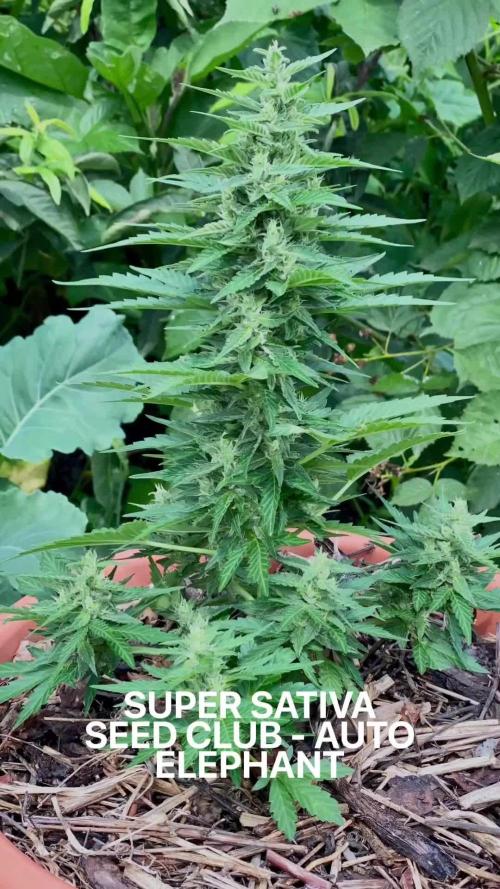
Wächst und duftet. Bin zufrieden und freue mich über das köstliche Aroma, das sich langsam im Garten ausbreitet.

Likes
5
Share


@BombBuds
Follow
Erntezeit!
Getrocknet wurde 9 Tage bei ~55% Luftfeuchtigkeit und 20 grad.
Trocken getrimmt.
Alle Popcorn nugs und Verschnitt zu Hash weiterverarbeitet.

Likes
40
Share


@CAMOGROWN
Follow
Switched over to bloom Booster tablets now the preflowers are showing
I think the roots have filled the pots as they drink it dry every day! Especially the tallest!
No LST just a few fans nipped of or the odd blade that's blocking light has been removed, and its helped!
My HPS is leeching calcium from my tops but the bloom booster has 40% more cal/mag in them so we should be good. I just rotate the plants and it seems to get the green back in the leaves.
Its technically 6 weeks from sprout BTW.
Thanks for watching, any tips feedback welcome.
Update- so the stretch hasn't stopped. 5" since Friday, I thought I was guna get small autos lol
So I decided to do some lollipoping on all the plants And some defoliation. I've supercropped the death out of my Trouble plant, I mean every branch even the top! but she's back on track and growing again! Will update Friday!

Likes
1
Share


@EVD420
Follow
This cultivar delivers exceptional performance, achieving over 90% desired trait expression in final selections. It features a very fast flowering time of just 35–45 days, making it ideal for growers looking for speed without compromising on quality.
The plants develop into large, vigorous specimens with strong structural integrity. Throughout the grow, they demonstrated excellent resistance to mold and fungal infections — all susceptible individuals were removed from the breeding pool. Controlled light stress was applied during the cycle and showed no negative impact on growth or health.
The effect is uplifting and cheerful, making it perfect for daytime use or creative sessions. Whether you're a home grower or a breeder, this strain offers stable genetics, strong resilience, and a joyful experience.
Likes
13
Share

@Cyrusdavirus
Follow
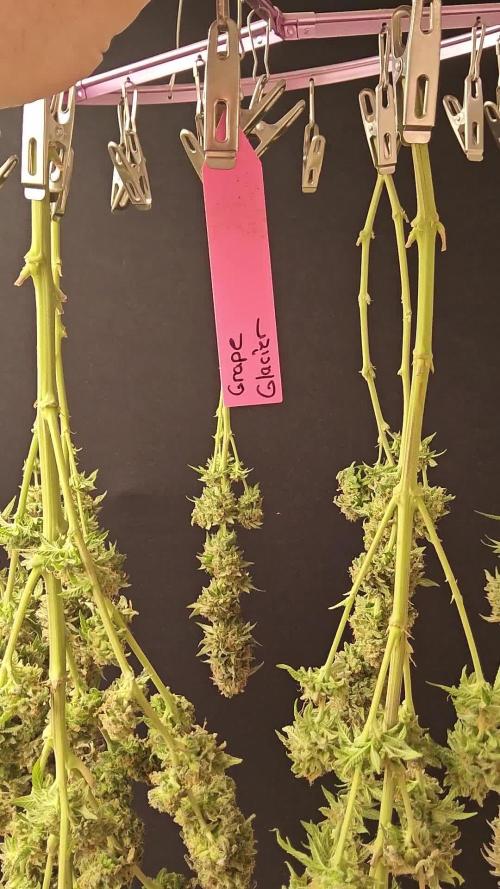
Final week update
I am trimming the plants as they get ripe leaving them under the lights for a few days before I chop them.
My theory is that trimming them makes them think they are being attacked by something and what are the plants defense 🤔 to get sticky and stinky 🤔 I do see a difference after a couple days, some more than others but all of them add terpenes and trichomes ❄️🔥❄️🔥
Thank you all for visiting and following along with me... Cyrus

Likes
3
Share


@DoctorD
Follow
Week 3 Grow Diary Report: Days 15-21
As we progress into the third week each of our strains—Tropicana Cookies, Gorilla Zkittlez, and Apple Strudel—continues to showcase impressive growth and resilience. This week, particular attention was given to optimizing environmental conditions, including an increase in CO2 levels (Growbag), adjustments in lighting (PPFD increase) to support the vegetative growth phase and introducing some light LST.
Tropicana Cookies:
Significant growth was observed, with plant height increasing from 12.5 cm to 18.5 cm. This rapid growth spurt, referred to locally as "stretching," was noticeable mid-week.
The plants have maintained their health with no major issues, responding well to environmental adjustments. Continued nutrient regimen with Alfa Boost. Since the soil is preamendet with nutrients, I just use PH-balanced water. Lighting intensity was increased progressively from 350 PPFD to 380 PPFD and then to 400 PPFD and CO2 supplementation was implemented to support enhanced photosynthesis.
Environmental Conditions maintained stable with temperatures ranging from 27°C during the day to 21-25°C at night, with relative humidity around 64-68%.
Gorilla Zkittlez:
Growth was steady, increasing from 10.2 cm to 15 cm. The plant has responded well to environmental controls and nutrient supply.
Gorilla Zkittlez remains in good health, with no signs of nutrient burn or deficiencies.
Apple Strudel:
This strain showed a healthy increase from 9.5 cm to 14 cm. Growth rates are slightly behind Tropicana Cookies but on par with expected metrics for the strain.
She continues to exhibit good health, benefiting from the stable grow conditions and targeted nutrient applications.
Week 3 has shown promising developments with all strains demonstrating robust growth and good health. The environmental adjustments, particularly the increased CO2 supplementation and lighting, appear to be positively impacting the plants' growth dynamics. As we move forward, it will be important to continue monitoring these conditions closely to ensure that they remain optimal for each stage of plant development.
Cheers,
D.
Likes
5
Share

@DogDoctorOfficial
Follow
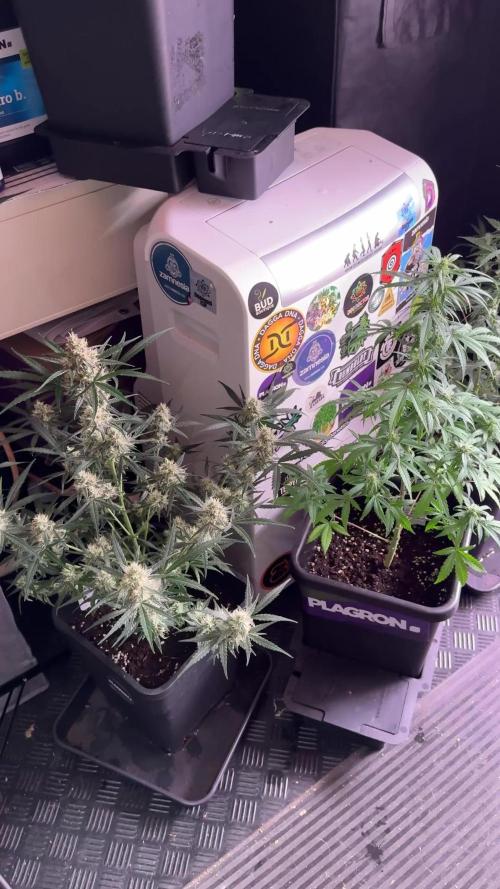
💎 Black Diamond Auto by Zamnesia – Pheno A Week 8 | She's Everywhere
Welcome back to another chapter of the 8×8 Adventure!
And this week, I have to admit something...
I have absolutely no idea where this girl is going.
And I love it. 😂💚
Black Diamond Pheno A has officially reached the point where I stop trying to predict what she's going to become and simply enjoy watching her do it.
Every week I think I've figured out her structure.
Then she does something else.
This week?
She's building main-cola-sized flowers everywhere.
Not just one dominant central cola.
Not a huge top surrounded by little side flowers.
I'm talking about substantial flowering structures developing all the way down the plant, with some of the lower flowers already starting to resemble little baseballs.
And the craziest part?
There is almost no popcorn.
She's simply turning branch after branch into proper flowering sites.
This Black Diamond is something special.
🌱 The 12/12 From Seed Adventure
For anyone discovering this diary for the first time, welcome to the 8×8 Adventure.
Every plant in this project is being grown under a 12 hours on / 12 hours off light schedule from seed.
There is no traditional vegetative period.
No extended growth phase.
No special treatment for individual phenotypes.
Every plant receives the same environment, the same lighting strategy, the same feeding philosophy and the same general care.
The genetics are the variable.
And that's exactly what makes this experiment so fascinating.
When twelve plants are given essentially the same conditions and one of them decides to become a completely different creature...
that's the phenotype talking.
And Black Diamond Pheno A certainly has something to say.
💎 She's Building Colas Everywhere
Last week I described this plant as tall, elegant and balanced.
This week?
I'm starting to think "balanced" isn't quite enough anymore.
At 169 cm, she has developed an incredible vertical structure with flowering sites distributed throughout the plant.
But what really catches my attention is the consistency of flower development.
Normally, when looking at a plant this size, you expect the hierarchy to be obvious:
One main cola.
A few strong secondary branches.
Then progressively smaller flowers as you move down the plant.
Black Diamond Pheno A seems to have decided that hierarchy is optional.
Her central cola is still the largest and most obvious flower.
Of course it is.
But the secondary branches are not behaving like secondary flowers anymore.
They're becoming colas in their own right.
And even further down the plant, I'm seeing flowers developing with enough volume that calling them "lower buds" almost feels unfair.
They're becoming little towers.
Some are already approaching baseball-sized proportions.
And there is remarkably little popcorn hiding underneath.
That is what has me so excited.
🍃 Still Untouched
Perhaps the most interesting part of this whole story is what hasn't happened.
I haven't topped her.
I haven't HST'd her.
I haven't performed aggressive defoliation.
I haven't stripped the interior.
I haven't tried to force her into a particular shape.
The only intervention has been the occasional leaf tuck when a large fan leaf was blocking a developing flower.
That's it.
And now I'm looking at this plant thinking...
Maybe she never needed me to shape her in the first place.
😂
This is one of those grows that reminds you that sometimes genetics already have a plan.
Our job isn't always to create the structure.
Sometimes it's simply to provide the environment and get out of the way.
☀️ She's Eating Every Photon She Can Find
And this girl certainly isn't wasting the light.
Top canopy?
She's using it.
Inner canopy?
She's using it.
Lower canopy?
Apparently she wants that too.
And now that the Lumiflora under-canopy lighting has joined the party, I'm extremely curious to see how far this phenotype can push flower development throughout the entire vertical structure.
The whole idea behind the under-canopy lighting was to give those normally shaded areas access to additional usable light.
And Black Diamond Pheno A seems to have plenty of flowering real estate available to take advantage of it.
She's capturing photons from above.
She's capturing photons from between the branches.
She's capturing photons from underneath.
At this point I'm almost convinced she's going around the room looking for the last photon that hasn't been claimed yet.
😂💚
💡 Lumiflora Under-Canopy Lighting
This is now becoming a particularly interesting part of the experiment.
The top of the plant is obviously receiving plenty of light from the main fixtures.
But look at the structure of this girl.
There are flowers developing everywhere.
That makes light distribution throughout the canopy increasingly important.
The under-canopy lighting isn't intended to replace the primary fixtures.
It's simply another layer of light reaching areas that would naturally receive less.
And this is exactly the kind of plant where I want to observe the result.
Will the lower flowers continue developing with impressive density?
Will the middle of the plant continue filling out?
Will the overall flower distribution become more uniform?
We're going to find out.
I'm not expecting miracles.
I'm expecting observation.
And that's one of the reasons this project is so much fun.
🌸 Flower Development Is Getting Serious
The difference from last week is becoming very obvious.
The flowers are no longer simply forming.
They're building structure.
Calyxes are stacking.
Pistils are filling the flowers.
Sugar leaves are becoming increasingly covered in visible resin.
And the individual flowers are beginning to gain the shape and volume that tells you the real bulking phase is approaching.
The central cola is beautiful.
But honestly?
I'm almost more interested in everything around it.
Because when you look down the branches, you keep finding another flower.
And another.
And another.
There is no obvious point where the plant suddenly says:
"Okay, that's enough. Everything below this is popcorn."
Instead, she just keeps producing.
Cola after cola after cola.
❄️ The Frost Is Coming Along for the Ride
Another thing becoming increasingly obvious in this week's photographs is the resin coverage.
The sugar leaves are carrying a beautiful layer of visible trichomes, and the flowers themselves are becoming increasingly frosty.
The close-up photographs really show it.
We're still not at the final destination.
There's plenty of flower maturation and swelling ahead.
But Black Diamond is already giving us a preview of what she's capable of.
And I have a feeling that once the flowers really start packing on weight, the visual difference could become spectacular.
💧 Feeding This Week
The feeding program continues to support the increasingly demanding flowering phase.
This week's recorded recipe:
Plagron Terra Bloom — 2.2 ml/L
Plagron Power Buds — 1 ml/L
Plagron Green Sensation — 1 ml/L
Plagron Sugar Royal — 1 ml/L
Plagron pH Plus — 0.03 ml/L
Plagron Lemon Kick — 0.03 ml/L
The nutrient solution is being maintained around pH 6.0, with the recorded EC/TDS reading at approximately 2.0 mS/cm.
Watering volume is currently around 1.3 L per plant per 24 hours.
And the plant is responding beautifully.
No obvious signs of nutritional stress.
No dramatic deficiencies.
No major environmental complaints.
Just growth.
Flower production.
And more flower production.
🌡️ Environmental Conditions
The environment remains stable and consistent, which is exactly what I want during this stage.
Current conditions:
🌸 Flowering: Week 8
📏 Height: 169 cm
💡 Light schedule: 12/12
🌡️ Day temperature: 29°C
🌙 Night temperature: 25°C
💧 Relative humidity: 60%
pH: 6.0
⚡ EC: ~2.0 mS/cm
🌱 Substrate temperature: 21°C
💧 Nutrient solution temperature: 21°C
🌬️ CO₂: 639 ppm
💦 Watering: ~1.3 L/plant/24h
The goal remains simple:
Keep the environment stable and let the plant perform.
📸 This Week's Gallery
This week's photographs might be some of my favourites of this phenotype so far.
The full-plant images show just how impressive her structure has become.
The close-ups tell an even better story.
Everywhere you look there is another flowering site.
The central cola is developing beautifully, but then you move your eyes down the plant and suddenly discover another substantial flower.
And another.
And another.
Some of those lower flowers are already surprisingly large.
The sugar leaves are carrying a beautiful layer of frost.
The pistils are still predominantly fresh and white, telling us that there is plenty of development still ahead.
And the most remarkable thing?
This plant still hasn't been defoliated.
She's lush.
She's green.
She's full.
She's flowering everywhere.
And somehow she's making it work.
🔮 Looking Ahead
This is officially the part of the grow where I'm going to stop making predictions.
😂
Because every time I think I know what Black Diamond Pheno A is going to do...
She proves me wrong.
What I can say is that the next weeks should be fascinating.
The flowers should continue swelling.
The calyxes should become more pronounced.
Resin production should increase.
And those numerous secondary flowering structures have the potential to become some seriously impressive flowers.
I'm particularly interested in watching those lower and inner flowers.
Because if they continue developing at anything close to the rate we're seeing now...
this plant could become an absolute monster from top to bottom.
And that's without me forcing her to do it.
💎 Let Her Shine
This phenotype has taught me something throughout this run.
Sometimes you don't need to push a plant.
You don't need to manipulate every branch.
You don't need to remove every leaf.
You don't need to create the structure yourself.
Sometimes...
you just need to give the genetics the opportunity to show you what they can do.
Black Diamond Pheno A has been given that opportunity.
And she's taking it.
She's capturing light from the top.
She's using the inner canopy.
She's reaching into the lower canopy.
She's taking advantage of the under-canopy lighting.
She's building flowers everywhere.
She's filling spaces where I expected to find popcorn.
And she's doing all of this while simply being allowed to grow.
At this point, I'm not trying to tell her what she should become.
I'm just watching.
I'm learning.
And I'm enjoying the show.
Because honestly...
I have no idea where this girl is going.
But wherever she's going...
I absolutely love the direction. 💎🌱
💚 Thank You
A huge thank you to everyone following another chapter of the 8×8 Adventure.
Thank you to GrowDiaries for providing a place where growers can document, compare, learn and inspire one another.
Thank you to Zamnesia for the Black Diamond genetics that gave us this fascinating phenotype to follow.
Thank you to Plagron for the nutrition supporting the plants throughout the run.
Thank you to Future of Grow LED for providing the main lighting driving this project.
Thank you to Lumiflora for joining the adventure and giving us the opportunity to explore what additional under-canopy lighting can contribute to a plant with this kind of structure.
And thank you to TrolMaster for helping maintain the stable environment behind the scenes.
And finally, thank you to everyone reading, commenting, asking questions and following these plants week after week.
Every phenotype in the 8×8 Adventure has its own personality.
But Black Diamond Pheno A?
She's becoming increasingly difficult to ignore.
She's not making one main cola.
She's making a whole collection of them.
And I can't wait to see what happens next.
Growers Love. 💚🌱💎
Likes
23
Share


@TheCannaProphet
Follow
~FastBuds Trainwreck Auto~
Quick Service!-High Route!
-Hit you like a freight train.
-A potent high that will leave you feeling good all day long.
-Super yields. This strain grows up to 120cm and yields 550gr/m2 in just 63 days!
-Perfectly balanced. Especially bred to develop the best of Indica and Sativa traits.
-Suited for everyone. Top-quality buds without much maintenance or extra attention.
-The good old days. An upgraded fast flowering version of the classic, bred to perfection.
__________________________________________________________________________________________________________________________________________________________________________________________________________________________________________________________________________________________________________________________________________________________________________________________________________________________________________________
STRAIN DESCRIPTION:
-A fast flowering hybrid variety suited for all types of growers, it’s an easy-to-grow strain that takes 9 weeks from seed to harvest, growing up to 120cm and yielding 550gr/m2 without needing much maintenance or extra effort. Expect hard-hitting nugs that will catch everyone’s attention due to the sweet pine-sol terpenes that stink out the whole room as soon as you light up the joint; This variety will be among your favorites once you experience the exceptional effects that may not seem too potent at first but slowly creeps up on you and get you high as a kite for hours.
-Bud description: Trainwreck Auto’s buds grow quite thick, with plenty bright yellowish-orange hairs that wrap around the medium-sized calyxes, complementing the light-green nugs beautifully. Expect extremely dense buds that grow stacked and end up looking like one giant nug in each branch. You’ll be amazed by the trichome production, the sugar-dipped nugs with some colorful leaves coming out of them will leave your fingers full of resin and, as soon as you start grinding them, overwhelm you with a pungent lemony pine-sol with a touch of sourness and a spicy background.
-Smoke report: After a couple of hits, you will experience a really cozy and stimulating head high that will get you in a comfortable state of mind and feeling good with everything and everyone; The long-lasting uplifting effect promotes a very calm and centered state of mind with a relaxed edge at first. The motivating effect will gradually transform into a more Indica-like high that deeply relaxes your muscles and relieves pain without leaving you too sedated, an ideal choice for those who want to stay alert during the morning and need to relax when the workday ends.
-Plant appearance: Growing on the taller side, this autoflower can reach up to 120cm while growing quite compact and bushy, you’ll see lots of dark-green fan leaves coming out of everywhere and a couple of side branches that can grow as tall as the main cola. Thanks to its Sativa heritage, this variety yields as much as it grows; Expect yields ranging from 350-500gr/m2, making it an ideal choice for all types of growers who are looking for a low-maintenance and fast flowering version of the classic.
*The above Strain Information/Description courtesy of FastBuds
__________________________________________________________________________________________________________________________________________________________________________________________________________________________________________________________________________________________________________________________________________________________________________________________________________________________________________________
THE SETUP:
~Planted into Jiffy Peat Pellets that were hydrated with de-chlorinated water with SuperThrive added then ph'd to 6.0 @ 80℉
~Grown 100% organic in 10g fabric pots with Mother Earth 70/30 Coco/Perlite medium amended with 2tbs/g of Down To Earth 4-4-4 / 2 cups/g of Earthworm Castings / 1tbs/g of Dr. Earth Flower Girl 3-9-4, 1tbs/g of Dr. Earth Bat Guano, 3/4 cup of Down To Earth Azomite and 1 tsp/g Down To Earth Fish Bone Meal.
~24hr light cycle during Germination / 19/5 light cycle for Vegetation and 12/12 for Flower
~Straight water ph'd @ 6.2-6.8 when needed and weekly Compost Tea's.
__________________________________________________________________________________________________________________________________________________________________________________________________________________________________________________________________________________________________________________________________________________________________________________________________________________________________________________
WEEKLY UPDATES:
9/6- Day 38 of flower and harvest time is fast approaching with her trichomes, which are now checked daily, maturing rapidly being 80% milky now with the remaining being clear.
Daily watering's continue with 1g of straight de-chlorinated water ph'd to 6.7 @74℉ and also I'm turning her pot 1/4 turn daily as well.
9/8- Well, her trichomes are right about where I like them to be and she's ready for 48hrs. in the dark before I chop and hang her to dry for 10-12 days.
I'm watering her with 1g of straight de-chlorinated water ph'd to 6.7 @74℉ and will continue to water her while she's in the dark (cannabis continues to carry on with it's growth processes even while in the dark) so that her medium doesn't completely dry out. Keeping her watered will also help to extend her drying time to that ideal 10-12 day target.
This should be some epic smoke as her buds are absolutely crystalized with trichomes and her smell is AMAZING! 😛💚
9/10- Well she's been in the dark for 24hrs. now with 24 more to go. I'm keeping temperatures in the low to mid 60's℉ and the RH @ 45%. Tomorrow is 'Chop Day'! I'll be taking some pic's of her when she comes out of the dark and during harvest...Stay tuned, this is some 🔥!
I am continuing to water while she's in the dark with 0.5g of straight de-chlorinated water ph'd to 6.8 @67℉ to keep her hydrated.
9/12- Well she's out of the dark where she spent roughly 60 hours. I kept the temp's @ 64℉ and the RH at 45%.
After I brought her out I shot a few pictures of her, then plucked off all of the shade leaves. I then cut her off at her base and hung her whole. I'll keep the RH in the room @ 50% for the first 24hrs., then raise it to 55-60% for the remainder of the drying. I have the temperatures in the Dry Room at a constant 65℉ to help preserve the terpenes.
Hopefully she'll take 10-12 days to dry to the point that she's ready to be trimmed and jarred! Stay tuned for the harvest of this phenomenal cultivar! 💚🔥
~Thanks for stopping in! Things are wrapping up and harvest is right around the corner....Stay lifted and be Blessed! 😎🙏~
Likes
67
Share


@CommanderCannabis
Follow
I had a busy week. I updated my 4" exhaust fan to a Cloudline 6" booster exhaust fan and a bigger carbon filter. I also added another mini-fan that can oscillate and I had to add a heater. Why you ask? Because I got a CO2 tank from a friend and it is recommended to have temps in between 85-95 degrees. Granted I could have used it three weeks ago but better late than never. I have a nice CO2 monitor inside the chamber and I use the internal video camera to watch the readings. I have also added some HydroGuard to help the roots. They are slightly brown and another grower recommended it. Daphni continues to grow well and has maintained her dark green color. She has also started to make pistils and they are starting to form into buds just three days after first pistil sighting. I can smell her now too. latest readings are Air Temp = 79F, Humidity = 42%, PPM = 1810, pH = 5.9. Concerning my roots, I put a black trash bag over the top of the reservoir to keep as much light out as possible. The reservoir is tan and white and I think light was getting thru.

Likes
Comments
Share


@RainbowSix
Follow
Rufio's ค่าย StarfireGenetix
Bloom : 8 Week
รอวันฟรัช ทิ้งระยะรอเก็บเกี่ยว
เป็นสายพันธุ์ที่ดีมาก ทนโรค กลิ่นดี รสชาติดี ความเมา 4.5/5
Likes
11
Share

@TrickzGrowz
Follow
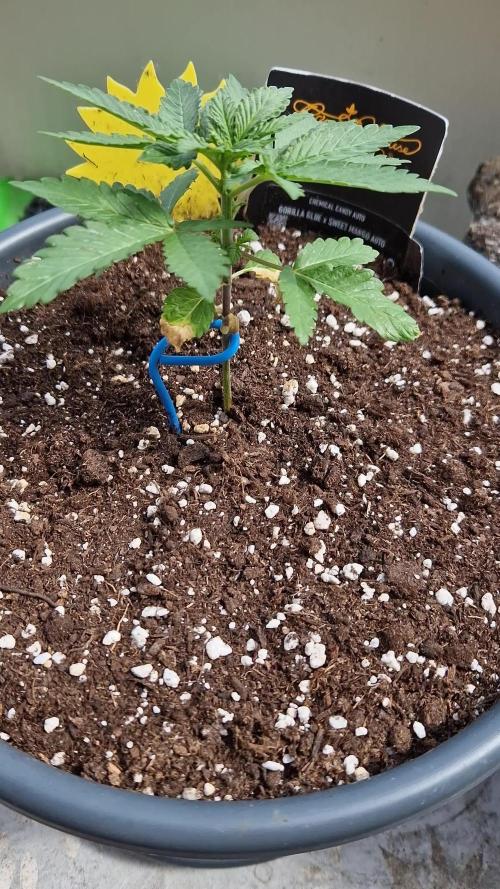
Servus Moin!
Langsam startet die Chemical Candy richtig durch. Der Stamm wird jetzt dicker und die Blätter bilden sich schön aus.
Likes
93
Share

@Roberts
Follow
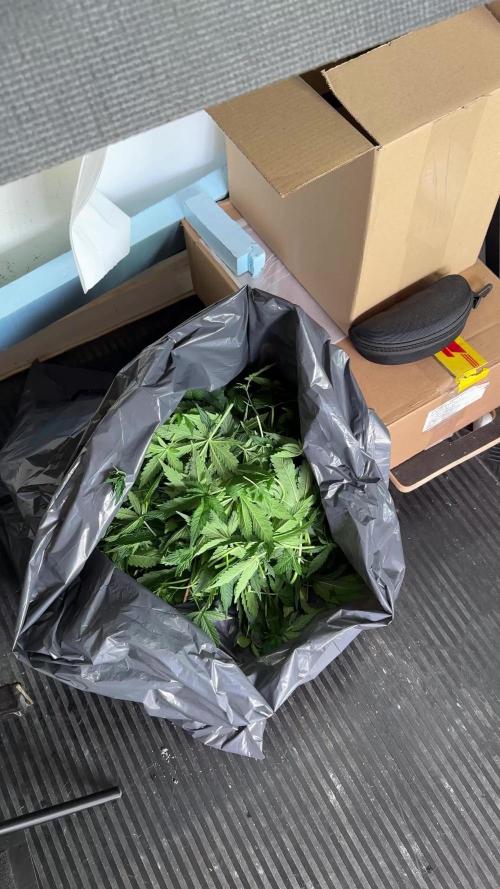
Auto Opium is just finishing up. She will go to ph water tomorrow. Then next update will be her harvest. She took a long time to grow and develop. I am glad she is finishing out. Then I will clean my area good, and start 4 new strains. I will be back next week with the harvest if gd ever gets that fixed. Thank you Medic Grow, and Divine Seeds. 🤜🏻🤛🏻🌱❄️
Thank you grow diaries community for the 👇likes👇, follows, comments, and subscriptions on my YouTube channel👇.
❄️🌱🍻 Happy Growing 🌱🌱🌱
https://youtube.com/channel/UCAhN7yRzWLpcaRHhMIQ7X4g

Likes
20
Share
@DogDoctorOfficial
Follow
🌱 Nectar Drip Update
Week 8 from Seed · Week 2 Flower (12/12 from seed)
Quick recap for anyone joining us now:
This run is a 12/12 from seed experiment, meaning each plant chose on its own when to enter flower. Because of that, flower timing is not perfectly synchronized — and that’s an important part of this grow and of the decisions we’re making.
We’re working with an exclusive collaborative genetic pack, not commercially available anymore, bred for stability, vigor, and resilience. What you see here is a real-world expression of those genetics, grown without chasing trends or hype — just observation, patience, and consistency.
⸻
🌡️ Environment & Feeding (Why We Changed Nothing)
This week, we deliberately changed nothing.
• Day temperature: ~28 °C
• Relative Humidity: ~65%
• EC: 2.4
• pH: 6.5
• Plant height: ~40 cm to ~80 cm
• Lighting: LED
Many growers would say these temperatures are “too high for flower,” but context matters.
Under LED lighting, leaf surface temperature typically runs 2–4 °C cooler than room temperature. Because of that, we focus on leaf VPD, not room VPD. The plant is what matters — not the number on the wall.
We are not chasing numbers.
We are paying attention to them.
The plants are responding perfectly:
• Lush, deep green foliage
• No signs of stress
• Strong internodal structure
• Uniform uptake across different phenotypes
When the plant is happy, stability beats adjustment. That’s why the nutrient recipe stayed exactly the same.
⸻
✂️ Defoliation — Why This Week, Why This Way
This week marked an important decision.
Normally, defoliation would happen around day 21 of flower. But in a 12/12-from-seed run, there is no universal day 21. Each plant entered flower on its own schedule.
The room was getting dense.
Airflow was being restricted.
Light penetration was becoming uneven.
So we listened to the plants — not the calendar.
We opened the canopy, improved airflow, and allowed the plants to:
• Breathe better
• Receive more uniform light
• Push growth upward instead of inward
We’ll be honest:
👉 We went harder than planned.
But it was a conscious decision, not an emotional one.
Leaves removed were healthy — not sick — which tells us the plant had energy to spare. The remaining structure is strong, clean, and well-shaped.
⸻
🛠️ Training & Recovery
• Structural branches previously damaged were taped last week
• All repaired nodes bounced back perfectly
• Plastic clips are still being used dynamically — on and off — to guide shape, not force it
This tells us everything we need to know about the genetics:
stable, resilient, forgiving, and strong.
⸻
🔮 What We Expect Next
After a hard defoliation, plants tell the truth quickly.
What we expect:
• Fast rebound
• Vertical push toward the light
• Strong flower site development
• Clean airflow through the canopy
If they slow down, we listen.
If they explode, we let them run.
So far, these girls are behaving like champions.
⸻
❤️ Final Words & Gratitude
To everyone reading this —
the supporters, the critics, the silent observers:
You all have a place here.
Growth doesn’t happen without contrast.
Learning doesn’t happen without mistakes.
And progress doesn’t happen without conversation.
Thank you to:
• The platform
• The OGs
• The new followers
• The sponsors
• The lovers and the haters
We treat everyone the same.
Criticism is welcome.
Questions are encouraged.
This is Nectar Drip — honest, detailed, educational, and real.
Let’s see what the future shows us 🌱💧
📡 Please stay tuned.we never quit https://www.youtube.com/@DOGDOGTHEDOCTOR NEW
🙏 Thank you for your patience and continued support.
FOR DISCOUNT CODES AND MORE JUST FOLLOW THE LINK https://website.beacons.ai/dogdoctorofficial
📲 Don’t forget to Subscribe and follow me on Instagram and YouTube @DogDoctorOfficial for exclusive content, real-time updates, and behind-the-scenes magic. We’ve got so much more coming, including transplanting and all the amazing techniques that go along with it. You won’t want to miss it.
GrowDiaries Journal: https://growdiaries.com/grower/dogdoctorofficial
Instagram: https://www.instagram.com/dogdoctorofficial/
YouTube: https://www.youtube.com/@dogdoctorofficial Deleted by Youtube
Vimeo : https://vimeo.com/dogdoctorofficial Under construction stay tuned ⸻
Explore the Gear that Powers My Grow
If you’re curious about the tech I’m using, check out these links:
🔆 Lighting & Environmental Control
• Future of Grow — Advanced LED lighting technology
https://www.futureofgrow.com/
DISCOUNT CODE: DOG20
• Lumiflora — Under-canopy LED lighting
https://lumiflorade.com/
• TrollMaster — Environmental controllers and automation gear (past collaboration)
⸻
Genetics
• Zamnesia Seeds — Genetics used in this project
https://www.zamnesia.com/
⸻
🌱 Soil, Substrates, Boosters & Root Support
• Plagron — Substrates, bio mixes, and supportive products
https://plagron.com/en/
⸻
🎒 Storage, Curing & Preservation
• Grove Bags — Curing and storage solutions
https://grovebags.com/
⸻
📸 Photography Equipment & Tools
(Not sponsors, but part of my creative toolkit)
• Sony A6700
• Sony full-frame macro lens + few more
• Stacking photography workflow - learning
• iPhone (for behind-the-scenes shots)
We’ve got much more coming as we move through the grow cycles. Trust me, you won’t want to miss the next steps, let’s push the boundaries of indoor horticulture together!
As always, this is shared for educational purposes, aiming to spread understanding and appreciation for this plant. Let’s celebrate it responsibly and continue to learn and grow together.
With true love comes happiness. Always believe in yourself, and always do things expecting nothing and with an open heart. Be a giver, and the universe will give back in ways you could never imagine.
💚 Growers love to all 💚
📸 P.S. – The Eye Behind the Lens
All photos in this diary (for now — except for the ones showing the camera, which I took with an iPhone) are taken with a Sony A6700 paired with a Sony full-frame macro lens and a few more.
Photography is part of the story — it’s how we share the fine textures, the glow, and the quiet details that words can’t always capture.
I’ve also started experimenting with photo stacking — a technique where multiple images, each taken at a slightly different focus point, are layered together to create one perfectly sharp image from front to back.
It’s not digital enhancement or AI; it’s pure photography — a way to reveal the plant’s beauty in microscopic depth, from trichome to petal.
You’ll even see a few shots of "ghost me" capturing the shots — camera, lens, setup — because every grow deserves not just to be cultivated, but documented like art.
FOR DISCOUNT CODES AND MORE JUST FOLLOW THE LINK https://website.beacons.ai/dogdoctorofficial
NEW DISCORD - Official Server Invite Link : https://discord.gg/ksjAkA5T74
Likes
6
Share

@soil2bud
Follow
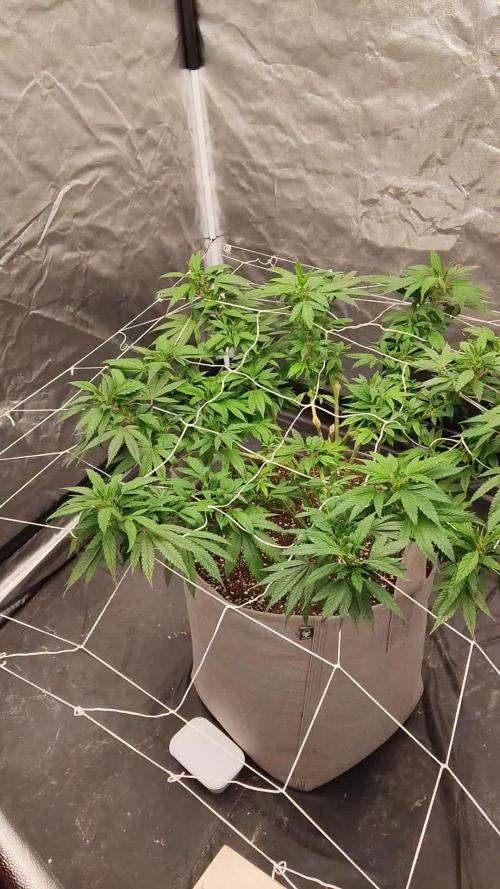
She is recovering well since the transplant. She is much bushier and greener than last week and I am happy with it.
Yesterday I gave her a Bio Fish feed at 2.5ml per liter and next week I will slowly increase it by 0.5ml or as needed. The scrog net is still just being used to keep the frame of the plant down and the 2nd screen will come as soon as I start seeing those 5 and 7 bladed leafs.


Likes
17
Share


@Easygrower
Follow
Hello growers day 63 red poison is in the net 😁 well what can I say about this incredible strain 60 days from seed I thought was abit of an ask but what do you no it is possible lovely red/ purple colours absolutely stinks my whole house is humm dinging i had them on a 20/4 light cycle from start to finish and I used biobizz allmix soil with biobizz nutrients and didn’t have any problems I will put a smoke report up when the buds are ready so if you’re looking for a very quick strain this is defo 1 for you super easy to look after and rewards you with stinking buds 10/10 from me on speed and smell and colour 👌🏻 And a very big thanks @sweetseeds for sending the beans for me to test much appreciated and big thanks to everyone who checked out my grow hope it’s useful for someone so until next time be safe and happy growing easygrower out✌️

Likes
2
Share


@TTerpz
Follow
Buds starting to form!!!!
Day 2 of week 8
4/3/25 UPDATE:
Flushed with Fox farm sledgehammer ph’d at 6.8
Soils were low at 5.8
4/5/25 update: fed with nutes
4/7/25: watered with plain water ph’d at 6.5
4/8/25: did a slight heavy defoliation to get ready for week 9!